
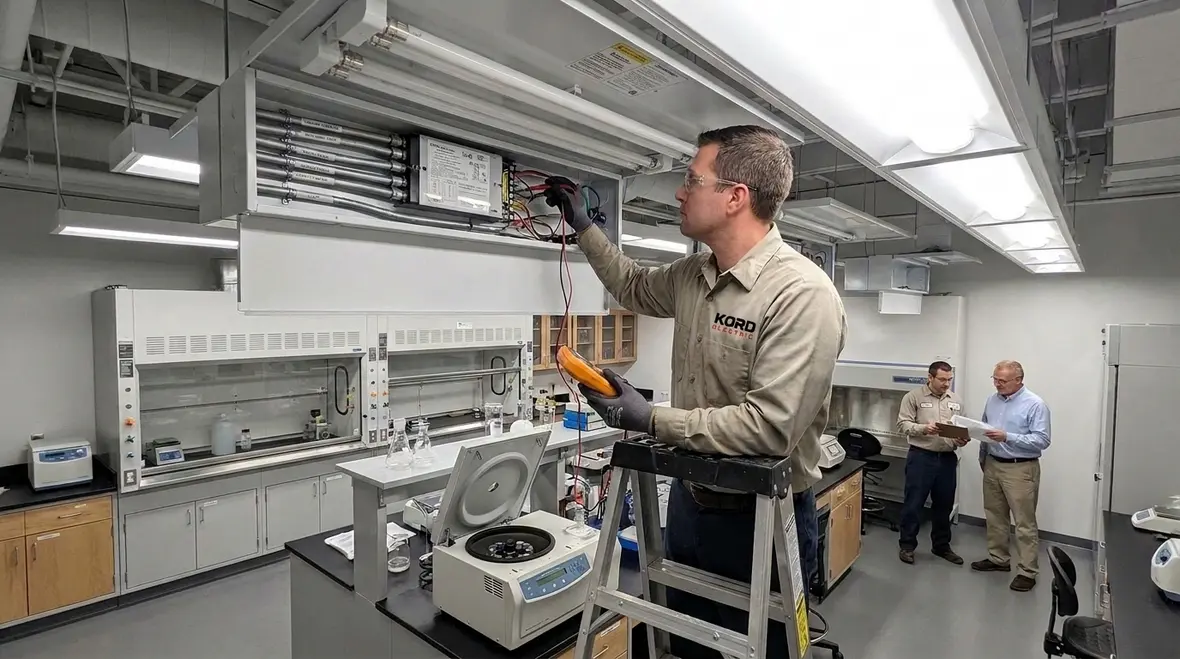
NFPA 70 Section 660.23 Lab Discharge Lighting
NFPA 70 Section 660.23 lab discharge lighting matters because it sets clear rules for how electrical systems must support lighting that uses gas discharge sources. In the first place, that helps labs stay safe and functional during long experiments and demanding schedules. Next, it reduces the chance of shock, fire, and nuisance shutdowns when systems fail in the worst possible moment, like right before a big presentation. At Kord Electric, we keep our commercial and industrial clients moving with expert service staff who explain the “why” behind each requirement. We do this slowly, carefully, and with the calm confidence you want when code talk gets intense. And yes, we also make sure the details do not turn into a real world power outage. That one is not funny for anyone.
Why the NEC still matters for real buildings
In commercial and industrial facilities, the National Electrical Code is not just a guideline on a shelf. It becomes the baseline for safe design, installation, inspection, and upgrades. However, people often treat NEC rules like they are optional unless an inspector says otherwise. That mindset costs money, delays projects, and creates risk. Our technicians at Kord Electric follow the NEC the same way we follow good testing habits: step by step, documentation included, and with field experience guiding the decisions.
Additionally, NEC updates reflect how equipment and wiring methods evolve. Because discharge lighting circuits can behave differently than simpler lighting loads, we pay attention to the parts that govern them. When a building uses specialized lighting in labs, the rules that cover NFPA 70 Section 660.23 lab discharge lighting connect to broader concepts like circuit protection, control equipment, wiring methods, and safe installation practices. So, if your facility supports research, manufacturing, healthcare, or other high duty operations, the NEC provides the guardrails that keep systems stable under stress.
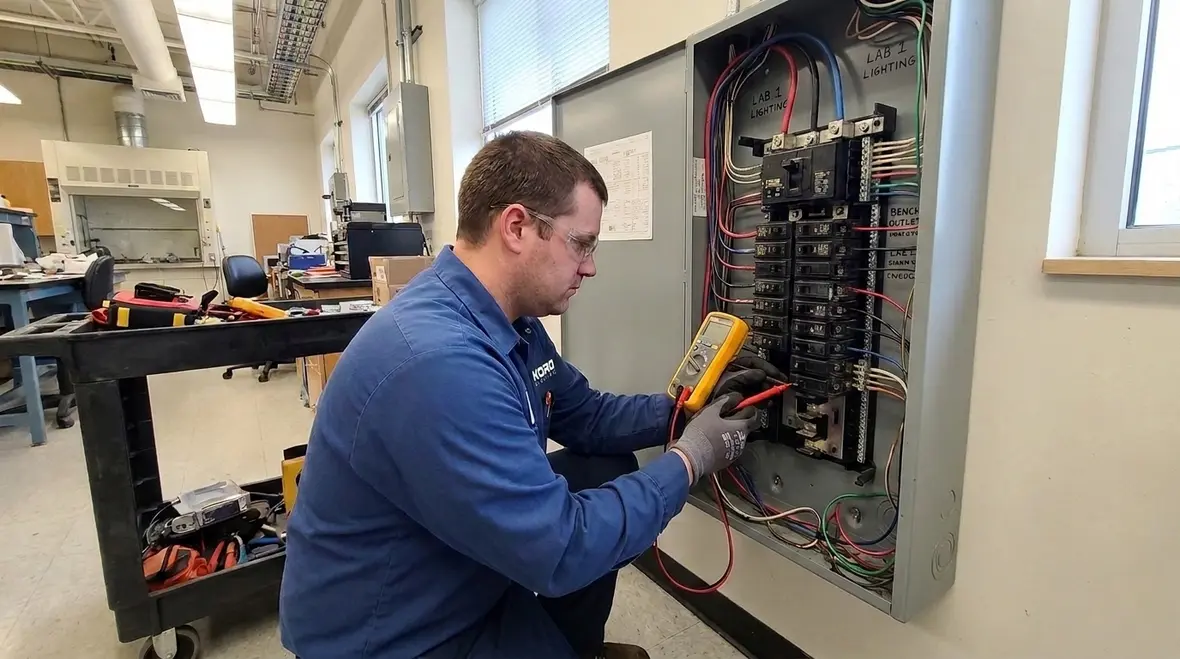
What NFPA 70 Section 660.23 covers in plain terms
Section 660.23 focuses on lab discharge lighting and the wiring and equipment needed to serve those lighting systems safely. Rather than treating these as typical fixtures, the code expects proper circuit design, correct connections, and safe handling of ballasts and related components. In other words, the code recognizes that discharge lighting systems include pieces that must be installed with care, and those pieces can fail if someone cuts corners.
When we help a facility team, we first review the lighting type and system layout. Then we map it against the requirements in the NEC. After that, we confirm the field installation matches the intent of the code. Our expert service staff often explains that lab discharge lighting is not just “lamps in a ceiling.” It is a system, with control gear and wiring that must remain safe under normal use and predictable faults.
Now, to keep things practical, we also compare the design documents with what actually exists on site. Because we work in real buildings, we have seen the mismatch between plan and pull box more times than we care to count. That mismatch often shows up when renovations happen in phases, or when older circuits get reused without verification.
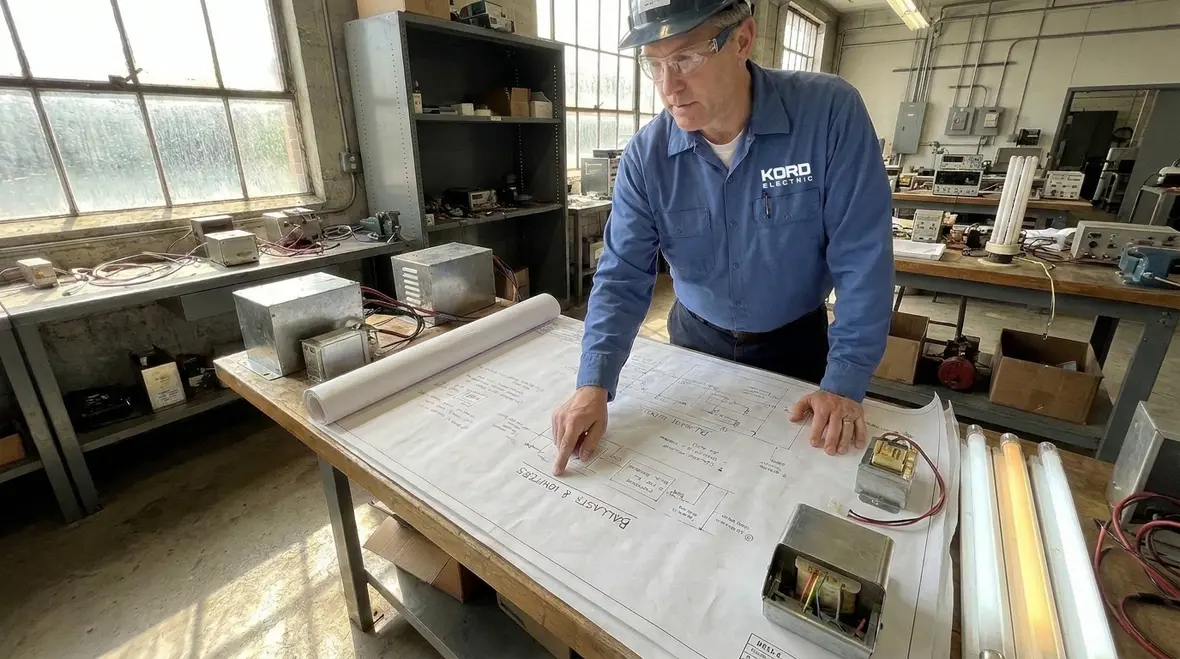
How discharge lighting systems change your electrical design
Discharge lighting systems can involve components like ballasts, igniters, and wiring configurations that behave in ways ordinary lighting does not. Therefore, when an electrical system feeds those loads, the design must reflect the actual operating needs and the safety requirements. For example, proper conductor sizing, correct terminations, and safe routing reduce heat buildup and protect against arcing. Additionally, correct control wiring supports safe operation and avoids unsafe switching patterns.
At Kord Electric, we guide commercial and industrial clients through the details that matter most for inspection and long term performance. We look at how the circuits get protected, how devices get labeled, and how wiring methods hold up in the spaces where labs operate. Next, we consider how the building environment affects the installation. Dust, vibration, moisture, and temperature swings can all strain electrical systems. So we plan for the long haul instead of the first day the system turns on.
Our technicians also remind teams that the “easy fix” is rarely the best fix. If a lab discharge lighting circuit experiences issues, we do not just replace components and hope. We trace the circuit, confirm correct installation practices, and verify that the system configuration matches NEC expectations. That approach prevents repeat failures that eat budgets and disrupt operations.
Code compliance you can actually verify
Many facility managers ask how they can confirm compliance without guessing. The answer is simple: verification should happen in the field, with test results and clear documentation. First, our team performs a review of the available drawings and existing conditions. Then we coordinate with your project schedule so the work does not interrupt operations. Next, we check installation details that inspectors and safety standards care about, including conductor terminations, support methods, and correct connections at panels and junction points.
In addition, we make labeling and documentation part of the process. Because when your maintenance staff later opens a panel, they need to know what they are looking at. If a system is not documented, troubleshooting becomes a guessing game, and guessing games are fun only in movies, not in substations or lab electrical rooms.
We also use a structured approach to meet NEC intent. That means we follow the requirement language, verify compatibility of components, and ensure the installation matches the design. If something does not match, we address it before it becomes an inspection problem.
Fire and electrical safety work together, not in separate worlds
Electrical safety and fire safety share many pathways in real buildings. When lighting systems use discharge technology, the installation must support safe operation, and related electrical components must stay in safe working order. That is why we coordinate the electrical scope with safety awareness across the facility.
We also know that fire code requirements often overlap in how systems must be built, protected, and maintained. To support our clients, we stay informed about broader safety systems and resources across the fire protection industry, including guidance available through partners and professional resources like Kord Fire and related organizations such as firepumps.org. That shared perspective helps us reduce gaps between electrical installation and safety planning. Meanwhile, our customers benefit because they get one consistent approach from the electrical side.
Typical upgrades for commercial and industrial labs
In real life, many lab upgrades do not start as a full rebuild. Instead, they arrive as a phased project, a retrofit, or a response to repeated failures. When we plan upgrades, we focus on the parts that directly connect to NFPA 70 lab discharge lighting requirements, while still protecting the rest of the electrical distribution system.
Common upgrade areas include the following:
- Circuit verification to confirm the existing feed and control arrangement matches code intent
- Panel terminations and device checks to reduce heat risk and prevent loose connections
- Ballast and wiring component review to ensure the installation supports safe operation
- Documentation updates so future maintenance aligns with how the system was built
- Labeling and routing improvements to reduce troubleshooting time and improve safety
As we work, we also keep your operation in mind. We plan around lab schedules, access needs, and safety requirements. So we do not just “install and leave.” Instead, we help your staff understand what changed, what to watch for, and how to keep the system stable. And yes, we explain it without making anyone feel like they need a graduate degree in code interpretation. They came here to run a lab, not to study textbooks.
What to expect from Kord Electric during a code focused project
Our clients get clarity and calm execution. First, we listen to the facility goals, whether you plan a renovation, a new lab build, or a reliability upgrade. Next, our technicians review the electrical scope and identify where code driven decisions matter most. Then we provide a practical plan that aligns with the building schedule and the safety requirements.
Additionally, our expert service staff walks your team through the details in plain language. That matters because the best code compliance fails if no one understands how the system operates. Therefore, we explain the key installation points, how we verified them, and what to expect during commissioning or inspection. If questions come up later, we support your team with the same structured approach. We treat your electrical systems like infrastructure, not like a temporary fix.
For clients who want context on NEC resources and related guidance, our teams also draw on information from NEC focused articles and safety content available through Kord Electric’s blog on NFPA 70 and Kord Fire’s NEC resources. We use those insights to keep our field decisions aligned with current expectations.
When projects expand beyond a single lab or building, many clients also explore our broader Los Angeles County electrical services so that NFPA 70 Section 660.23 lab discharge lighting work stays coordinated with larger distribution, maintenance, and upgrade plans across multiple facilities.
FAQ
Final note and next step
If your facility uses lab discharge lighting, we recommend a code focused review before problems grow teeth. At Kord Electric, we support commercial and industrial clients with expert service staff who explain the requirements clearly, verify installation details, and help your team plan upgrades that pass inspection and hold up in the real world. Reach out to us for an electrical assessment and a practical compliance plan. We will bring calm, structured execution to your project, and we will keep your power stable while everyone else panics.


