
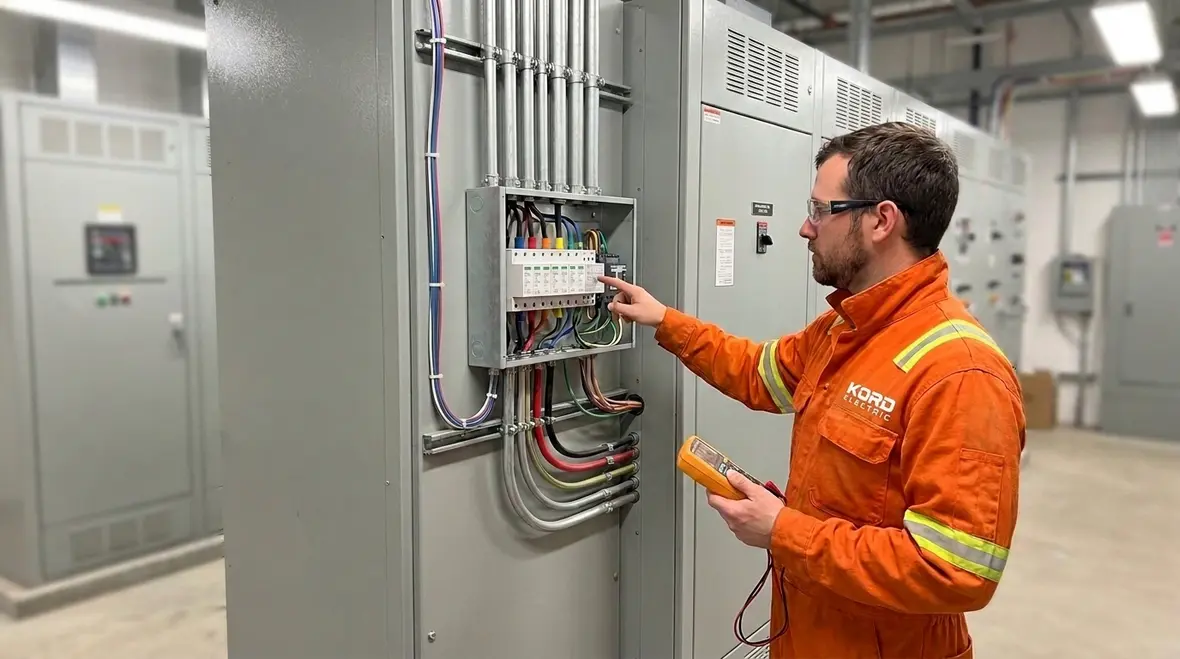
NFPA 70 Section 670.7 MCC Surge Protection
NFPA 70 Section 670.7 MCC surge protection matters for commercial and industrial sites because it helps protect the electrical backbone that keeps operations moving. At Kord Electric, we focus on major property buildings and business critical systems, so we treat surge protection as a design and safety decision, not an afterthought. When a power event hits, the damage can start quietly and then grow fast. Therefore, we make sure your MCC and connected loads get the right protection, sized and installed correctly.
In this guide, our expert technicians and service staff walk you through the National Electrical Code updates and how they connect to real jobsite needs. We explain what the rules mean, how they get applied in the field, and why a careful approach beats a “hope it works” plan. And yes, if you have ever watched a breaker trip like it is performing on a talent show, you already understand the value of getting ahead of the problem.
How the NEC shapes MCC surge protection decisions
Third person perspective matters here because code compliance is objective, and we keep the conversation grounded. The NEC, published as NFPA 70, sets minimum requirements for safe installation of electrical conductors and equipment. When it comes to industrial control gear, the stakes rise. Equipment includes MCCs, control circuits, motor starters, drives, and sensitive electronics. Consequently, a surge can travel through power and control paths.
Section 670.7 focuses on NFPA 70 Section 670.7 MCC surge protection and drives the idea that surge protection must be considered where an MCC feeds loads that can be harmed by voltage spikes. However, this does not mean every site gets the same device. Instead, the NEC pushes designers and installers to evaluate conditions, expected surge levels, equipment sensitivity, and coordination.
Our technicians explain it in plain terms: the code tells you what to protect, and good engineering tells you how to protect it. For instance, a surge protective device installed without correct electrical integration can underperform or create nuisance issues. Meanwhile, a well planned installation can reduce stress on insulation, transformers, and downstream components.
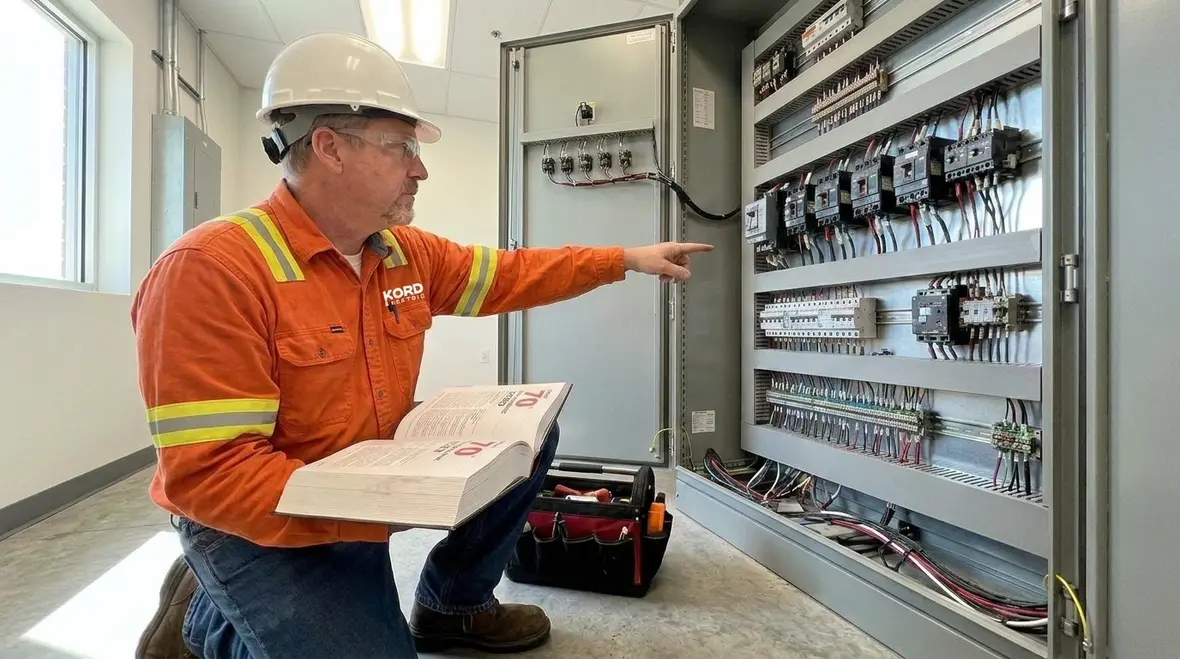
For facilities that want a deeper dive into how the NEC shapes design choices across entire systems, it can be helpful to connect this discussion with broader code explainers such as “Understanding NFPA 70: The National Electrical Code Explained for 2026,” which Kord Electric uses as a reference point alongside Kord Fire’s NFPA 70: All About The National Electrical Code (NEC) 2026 resource to keep design, safety, and compliance moving in the same direction.
What Section 670.7 MCC surge protection requires in practice
To apply the requirement, we begin with the MCC as the system hub. A typical MCC does not sit alone; it connects incoming power to distribution breakers, bus bars, and outgoing branch circuits. So, when a surge appears, it does not stop politely at the MCC door. It can push energy through control power and into the devices that keep your process running.
Section 670.7 MCC surge protection typically addresses the need for surge protective devices on MCCs under certain conditions. We also see that inspectors and engineers expect the installation to match the code intent: minimize damage and reduce the risk of unsafe conditions. Therefore, our expert service staff confirms details like device type, placement, and connection method before we finalize the design.
Just as important, we confirm coordination with upstream and downstream protection. If a site already uses surge protective devices elsewhere, we do not treat each device like a standalone hero. Instead, we verify system level performance so that the response to a surge remains controlled and the energy paths do not fight each other.
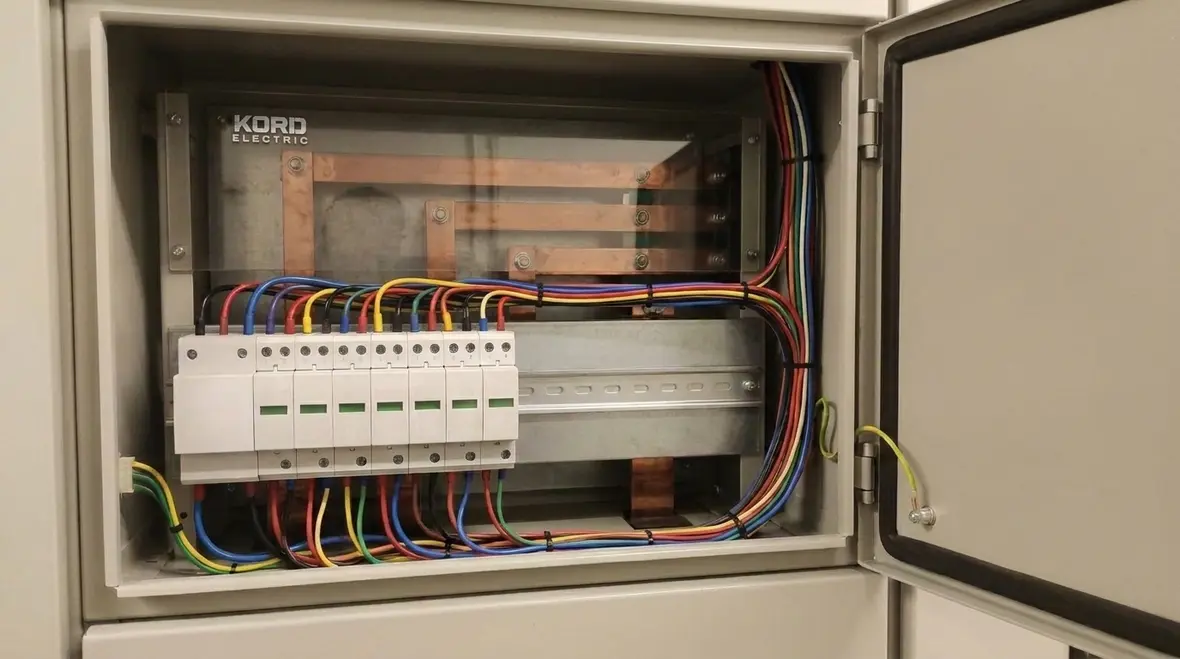
Because MCCs live at the intersection of large horsepower loads, control circuits, and building infrastructure, we also connect surge protection planning with other NEC topics our team covers, such as specific purpose load calculations under NFPA 70 Section 120.4 and broader NEC-driven design planning. That way, the same disciplined logic that sizes feeders and gear also shapes how we protect them when transients hit.
How surge events travel through industrial electrical systems
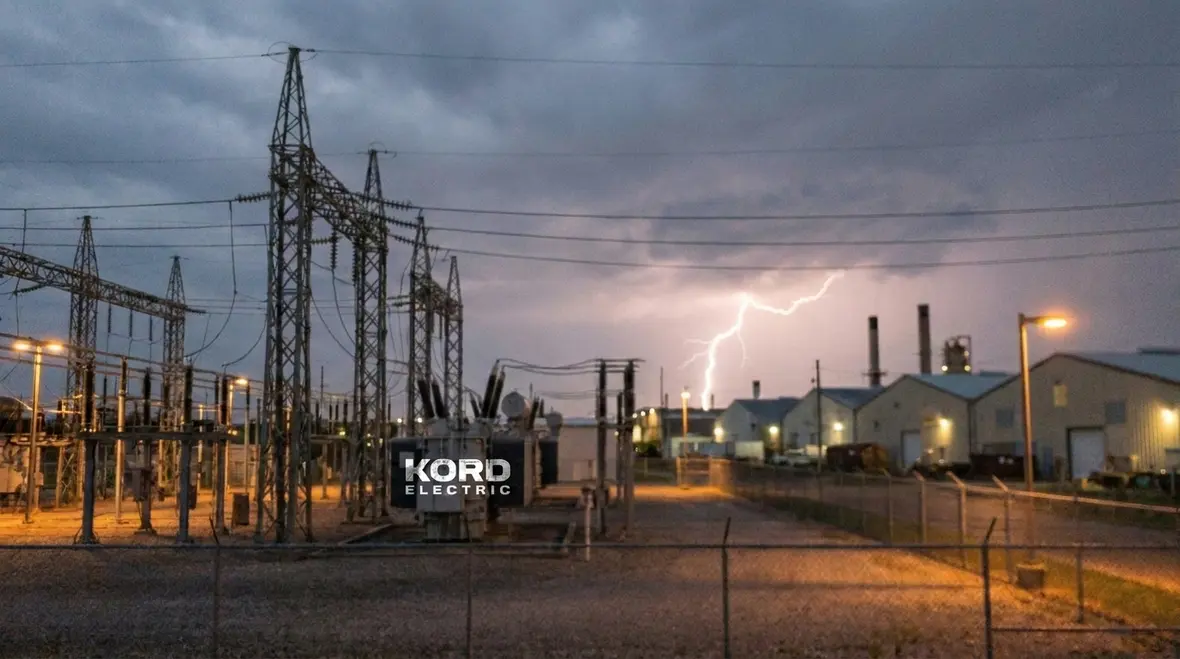
Surges rarely feel “local.” They often arrive as fast voltage spikes caused by lightning, utility switching, or faults somewhere else on the grid. Then, they spread through wiring, grounding paths, and connected equipment. Moreover, some damage happens during the event, while other damage shows up later as degraded insulation or intermittent failures.
Our team observes a pattern in commercial and industrial facilities. Over time, equipment can develop heat stress and insulation breakdown, especially when repeated surges occur. As a result, a site may see random resets, control malfunctions, nuisance alarms, or sudden drive failures. Not every failure points to surges, but surges can be the hidden starter pistol.
In the field, we also consider the difference between transient overvoltage and longer events. A transient can last microseconds, yet still harm semiconductor based controls. That is why surge protective devices, if designed and installed properly, act like a fast guard at the gate. They clamp excessive voltage and redirect energy in a controlled way.
For guidance, we align our work with code interpretations from our resources at Kord Fire and Kord Electric, including the focus on NFPA 70 and practical NEC understanding. We do not just chase compliance paperwork; we chase reliability. That same reliability lens shows up in related planning topics like building electrical system design and electrical asset management support for commercial facilities, where our team blends code intent with field realities across entire campuses.
Designing for coordination, not luck
When a facility wants surge protection, our technicians start with coordination. First, we check the system architecture. Then, we review available fault current, grounding design, and the path from utility service to the MCC to final loads. After that, we select devices that fit the electrical conditions and integrate with the existing protective devices.
Coordination includes more than matching voltage ratings. We also look at let through energy, clamping behavior, and compatibility with downstream equipment. For example, a surge protective device on an MCC should not create abnormal heating or conflicts with breakers and fuses. Therefore, we verify installation details like conductor routing, connection lengths, and bonding practices.
Our expert service staff often points out a simple truth: surge protection works best when the electrical connections are short and well bonded. Long, loose, or poorly routed conductors can add impedance, which reduces performance just when you need it most. It is like using a fire hose with a kinked nozzle. You still have water, but you do not get the effect you paid for.
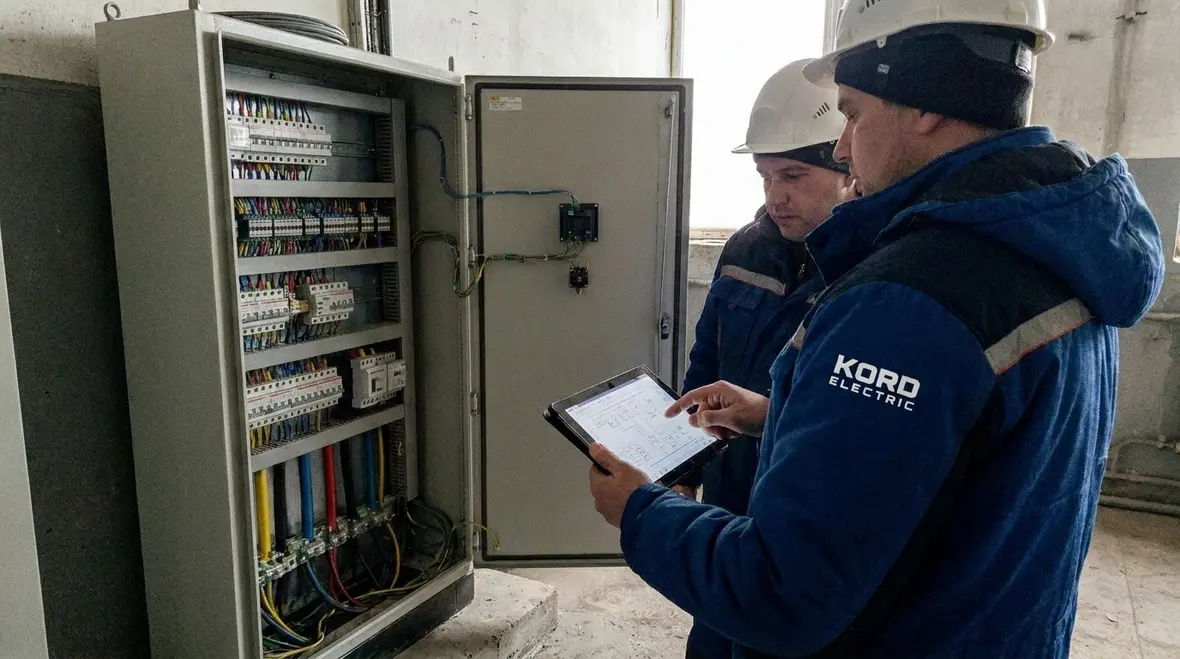
And if you think “we will deal with it later,” remember that downtime in major property buildings rarely waits for your schedule. We build for the real world, where production timelines and occupancy demands run continuously. That same mindset drives our zero-downtime electrical solutions work for critical facilities, where surge protection, switching strategies, and maintenance planning have to coordinate so operations do not turn into an unplanned experiment.
Installation details our technicians verify before energizing
We treat installation as a technical craft. Before energizing, our technicians follow a checklist that covers the details inspectors look for and failures often hide. In other words, we handle the small stuff that makes the big stuff last.
Key items we verify include:
- Correct device selection for the MCC environment and application, not just a generic “surge pack”
- Proper electrical connections with attention to bonding and conductor routing
- Coordination with upstream protection to avoid conflicting behaviors during surge events
- Compliance with system labeling and documentation so future maintenance teams can work quickly
- Testing and functional checks where applicable to confirm installation integrity
Next, we consider the facility’s operational needs. Commercial and industrial sites often have multiple power zones. Therefore, we help define where surge protection belongs and how it supports critical systems. For instance, control rooms, process areas, and building automation integrations all benefit from a well thought out approach.
We also make sure the design aligns with broader life safety thinking. When buildings rely on fire and emergency systems, stable power quality supports those systems. While our primary focus stays with electrical protection, our team stays aware of safety ecosystems through resources such as firepumps.org, and through coordination perspectives used by Kord Fire, so the electrical plan does not live in a bubble.
Common MCC surge protection mistakes and how we prevent them
In the real world, mistakes happen. The good news is that many of them are predictable. We prevent them by addressing root causes during design and installation.
Here are common issues we see and how we handle them:
- Using a surge protective device without confirming system conditions, which can lead to poor performance during real events
- Ignoring coordination with upstream and downstream protective devices, which can cause nuisance behavior or reduced effectiveness
- Long or poorly routed conductors, which increases impedance and weakens surge clamping performance
- Inconsistent grounding and bonding practices, which can make the surge path unclear
- Overlooking documentation, which slows future service work and increases risk during maintenance
To keep engagement high, here is a small joke from our jobsite reality. People sometimes treat surge protection like a bathroom light switch: flip it on and everything works forever. Electrical systems do not operate like that. They respond to physics. Therefore, we design protection to respond correctly when reality shows up, because reality always shows up.
We also remind stakeholders that compliance is not a one time action. Upgrades, equipment replacements, and changes in loads can alter surge exposure and performance. Consequently, we recommend reviewing surge protection as part of periodic electrical maintenance and whenever the MCC configuration changes.
Staying current with NEC changes and facility expectations
Power codes update, and facilities change too. That is why we keep our service staff current with NFPA 70 guidance and interpret it for real projects. We pull insights from our published resources, including the NEC overview and update discussions hosted on Kord Electric and Kord Fire sites. When a code update comes, we translate it into what it means for MCCs, control circuits, and commercial and industrial operations.
Also, we communicate the “why” behind requirements so stakeholders can make informed decisions. We do not hide behind jargon. Instead, we explain how the rule aims to protect equipment and reduce hazards from electrical transients. Then, we show what our technicians will do during installation.
That approach matters because major property buildings run on schedules, budgets, and risk management. When teams understand the protection logic, they support the scope. And when scope moves forward smoothly, the result is better protection and fewer surprises.
If you want to see how this same mindset plays out in other code-driven topics, you can explore Kord Electric’s article on NFPA 70 Section 120.4 NEC specific purpose load calculations, which connects practical calculations with the broader NEC explainers like “Understanding NFPA 70: The National Electrical Code Explained for 2026.” Together with Kord Fire’s NEC overview, these resources give facility teams a consistent, plain-language map for both design and protection decisions.
FAQ
Choose Kord Electric for MCC surge protection that actually holds up
If your commercial or industrial facility relies on MCCs and critical controls, do not treat surge protection like a checkbox. Kord Electric delivers design support, expert installation, and field verified details for NFPA 70 Section 670.7 MCC surge protection and related protection strategies. Our technicians explain each step, so you know what we install and why. Contact us to review your MCC layout, power conditions, and coordination needs. Then we build a plan that protects uptime, equipment, and peace of mind. And yes, we will keep it calm, not chaotic.
For facilities throughout Southern California, that plan often ties directly into our broader Los Angeles County electrical services, where MCC surge protection, maintenance, upgrades, and emergency response all connect under one coordinated strategy instead of scattered, one-off projects.


