
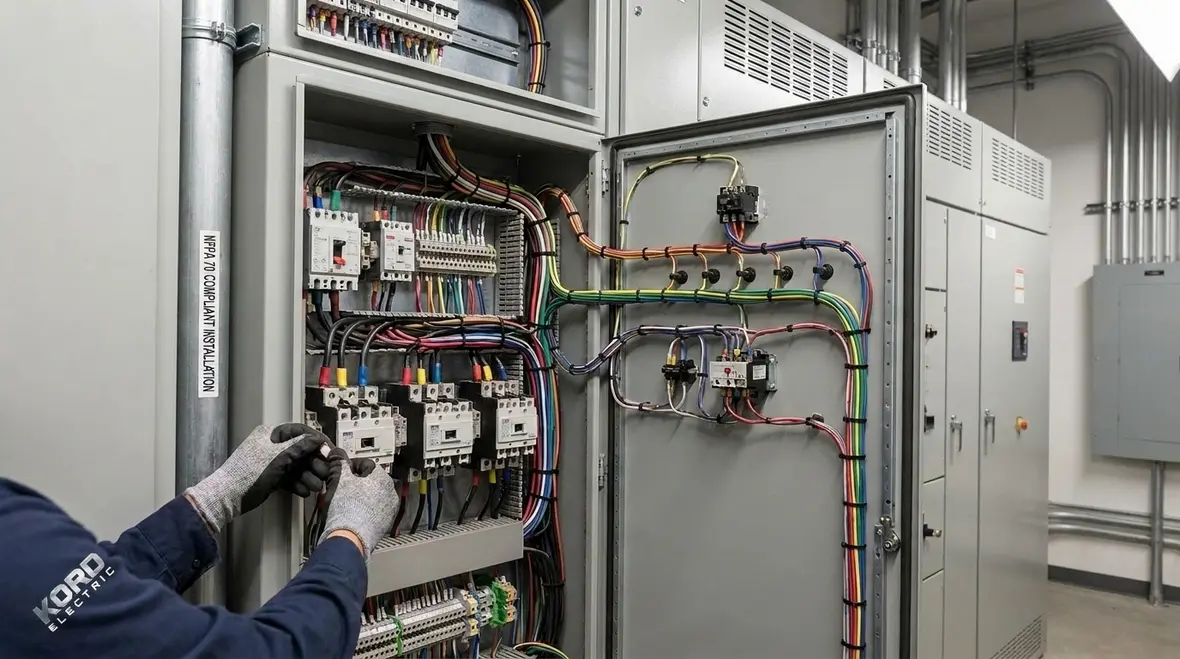
NFPA 70 Section 670.5 Motor Control Center Conductors
Motor control center wiring starts with NFPA 70 Section 670.5 motor control center conductors
When a commercial or industrial facility plans or upgrades electrical systems, we treat every conductor decision like it matters, because it does. Early in the job, our technicians reference NFPA 70 Section 670.5 motor control center conductors to set the right expectations for how conductors connect, where they run, and how they must perform. That matters for motor loads, control circuits, and the reliability of the whole lineup. In other words, we do not “wing it” and hope for the best, because electricity does not do vibes. We follow the National Electrical Code requirements reflected in NFPA 70, and we keep your MCC wiring aligned with the way inspections and real-world operation work.
And yes, we know some folks treat code like a haunted house map. But once we explain the path step by step, it stops feeling like a riddle from a pop quiz you forgot you studied for.
What NFPA 70 requires for commercial control systems
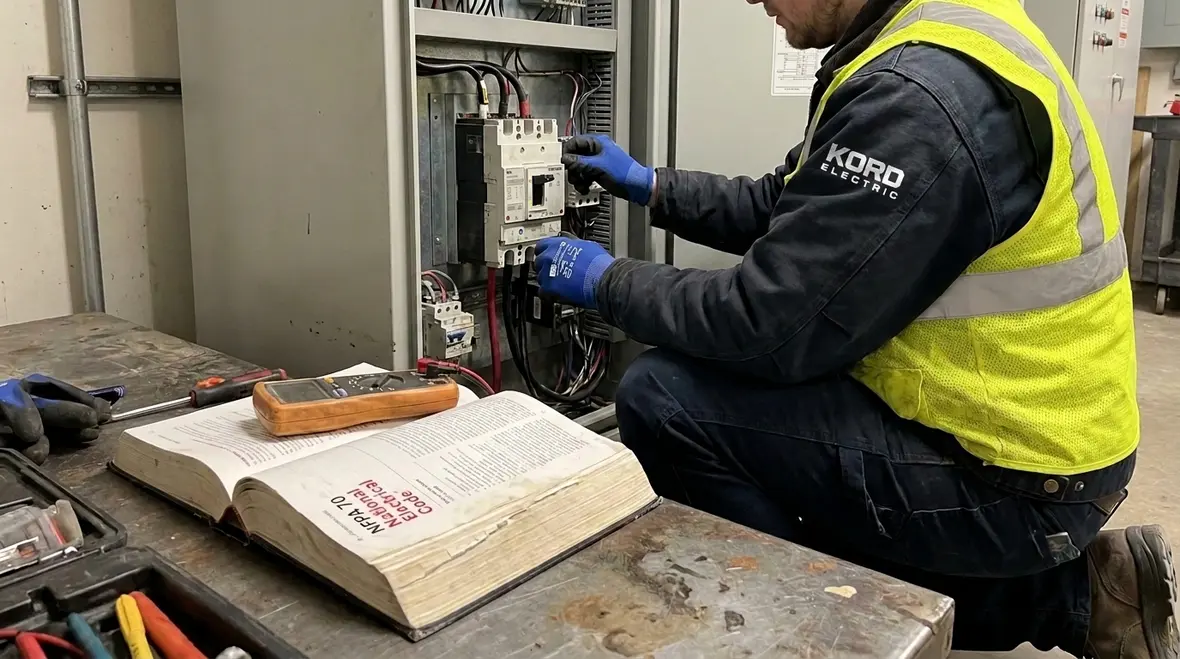
In plain terms, NFPA 70 sets the rules for safe electrical design, installation, and inspection. Meanwhile, our experts at Kord Electric focus on the parts that make a difference in commercial and industrial settings, such as motor control centers, control wiring, grounding, and protection practices. As soon as you move from general power distribution into motor and control circuits, you enter an area where details matter more than people expect.
For example, a facility might have strong main feeders, but a weak link appears where control conductors connect to motor circuits and protection devices. Therefore, we emphasize proper conductor sizing, correct termination practices, and the right approach to raceways and routing. In addition, we help others understand that the code does not just care about “it works,” it cares about “it works safely, reliably, and consistently over time.”
During upgrades, we also review how existing systems match the current intent of the NEC. Sometimes the equipment in a facility looks fine on the outside, but the wiring details create problems later, especially under motor starting loads and varying operating conditions. Our service staff explains what we see in a calm, direct way, because clarity keeps your project moving.
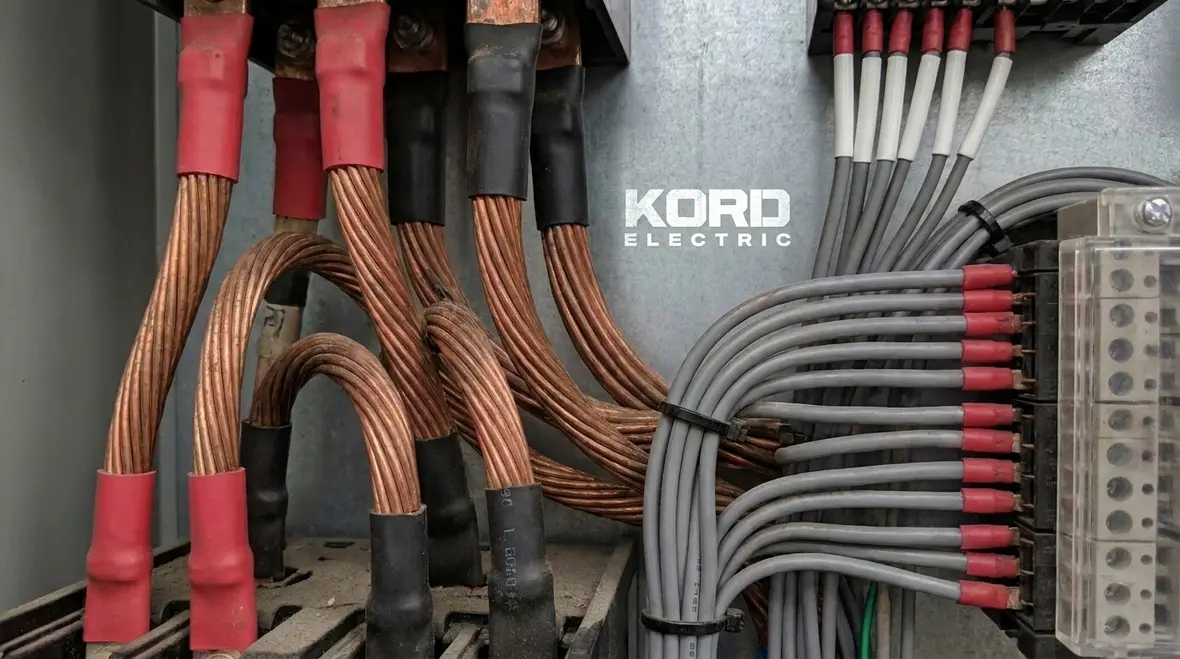
Motor control center conductors: the practical safety picture
When people hear “motor control center,” they often picture a cabinet full of buttons and relays. However, the real story lives in the conductors inside and connected to it. Our technicians treat motor control center conductors as part of a system that must endure heat, vibration, and electrical stress. Consequently, conductor performance affects insulation life, termination integrity, and how protective devices behave.
In many facilities, motor control circuits handle signals, control power, and the pathways that energize contactors and starters. Therefore, correct conductor selection and installation reduce nuisance trips, prevent intermittent faults, and improve troubleshooting outcomes. And if you have ever watched a maintenance team hunt for a “mystery” fault, you already know what it feels like when wiring details were not handled carefully.
We also pay attention to conductor routing and separation practices because control conductors can pick up noise or create unintended interactions if installed poorly. When we align your design with NEC expectations, we support better reliability and easier field diagnostics. That is not just theory. It helps teams restore uptime faster when something changes.

How we apply 2026 NEC updates without slowing projects
Some clients worry that code updates will force a full redesign and blow up the timeline. We understand that concern, and we manage it with planning. Our approach starts with reviewing the specific scope of work, the equipment list, and the existing electrical architecture. Then we map how the project requirements align with the NEC approach described in the National Electrical Code coverage we reference, including the guidance around NFPA 70 Section 670.5 motor control center conductors and how conductors should be handled in motor control applications.
Next, we coordinate with stakeholders so the design team, electricians, inspectors, and facility operators share the same picture. If you change something in one area, it can affect termination requirements, labeling, testing steps, and documentation. So we plan transitions carefully, and we keep the work moving in phases when possible.
Also, we keep the conversation grounded. Nobody needs a lecture on obscure wording while your plant is waiting on a schedule. Instead, our expert service staff explains the “why” behind the requirement and what it means for actual installation steps. That way, your teams make smart decisions without stalling the project.
Think of it like upgrading a streaming system. If you do not configure the router properly, you blame the show. If you do configure it properly, the system runs. Code work works the same way.
Compliance steps we run on commercial and industrial jobs
When we support commercial and industrial facilities, we treat compliance like a checklist that keeps people safe and keeps operations stable. First, we verify the project intent and equipment ratings. Then we validate conductor details that relate to motor control center applications, such as proper conductor types, correct sizing, correct installation practices, and secure terminations.
After that, we focus on how the installation will be inspected and how it will perform. For example, we document the wiring approach and support testing and verification steps that match your system design. We also review labeling and identification so future maintenance teams can find circuits without playing electrical scavenger hunt. And when we spot mismatches between drawings and field reality, we address them early rather than letting them become the kind of issue that shows up during a commissioning walk.
Finally, we make sure the system supports the way your facility operates. Motor loads cycle. Processes change. Production schedules shift. So we help others align electrical design to real use, not just a one-day snapshot. We do this with calm professionalism because the best electrical work feels steady, not chaotic.
Our partners and teams also reference broader NEC learning resources that help explain how the code fits together. For example, guidance summarized across NFPA 70 coverage can clarify the larger intent for installations, including how NFPA 70 relates to electrical safety and building needs. We use that clarity to keep your MCC wiring and conductor decisions in sync. For a deeper dive, facilities can connect what we do in the field with educational resources such as Kord Fire’s overview in “NFPA 70: All About The National Electrical Code (NEC) 2026,” which explains how the rulebook shapes everyday electrical decisions.
What fire and electrical teams should coordinate
Electrical code compliance and fire safety connect more often than most people notice. In a major property building, the electrical system supports detection, control, and safe shutdown functions. Therefore, we coordinate with fire and life safety thinking, so electrical installation and system behavior align.
For motor control and related wiring, it means we pay attention to how electrical circuits support controlled operation. We also make sure the installation reduces the risk of unsafe conditions that can create emergencies. If fire protection teams need reliable system operation, then electrical wiring must deliver reliable behavior.
We also respect that different teams use different language. Our technicians translate requirements into practical steps so coordination stays smooth. And yes, that translation prevents the classic meeting issue where everyone nods, then nobody moves forward. We prefer meetings where action shows up before lunch.
If your building relies on integrated fire and electrical planning, we help keep the electrical work aligned with the bigger safety framework. We also reference the broader ecosystem of resources that discuss electrical and fire safety relationships, including guidance seen in industry focused fire and electrical organizations like Kord Fire and related educational materials. For commercial and industrial facilities that want to see how these ideas apply across distribution, controls, and life safety, our internal guide on commercial electrical systems shows how code, reliability, and operations intersect in real projects.
Where MCC conductors fit into your broader electrical strategy
Motor control center conductors do not live in isolation. They sit inside a larger ecosystem that includes feeders, distribution equipment, surge protection, and emergency power. When we design or upgrade MCC lineups, we also look at how those conductors interact with upstream protection, downstream loads, and parallel systems like generators or UPS equipment.
For example, if your facility is planning new backup power, MCC conductors must coordinate with transfer schemes and fault clearing strategies. That is why many teams review MCC work alongside planning for emergency power for business continuity design, so the conductor choices inside the MCC support the way your system behaves when utility power takes an unscheduled break.
Likewise, surge protection and power quality work better when conductor routing and bonding are handled with the same attention to detail. It is one thing to install a surge protection device. It is another to make sure the MCC conductors, grounding conductors, and bonding jumpers give that device a low-impedance path so it can do its job when the next transient tries to cause trouble.
Featured FAQ for NFPA 70 motor control wiring
Get your MCC wiring right with Kord Electric
If you are upgrading or expanding a commercial or industrial facility, do not leave motor control center wiring to luck. At Kord Electric, we align your design and installation with NFPA 70 expectations, including the conductor details tied to NFPA 70 Section 670.5 motor control center conductors. Our technicians explain each step clearly, coordinate with your project team, and help you move through inspections with confidence. For facilities across the region, including those using our broader Los Angeles County electrical services, we keep MCC conductors, control wiring, and distribution planning working together instead of in separate silos.
When you are ready to plan the next electrical upgrade, you can also explore Kord Electric resources that break down how NFPA 70 shapes real projects, including our code-focused and design-focused blog features. Then, connect with our team so we can apply those principles to your specific MCC lineup, motor loads, and control architecture.


