
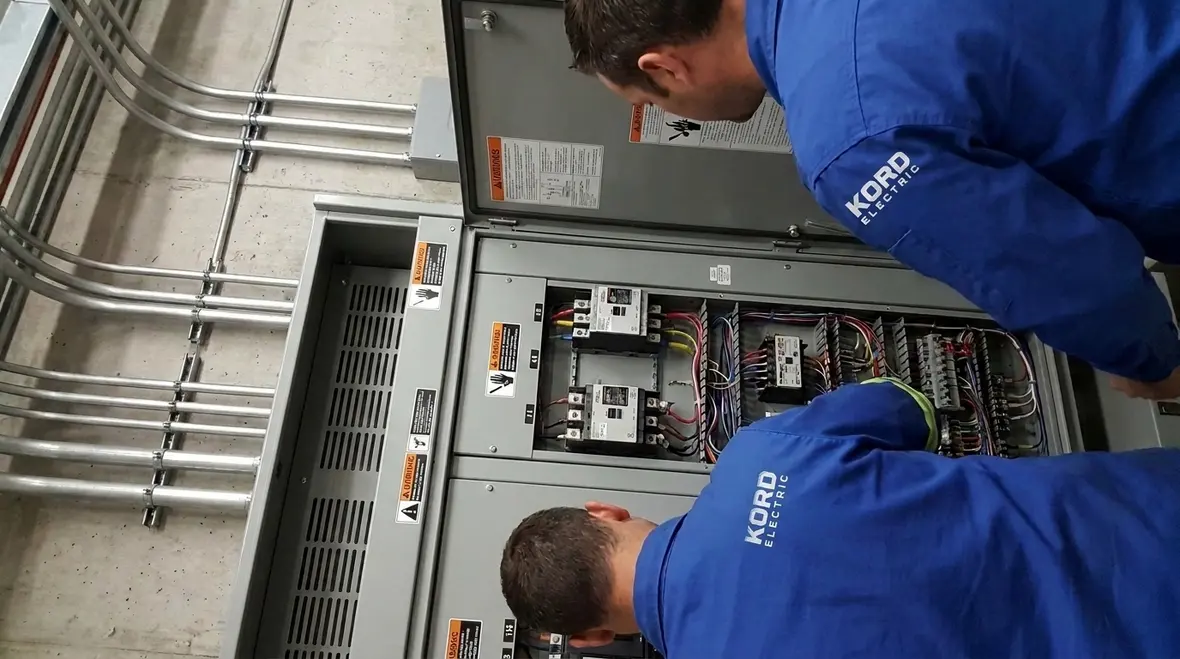
NFPA 70 Section 670.1 Motor Control Center Scope, Why It Matters
NFPA 70 Section 670.1 motor control center scope, and why commercial sites care
At Kord Electric, we spend a lot of time helping commercial and industrial facilities understand the rules that keep power safe, reliable, and compliant. Early on, we point teams to the NFPA 70 Section 670.1 motor control center scope because it sets clear boundaries for what falls under the motor control center umbrella. In plain terms, it guides how facilities should handle motor control equipment, its construction, and how it must work in the real world. And yes, the real world includes vibration, heat, long operating hours, and the occasional “mystery trip” that shows up at 2:00 a.m. like an uninvited movie sequel.
In this article, we explain how we connect the NEC approach to day to day electrical planning. We do this in a way that aligns with the NEC editions discussed in guidance from our team at Kord Fire and Kord Electric, including the 2026 update discussions. Then we show how our technicians translate that code into practical upgrades for major property buildings. We also connect this discussion with resources like our broader NEC primer in Understanding NFPA 70: The National Electrical Code Explained for 2026, so facility teams can see how MCC rules fit into the larger code picture.
What the NEC sets in motion for motor control centers
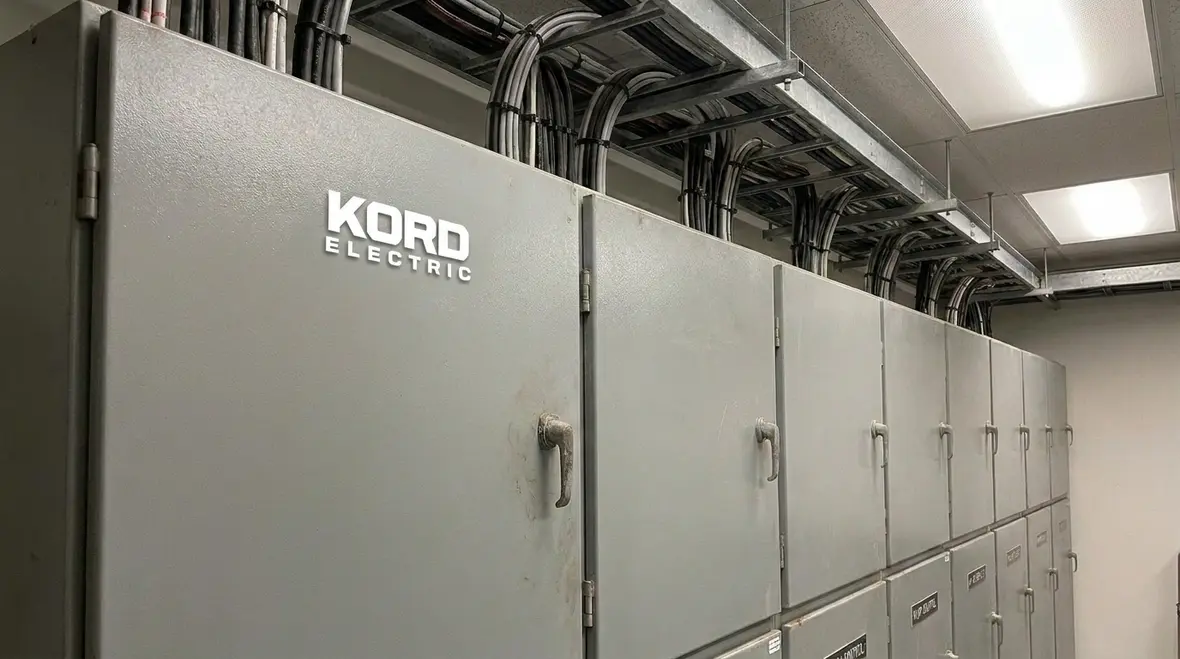
Our expert service staff often hears the same story: a motor starts, a control circuit behaves, then something changes. A pump runs longer, a load grows, or the facility adds automation. As a result, the electrical system that once worked becomes harder to trust. That is where the NEC framework helps, because it focuses on installation safety and predictable operation.
When we support commercial and industrial facilities, we do not treat motor control centers as “just another cabinet.” We treat them like the control hub for pumps, fans, conveyors, compressors, and process equipment. The NEC approach helps teams reduce shock risk, limit fire risk, and improve the chance that protective devices do the job they were designed to do.
Moreover, we explain the intent behind the requirements. For example, proper conductor sizing and protective device coordination matter long before an inspector arrives. They also matter long before a motor draws more current than expected. If someone thinks, “We will deal with it later,” that is usually when later arrives with overtime charges and a contractor who has to chase issues across multiple panels. We help facilities avoid that by aligning MCC design with clear NEC expectations around equipment rating, fault duty, and coordinated protection, not just “what fit in the gear room.”

How engineers and electricians read the code like a map
Some people skim the code as if it were a phone book. We do not. Our technicians and expert service staff approach it like a route plan: each requirement links to an electrical outcome. First, we identify the equipment class and function. Next, we match the installation details to the safety goals. Then we confirm the system can operate without creating unsafe heat, unsafe fault conditions, or confusing labeling.
In our process, we also connect code language to system behavior. For motor control centers, behavior is everything. When a motor starts, the electrical load can spike. If the system design fails to handle those conditions, the result can look like nuisance tripping or shortened equipment life. On the other hand, if the design is right, protective devices operate as expected and the control system stays stable.
At Kord Electric, we also coordinate with the broader compliance picture. That means we consider how electrical work affects fire protection, standby power, and other building systems in major property buildings. If you have ever seen a control cabinet and thought it was “small,” we politely remind you it is like the cockpit of a plane. It might be compact, but it runs the flight. That is why, when we review MCC scopes tied to the NFPA 70 Section 670.1 motor control center scope, we also keep an eye on how those same circuits interact with emergency power, fire pumps, and building automation systems that show up across our other design resources.
Install practices that keep MCCs safe in real facilities
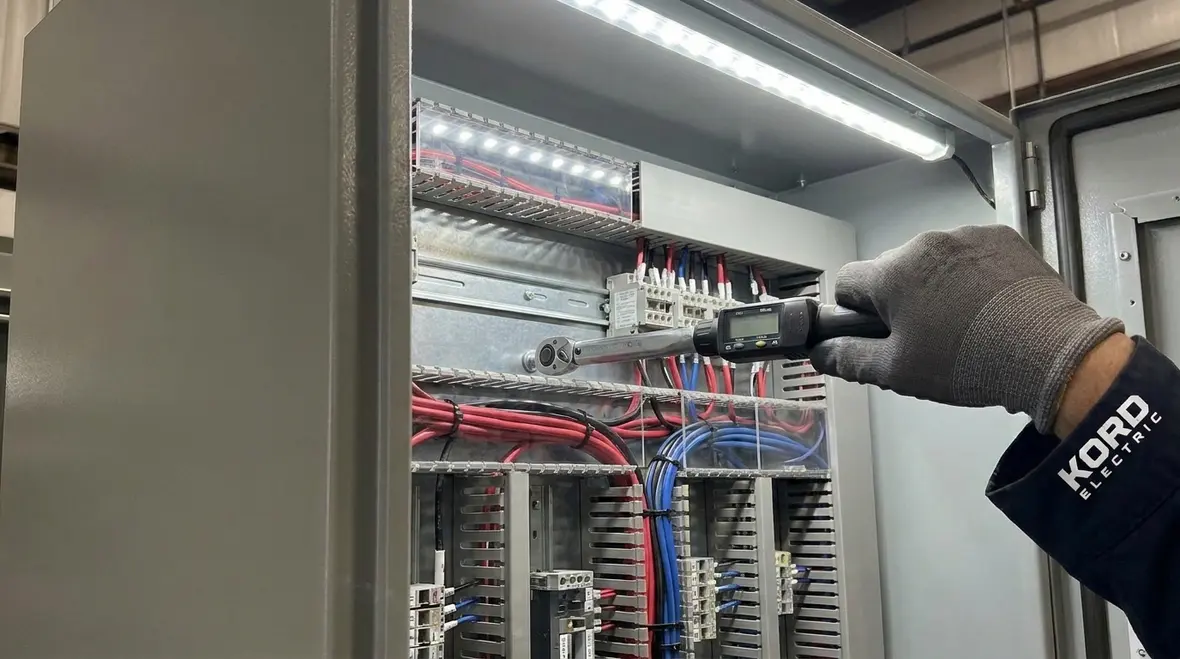
Even when the design looks correct on paper, installation details can still create risk. Therefore, we focus on practices that hold up in the field. Our expert service staff commonly addresses the following areas when they support commercial and industrial projects:
- Clear conductor management: We route conductors carefully to avoid damage, overheating points, and confusion during future maintenance.
- Proper terminations: We verify torque and termination quality so connections do not loosen under vibration and thermal cycling.
- Enclosure and separation: We maintain appropriate barriers and spacing so faults do not spread where they should not.
- Correct protective device setup: We coordinate overcurrent protection and control circuit protection so protection functions during abnormal conditions.
- Labeling and identification: We label clearly so operators can troubleshoot fast and safely, even under pressure.
Now, here is the part that saves budgets. When we install or upgrade motor control centers correctly, we reduce repeat visits. Then we reduce downtime. And when downtime drops, the facility stops losing money in quiet ways, like missed production windows and delayed maintenance tasks. It is not dramatic like a superhero origin story, but it is just as effective. Those same discipline habits also support cleaner inspections under the wider NEC framework we describe in our data-driven electrical design guides, where consistent documentation and field quality go hand in hand.
Common MCC issues we prevent during upgrades
Commercial and industrial facilities often call us after something already feels off. We do not blame the prior work, but we do review it with fresh eyes. Our technicians look for failure patterns that show up in motor control centers over time, including:
- Oversized or undersized protection: This can lead to faults that escalate or to trips that happen even when the equipment is fine.
- Loose connections and overheating: These can start as a smell problem, then turn into a maintenance emergency.
- Inconsistent grounding and bonding practices: This increases risk during faults and can complicate troubleshooting.
- Control circuit mismatches: When control voltage levels or wiring practices do not match the equipment requirements, reliability drops.
- Changes in load profiles: Fans and pumps get upgraded, and the original assumptions do not always match the present day.
We also work with facility managers to plan updates that fit operations. Therefore, we schedule improvements with safety, power continuity, and downtime limits in mind. In major property buildings, that planning matters. People expect that life inside the building keeps going, whether that involves water flow, ventilation, or process operations. Sometimes that means pairing MCC retrofits with broader efforts like emergency power for business continuity design, so one project does not accidentally undercut another.
Coordination across electrical, fire, and standby systems
Electrical code compliance does not happen in isolation. It interacts with fire protection needs, emergency power behavior, and building safety systems. That is why we connect our electrical work with the broader safety strategy. Our team in the Kord Electric network keeps close tabs on how NEC ideas show up alongside fire and life safety expectations, including the perspectives you can find through Kord Fire and related educational resources.
For example, when a facility uses emergency power or standby generators, the motor control center must work correctly under that change in power source. Meanwhile, fire pump systems and related control circuits demand strict attention to the way the electrical system behaves during test and alarm conditions. Organizations like FirePumps.org highlight how crucial proper design and installation are for reliable pump operation, and we treat those reliability goals as serious engineering targets.
So, when we coordinate systems, we focus on how current paths and control signals respond during abnormal events. In that way, our upgrades support safer faults, clearer operation, and smoother testing. In short, we help prevent a “works on a sunny day” scenario. The same mindset shows up in our work on emergency power design and other continuity-focused projects where MCCs, transfer schemes, and life safety loads share the same infrastructure.
Where the 2026 NEC discussion fits your planning
Facilities do not upgrade every year, but they do plan ahead. Our approach treats code updates as an opportunity to improve safety margins, documentation quality, and installation consistency. We also follow ongoing education and explanation efforts related to the NEC, including the discussions around the 2026 cycle from Kord Electric and Kord Fire.
When teams plan for future compliance, we help them map what changes in practice: documentation, installation details, and how motor control equipment should be integrated into the electrical system. Then we translate that mapping into a real scope of work. That means we provide clear steps for design review, procurement coordination, installation verification, and closeout documentation. For MCCs that fall within the NFPA 70 Section 670.1 motor control center scope, that roadmap keeps upgrades tied to actual code language rather than vague promises.
And yes, we keep it business friendly. We explain in plain terms, and we do not hide behind code jargon. If an inspector asks for a detail, our documentation and our technicians’ knowledge support the answer immediately. Nobody wants a team scrambling for proof at the last minute. That is not a strategy; it is a hobby. We prefer the approach we use in our electrical safety checklists for new commercial buildings, where requirements, tests, and documentation are all laid out before opening day.
FAQ
Conclusion and call to action
If you run motors, pumps, fans, or process equipment, you cannot treat motor control centers as a “set it and forget it” box. At Kord Electric, we use our technicians and expert service staff to connect the NEC approach to practical, safe upgrades for commercial and industrial facilities and major property buildings. If you want a clear plan for MCC compliance, reliability, and inspection readiness, contact us now. We will review your system, explain the path forward in plain language, and help you move with confidence.
For facilities across the region, that often includes tying MCC work into broader Los Angeles County commercial and industrial electrical services, where distribution upgrades, backup power, and controls all come together in one coordinated plan. When those pieces align with the NFPA 70 Section 670.1 motor control center scope and related NEC requirements, your electrical system stops feeling mysterious and starts acting like the dependable asset it should be.


