
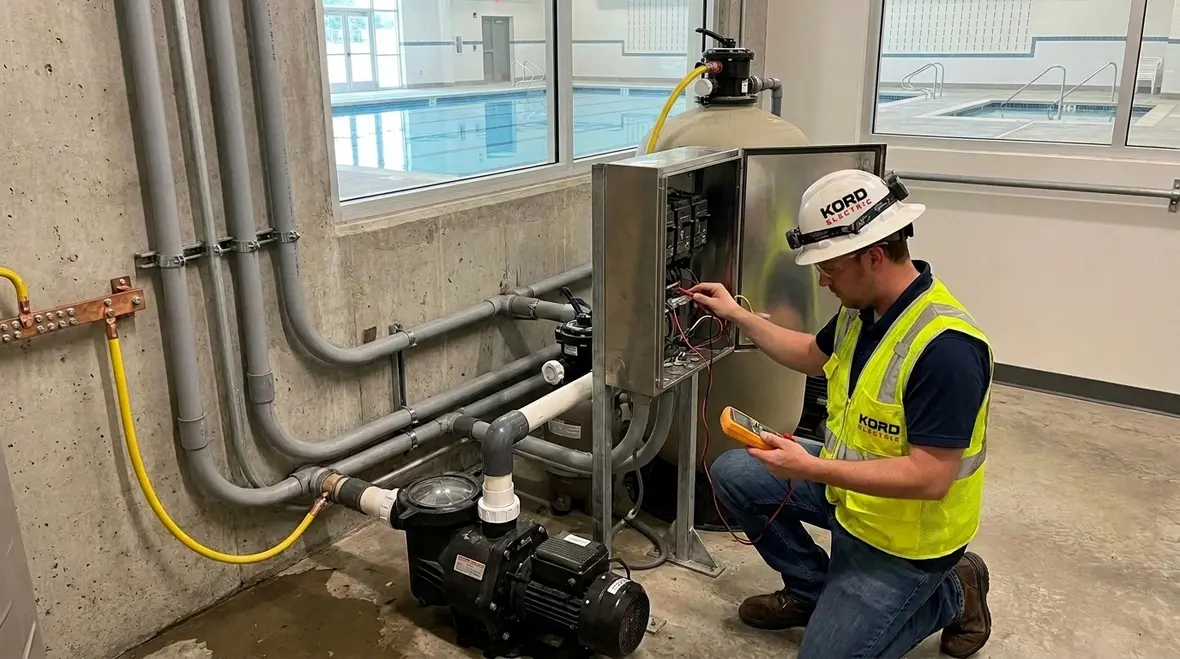
NFPA 70 Section 680.1 Pool Electrical Scope Guide
Kord Electric handles the electrical world for commercial and industrial facilities, major property buildings, and the teams that keep them running. So when owners and facility managers ask about the NFPA 70 Section 680.1 pool electrical scope, we pay attention fast. That scope matters because it sets the rules for how pool and related electrical systems get built, protected, and maintained. In other words, it tells us where the code starts, what it covers, and how we should think about safety around water.
And yes, water and electricity are a comedy sketch no one wants to watch in real life. Yet people still try. We see it when someone “just replaces a breaker” like it is a simple shelf swap. Then the system behaves like a haunted house. That is why we explain the National Electrical Code with care, and we do it through the lens of real projects, real inspections, and our technicians who show up and do the work.
What the NEC sets for pool electrical work
The National Electrical Code is a rulebook for safe electrical design, installation, and inspection. For pool areas, it focuses on hazards that get bigger when water mixes with electrical equipment, wet surfaces, and human contact. NFPA 70 Section 680.1 pool electrical scope becomes the starting point because it frames the pool-related electrical parts that the code addresses. As a result, it shapes how we plan conduit runs, grounding, bonding, wiring methods, and protection devices.
Furthermore, the code does not treat pools like normal “amenity wiring.” Pools and spa equipment sit in environments where moisture is expected, and metal parts can create paths for current if bonding and grounding are wrong. Therefore, the NEC pushes us to design the system so a fault does not energize surfaces that people touch. Likewise, it aims to protect the equipment itself from damage and to support reliable operation over time.
Our expert service staff often tells teams this in plain language: the goal is not only compliance. The goal is fewer surprises, safer service calls, and a system that behaves during peak use, not only on the day of an inspection.
How 2026 updates influence what we build next
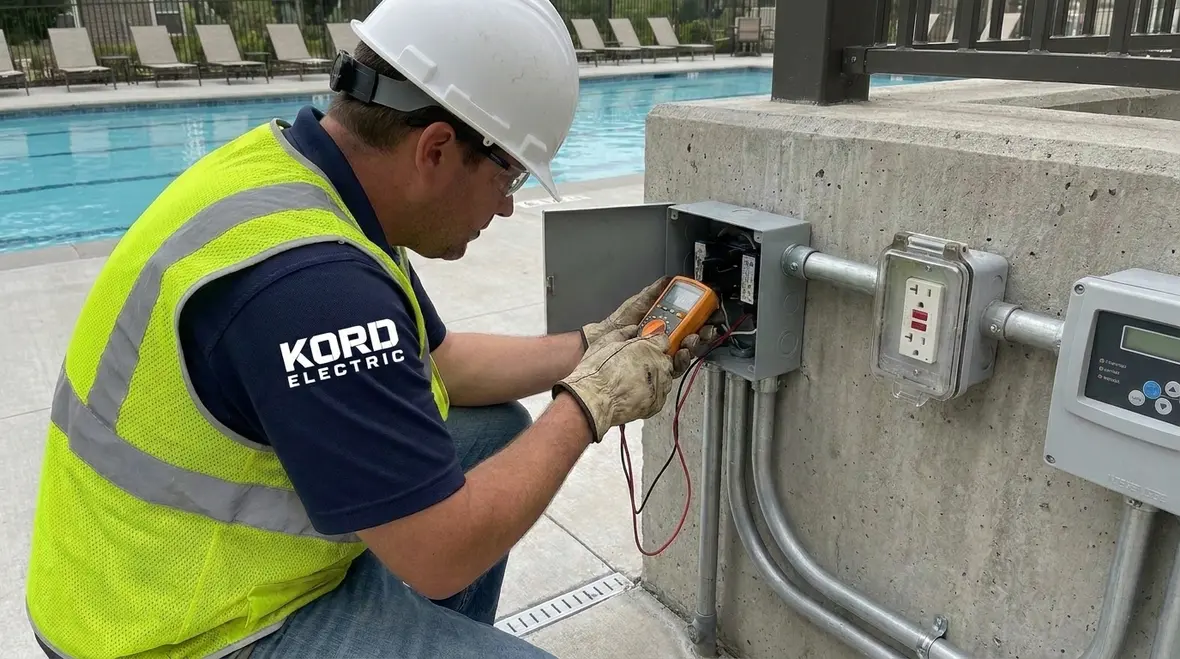
The electrical code evolves because field experience evolves. We follow changes like we follow schedules on construction sites: carefully, and with respect for timelines. The 2026 direction helps clarify expectations for installation practices, inspection priorities, and how designers and contractors document compliance. When our teams break down the NFPA 70 Section 680.1 pool electrical scope, we connect it to broader code context so owners understand how it fits alongside other requirements, including guidance like the National Electrical Code overview shared in resources such as our dedicated NEC explainer for 2026.
Also, owners often ask us, “Will the update force us to replace everything?” Usually, it does not work that way. Instead, the update affects what new installations must follow, and it can guide how we upgrade older systems when we touch them. In practice, we often find that facility teams appreciate this approach because it reduces downtime.
So, when we plan pool area electrical work, we treat compliance as a living process. First, we review the relevant NEC sections. Then, we confirm the project scope with the building plans and the equipment list. After that, we verify the wiring, bonding, grounding, and protection choices through field-ready installation details. Finally, we leave the team with documentation that helps future maintenance staff.
It is not glamour work, but neither is keeping a rooftop HVAC system alive. Still, it is what keeps the building from turning into a public safety headache.
Grounding and bonding, the part people skip until it hurts
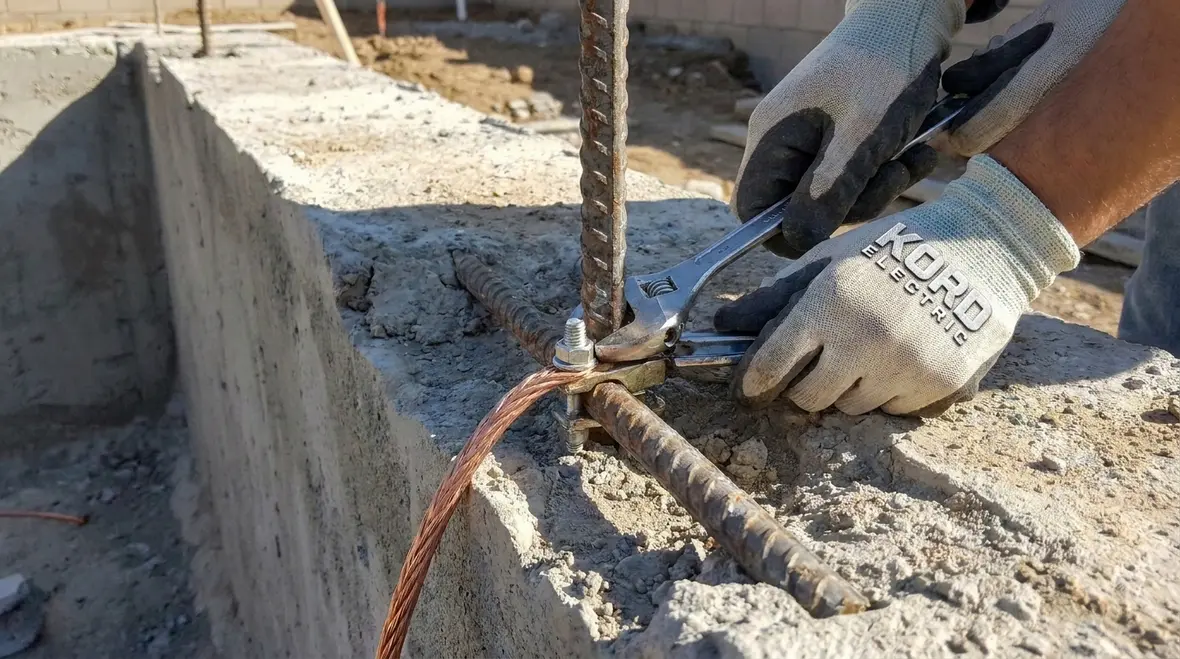
Let us talk about grounding and bonding, because this is where mistakes show up most often on real jobs. Water areas create conditions where metal surfaces can become energized if the electrical system does not control faults correctly. Therefore, bonding connects conductive parts so they sit at the same electrical potential. Grounding then provides a safe path for fault current to travel to earth, where protections can operate.
In our work, we do not treat bonding like an afterthought. We coordinate it with the pool equipment, the surrounding metal structures, the reinforcing steel where applicable, and the raceways and enclosures that carry power. Moreover, we verify the continuity paths and ensure the materials match the environment.
Next, we examine how the system protects people during faults. Protective devices must clear faults within the time and conditions the code expects. However, if bonding is wrong, the protective device may not see the fault the way it should. Then, you get delayed clearing or the wrong current path. That is like setting off a fire alarm with a paperclip and hoping it works. Sometimes it does. More often, it does not.
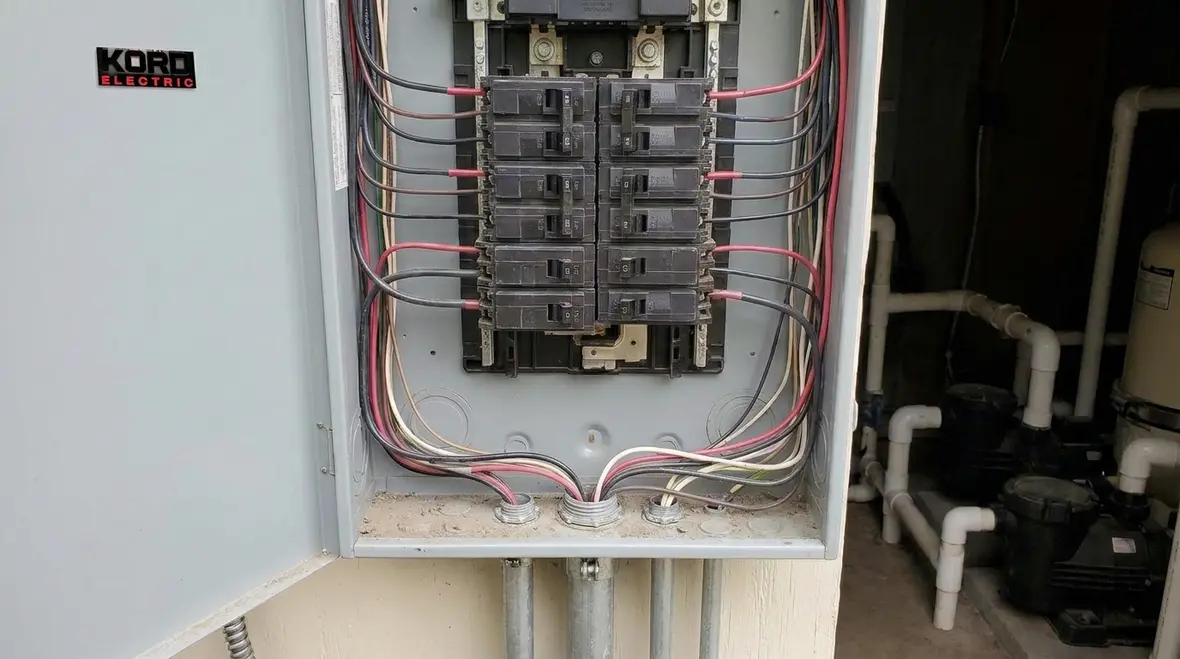
To keep it calm and clear, our technicians explain the “why” as they install. They also point out how future service can inspect the system without guessing. We focus on practical access, labeling, and neat routing, because commercial and industrial facilities need reliability, not mystery meat wiring.
Wiring methods and protection choices for pool equipment
Pool areas demand thoughtful wiring methods and protection strategies. The wiring method influences how well cables resist moisture, physical damage, and corrosion. Meanwhile, overcurrent protection and ground fault protection help limit injury risk during faults.
We plan conductor routing so the installation matches the equipment layout. Also, we protect conductors from impact and water intrusion based on the conditions around the pool deck, pump room, and equipment enclosures. Where the design calls for it, we select materials that hold up to the environment rather than degrade and fail early.
For protection, we pay attention to the correct device type and correct sizing. Then we test to confirm it operates as intended. Even when everything “looks fine,” a proper system uses verification steps. That is how we avoid the kind of failures that show up months later, right when the building team is busy with something else.
We also make sure the installation supports code-required field inspection. We coordinate with the general contractor and the building electrical engineer early, so the final result does not rely on last-minute fixes. In facility work, “later” can mean “too late,” and it can mean more cost. So we build it right the first time.
Coordination for facility teams and code-driven documentation
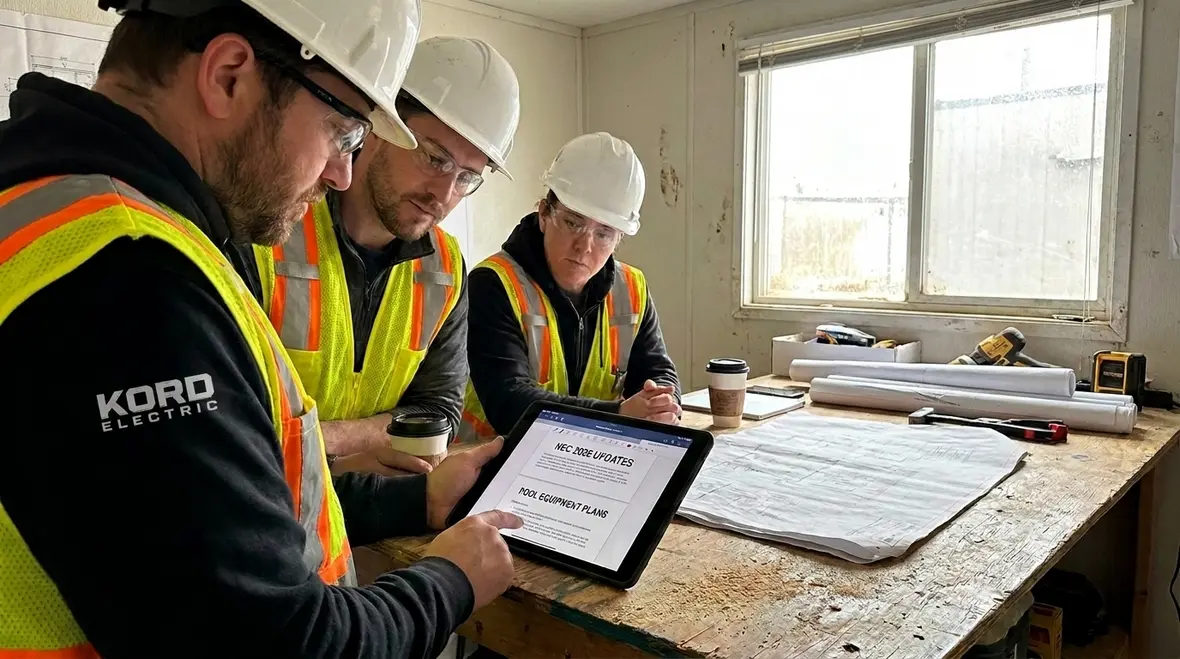
Commercial and industrial projects succeed when teams coordinate. Pool electrical systems involve multiple parties: architects, engineers, electrical contractors, fire and life safety professionals, and sometimes pool equipment suppliers. Each team may hold pieces of the puzzle, and our job is to connect those pieces into a safe, inspected system.
At Kord Electric, our technicians guide the process with documentation that helps others maintain the system. We produce clear details on where equipment connects, what devices protect what circuits, and how bonding and grounding get implemented. Additionally, we help teams understand which parts must be inspected during maintenance and what signs to watch for.
As we coordinate, we also keep an eye on fire related planning around the building. For pool facilities that include pump rooms, chemical storage areas, and shared mechanical spaces, electrical design and fire planning should not operate in separate worlds. Our broader safety mindset mirrors what our teams share in related articles on data-driven electrical design and electrical equipment planning for commercial and industrial facilities, where code-conscious decisions and documentation work together from design through maintenance.
When the facility team later schedules work, we want them to spend time operating the building, not decoding legacy wiring. If someone has to “guess” during a service call, that is a hidden risk. So we reduce guesswork up front.
To keep the tone light, we tell our clients this: electrical documentation is like a good training manual. No one reads it for fun. Yet everyone needs it when the night shift starts asking questions.
When to inspect, test, and upgrade pool related systems
Even a well-installed pool system does not last forever without maintenance. Facility conditions change. Equipment wears. Enclosures corrode. And sometimes upgrades get delayed until a failure forces the schedule.
We recommend inspection routines based on the building’s use, the local environment, and the age of the system. During inspection, we check the condition of terminations, the integrity of bonding connections, and the state of raceways and enclosures. We also verify that protective devices operate properly under test conditions that match their design.
If we see corrosion, loose connections, or signs that water exposure has affected components, we plan upgrades. Then we coordinate the work so the pool and building operations can continue safely. For major property buildings, this matters because downtime affects tenant schedules, safety compliance, and brand trust.
Additionally, we align any upgrade work with the current code expectations for the scope we touch. That way, we do not create a patchwork system where old methods conflict with new requirements. Fire pumps and water related systems often live in the same complex ecosystems, and industry resources reinforce that these systems must work together under stress. We take that same “system thinking” approach to electrical safety around water features so the NFPA 70 Section 680.1 pool electrical scope does not live in isolation from the rest of the building.
Dual column checklist for pool electrical scope compliance
To support facility teams, we keep a practical checklist. Use this as a planning aid for new installs and upgrades in commercial and industrial settings.
| What we verify | Why it matters |
| Bonding and grounding integrity around pool equipment | Controls fault paths so protective devices clear safely |
| Wiring methods and conduit/enclosure condition | Resists moisture, impact, and corrosion in wet areas |
| Protection device selection and settings | Helps prevent shock risk and limits equipment damage |
| Conductor routing and secure termination | Improves reliability and simplifies future service |
| Inspection readiness and documentation | Reduces rework and supports clear maintenance planning |
FAQ
Wrapping it up with Kord Electric
Pool electrical safety should feel steady, not stressful. When you manage commercial and industrial facilities, you need systems built for real use, not just for paperwork. Our technicians and expert service staff guide the process from planning through verification, with grounding, bonding, wiring methods, and protection choices aligned to the pool electrical scope. If you are planning a new installation or a focused upgrade, contact Kord Electric for an on site review and a clear compliance path that keeps your building calm and your operations moving.
If your facility portfolio stretches across the region, you can also connect this work with broader Los Angeles County electrical services for commercial and industrial properties. That way, pool systems, distribution equipment, and critical infrastructure upgrades all move in the same direction, guided by code, real field experience, and a team that treats uptime like it matters, because it does.


