
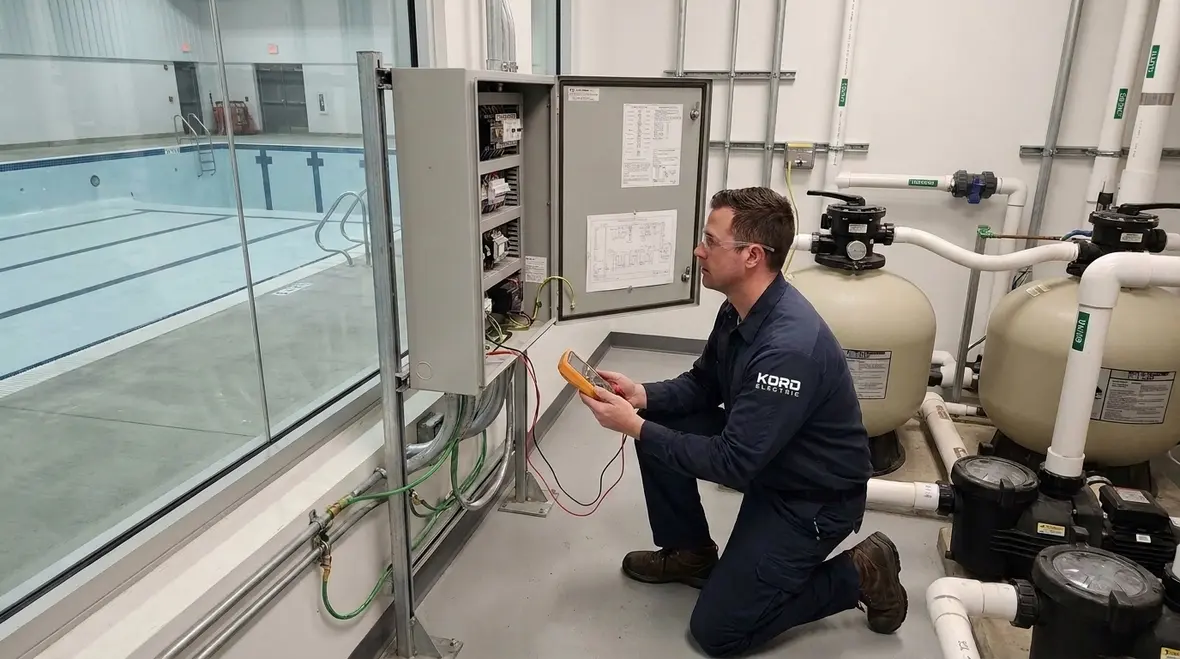
NFPA 70 Section 680.4 Pool Inspection Requirements
Commercial and industrial property owners do not get to “wing it” when water, electricity, and safety meet. In fact, the NFPA 70 Section 680.4 pool inspection requirements set clear expectations for how pool areas and related electrical equipment must be checked. Within every inspection cycle, inspectors verify that bonding, wiring methods, and protection features remain intact and usable, not worn, loose, or compromised. And yes, we have seen what happens when someone treats an electrical inspection like it is optional. It is not optional. It is the difference between a safe facility and a headline that reads like a bad sitcom.
At Kord Electric, we help owners and facility teams understand how the National Electrical Code affects real-world pool and water equipment in major properties. Our technicians and expert service staff explain each requirement in plain terms, and then we handle the work with steady professionalism. Meanwhile, we also keep the humor gentle, because even serious code work deserves a little breathing room.
Why National Electrical Code compliance matters for water areas
When electricity serves water features, the margin for error shrinks. However, the risks are not random. They connect to bonding, grounding, insulation quality, equipment ratings, and installation practices. Therefore, we recommend that facility teams treat NEC compliance like a system, not like a checklist you rush through.
Also, code language often feels dense at first glance. Still, our team reads it the way you would read a blueprint: with attention to what the words require in the field. We align equipment placement, wiring rules, and safety devices to how facilities actually operate. Then, when your pool or water system is inspected, the installation holds up under real scrutiny.
In other words, we do not just chase compliance. We help prevent failures before they cost you downtime, repairs, and reputational pain.
How NFPA 70 organizes rules that affect pool and water equipment
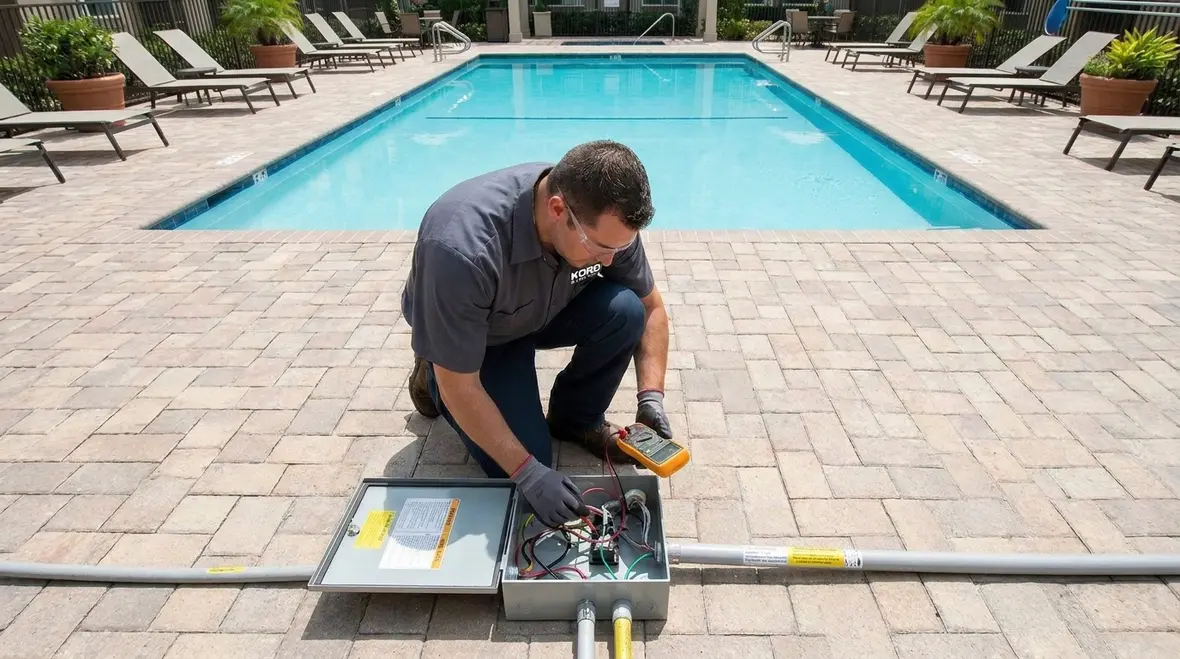
The NEC, also known as NFPA 70, organizes requirements by location, function, and equipment type. As a result, rules that affect pool wiring do not float in isolation. They connect to general electrical safety principles and to specific sections tied to water hazards.
When we work with large propertie buildings, we see the same pattern over and over. A facility may have modern equipment, yet the installation details can still be weak. Perhaps someone used the wrong wiring method, or bonding did not match the electrical layout. Or, maybe the inspection schedule never got updated after remodel work. That is why we focus on both the equipment and the installation conditions.
To support property teams, our technicians often explain code structure like this. We start from what the equipment is allowed to do, then we check how it must be connected, protected, and verified over time. That approach reduces surprises and keeps the safety story consistent from first install through future inspection.
Following NFPA 70 Section 680.4 pool inspection requirements in practice
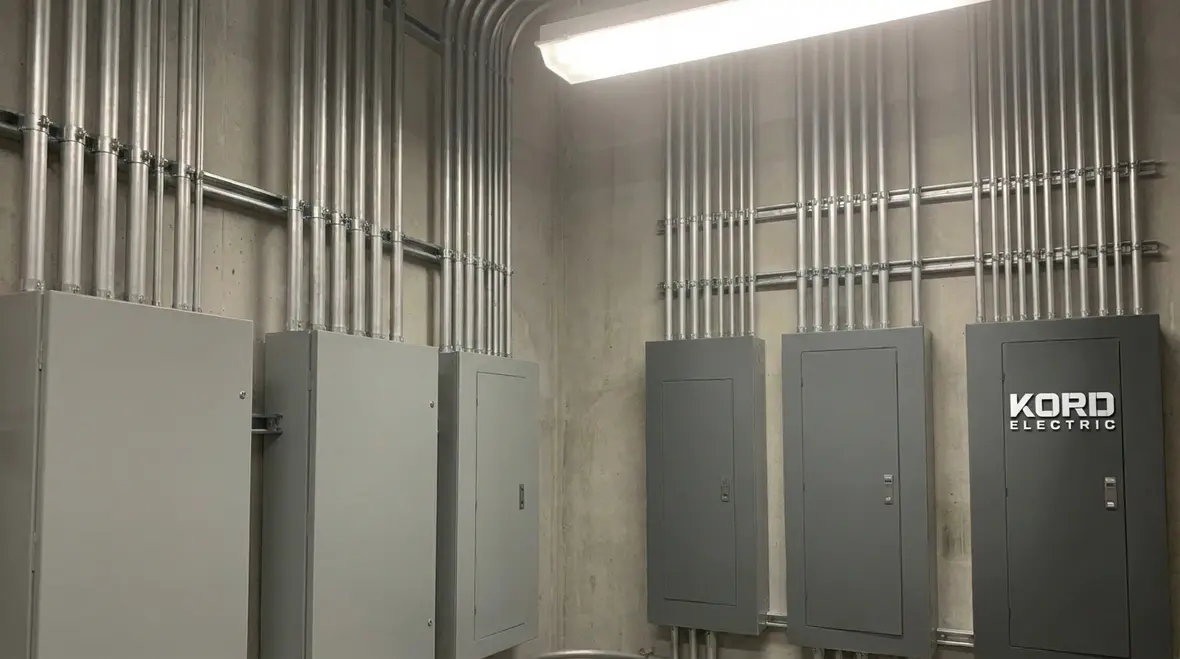
Let us get specific. The NFPA 70 Section 680.4 pool inspection requirements focus on how pool-related electrical systems must be inspected to ensure safe operation. We guide our clients through the key intent: equipment must stay connected as designed, bonding must remain effective, and protective features must still perform the way the code expects.
Now, here is where facility reality matters. Inspections do not happen in a vacuum. They happen after seasonal use, cleaning cycles, chemical changes, repairs, and sometimes tenant-driven modifications. Consequently, the inspection process must account for wear, corrosion, physical stress, and changes to the surrounding electrical environment.
Our expert service staff often explains it like this: an inspection checks the “as found” condition. If the system fails that check, the system does not get to move forward just because it worked last year. We document what we find, identify what needs correction, and then we execute repairs in a way that supports future verification.
For major property buildings, this matters even more because schedules are tight. We plan work to limit disruption while keeping the electrical safety requirements steady. And yes, we coordinate with site managers so the team is not chasing parts while guests are walking around, because that is a logistical nightmare and nobody wants that movie scene.
Bonding, grounding, and wiring methods that stand up over time
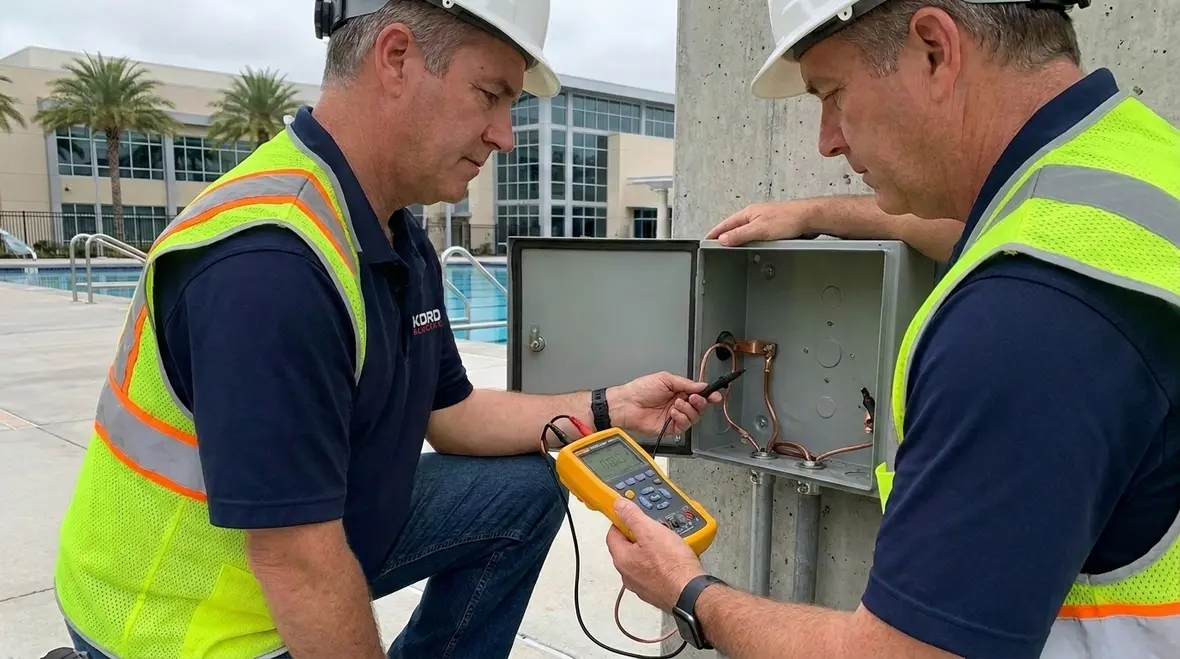
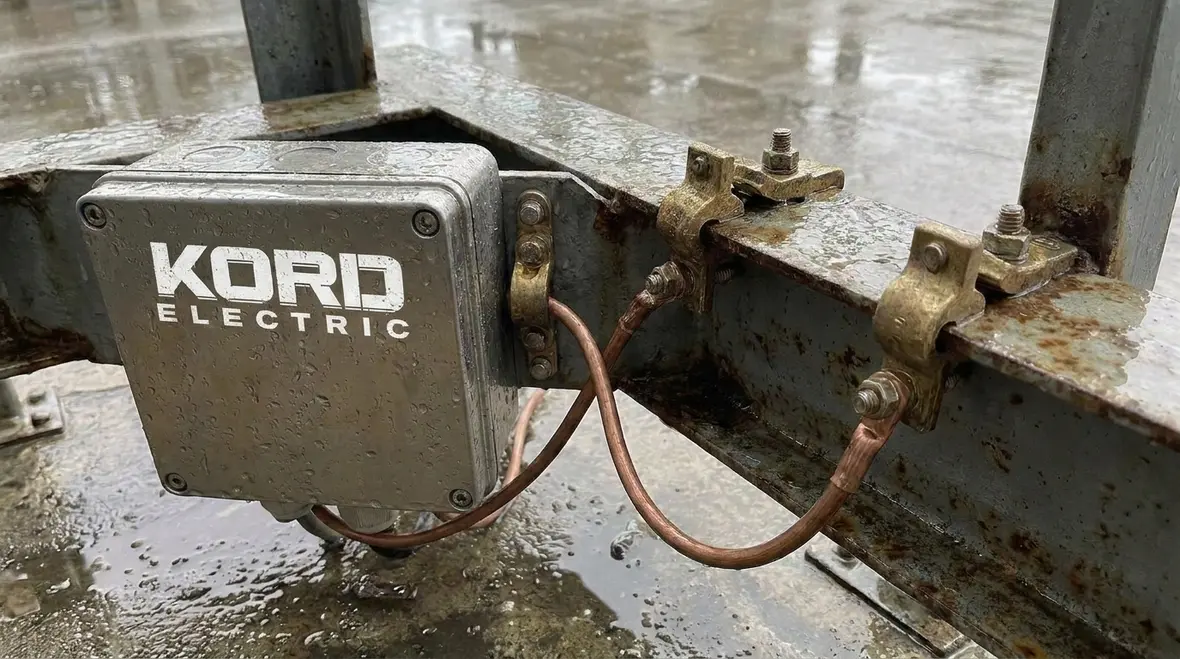
Most failures in pool and water electrical systems trace back to connection quality. Therefore, bonding and grounding deserve real attention, not a “looks connected” glance. Connections must be made with correct materials, correct routing, and correct termination practices.
We also stress wiring methods and installation details. Proper protection reduces exposure to damage and moisture intrusion. When equipment sits where splashes, humidity, and chemical exposure exist, the wrong method can degrade performance and create hazards. Over time, that degradation can show up as loose conductors, surface corrosion, insulation breakdown, or unreliable device performance.
At Kord Electric, our technicians verify the installation approach during service work and electrical evaluations. In addition, we cross-check the equipment setup with how the facility operates, including access limitations. If a technician must reach a component during normal maintenance, we ensure the installation supports that reality.
In a business setting, good design should make safety easier, not harder. We build that into our work, so future inspections and troubleshooting feel controlled rather than chaotic.
Inspection readiness for commercial teams and facility managers
Inspections go better when the property team prepares in advance. So we help facilities create readiness steps that fit real operations. That means understanding the pool electrical layout, confirming documentation exists, and verifying that recent work did not change safety-critical components.
Then we help answer the question that always shows up on inspection day. “Why does this part look different than last time?” Sometimes, renovations shift components, labels, or routing. Sometimes, maintenance adjustments occur without updating electrical records. If the facility cannot explain the “as changed” condition, the inspection can slow down.
Our approach is to keep the facility team informed throughout. We explain what the code requires, what we found, and what needs attention next. Meanwhile, we maintain professional timelines, because commercial work depends on coordination, not surprise delays. Think of it like customer service for electrical safety. We keep people calm, and we keep the power story clear.
Leveraging expert service for ongoing NEC-aligned upgrades
Many facilities do not fail because they ignore electrical safety. Instead, they fail because upgrades happen in pieces. One contractor updates controls. Another replaces a component. Yet the full system connection and protection picture never gets rechecked. Over time, the installation drifts away from best practice.
That is why we recommend ongoing electrical service support for commercial and industrial sites. Our expert service staff helps property owners plan upgrades with code alignment in mind. For example, if you update pumps, lighting, or controls near water features, you should also verify bonding continuity, grounding paths, and wiring method compatibility.
And yes, if you want a pop culture analogy, imagine upgrading only the special effects while ignoring the script. The audience still sees the plot holes. The same idea applies to electrical safety. When we upgrade, we verify the entire safety chain, not just the visible component.
For more context on how organizations discuss these topics, you can review related resources from our network and educational partners, including Kordfire, Kordfire Australia, and FirePumps.org. We use these ideas to support practical field decisions, while our technicians apply the requirements based on the actual building conditions.
If you would like to dive deeper into how the National Electrical Code shapes everyday electrical design decisions, you can also explore our related guide, Understanding NFPA 70: The National Electrical Code Explained for 2026, which walks through how code articles connect to real projects.
Connecting pool inspection planning with broader electrical services
Because pool and water-area inspections never exist in isolation, we encourage property teams to see NFPA 70 Section 680.4 as part of a bigger reliability picture. The same discipline that keeps pool bonding intact also supports surge protection, emergency power, and everyday uptime for the rest of your building’s systems.
At Kord Electric, our technicians and expert service staff already support commercial and industrial facilities with detailed inspections, targeted repairs, and structured maintenance across Southern California. That means when we prepare your pool electrical system for inspection, we can also help you prioritize other work that keeps the rest of your power story steady instead of reactive.
For owners who manage multiple properties or complex campuses, it can be especially helpful to connect pool inspection schedules with other preventive tasks. Aligning torque checks, insulation testing, and equipment evaluations with the same outage window often reduces repeat mobilization and keeps disruption low while still respecting safety requirements.
If your buildings are located in or around Southern California, you can coordinate this broader work through our regional support teams. Our dedicated Los Angeles County electrical services group, for example, helps local facilities align pool inspection needs with wider electrical reliability projects, so you are not juggling separate timelines that fight with each other.
How pool inspections fit into long-term reliability planning
When you treat NFPA 70 Section 680.4 pool inspection requirements as a recurring checkpoint instead of a one-time hurdle, they become part of a long-term reliability plan. Each inspection tells a story about how your system is aging, how environmental conditions are affecting equipment, and where upgrades might be needed before a failure forces your hand.
Our team documents that story in a way your facility staff can actually use. We map findings to risk levels, recommend timelines for correction, and connect each recommendation to what it protects—people, uptime, equipment life, or all three. That way, your capital planning and maintenance budgets align with what the system truly needs, not just what the last outage made obvious.
FAQ
Next steps with Kord Electric
If you manage a commercial or industrial property with pool or water equipment, do not wait for an inspection day surprise. We at Kord Electric help you prepare, verify, and repair electrical systems so they stay aligned with safety expectations, including pool inspection needs tied to NFPA 70 Section 680.4. Call us to schedule an assessment with our technicians and expert service staff. We bring calm, clear explanations, and field-ready execution. Let us handle the work while you keep the building running.
You can also coordinate pool inspection support with other reliability projects across your portfolio. Whether you need targeted troubleshooting, preventive maintenance, or larger upgrades, our regional teams help you connect the dots so that each inspection feeds into a more predictable, safer electrical system for your tenants, guests, and staff.
When you are ready to align your inspection plan with a broader service strategy, our commercial and industrial specialists will walk your team through options, timelines, and priorities in plain language. From the first walkthrough to the final test, our goal is simple: make electrical safety feel organized instead of dramatic.
If your properties are located in Los Angeles County or the surrounding region, our dedicated crews are already working inside buildings just like yours. We can support focused projects around pool and water-area compliance or integrate those needs into a wider reliability program that covers distribution equipment, backup systems, and everyday operations.
To see how this broader approach plays out across commercial properties, you can review our article on electrical asset management support for commercial facilities, which explains how coordinated inspections and upgrades protect both budgets and uptime.
For hands-on help in the region, explore our dedicated Los Angeles County electrical services for commercial and industrial buildings, where our technicians combine inspection readiness, troubleshooting, and project support under one coordinated plan.


