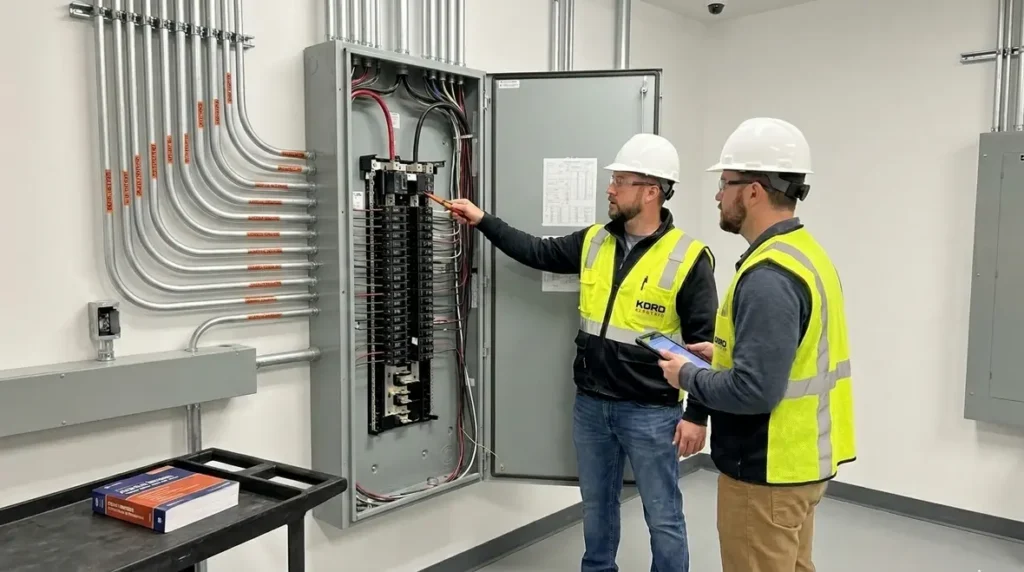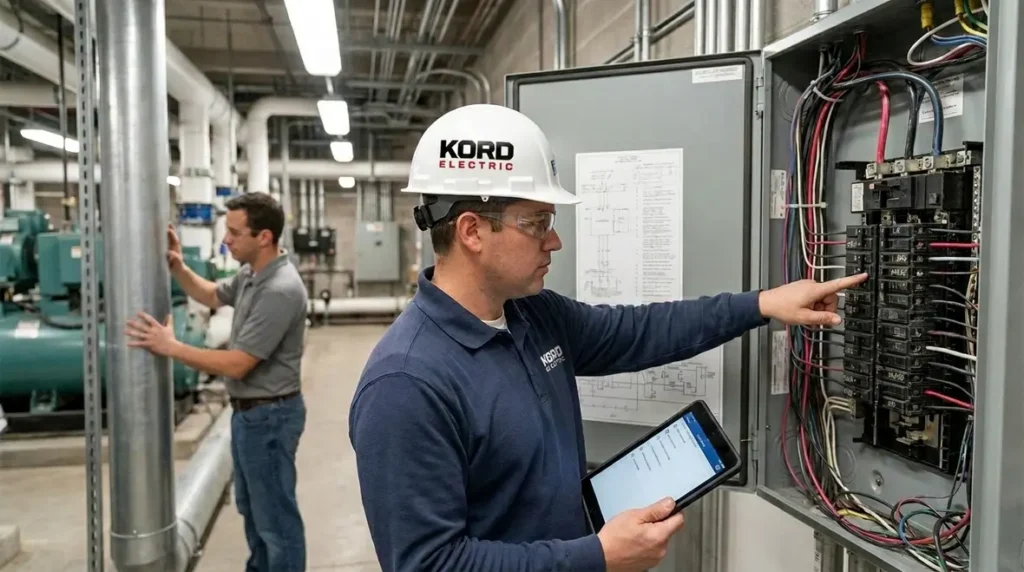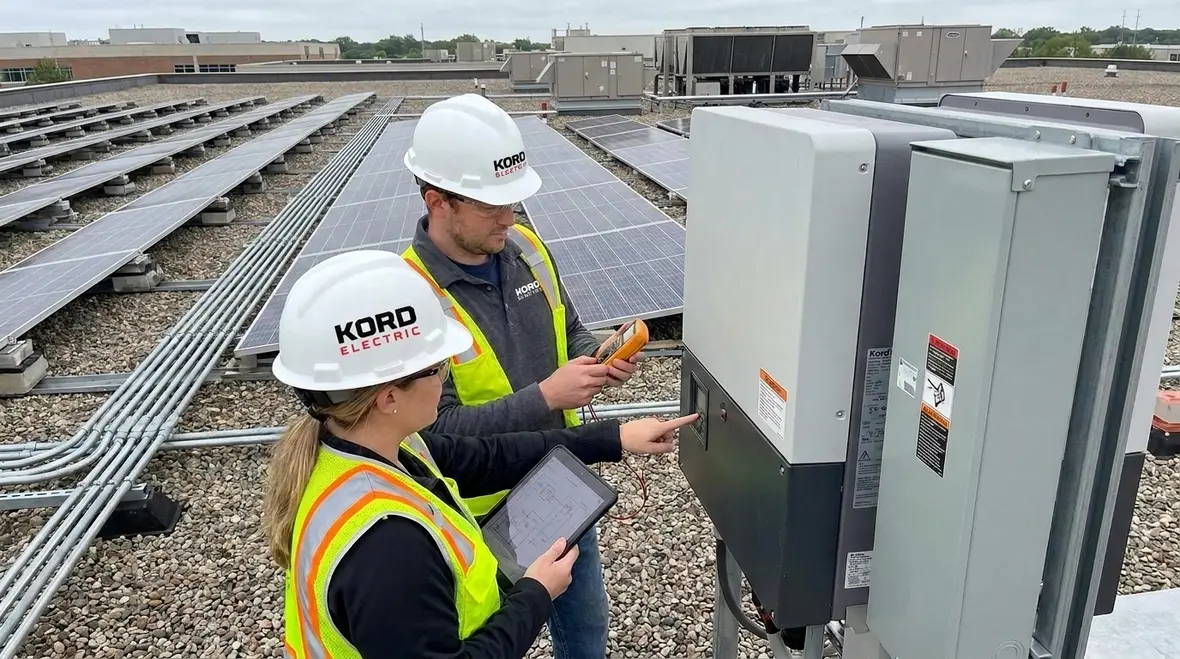
NFPA 70 Section 691.1 PV Supply Station Scope Compliance
At Kord Electric, we help commercial and industrial facilities stay safe, compliant, and ready for what comes next. In our work, we often start with NFPA 70 Section 691.1 PV supply station scope, because it sets the boundaries for how a PV system connects, protects, and operates. Specifically, this scope covers the rules that apply to a PV supply station for interconnection and power handling. So, before anyone flips breakers like it is a scene from a late night sitcom, our expert team explains what the code expects and why it matters for real sites, real uptime, and real safety.
Below, we take a deeper look at the National Electrical Code in a way that makes sense for major property buildings, campuses, warehouses, and other mission critical work. Then, we show how our technicians translate those rules into field-ready plans.
What the NEC expects from PV supply station designs in major buildings
When a facility installs or expands solar, the wiring does not just “run from panel to inverter.” Instead, it interacts with the building electrical system, other loads, and protection devices. NFPA 70 Section 691.1 PV supply station scope exists for a reason: it tells designers and installers where the code’s focus begins and what responsibilities follow.
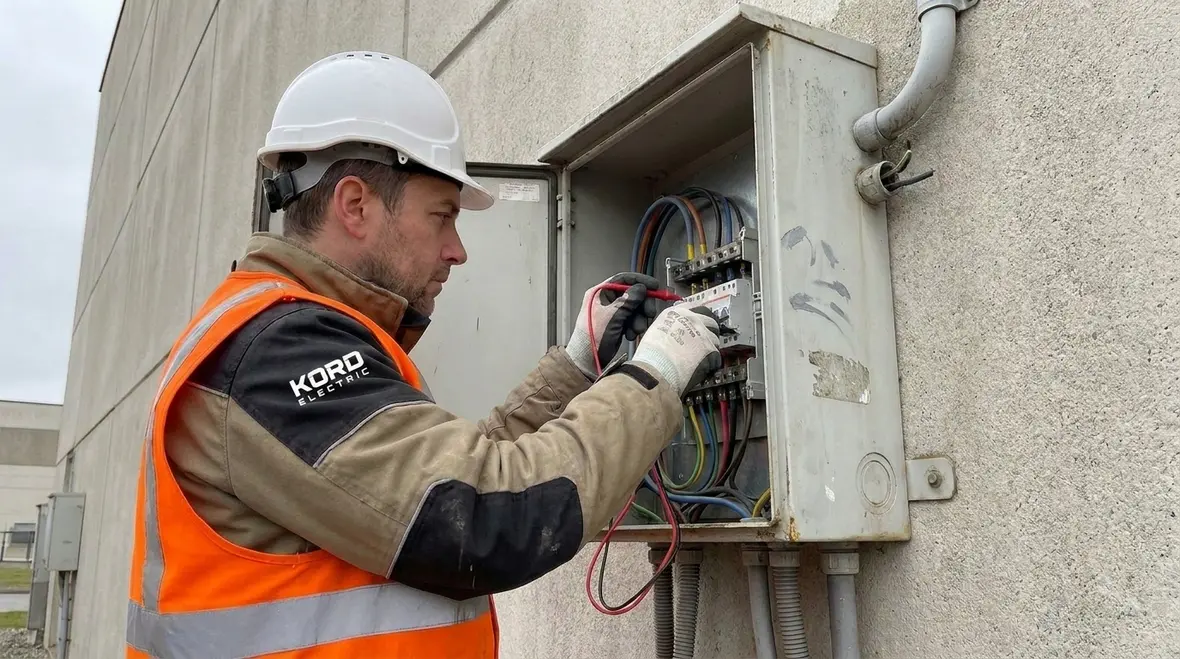
Our technicians break this down in plain terms. First, they review how the PV source ties into the station and then how the station routes power onward. Next, they check that the system uses the correct equipment and protection methods for the application. Finally, they confirm the arrangement supports safe shutdown and proper operation under fault conditions.
In other words, we do not treat PV supply stations like a “set it and forget it” gadget. We treat them like part of the facility’s electrical backbone. Because when the grid acts up, the building still needs to act right. And yes, that is as unglamorous as it sounds, but it is also where safety lives.
Key code responsibilities that affect PV feeders, disconnects, and labeling
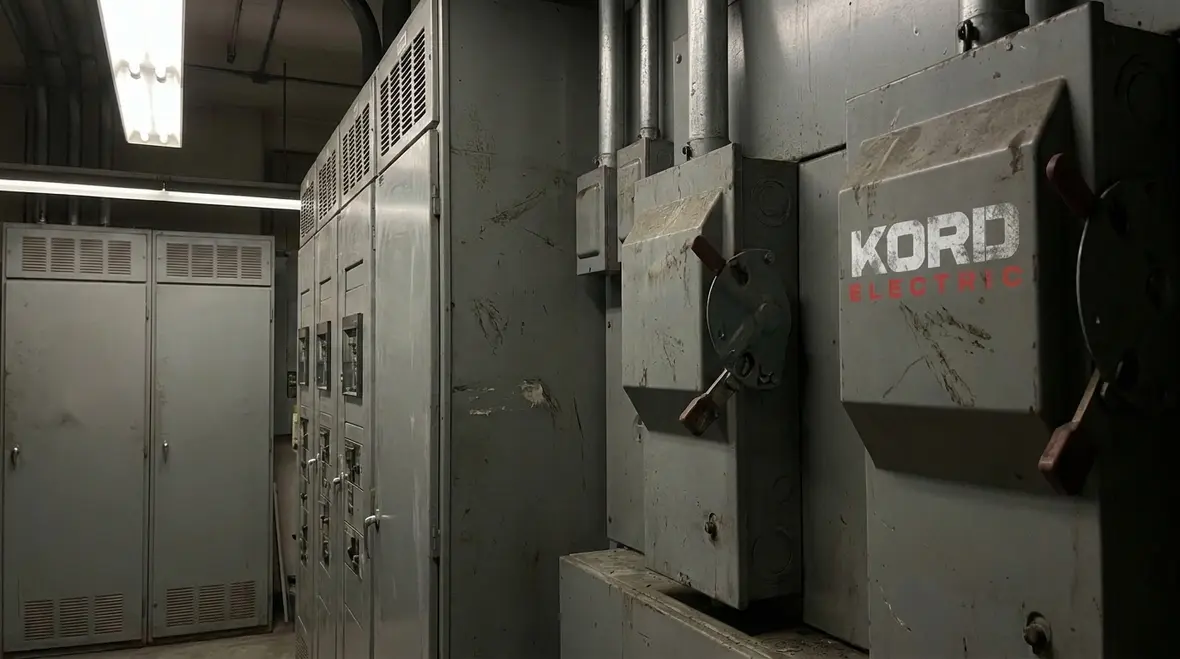
In commercial and industrial projects, code compliance becomes a chain of small, enforceable details. Even when a plan looks correct on paper, the field will test it. So, we guide teams through the practical duties the NEC requires.
Here are the areas our expert service staff emphasize most during design reviews and commissioning:
- Proper protection and overcurrent coordination: we confirm devices work together so faults clear correctly without causing unnecessary downtime.
- Correct disconnecting means: we verify how operators can safely isolate PV power from the rest of the system.
- Equipment suitability: we ensure ratings match the site conditions, including voltage, environment, and system configuration.
- Clear identification and labeling: we support clear markings so staff can find shutdown points fast, even under stress.
- System interaction with grounding and bonding: we check bonding paths so fault current behaves as the code intends.
Transition matters here. If a project team designs a PV setup but ignores coordination, the system can trip too early, or worse, fail to clear a fault quickly. And if labeling is vague, even the best tech will lose time during an emergency. We have seen that kind of delay cost more than a properly detailed plan ever would. Nobody wants to hunt for a label like it is a missing remote control.
How NFPA 70 guides safety for fault conditions and shutdown
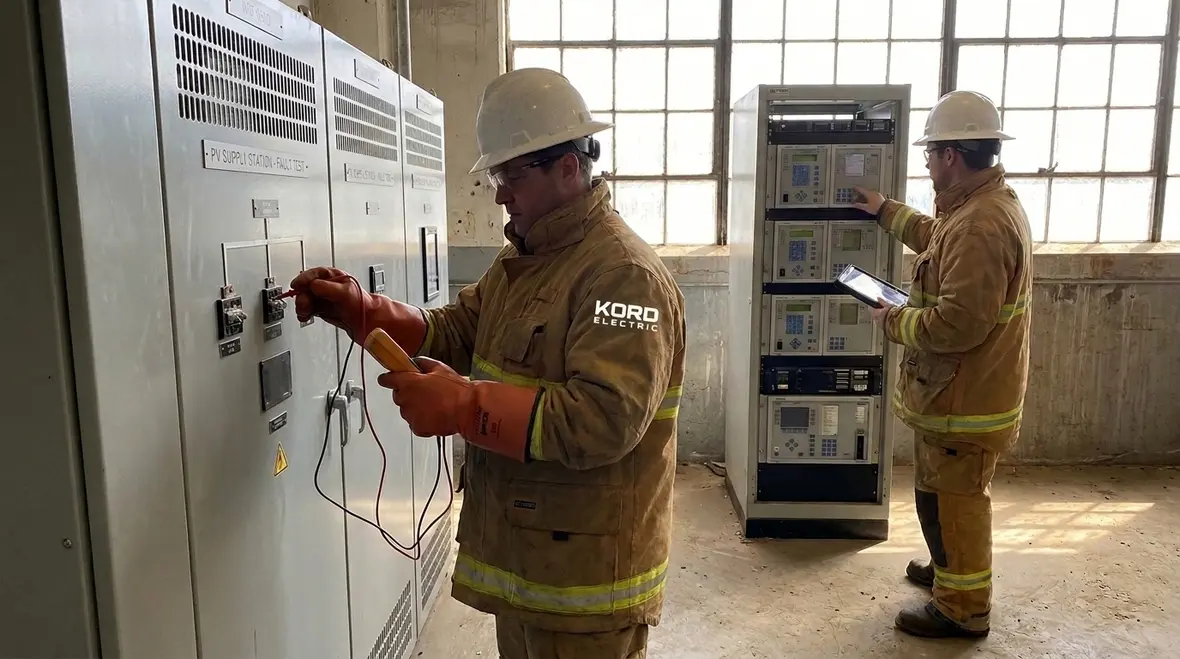
Commercial and industrial facilities cannot afford confusion during abnormal events. The NEC focuses on how PV systems respond when something goes wrong. Therefore, our approach centers on fault handling, isolation, and predictable operation.
Our technicians explain it this way: when a fault happens, current rises, protective devices must detect the situation, and the system must reach a safe state. If the PV supply station and its related equipment do not meet those expectations, safety can degrade in ways that are hard to notice until it is too late.
So, we look at the real sequence of events:
- Fault detection: protection devices must sense the fault and act.
- Fault clearing: the system should clear the fault without spreading damage.
- Safe isolation: operators should be able to isolate PV power where required.
- Consistent behavior: multiple components should respond in a controlled way.
Meanwhile, we remind project owners that safety is not only for electricians. Facility staff, emergency responders, and maintenance teams depend on clear documentation and safe operating pathways. If the electrical design supports shutdown procedures and identification, then training becomes easier and response becomes faster.
Design and installation choices that help large facilities stay compliant

Code knowledge matters, but so does execution. We often see how good intent can get tangled in details like cable routing, conduit fill, terminations, and workmanship. Because these issues can change performance and safety margins, our team pays close attention.
For major property buildings and commercial sites, we recommend these practical steps as part of the planning and build:
- Start with load and integration planning: we help teams map PV output into the facility’s existing electrical design.
- Coordinate with other systems: we account for interactions with switchgear, UPS, standby power, and critical loads.
- Verify equipment selection early: we confirm ratings, operating ranges, and suitability before procurement locks the schedule.
- Document the as built system: we ensure the field matches the plan and that records stay accurate for future service.
- Plan for ongoing testing: we build commissioning and maintenance steps into the project schedule.
At times, we hear the classic line, “We will fix it later.” In the electrical world, “later” often arrives as an outage. So, we push for clarity now. And when we walk teams through design assumptions, our technicians take time to explain how each decision ties back to the code requirements.
For facility owners and managers who want broader background on how the NEC shapes these choices, our team often points to resources like the Kord Electric guide Understanding NFPA 70: The National Electrical Code Explained for 2026 and Kord Fire’s companion overview on NFPA 70 for fire and life safety planning. Together, they help connect PV supply station design back to the larger electrical and safety picture across a facility.
Commercial and industrial compliance workflow we use at Kord Electric
Compliance should feel like a process, not a surprise. That is how we run our work for commercial and industrial facilities. We align stakeholders early, then we verify as we go.
Here is the workflow our team commonly follows:
- Site review and scope alignment: we identify the facility type, utility interface, and PV system goals.
- Plan review with code mapping: we cross check design intent against NEC requirements, including PV station scope rules.
- Pre installation checks: we inspect equipment readiness, labeling plan, and rough routing.
- Installation and workmanship verification: our technicians confirm terminations, protection, and setup against the plan.
- Commissioning support: we validate operation, protection behavior, and safe isolation methods.
- Documentation handoff: we deliver clear records that make future service easier.
In many cases, teams also coordinate with fire and life safety planning. You may have noticed how Kord Fire resources and guidance can support a more complete safety view around electrical systems. We often see a similar mindset across the industry, including practical references from fire protection education sites like firepumps.org. Even though our main focus stays on electrical compliance, safety is a shared goal across disciplines.
And for those who prefer a simple summary: we help you avoid the kind of compliance headaches that show up after the inspector leaves. Nobody wants that ending. Even if it makes for good drama in movies, it never makes for good business.
Common mistakes in PV supply station projects and how we prevent them
When projects fail, the cause is often not one big mistake. Instead, it is a handful of small misses that stack up. For commercial and industrial facilities, we focus on the mistakes that create the biggest risks and the worst delays.
Here are common issues our technicians watch for:
- Incomplete system understanding: teams assume PV integration stops at the inverter, then miss how the supply station interacts with the building electrical system.
- Protection devices not coordinated: the system clears faults incorrectly or trips during normal operating changes.
- Ambiguous shutdown paths: operators cannot isolate PV power quickly, which complicates response.
- Inconsistent labeling: documentation does not match the installed layout, and staff waste time.
- Poor field workmanship: loose terminations or incorrect routing can create heat buildup and future failures.
As we step through these pitfalls, our staff explain the “why,” not just the “what.” That way, owners and site managers can make better decisions, and our crews can build faster with fewer surprises. Transition from design to build should be smooth. If we spot a mismatch early, we fix it before it becomes an expensive lesson.
Because PV supply station work rarely happens in isolation, we also tie these lessons back to other NEC topics covered in our resources, like multiwire branch circuits, neutral conductor rules, and feeder diagram requirements. When those fundamentals stay aligned, it becomes much easier to keep NFPA 70 Section 691.1 PV supply station scope fully satisfied across design, installation, and long-term maintenance.
For facilities in Southern California that want help applying these ideas in the field, our Los Angeles County electrical services team supports PV integration, code reviews, and corrective upgrades with a strong focus on NEC alignment and long-term reliability.
FAQ
Conclusion: get a PV compliance plan that holds up in the real world
If your commercial or industrial facility plans a PV upgrade, you deserve an electrical team that handles the details that inspectors and safety teams care about. At Kord Electric, we bring expert technicians, careful code mapping, and field tested execution. We help you design, install, and document PV supply station systems that operate predictably when conditions change. Ready for a review? Contact us now, and we will put your project on a safer path from day one.
From the first conversation about NFPA 70 Section 691.1 PV supply station scope to final commissioning and documentation, our goal stays simple: keep your system compliant, your operations steady, and your team confident about how PV power behaves on site.