NFPA 70 Section 691.4 Large Scale PV Requirements
Kord Electric serves commercial and industrial facilities and major property buildings, so when we talk code, we do it with real-world care. And yes, we start with the big picture. In NFPA 70 Section 691.4 large scale PV requirements, the code lays out how large photovoltaic systems must be planned and built, especially when the installation can affect safety at scale. In our experience, many teams hear “PV” and think it is only about panels and sunshine, but we know better. While the rest of this guide breaks down how the National Electrical Code supports safer designs, we also help you understand what changes when you build bigger, connect deeper, and operate longer. Then, you avoid the kind of surprises that make people stare at a breaker like it owes them money.
What NFPA 70 Section 691.4 requires for large scale PV
Our certified technicians explain the intent behind the code first, because the intent drives the details. Under NFPA 70 Section 691.4 large-scale PV requirements, the code expects a consistent approach to safety for large photovoltaic installations. That means the design and installation must address how the system will behave in normal operation and under fault conditions. It also means the project team must treat PV as part of the electrical system, not as a separate “solar island.”
As we review projects, we see common themes. First, the system needs clear electrical coordination so protective devices can do their job. Next, wiring methods and equipment ratings must match the duty and the environment. Then, the installation must support safe maintenance and reliable operation. In other words, the code does not ask for paperwork for fun. It asks for details that keep people safe and keep production running.
To put it plainly, if a facility runs on uptime, the PV system also needs uptime. And when utilities and emergency responders might need to understand the system quickly, clear labeling and safe access matter. We tell teams this in meetings, and we show it in the field. Our expert service staff often says, “The best inspection is the one that goes smoothly,” and we build toward that outcome from day one.
How the National Electrical Code organizes PV safety
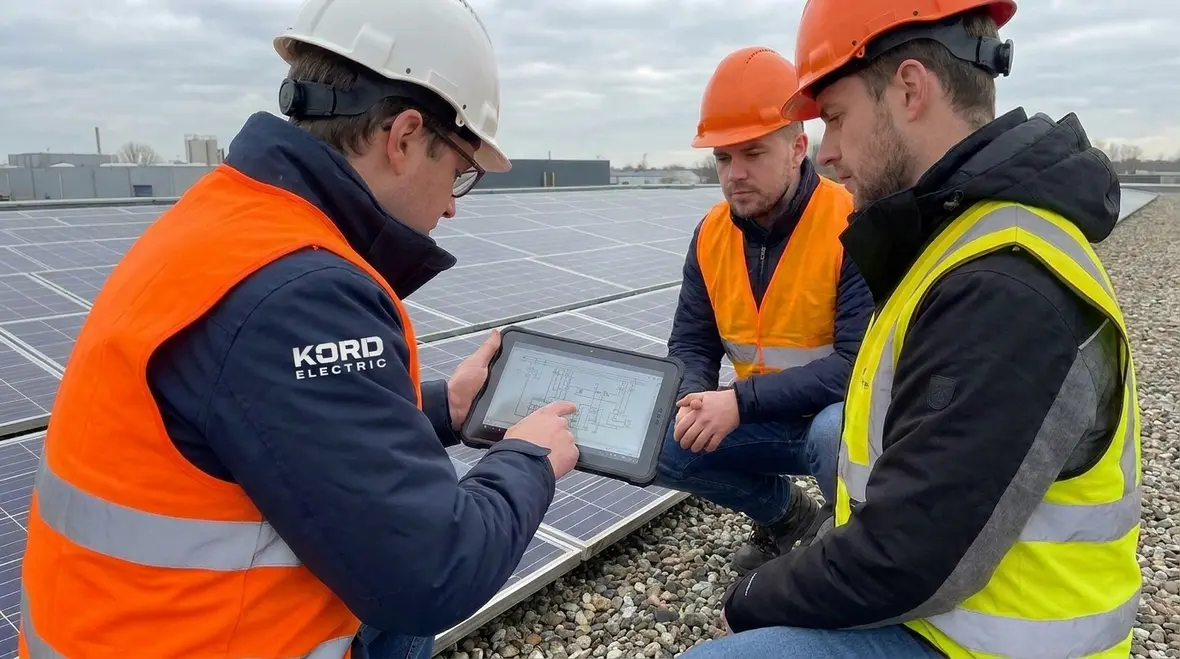
The National Electrical Code, often called the NEC, uses structure so installers and inspectors can navigate safety requirements without guesswork. For large commercial and industrial property buildings, that structure matters even more, because the PV system connects into complex electrical gear, switchboards, and life-safety loads. Therefore, our approach focuses on how the code guides coordination across the whole electrical system.
In practice, the NEC drives decisions in areas like conductor sizing, overcurrent protection, grounding and bonding, and equipment suitability. It also addresses how PV circuits are identified and how they interact with other sources of power. As a result, the system can be isolated when needed and can respond predictably during faults.
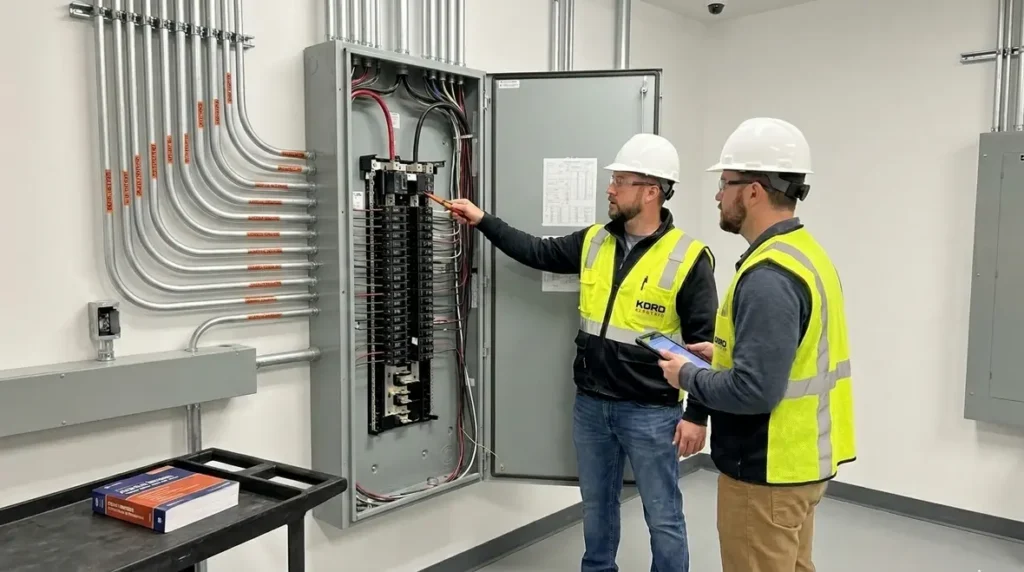
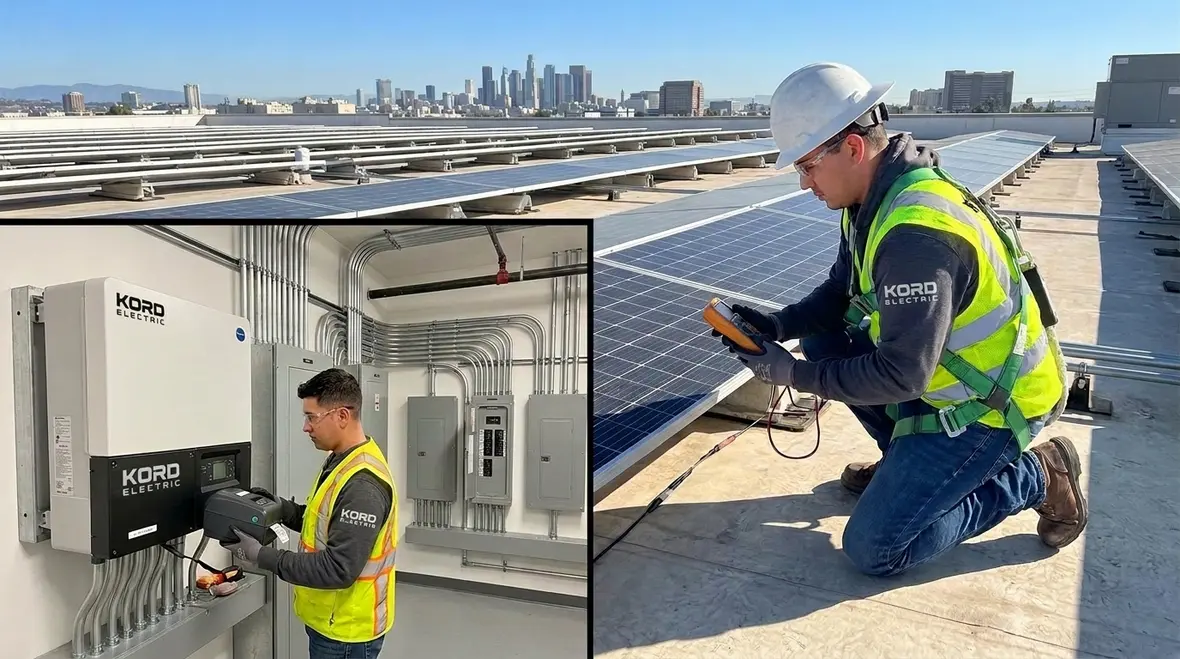
We also emphasize the role of utility interconnection and system labeling. Even when a PV array is on the roof, the electrical story continues in the equipment room. Our technicians walk teams through the path of energy, from array to inverters, from inverters to switchgear, and then out into the facility. When you understand that path, code compliance stops feeling like a scavenger hunt. It becomes an organized plan.
And if you have ever seen someone try to “figure it out later,” we are here to tell you later is where problems grow. Like plants, but less charming.
Conductor routing, protection, and labeling that inspectors expect
When a PV system is built for a major property building, inspectors look for consistent protection and clear documentation. Our expert service staff teaches teams to treat routing and labeling as core safety work, not administrative chores. Then, the system remains easier to operate, easier to troubleshoot, and easier to maintain.
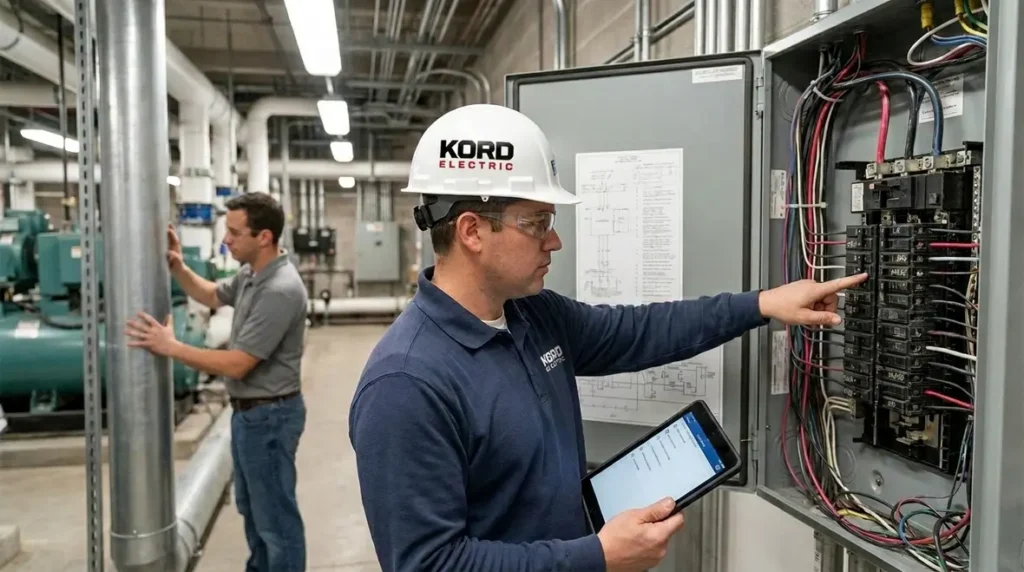
First, conductor routing should follow safe pathway rules and match the conditions where the cables run. That means considering physical protection, temperature, and exposure. Next, overcurrent protection must align with the system design so protective devices can interrupt faults. We do not just pick devices by guess. We size and coordinate them based on the expected operating characteristics.
Finally, labeling must support real use. Maintenance staff, electrical engineers, and emergency responders should find what they need fast. If a label is vague, the risk rises. If the label is correct and placed properly, the facility runs smoother during the moments that matter. As we guide projects at Kord Electric, we often recommend a label scheme that matches the actual single-line design and the physical equipment layout.
Think of labeling like the map in a parking garage. Without it, everyone gets lost. With it, people reach the exit on the first try, and nobody blames the toaster.
Grounding, bonding, and fault response in large PV systems
Commercial and industrial facilities need grounding and bonding strategies that support safe fault response. For large PV installations, this becomes a key part of how the system protects people and equipment. When fault conditions occur, the goal is predictable behavior: faults should be detected, isolated, and cleared in a controlled manner.
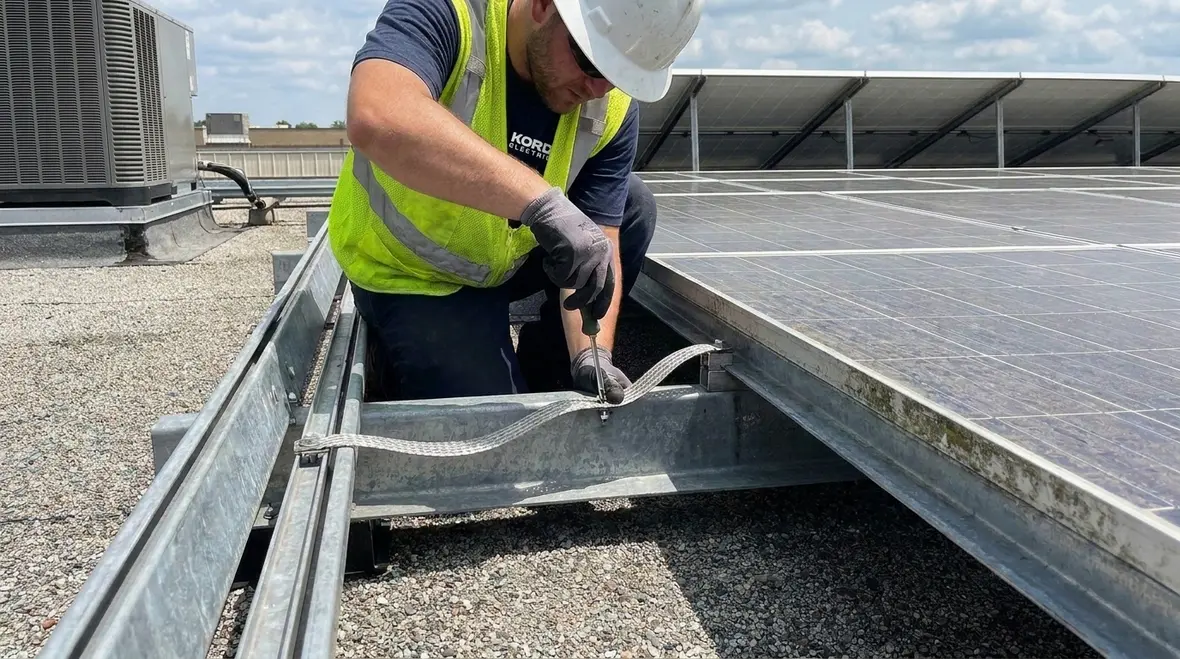
Our technicians focus on bonding paths, equipment grounding conductor choices, and how the system integrates with the building grounding electrode system. Then, we confirm that metal parts and raceways are treated correctly so stray voltage risks remain low. We also coordinate how protective devices respond during abnormal conditions.
At this stage, we often help teams align PV design choices with building electrical systems. For example, the PV system must work with the facility’s grounding and bonding scheme, not fight it. That means we consider how the PV components and inverters connect electrically, and how the facility’s existing gear handles fault currents.
We also remind stakeholders that PV is not “set and forget.” Over time, systems operate under heat, weather, and load cycles. That is why our service includes planned checks, so protective behavior remains consistent long after commissioning.
Emergency planning and safety coordination for major buildings
Large PV systems connect into a building’s critical electrical environment, so emergency planning has to reflect the actual design. Our approach in commercial and industrial projects includes coordination on what happens during power events and emergency response. We want emergency teams to understand the electrical configuration without pulling an all-nighter.
Clear system identification helps, but coordination goes further. We support facility stakeholders with the information that helps them plan safe shutdown and access. For example, responders should know how PV circuits are identified and where relevant disconnect points or controls are located. Additionally, the building’s life-safety systems must maintain their reliability according to the overall electrical design intent.
As we work with project teams, we often reference the broader guidance found in code resources and industry practice. We also connect the electrical plan with real on-site operation. That is why Kord Electric emphasizes practical implementation, not just theoretical compliance.
It is also why we keep an eye on how the system can affect overall electrical fault scenarios. Safety coordination means the PV system does not create confusion during a high-pressure moment. In business terms, it means less downtime, fewer surprises, and smoother communication across teams.
Maintenance and inspections that protect long-term performance
Once a large PV system is operating, maintenance becomes a reliability strategy. Our expert service staff helps facilities plan inspections that match real conditions. Weather, electrical stress, and component aging can all influence performance and safety. Therefore, we recommend a maintenance approach that checks key electrical and physical elements, rather than simply waiting for a warning light to panic your operations team.
In practice, we look at the health of connections, the condition of equipment enclosures, and the integrity of labeling and routing. We also consider how inverters and protection devices behave over time. When systems are maintained properly, we help reduce the chance of nuisance faults and improve the reliability of power delivery.
Moreover, code compliance is not a one-time milestone. When modifications happen, or when equipment is replaced, the facility must remain aligned with the NEC approach for safe system design. We work with facility managers and electrical stakeholders so changes do not quietly undermine safety assumptions.
And if you are wondering whether maintenance is worth it, we will answer this gently: it is. Like regular HVAC service, it prevents the “big bill” later. Except the big bill sometimes includes a team standing around looking confused, which we try to avoid.
Where Kord Electric fits for commercial PV compliance
Kord Electric supports commercial and industrial facilities and major property buildings with electrical expertise that keeps projects moving and systems safe. When teams choose us, they get technicians and service staff who explain requirements clearly and coordinate with the project realities on-site.
We also understand that major buildings involve more than one vendor, multiple interfaces, and strict timelines. So we help teams manage the electrical details that affect safety and inspection outcomes. Our work aligns with national code expectations and with the safety intent behind NFPA 70 and PV requirements. When stakeholders ask practical questions, we answer them directly, and we document decisions so the facility team can act with confidence.
For facilities planning ahead, our team also connects large PV projects to the broader NEC context. If you want a deeper foundation on how the code shapes modern systems, you can explore our related resource on understanding the NEC in our 2026-focused guide, “Understanding NFPA 70, the National Electrical Code Explained for 2026,” available through the Kord Electric blog. That way, NFPA 70 Section 691.4 large-scale PV requirements fit into a bigger picture, not a one-off puzzle.
We also encourage teams to leverage relevant industry resources and code guidance to confirm their approach. For example, our internal knowledge base connects code topics to practical implementation, including themes found across NEC and fire-safety related guidance from industry partners. For projects that involve property-wide systems, we also stay mindful of how electrical design ties into safety planning and emergency readiness.
And yes, if anyone tells you code is boring, we politely disagree. Code is the reason systems behave safely. It is just the reason rarely shows up in the marketing brochure.
When facilities in Los Angeles County look for a partner who understands both PV requirements and everyday building operations, our dedicated Los Angeles County electrical services team helps connect PV planning with panels, feeders, life-safety equipment, and the rest of the system that keeps your building running.
FAQ
Conclusion
Kord Electric helps commercial and industrial facilities build and maintain PV electrical systems that stay safe and inspection-ready. Our technicians explain the NEC expectations in plain business terms, then we execute with careful routing, protection coordination, grounding practices, and clear labeling. If your facility is planning a large PV project, or if your current system needs a compliance and reliability review, we can help you move forward with confidence. Contact Kord Electric today, and let us handle the code details so your team can focus on operations.
For facilities across Los Angeles County and Southern California, our PV support also connects naturally with broader commercial and industrial solutions, including service upgrades, maintenance programs, and emergency response. That way, NFPA 70 Section 691.4 large-scale PV requirements are not handled in isolation. They become part of a coordinated electrical strategy that protects people, equipment, and uptime.