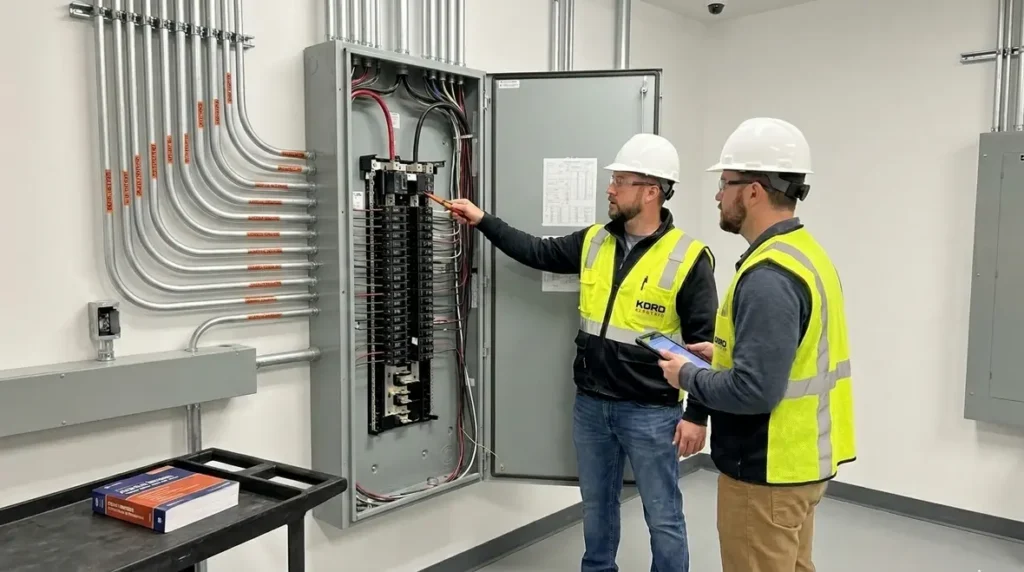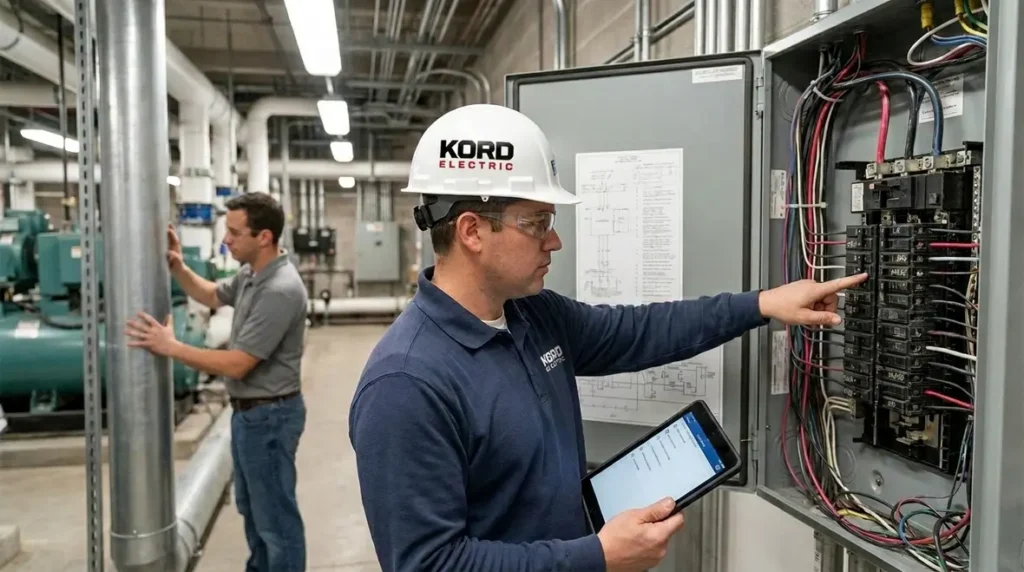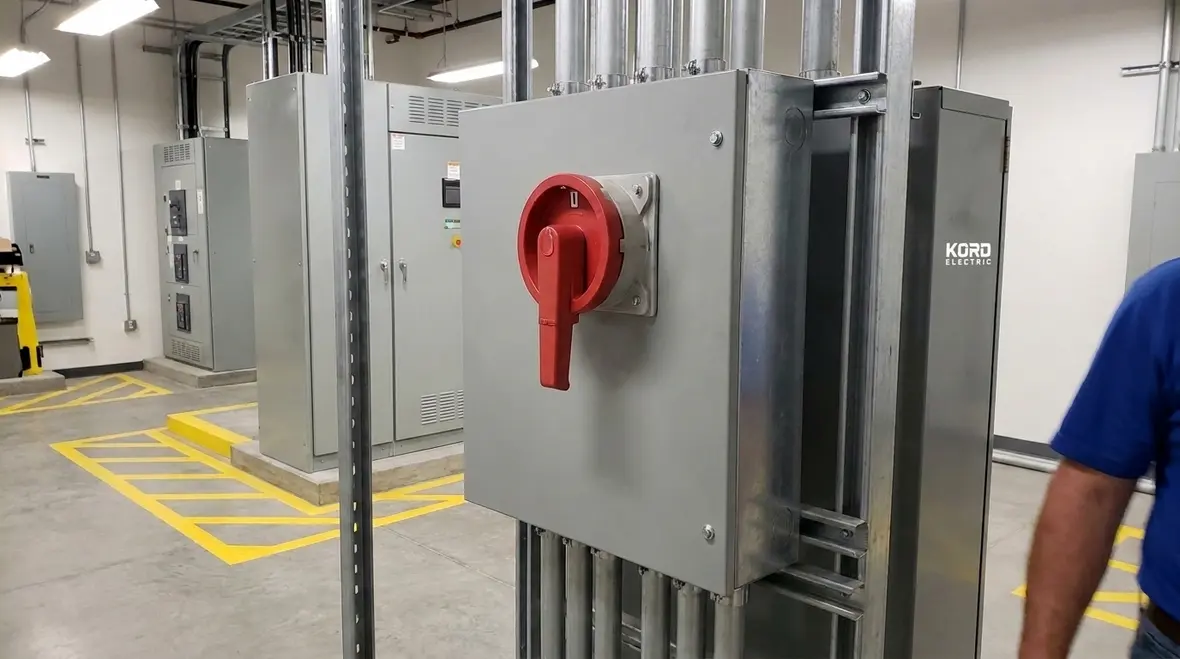
NFPA 70 Section 692.13 Fuel Cell System Disconnect: Code-Ready Planning For Commercial And Industrial Sites
Commercial and industrial facilities lean hard on reliable power, yet many do not fully plan for how modern alternative energy systems need to disconnect, isolate, and protect that power when something goes wrong. Fuel cells sit right in that tension. They promise cleaner, more resilient energy, but they also introduce new behaviors that your electrical system, safety protocols, and inspection plans must handle without guesswork.
That is where NFPA 70 Section 692.13 fuel cell system disconnect becomes more than just another line in the National Electrical Code. It is the part of the rulebook that shapes how fuel cell systems get shut down, isolated, and serviced without putting people or property at risk. At Kord Electric, we bring those requirements out of dense code language and into real-world jobsites, from major property buildings to industrial facilities with layered safety expectations and complex power flows.
On projects across Los Angeles County and surrounding areas, our technicians and expert service staff walk facility teams through what NFPA 70 expects, how it affects design, and what inspectors will want to see in the field. Then we fold those expectations into drawings, labeling, and commissioning steps so the disconnecting means for your fuel cell system works the way it should the first time, and every time after that.
NFPA 70 Section 692.13 fuel cell system disconnect: why commercial and industrial sites should care
At Kord Electric, we work on commercial and industrial facilities and major property buildings, and we see a pattern every year. People want reliable power, but they do not always plan for the specific disconnect and protection needs tied to alternative energy systems. Early in our projects, our technicians explain how NFPA 70 Section 692.13 fuel cell system disconnect shapes safe design, inspection points, and future maintenance. And yes, we know it sounds like paperwork with a hard hat, but this is the kind of rule that prevents the “we thought it would be fine” moment that no operator ever wants.
To be clear, we do not treat NFPA 70 Section 692.13 fuel cell system disconnect as a box to check. Instead, we guide building owners, facilities teams, and electrical contractors through what the National Electrical Code requires for fuel cell installations, including how disconnecting means should work, where they should be located, and how they should support safe service and emergency response. Then we bring that plan into real-world site work, with our expert staff on hand to explain it in plain terms.
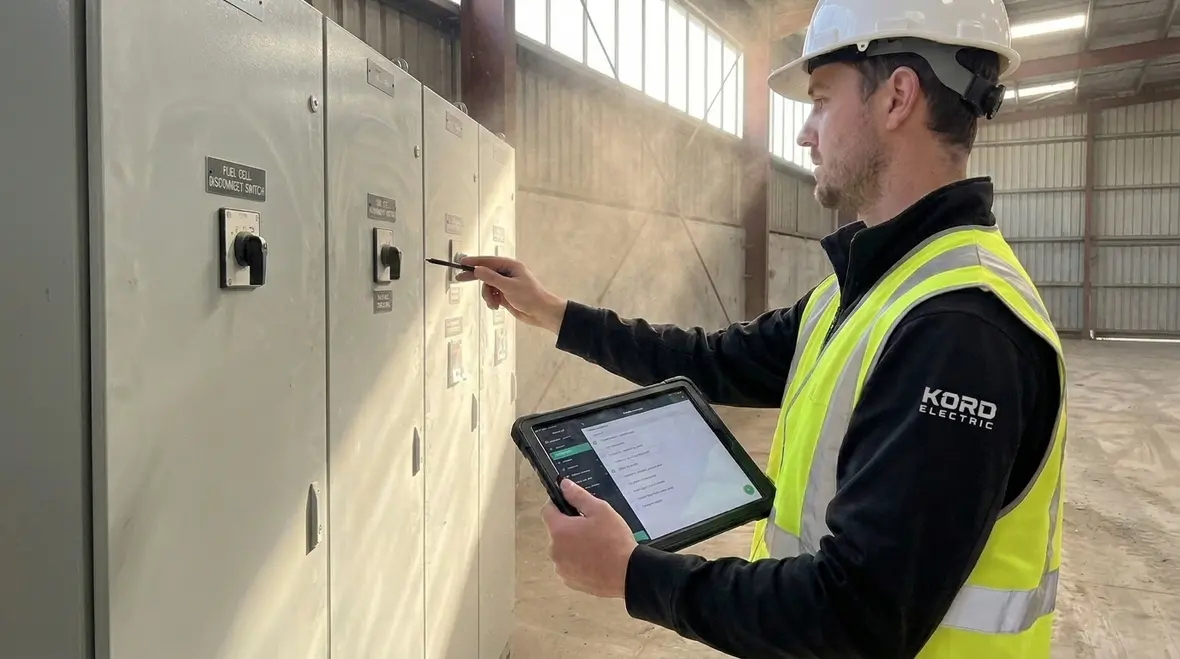
Many of our conversations start with a simple question from facility leaders: “Is this fuel cell setup code compliant?” The better question is, “Can we isolate it safely and predictably under stress?” NFPA 70 Section 692.13 fuel cell system disconnect is one of the answers, provided you treat it as part of a broader electrical safety story instead of a last-minute checkbox before inspection day.
What NFPA 70 requires for fuel cell installations in plain language
NFPA 70 lays out rules that help protect people, property, and equipment. For fuel cell systems, the code treats disconnect and control as more than convenience. Consequently, it focuses on how operators isolate a system safely, especially when the system needs service, troubleshooting, or emergency shutdown.
Here is the practical way we explain it to others on site. First, the fuel cell system is not like a basic plug-in appliance. It involves energy conversion and power output that can continue operating until it is properly controlled. Second, a disconnect point must support safe isolation in a way responders and qualified workers can understand and use. Third, the design must align with the system’s voltage and operating behavior so that isolation truly stops the hazard.
Our technicians often compare it to a fire door. People do not admire it when it works, but they remember it when it fails. Likewise, a proper disconnect scheme does not make headlines, but it keeps a facility from turning into an expensive “after the fact” learning experience.
For facility teams that want a broader primer on how the National Electrical Code hangs together, we often point them to Kord Electric’s educational resources on NFPA 70, including our in-depth guide to the National Electrical Code for 2026. That kind of foundation makes it easier to see where Section 692.13 fits in with other rules that govern service equipment, overcurrent protection, grounding, and labeling across the rest of the system.
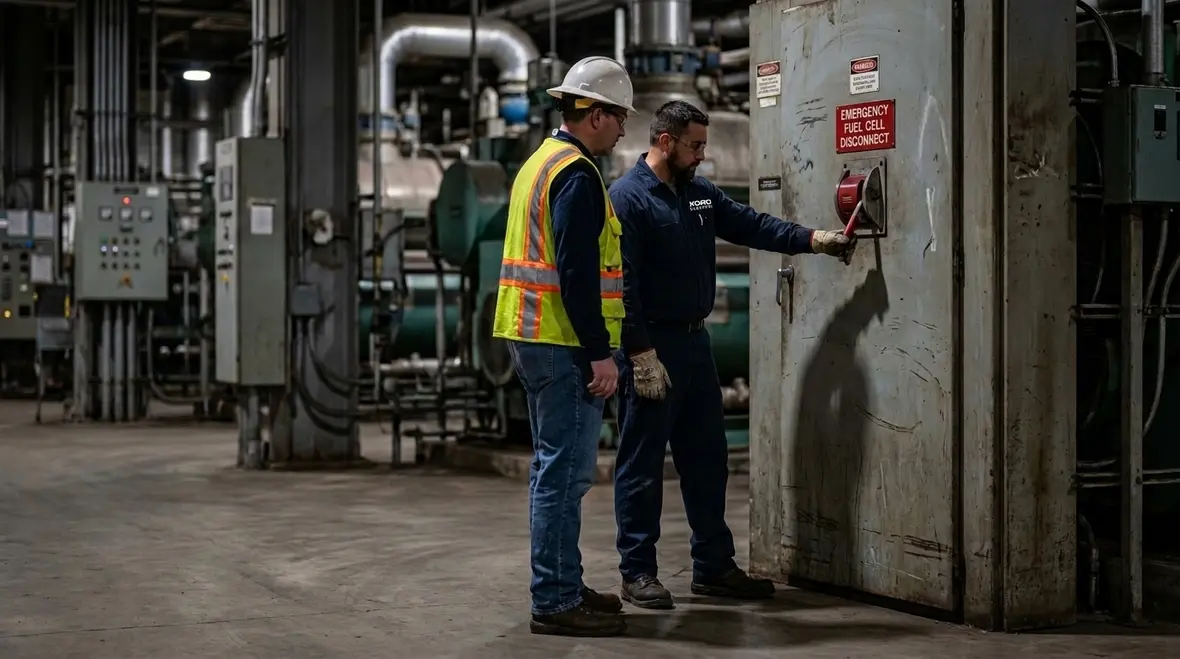
By pairing the overarching NEC framework with the specific requirements in NFPA 70 Section 692.13 fuel cell system disconnect, facility owners gain a clearer sense of how design decisions today affect maintenance windows, shutdown strategies, and risk exposure years from now.
How disconnecting means support safety, service, and emergency response
Even when a system functions well, it needs service. Moreover, service does not happen in a perfect world with perfect timing. A component fails, a sensor goes out, or a control board needs replacement. Therefore, disconnecting means must allow qualified personnel to isolate the fuel cell system safely and effectively.
When we review a fuel cell electrical plan, our expert service staff looks for clarity and usability in the field. We focus on how the disconnect can be reached, how it is labeled, and how it fits into the facility’s broader shutdown strategy. Because commercial and industrial sites often have layered safety processes, the disconnect must integrate with them rather than contradict them.
In many facilities, teams also coordinate with fire safety requirements and site emergency procedures. That coordination matters because the building emergency plan expects predictable electrical behavior. If the system does not isolate cleanly, response times can stretch and risk increases. So, we help teams align fuel cell isolation with the rest of the site safety architecture.
And yes, we sometimes joke that electricians live in a world where “just push the button” is never a plan. It is a movie line. Real facilities need labels, procedures, and equipment that behaves exactly as designed.
Disconnecting means that follow NFPA 70 Section 692.13 fuel cell system disconnect also make life easier for operations teams during drills and after-action reviews. When a site walks through an emergency shutdown sequence, the difference between “everyone understands the disconnect path” and “everyone is guessing” shows up immediately in timing, communication, and confidence.
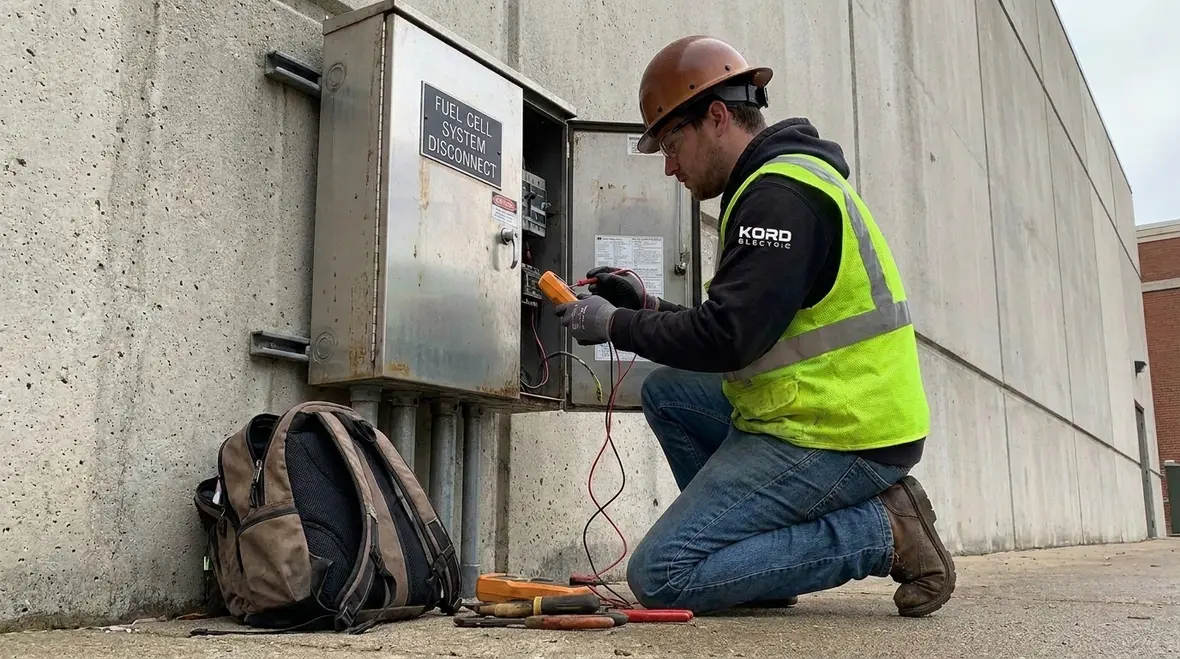
When those drills happen in buildings with multiple alternative energy sources—fuel cells, solar, storage, and backup generators—the clarity of each disconnecting means and the way they interact becomes a core safety feature, not a behind-the-scenes detail.
Labeling, location, and access: what our teams check during commissioning
We build commissioning checklists around what field workers actually need. As a result, we verify that disconnecting points are installed in a practical location that supports quick access by qualified personnel. We also confirm that labels and markings guide the right actions without guesswork.
For major property buildings, it is not enough that the disconnect exists. It has to be reachable under the conditions that matter. For example, if an area is locked down during certain operations, the disconnect path must still work within established procedures. Likewise, the disconnect scheme must respect the physical layout so technicians can work safely without violating access requirements.
Our technicians also check how the system disconnect aligns with other equipment nearby. In real projects, fuel cell systems often sit near switchboards, panels, and control devices. Therefore, the disconnect must not create confusion about which device isolates which part of the power flow. We reduce that confusion by reviewing diagrams, confirming labeling in the field, and documenting the final setup.
Transitioning from design to install is where problems show up most often. Consequently, our team uses site walkthroughs to catch mismatches early, not after the inspection. We also prepare O and M teams with clear explanations so they do not have to “learn it live” during a fault.
During this phase, we also help facility teams connect the dots between their fuel cell disconnecting means and larger topics such as electrical code upgrade planning and ongoing maintenance. When a project includes broader electrical improvements, our commissioning checklists tie NFPA 70 Section 692.13 fuel cell system disconnect to other NEC-driven upgrades so the whole system works as a single, understandable unit.
Working with code, inspectors, and facility teams
Compliance is not just about meeting code text. It is about making the system understandable to the people who will maintain it. When our team supports a commercial or industrial installation, we communicate in a way facilities managers can use. We explain what inspectors will look for, what documents need to match the field, and how to keep records clean.
Many owners ask if we can “just handle the electrical.” Others expect that electrical work will blend into existing processes. We do both. We handle the electrical scope, and we also help the broader facility team understand how the disconnecting arrangement affects operations and emergency response.
If you are referencing the guidance from recognized resources, you will notice recurring themes: disconnecting means must support safe isolation, and the install must follow the NEC framework that governs electrical safety in the U.S. While code sections can feel dense, our expert service staff breaks them down to the decisions that matter. For fuel cell systems, those decisions often include isolation strategy, equipment labeling, and coordination with other safety systems.
And because no one wants surprises, we encourage teams to confirm requirements before the final pull of permits. Planning early avoids delays. It also keeps costs from creeping up like a villain in a superhero movie.
For facilities that manage multiple projects at once, we often pair NFPA 70 Section 692.13 fuel cell system disconnect planning with broader consulting on electrical code upgrades, emergency power strategies, and maintenance programs, so the disconnects, panels, and backup systems all tell the same safety story to inspectors and internal stakeholders.
Integration with existing electrical systems and power flow planning
Fuel cell systems seldom operate alone. They tie into building power distribution, controls, and sometimes backup strategies. Therefore, a good disconnect plan must reflect how power actually flows through the facility.
Our team approaches this as a system, not a single device. We review upstream and downstream equipment and consider how the disconnect will affect operation during normal and abnormal conditions. Then we make sure the disconnecting arrangement supports safe isolation without creating new hazards, such as leaving energized paths that technicians did not expect.
In industrial settings, power flow planning can be tricky. Loads can move between modes, and controls can shift behavior based on demand. For that reason, our technicians confirm that the disconnect sequence and control logic align with how operators manage the facility. This helps avoid situations where a disconnect isolates one part of the system but another part keeps producing power.
Moreover, transition plans matter. If a facility upgrades its electrical gear later, the disconnect labeling and documentation should still match the real arrangement. We help teams keep the “as built” picture accurate so future maintenance stays safe and efficient.
When we work with commercial electrical systems that already include complex distribution, we also reference complementary planning tools—such as data-driven electrical design approaches and surge protection strategies—so the fuel cell integration and its disconnecting means sit neatly inside a modern, code-minded electrical backbone instead of bolted on as an afterthought.
NFPA 70 Section 692.13 fuel cell system disconnect in operation: what facilities should plan
Once installed, the disconnect strategy must remain usable and consistent. That means maintenance planning, staff training, and periodic verification of labeling and equipment condition. Even great installs can drift over time if the facility team does not keep the system updated.
At Kord Electric, we support commercial and industrial facilities with a focus on ongoing safety. Our expert service staff explains what facilities teams should monitor, how to document changes, and how to handle service events without bypassing safeguards. We also help teams understand that the disconnecting arrangement connects to the facility’s larger safety posture.
In addition, we advise owners to treat fuel cell disconnects as part of a lifecycle plan. That includes inspection intervals, condition checks, and clear access pathways. When a system is kept in good order, it supports safer operations and fewer downtime events. It also makes inspections easier, because the installation remains aligned with what the drawings and labels communicate.
And if you ever hear someone say, “We will figure it out later,” we gently remind them that electricity does not do later. It does now. Then we do the work the right way.
For facilities in and around Los Angeles County, that lifecycle approach often includes partnering with an electrical contractor who understands both code and operations. When you coordinate NFPA 70 Section 692.13 fuel cell system disconnect compliance with broader services—like panel upgrades, emergency power, and preventive maintenance—your fuel cell installation becomes one more stable, predictable piece of a larger electrical system, not a mystery box on the one-line.
FAQ
Conclusion: bring code clarity to your next fuel cell project
Fuel cell systems can deliver real value to commercial and industrial facilities, and safety planning needs to match that ambition. Our technicians at Kord Electric help owners and facility teams understand how disconnecting means work, how to verify installation in the field, and how to keep documentation aligned over time. If you are designing, commissioning, or maintaining a fuel cell system, contact us early. We will review your plan, explain the key requirements, and help you move forward with confidence.
If your facility is located in or around Los Angeles County and you are planning a fuel cell installation, an upgrade to your electrical infrastructure, or both, consider coordinating your NFPA 70 Section 692.13 fuel cell system disconnect strategy with comprehensive regional support. Aligning your project with professional Los Angeles County commercial and industrial electrical services helps ensure that your disconnects, distribution equipment, and long-term maintenance all pull in the same direction: safer power, fewer surprises, and smoother inspections.
And when your team wants deeper background on why the NEC reads the way it does, you can connect this fuel cell work with broader resources such as Kord Electric’s guide to understanding NFPA 70 for 2026, so every disconnect, panel schedule, and shutdown procedure has a clear code story behind it.