Office Building Lighting Efficiency Strategies
Boosting Office Building Lighting Efficiency Without Wasting a Single Watt
Modern office building lighting systems can either help a facility run smoothly or quietly drain money through avoidable waste. When we focus on office building lighting efficiency in the early stages, we cut energy use, stabilize comfort, and reduce downtime. Others try to “just swap bulbs,” but that is like fixing a leaking roof by buying a bigger bucket. We take a more complete approach for commercial and industrial facilities, and for major property buildings, so lighting performance stays strong across seasons, tenants, and work hours.
Next, we walk through how we measure what matters, how we design for real use, and how our technicians keep systems performing at peak levels through ongoing service. And yes, our service team explains everything in plain language, because you should not need an engineering degree to understand why your lights behave the way they do.
Audit the Lighting System Like You Mean It
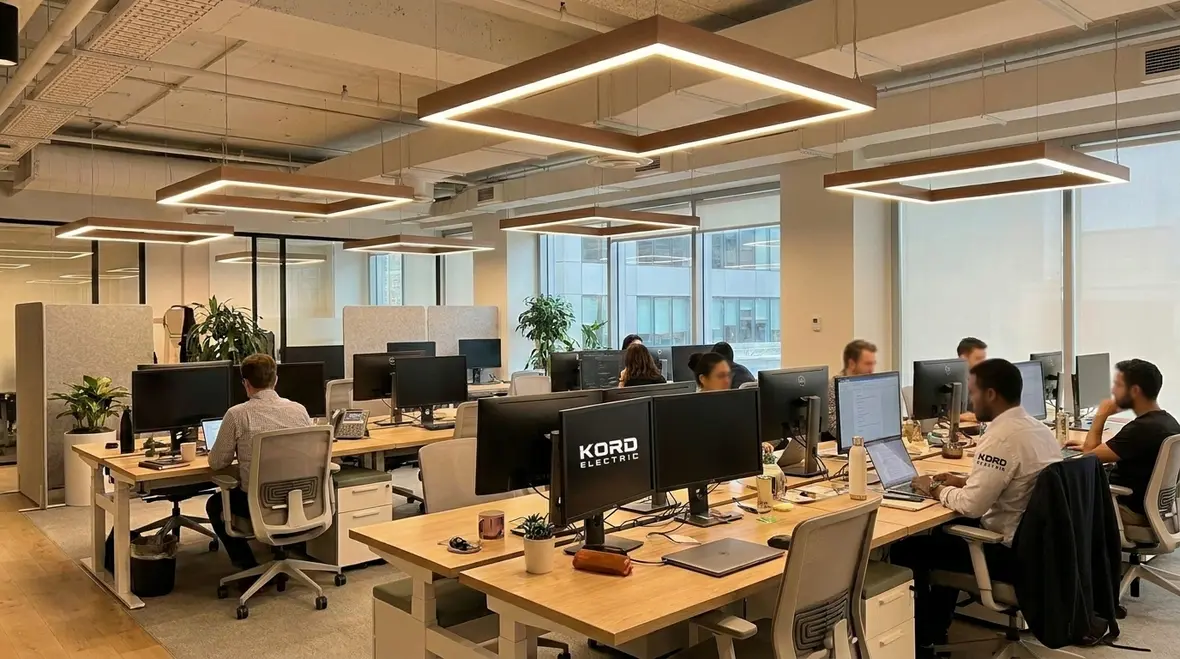
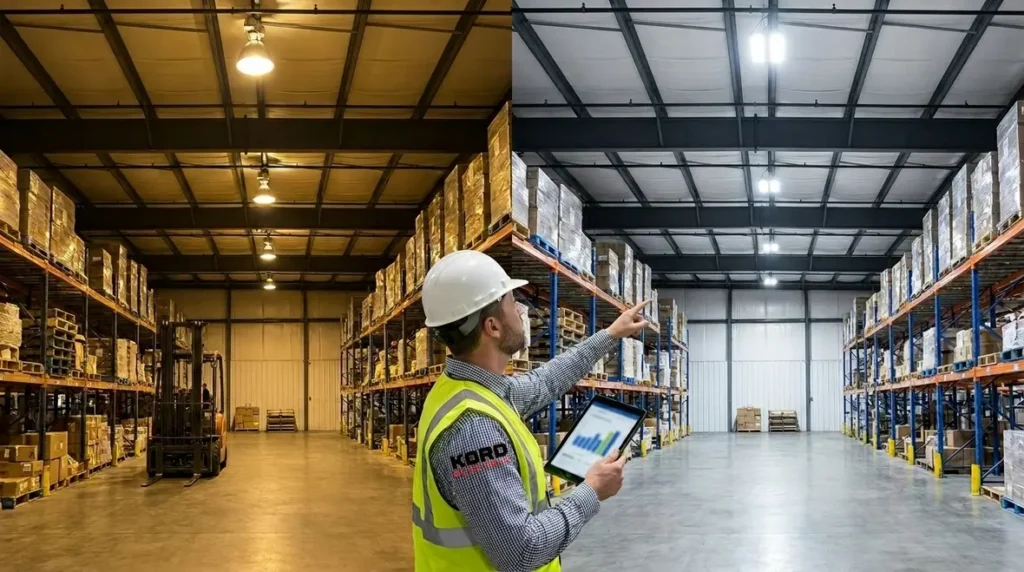
We start by looking at the entire system, not just one fixture or one hallway. A proper assessment covers electrical load, fixture condition, control devices, and lighting levels across zones. After that, we compare real measurements to design targets. Then we map where energy goes and where comfort drops. This is where office managers often feel blindsided, because the problem is rarely “the light is bad.” The problem is usually “the system is aging, tuned wrong, or both.”
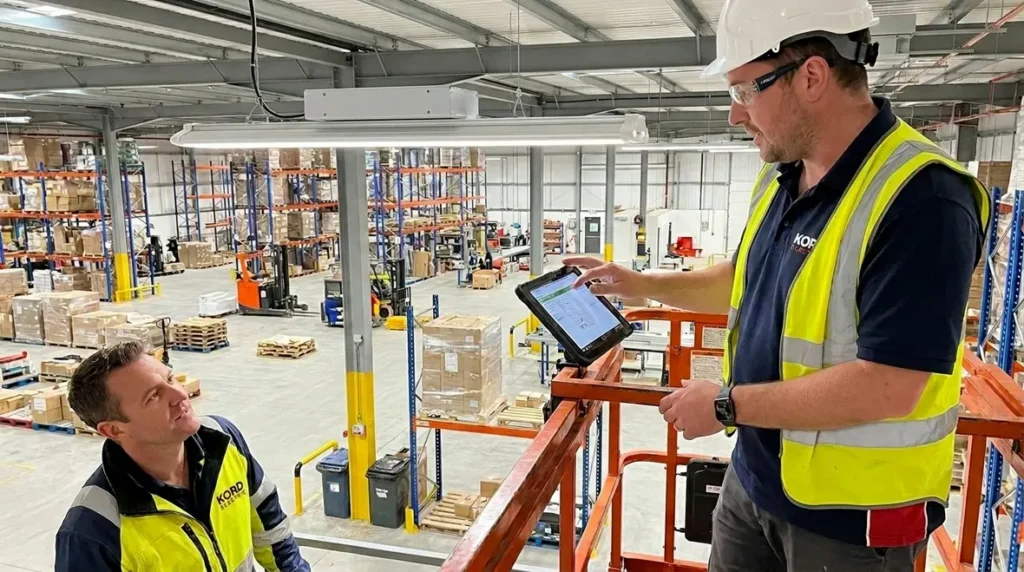
Our technicians and expert service staff use site checks to identify drivers of wasted energy, such as outdated dimming behavior, sensors stuck in the wrong mode, or lamps and drivers that no longer deliver rated output. Then we document findings in a way that helps building teams make decisions fast. In other words, we do not leave you with a mystery slideshow. We give you an actionable plan.
Plan Controls That Match How People Actually Work
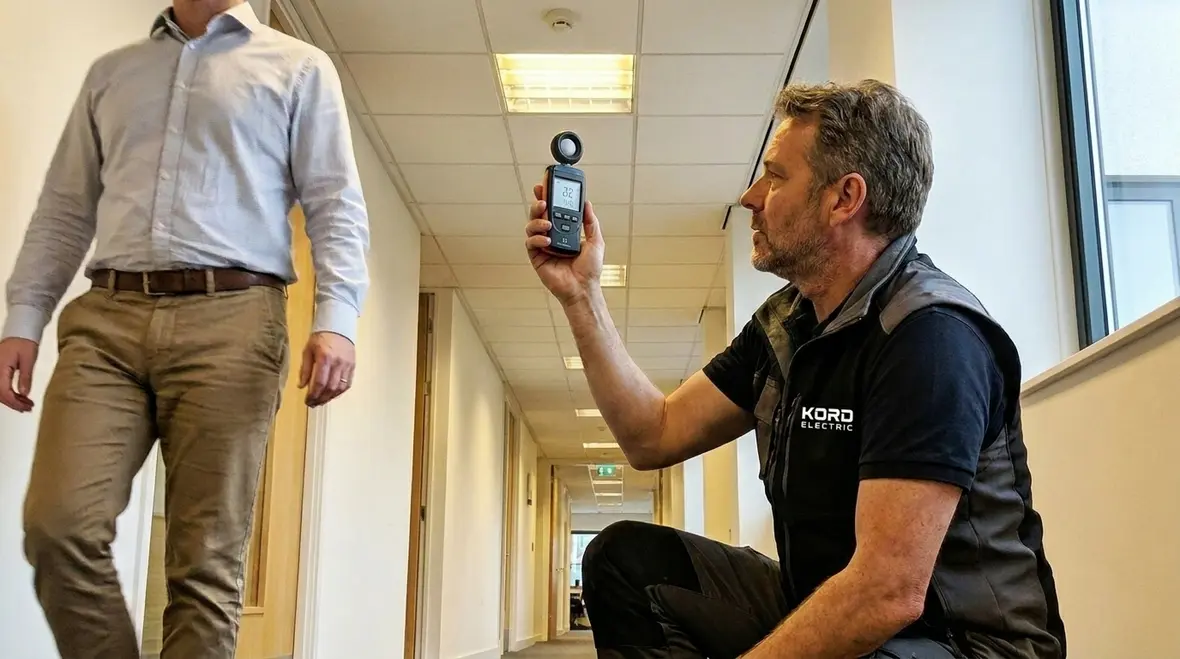
We see it all the time: a building looks great on paper, but staff never uses spaces the way the original design assumed. That is why we help clients plan controls around real schedules and occupancy patterns. When controls align with how people move, lighting levels drop when they should, and they brighten when they matter.
For commercial and industrial facilities and major property buildings, we typically support these control strategies:
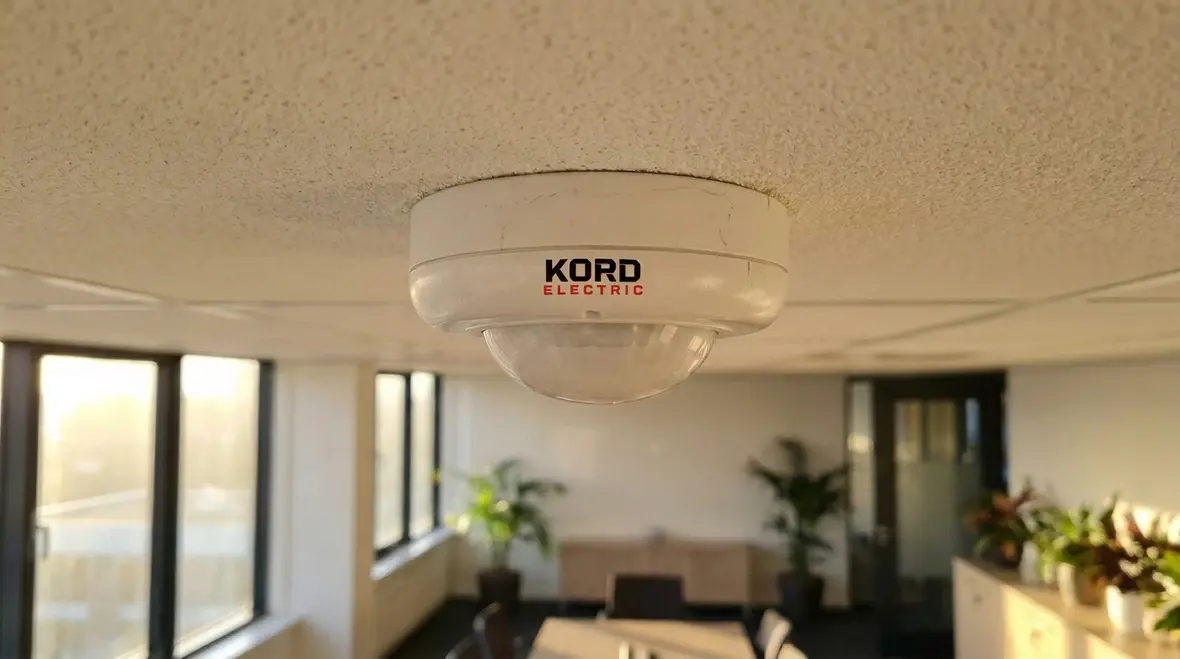
- Occupancy sensing for offices, restrooms, corridors, and meeting spaces
- Daylight harvesting near windows, so artificial light steps down when sunlight is strong
- Time-based scheduling for predictable zones like lobbies and service corridors
- Step dimming to avoid harsh flicker and to keep comfort steady
Then, once controls work, we verify performance. We adjust settings so sensors do not overreact to shadows, and so dimming curves do not make spaces feel like a “set on low power mode.” Nobody wants that mood, unless a tenant is filming a spy movie in room 402.
Upgrade Fixtures and Drivers Without Creating New Problems
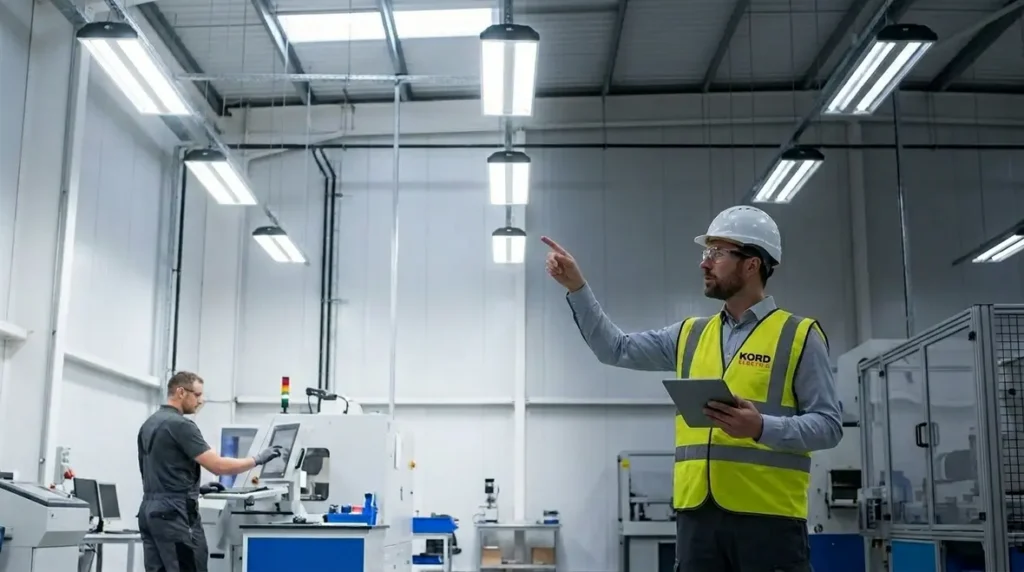
Lighting efficiency depends on more than the bulb or the LED chip. It also depends on drivers, optics, wiring quality, and how the luminaire distributes light. Therefore, we recommend upgrades that fit the building layout and the control scheme already in place, rather than replacing components in a vacuum.
When we plan upgrades for our clients in commercial and industrial facilities, we look at:
- Lumen output stability over time, since output can fall before people notice
- Power factor and harmonic behavior, because electrical quality impacts efficiency
- Optical design for glare control and even distribution
- Compatibility with controls, so dimming remains smooth
Next, we confirm that the new equipment will not fight the existing system. If the control device expects one dimming style and the LED driver behaves another way, the result can be nuisance flicker, poor dimming depth, and higher maintenance calls. In short, we help prevent “upgrade regret.”

Preventive Maintenance That Protects Efficiency Over Time
Many teams treat lighting as a set-it-and-forget-it expense. Yet the truth is calmer and more predictable: lighting systems drift. Drivers age, sensors get dirty, contacts loosen, and wiring heats under load. As this happens, lighting efficiency declines even if the lights still turn on. That is why we recommend a preventive maintenance rhythm tailored to the building.
We support this approach through the preventive work we outline in our electrical preventive maintenance service. You can find details here: https://kordelectric.com/electrical-preventive-maintenance/. In that framework, we focus on checking components before they fail, verifying performance, and keeping safety systems in strong shape. Then we document what we find so facility teams can plan budgets with confidence.
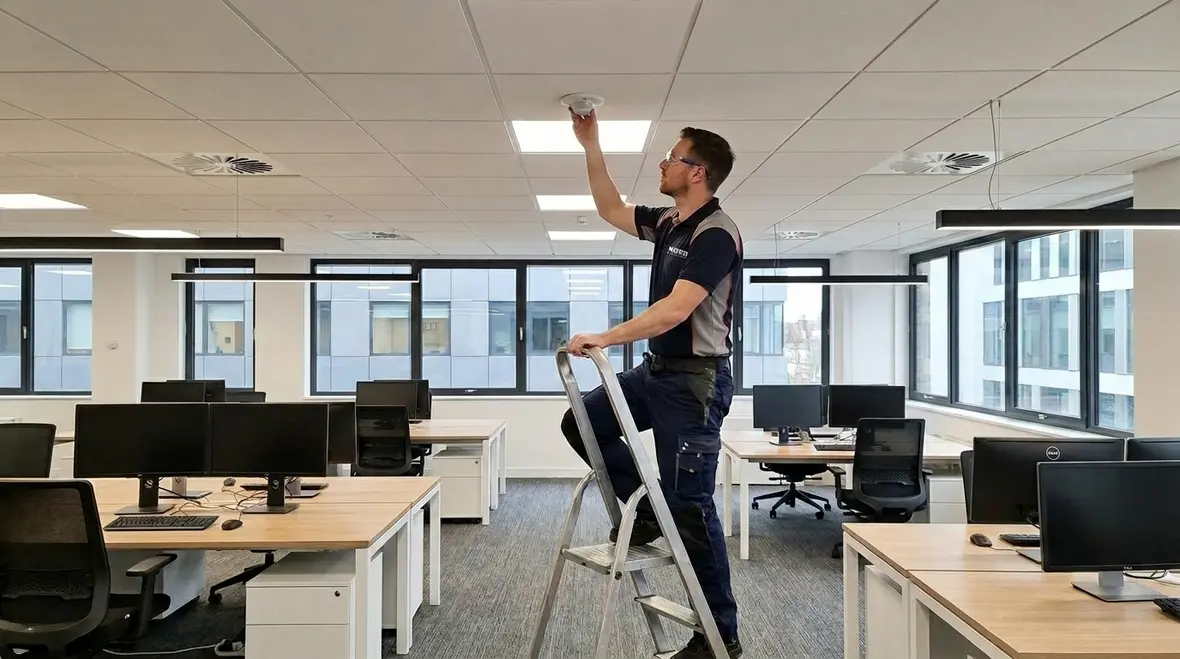
Our technicians also clean and inspect where needed, because even small issues can affect output and sensor accuracy. And because we work with commercial and industrial facilities and major property buildings, we schedule service in a way that respects operating hours and tenant needs. The goal stays simple: keep efficiency steady, keep comfort stable, and keep unplanned outages off your calendar.
Measure Results With Real Metrics, Not Guesswork
Once we design improvements and complete upgrades, we do not stop at “it looks brighter.” We measure. We track lighting levels, energy trends, and control response. Then we compare results against baseline data. This step matters, because efficiency changes can be subtle at first. A corridor might feel fine, but if dimming behavior does not hit the right levels during low occupancy, energy savings will lag.
We also evaluate how upgrades affect daily operations. For example, if meeting rooms no longer need manual switching, staff spend less time dealing with lighting issues and more time doing their work. That reduction in friction saves money in a way that does not always show up in utility invoices.
Furthermore, we help clients align lighting performance with building goals like sustainability targets and tenant satisfaction. And yes, we sometimes get asked if our process is “too much.” Our response is calm: if the goal is office building lighting efficiency, then thorough measurement is not optional. It is the bridge between good intentions and real savings.
Common Lighting Issues We See in Commercial Facilities
Even well-run buildings run into trouble. Below are problems we commonly uncover during service visits, along with the kinds of fixes our technicians apply.
- Sensors that trigger too often: We recalibrate placement, clean sensing surfaces, and adjust sensitivity so lighting responds correctly to real occupancy.
- Dim levels that feel “wrong”: We review dimming curves and control settings so staff see comfortable light without wasting power.
- Hot spots and glare: We check optics and layouts to improve even distribution and reduce discomfort.
- Electrical drift: We inspect connections and verify electrical behavior so the system operates safely and efficiently.
- Driver aging: We identify components losing output or stability and plan targeted replacement to avoid ripple failures.
When clients address these items early, the building keeps its performance longer. Otherwise, the system slowly turns into a budget leak. Not dramatic, just steady, like a show where the plot never resolves. We prefer resolutions.
Frequently Asked Questions About Office Building Lighting Efficiency
Connect Lighting Efficiency With Your Broader Electrical Strategy
Lighting rarely operates alone. In commercial and industrial facilities, lighting loads share space with panels, switchgear, HVAC, and sensitive equipment. When those systems work together, the building runs smoothly. When they do not, voltage swings, nuisance trips, or hidden electrical issues can quietly cut into efficiency.
That is why many property teams link their lighting strategies with broader electrical services. Structured programs like Kord Electric’s electrical preventive maintenance keep panels, breakers, and distribution equipment in good shape, so efficient lighting has a stable foundation. For facilities navigating unstable power or sensitive loads, dedicated support for voltage fluctuations in commercial and industrial facilities helps protect both lighting systems and critical equipment from unnecessary stress.
When you align office building lighting efficiency with preventive maintenance, voltage stability, and code-compliant installation practices, upgrades stop feeling like one-off projects. Instead, they become part of a calm, organized plan that supports uptime, safety, and predictable operating costs.
Ready to Make Your Lighting System Perform Better?
When we handle lighting efficiency for commercial and industrial facilities and major property buildings, we move beyond quick fixes and build long-term value. Our technicians evaluate your current system, align controls with real usage, and support upgrades with preventive service so performance stays steady. If you want a calm, methodical plan that reduces energy waste and protects comfort, reach out to Kord Electric. Let us review your lighting system and show you practical next steps. Then your lights will work like they should, not like they merely survive.
For property leaders ready to connect lighting upgrades with a larger electrical roadmap, Kord Electric’s dedicated services for commercial recessed lighting installation, emergency electrical services, and electrical preventive maintenance can be combined to support both day-to-day performance and long-term reliability.