Office Lighting Retrofit: Costs, Benefits & Energy-Efficient Design
Office Lighting Retrofit: Costs, Benefits & Energy-Efficient Design is one of those projects that sounds simple until you live through it. At Kord Electric, we see it every day: a commercial space that wastes energy, drains comfort, and quietly frustrates employees and visitors. Then a lighting retrofit begins, and everything changes in a calm, measurable way. We help property managers, owners, and facility leaders plan how to upgrade, what to upgrade, and why it will pay off. In this article, our team walks through retrofit paths that improve productivity, reduce maintenance, and support modern energy goals. And yes, we keep the process practical, because nobody wants their office lit like a warehouse, unless they are secretly training forklifts for the NBA.
How commercial office lighting upgrades usually start
In most major property buildings, the office lighting retrofit conversation begins with a complaint that sounds small, but isn’t. People say the lights feel harsh. Or they say they cannot focus. Or they notice some areas look brighter while others look like the lights are losing faith. At the same time, the facility team often sees higher electricity bills and frequent lamp or driver failures.
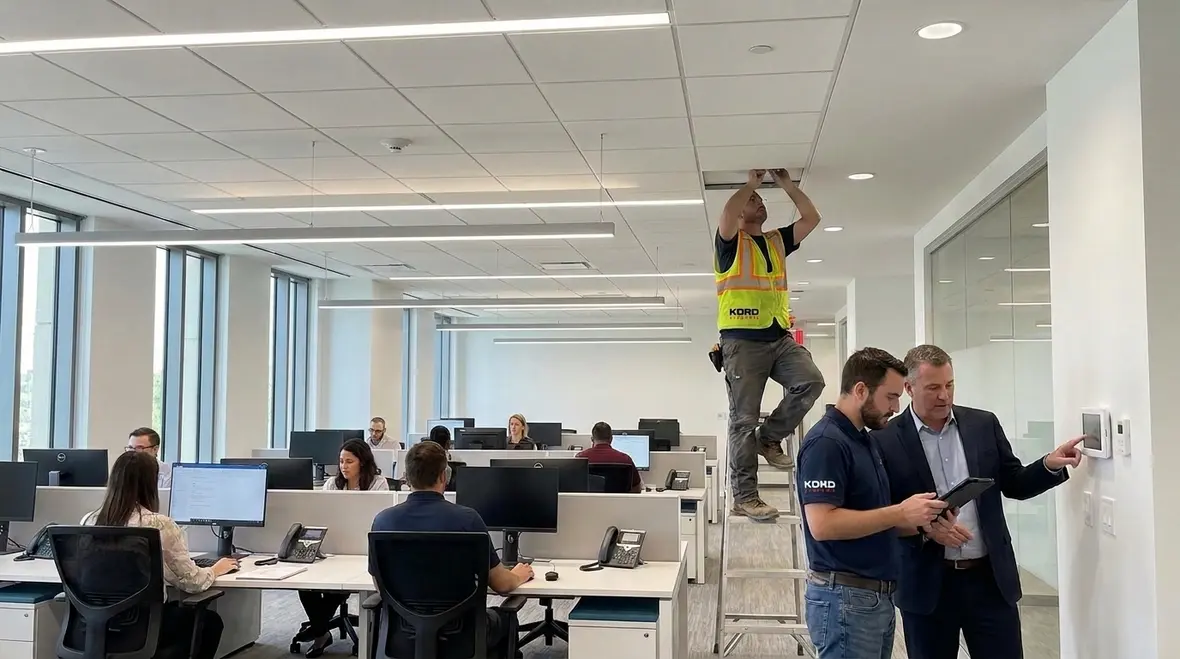
So we start with facts, not guesses. First, our technicians or expert service staff gather site details, including fixture types, existing wiring, dimming control presence, and how the space gets used. Then we map the lighting problem to the real cause. For example, aging optics, wrong color temperature, and outdated control layouts can all produce discomfort even when wattage seems “fine” on paper.
After that, we clarify goals. Some clients want better visual comfort. Others want predictable energy savings. Many want both, plus a safer workplace and a cleaner maintenance plan. And because commercial and industrial facilities cannot pause operations for long, we plan work in a way that respects schedules and building access rules.
What makes a lighting retrofit worth the investment
We’ve noticed that property teams compare this decision to buying a new suit. The problem rarely looks dramatic from far away. Up close, though, poor fit shows up in how people feel and how they move. Lighting works the same way.
Office Lighting Retrofit: Costs, Benefits & Energy-Efficient Design typically earns its value through three practical results: lower operating cost, improved comfort, and smarter controls that prevent wasted light. When the building uses dimming strategies and occupancy schedules, lights stop burning at full power when nobody needs it.
Furthermore, modern LEDs reduce maintenance because they last longer than many older sources. That means fewer service calls and less downtime. In major property buildings where maintenance crews already juggle multiple systems, that alone can reduce stress.
And there’s the productivity angle, which we treat seriously. Better glare control and consistent illumination help employees read screens comfortably, reduce eyestrain, and maintain attention. When people work with fewer visual distractions, they do better work. It’s not magic. It’s physics and good design doing their jobs.
If you want to see how this connects with broader building strategies, it pairs naturally with topics like office building lighting energy upgrades and efficiency planning across your entire property.
Project planning that protects operations and budgets

Next, Kord Electric treats planning as the main event. We build the project scope around how your facility runs, not around how our calendar runs. Then we reduce surprises by checking conditions early.
Our expert service staff confirm fixture compatibility, measure photometric needs, and review control wiring pathways. Then we choose the retrofit approach that matches your ceiling layout and electrical constraints. If the current wiring supports modern controls, we can often add capability without replacing everything. If it does not, we guide you to a path that still fits budgets while meeting performance requirements.
We also plan for phased installation, because commercial tenants cannot shut down large areas all at once. Instead, we schedule work by zones, with clear communication about access times and cleaning steps. In other words, we keep the lights improving without turning the office into a construction reality show.
Finally, we confirm how the new system will be tuned. A retrofit plan should not end after installation. We verify output levels and control behavior so the space stays consistent through daily use.
Coordinating lighting upgrades with broader electrical plans
Office lighting retrofits rarely live in a vacuum. They often tie into broader electrical upgrades, distribution work, or energy initiatives. That’s why many property teams bundle their retrofit planning alongside efforts covered in resources like Kord Electric’s electrical infrastructure upgrade guides and efficiency strategies. Keeping these aligned helps you avoid repeat disruptions and surprise scope creep.
Cost drivers in a commercial lighting retrofit
Let’s talk money like adults. Costs vary based on what exists today and what you need tomorrow. A smart Office Lighting Retrofit: Costs, Benefits & Energy-Efficient Design plan prices the work based on the full system, not just the fixture count.
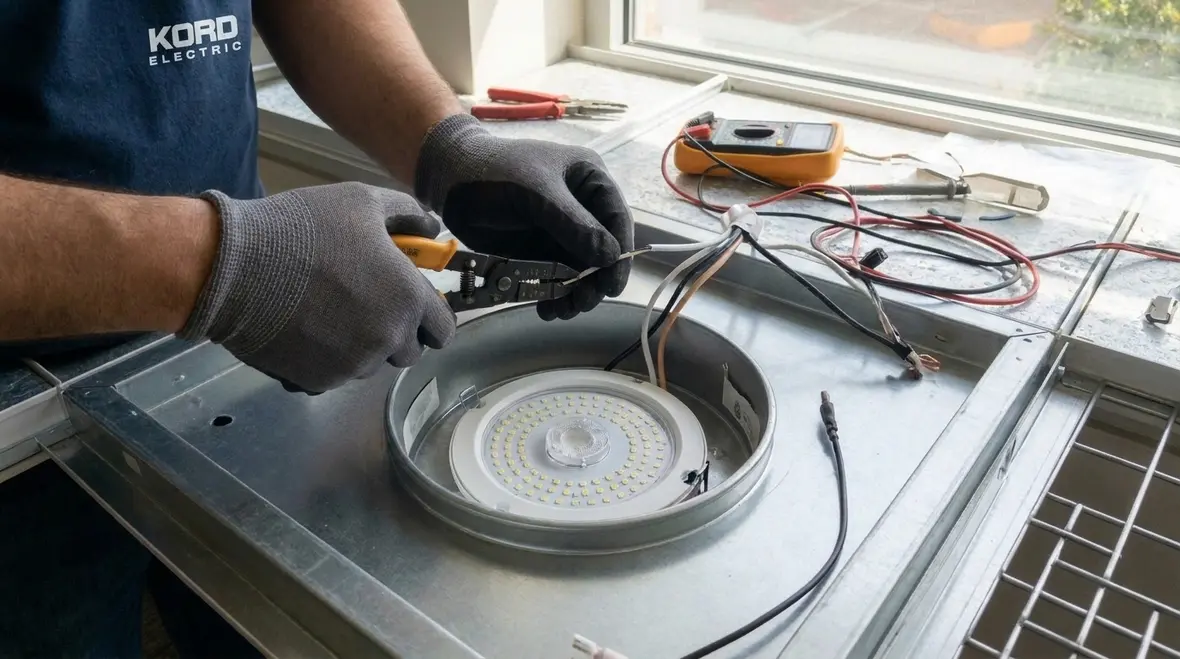
Key cost drivers typically include fixture type, labor complexity, and controls integration. For example, the retrofit path changes if you use existing housings with LED modules, or if you replace the entire fixture. Controls add value, but they also add scope. If you move from simple on off switching to dimming and occupancy sensing, you should expect additional design and commissioning work.
Also, building constraints matter. Some offices need work around tenant operations, while others allow faster ceiling access. If electrical panels require updates, that will affect cost. If we need new low voltage control wiring, that affects installation time and materials.
However, we help property owners reduce risk by selecting solutions that match the building’s operating model. If the space runs at predictable times, scheduling can deliver strong savings. If occupancy varies throughout the day, sensors can do the heavy lifting. That way, you avoid paying for features you will not use.
And yes, sometimes the best financial decision is also the most boring one: fixing the control strategy before expanding the lighting footprint. Boring decisions tend to work. Like traffic laws. Or coffee before meetings.
Connecting retrofit costs with long-term ROI
When you look at cost drivers, it helps to compare them against long term gains in energy savings, maintenance reduction, and tenant satisfaction. Articles like Kord Electric’s warehouse energy saving retrofit guides and LED ROI breakdowns show that well-designed lighting upgrades often pay back faster than expected, especially in buildings where lights run long hours and old fixtures eat power for fun.
Energy efficient design choices that improve comfort and savings

Now we get into the part your employees will actually notice. Energy efficient design should not feel like a compromise. It should feel stable, comfortable, and consistent.
First, we focus on light distribution and glare control. Even bright lights can make people uncomfortable if the beam pattern causes reflection on desks or screens. So we match the fixture optics to the task areas, especially where employees read, type, or use monitors.
Second, we address color quality. The right color temperature can support focus and reduce the “too cold” or “too yellow” feeling that makes people cranky. And when a building uses multiple zones, we keep the appearance consistent so employees do not feel like they work in different seasons every time they walk down the hall.
Third, we design controls around how the building operates. With dimming, lighting levels can track activity. During low occupancy periods, lights reduce output while maintaining safe visibility. When people enter, illumination rises smoothly. This reduces energy waste and can also extend the life of components.
Finally, we coordinate the design with ceiling conditions, existing wiring, and maintenance goals. The best retrofit is not just efficient. It is serviceable. That means choosing solutions that our technicians can maintain quickly and safely in commercial and industrial settings.
Using controls to unlock hidden efficiency
Controls are where many offices leave money on the table. Smart strategies like occupancy sensing, daylight harvesting, and time-based scheduling can trim hours of unnecessary runtime without making employees feel like they’re working in a cave. If you want to go deeper, Kord Electric’s resources on automated lighting controls and office lighting efficiency strategies show how these systems behave in real buildings, not just in spec sheets.
Common retrofit paths for productivity focused offices
To move from ideas to real outcomes, we typically recommend one of several retrofit paths, depending on ceiling design, fixture condition, and control needs. In our work, we align with office lighting retrofit options designed to support productivity and reduce waste.
- LED module retrofits when the existing housings are in good shape and the retrofit can preserve ceiling layout with minimal demolition
- Fixture replacements when existing fixtures cannot support the needed optics, driver upgrades, or control integration
- Control upgrades added to existing lighting systems where wiring and infrastructure can support dimming, scheduling, and occupancy sensing
- Zone based lighting layouts that separate task areas from circulation areas so each space uses the right amount of light
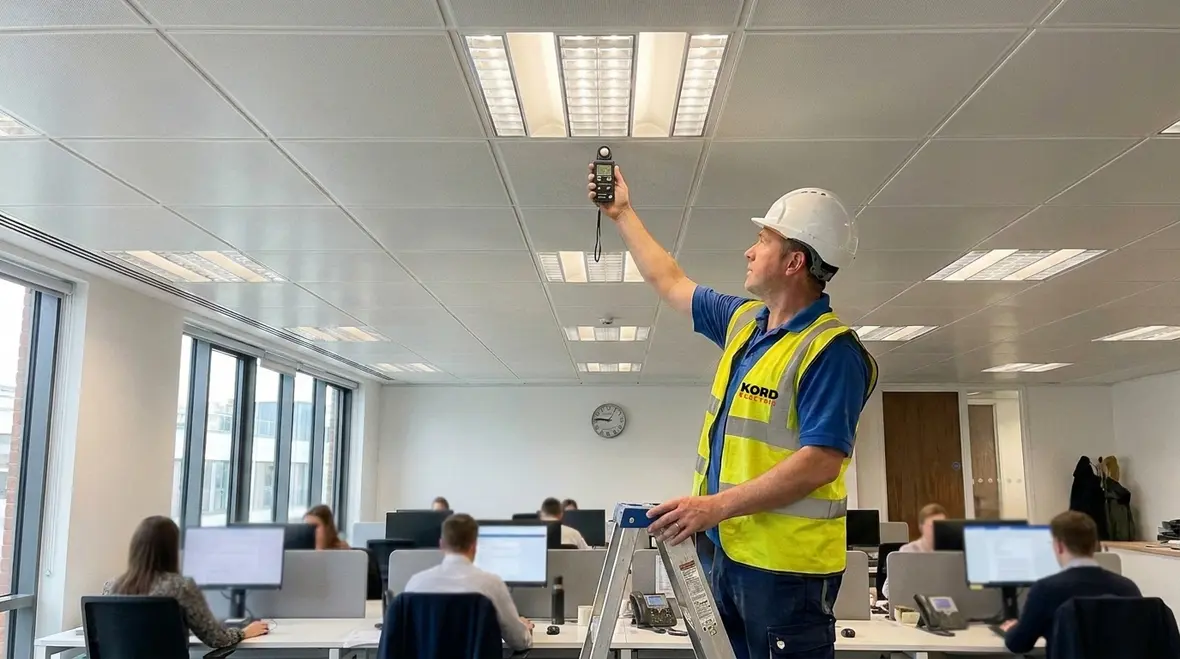
Then we tune the system. We don’t just install and walk away like it’s a vending machine. Our expert service staff verify that controls respond the way your building needs, and we check that the light levels feel uniform across the workspace. If a room has hotspots or underlit corners, productivity drops. We correct that.
Also, we keep the retrofit plan aligned with tenant expectations and safety requirements. Commercial and industrial facilities need dependable performance, and they need it consistently.
Supporting productivity, safety, and compliance together
In practice, the best retrofit paths support more than productivity alone. They also improve safety, visibility, and code alignment. That’s why Kord Electric connects lighting retrofits with topics like workplace lighting safety hazards and commercial recessed lighting strategies in other guides. Aligning those threads keeps your office from slipping into the “dim and confused” category over time.
FAQ about office lighting retrofit costs, benefits, and design
Choosing Kord Electric for your retrofit
When a company upgrades lighting, the real difference shows up in the details. Kord Electric brings technicians and expert service staff who treat the project as a system: fixtures, controls, electrical conditions, and the way people actually use the space. We plan for uptime, verify performance, and help property teams make decisions that protect budgets while improving comfort and efficiency.
If you want a clear retrofit path, reliable execution, and energy efficient results that your tenants will notice, we can help. Contact Kord Electric for a commercial site assessment and retrofit plan. Let’s get your building out of “dim and confused” lighting mode and into a calm, well-controlled, cost-smart future.
For property teams across Southern California, it also helps to partner with an electrical contractor that already delivers Los Angeles County electrical services for commercial and industrial facilities. That way, your lighting retrofit folds neatly into broader power, safety, and maintenance goals.
If you are exploring broader ways to boost comfort and focus across your building, you can also review options like office lighting retrofit options for productivity to see how different layouts, controls, and fixture types can support your long-term plans.
Office Lighting Retrofit: Costs, Benefits & Energy-Efficient Design works best when it is part of a bigger, calm strategy for how your building uses and manages power. That is where Kord Electric’s broader service offerings give you a single, steady partner instead of a patchwork of vendors.
Ready to map out your own retrofit? Our team is here to walk the site, review your existing lighting and controls, and design a path that respects your budget, your tenants, and your schedule.