Office Lighting Retrofit Options for Productivity
Kord Electric helps commercial and industrial facilities upgrade their spaces with modern office lighting retrofit options that improve productivity without wrecking the budget or the workday. In the first phase, we typically assess your current fixtures, controls, and light levels, then we recommend practical office lighting retrofit upgrades such as LED troffers, tunable white solutions, and smart controls. Next, our technicians plan the retrofit so teams keep working, not “living in a construction documentary.” Finally, we test performance on site so the light feels better the moment the crew finishes. That is the calm part. The faster part comes after: steadier brightness, fewer complaints, and a workplace that supports deep focus instead of fighting it.
Why lighting affects productivity in commercial spaces
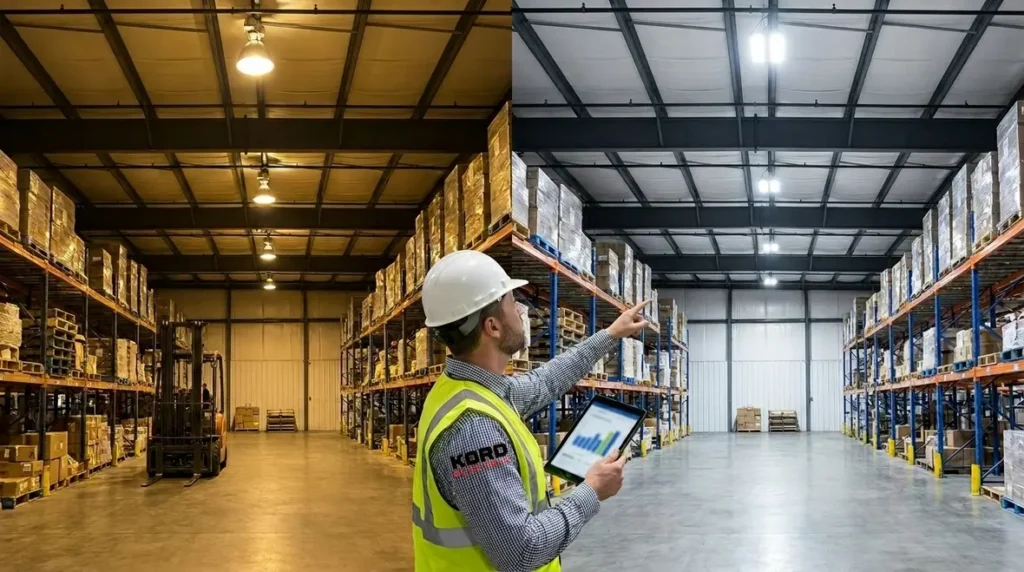
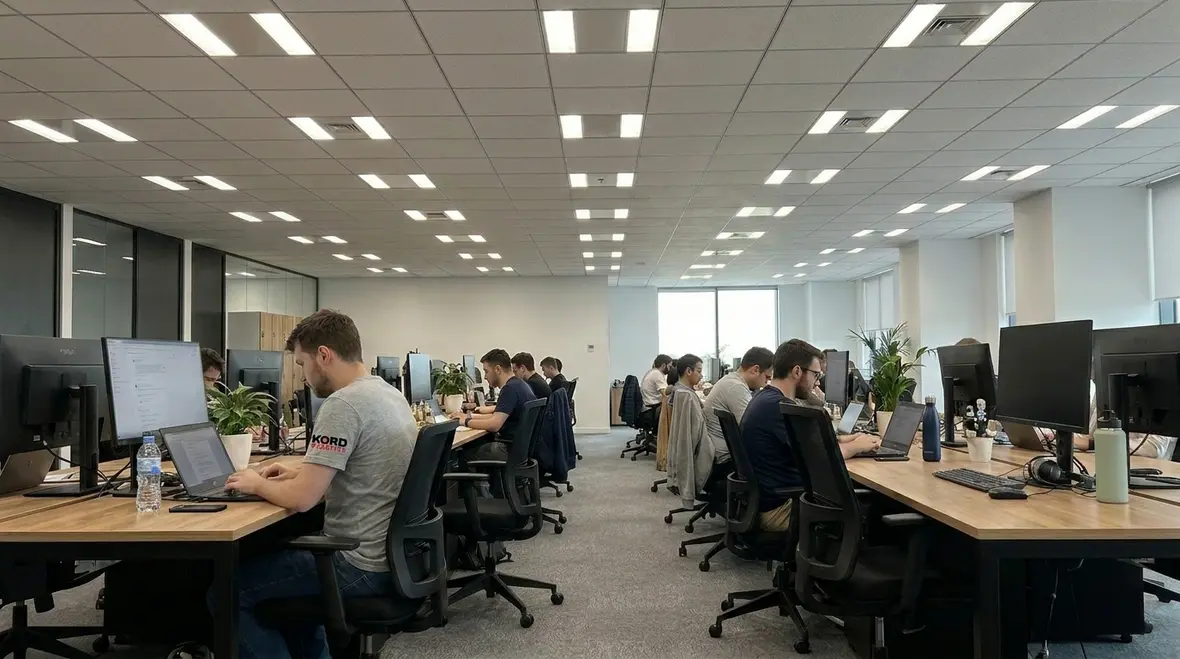
Others can treat lighting like decoration, but in commercial and industrial facilities, lighting shapes how people work. When light levels swing too bright or too dim, eyes work harder. As a result, focus breaks sooner, and fatigue creeps in. In addition, glare from older fixtures can create “hot spots,” which makes screens harder to read and meetings less comfortable.
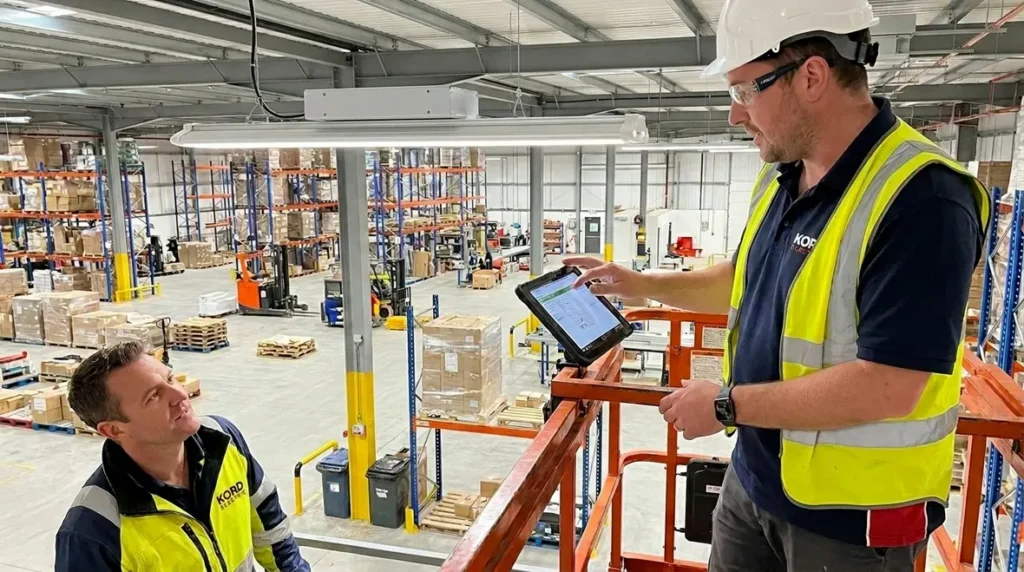
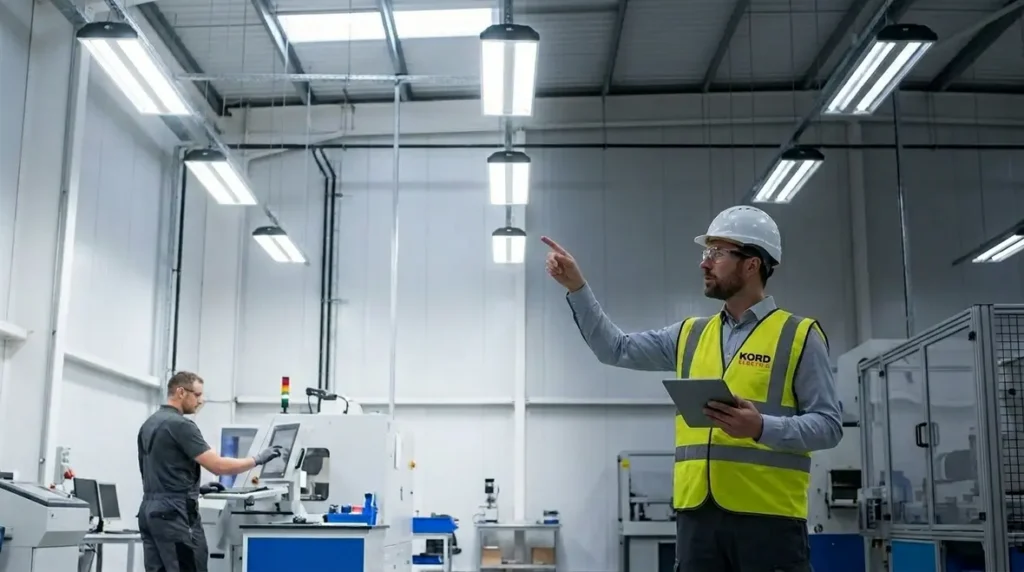
At Kord Electric, our service staff explains this in clear terms during site walkthroughs. We do not just point at a fixture and say “replace it.” Instead, we show how color quality, uniformity, and control behavior influence comfort across the whole floor. Then we connect the dots to productivity: better task visibility supports accuracy, while consistent lighting reduces the repeated micro-distractions that people do not always name.
And yes, lighting can make a space feel like it is always slightly “on the verge” of being upgraded. We fix that. Think less like a gloomy basement, more like an office that is quietly confident.
Start with a lighting audit, not a guess
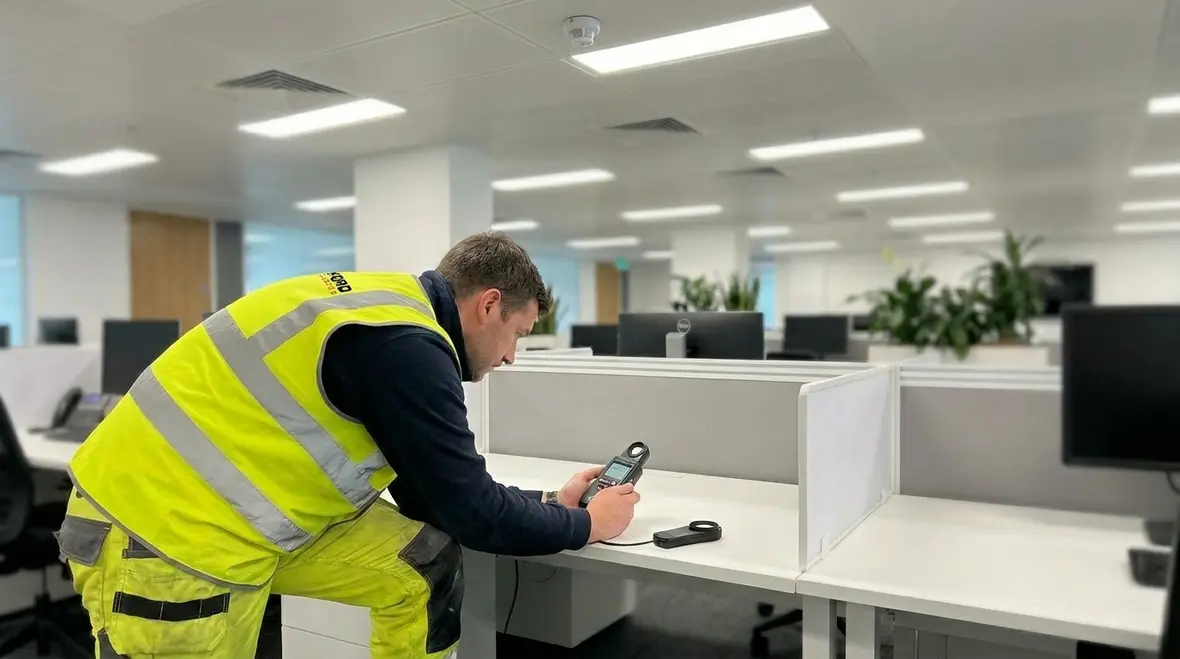
Some teams skip the audit and jump straight to lamps, but we rarely recommend that route. Instead, Kord Electric begins with an on site review of your current system, then we verify it with measurements. We evaluate footcandles at desk height, check uniformity, and identify glare risks from fixture geometry and mounting height. Meanwhile, we also consider how rooms get used, including conference areas, production admin spaces, and corridors connecting key zones.
Next, we check controls. If your space uses outdated timers, sensors that miss motion, or dimming that behaves unpredictably, productivity takes a hit. People end up “fixing” lighting with manual overrides. That is the kind of small rebellion nobody logs, but everyone experiences.
Our technicians also look at maintenance patterns. If old fixtures fail frequently, teams lose time when lights go out or flicker. Therefore, a proper audit helps us pick office lighting retrofit options that match your operating reality, not just the spec sheet.
LED upgrades that improve comfort without downtime
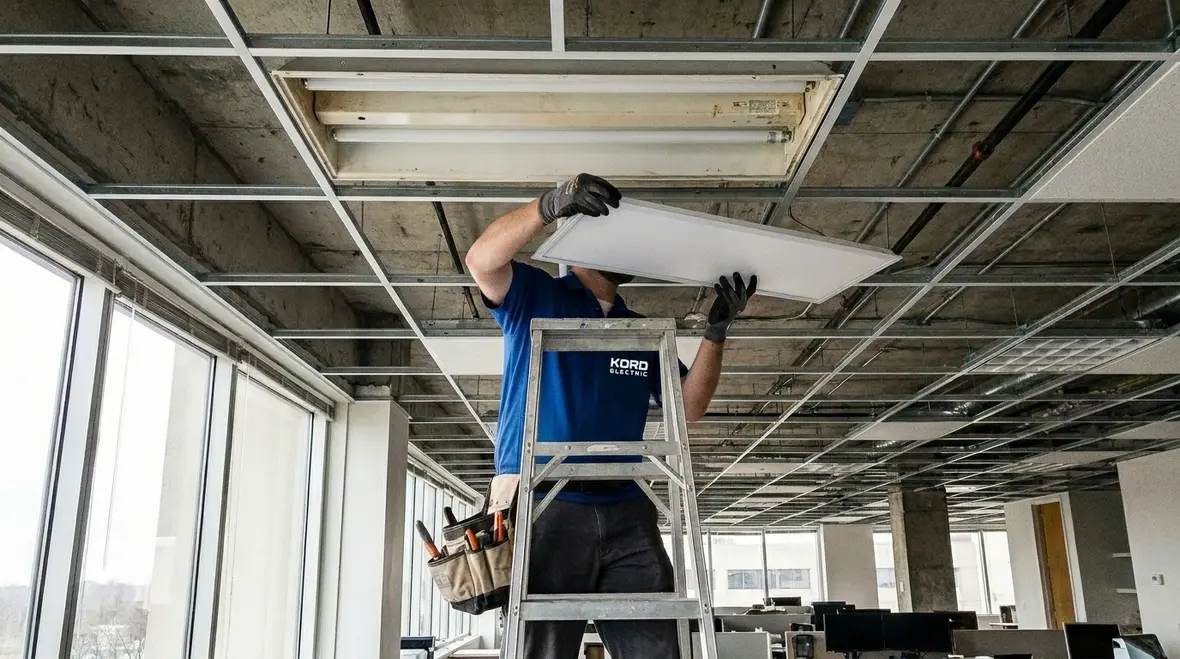
Once we confirm the baseline, we move to modern LED solutions. Our office lighting retrofit options often include LED troffers, high bay replacements, and linear fixtures engineered for commercial and industrial environments. We select these products based on distribution, efficiency, and the way they handle reflections off ceilings and partitions.
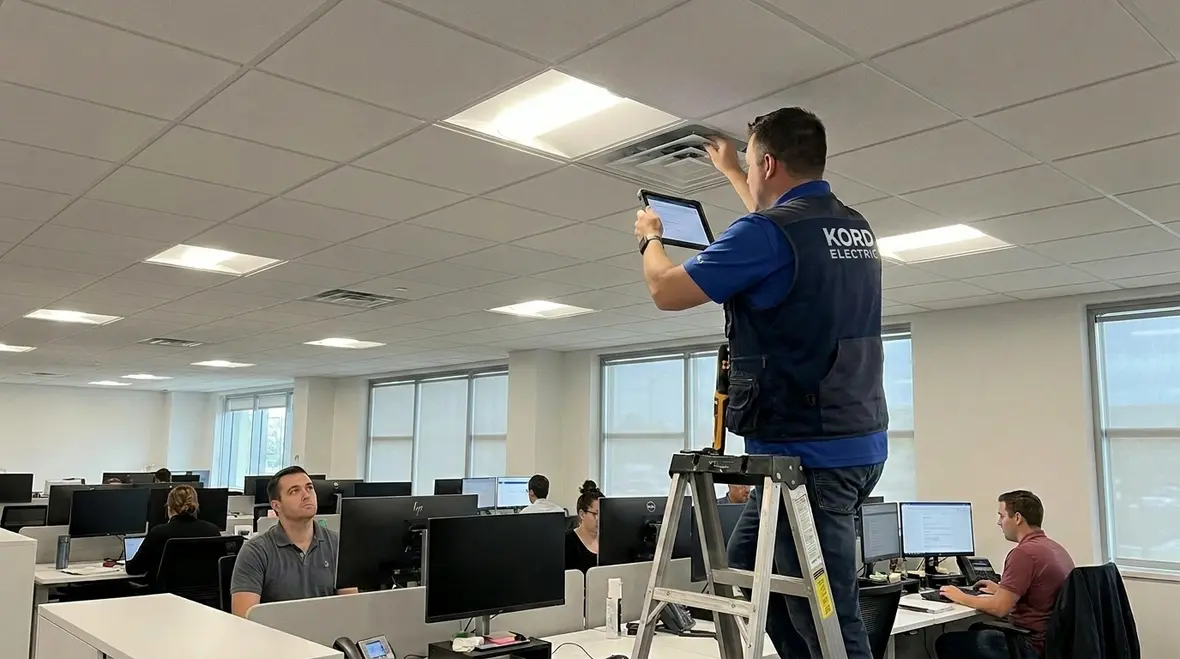
To keep downtime low, we plan the work in phases. For example, we schedule upgrades area by area during off peak hours when possible. Then our crews remove and replace fixtures, while we verify light levels after installation. As a result, employees keep their workflow and your building does not turn into a maze of ladders.
Here is the calming truth: better fixtures can make the entire space feel more stable. With LEDs, flicker behavior typically improves and color consistency stays more reliable over time. Also, LED systems often reduce heat load, which matters in facilities where HVAC already works hard.
Controls and dimming: the quiet productivity engine
Even the best LED fixture struggles if the controls behave badly. Therefore, we focus on smart dimming and occupancy strategies that align with how people actually move through your building. With well planned control logic, lighting adjusts based on occupancy and daylight input. Then the system avoids the “full blast for no reason” problem that drives energy waste and complaints.
In many commercial and industrial facilities, spaces have mixed schedules. Training rooms fill and empty quickly. Admin offices have long working hours. Corridors only get traffic at certain times. Our technicians help design a control plan that supports these patterns, instead of treating every room like it is an all day conference call.
And if you ever hear someone say, “The lights are acting weird,” we usually find the culprit in the control settings or sensor placement. We explain the cause in plain language during commissioning, so your team knows how the system will respond tomorrow, not just how it worked today.
Tunable white and task lighting for focus zones
Not every part of a building needs the same lighting. Some zones need calm, steady brightness for screen work. Others need stronger task light for detailed reviewing, packaging coordination, or lab adjacent administration. Tunable white systems can support this by shifting color temperature across the day to match circadian friendly patterns.
Meanwhile, task focused lighting helps avoid the classic problem where overhead light feels bright but desks still look dim due to beam angles and surface reflectance. So we design the retrofit to support real tasks, not just a uniform ceiling glow.
Once installed, Kord Electric tests and balances the setup. Our service staff walks you through the end results, including how light levels and color behavior affect typical workflows. In short, people stop squinting at screens like they are reading fine print in a movie theater aisle.
How we deliver retrofit options with fewer surprises
Retrofitting commercial and industrial buildings requires coordination. We manage it with a practical process that protects operations and keeps expectations clear. First, our team reviews existing drawings and field conditions, then we confirm pathways for wiring and driver placement. After that, we prepare a phased installation plan, so your staff does not lose access to key areas.
Next, we handle commissioning and verification. That means we measure output, confirm control responses, and ensure the dimming curve behaves as intended. If something does not match the plan, our technicians correct it before the project leaves the site. Then we document the configuration so building teams can maintain the system confidently.
To keep things transparent, Kord Electric sometimes presents choices in a structured way so decision makers understand tradeoffs quickly. In one common format, we align three goals side by side to help teams choose the right approach for their building:
| Goal | What we recommend |
| Comfort and visual clarity | LED distribution upgrades, glare control, balanced uniformity |
| Energy and control behavior | Occupancy sensors, daylight harvesting, stable dimming logic |
| Operational continuity | Phased work planning, fast verification, minimal disruption |
When customers see the plan laid out like this, they usually breathe easier. And honestly, that is our favorite outcome.
For facility managers who want to explore budget and payback in more depth, resources like Kord Electric’s Commercial Lighting Upgrade Cost Guide and the broader Commercial Lighting Compliance in California overview can help put retrofit decisions in context across energy, code, and long term asset value.
Cost, payback, and what to expect from your retrofit
Cost depends on fixture count, control strategy, existing wiring condition, and how much tuning the project needs. However, the best retrofit decisions often come from measured performance, not guesswork. Therefore, we align design choices with your usage patterns and your facility goals, whether the priority is occupant comfort, energy reduction, or steady maintenance.
In many commercial and industrial buildings, LEDs plus controls deliver predictable savings because the system dims when spaces go quiet. Over time, fewer failures also reduce maintenance labor. Additionally, better lighting can improve staff satisfaction, which supports retention and reduces friction during daily operations.
We also help clients plan the timeline so the project stays manageable. If the building has strict operating windows, we schedule around them. And if a space needs careful commissioning due to special use, our technicians budget the time so the results hold up.
If your team is coordinating lighting upgrades with broader electrical reliability work, Kord Electric can also connect retrofit planning with services like Electrical Preventive Maintenance and high level Lighting Installation Services so inspections, emergency lighting, and long term maintenance align with your new system from day one.
FAQ
Ready to upgrade your workplace lighting?
If your commercial or industrial facility feels inconsistent, uncomfortable, or simply behind the times, Kord Electric is ready to help. We start with a real lighting audit, then we implement modern office lighting retrofit options with LED upgrades, smart controls, and verification that holds up after install. Our technicians and expert service staff explain the plan clearly, coordinate the work around operations, and commission the system for dependable daily performance. Contact us today to schedule a site assessment and turn your lighting into an advantage.
For buildings planning more comprehensive projects beyond lighting, Kord Electric also supports larger system work such as commercial rewiring cost planning and industrial layout optimization. Pairing your office lighting retrofit options with a broader electrical strategy can help protect uptime, simplify inspections, and create a safer environment for every shift.
When you are ready for a partner who handles design, installation, code compliance, and long term reliability together, explore our dedicated Lighting Installation Services for commercial and industrial facilities. From first walkthrough to final commissioning, the goal is simple: lighting that quietly makes work easier every day.