Outdoor Lighting Design for Commercial Security
Strategic outdoor lighting design that makes commercial sites harder to ignore
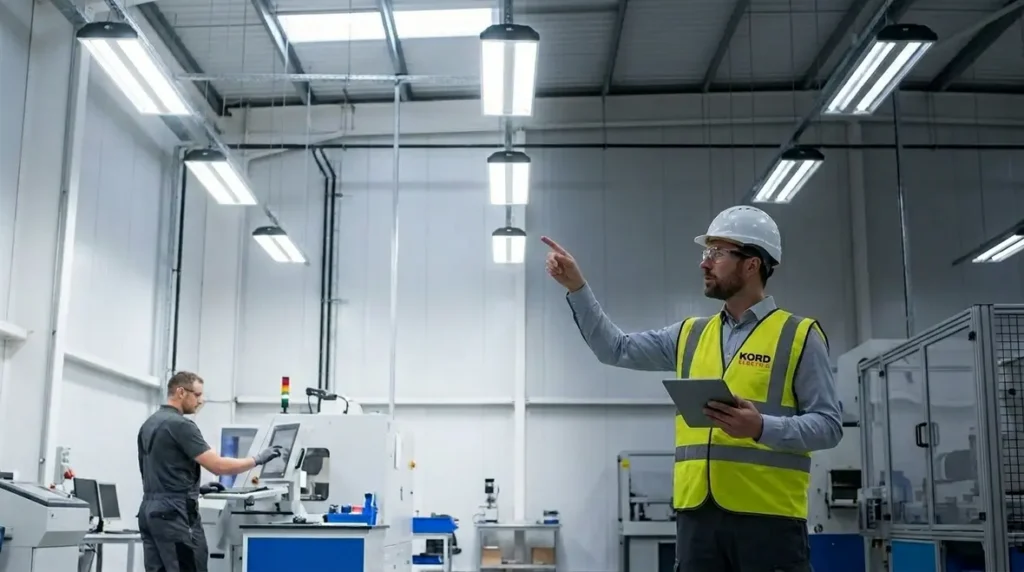
At Kord Electric, we believe outdoor lighting design for commercial security is not just about brightness. We shape light so it supports visibility, discourages bad decisions, and helps staff move through the site with confidence. When we plan for commercial and industrial facilities, we focus on what matters: lighting that covers key paths, reduces dark corners, and works with existing cameras and access points. And yes, we also plan for glare, because nobody wants their security system to look like it is trying to guess the weather. Our expert technicians explain each step clearly, so others on site understand what we are installing and why it will perform.
How we approach site surveys for real security gains
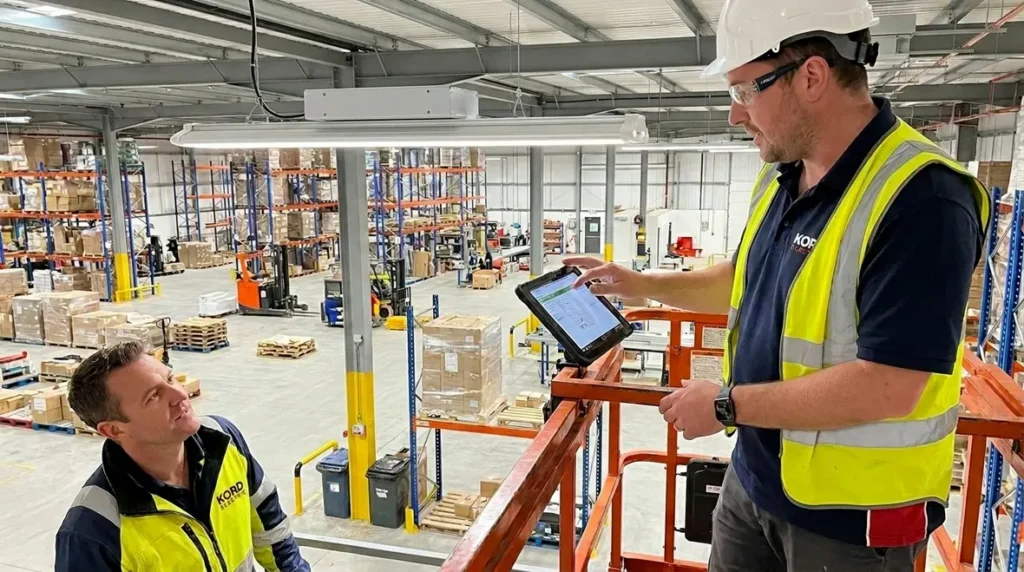
First, we do more than walk around with a flashlight and optimism. Our technicians start with a practical survey, and then we translate the results into a lighting plan that supports security outcomes. For example, we check lighting height, mounting locations, surface reflectance, and the geometry of the property. Next, we map where people actually walk, where vehicles enter, and where equipment sits. After that, we coordinate with the security layout, including camera fields of view and gate areas.
To keep things calm and organized, we document what we see and explain the reasoning. This is where our expert service staff earns their keep. They point out how a small lighting gap near a loading dock can create a “blind zone” even if the rest of the site looks bright. Moreover, they show how glare can wash out footage, which is like putting sunglasses on a camera and calling it a day.

Translating walk-throughs into a security-focused lighting plan
A good site survey turns observations into a clear set of priorities. We flag high-traffic walkways, vulnerable perimeter segments, and areas where lighting must serve both safety and security, such as employee entrances and visitor parking. From there, we start planning fixture types, mounting heights, and aiming strategies that match the way people and vehicles actually move through the property.
Light placement that discourages intrusion without wasting energy
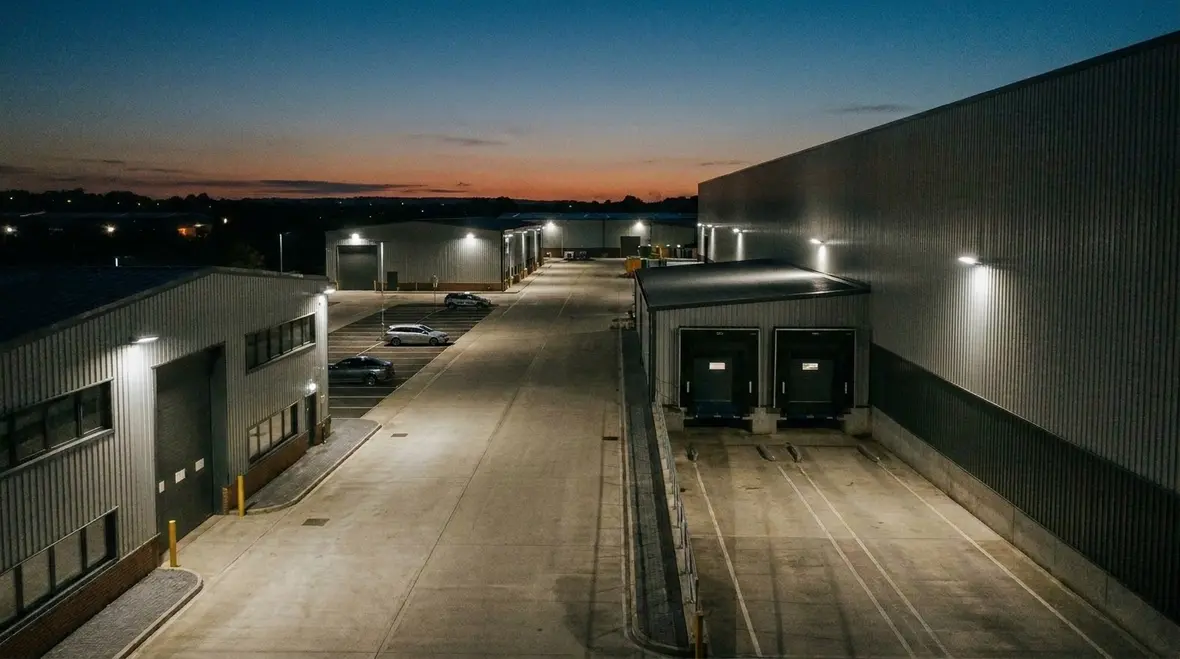
Once we understand the site, we design the placement and aiming of each fixture. This is where strategy beats brute force. Instead of flooding the entire property, we use focused lighting to cover routes, entrances, and perimeter areas. At the same time, we avoid unnecessary spill into windows of neighboring buildings. As a result, we support safe operations and reduce complaints.
We also consider how light behaves across time. For instance, we evaluate seasonal changes in angle and how trees, signs, or equipment might block light later in the year. Then we choose fixtures that maintain performance, even in dusty or harsh environments that many industrial sites face.
And if someone on site asks, “Why not just crank it up?” we smile and explain that higher output does not always mean better coverage. It often means more glare, more glare means poorer video, and poorer video means you get to have a meeting you could have avoided.
Creating layered lighting around entrances and perimeters
We often use a layered approach to cover approaches, thresholds, and adjacent spaces. One layer focuses on approach routes like drive aisles or walkways. Another layer handles the immediate entrance or gate. A third layer smooths the transition into nearby parking stalls or sidewalks so there is no sharp drop in visibility. This makes it easier for cameras and patrol teams to follow movement across the scene without losing detail in dark gaps.
Designing for cameras, access control, and patrol visibility
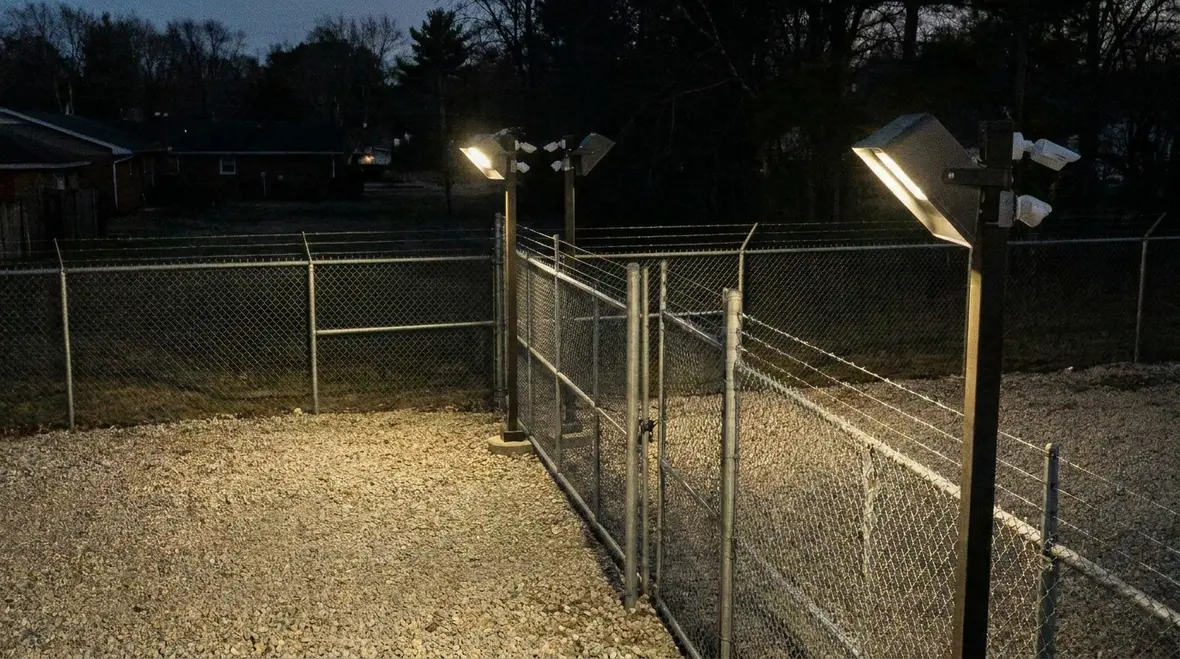
Lighting works best when it supports the rest of the security system. Therefore, we design with cameras and access control in mind. We align illumination levels so video captures faces, license plates, and movement paths. At the same time, we reduce hot spots that can blow out image detail.
Our technicians review camera placement and then propose lighting adjustments where needed. For example, we may add wall wash lighting to reduce harsh contrast at a building entrance. Alternatively, we may increase perimeter consistency so a person moving near the fence line remains visible. In addition, we plan for operational needs such as safe loading and unloading during early morning hours.
Importantly, we keep the balance between visibility and comfort. Security teams need clear sightlines, and building occupants do not need to feel like they work inside a spotlight. So, we use shielding and correct aiming to keep the light where it helps most.
Coordinating outdoor lighting with security technology
When security cameras, card readers, intercoms, and gates work under a well-planned lighting design, the whole system feels calmer and more predictable. Camera analytics perform better because they see consistent scenes instead of patchy glare. Access points feel safer because users do not have to fumble with badges in the dark. Patrol staff can scan their routes quickly and spot anything that does not belong.
For property teams that also manage fire protection and life safety systems, integrating lighting with device placement can echo the same precision used in fire alarm layout and code compliance. That kind of coordination has already proven its value in safety disciplines, and it translates directly into more effective security lighting as well.
Choosing fixtures and controls built for long hours
After placement, we focus on equipment choices. Kord Electric selects fixtures and controls that fit commercial and industrial workflows. We prefer solutions that handle frequent on and off cycles, resist weather and dust, and deliver consistent color and output. This matters because outdoor conditions shift, and security cannot wait for a seasonal “lighting reset.”
Controls also play a major role. We often recommend smart scheduling or photo control options so lighting reacts to actual conditions. Then, we coordinate with the site’s operational priorities. For instance, some facilities need brighter light during shift changes, while others want reduced levels during overnight hours with full output triggered when motion occurs.
However, we do not treat controls like a gimmick. We explain how dimming profiles affect camera exposure and how motion activation can create uneven brightness if not planned well. Our expert service staff walks others through these choices so the final system works as a single security layer, not a pile of parts.

Aligning controls with real-world commercial schedules
In practice, outdoor lighting often has to juggle security, energy, and comfort. Shift changes might call for full output in parking lots and along paths. Late-night hours may only need baseline perimeter coverage until motion appears. Delivery windows, cleaning schedules, or seasonal hours can all shape how lighting scenes change across the week. A thoughtful controls strategy lets you support security while keeping energy costs grounded in reality.
Reducing glare, shadows, and “security blind spots”
Even well lit sites can still fail if they create harsh shadows or glare. Therefore, we audit for problem areas. We look for reflective surfaces that bounce light into cameras, we check for direct line of sight into eyes, and we identify spots where corners stay dark. In many commercial properties, loading docks, stairwells, and under-canopy areas become trouble zones because people assume “it is bright enough.” Then the night arrives and the truth shows up.
To solve this, we adjust aiming angles and spacing. We also choose mounting positions that reduce obstruction. Where necessary, we add fixtures to “close the loop” around entrances, so there is no abrupt transition from bright to dark. This matters because intruders often exploit contrast. If your perimeter looks like a stage with consistent lighting cues, it becomes harder to approach unnoticed.
Turning problem zones into predictable spaces
Loading docks, side yards, and stair towers do not have to feel like afterthoughts. With deliberate light levels and careful aiming, these areas can match the clarity of primary entrances. That consistency also pays off when security teams review footage after an incident. Instead of squinting at grainy silhouettes disappearing into a dark corner, they get usable images that actually support investigations.
Maintenance planning that keeps security lighting reliable
Lighting fails quietly. A lens gets dirty, a driver ages, or a fixture shifts after routine maintenance. As a result, brightness and coverage can drift without anyone noticing, and security teams end up trusting a system that no longer matches the original plan. That is why we recommend maintenance planning as part of the full design package.
Our technicians help others set practical inspection schedules based on usage and site conditions. We also recommend cleaning where needed, and we monitor performance trends so issues show up early. Additionally, we document fixture locations and system layouts so troubleshooting does not become a scavenger hunt during an urgent situation.
In short, we treat outdoor lighting as infrastructure. It deserves the same level of attention as the rest of the electrical and security systems that keep a facility running.
Connecting design, code compliance, and long-term performance
Commercial properties already invest in inspections and testing for other life safety systems because they know that design alone is not enough. The same philosophy applies to outdoor lighting design for commercial security. When fixture selection, aiming, controls, and maintenance are all aligned, lighting supports daily operations, reinforces security, and fits smoothly alongside broader electrical and safety standards.
FAQ
Need a lighting plan that protects your building and staff?
If you manage a commercial or industrial facility, we can help you upgrade visibility with a plan built for security performance. At Kord Electric, we survey your site, align lighting with cameras and access control, and design a system that reduces shadows and glare. Then we help you keep it reliable through practical maintenance guidance. Contact us today to schedule a walkthrough and get a clear, site specific path forward that your team can trust.
For properties reviewing broader lighting upgrades or code-driven projects, you can also explore resources like Kord Electric’s lighting installation code compliance guidance to see how security lighting fits into a bigger picture of safety, performance, and inspection readiness.
Ready to turn your exterior from “mostly lit” into a well-planned security asset? Our team designs outdoor lighting that supports cameras, patrols, and everyday users so your site looks intentional, not improvised.