Electrical Safety for Commercial Kitchens
In commercial settings, the stakes are higher, and so are the consequences. At Kord Electric, we focus on electrical safety for commercial kitchens because these environments run hot, fast, and often under pressure. After all, kitchens do not just cook food; they also run ovens, fryers, vents, dishwashers, mixers, reach-ins, and a whole orchestra of motors and heaters that pull serious power. When electrical systems slip, the risks show up quickly as shock hazards, arc flashes, and fire spread. In this article, we lay out practical safety protocols for real commercial kitchen operations, and we explain them in plain language using guidance from our technicians and expert service staff, step by step.
1) Why commercial kitchen electrical risks feel unique

Commercial kitchens behave differently than offices or retail. First, you have water, steam, grease, and frequent appliance movement. Next, you often have staff working with wet hands while managing hot equipment. Then, the electrical load spikes again and again as equipment cycles, compressors kick on, and ventilation ramps up.
We tell our clients that the danger usually starts small: a loose connection that heats up, a worn cord, a panel door that does not close fully, or a breaker that trips “only sometimes.” After that, the problem can scale fast. Grease and dust act like a thermal blanket, so even a minor issue can turn into a heat event. And if you think “we would notice,” remember: a failing contactor does not send a text alert. It just quietly deteriorates until it does something dramatic.
Our technicians see the same pattern across major property buildings and commercial and industrial facilities. People build habits around cooking, not electrical conditions. Therefore, the best time to fix safety gaps is before anyone smells “something weird,” and before someone decides to “just reset the breaker.”
2) The daily protocols that prevent shocks and fires
Safety should not depend on heroics. We recommend a routine that staff can follow every day, even on a busy service shift. To keep it real, we structure protocols around what teams already do: inspections, cleaning, start-up checks, and shutdown steps.
What we ask kitchens to do daily
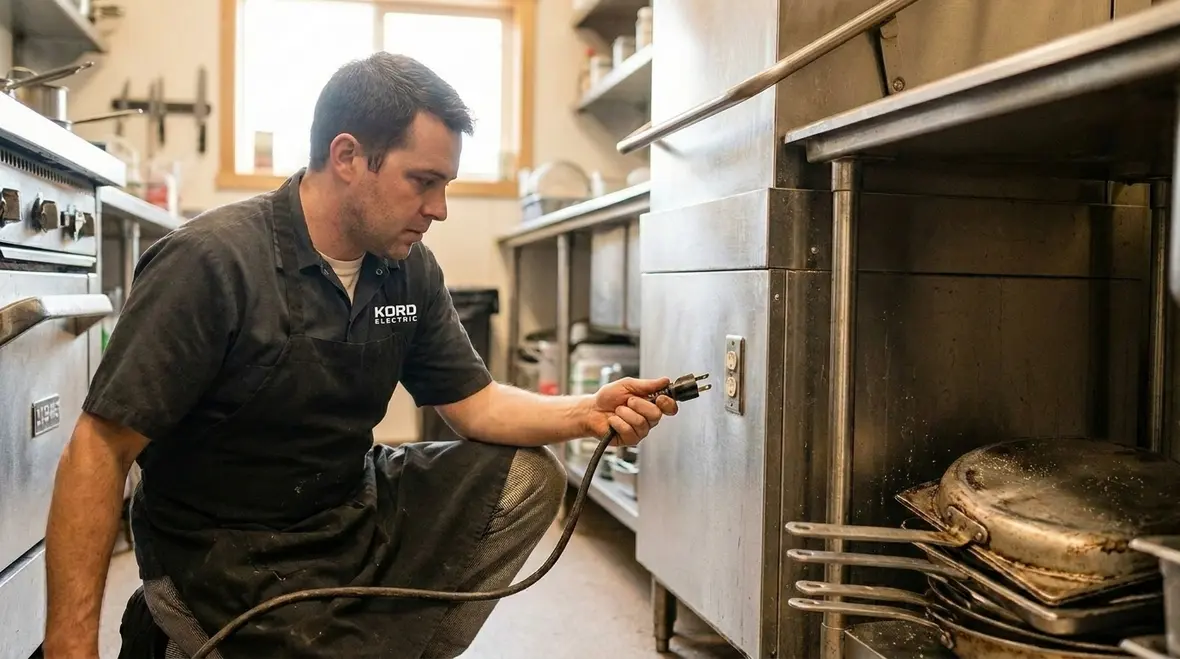
- Start-up visual checks: staff verify that appliance cords, plugs, and receptacles stay intact and dry, especially near dish areas and under prep counters
- Watch for heat signs: scorched outlets, discoloration at plugs, and warm panel covers deserve immediate attention
- Keep water away from connections: staff use drip shields and route hoses to avoid direct exposure to receptacles and junction boxes
- Confirm GFCI protection: test where required by local code and your equipment needs
- Lockout mindset: if a circuit needs work, the team does not “quick-fix” while energized
We also remind operators of a simple rule: if a device looks like it is behaving oddly, treat it like it is dangerous. Then, bring in qualified help. Our expert service staff can validate the actual cause instead of guessing, because a tripped breaker can come from overload, ground fault, moisture intrusion, or a failing component.
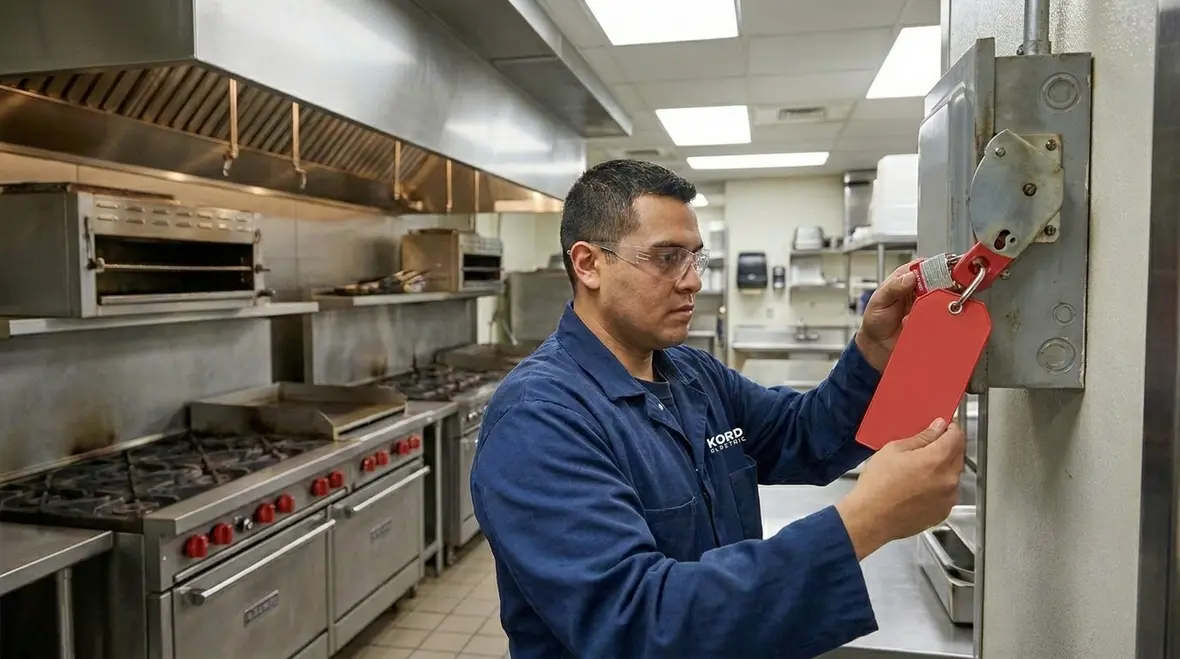
3) Lockout, tagout, and safe troubleshooting in the field
When electrical problems show up, teams often react quickly. However, speed does not equal safety. We design our procedures so technicians and trained staff can isolate energy sources without improvising.
Core lockout and tagout practices we support
- Identify the correct disconnect: follow equipment labeling and panel schedules, not memory
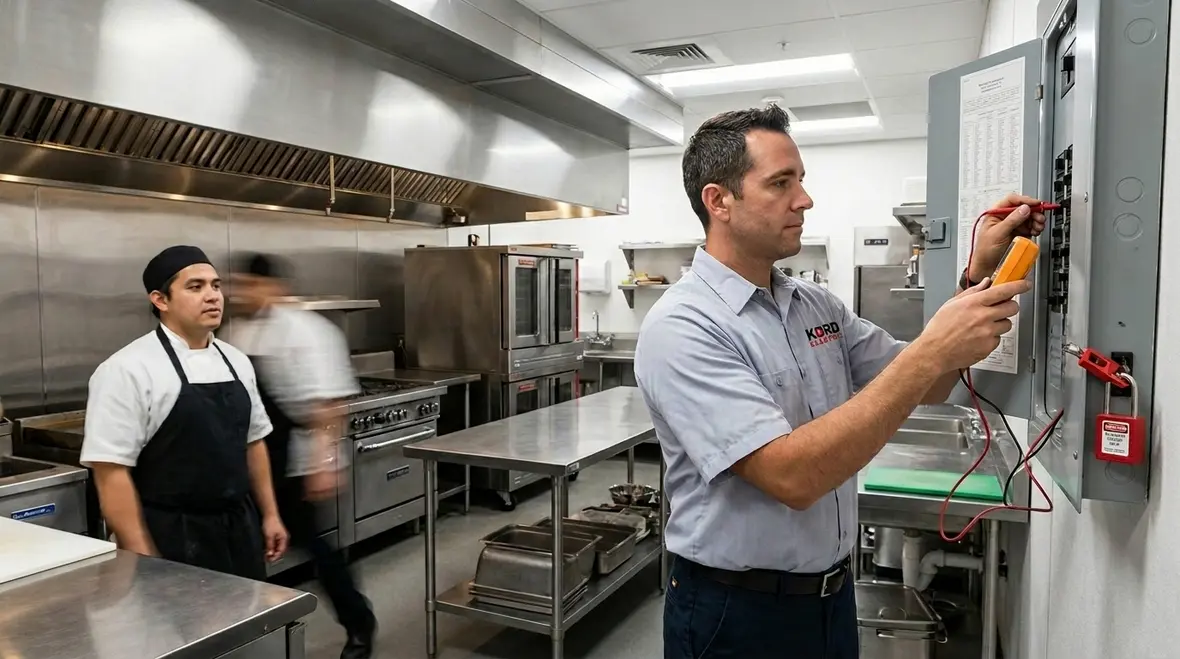
- De-energize and verify: test before touching, because “off” can still mean “dangerously alive”
- Use proper test equipment: measure voltage and confirm absence of energy
- Apply tags and control access: prevent other staff from re-energizing during repairs
- Restore safely: confirm connections, replace covers, and document work
In the field, we teach our technicians to slow down during troubleshooting. Yes, it feels slower, and yes, someone will joke that the breaker is “just shy.” But we do not rely on jokes. We rely on verification. That approach cuts down repeat failures and prevents staff from getting hurt during energized checks or partial repairs.
4) Proper panel and wiring management for busy kitchens
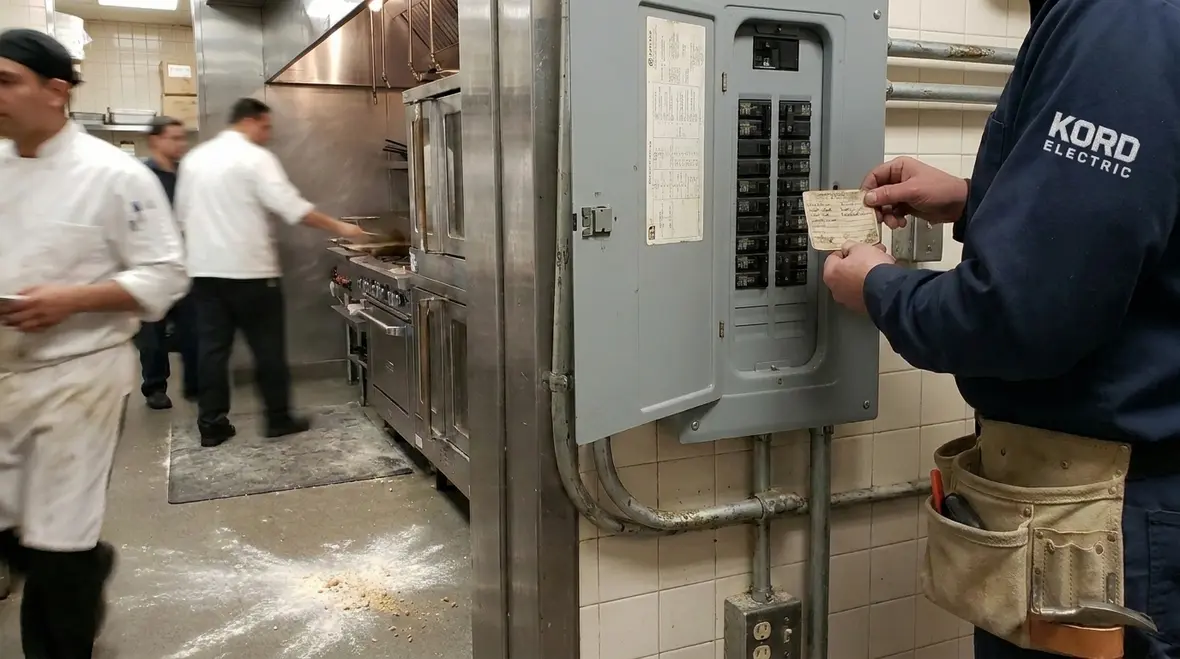
Panels and wiring work like backstage crew. Most people do not think about them until the show stops. In kitchens, panel access gets blocked by carts, clutter, and even storage items. Meanwhile, wiring routes can get exposed to heat or grease when conduit paths are poorly protected.
So we push commercial property teams to treat panels as critical infrastructure. Our technicians review key elements and help owners plan improvements, especially in multi-tenant or major property buildings where shared systems create extra complexity.
What good panel management looks like
- Keep working clearances: ensure doors, access paths, and floor space around electrical equipment remain unobstructed
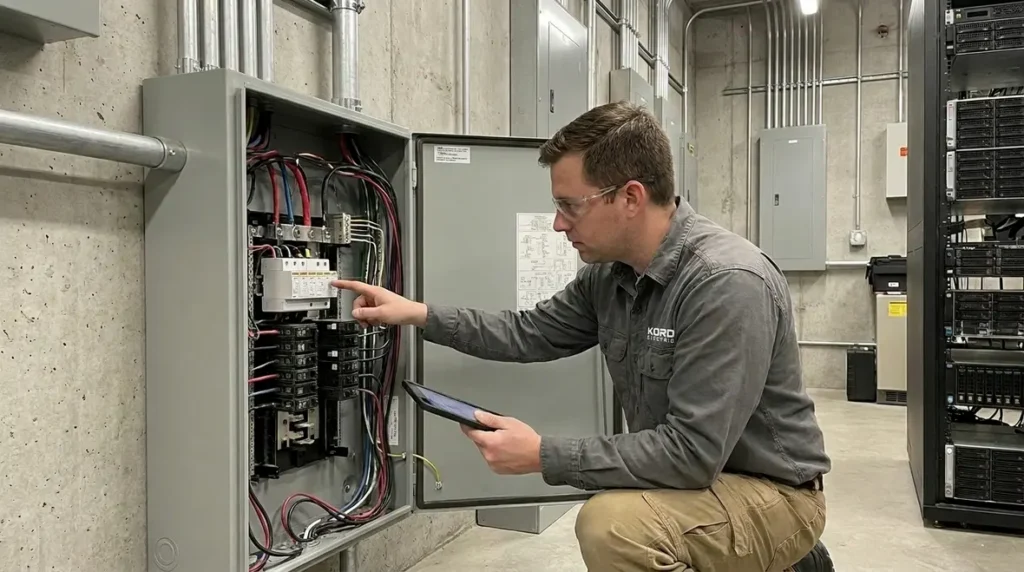
- Label circuits accurately: staff should know what each breaker feeds without guessing
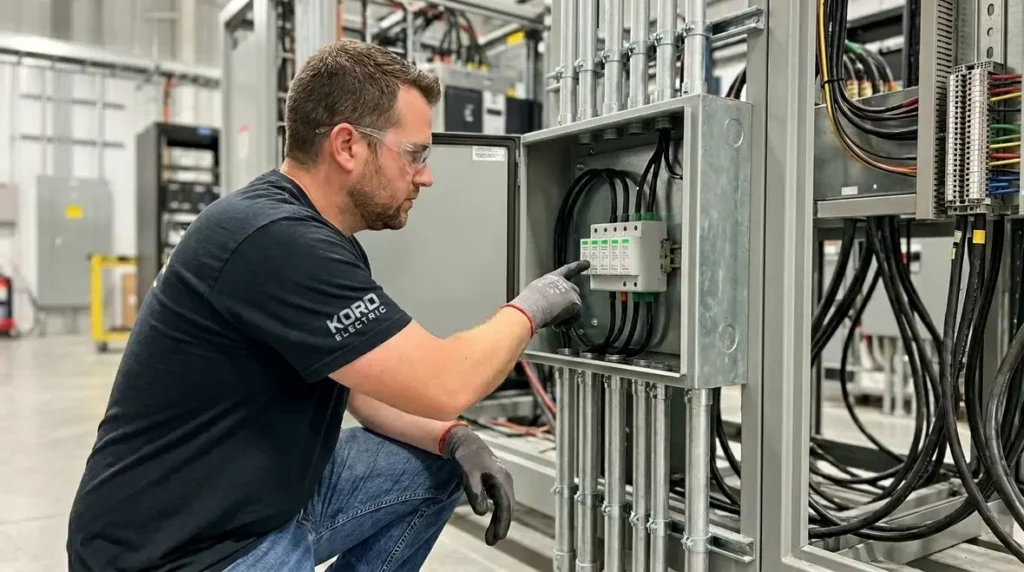
- Inspect terminations: we check for looseness, corrosion, and signs of overheating
- Use correct conductor ratings: loading errors create heat and early failure
- Protect from grease and moisture: we help upgrade enclosures and seal penetrations where needed
Also, we encourage scheduled inspections rather than “wait until it breaks.” That is how kitchens keep equipment uptime high and avoid the kind of downtime that turns dinner service into an emergency situation. If you run a commercial kitchen, you already handle enough emergencies. The goal is to keep electricity from joining the chaos.
5) Grounding, bonding, and GFCI protection that actually work
Grounding and bonding sound like technical housekeeping, but they directly affect shock risk and fault clearing. When grounding fails, the protective devices can respond late or not as intended. And in wet kitchen zones, “late” is not a luxury.
Our expert service staff explains these systems to building managers and kitchen supervisors in a way that sticks. We do not just say “it should be grounded.” We show what proper design does and what failure looks like.
Safety protocols tied to grounding and GFCI
- Ensure correct equipment grounding: verify continuity and proper connection to the bonding system
- Confirm GFCI coverage: check that receptacles and wet-area circuits match equipment needs and local requirements
- Test and document: perform functional tests and record outcomes so trends show up early
- Inspect for moisture intrusion: water in boxes can create false trips or hidden faults
- Train staff on reset rules: they should report repeated faults rather than “reset and ignore”
And yes, we have heard the reset-and-ignore plan before. It is basically the electrical version of “if we do not look at the mess, it is not real.” It is real. Electrical safety for commercial kitchens improves when teams treat protective device faults as signals, not inconveniences.
6) Equipment connection safety for ovens, fryers, and dish systems
Kitchens run heavy equipment, and each connection point matters. Cords, hardwired junctions, control circuits, and motor leads can fail under heat cycles and vibration. We work with commercial and industrial facilities, including major property buildings where equipment replacement schedules and shared maintenance rules can complicate things.
Connection safety practices we recommend
- Use correct strain relief: reduce stress on cords and prevent conductor damage
- Protect against heat and grease: route wiring away from hot exhaust paths and add shielding where needed
- Verify torque and fastening: looseness during installation or after service leads to overheating
- Inspect junction enclosures: ensure covers remain seated and seals resist moisture
- Coordinate with equipment changes: when teams add appliances, they must match circuit capacity and protective device sizing
When our technicians install or service kitchen equipment, we treat connection work like it is part of the production line. After all, if the connection fails, the entire line stops. Instead of repeating the same repair cycle, we aim for durable installs that match real-world kitchen behavior.
7) Emergency readiness and incident prevention
Even with strong routines, emergencies can happen. Smoke, breaker trips, unusual humming, or sudden loss of ventilation can create fast-moving risks. Therefore, we help clients build an electrical response plan that aligns with how kitchens operate during service.
Emergency readiness steps we support
- Define “stop work” triggers: clear signals for shock risk, burning odor, arcing sounds, or panel heat
- Establish a safe isolation process: know which disconnect to use and who controls it
- Coordinate with fire and facilities teams: ensure responders understand equipment zones
- Keep equipment areas accessible: do not park carts in front of electrical disconnects
- Document and review incidents: we evaluate root causes so the same fault does not return next week
We also recommend that teams review near misses. If a receptacle sparks once, something is off. Treat it seriously, even if nobody screamed. Electricity rarely needs an audience.
FAQ
For deeper planning around maintenance schedules and long-term reliability, many facility leaders also explore broader electrical preventive maintenance programs that cover panels, distribution equipment, and critical systems across their buildings.
Conclusion: call Kord Electric before service becomes drama
Kord Electric helps commercial and industrial facilities keep operations safe through practical electrical safety protocols, clean panel practices, proper grounding checks, and trained technician support. We work with major property buildings and kitchen teams to reduce shock risk, prevent fire hazards, and keep equipment uptime strong. If you want a safer kitchen, do not wait for a smell, a spark, or a surprise shutdown. Contact us today to schedule an on site safety review and get a plan your staff can follow.
If your kitchen safety goals are part of a broader upgrade, our team also supports larger projects like commercial kitchen electrical upgrades and wiring, full building maintenance plans, and targeted improvements that keep your entire facility ready for inspection and growth.
And because commercial kitchens rarely operate in isolation, we can coordinate our work with building-wide lighting, power quality, and preventive maintenance strategies so your cooking line, service areas, and back-of-house systems all share the same level of protection and reliability.
When you are ready to turn “we should fix that someday” into a clear, scheduled plan, Kord Electric is ready to help with commercial electrical services that respect your timelines, your staff, and your safety standards.
For properties that rely on continuous uptime, pairing kitchen-focused electrical work with structured electrical preventive maintenance helps ensure that small issues are caught early, documented clearly, and corrected before they interrupt service.