Commercial Electrical Troubleshooting Guide
When a commercial building electrical issue pops up, people often want answers fast. So we use a commercial building electrical troubleshooting guide right away, inside our first visit planning and even before our clients call us. Our approach starts simple, then gets specific: we check safety, look for patterns, confirm load behavior, and inspect key components in a logical order. And yes, we treat this like a checklist, not a scavenger hunt. Because nobody wants to “wing it” with a live system, like stepping into a movie theater without checking the seat number first.
Third person point of view here, but the goal stays the same: keep the problem contained, reduce downtime, and help others decide whether they can handle a quick fix or whether our expert service staff must step in.
Troubleshooting Common Commercial Electrical Issues Before Calling a Pro
In busy commercial properties, nobody has time for trial-and-error electrical work. A clear, methodical commercial building electrical troubleshooting guide keeps facilities teams focused on what matters most: safety, uptime, and fast decisions. Instead of chasing random hunches, the process follows a simple progression—stabilize the area, gather facts, isolate the problem, and decide when to call in licensed experts like Kord Electric.

From the first flicker of a light to a full panel outage, the best results come from treating each symptom as a clue, not a guessing game. Facilities teams who learn the basics can stabilize situations quickly, keep clear notes for technicians, and avoid turning a small interruption into a long, avoidable shutdown.
Quick Safety Checks That Prevent Bigger Outages
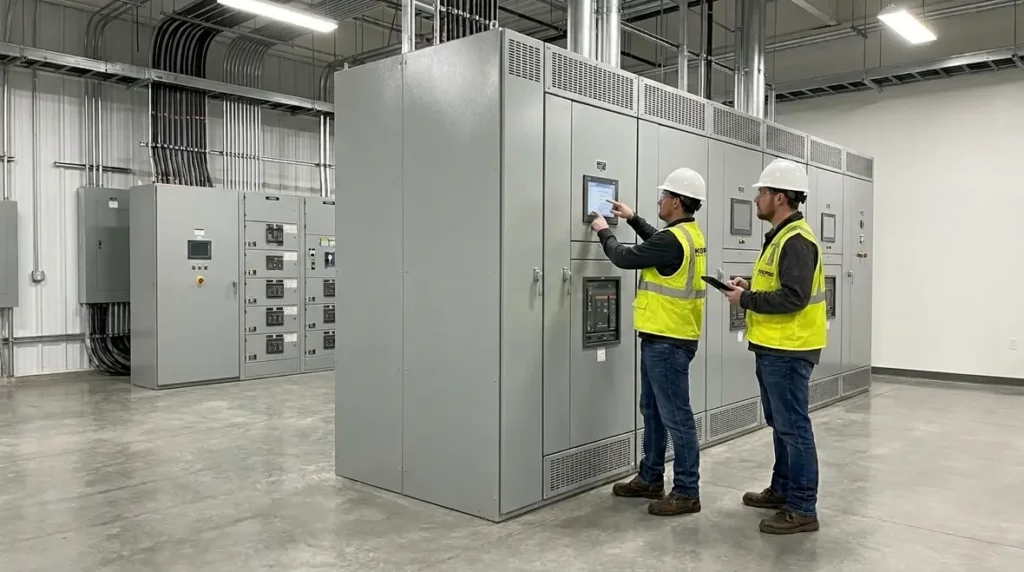
Before anyone touches anything, they should treat electrical trouble as a safety event. First, they confirm the area is safe for staff and customers. Then they remove unnecessary traffic from the equipment room. After that, they verify whether the issue involves sparks, burning smells, smoke, or unusual heat. If any of those show up, the right move is immediate shutdown and isolation, then calling licensed help.
Next, others should confirm if the problem is localized. If only one panel branch trips, the fault may sit in a circuit or load. However, if multiple circuits fail or the main breaker shows signs of stress, the issue may involve incoming power or upstream components. Therefore, the team should record what happened, when it happened, and which loads were running at the time.
Our technicians often remind site managers of a simple truth: the faster people write down observations, the faster we narrow down the cause. We then explain what we find in plain language, because “trust us” helps nobody.

These early safety checks are not about being dramatic. They are about preventing a nuisance issue from escalating into a building-wide outage or a serious incident. Clearing the space, shutting down what needs to be shut down, and documenting what people see gives licensed electricians a huge head start when they arrive.
Why Breakers Trip: Faults, Loads, and Loose Connections
Breakers trip for a reason, and most of the time that reason comes down to either overload, short circuit, ground fault, or an abnormal load behavior. To troubleshoot correctly, others should start by identifying which breaker trips and whether it resets normally. If a breaker keeps tripping after reset, that pattern matters.
Then we look at the load story. For example, a kitchen, HVAC system, or warehouse lighting circuit may draw spikes during startup. In the same way a superhero shows up right after the credits start, these loads only misbehave at predictable times. However, if the breaker trips during random hours, a failing device or degraded connection becomes more likely.
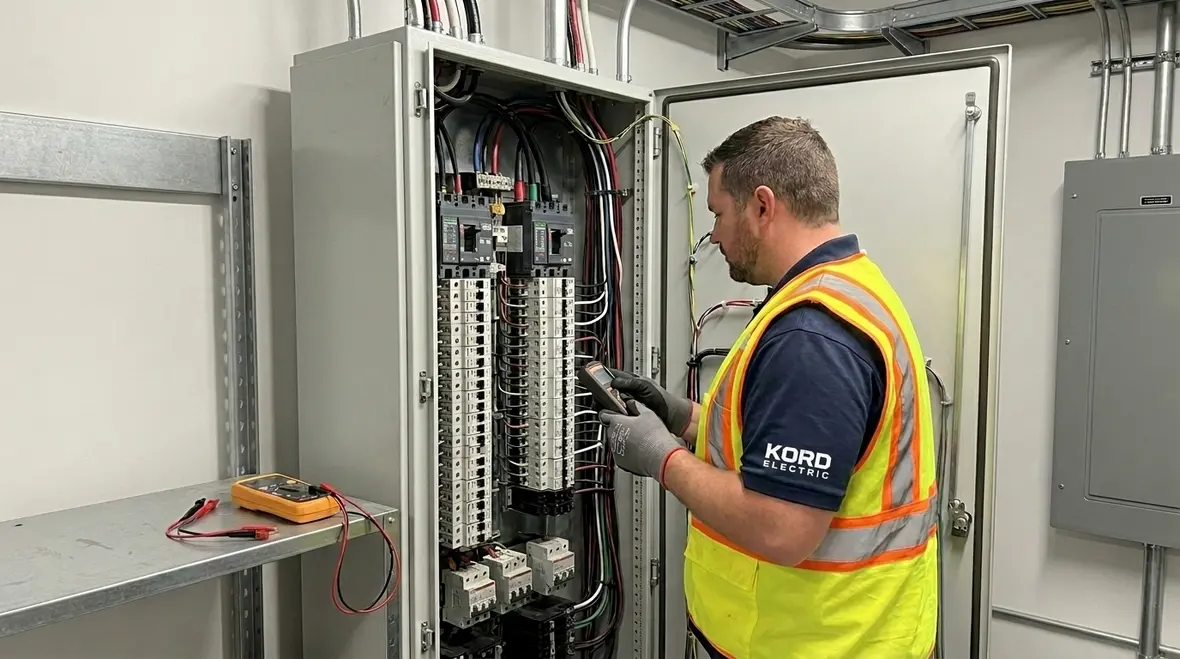
Loose connections create heat, and heat creates more resistance, and more resistance can turn a “small” issue into a major outage. Therefore, the team should check for signs of discoloration, listen for crackling, and confirm torque status where safe and allowed by policy. Of course, if the building code or site rules restrict access, then our expert service staff takes over quickly.
We also note that some modern commercial systems use selective coordination. That means the upstream breaker should not trip if a downstream fault exists. When it does, it tells us something about the failure location or protective device condition.

For facilities teams, the goal is not to take apart the panel. It is to observe intelligently: which breaker, what load, what time, and what changed recently. That detail turns a vague “the power keeps going out” complaint into actionable information for a licensed commercial electrician who can safely open equipment, test components, and correct the root cause.
Lighting and Power Quality Problems That Feel Like Ghosts
Not every issue throws a breaker. Sometimes the building just looks “off,” and staff notice flicker, dimming, buzzing, or random outages. These symptoms often link to voltage drop, poor connections, failing ballasts, miswired controls, or harmonics from variable frequency drives, LED drivers, or other electronic loads.
To handle this before a pro arrives, others should start by documenting the exact behavior. Does the flicker happen when certain equipment turns on? Does it follow a schedule, like after lunch rush for a retail tenant? Then they check whether the issue occurs across multiple floors or only one tenant space.
Next, they should verify the status of dimming controls and occupancy sensors. Many modern commercial building setups rely on control wiring, low voltage relays, or networked lighting systems. A misconfigured controller can mimic an electrical fault. Still, when flicker lines up with HVAC compressors, dock equipment, or elevators, power quality becomes more likely.
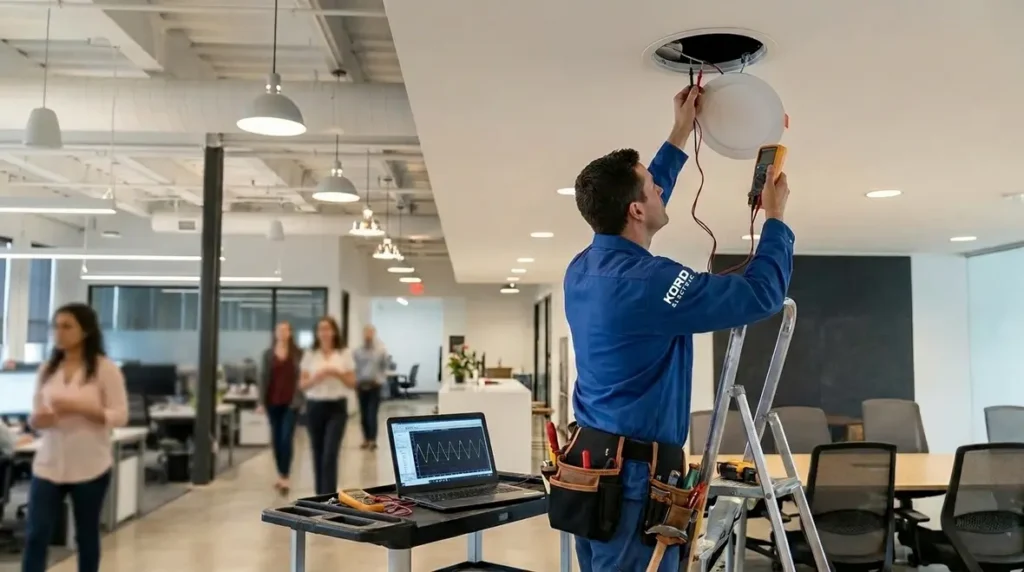
For complex patterns, our technicians use measurement and not guesswork. We focus on identifying whether voltage dips, harmonics, or grounding issues drive the complaint. And we explain results step by step, so facilities teams understand what changed and why. For deeper dives into power quality and stability, property leaders can also review related resources like our voltage fluctuations services for commercial and industrial facilities.
These “ghost” issues can affect everything from office productivity to sensitive lab equipment. A structured commercial building electrical troubleshooting guide treats them like any other problem: observe, correlate with other loads, document the pattern, and then let proper test equipment verify what is really happening.
Why Motors, HVAC, and Loading Dock Circuits Fail Early
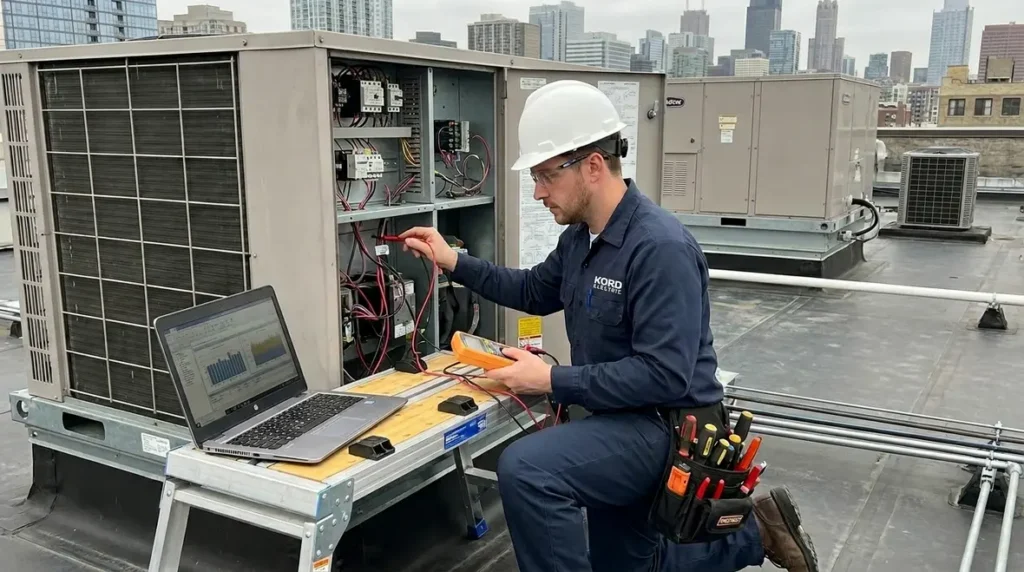
In industrial and major property buildings, motor circuits carry real weight, sometimes more than people think. As motors age, insulation can weaken, bearing failures can increase current draw, and control components can drift out of spec. Therefore, the circuit protection may trip, run times may increase, or the motor may start hard.
Others can reduce confusion by checking the basics. They should confirm whether the issue happens during startup, during steady operation, or only after the motor runs for a while. Startup problems often point to contactors, overloads, wiring, or power quality conditions. Over time problems may point to heat, mechanical binding, or insulation breakdown.
In loading dock systems, the electrical story often includes frequent duty cycles. That means contactors wear, control relays fatigue, and wiring experiences repeated flex. If the building has variable frequency drives, harmonics and grounding practices matter even more. So we do not treat these as generic troubleshooting tasks.
Our technicians also coordinate with the maintenance team, because in real life, equipment logs and work orders tell the truth faster than any “magic” reset. We then lay out the next steps with clear reasoning, not just a bill and a shrug.
EV Charger Installation Clues That Help Avoid Electrical Surprises
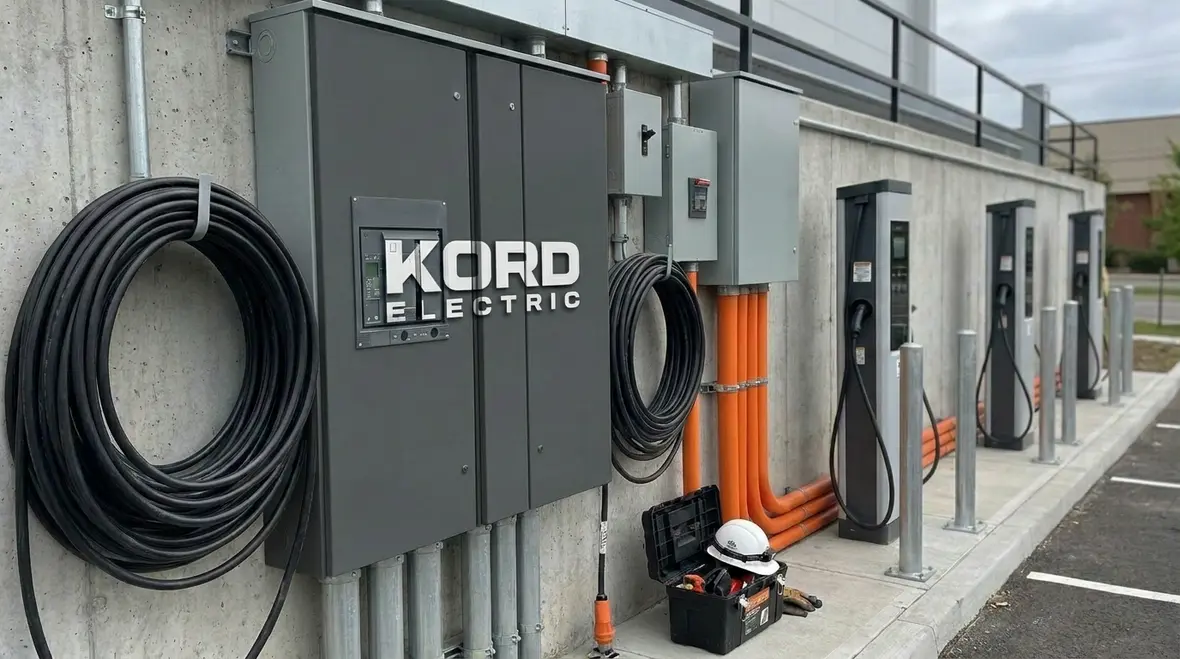
Some commercial electrical troubles connect to EV charging even when the complaint sounds unrelated. That is because many facilities install chargers on existing electrical infrastructure, and the building’s load plan must match the reality on the ground. If others notice breaker trips during charging, slow charging, or repeated faults on charging stations, the issue often traces back to circuit capacity, conductor condition, panel labeling, or control settings.
When a site plans an EV charger installation, Kord Electric supports commercial and industrial facilities with a structured approach. We confirm existing panel capacity, evaluate available space, and verify the correct circuit configuration. We also consider demand management so charging behavior fits within the building’s power limits. If a facility installs chargers without matching the load plan, the system may run fine for a few weeks, then break during peak usage. Electricity loves timing, like a sitcom character who always trips at the worst moment.
Because our expert service staff explains what we find, others can make smarter decisions about upgrades. And when we recommend changes, we focus on safety and code-compliant work for major property buildings.
For more details on our installation process, the team can review our EV charger installation page at https://kordelectric.com/ev-charger-installation/.
When Facilities Should Call Kord Electric First
Some issues deserve a pro early, not late. If multiple panels show symptoms, if protective devices show signs of heat damage, or if staff reports burning odors or repeated nuisance tripping, the best time to call is now. Also, if the building depends on uptime for safety systems, refrigeration, elevators, or life critical controls, the safe path is to schedule service quickly.
Furthermore, if the issue affects an area with customers on site, management should treat “monitoring” as temporary only. Electrical faults do not negotiate. They either stabilize or escalate. And while one person can reset a breaker, resetting can sometimes hide the real problem until it fails harder.
Our technicians handle commercial building electrical troubleshooting with a methodical flow. First, we verify symptoms and operational context. Then we inspect protective devices, conduct targeted testing, and confirm corrective actions. Finally, we communicate the outcome clearly, because facility leaders need practical next steps, not vague promises.
That is how others avoid the classic mistake of calling a general contractor for a specialized electrical problem and then waiting for a second appointment. In business, time is money, and in electrical work, time also prevents damage. For facilities that want to stay ahead of failures, pairing this commercial building electrical troubleshooting guide with structured electrical preventive maintenance is often the smartest move.
FAQ for Commercial Electrical Troubleshooting
Next Steps With Kord Electric
If a commercial electrical issue is slowing operations, others should not wait until it becomes an outage. Kord Electric helps major property buildings and industrial facilities move from symptoms to real causes, with our technicians handling the inspection, testing, and corrections. We explain findings clearly and guide next steps so your team can reduce downtime and prevent repeat failures. Call us today to review the issue and schedule troubleshooting with our expert service staff, before the problem grows legs and sprints through the building.
For facility leaders building long-term resilience, this commercial building electrical troubleshooting guide pairs well with structured services like electrical preventive maintenance, emergency electrical services, and dedicated EV charger installation. Together, they keep systems stable, support compliance, and give your team the confidence that when something does go wrong, there is a clear plan and a trusted partner ready to respond.
Whether you are dealing with nuisance trips, unexplained flicker, or a full outage, Kord Electric’s commercial and industrial team brings a methodical, safety-first approach to every call. The sooner we are involved, the faster we can protect equipment, restore uptime, and keep your building’s story moving in the right direction.