
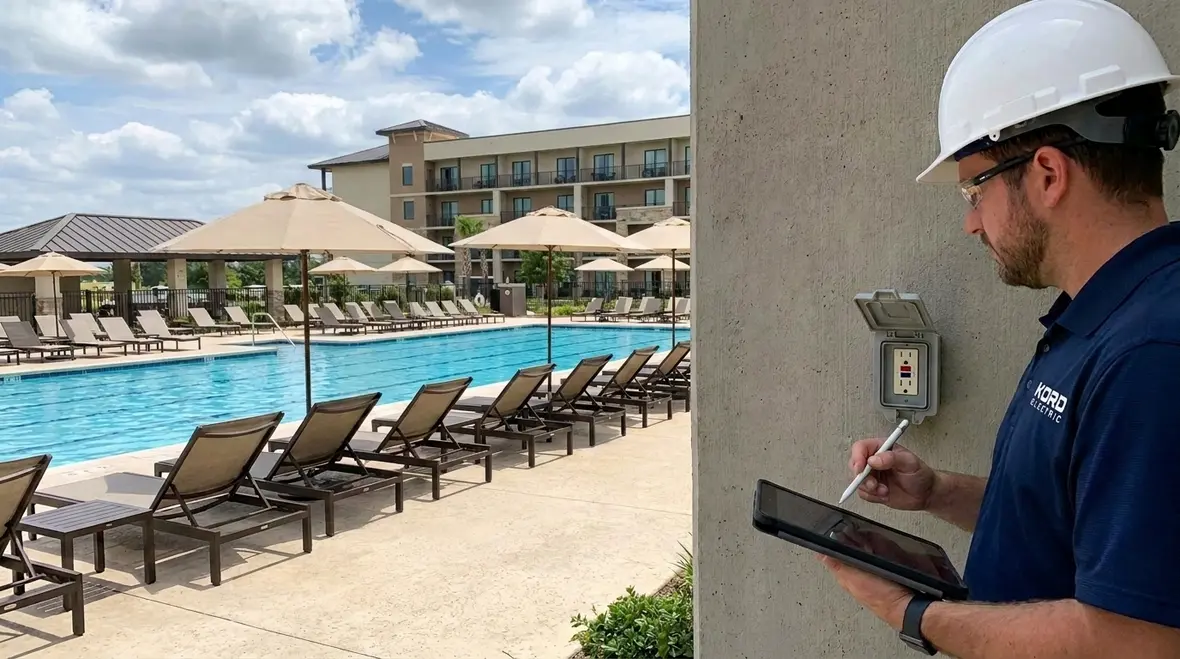
Pool Lighting Receptacles NFPA 70 NEC Section 680.22
In our experience at Kord Electric, the details matter most where people gather, where equipment runs hard, and where inspections show up without warning. That is why we pay close attention to NFPA 70 Section 680.22 pool lighting receptacles early in planning, not after the drywall has already won. We see facilities try to solve electrical issues like they solve traffic jams: late, loud, and with too much stress. Meanwhile, our technicians methodically review the National Electrical Code requirements for pool lighting areas so your project stays safe and your documentation stays clean.
In this article, we explain how the NEC works in real life for commercial and industrial settings, what changes in the latest updates mean for 2026 planning, and how our expert service staff help teams understand the why, not just the what. And yes, we will keep it clear enough that even a non electrician can follow along, although they still might want to call us anyway.
Pool Lighting Receptacles and NFPA 70: What Commercial Facilities Need to Know
Pool lighting may look simple on the surface – fixtures, receptacles, and a pleasant glow around the water line – but behind each of those choices sits a stack of NEC expectations. When those expectations are ignored, commercial and industrial properties do not just risk a failed inspection. They risk shock hazards, downtime, and a reputation hit with tenants and guests who expect the lights to work and the water to stay safe.
That is why our team at Kord Electric treats NFPA 70 Section 680.22 pool lighting receptacles as a design starting point, not a last-minute checklist. We look at clearances, locations, protection methods, and the way each receptacle supports the wider pool lighting system. Then we line that up with local requirements, project schedules, and the brutal reality that nobody enjoys ripping open finished work just to satisfy a detail that should have been caught earlier.
We also connect your pool lighting plan to broader NEC context so it does not feel like a random isolated rule. If your facility team wants a deeper big-picture overview of how the code fits together, articles like Understanding NFPA 70: The National Electrical Code Explained for 2026 help frame why these rules land where they do and how they influence day-to-day decisions during design and construction.
How NFPA 70 and the NEC Work Together
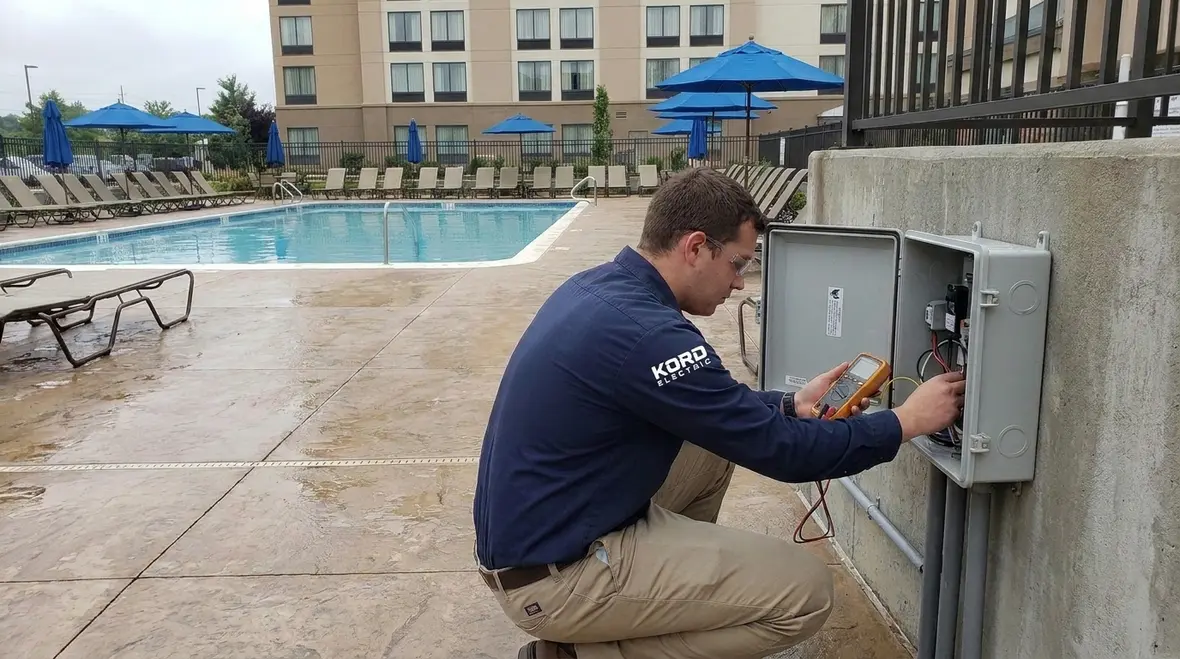
The NEC is the practical guide most facilities use for safe electrical design, installation, and inspection. In other words, we do not treat it like a suggestion. We treat it like the rulebook your systems must match. The NEC lives under the umbrella of NFPA 70, and it covers everything from wiring methods to grounding to specialized areas like wet locations.
For commercial and industrial facilities, we focus on how the NEC ties into building code, permitting, and inspection expectations. When teams coordinate early, we reduce rework, avoid missed details, and keep operations running. And when teams wait until the last minute, we usually spend more time troubleshooting than installing, which is about as fun as watching a sitcom where everyone forgets the punchline.
We also help owners and facility managers understand that code compliance is not only about passing inspection. It also reduces risk, supports consistent performance, and helps your staff maintain systems with fewer surprises. When we walk facilities through resources such as Kord Fire’s NFPA 70 overview or our own NEC-focused blog posts, the pattern becomes clear: the more a team understands how the NEC is structured, the easier it becomes to apply specific articles like those governing pools without getting lost in jargon.
When facility leaders want to see how this connects to everyday decisions, we often recommend starting with guides like “How to Read NFPA 70: National Electrical Code” from our blog family, because once you can navigate the structure, sections like 680 for pools stop feeling mysterious and start feeling like a logical extension of the same safety priorities you see throughout the book.
NFPA 70 for 2026: What Changes Drive Field Decisions
When we plan for the 2026 cycle, we do not just skim headlines. We evaluate how each update affects real installs. The goal is simple: the electrical system should be safe, durable, and easy for trained teams to service over time.
From our review of the NEC explanations published by our partners at Kord Fire and resources around the code, we focus on how updates impact construction timelines, inspection criteria, and ongoing compliance documentation. For example, when requirements tighten around specialized environments, we often need to adjust how teams select equipment, route cables, protect wiring, and label circuits.
Our expert service staff explain the practical effects during site walks. So instead of hearing “the code changed,” you hear “we need to do this before rough in so the final inspection does not stall.” That is the difference between reactive electrical work and proactive electrical management.
To keep things grounded, we cross-reference 2026-focused NEC explainers, including detailed breakdowns of NFPA 70 changes, and translate those into schedules and scopes your GC, facilities team, and inspectors can all agree on. It is less about memorizing every line and more about understanding how a change in one section can raise the bar for equipment ratings, GFCI use, fault protection, or bonding in sensitive locations like pool decks and mechanical spaces.
In many commercial and industrial properties, these updates become even more important when you are planning multi-phase work or capital improvements. Aligning early with a code-focused electrician who lives inside NFPA 70, instead of visiting it once a year, keeps your 2026 planning from turning into a last-minute scramble that everyone remembers for the wrong reasons.
NFPA 70 in Pool Areas: Why Section 680 Matters
Pool and similar installations create unique electrical challenges. Water, splash zones, and shared spaces mean the NEC takes extra care with shock risk. We see facilities underestimate that reality, then later wonder why inspectors ask so many questions.
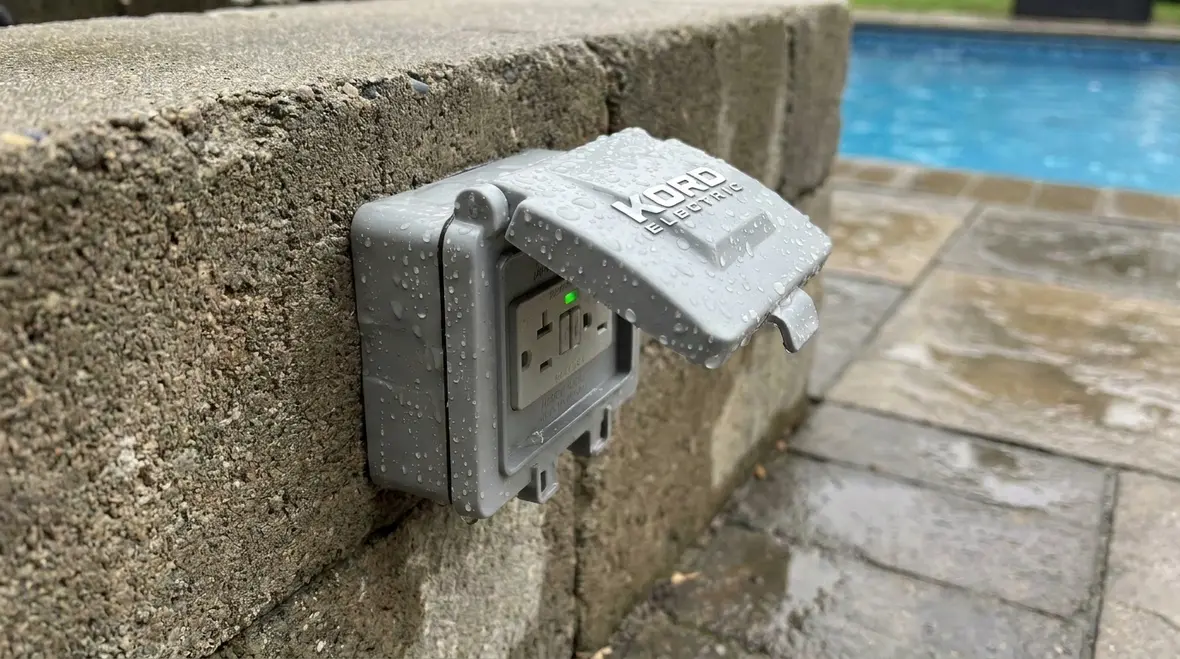
That is where NFPA 70 Section 680.22 pool lighting receptacles becomes central to planning. These receptacles serve lighting and associated electrical needs in and around pool environments, and they must meet strict safety rules designed for wet and damp conditions. When teams apply the requirements correctly, they reduce the chance of energized equipment in areas where people move, swim, and gather.
Our technicians explain the key idea in plain terms: the system must protect people even if something fails. Therefore, we help you match the receptacles to the environment and keep wiring and protection methods aligned with the NEC intent.
In practice, this means looking carefully at how receptacles interact with luminaires, junction points, transformers, and control gear, and how they sit relative to the pool edge, deck surfacing, fencing, pump rooms, and service corridors. When you tie that back to broader NFPA 70 discussions from resources like Kord Fire’s NFPA 70 guide, it becomes obvious that Section 680 is just the focused expression of a bigger goal: keeping people safe wherever electricity and water share the same space.
What Our Technicians Check Before Install and During Service
At Kord Electric, we do not treat compliance as a paperwork exercise. Our technicians verify the physical details. Then our expert service staff confirm the documentation aligns with what we built.
Here is how we typically work through the scope for commercial and industrial properties, including major propertie buildings with complex electrical systems:
- Site review and zoning: We map the pool lighting areas and verify what counts as splash or wet zones based on layout and use.
- Equipment selection: We choose devices that meet NEC expectations for that environment, because the “looks right” option rarely survives inspection.
- Protection and routing: We confirm wiring methods, protection, and routing so cables stay safe from damage and remain usable over time.
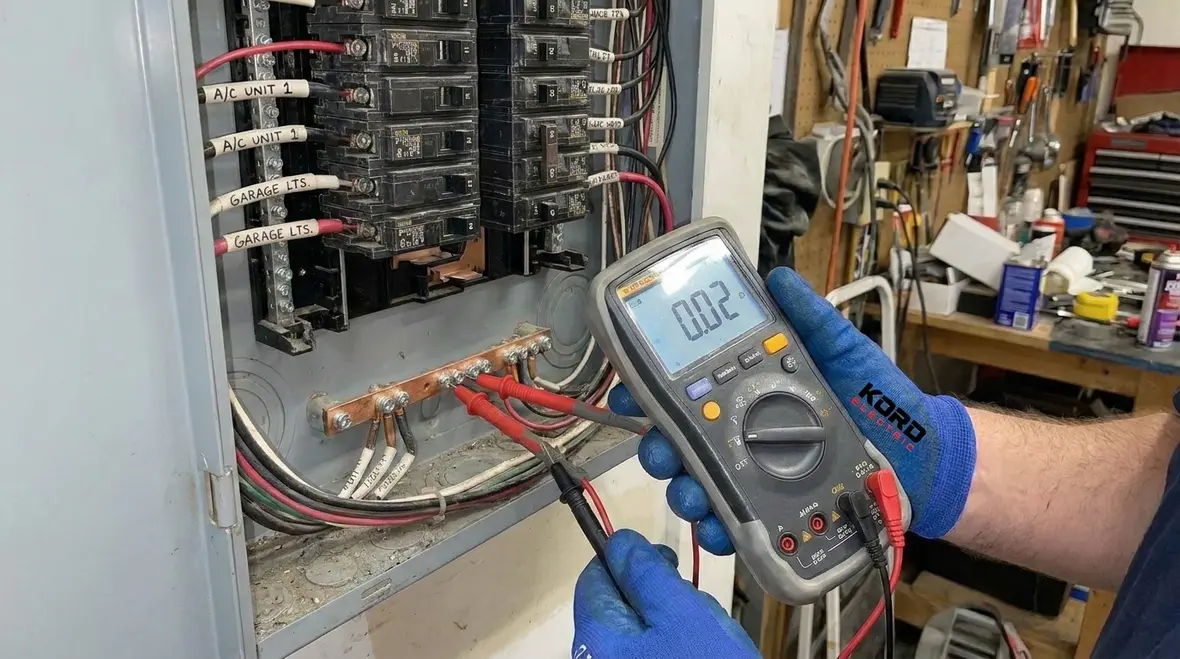
- Grounding and bonding checks: We verify connections and continuity so fault conditions do not create unsafe voltages.
- Testing and verification: We test systems after install, then document results so maintenance teams have a clear baseline.
We also support ongoing service. So when a facility manager asks why something tripped or why a device feels “off,” our team can trace the issue using the same standards the install followed. It saves time, reduces downtime, and keeps the site safer.
Because pool environments live under the same NEC umbrella as your service-entrance, feeders, and emergency systems, our team ties receptacle decisions back to the rest of your electrical distribution. That way, a change near the water line does not accidentally introduce problems upstream at a panelboard or disconnect that also must follow its own dedicated NFPA 70 sections.
Keeping Compliance Real: Inspections, Documentation, and Ongoing Maintenance
After installation, compliance must stay alive. In commercial and industrial settings, changes happen. Tenants update spaces, pool schedules change, and equipment ages. Even a well built system can drift away from the original intent if maintenance is inconsistent.
We help facilities keep compliance real by building a clear maintenance path. First, we ensure the initial install records are complete. Then we support periodic checks that look at both safety and performance.
To keep things simple, our expert service staff emphasize three practical habits:
- Document everything: We provide clear records that match what inspectors will expect later.
- Use trained staff or trained partners: If someone replaces components incorrectly, the system may still “work” but fail safety intent.
- Address small issues fast: A minor fault can grow into a major one, like a sitcom misunderstanding that somehow turns into a plot twist.
When you plan this way, your site spends less time on emergency fixes and more time on steady operations.
We also encourage facility teams to review NEC-focused learning material at least annually, including refreshers on NFPA 70 fundamentals and specific sections that influence their systems. That way, when an inspector references an update or cites language tied to NFPA 70 Section 680.22 pool lighting receptacles, your staff hears familiar terms instead of a cryptic code riddle that sends everyone scrambling.
Choosing a Code Focused Partner for Major Propertie Buildings
Commercial and industrial properties need more than a contractor who shows up. They need a partner who understands how codes connect to design, permitting, installation, testing, and service.
We only target commercial and industrial facilities and major propertie buildings, because these sites require the coordination and documentation that code compliance demands. So, whether your scope includes pool lighting systems, general distribution work, or specialized wet area electrical needs, we build with the NEC in mind from day one.
From the start, we coordinate with project teams, review requirements, and explain what matters in a way that keeps everyone aligned. Then we execute with precision. Finally, we support service so the system stays safe long after the ribbon cutting, when everyone stops checking and assumes the work “just lasts.” That assumption can be expensive. We prefer certainty.
For properties across Southern California and especially those in demanding jurisdictions, pairing your pool lighting and receptacle projects with regional experts matters. That is why many facilities look to dedicated offerings like Los Angeles County commercial electrical services when they need both code expertise and local familiarity with inspectors, permitting habits, and real-world expectations.
FAQ: NFPA 70, Pool Lighting, and Receptacle Safety
Conclusion: Let Us Keep Your Electrical Systems Code-Ready
When we handle electrical work, we focus on safety, clarity, and documentation that holds up during inspections and long term maintenance. Our technicians and expert service staff help commercial and industrial facilities plan correctly, install precisely, and keep systems compliant over time. If your property includes pool lighting areas or other wet location electrical needs, we recommend a code focused review before decisions get locked in. Contact Kord Electric today, and let us build certainty into your electrical plan.
Whether you are mapping new construction, upgrading an older pool deck, or coordinating a multi-building campus, our team can align your NFPA 70 Section 680.22 pool lighting receptacles, distribution equipment, and supporting infrastructure so they work together as a single compliant system. That means fewer surprises, smoother inspections, and more time spent with your facility running the way it should instead of waiting on last-minute fixes.


