
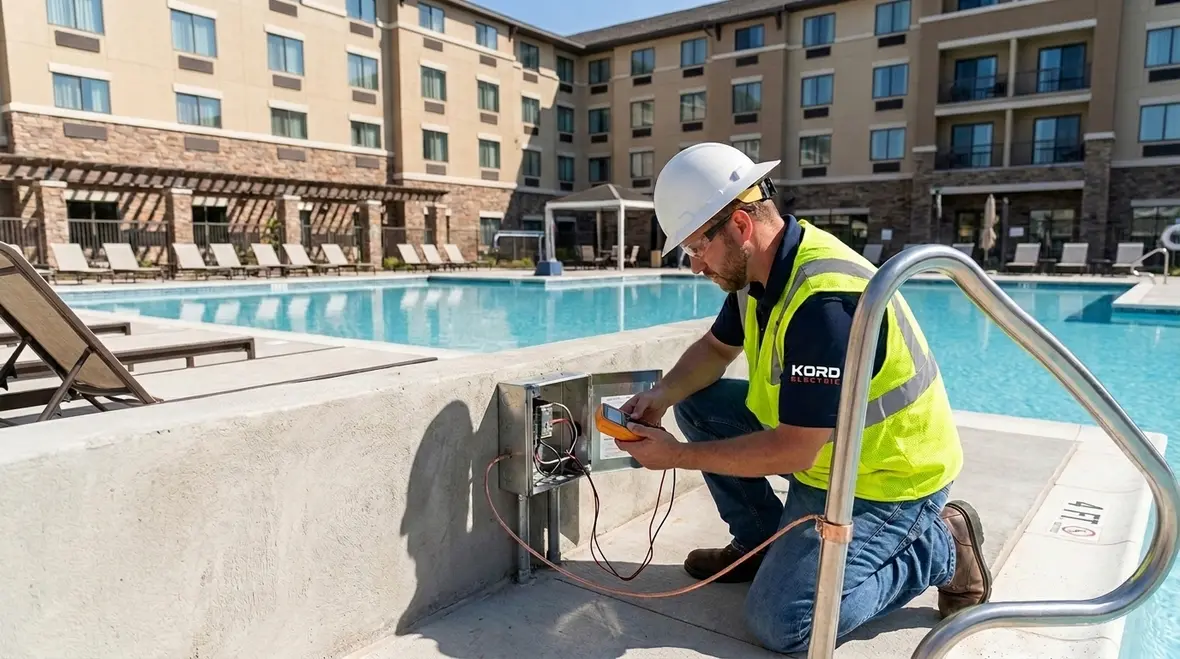
NFPA 70 Section 680.20 Swimming Pool Electrical Code
NFPA 70 Section 680.20 swimming pool electrical sets the rules for how we keep pool areas safe, reliable, and code compliant. At Kord Electric, we focus on commercial and industrial facilities and major property buildings, so our teams plan, install, and maintain systems with the same care a casino uses when counting chips. If you manage a hotel pool, a sports complex, or a large multifamily development, this guidance matters. It shapes grounding, bonding, and the way electrical equipment gets placed near water. And yes, mistakes near water can be as unforgiving as a bad coffee order at 7 a.m.
In this article, we explain how the National Electrical Code is built, why NFPA 70 matters, and how our expert service staff helps owners and facility managers make smart decisions before inspections show up uninvited.
Why NFPA 70 drives safety in commercial and industrial electrical work
NFPA 70, also known as the National Electrical Code, gives a practical set of design rules that reduce shock risk and fire risk. First, it sets baseline requirements for wiring methods, equipment ratings, and circuit protection. Then, it addresses special spaces, including pools and similar wet locations. When we plan projects for major property buildings, we do not treat code as paperwork. We treat it as a system map for real-world conditions.
Our technicians explain it like this: the code does not “guess” what happens during a fault, it assumes faults can and will occur. Therefore, it aims to limit damage, speed up clearing, and keep accessible metal parts from becoming dangerous. Meanwhile, facility teams benefit because compliant work tends to require fewer interruptions later. In other words, code aligned electrical systems help you avoid the kind of surprise downtime that ruins a whole quarter.
NFPA 70 Section 680.20 swimming pool electrical: what it covers
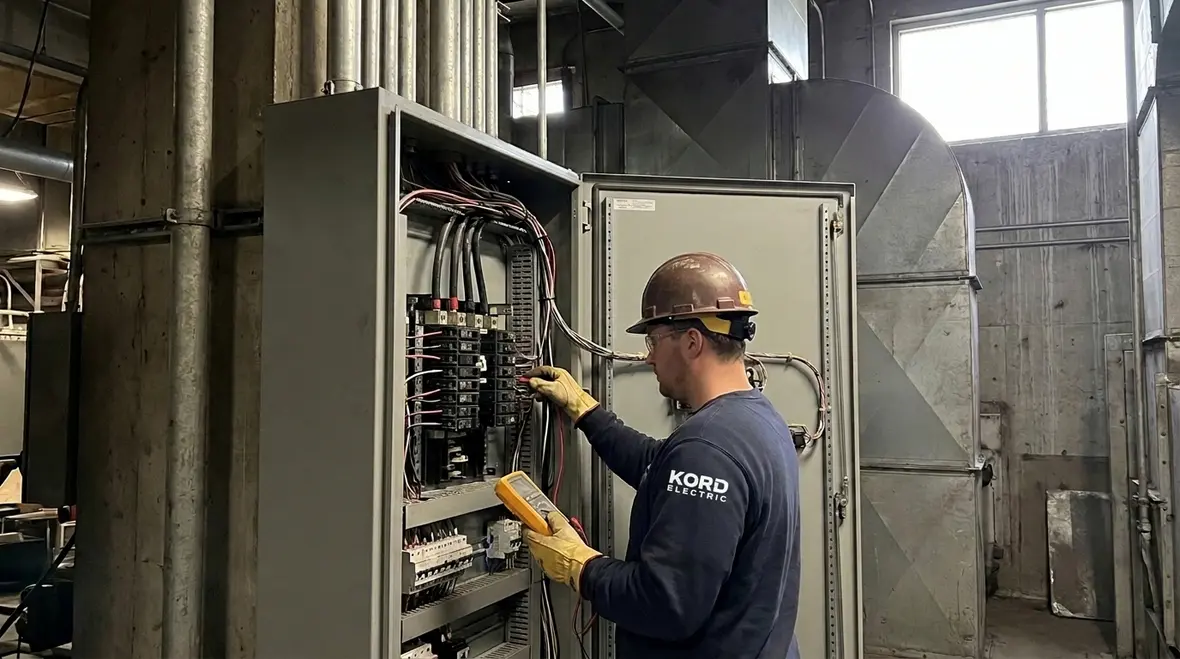
NFPA 70 Section 680.20 swimming pool electrical addresses key installation practices for circuits and equipment serving pool areas. In practice, these rules influence how conductors enter the pool zone, how bonding gets handled, and how equipment is protected. Moreover, this section ties to broader requirements in the NEC that cover how systems must be grounded and bonded across the installation.
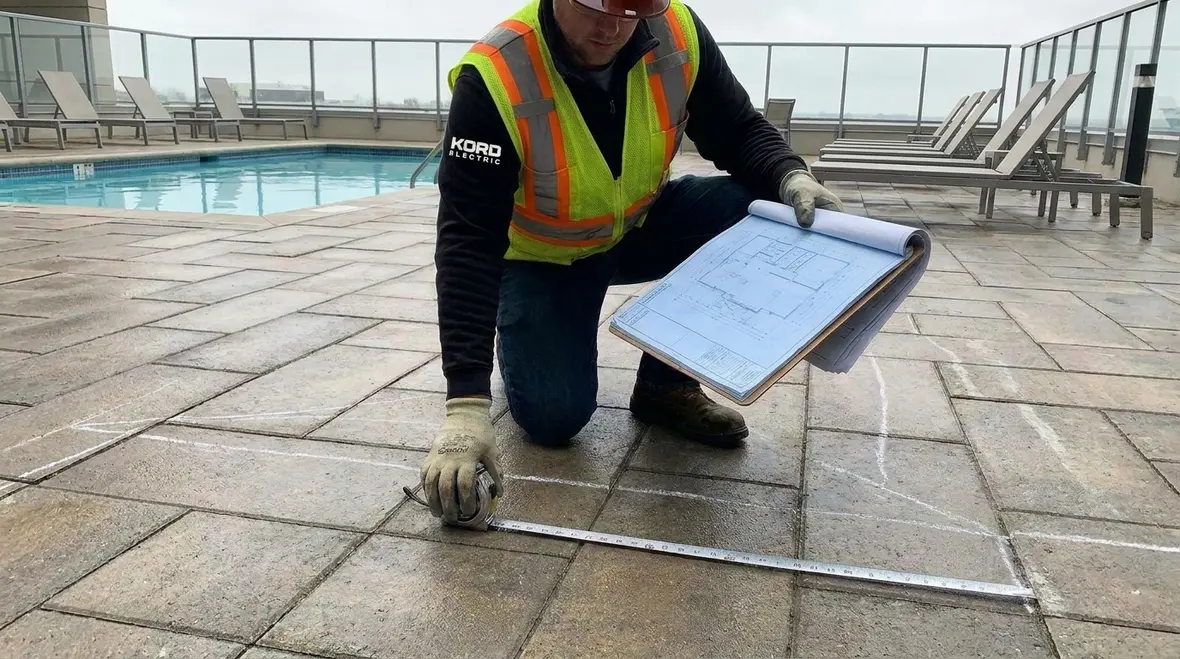
At Kord Electric, our expert service staff reviews the job scope and clarifies what “pool area” means for your site. Because layouts vary, we confirm dimensions, identify boundaries, and map equipment placement. Next, we verify that the pool electrical components match the intended use, location, and environmental exposure.
So if you are asking, “Are we close enough to the pool for these rules to apply?” the answer depends on measurements and the defined area in the code. We help your team settle that early, instead of debating it after a rough inspection.
How bonding and grounding connect to the pool electrical zone
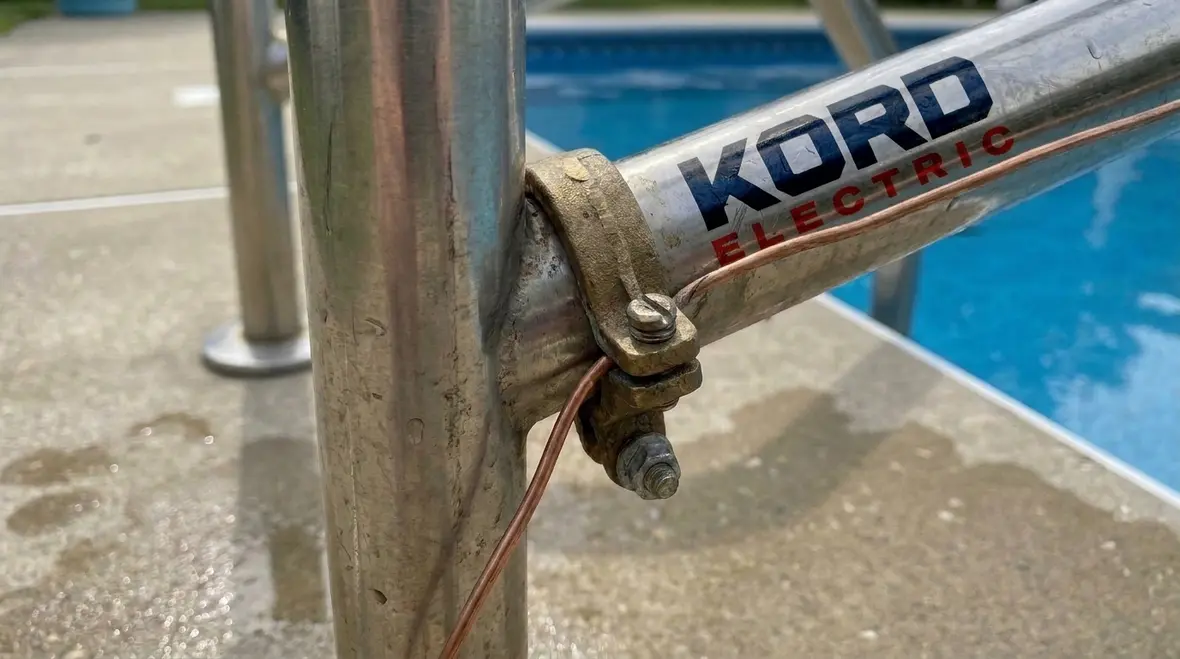
Bonding and grounding are not just technical phrases we toss around to sound busy. They prevent unsafe voltage differences between metal parts. As a result, when electrical faults occur, the system behaves in a controlled way. In pool installations, metal ladders, handrails, bonding conductors, and nearby conductive surfaces need to work together as a single safety network.
Additionally, incorrect bonding can let a person near the water become the easiest path for current. That is the scenario we avoid. Therefore, we ensure that bonding methods follow NFPA 70 rules and match the equipment listed for wet locations.
Our technicians typically start by identifying all conductive parts in the pool environment and then tracing how they link to the grounding and bonding system. After that, we verify conductor sizing, termination quality, and routing. Finally, we document the setup so it stays understandable for maintenance staff long after the installer leaves the site.
Wiring methods, protection, and equipment placement in wet areas
Once bonding and grounding get established, we focus on wiring methods and equipment protection. Wet locations demand installation choices that resist corrosion and maintain insulation integrity. Thus, we select conductors, conduits, fittings, and equipment rated for the conditions they face.
We also pay close attention to circuit protection. If a circuit fault happens, protective devices must clear fast enough to reduce hazard and damage. In commercial settings, that also helps limit downtime for pools, spas, and related water features.
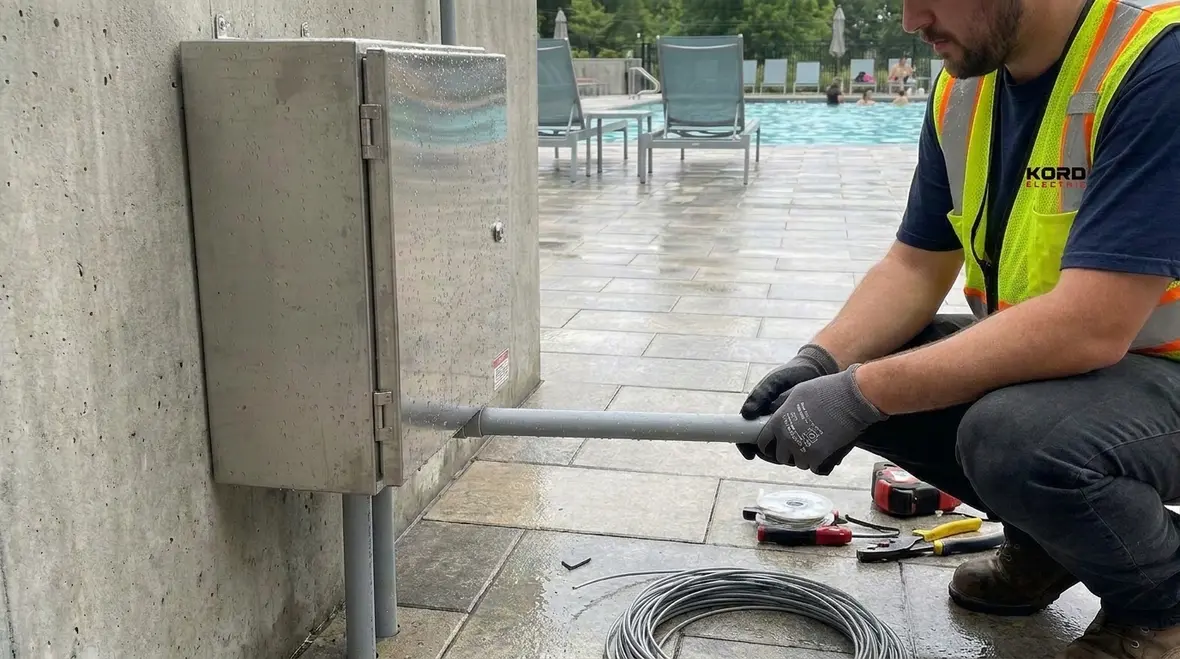
Equipment placement matters too. For instance, we consider how splashing, chemical exposure, and maintenance access affect installed components. As our team explains during site reviews, the “best” location is not just where the equipment fits. It is where it stays safe, serviceable, and aligned with the code rules that govern the pool zone.
And yes, we have seen installations where someone treated a wet-rated enclosure like it was just a decorative box. That approach rarely ages well. We would rather build it right now than fix it later, after the facility has already paid for disruption.
Plan, estimate, and coordinate like a pro for major property buildings
For large facilities, the work rarely stays in one trade lane. Electrical teams coordinate with civil, pool construction, controls, and sometimes fire protection or life safety systems. Therefore, we build a process that reduces rework. First, our project engineers review drawings and confirm the pool electrical scope. Then, they align it with NFPA 70 requirements for wet areas and the specific installation details.
Next, our technicians verify existing site conditions where applicable. For example, they check grounding systems, identify nearby metallic structures, and confirm that the space supports safe equipment placement. After that, we prepare a clear installation plan that matches the schedule your operations team needs.
Our goal is simple: we deliver a compliant system that your facility can operate with confidence. If upgrades come later, the foundation remains solid, and maintenance stays easier. That is how we keep commercial projects moving without turning them into an endless “who owns this piece” meeting.
If your team wants to zoom out and understand how pool work fits into the bigger NEC picture, resources like Understanding NFPA 70: The National Electrical Code Explained for 2026 help connect section level requirements with long term planning for commercial and industrial facilities.
What inspection and documentation should look like
In a commercial environment, inspections and ongoing maintenance should not feel like a mystery novel. They should feel predictable. We assist facility teams by documenting key installation details and ensuring that our work can be verified against NFPA 70 requirements.
Our expert service staff helps clients understand what inspectors typically look for. They explain bonding continuity, conductor terminations, equipment ratings, and how the installation matches the defined wet location rules. Moreover, we help you keep records organized so you can answer questions fast during inspections and audits.
When documentation is clear, it saves time. When it is vague, it forces people into guesswork. And in electrical work, guesswork is like using a flashlight app in a thunderstorm. It might work once, but it is not a plan.
NFPA 70 compliance support from Kord Electric and Kord Fire
We understand how safety systems connect across a property. That is why Kord Electric coordinates with broader fire and life safety support from Kord Fire and other specialist partners when a project demands it. Also, we stay mindful of how electrical safety influences fire performance and emergency readiness.
For pools, spas, and water features, the electrical build must support the facility’s life safety goals. At the same time, fire protection and related systems must integrate cleanly into the site plan. Therefore, we treat compliance as an integrated system effort, not as isolated checkboxes.
On many projects, we also coordinate with local fire and building teams and ensure that installed equipment does not create hidden conflicts. If a facility uses water features as part of guest experience or public recreation, we respect how downtime affects operations. We help your team maintain safety without disrupting business more than necessary.
Quick comparison of key compliance areas
| Compliance focus | What we verify on site |
| Pool area electrical | Defined wet location boundaries, bonding, grounding, and circuit arrangement |
| Equipment protection | Ratings for moisture, corrosion resistance, and safe enclosures |
| Wiring and protection | Correct wiring methods, terminations, and protective device clearing behavior |
| Documentation | Installation details for inspections, maintenance, and future upgrades |
FAQ for NFPA 70 Section 680.20 swimming pool electrical
Ready for a safer, code compliant pool electrical system
If you operate a hotel, campus, warehouse complex with water features, or a major property building, we can help you plan and execute a safer electrical system. Kord Electric brings experienced technicians, clear documentation, and practical installation support that fits real schedules. Meanwhile, our expert service staff helps your team understand what NFPA 70 requires so inspections feel calm instead of chaotic. Contact us for a site review and a compliance focused plan you can trust.
For property owners and managers in Southern California, our Los Angeles County electrical services team can align NFPA 70 Section 680.20 swimming pool electrical requirements with broader site upgrades, from distribution changes to life safety coordination, so your entire facility benefits from the same code minded approach.


