
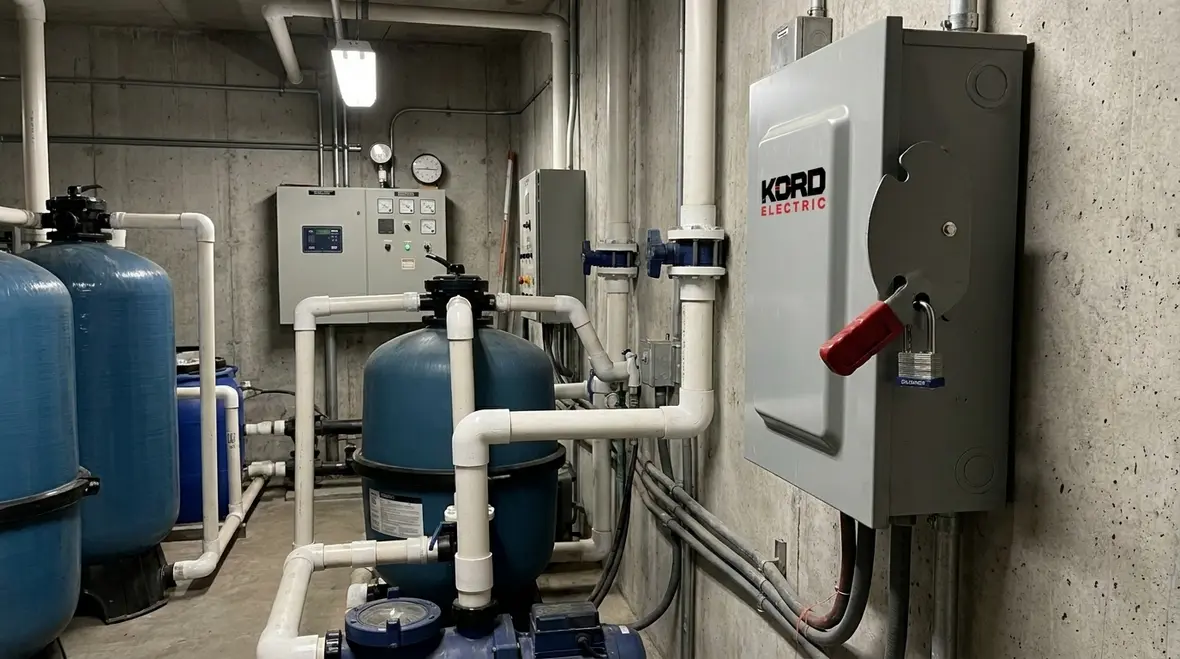
NFPA 70 Section 680.13 Pool Maintenance Disconnect Guide
At Kord Electric, we know commercial and industrial facilities cannot afford electrical guesswork, especially around pool and spa systems that run year after year. That is why we pay close attention to the NFPA 70 Section 680.13 pool maintenance disconnect right from the start. Within the right design and install, a pool maintenance disconnect helps create a clear, controlled way to shut things down for service and safety. However, we also know the real world brings surprises, like a pump that will not behave, a controller that trips at the worst time, or a staff member who just wants power off now, not after a debate. Our technicians explain what the code expects, what the equipment actually needs, and how we install the pieces so your maintenance team can work without drama.
In this guide, we cover how the National Electrical Code works for pool equipment, what NFPA 70 requires in practical terms, and how our expert service staff approaches safe installation and ongoing upkeep. Then we close with clear next steps for commercial owners and facility managers who want compliance without losing uptime.
NFPA 70 pool disconnect basics for facility teams
Pool circuits and maintenance disconnects are not just “nice to have” for major properties. They support safe servicing, reduce risk, and help keep electrical systems in a predictable state. First, we look at the purpose behind the NFPA 70 Section 680.13 pool maintenance disconnect: it provides a dedicated way to isolate power for pool-related equipment during maintenance. Then, we connect that purpose to everyday facility needs such as lockout, safe troubleshooting, and quick shutdown during emergencies.
From our experience, many facility managers know the word “disconnect,” but they do not always know how the disconnect functions with the whole system. For example, there may be a pool pump circuit, a heater circuit, and controls that interact with filters, valves, and automation. When maintenance staff isolates power for one item but not the others, they can create confusion or unsafe conditions. Therefore, we design and review the setup so the disconnect matches the load it is meant to control.
We also help our clients understand that code compliance is not a one-time stamp. As equipment changes, as controls get upgraded, and as building operations evolve, the disconnect approach must still make sense. If you ever feel like your electrical system acts like a pop culture villain, always revealing a new twist, you are not alone. The goal is to remove those twists through good planning and correct wiring.
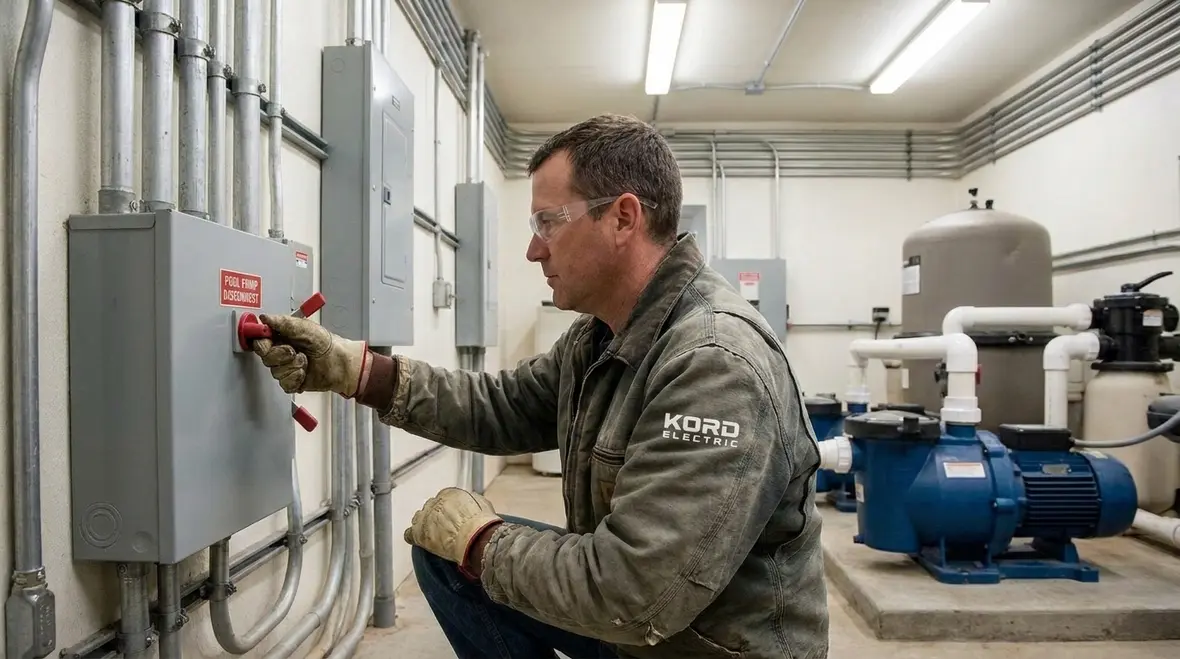
How the NEC organizes rules and what it means for pool equipment
The National Electrical Code, found in NFPA 70, organizes requirements so installers and inspectors can verify safe design. Yet, many people treat it like a huge wall of text. We do not. Instead, we break it into sections that map to real equipment. Then our technicians explain how those sections connect to your specific pool and spa installation.
One reason this matters for commercial and industrial facilities is that pool systems often sit inside bigger utility and life safety plans. For example, the building may already have its own electrical rooms, switching gear, grounding systems, and emergency power rules. Even if the pool circuit feels “small,” it still ties into the facility’s broader electrical environment. Consequently, code requirements about disconnecting, protection, and installation practices must fit into that bigger picture.
For further context, our team aligns our work with the guidance and breakdowns we share across our resources, including our coverage of NFPA 70 and how it applies across modern installations. We also reference related safety and fire protection topics through our sister resources, because in real life, electrical safety and fire safety are not separate departments. They are neighbors that should get along.
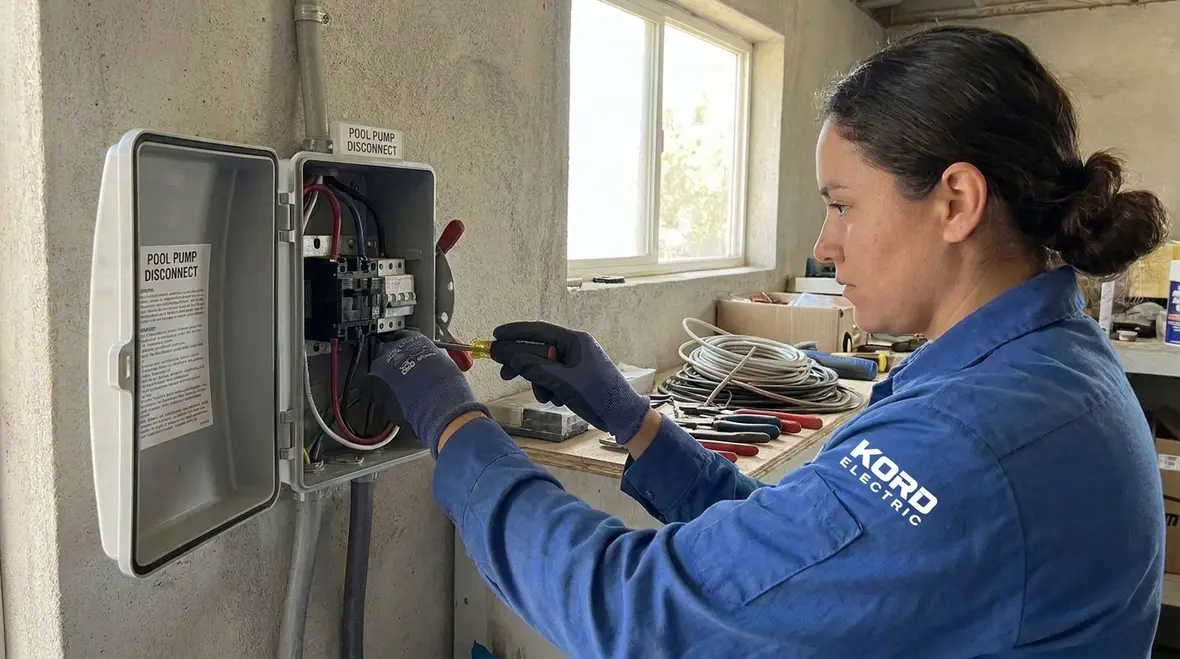
What our technicians check when installing a maintenance disconnect
When we install or verify a pool maintenance disconnect, our expert service staff runs a structured checklist. First, we confirm the equipment that the disconnect must serve. Then we verify that the disconnect rating and configuration match the connected loads and control method. After that, we review placement and accessibility so maintenance workers can reach it without stepping into hazards.
Next, we examine wiring methods and routing. We avoid shortcuts because pool environments add stress from moisture, chemical exposure, and condensation. If wiring and terminations are done carelessly, you might get nuisance issues, corrosion at connections, or worse, failures that show up months later. And yes, failures months later are the kind that make project managers stare at a ceiling like it owes them money.
Then we verify grounding and bonding practices in the surrounding system. Proper bonding supports electrical stability and reduces shock hazards. We also check labeling and documentation. Facility staff should not have to guess which disconnect controls which pump. Clear labeling helps new hires, night shift operators, and contractors.
Finally, we test the arrangement in a way that matches real operations. We do not just follow theory. We confirm that the disconnect isolates what it should isolate, so maintenance staff can work safely. That is where experience matters, because code compliance means nothing if the equipment behavior does not match the design intent.
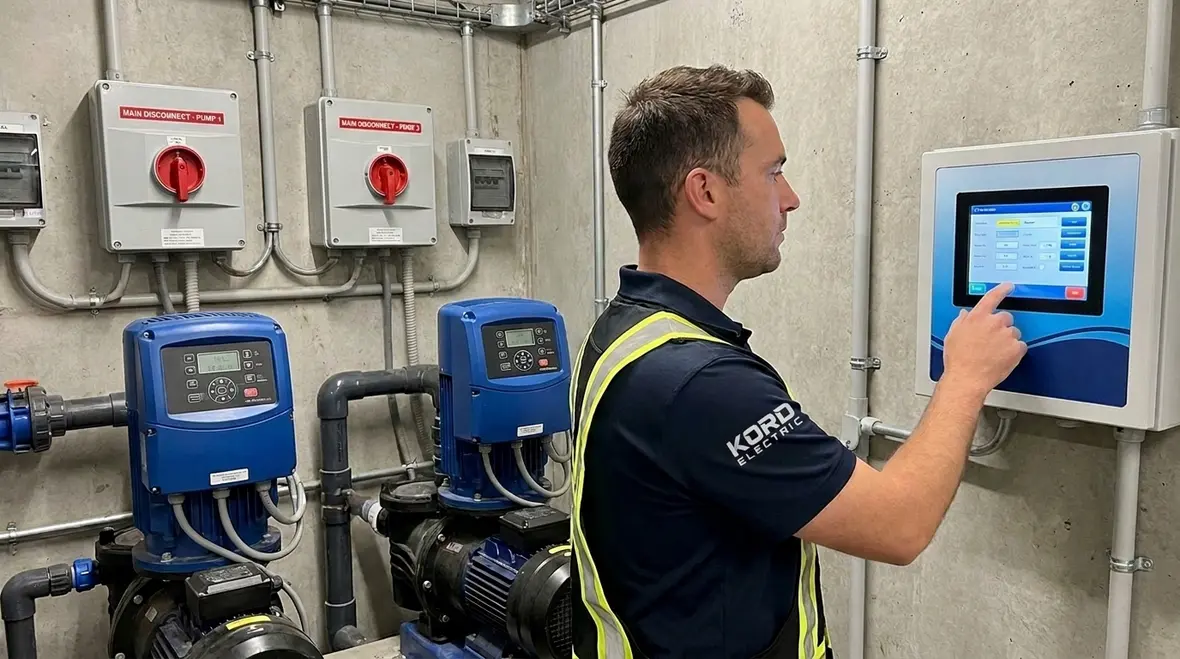
Coordination with automation, pumps, and controls in major properties
Commercial and industrial sites often run pool systems through building automation or dedicated controllers. Therefore, we coordinate the disconnect strategy with the pump controls, heater controls, and any automation interfaces. This is where many installations drift from the ideal plan. A disconnect might isolate a circuit, but the control board could still power up through another path, or the system might retain stored energy and create confusion for service crews.
In practice, we map the full power path and the control path. Then we determine how the pool maintenance disconnect should behave for service actions. For example, when a technician isolates power at the disconnect, the expectation is that the pool equipment will safely stop and not restart unexpectedly. We also consider restart behavior after power returns, so the system does not kick into operation without proper checks.
We also plan for future changes. If your property upgrades from single-speed pumps to variable speed models, or if it adds automation sensors, the electrical approach should remain clear. We often recommend that clients treat the disconnect and its related circuits as part of the equipment lifecycle, not just a one-time installation detail.
Common mistakes we prevent during reviews and retrofits
Even when an installation started with good intentions, pool systems sometimes grow into problems through upgrades and patchwork fixes. Our technicians catch these issues during reviews and retrofit work. First, we see mismatched disconnect scopes, where a disconnect controls one component but maintenance teams need power off for several connected parts. That can create unsafe “half isolated” conditions.
Second, we see poor accessibility. If the disconnect ends up behind locked gates or blocked by equipment, staff cannot safely reach it. Code requirements exist for a reason, and accessibility is part of safety.
Third, we see labeling failures. If the label does not match reality, maintenance time increases and errors happen. Facility teams should not have to play guess-the-switch. If your property has more than one pool zone, we also ensure the labels match the actual zones, not the original install plan from years ago.
Fourth, we see corrosion and connection issues. Pool environments punish weak workmanship. Over time, loose terminations can cause heat and instability. Therefore, we check terminations, inspect protective measures, and confirm that components are suited for the environment.
Last, we see coordination problems with other electrical systems. For instance, the facility might have service panels, subpanels, or switching arrangements that complicate how the pool equipment powers up during normal operations. We align the pool maintenance disconnect with those systems so your uptime does not suffer whenever someone opens a panel door.
Why ongoing maintenance matters after installation
A correct installation does not remove the need for inspections. In commercial and industrial facilities, we treat pool electrical systems like any critical asset: we plan checks, we watch trends, and we document findings. Over time, vibration from pumps can loosen connections, corrosion can build at vulnerable points, and automation updates can change how equipment reacts to power cycles.
So, we help our clients build maintenance routines that keep safety and compliance steady. Our expert service staff explains what to look for, such as signs of overheating, damaged enclosures, moisture intrusion, or inconsistent system behavior after power changes. Then we recommend practical steps that protect your staff and your equipment.
Additionally, we coordinate with site safety goals. Because a pool system supports daily operations for staff and guests, electrical reliability supports overall risk control. When electrical issues happen, they rarely stay isolated. They can affect pump schedules, heating performance, chemical circulation timing, and even how quickly your facility can recover from downtime.
How commercial facilities can plan compliance without downtime
We know the real constraint is time. Property managers cannot always schedule outages, and operations must keep running. Therefore, we plan pool-related electrical service with a downtime-aware approach. First, we verify current system documentation, single line diagrams, and equipment maps. Then we plan a work window that matches the operational needs of your facility.
Next, we coordinate with your maintenance schedule and any automation needs. If the pool system ties into a daily routine, we sequence work to avoid leaving equipment in unstable states. Our team also supports safe handoff so maintenance staff understands what changed and what to test during commissioning.
Finally, we document the work clearly. We provide a record of what we inspected, what we corrected, and what the system should do during service operations. When your facilities run across multiple buildings, documentation helps prevent repeat mistakes across locations.
And if this sounds like we are serious about making everything behave, yes we are. We have seen what happens when a system works “mostly fine” until it does not. That is the electrical equivalent of trusting a sitcom to fix your wiring. It is funny, until it burns.
FAQ
Call Kord Electric for a code-aligned pool electrical review
If your commercial or industrial pool system needs a disconnect review, retrofit, or installation that fits how your facility actually runs, Kord Electric is ready. Our technicians and expert service staff explain what the code expects and then we implement it with clear documentation and practical coordination. Contact us to schedule an assessment and build a plan that supports safety, compliance, and uptime. We will help your pool equipment shut down for service the right way, every time.
For properties across the region that need broader electrical support beyond the pool deck, our team also provides Los Angeles County electrical services for commercial and industrial facilities, so your pool work can align with panels, feeders, emergency power, and everyday distribution needs across the rest of the site.
When you are ready to move from “it usually works” to a documented, code-aligned system, we help you treat NFPA 70 Section 680.13 pool maintenance disconnect usage as a reliable part of your safety program instead of an afterthought. That way, the next time someone says “we need the pool off, now,” the right handle is ready, the shutdown is clean, and your maintenance team can get to work without drama.


