
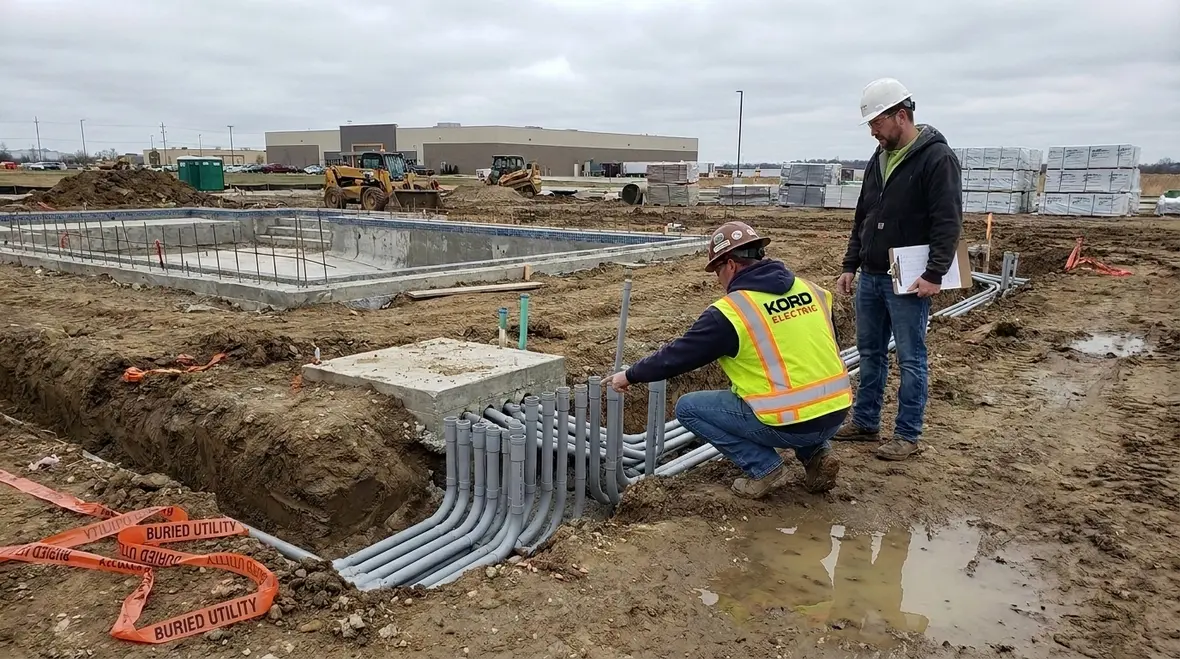
NFPA 70 Section 680.11 Pool Underground Wiring Compliance
Kord Electric supports commercial and industrial facilities with safe electrical work that stands up to real-world inspections. When we talk about NFPA 70 Section 680.11 pool underground wiring, we do not treat it like trivia. Early decisions about placement, protection, and routing can prevent failures that turn into expensive downtime. For example, pool areas mix wet locations, long cable runs, and tight construction schedules. As a result, the wiring details matter more than most people expect, even when the project team thinks, “It’s just electricity, right?”
In this article, we explain what the National Electrical Code (NEC) requires for underground conductors around pools, spas, and similar water features. Our technicians explain the why behind each rule, step by step, so your facility stays compliant and dependable. And yes, we promise: no one has to become a code scholar overnight.
How NFPA 70 treats pool underground wiring
The NEC is built to reduce risk from shock, fire, and overheating. Moreover, when water enters the picture, the code gets more specific because conditions can change fast. Wet locations can lower resistance, and buried wiring can face physical damage long before anyone notices.
In the sections connected to pool circuits, NEC rules focus on the entire path of the conductors. That means we look at the cable from the point of connection all the way to the equipment. Then we verify protection methods, burial depth expectations, and the type of wiring system that matches the environment. If the environment includes moisture, corrosive soil, or future excavation risk, we plan for that up front.
Our expert service staff follow the NEC logic in the field. First, we identify the load and the equipment. Next, we confirm the requirements that apply to the specific location, including how the cable is run and protected. Finally, we document and verify the installation so it aligns with NFPA 70 intent.
Here is a practical way to think about it: underground wiring is like a company’s supply chain. If one stage fails, the whole operation suffers. With pool areas, the “weak link” shows up quickly, and it costs more to fix than it did to do correctly the first time.
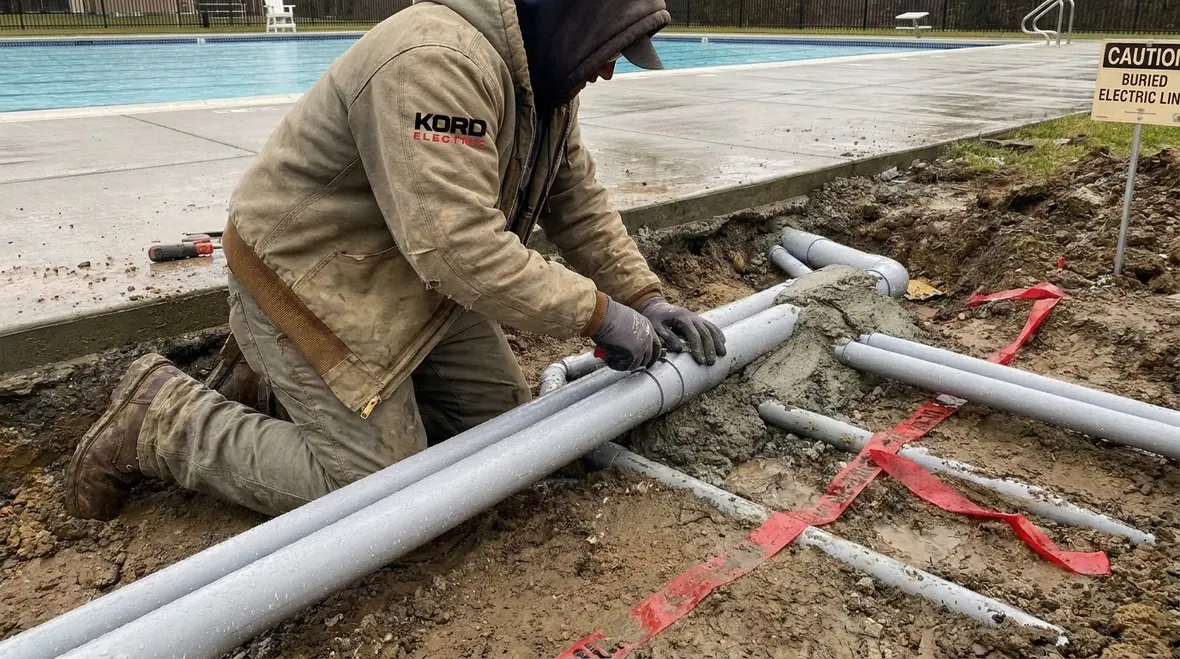
NEC compliance for Section 680.11, explained
We often hear facility managers ask what NFPA 70 Section 680.11 pool underground wiring really means in plain terms. In short, it guides how underground conductors for pool-related equipment must be installed and protected where they pass through or under the pool environment.
However, compliance is not only about burying cable. We focus on protection choices, routing, and the system design that keeps conductors safe for the life of the facility. That includes preventing damage from moisture, abrasion, and digging. It also means matching the wiring method to the location’s conditions and the equipment it serves.
Our technicians explain it like this during walk-throughs. If the cable is buried in a way that exposes it to physical harm, then the installation invites failure. If the wiring method does not suit wet conditions, then corrosion and insulation breakdown can shorten service life. And if the routing ignores future work, you risk a “surprise excavation” scenario where the next contractor digs first and asks questions later. We have all seen that movie. We prefer the ending where the electrical system survives the plot.
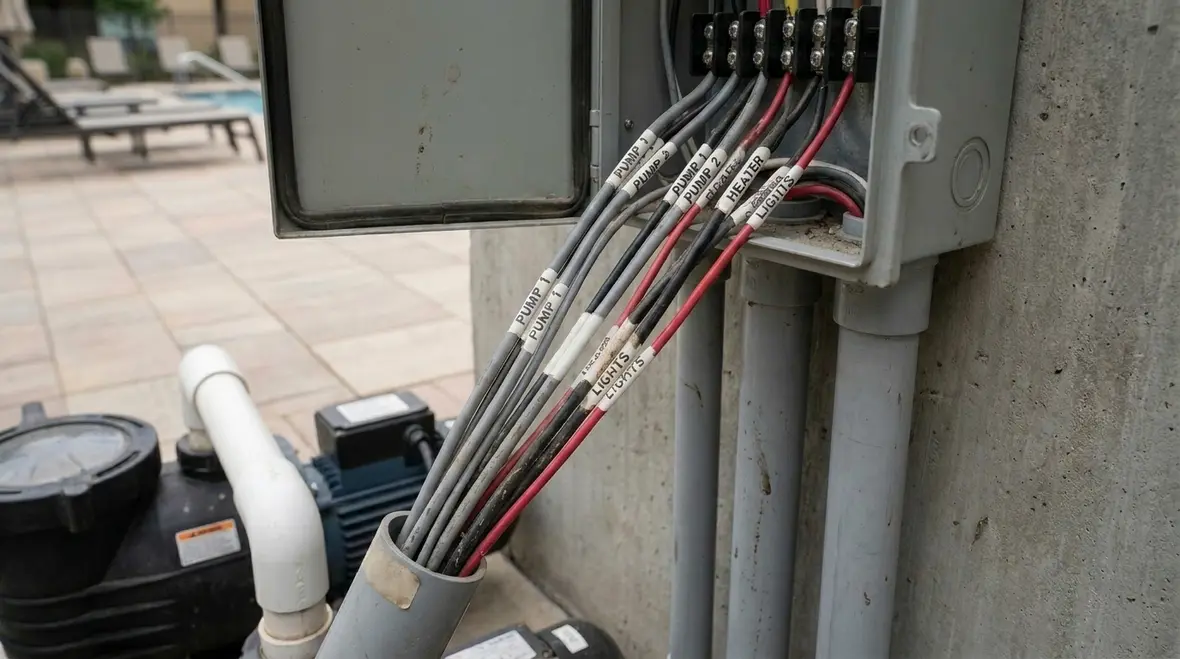
What goes wrong when underground wiring gets “shortcut”
Even when contractors mean well, shortcuts create predictable problems. First, people sometimes choose the wrong wiring method for the soil and moisture conditions. Then they assume conduit runs do not need careful planning. After that, they skip coordination with site grading and drainage, which later shifts soils and stresses the buried path.
In a commercial or industrial setting, these issues show up as nuisance trips, intermittent faults, or equipment that underperforms. Worse, a failure near pool equipment can impact customer experience, safety, and operational schedules. That is why we emphasize methodical layout and verification, not speed at any cost.
Our teams also consider the realities of major property buildings. Pool decks get resurfaced. Site utility work gets added. Landscaping gets refreshed. And sometimes, a maintenance crew finds a section of buried raceway that looks “fine” until water gets in or stress points appear. Our approach reduces these surprises by aligning electrical work with the site plan from day one.
From a compliance angle, the NEC expects systems to remain safe under intended and foreseeable conditions. If the installation cannot handle moisture exposure and physical risk, it fails that requirement. We do not gamble with that. We document what we install and why, so your facility team can support compliance during inspections.
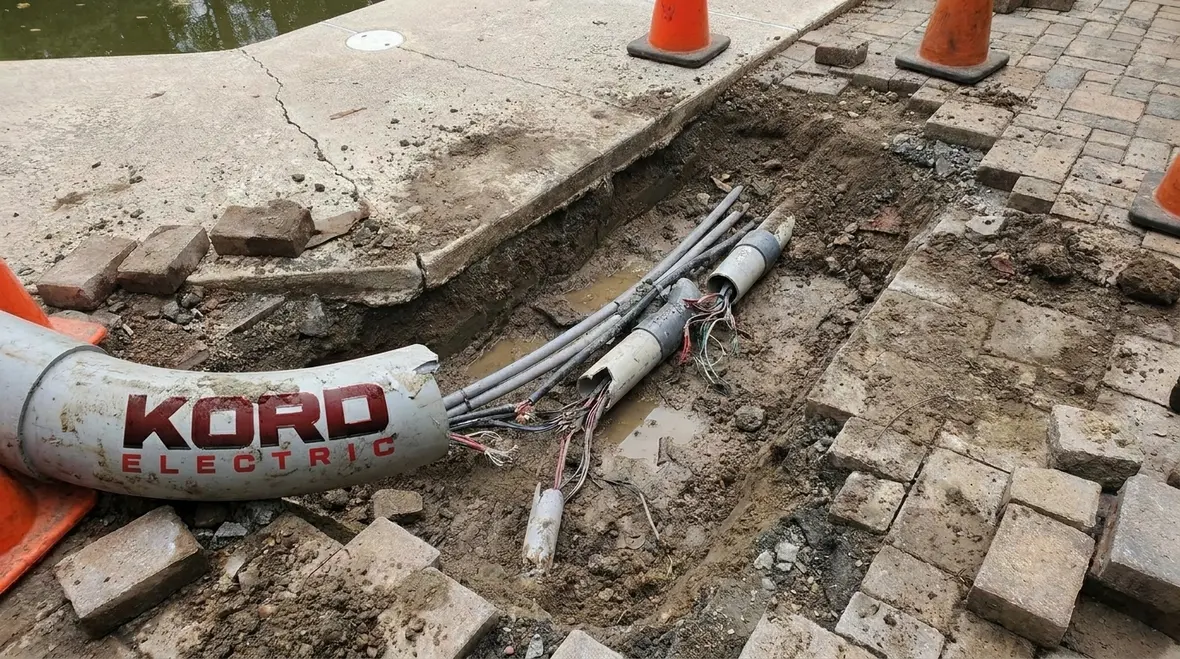
Choosing wiring methods and protection that fit the site
To meet the NEC intent, we choose wiring methods that match both the location and the threat level. That includes moisture exposure, soil behavior, and the chance of future disturbance. Additionally, we plan for protection where the cable transitions from above grade to underground areas. These changeover points often cause trouble if they are not built carefully.
Our technicians follow a simple rule: if the environment is harsh, the system must be built for harshness. We also coordinate with other trades so the burial path does not conflict with drainage structures, structural penetrations, or other underground systems. When the electrical run clashes with site work, the final installation often ends up modified in ways that increase risk.
We reference key NEC requirements and also support alignment with current NEC updates. For facilities using modern construction cycles, it helps to stay informed about future editions and how interpretations may shift. That is why we review guidance related to the NEC, including updates discussed in resources on Kord Electric and Kord Fire content such as Understanding NFPA 70: The National Electrical Code Explained for 2026 and the Kord Fire overview NFPA 70: All About The National Electrical Code (NEC) 2026, so we can apply what matters most to real jobs.
And yes, sometimes teams try to treat pool wiring like standard outdoor lighting. That approach usually ends with a support call, a failed insulation check, and a note from an inspector that reads like a polite, formal eyeroll. We help you avoid that.
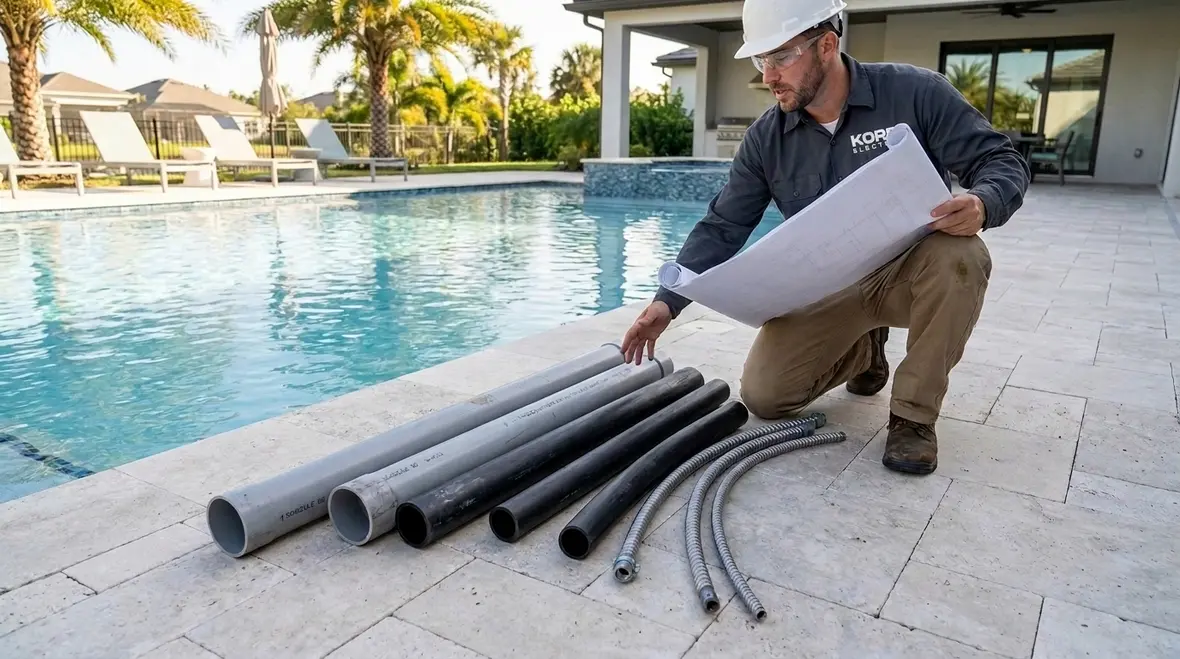
Coordination with pumps, bonding, and safety systems
Pool areas rarely operate like a simple set of switches. They usually connect to pumps, heaters, controls, and safety systems. Therefore, underground wiring connects into a broader electrical and life-safety design.
We coordinate with the overall pool equipment arrangement, including bonding and grounding practices that reduce shock risk. Bonding ties conductive parts together so fault currents behave predictably. Meanwhile, proper routing and equipment selection helps keep conductors within safe thermal limits and supports reliable operation.
Where fire and life safety features exist, we also coordinate with the facility’s fire protection plans. For many properties, this means aligning pool area electrical design with fire pump systems and related equipment. If a site uses fire pumps, the electrical layout must support those systems reliably. We also review information from fire pump and life safety resources and align our thinking with the professional guidance found on dedicated sites such as firepumps.org so our work supports reliable pump operations and the broader protection strategy.
When our expert service staff explain these connections, we focus on system behavior, not just code citations. We help you understand how the pool equipment power and control circuits interact with bonding and protection methods. That way, facility teams can make informed decisions during upgrades and inspections.
Plan ahead: inspections, documentation, and future upgrades
Commercial and industrial facilities operate for years after the install date. That means you need more than a pass on inspection day. You need an electrical system that can support future repairs, equipment replacements, and occasional site changes.
We plan for inspection readiness by documenting installation details that matter. That includes how wiring methods route underground, how protection is applied at transitions, and how equipment circuits align with the NEC approach. Moreover, we verify workmanship through testing and checks that support safe operation.
Then we think about future upgrades. Pool equipment changes over time, controls get updated, and component footprints sometimes shift. If the underground wiring route is well planned, those changes become manageable. If not, the facility faces longer outages and higher labor costs.
Kord Electric builds for that reality. Our technicians explain what they install, why they choose the method they choose, and how the system supports compliance over time. We also coordinate with major property building teams so electrical work does not stall other critical scopes.
One more thing: if your facility team wants predictable maintenance, design now for access later. It is easier to maintain a system with clear routes than to “hunt” for buried paths during repairs. We do not want anyone playing underground electrical treasure hunt. We know it looks fun in movies. In real life, it is just expensive silence.
FAQ: NFPA 70 pool wiring and underground rules
Partner with Kord Electric for pool area compliance
At Kord Electric, we focus on commercial and industrial facilities, major property buildings, and the teams who run them. We bring expert technicians and clear explanations, so your facility can meet NFPA 70 requirements for pool underground wiring with confidence. If you are planning a new build, an upgrade, or an inspection refresh, we can help you design, install, and document the electrical work right the first time.
For facilities that need full-system support beyond the pool deck, our Los Angeles County electrical services team covers distribution upgrades, emergency power planning, and project-ready documentation across commercial and industrial sites. By aligning pool area work with broader infrastructure, your electrical system behaves like a single, coordinated design instead of a set of disconnected projects.
When your facility team is ready to dive deeper into NEC strategy as a whole, you can connect this pool-focused guidance with other Kord Electric resources that unpack the code in practical language, including our step-by-step guides on how to read NFPA 70 and on keeping electrical systems steady through future code cycles. Together, they show how careful planning, documentation, and field verification keep your equipment safe, reliable, and ready for inspections year after year.
If you are planning a new pool installation, renovating an existing deck, or coordinating electrical work with other trades, Kord Electric can help you apply NFPA 70 Section 680.11 pool underground wiring rules without slowing down your schedule. Call Kord Electric today and let’s keep your pool systems safe, reliable, and compliant from the first layout mark to the final inspection.
To see how our NEC expertise ties together across your entire property, you can also review our in-depth overview on Understanding NFPA 70: The National Electrical Code Explained for 2026, where we connect code updates to planning decisions for commercial and industrial facilities.
Ready to design pool underground wiring that passes inspection the first time?
Connect with Kord Electric for NEC-focused planning, installation, and documentation that respects your schedule and your budget while keeping safety at the center of every decision.


