
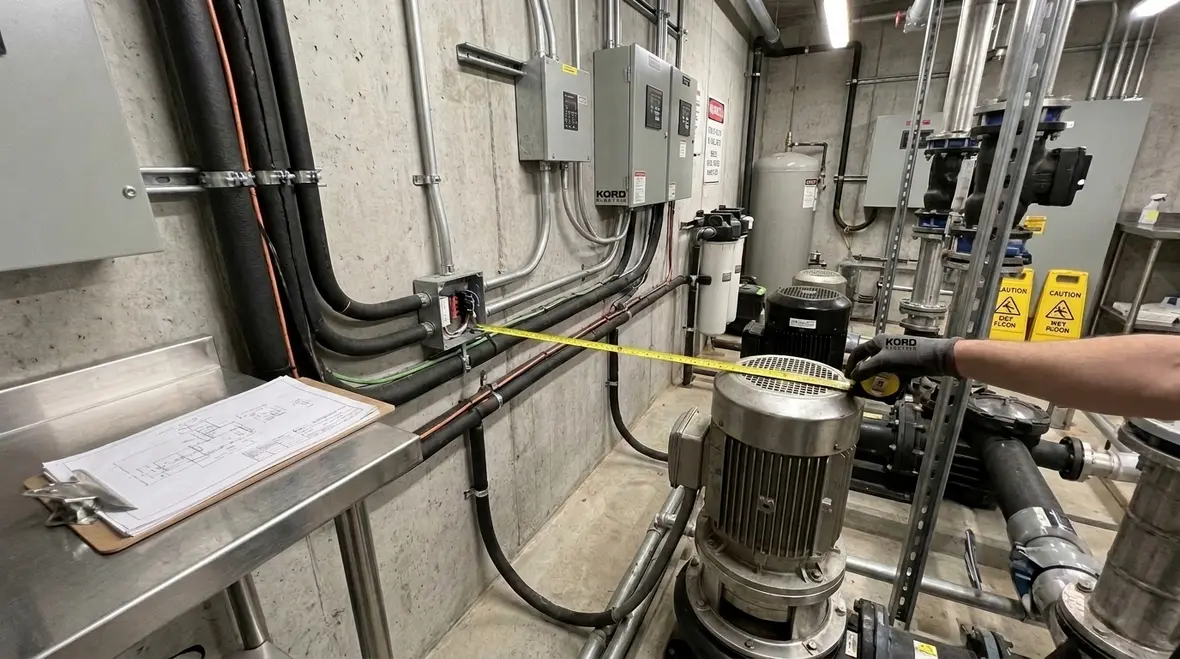
NFPA 70 Section 680.9 pool conductor clearances
NFPA 70 Section 680.9 pool conductor clearances: what commercial and industrial sites must get right
When we help commercial and industrial facilities with electrical upgrades, we treat pool wiring like it matters, because it does. In the first place, NFPA 70 Section 680.9 pool conductor clearances set the rules for how much space pool conductors need from nearby metal parts and wet locations. If we ignore those clearances, we do not just risk a red tag during an inspection. Instead, we risk heat buildup, damaged insulation, and conditions that can turn a “simple maintenance call” into a whole drama series. And nobody wants that, not even if they binge TV like it is a full time job.
To keep your site safe and compliant, our Kord Electric technicians walk through requirements in a clear, practical way. Then we align the design, the install, and the testing so your team can move forward with confidence, not guesswork. And yes, we explain things step by step, because “trust me” is not a specification.
How we interpret NEC requirements for pool and wiring zones
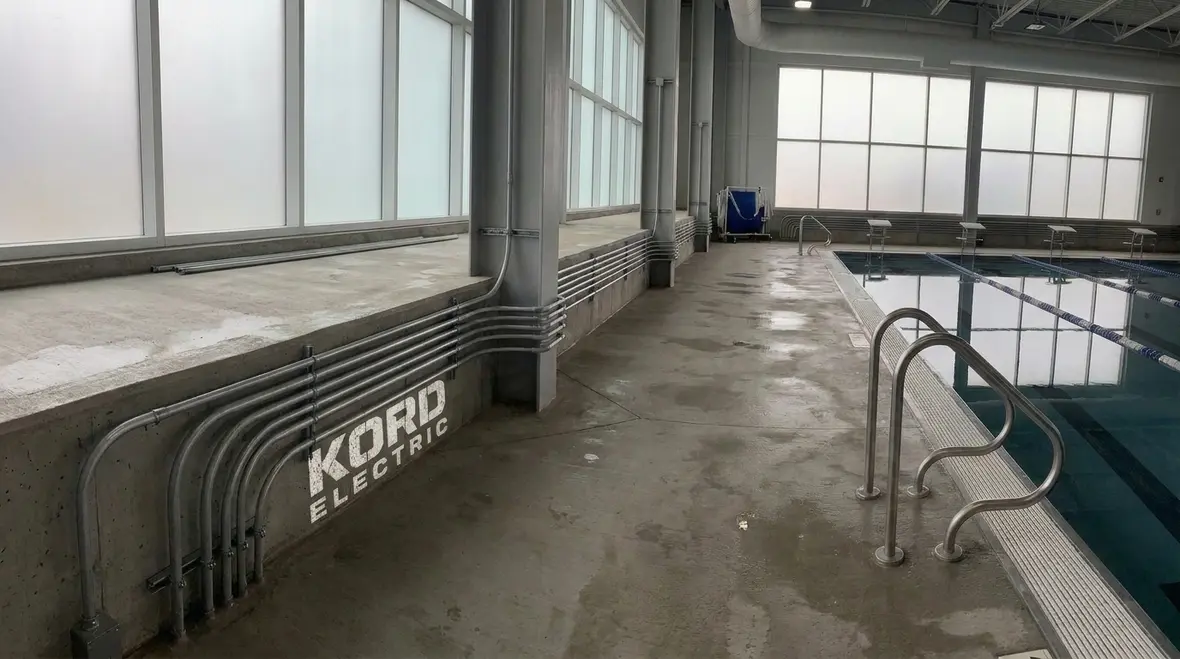
Most facilities struggle when they treat code as a pile of rules instead of a system. However, we read NEC provisions as a set of boundaries that protect people, limit hazards, and manage fault conditions. Pool and similar areas often include wet surfaces, conductive surfaces, and human contact points, so the code focuses on separation, wiring methods, and protection levels.
Then we translate that into engineering choices. For example, we review how the pool equipment is fed, where conductors run, and how bonding and grounding get handled across the site. Next, we confirm the pathway choices, because the “where” matters as much as the “what.” When our expert service staff explains this to facility managers, we keep it simple: the code aims to reduce shock risk and keep conductors in safe operating conditions.
In practice, we often see mixed outcomes when contractors install wiring before the final routing plan exists. After that, they scramble to “make it fit.” Meanwhile, the code does not negotiate. Therefore, we build a checklist, verify conditions on site, and coordinate with electricians and electrical contractors so clearances stay within the rules.
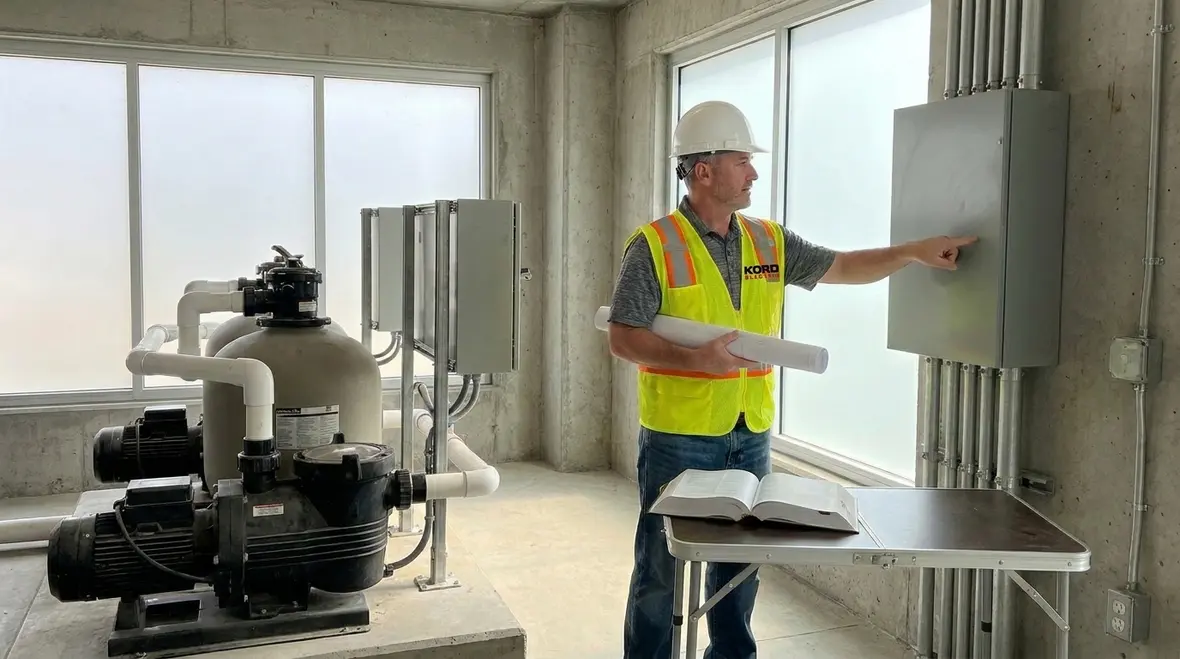
Why pool conductor clearance rules exist in the real world
Clearances are not busywork. Instead, NFPA 70 Section 680.9 pool conductor clearances reflect the physics of moisture, corrosion, and insulation stress. When water and humidity surround conductors, the insulation can degrade faster, and the risk of fault rises. In addition, conductors can experience strain from mechanical movement, cleaning tools, and maintenance traffic.
Accordingly, the code establishes spacing so conductors do not end up where damage is likely. We also look at how metal parts behave. If a conductor sits too close to metal surfaces, and if bonding gets mismanaged, the system can develop conditions that increase shock risk during a fault. So, the clearance rules help control how the electrical system behaves under normal use and under failure.
Think of it like a seatbelt. The belt does not matter until it does. Then suddenly everyone wants it. Clearances work the same way. They only get noticed when something goes wrong, and we prefer not to wait for “wrong.”
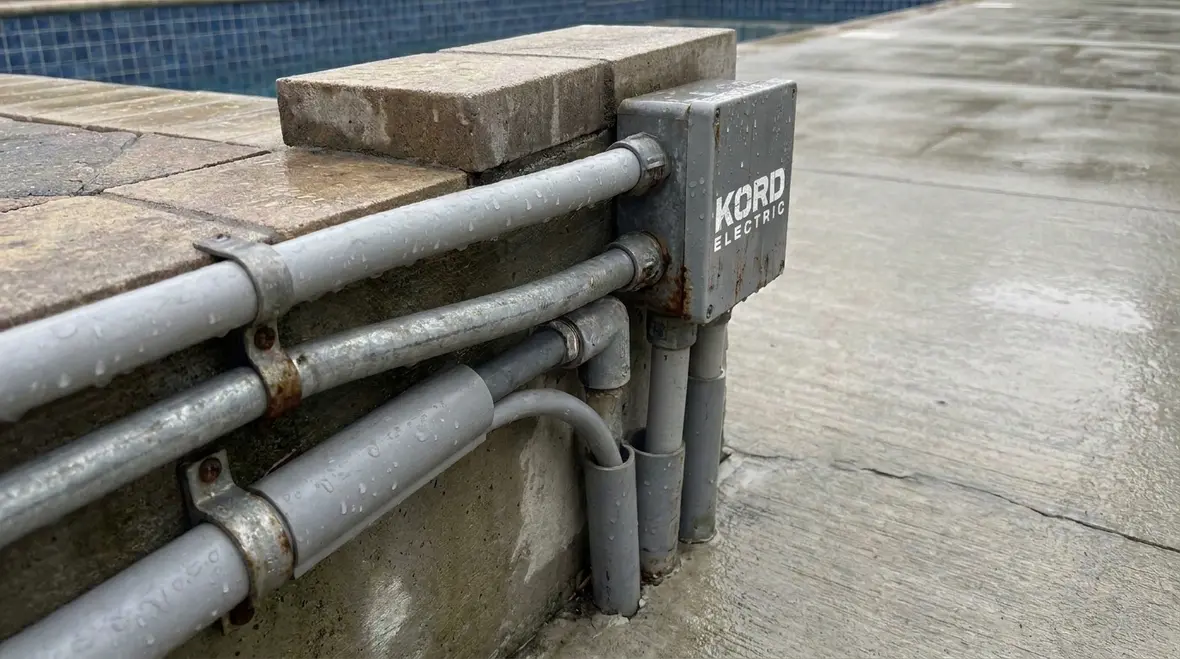
Installation steps our team uses for compliant conductor routing
Our Kord Electric teams follow a method that keeps work orderly and measurable. First, we map the pool area and surrounding equipment, then we identify the conductor paths. After that, we verify the exact conditions where conductors will run.
Next, we select wiring methods and routing strategies that support the NEC intent. We also ensure the physical layout supports pool conductor clearance requirements throughout the route, including turns and transitions. Then we document what we found, what we installed, and how it aligns with the code basis for protection.
Here is how we typically manage the workflow for commercial and industrial projects:
- Site verification: we check wet areas, metal surfaces, and equipment locations before rough work starts.
- Routing planning: we confirm the run paths and measure distances so clearances stay intact.
- Protection and support: we use proper support spacing and secure pathways to reduce strain and movement.
- Bonding and grounding coordination: we align the bonding scheme so the electrical system works as one.
- Testing and documentation: we test and record results so facility teams have proof, not vibes.
Meanwhile, our technicians explain each step to the site team so stakeholders understand why a specific routing choice supports safety. That way, your maintenance staff does not inherit a puzzle. Instead, they receive a system that makes sense and performs.
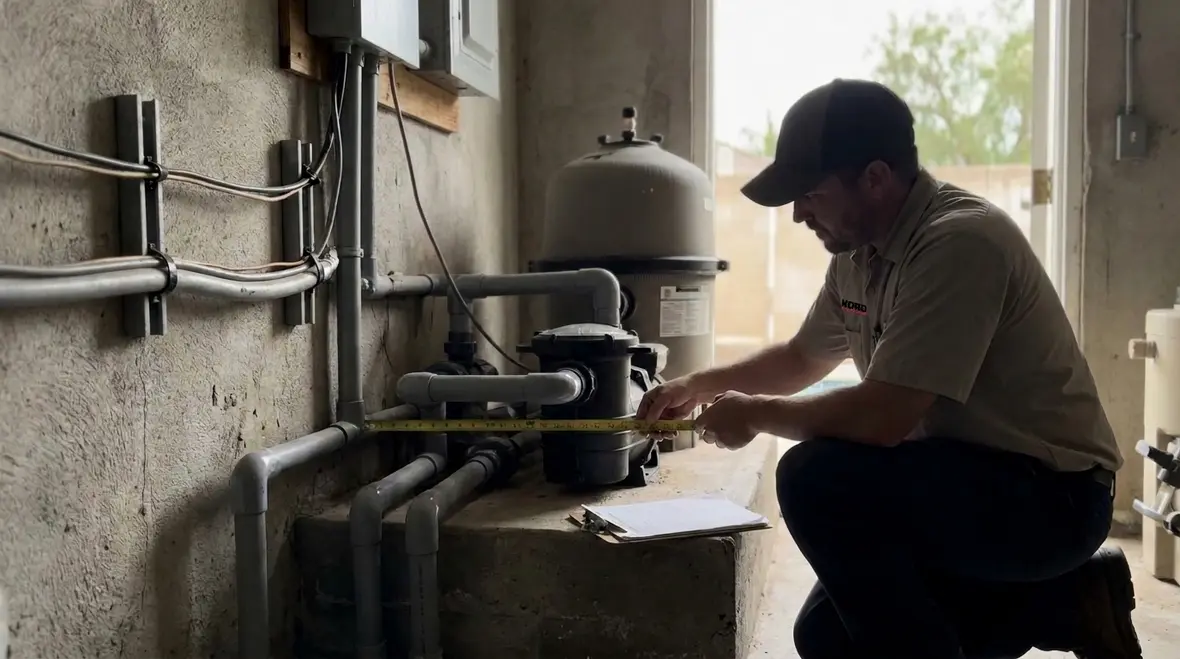
Common compliance mistakes we see during commercial facility inspections
Even strong facilities can get tripped up by details. For example, teams sometimes treat pool wiring like regular building circuits. However, pool areas demand tighter attention because moisture and human contact change the safety equation.
Below are mistakes we often encounter during reviews. We mention them because we want your team to avoid them, not because we like calling out others. That is our job, not our hobby.
- Rushed conductor placement: conductors get set before final equipment placement, then clearance gets compromised.
- Unplanned splices: splices end up in wet or hard to access areas, and they can add failure points.
- Missing or unclear bonding checks: bonding must support safe fault clearing, so we verify it carefully.
- Inconsistent routing paths: conductors may meet clearance at one spot but fail at a transition or bend.
- Documentation gaps: some projects look fine during install but fail when records do not match field conditions.
Additionally, we see confusion around how rules apply to equipment circuits and how those circuits connect back to the rest of the system. Therefore, we align the entire design, not just the “pool section,” because the pool area connects to the broader electrical architecture of your building.
Our experts also coordinate with other trades when needed, especially when wet-rated construction or pool equipment layouts change late in the schedule. When change happens, clearances can shift, and we respond early instead of reacting after inspection.
Coordinating the NEC with fire and pool support systems
Commercial and major property buildings rarely rely on electrical components alone. They rely on systems that support life safety, equipment cooling, and safe operation. That is why we align electrical compliance with other technical needs across the facility.
For example, the pool area often connects to pump rooms, filter systems, and controls. In parallel, fire protection systems require careful coordination with electrical supply and control wiring. While the pool and electrical sections focus on safe conductors, fire and pump needs focus on reliable operation when it matters most.
We also reference guidance used by fire and electrical experts, including content from partners like Kord Fire and industry education groups such as FirePumps, because it helps us understand how systems work together in real buildings, not just on paper. Then we design the electrical feed and routing so it supports stable operation without creating extra risk.
For teams that want to go deeper on code context, we often point facility leaders to resources like Understanding NFPA 70: The National Electrical Code Explained for 2026, which lays out the broader rulebook behind NFPA 70 Section 680.9 pool conductor clearances and related requirements.
In short, we do not treat electrical compliance as a silo. We treat it as part of a whole facility safety plan. And yes, we still keep the work business casual, meaning you get clear explanations without the “engineer-speak fog.”
What to expect from Kord Electric on a pool area electrical project
When you bring Kord Electric into a commercial or industrial project, we focus on outcomes: safe installations, code-aligned design decisions, and documentation your stakeholders can trust. Our technicians show up prepared, and our expert service staff explains the “why” behind the “what.” That matters because the people running the facility later deserve to understand the system, not fear it.
Here is what our process typically looks like:
- Kickoff and site review: we discuss goals, equipment locations, and known constraints.
- Design alignment: we review conductor routing plans and confirm they support NFPA 70 requirements.
- Field coordination: we verify spacing, transitions, and support details during installation.
- Verification: we test and confirm that the installation matches the plan and code intent.
- Handover documentation: we provide records so inspections and maintenance run smoothly.
And if you are wondering whether we can do this without slowing down your schedule, we can. We plan so work stays structured. In other words, we act like adults at a jobsite. Rare, but we strive.
If your facility is planning broader upgrades in addition to pool work, our team can connect these projects with services described in resources like our data-driven design and power quality guides, then align everything through our Los Angeles County electrical services support. That way, NFPA 70 Section 680.9 pool conductor clearances live inside a coordinated electrical strategy, not as a one-off checklist item.
FAQ
Final word from Kord Electric
Electrical pool area compliance should not feel like a last minute scavenger hunt. At Kord Electric, we help commercial and industrial facilities plan, install, and verify work so conductor routing supports NFPA 70 Section 680.9 pool conductor clearances and related safety goals. Our technicians and expert service staff explain decisions in plain terms, then we document what we do. If you want a safer system and smoother inspections, contact Kord Electric today for a review and next step plan.
If your team is exploring how pool work fits into a larger compliance roadmap, you can also connect this project with other planning tools and NFPA 70 resources from the Kord Electric blog. That way, each upgrade moves your facility toward a stronger electrical backbone instead of treating every inspection as a fresh surprise.


