Retail Space Lighting Design Trends for Sales
Retail performance does not start at the counter. It begins at the ceiling, where Retail space lighting design trends shape how people move, pause, and buy. At Kord Electric, we help commercial and industrial facilities and major property buildings turn lighting into a quiet advantage. We adjust light like a careful editor: remove glare, sharpen focus, and build atmosphere that stays consistent from morning rush to evening traffic. Then we back it up with expert service staff who explain every decision in plain language, not in trade-show riddles. Because a building should not feel like a museum where nobody knows where to look.
How lighting influences shopper flow and sales
When lighting hits the right places, people naturally drift toward the displays that matter. In our experience, well designed illumination reduces visual friction. That means customers can spot product details faster, read signage with less effort, and feel comfortable moving through aisles. Meanwhile, poor lighting forces extra squinting and slow steps, and shoppers quietly “shop less with their eyes.”
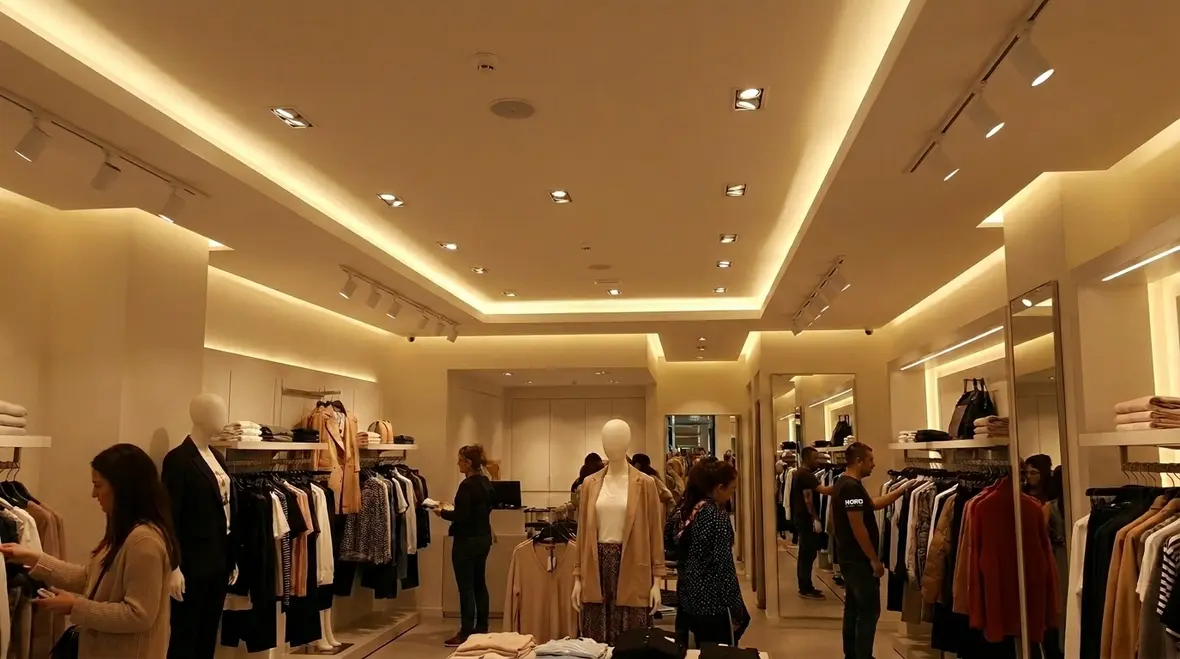
To manage this, we map tasks to spaces. Track lighting can create clear “routes” for product zones. Cove lighting can soften transitions across sections so the journey feels smooth. However, the real win comes from consistent brightness levels across key paths, because sudden jumps in contrast can make people stop like they just heard a suspicious sound in a movie theater. Our technicians calibrate these zones so the space feels intuitive, not chaotic.

In a well planned store, light does not shout, but it does give clear cues. Sightlines stay clean, high-value areas feel naturally important, and low-traffic corners stop feeling like the “forgotten shelf” of the building. Over time, that difference adds up in sales volume, dwell time, and customer comfort.
Plan for layered illumination, not a single big light
Modern retail space performance rarely comes from one fixture pretending to do everything. Instead, we use layered illumination. That usually means ambient light to set the baseline, task light to support reading and product inspection, and accent light to highlight focal points.
For example, at Kord Electric we often recommend:
- Ambient light for overall visibility and safety in circulation areas
- Task light for checkout lanes, fitting areas, service desks, and product education zones
- Accent light for hero displays, brand moments, and high margin items
Then we tune the angles and spacing. When the beam hits too flat, it washes merchandise. When it hits too steep, it casts harsh shadows that feel like the product is under interrogation. Our expert service staff walk building teams through the logic step by step, so the client understands why we choose specific optics, mounting heights, and dimming strategies. You do not need a degree to approve a lighting plan, but you should feel confident in it.
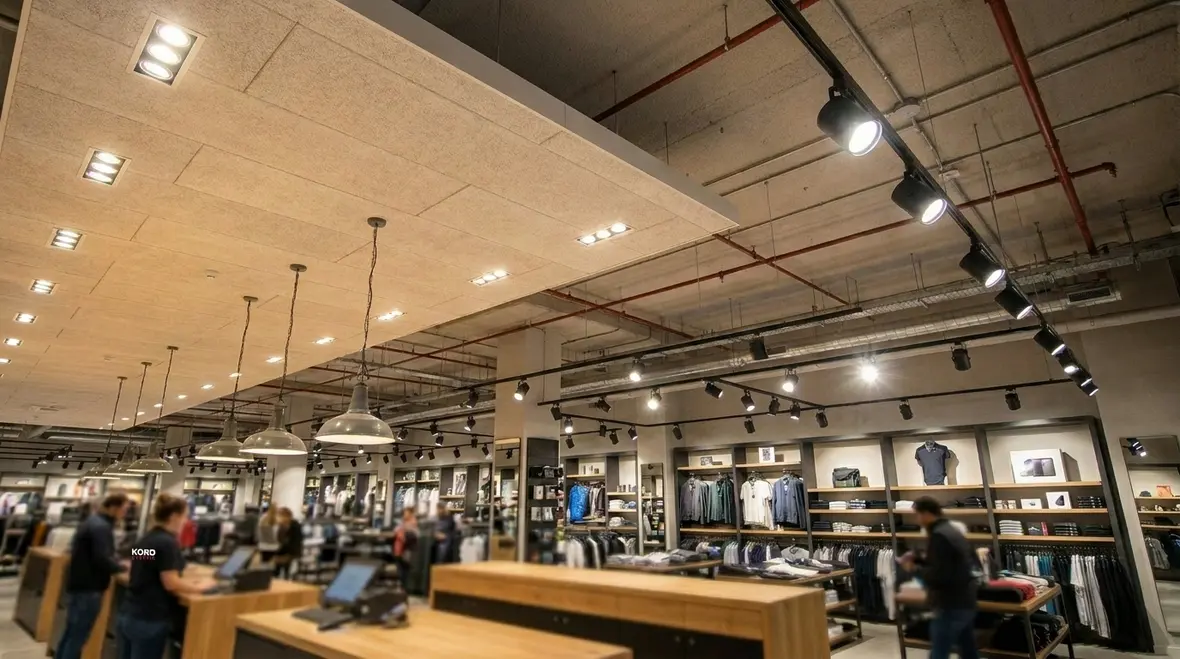
Layered lighting also makes it easier to adapt over time. Seasonal displays, new merchandising strategies, and floorplan changes all become less painful when ambient, task, and accent systems can be tuned independently instead of fighting a single, overworked grid of fixtures.
Choose the right color quality for real product color
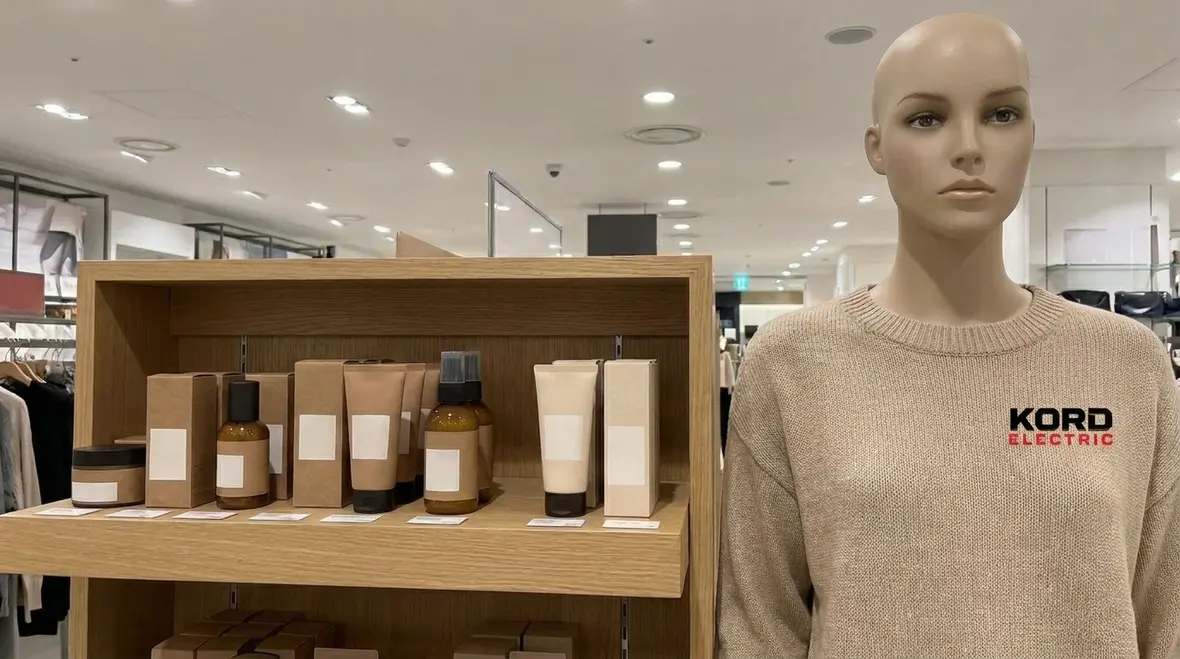
Color quality matters more than most teams expect. Under the wrong spectrum, “blue” merchandise can look dull, skin tones can look off, and labels become harder to read. Therefore, Kord Electric focuses on what customers actually see, not only what a spec sheet claims. We discuss color rendering, color temperature, and how both influence comfort and perceived quality.
In many commercial spaces, we aim for balanced color rendering that keeps packaging accurate and signage crisp. If a space uses mixed materials, we also adjust to prevent the lighting from making finishes appear mismatched. This is especially helpful in major property buildings with multiple tenants, because each unit might carry different wall colors, flooring, or display textures.
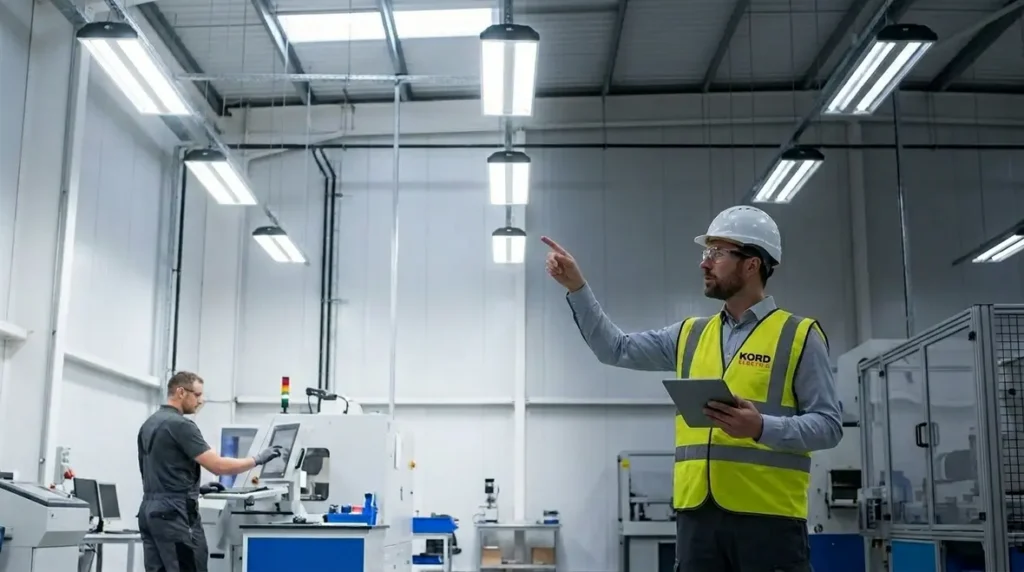
Our technicians explain the practical outcome during walk-throughs. They point out how daylight changes throughout the day, and they show how the same fixture behaves under different reflections. Then we design a stable approach so the building does not “mood swing” like a character who changes outfits between scenes.
Clear, accurate color also helps reinforce branding. When brand palettes, signage, and product finishes all read consistently from aisle to aisle, shoppers trust what they see. That trust quietly supports higher ticket purchases and fewer “this looked different in the store” returns.
Design around glare, reflections, and “hidden” visual problems
Even great-looking fixtures can cause discomfort. Glare reduces perceived quality and makes people avoid looking up. Reflections can wash glossy displays or create distracting hotspots on floors. Also, poorly controlled lighting can make mirrors, glass doors, and polished metal look like they are part of a funhouse.
To prevent that, we treat glare control as a design requirement, not an afterthought. We review aiming angles, optical shields, and surface reflectance. For retail space performance, we also pay attention to camera sightlines. Security teams need dependable images, and customers need comfortable visibility.
In practice, we often use:
- Appropriate shielding and optics to control direct view glare
- Surface and finish considerations for predictable reflections
- Contrast tuning so aisles feel clear without feeling harsh
- Dimming and zoning to reduce brightness swings
Our team works with facility managers to schedule adjustments when it causes the least disruption. And yes, we usually hear the same concern: “Will this make the space darker?” We respond calmly, because in most cases we reduce problematic glare while keeping visibility steady. The goal is comfort that looks intentional, not brightness that feels like a courtroom.
Smart controls that protect energy budgets and guest experience
Smart control does not mean complicated. It means the lighting responds to real use. In large commercial and industrial facilities and major property buildings, a lighting system should avoid wasting power when areas sit empty or when daylight covers part of the space.
We help teams implement controls that support both performance and savings. That often includes zoning, occupancy sensing, and daylight harvesting where it fits. Then we program dimming curves so the transition feels smooth, not like someone slowly turning a knob in a haunted basement.
When controls work well, staff notice fewer flicker complaints, customers feel consistent brightness, and the building meets energy targets without constant manual changes. Additionally, a properly controlled system simplifies maintenance. Our technicians set up routines for verifying output and checking sensor behavior, so the system stays reliable long after the installation day.
Lighting safety and compliance for high traffic spaces
Safety cannot be an accessory. Kord Electric designs lighting systems for clear wayfinding, stable visibility, and dependable illumination during normal operations and maintenance transitions. For commercial and industrial facilities and major property buildings, we coordinate lighting layouts with site circulation and access needs.
We also consider how people actually move. Walkways, stair approaches, loading zones, and exterior-adjacent entrances require practical lighting levels that help prevent slips, missteps, and “I did not see that” moments. If the space includes branding displays or temporary promotions, our design approach supports predictable lighting behavior while still allowing controlled updates.
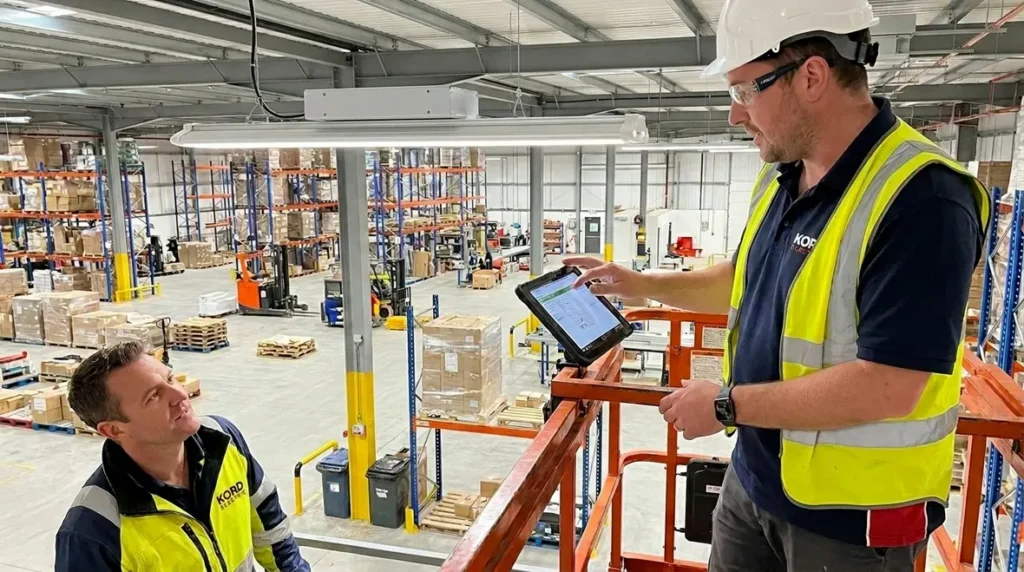
Our expert service staff review the completed plan with the building team. They explain how lighting supports safe movement and how the system stays consistent for staff workflow and customer experience. In other words, we build lighting that performs under pressure.
Retrofit strategy that minimizes downtime
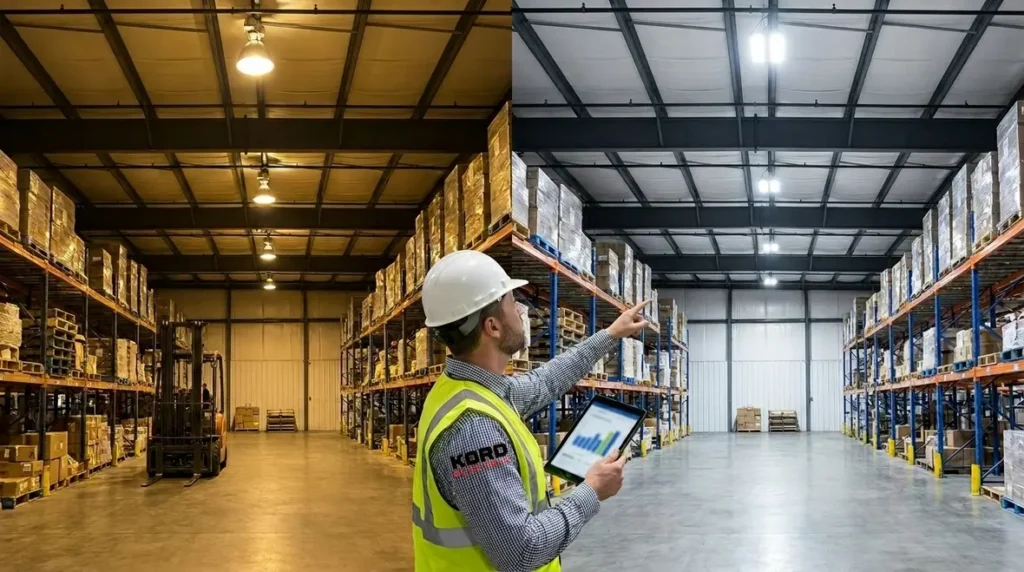
Many building teams want upgrades, but they do not want closures. Therefore, we plan retrofits to reduce disruption and maintain business continuity. We start by evaluating existing infrastructure, fixture conditions, and control compatibility. Then we phase work so the most visible areas get attention first while less critical zones receive upgrades in sequence.
For example, we often prioritize:
- High visibility zones where glare and color issues show up fastest
- Areas with frequent staffing and customer interaction, including checkouts and service desks
- Exterior-adjacent entrances where seasonal changes impact perception
- Control improvements that deliver savings without major rebuilds
Then, our technicians document the steps clearly and share what changes are happening behind the scenes. That transparency helps the facility team feel in control, especially when multiple stakeholders exist across a major property building. Like a good manager, we make sure nobody feels surprised when the lights change.
When property managers want to dig deeper into budgets and planning, resources like the Commercial Lighting Upgrade Cost Guide help connect design decisions to long term savings and code expectations across large portfolios.
FAQ
Final call from Kord Electric
If your commercial space needs better performance, comfort, and a cleaner look, Kord Electric can help you build lighting that actually works. We design layered systems, improve color accuracy, control glare, and add smart zoning where it makes sense. Our technicians and expert service staff stay close to your team, so you understand each step and the results you will see on day one. Schedule a lighting consultation today, and let us turn your building into a place people want to linger.
For facility leaders planning broader upgrades, pairing lighting design with services like comprehensive Lighting Installation Services or Recessed Lighting Installation helps align aesthetics, code compliance, and long term maintenance under one coordinated plan.
And if your property portfolio includes industrial or mixed use sites, insights from resources on commercial lighting compliance and industrial lighting layout optimization can support decisions that keep every building aligned with current standards while protecting uptime, safety, and energy targets.