Smart Lighting Control for Commercial Warehouses
Smart lighting control that actually saves money in warehouses
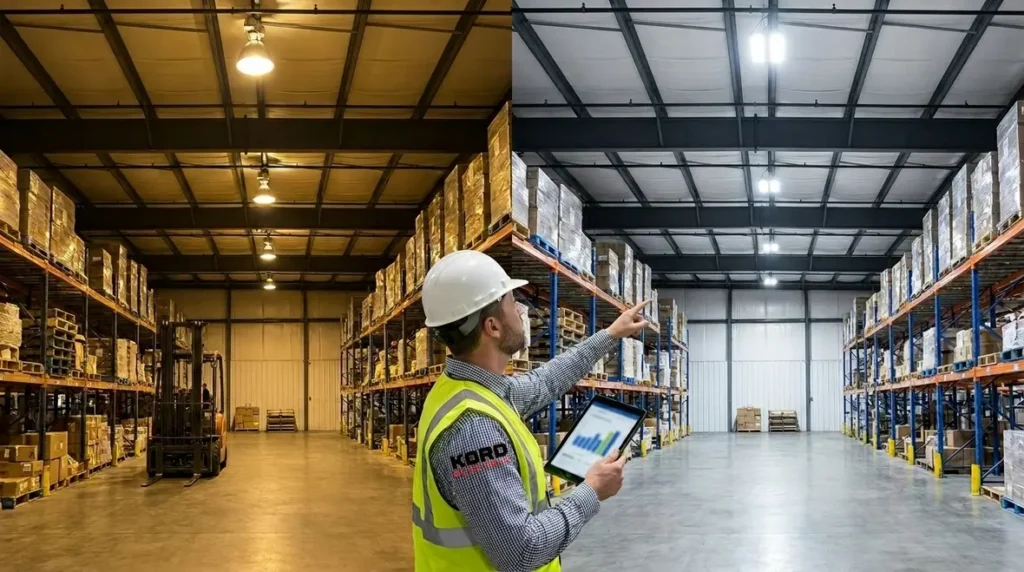
At Kord Electric, we often start by looking at what your warehouse lights do when nobody is watching. With lighting sensor integration for commercial warehouses, we can connect real lighting needs to real occupancy, real daylight, and real time. Then, instead of running full power “just in case,” your lighting system responds like a calm professional who shows up prepared. Naturally, we support this with our expert service staff, so your team understands what we install and why it matters. And yes, we know lighting controls used to sound like a buzzword. However, when we tune the system, the results feel less like science fiction and more like a sensible upgrade.
Why warehouses lose efficiency when lights stay fixed
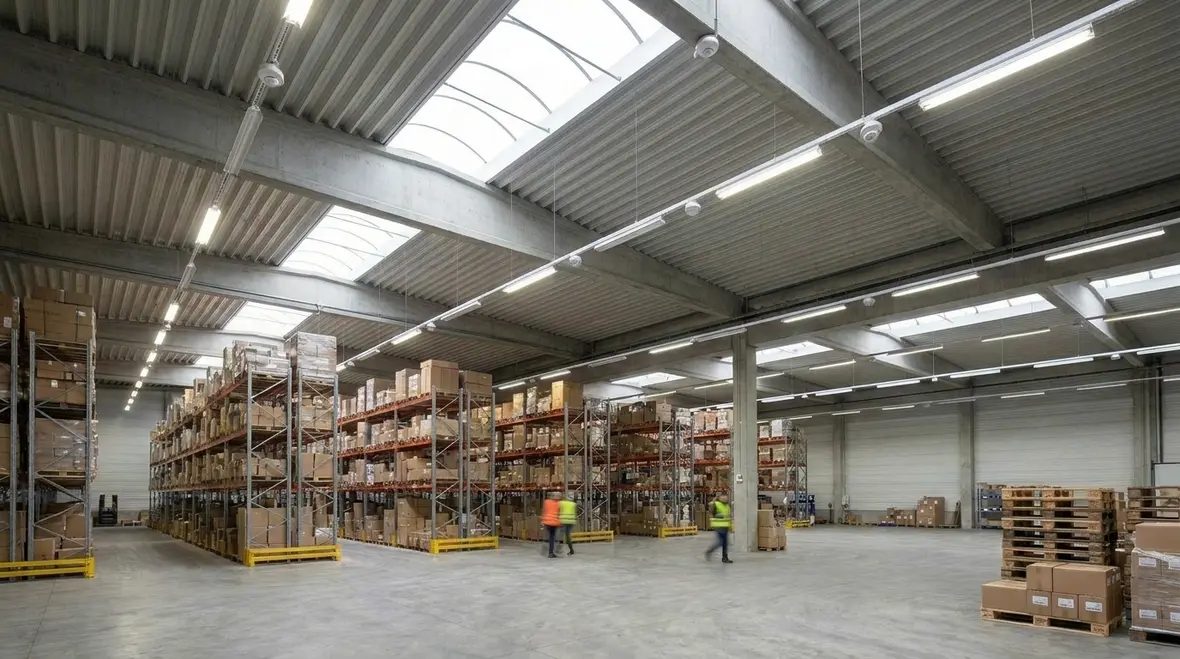
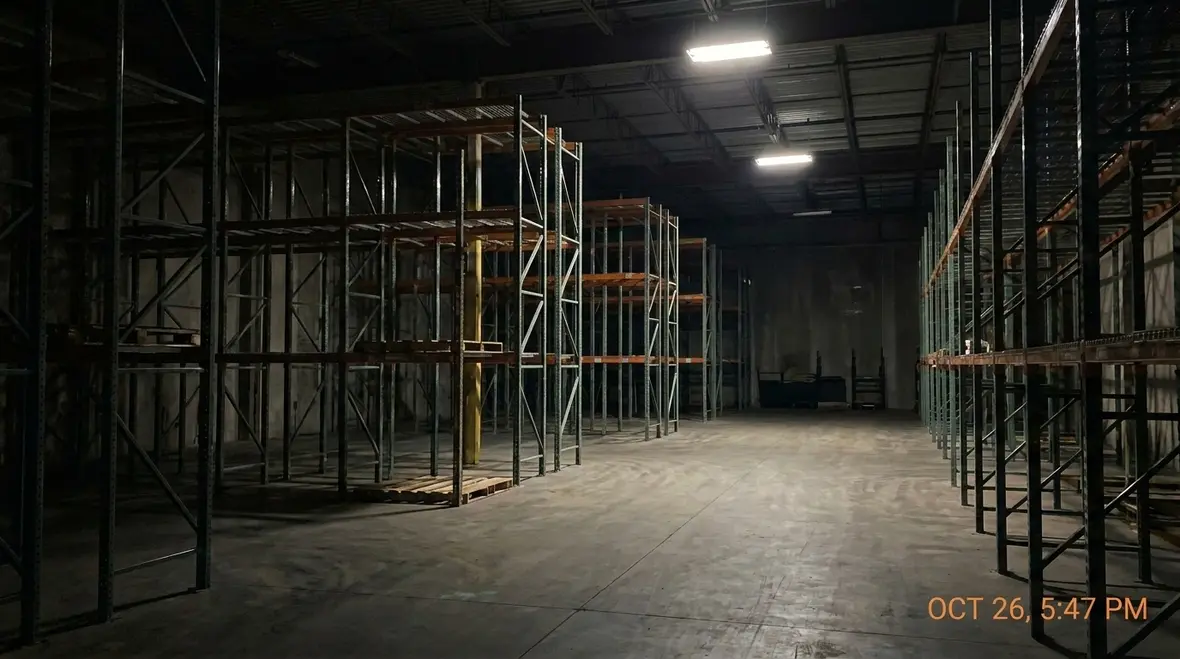
Warehouses push light hard and for long hours. As a result, a simple on off setup keeps lights at the same level no matter where workers move or how much sun hits the loading dock. Over time, that creates waste, especially in zones that rarely get full traffic. Meanwhile, higher heat gain from lighting can increase HVAC load, so the building pays twice. Then there is the maintenance angle. When systems lack smart control, relays, drivers, and even lamps or fixtures get stressed by constant cycling patterns and unnecessary run time.
In practical terms, fixed schedules treat all shifts the same. Yet every shift changes. One week you run forklifts through a cold aisle for hours. The next week you run pick operations near the racks and daylight does the rest. Smart control handles that difference without asking your supervisors to become part time lighting engineers. Our technicians explain these patterns clearly, because we want your stakeholders to see the operational story, not just the wiring diagram.
How smart lighting control systems improve performance step by step
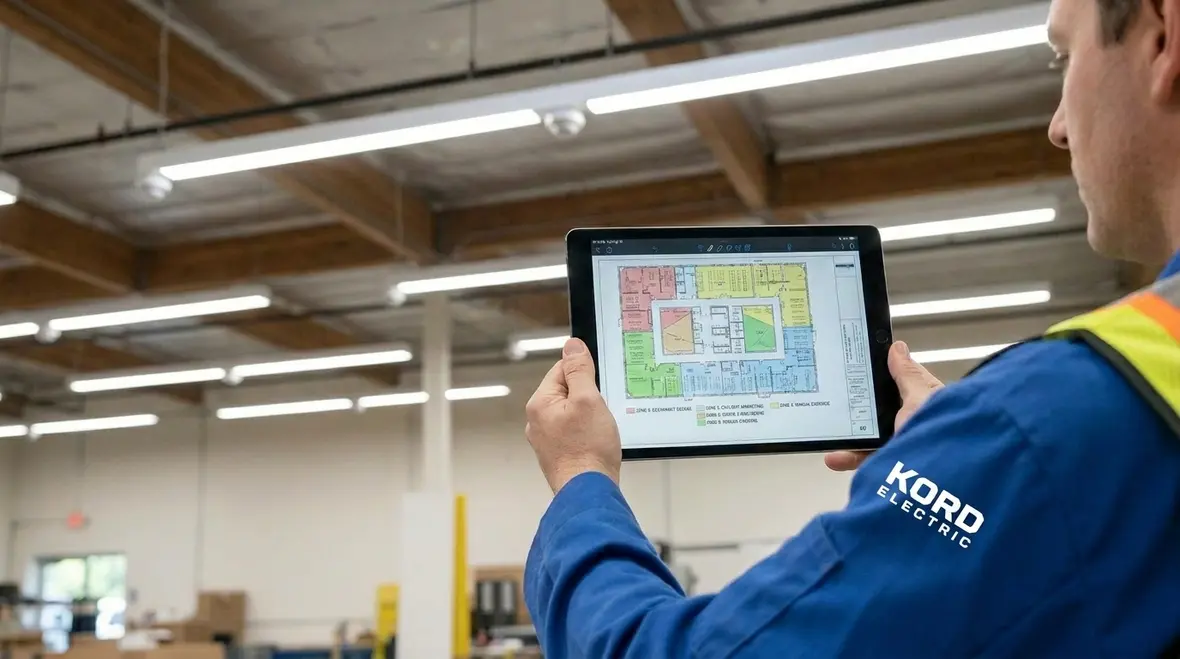
When Kord Electric designs a control plan, we do it like a relay race: one handoff at a time, no chaos. First, we map the warehouse into lighting zones that make operational sense. Then we add sensors that measure motion and ambient light. After that, we set control logic that matches your work rules, such as dimming targets, time delays, and minimum brightness levels. Finally, we validate performance in real conditions with your staff and adjust as needed.
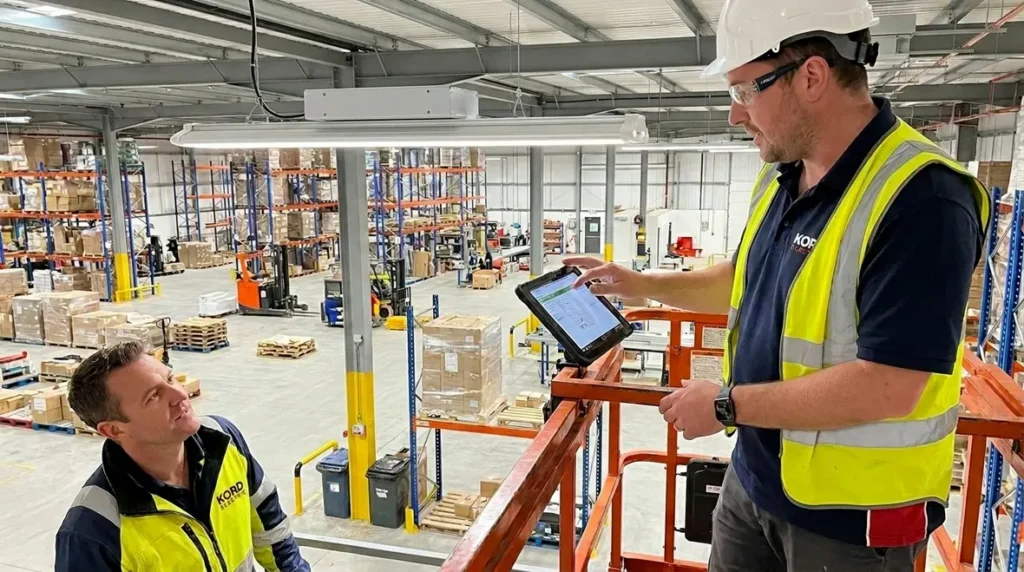
As we build this, we also think about how power flows and how controls communicate. Modern systems can work with networked controls or local control strategies, depending on your facility layout. Moreover, we align the plan with your electrical infrastructure, so the control hardware does not create new problems. In other words, we install for long life, not short demo wins. Our technicians talk through each step so others in your facility know what to expect during commissioning. If you have ever seen a system behave perfectly on paper and then act stubborn on site, you already understand why this matters.
Occupancy sensing and daylight response that teams actually notice
Let us be honest. Some people only care about lighting when it fails. Others care about lighting only when it looks “too dim.” Smart control should land in the middle, because it should feel natural and steady. With lighting sensor integration for commercial warehouses, occupancy sensors detect presence, while daylight sensors measure available natural light. Then the system dims when it can, without turning the space into a cave. At the same time, when people return to an area or light levels drop, the system ramps up smoothly.
In warehouses, this can improve safety and comfort in very targeted places. For example, aisles near skylights can ride on daylight during the day shift. Meanwhile, dock areas and interior rows can maintain stable output. This reduces glare complaints and supports consistent visibility for pick and pack work. Then, when the building moves to night mode, occupancy triggers keep illumination focused on active zones, so you save energy without sacrificing coverage.
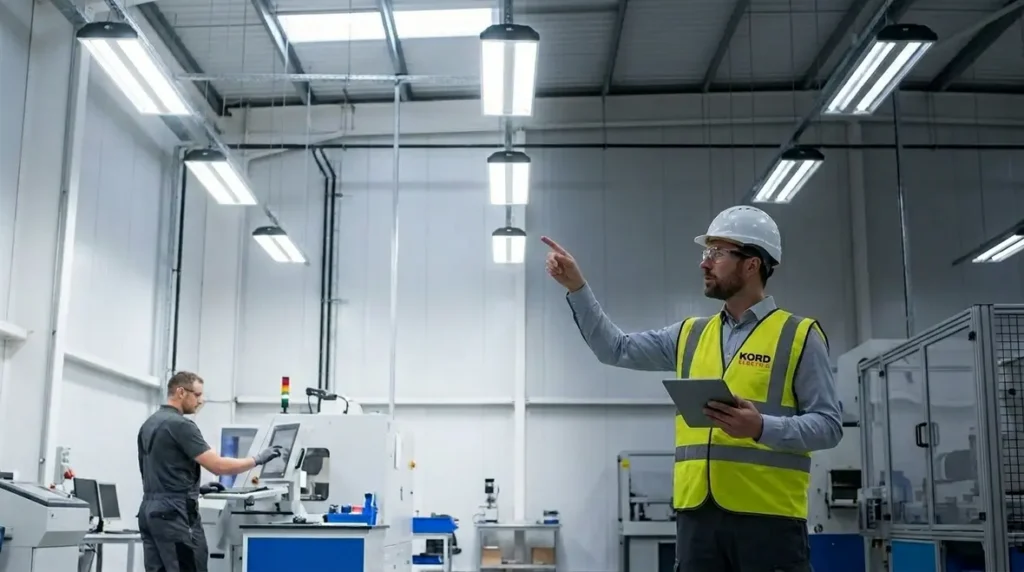
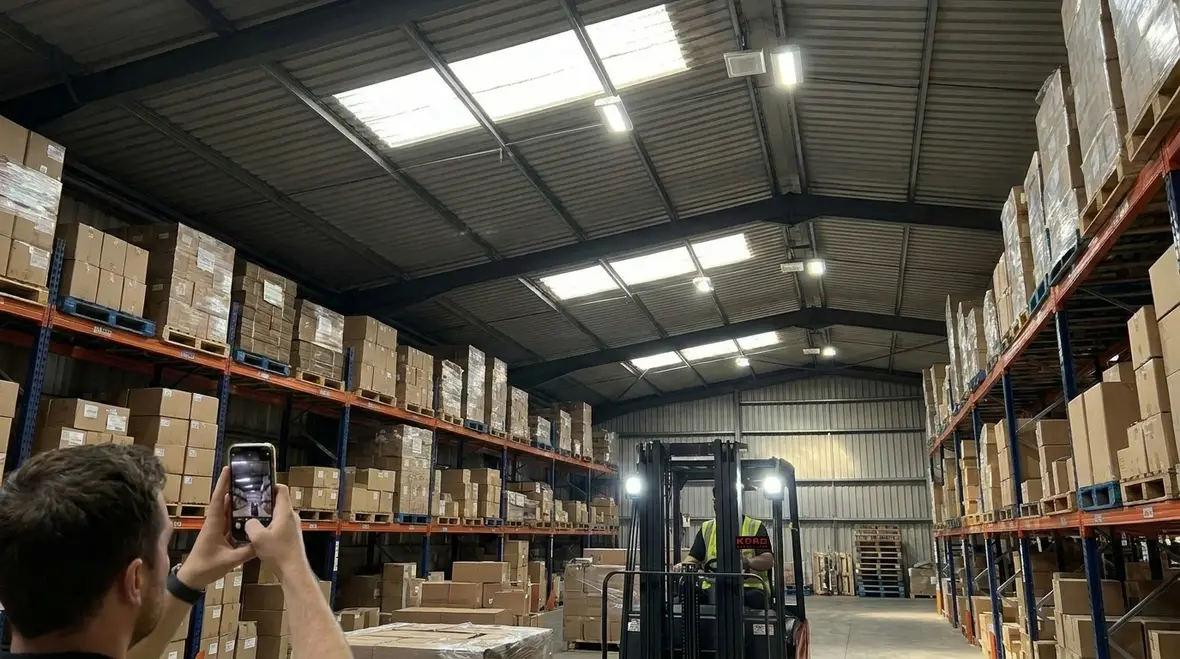
Our expert service staff also checks the sensor placement so you get reliable results. If sensors face walls, get blocked by tall racks, or sit in drafty corners, performance drops. We explain those details on site, and we document the logic so facility managers can maintain confidence long after we finish.
Commissioning, controls tuning, and avoiding costly mistakes
Even a great design can underperform if it is not commissioned properly. First, Kord Electric verifies sensor coverage, then tests response time, and finally checks dimming curves under real warehouse conditions. Next, we tune time delays so lights do not flicker or ramp too aggressively. After that, we confirm that emergency pathways and required egress lighting rules still meet your safety needs. If your facility follows strict compliance requirements, we plan around that from the start.
Now, about mistakes. The most common one we see is treating controls like “set it and forget it.” Then the facility changes. Racking moves, traffic routes shift, and daylight patterns shift with weather and seasonal use. When you keep schedules fixed, the system fights your operations. However, when you tune logic and review sensor coverage as part of maintenance, the system stays aligned. That is why our technicians do training with your team. We show them how to interpret sensor behavior and how adjustments should be made.
We also consider how the project ties into broader commercial electrical needs. If you are planning upgrades to circuits, panels, or power distribution, the coordination reduces downtime. In fact, when customers ask about rewiring costs for commercial electrical systems, we reference our rewiring cost guide for commercial electrical systems to help them budget intelligently. That kind of planning matters because controls are only as effective as the electrical backbone that powers them.
Budget and cost planning for smart lighting control upgrades
Many decision makers ask about the “real” cost, because they do not want surprise invoices. Kord Electric approaches this with transparent scoping. We look at fixture types, existing wiring pathways, control panel requirements, and whether you need upgrades to accommodate dimming and sensor power. Then we factor in controls hardware, installation labor, commissioning time, and documentation.
To support that planning, we can align your electrical upgrade path with guidance from our rewiring cost guide for commercial electrical systems. If your facility already has proper conduit space and control ready wiring, costs can stay contained. If the system needs additional pathways or panel work, we flag it early so you can choose an approach that fits your timeline. Furthermore, smart controls can reduce energy and maintenance expenses over time, which helps balance the initial investment.
Here is a simple way to think about it. Energy waste is like a leaky faucet. You might not hear it every minute, but over months it adds up. Controls turn that leak off during unneeded hours. And unlike some pop culture villains, we do not wait for the building to explode before fixing the problem.
Dual column: what Kord Electric delivers and what your teams should expect
What we do
We zone the warehouse by workflow and light behavior.
We plan sensor placement and control logic.
We coordinate electrical integration with your current system.
We commission, test, and tune in real conditions.
What you get
Lower energy use without unsafe dim levels.
More consistent visibility for operators and pick teams.
Clear documentation and technician supported training.
Fewer maintenance headaches from smarter run time.
Frequently asked questions
Ready to cut waste without cutting visibility
If your warehouse lights run full power when they should not, you are paying for wasted energy and extra wear. At Kord Electric, we design smart systems that use occupancy detection and daylight response to keep illumination steady, safe, and efficient. Our technicians and expert service staff explain every step, from zoning to commissioning, so your team feels confident after handoff.
If you are planning broader upgrades, consider pairing smart lighting control with services like commercial and industrial lighting installation or preventive maintenance so your fixtures, controls, and electrical backbone work together for long term performance.
Contact us today to schedule an assessment for your commercial or industrial facility, and let’s turn lighting waste into real savings.