Emergency Power Backup System Testing Guide
At Kord Electric, we start every safety check with emergency power backup system testing for commercial and industrial facilities, and for major property buildings where downtime turns into real money. In the first step, we verify that the backup gear turns on when it should, at the speed it should, and in the condition it should. Then we move from “it started” to “it performed.” Our technicians and expert service staff follow a calm, methodical plan, because even the best generators can fail if the load, transfer path, and controls do not agree. And yes, we have seen systems behave like a drama queen, waiting until the worst possible moment to “think it over.”
What a verification plan looks like for commercial systems
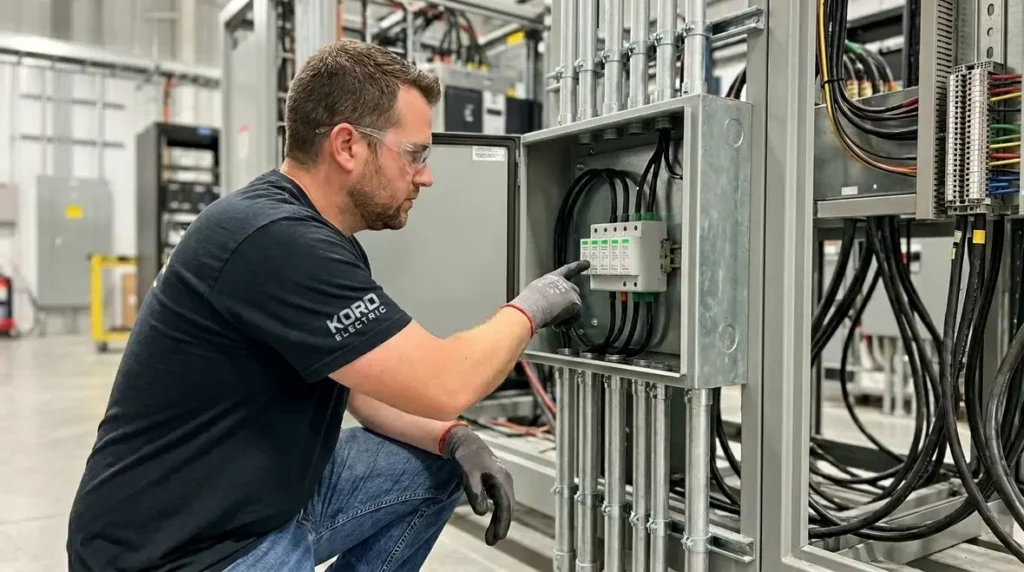
Verification is not a single test and a handshake. It is a set of checks that prove reliability across transfer, power quality, controls, and protection. First, we confirm the system’s role in the facility’s design. Next, we match that role to how the equipment is installed and labeled. Then we test in a sequence that mirrors real life: utility outage, controlled transfer, load pick up, and stable operation.
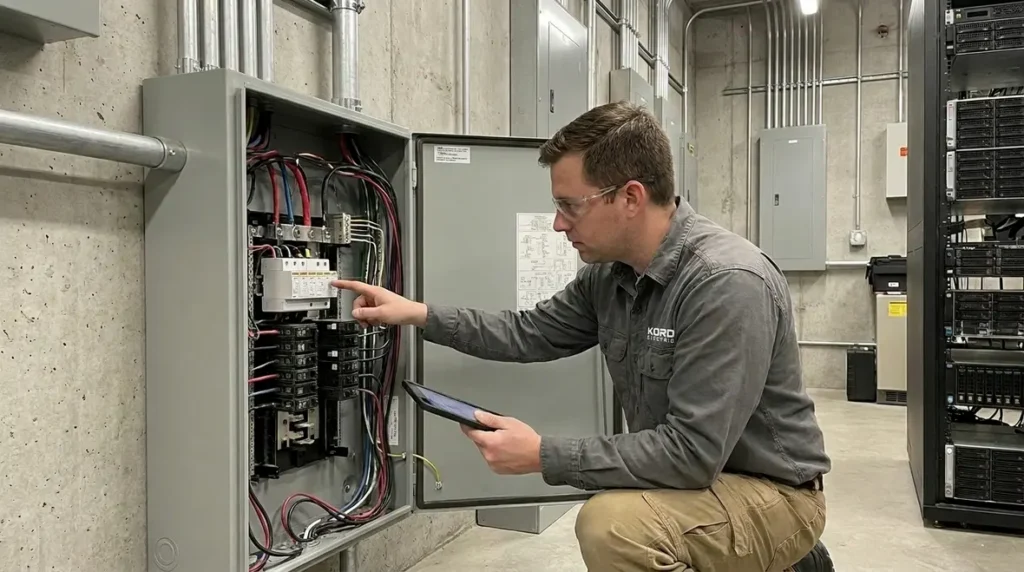
In practice, our technicians treat each installation like a living system, not a museum piece. Therefore, they review the documentation, confirm settings, and then test under conditions that reveal weaknesses. Many owners think verification means checking the generator only. However, the transfer switch, ATS or MTS logic, distribution, and sensing circuits matter as much as the engine. If one link hesitates, the rest can pay the price.
Owners who manage larger portfolios often connect this kind of verification with broader life safety strategies, including how egress lighting and exit signs behave when the grid goes down. Kord Fire’s egress checklist for emergency lighting and exit signs shows how emergency lighting, signage, and backup power all share one job: keeping people moving safely when normal power disappears.
Essential protocols for safe transfer and load pickup
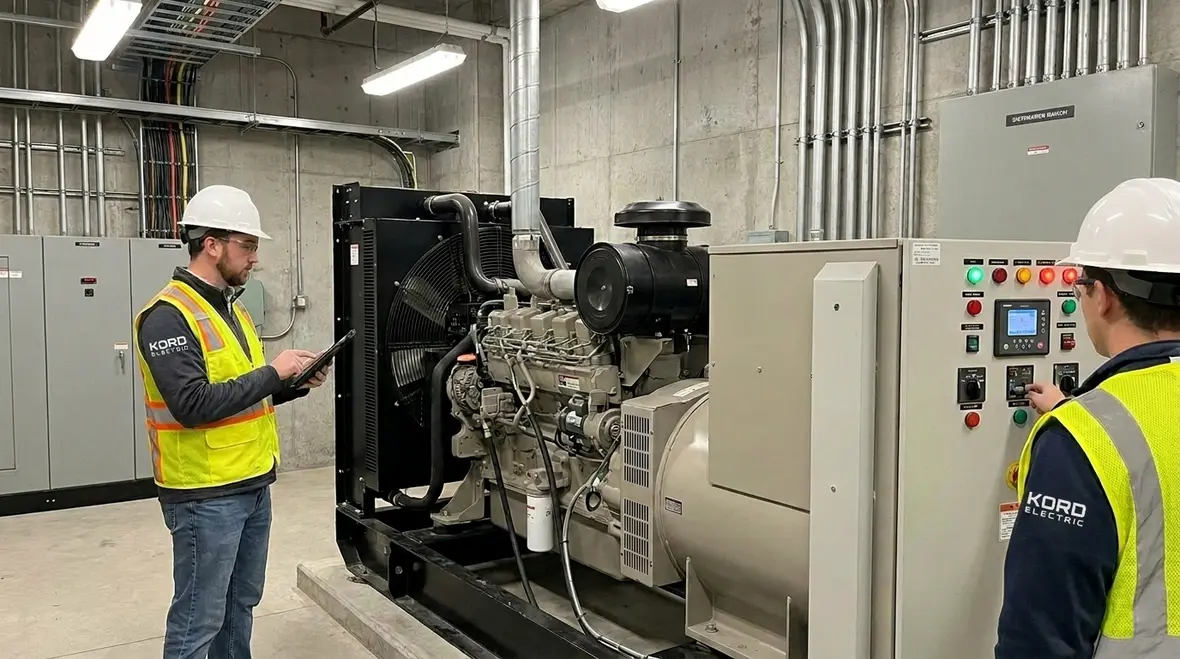
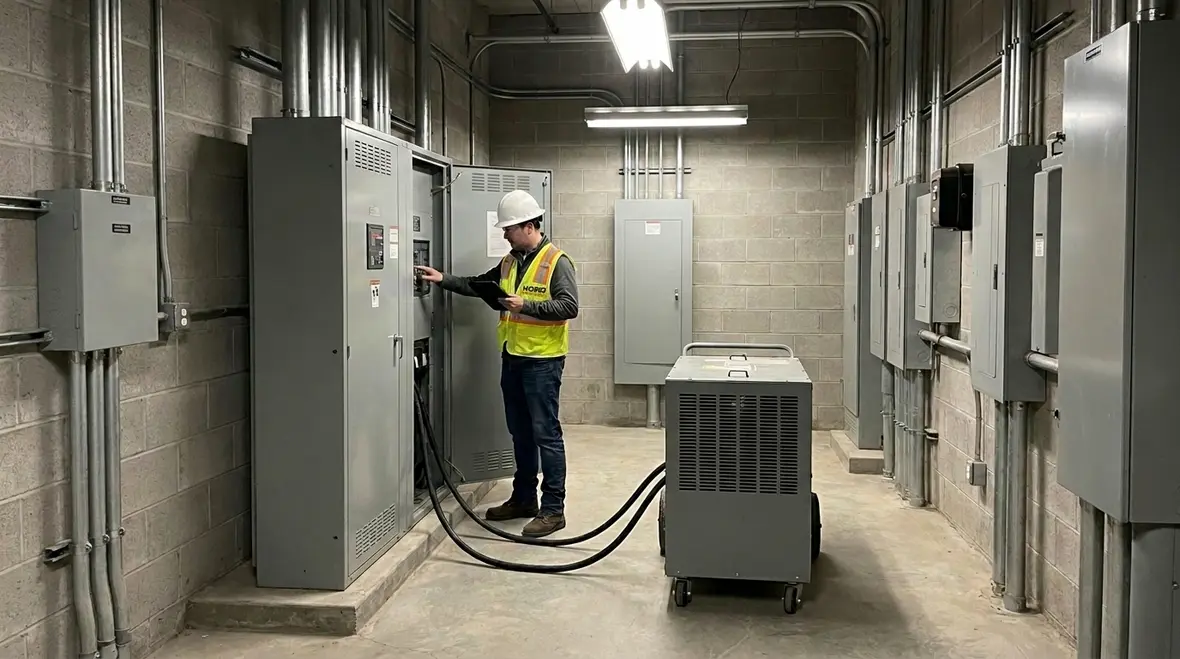
To verify commercial backup power systems, we start with transfer behavior and load pickup. We confirm that the transfer path switches cleanly from utility to backup and then back again as required. After that, we confirm timing. A slow transfer can cause nuisance alarms, sensitive equipment shutdowns, or worse, a partial power condition that confuses controls.
Then we test load pickup in a controlled way. Our expert service staff often uses load banks when needed, especially in large properties where the “real load” changes during the day. Moreover, we check that priority loads start first and that nonessential loads stay off until they should. This matters because a generator that can run with zero drama at idle may stall when the building decides to turn everything on at once.
During verification, we also check for correct signal logic: engine start commands, fuel valve actuation, breaker coordination, and any synchronizing features. If the system uses a paralleling setup, we validate the coordination sequence as well. In other words, we make sure the backup system acts like a team, not like a group chat where everyone argues about who pressed the button.
Transfer timing and load coordination matter just as much for life safety lighting as they do for large mechanical loads. Kord Fire’s breakdown of battery backup vs generator for emergency lighting walks through how different backup strategies impact what people actually see in hallways and stairwells when the main power fails.
How we verify power quality and voltage stability
After transfer, we shift focus to output quality. Commercial and industrial loads do not forgive sloppy power. Therefore, we verify voltage regulation, frequency stability, harmonic distortion, and transient behavior during switching. We also check that protective devices receive the right signals and that sensitive equipment stays within safe tolerances.
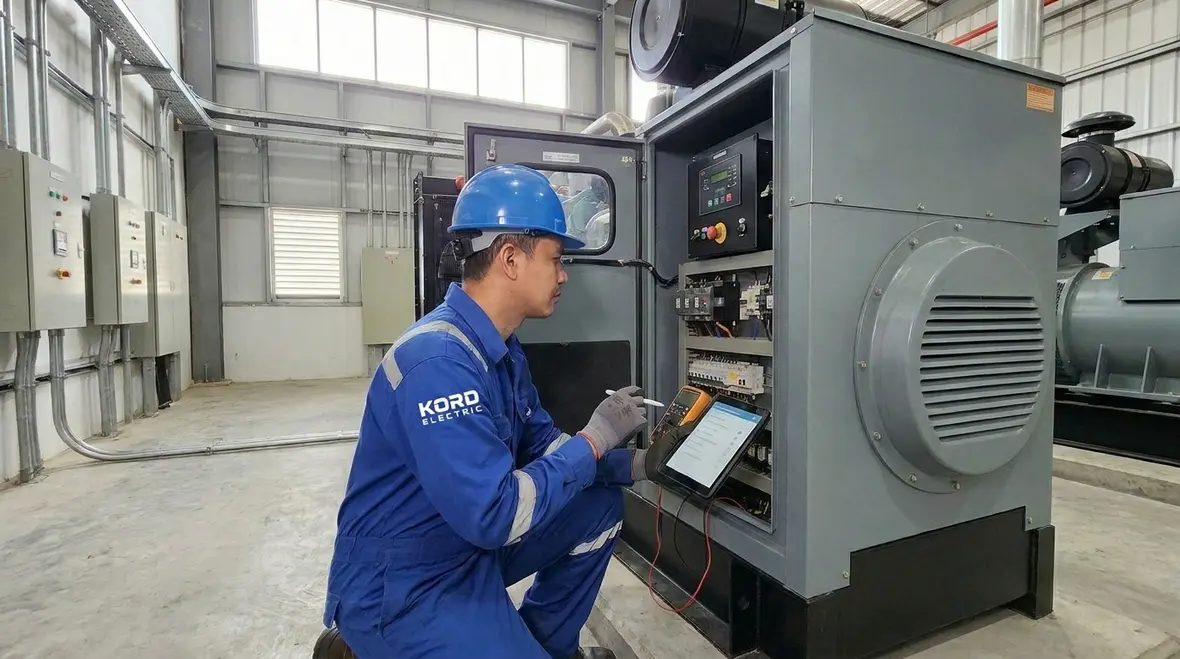
Our technicians use calibrated testing tools to measure output while the system runs under representative load levels. In addition, we observe how the generator responds to quick load changes. That response reveals whether the governor and control settings can handle “real building behavior,” like HVAC cycling, elevators, refrigeration, and process loads.
Power quality verification also includes confirming that the distribution panels and downstream breakers coordinate properly. If protective devices trip at the wrong time, the backup system may look operational at first, then fail under stress. Nobody wants to discover that only after a tenant calls because the data room “went dark for a minute.” That minute is never just a minute.
In many facilities, that same backup infrastructure also feeds emergency lighting circuits. Guides like Kord Fire’s emergency lighting repair and troubleshooting guide show how even small voltage and charging issues can cause big headaches when people expect the backup lights to come on instantly and stay on until everyone is out.

Testing protocols for controls, alarms, and fault handling
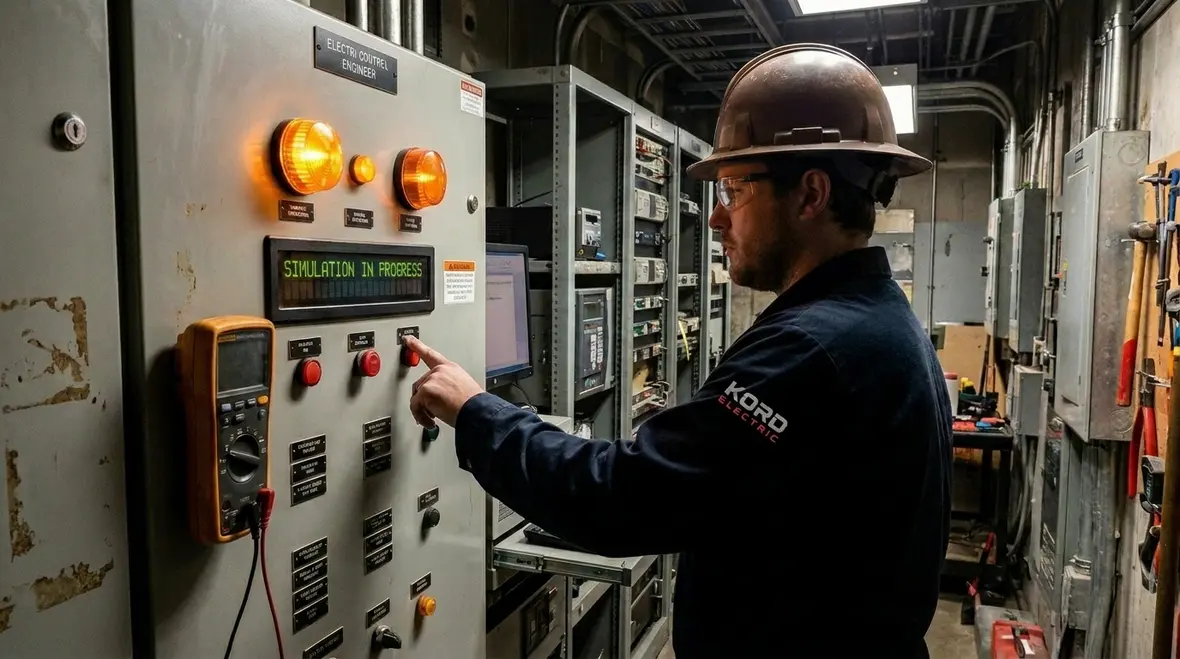
Verification must prove that the system detects problems and reports them clearly. So we test control logic, alarms, and protective shutdowns. We verify startup permissives, run permissives, and stop logic, then we confirm alarm indicators and communications to the building automation system.
Next, we test fault handling in a safe manner. That can include simulated abnormal conditions to confirm the system locks out or switches states correctly. Our expert service staff also validates that alarms show the right message, not a vague “something’s wrong” alert. In commercial operations, vague alerts make it harder to respond quickly, which increases risk.
We also verify engine and transfer switch diagnostics. Many systems keep logs, but owners often never check them until something breaks. Therefore, we review event history and confirm that the system logs key events: transfer start, load pickup, any warnings, and any protective trips. If the system can tell us what it did, we can prevent the next failure.
And for a little humor, we will say this: a backup system that hides its own problems is like a superhero who only sends postcards after the villain is already winning.
The same philosophy applies to fire alarm and life safety systems. Kord Fire’s guide on fire alarm trouble signal meanings underscores how clear messages, solid diagnostics, and healthy backup power keep building staff calm when something needs attention.
Fuel, runtime, and maintenance checks that actually hold up
No matter how perfect the electrical side looks, fuel issues can stop a backup system mid job. So we verify fuel quality, fuel supply, and runtime assumptions. For commercial and industrial sites, we confirm tank capacity, fill procedures, and vendor schedules where diesel or natural gas supply plays a role. Then we verify that fuel delivery components operate as designed, including filters, pumps, lines, and any heaters.
Runtime verification matters because “rated hours” often assume ideal conditions. Therefore, our technicians review load profiles and compare them to the expected runtime. They also confirm that maintenance intervals match real operating conditions. In other words, if the facility runs in hot climates, dusty zones, or heavy seasonal loads, we adjust the verification approach accordingly.
We also verify battery systems and charger operation, because control power failures can stop a system from starting during an outage. That includes battery capacity checks, terminal inspections, and charger output verification. After all, if the backup generator is a car, the control batteries are the keys. Without keys, even the fastest engine sits there looking useful but doing nothing.
Battery health is just as critical on the fire protection side of the house. In Kord Fire’s article on fire alarm system reliability and battery health, the team shows how neglected batteries quietly undermine otherwise solid systems — the same lesson that applies to generator cranking batteries and control power banks.
Compliance documentation and third party readiness for major properties
Verification becomes far more valuable when it is documented clearly. For major property buildings, owners and facility teams often need proof of testing and service activity for internal records, tenant requirements, and regulatory review. Therefore, we provide clear reports that outline the test steps performed, observed results, and any follow up actions.
Our expert service staff also makes sure the documentation matches the system configuration. That includes transfer settings, control software versions where applicable, and operational test results tied to the system design. When third party reviews happen, this organized record helps reduce confusion and speeds up approvals.
We also recommend how owners can keep records consistent between service visits. Consistent documentation helps track trends. It can show that a particular control alarm repeats seasonally or that a runtime parameter shifts slightly over time. Then Kord Electric can address the cause before the issue becomes a headline.
For facilities coordinating electrical reliability with life safety compliance, Kord Fire’s full lifecycle of fire protection servicing offers a similar long-view approach: design, install, inspect, maintain, and document so that every system is ready when the inspection team or an actual emergency shows up.
How do you know you are ready for emergency outages?
Readiness means more than “the generator can start.” It means the system can transfer on demand, carry the required loads, maintain stable output, and report problems early. Therefore, we confirm that the system completed emergency power backup system testing without abnormal alarms, unstable voltage, or unexpected load shedding. We also confirm the transfer sequence matches the building plan.
Then we validate operability in a way that reflects the actual building. For commercial and industrial facilities, “actual” means load behavior, operating modes, and seasonal conditions. If a property runs with different load levels depending on the time of day, we plan verification steps around that reality, not around generic assumptions.
Finally, we provide next step guidance. Our technicians explain findings in plain language, including what must be corrected and what can be monitored. We do not talk down to facility managers. We help them make decisions. And we keep the tone steady, because in a real outage, calm communication beats panic every time.
If your power reliability planning includes emergency egress, it may also be helpful to coordinate with the life safety side using guides such as Kord Fire’s exit light not working troubleshooting guide, which explains how exit signs and their own backup power behave when called into action.
FAQ for commercial backup power verification
Ready to prove your system can perform under pressure?
If your commercial backup power system has not been verified thoroughly, Kord Electric can help you replace uncertainty with proof. We perform structured verification that covers transfer behavior, load pickup, power quality, controls, alarms, and readiness for real outages. Our technicians and expert service staff explain results in plain language and provide clear next steps for major property owners and facility teams. Call Kord Electric today and schedule a verification visit before the next outage schedules you.
For a coordinated protection strategy across electrical reliability and fire protection, Kord Fire’s service teams can support you with inspection and maintenance for emergency lighting, fire alarms, and sprinkler systems, including pre action sprinkler systems for critical environments that often share space with the same critical loads your generators protect.
When you are ready to align emergency power backup system testing with life safety services, Kord’s related fire protection service offerings at Full Lifecycle of Fire Protection Servicing make it easier to build a unified plan that keeps tenants, equipment, and operations protected from both outages and fire events.