Smart Lighting Retrofit ROI for Commercial Buildings
Kord Electric helps commercial and industrial facilities move from “lights are on, end of story” to systems that save energy, reduce waste, and improve how spaces feel for people who actually use them. In this guide, we break down the ROI of retrofitting commercial buildings with smart lighting systems, and we explain it in plain language that decision makers can use. First, our work focuses only on commercial and industrial buildings and major property sites, because those are the places where smart lighting pays off fastest. Then, we show what smart controls change in real terms: power use, maintenance, and operating schedules. Finally, our technicians walk the site, map the loads, and explain options clearly, because nobody wants a mystery bill or a lighting plan written by a fortune cookie.
Why smart lighting retrofits create measurable ROI
In most commercial spaces, lighting runs more hours than almost any other plug in the building. As a result, even small improvements stack into big savings. At Kord Electric, we connect this to ROI the way owners and managers think about it: utility cost, maintenance cost, and downtime risk. Smart lighting systems reduce energy waste by matching light output to need, not habit. They also reduce labor because systems flag issues early and streamline troubleshooting.
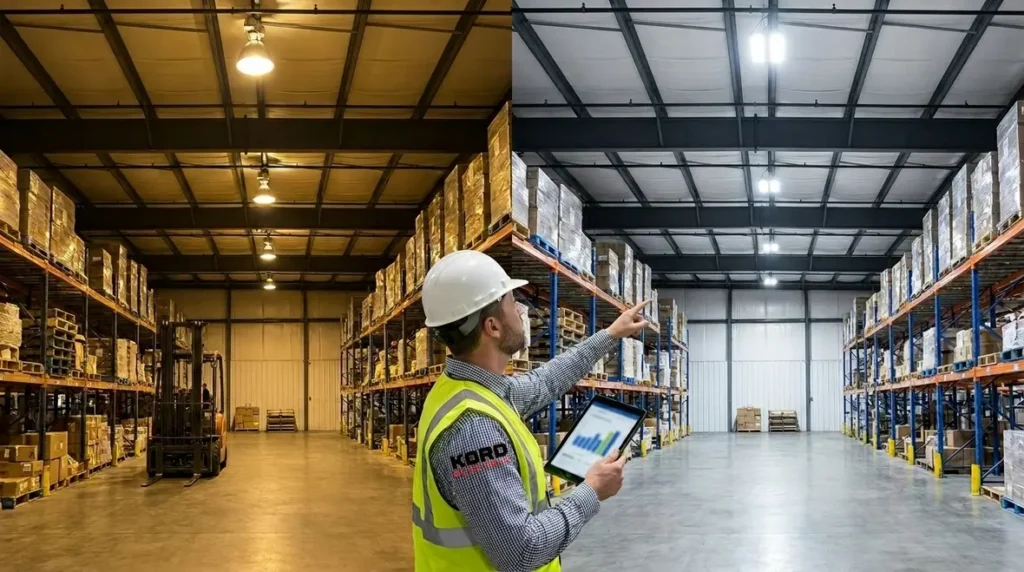
To be clear, a retrofit does not just “add controls.” Instead, it updates the whole operating behavior. For example, occupancy sensing prevents empty rooms from staying fully lit all day. Scheduling ensures lights follow actual shift patterns. Daylight harvesting cuts output when sunlight does the job. Then, dimming reduces heat load around fixtures, which matters more than people expect in offices, warehouses, and retail support areas.
And yes, the joke writes itself: wasting electricity is like leaving the fridge door open because you might want a snack someday. Smart controls stop that. More importantly, they turn lighting into a predictable system with measurable performance, so ROI stays anchored to reality instead of hope.

Calculating payback without guessing
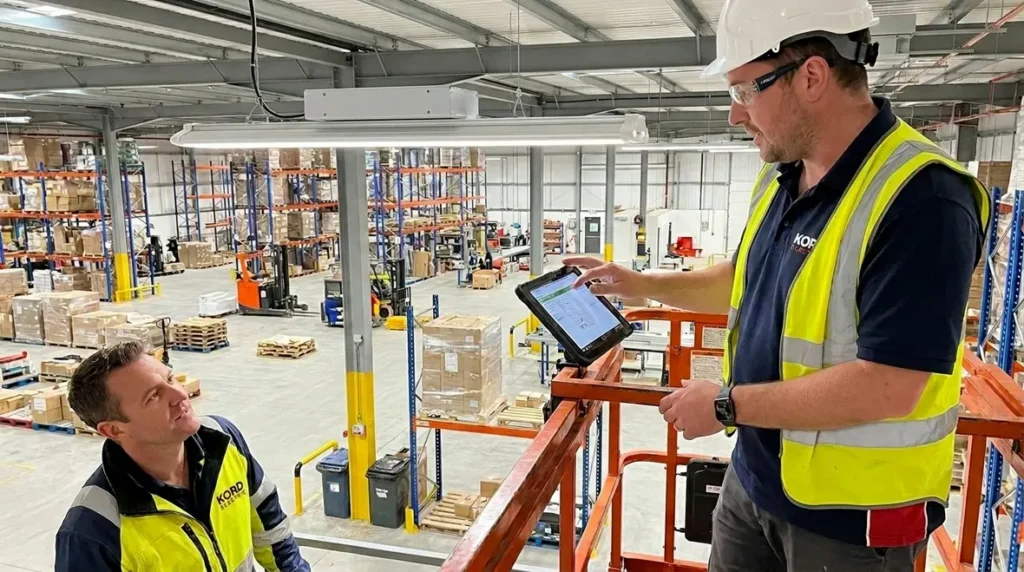
When others estimate ROI, they often rely on broad averages. At Kord Electric, we use a more careful approach that fits commercial and industrial facilities. First, our technicians review the existing fixture types, operating hours, and control layout. Next, we estimate baseline energy use and then model how smart lighting changes it. After that, we compare the before and after costs to estimate savings and payback time.
Smart lighting retrofit savings usually come from three sources. Energy reductions come first. Next, reduced maintenance lowers the cost of labor and replacement. Third, fewer disruptions protect productivity and minimize downtime. If a building operates in multiple shifts, the model becomes even more valuable because lighting schedules can be aligned to real occupancy.
In addition, we evaluate the electrical context. Some sites struggle with unstable power, and voltage fluctuations can affect fixture performance and control reliability. We reference our voltage fluctuations in commercial and industrial facilities, because electrical stability can change how well certain technologies perform and how quickly they recover value. If voltage swings are present, proper selection and installation practices matter, and our team accounts for that during design.
Operational savings that show up on invoices
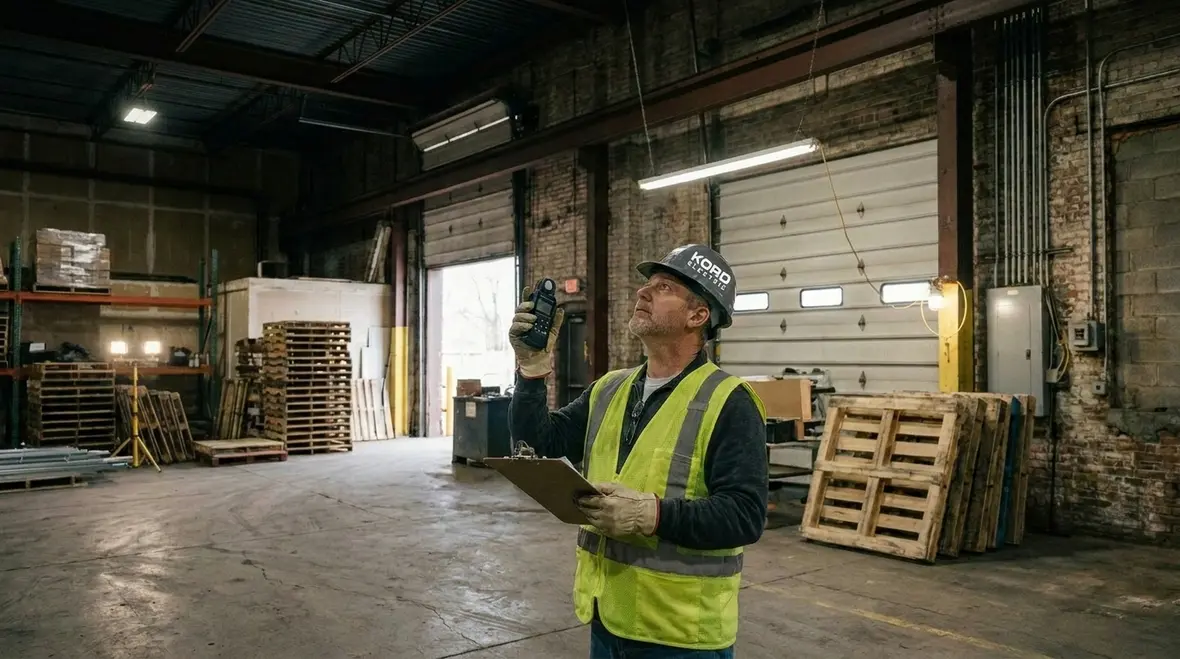
After the retrofit, owners typically see ROI through two paths: lower kWh use and fewer maintenance visits. However, the biggest win often hides in daily operations. Smart lighting reduces “always on” behavior, and it also trims the hours when lights stay at full output longer than necessary. Then, the system can adapt automatically when spaces change use, such as training rooms, conference areas, and storage zones.
For industrial sites, scheduling and zoning help manage large open areas. Instead of one setting for a whole warehouse, controls can target sections that match activity. Meanwhile, occupancy sensing prevents lighting from staying lit after shifts end. This protects comfort for staff and reduces the energy cost of emptiness. For commercial property buildings, the value also shows up in consistency. Facilities look better when lighting levels stay steady and tuned to use.
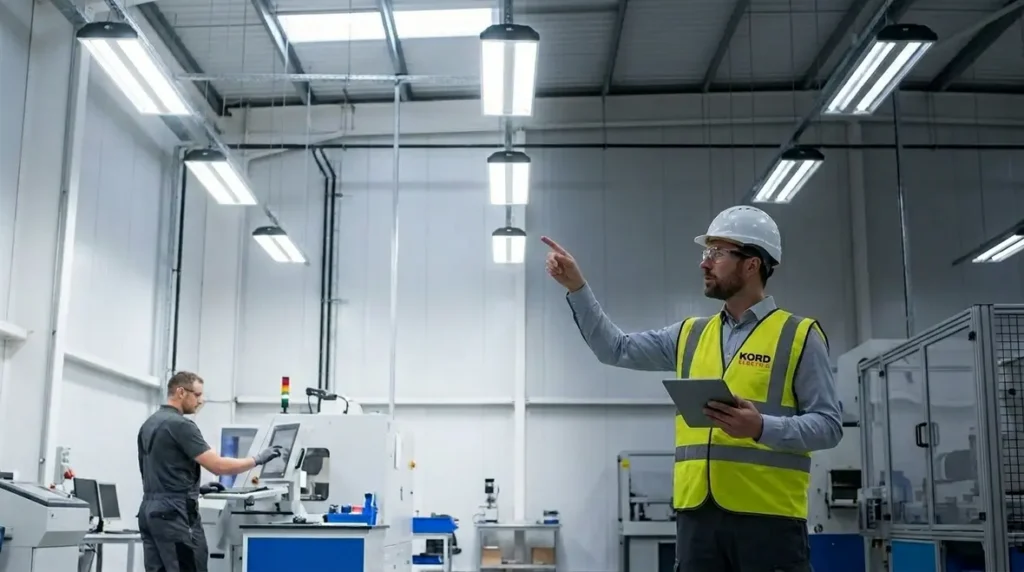
Our expert service staff also helps teams understand day to day settings. They explain how schedules, override controls, and occupancy sensitivity work, so operations teams do not fight the system. In fact, we often find that the ROI improves after staff learns how to manage the system instead of treating it like a locked box.

Controls, sensors, and schedules that drive true performance
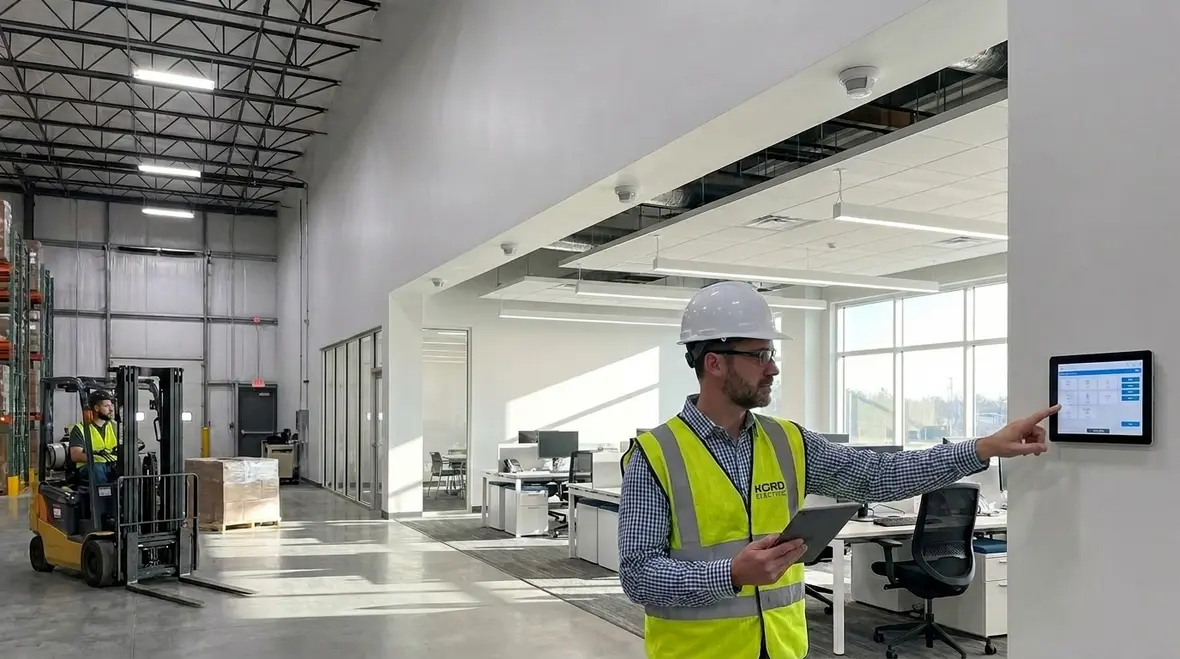
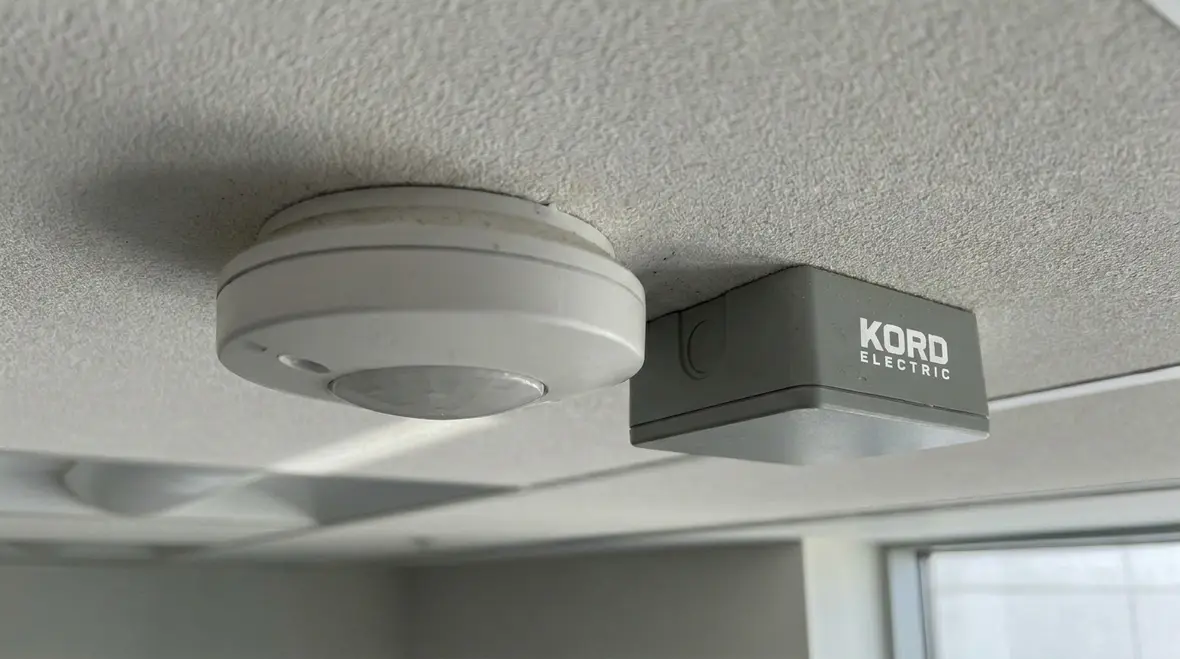
Smart lighting ROI improves most when controls match the building’s real behavior. That is why Kord Electric designs retrofits around zones, work patterns, and light needs rather than forcing one uniform plan. For many commercial buildings, we see good results by combining occupancy sensing with scheduling and daylight dimming. This mix targets both sudden changes, like meeting rooms, and slow changes, like sunlit work areas.
Then we address system reliability. Sensors need correct placement, and schedules need calibration to match shift timing and cleaning routines. If a retrofit is installed without that care, the system can waste energy or frustrate staff. However, when the setup is done right, occupants stop thinking about lighting and start using the space. That is a quiet win, and it often becomes the difference between “nice upgrade” and “strong ROI.”
Here is the part others sometimes forget: the electrical environment influences performance. If the building experiences voltage fluctuations, fixture operation can vary, and controls may behave differently than expected. Our technicians consider these factors using our commercial and industrial voltage guidance so the retrofit does not become a science fair project.
Where electrical stability fits into ROI
Smart lighting systems depend on stable operation. When power quality issues exist, the retrofit still can succeed, but owners should expect a more careful plan. In our experience, facilities that deal with unstable voltage may see inconsistent fixture behavior, and that can affect energy savings and maintenance patterns. Therefore, Kord Electric reviews site electrical conditions as part of the retrofit process.
Our article on voltage fluctuations in commercial and industrial settings helps explain why power stability matters. In plain terms, voltage problems can create performance drift in lighting loads and control electronics. So, while the ROI equation focuses on savings, the winning strategy also protects the system’s ability to deliver those savings reliably over time.
Additionally, good planning reduces future costs. If a retrofit gets installed without addressing electrical concerns, facilities can waste time troubleshooting what should have been prevented. And nobody loves troubleshooting. It is like trying to find the right streaming remote when there are twelve remotes in the drawer. You can do it, but it costs your day.
ROI comparison: how smart lighting beats basic upgrades
Some owners consider “standard” upgrades, like swapping bulbs or adding timers. Those moves can help, but they often leave savings on the table because they do not manage lighting based on actual occupancy and daylight. Smart systems can, and they do it at a building level, not just one room. That is why the ROI curve usually holds better when controls are integrated properly.
To show the difference in a practical way, Kord Electric typically compares outcomes across energy savings, maintenance needs, and control flexibility. Below is a dual column view used during planning discussions, because decision makers like side by side clarity, not a mystery novel.
Lighting approach | What tends to change for ROI
- Basic replacement without controls : Lower power draw, but lights still follow static schedules. Energy waste remains during low occupancy.
- Timers only : Better than constant on, yet still ignores real occupancy changes. Savings can drop when people use spaces differently than the schedule.
- Smart lighting retrofit benefits with sensors and scheduling : Lights match use. Daylight dimming and occupancy sensing reduce waste during both predictable and unexpected changes, improving payback consistency.
- Integrated controls with monitoring : Maintenance improves through alerts and faster fault detection. Staff gains clearer override settings, which reduces complaints and unnecessary overrides.
And again, our technicians help implement these systems so facilities actually operate them. That part matters, because ROI depends on performance after installation, not just before it.
For facilities planning broader upgrades, pairing smart lighting with structured electrical preventive maintenance and robust electrical services across the region keeps the entire power and lighting strategy aligned with long term performance goals.
FAQ about commercial smart lighting retrofit benefits
Next steps with Kord Electric
If a commercial or industrial property needs a smarter lighting plan, Kord Electric can help you build an ROI focused retrofit from the ground up. Our technicians evaluate your current setup, consider electrical stability, and explain options in a way your team can act on right away. Then we design and install controls that match how your building actually operates. Contact us to schedule a site review, and let us turn your lighting system into a predictable, cost saving asset instead of an ongoing utility gamble.
For large properties across Southern California, our dedicated Los Angeles County electrical services support everything from smart lighting retrofits to wider electrical upgrades, so your facility roadmap aligns with both energy performance and reliability goals over time.
When you are ready to explore a commercial smart lighting retrofit benefits package that fits your facility, our team can also coordinate with broader lighting installation services, Title 24 compliance, and electrical maintenance planning so you are not juggling multiple vendors or conflicting designs.