Smart Office Lighting Controls ROI Guide
Smart office lighting controls: ROI starts before the first retrofit
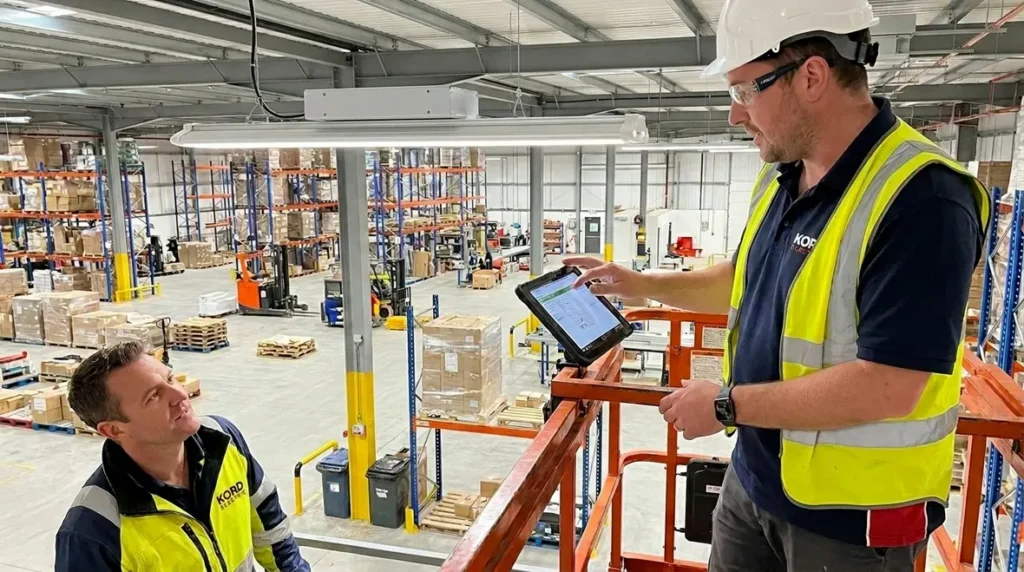
Kord Electric helps facility managers install smart office lighting controls that cut waste, stabilize comfort, and protect budgets over time. In our experience, the best return on investment does not show up only on a utility bill. Instead, it shows up in fewer complaints, lower maintenance calls, and steadier operations across long workdays. When our technicians explain the plan, they do it in plain language, because nobody wants a “trust me bro” approach with electrical systems. And yes, we keep it professional, even when someone jokes that the lights should just “read minds” like in a sci fi show.
Then, as the facility learns how people use space, the controls keep adjusting. That is where ROI usually becomes real, not theoretical.
What facility managers actually pay for, and what they can stop paying
ROI is not magic. It is math, shaped by the daily reality of a commercial or industrial building. A facility manager typically funds lighting through several streams: energy consumption, labor to troubleshoot and reconfigure circuits, replacement of lamps and parts, and the hidden cost of user dissatisfaction that triggers service tickets. Smart lighting systems reduce each stream when they fit the building correctly.
First, the controls manage lighting output based on occupancy, daylight, and scheduled needs. As a result, the building avoids “always on” habits. Next, the building reduces night time waste and after hours use. And importantly, it limits unnecessary cycling of fixtures, which can extend equipment life.
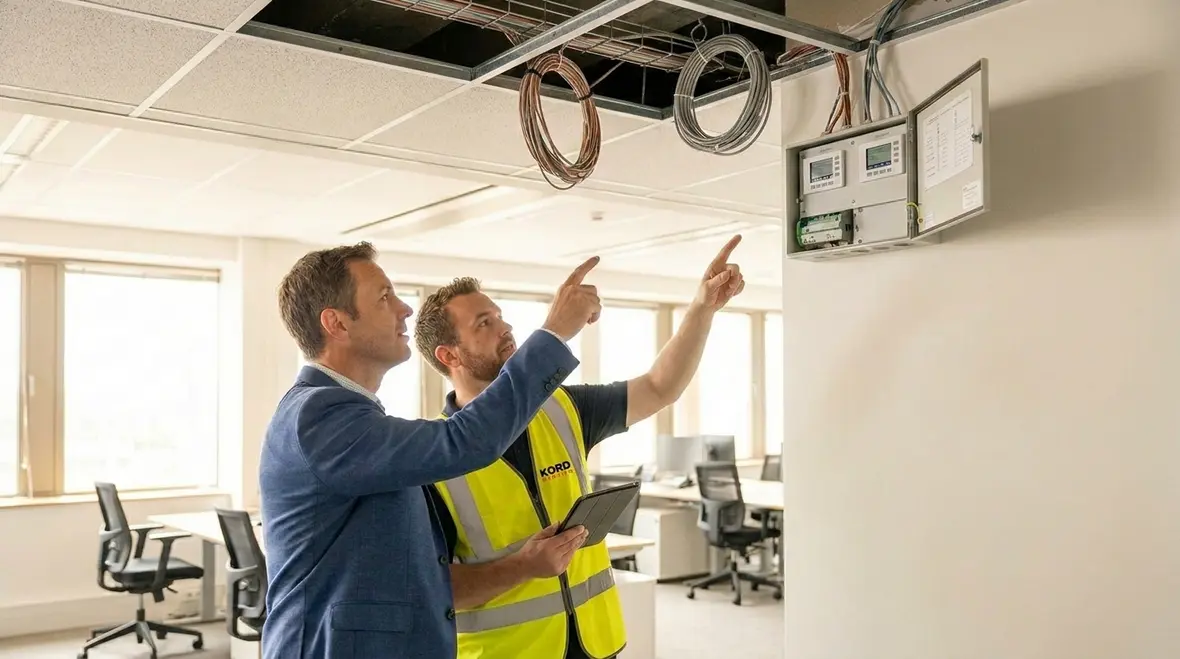
At Kord Electric, our team often reviews the current electrical setup and how the lighting is wired and controlled. If the existing controls do not communicate well or they force the facility into rigid schedules, then ROI slows down. Therefore, we help other stakeholders plan changes that align with how the property runs, not just with what is easiest for a contractor that day.
How energy savings turn into measurable ROI
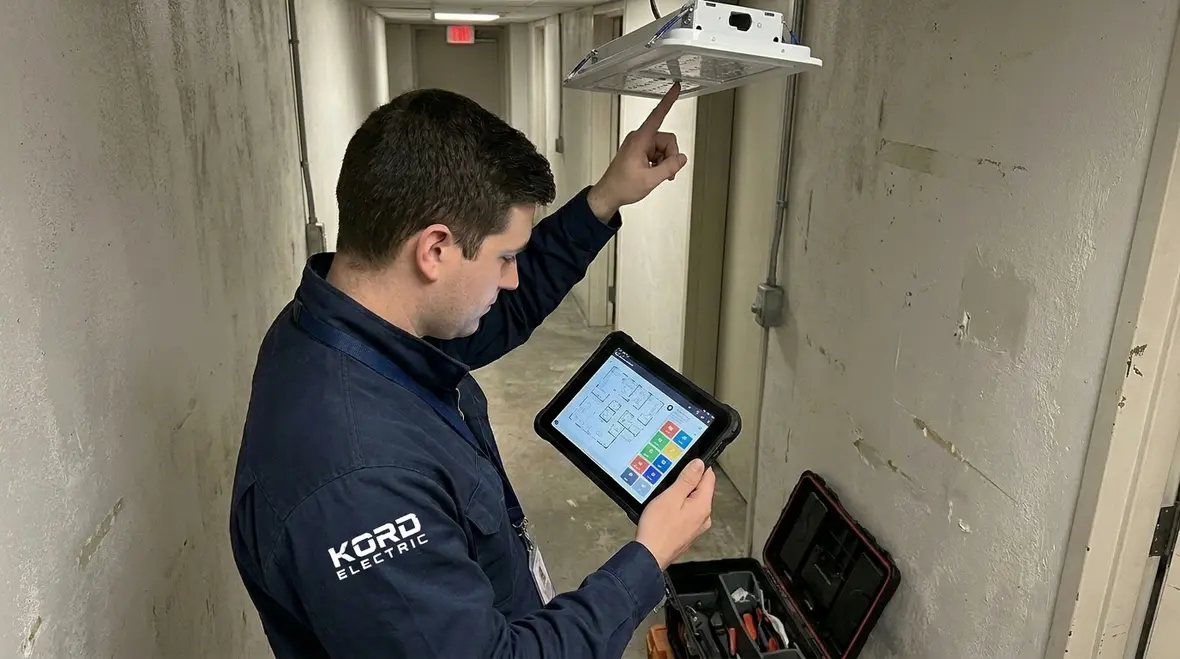
Energy savings often drive the first visible return. However, smart office lighting controls do not only dim lights. They coordinate lighting with real conditions. When daylight reaches a work area, the system reduces artificial light output. When occupancy changes, it adjusts levels instead of leaving lights on by default. This prevents the classic pattern of “lights blazing like a parking lot” during a bright afternoon.
Then, savings compound over time. In commercial and industrial buildings, occupancy and solar patterns repeat weekly, seasonally, and by floor use. So the control logic learns and keeps acting. Meanwhile, a well planned system can also support compliance and reporting needs that many major property teams track internally.
To estimate ROI, facility managers should compare baseline energy use against expected reduction. We encourage clients to look at whole building lighting load, not only office areas. After that, the team models savings while factoring in commissioning and tuning time. In other words, we help make the project pay off within the timeframe leadership expects.

Maintenance ROI: fewer calls, longer equipment life, smarter troubleshooting
Energy savings matter, yes. Still, maintenance is where many managers find steady value. Lighting systems in large facilities face wear from frequent switching, heat buildup, and inconsistent use. Smart office lighting controls can lower stress on equipment by managing transitions smoothly and by avoiding unnecessary runtime.
Also, our technicians help teams reduce time spent locating problems. When a building can identify which zones behave unexpectedly, staff can respond faster. Instead of sending a crew to “check every light,” the facility can narrow down faults. That approach saves labor hours and reduces downtime that can affect tenant comfort.
In addition, Kord Electric supports service staff with clear documentation and training. We keep explanations calm and practical, because in a real facility, the person troubleshooting at 6:00 AM needs direct guidance, not a lecture.
Rewiring choices and electrical upgrade costs that affect payback
Some projects hesitate at the “electrical reality” part. Facility leaders worry about rewiring scope, panel capacity, conduit access, and downtime. Yet, the ROI question depends on how you sequence the work. If smart lighting controls can be integrated with existing infrastructure, the project can move faster. If not, the team must plan upgrades carefully.
Kord Electric has covered commercial electrical cost planning in our rewiring cost guide for commercial electrical systems. That guide helps property teams understand how rewiring labor, materials, and complexity often drive budget. It also shows why electricians and controls engineers should collaborate early, instead of arriving late and calling for “surprise changes.”
Therefore, smart office lighting controls projects should follow a staged approach. First, we assess current control wiring, switching layout, and power paths. Next, we map lighting zones to the way spaces operate. Then, we plan any rewiring only where it adds control value. When the plan avoids unnecessary wire runs, payback improves.
And yes, rewiring always sounds scarier than it is in theory. But when our technicians explain the steps and sequence the work, facility teams usually feel the difference immediately. It is the difference between a planned job and the kind of surprise that makes people think the building is haunted.
Comfort ROI: higher satisfaction without ballooning energy use
Facility managers often measure ROI in dollars, but operations teams also measure it in complaints. Lighting issues drive more than annoyance. Poor lighting can reduce productivity, increase fatigue, and create friction with tenants. Smart lighting systems can improve comfort by stabilizing brightness levels and reducing glare through better dimming behavior.
As a result, occupants experience fewer “light mood swings.” In many workplaces, people want predictable lighting, especially around tasks. When controls respond to real usage and daylight, the system can keep the space at a target level without a constant cycle of on and off.
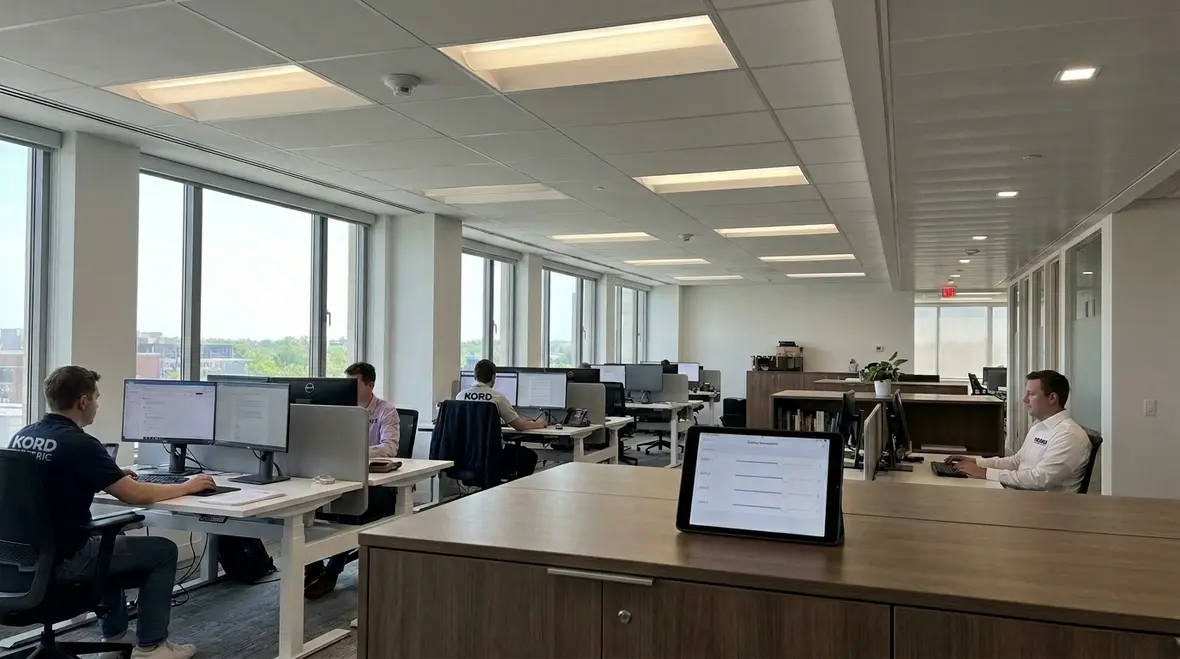
Furthermore, Kord Electric focuses on commercial and industrial facilities and major property buildings. That matters because these environments often include multiple tenant types, varying schedules, and complex power distribution. Our approach supports zones that reflect actual work patterns, instead of generic lighting layouts that look good on paper but fail in real operations.
Implementation ROI: planning, commissioning, and how we train your teams
ROI improves when the installation includes commissioning and operational training. Many projects fail to deliver full value because controls get installed but never tuned. Then, the system runs with default settings that do not match the building’s occupancy patterns.
At Kord Electric, our technicians and expert service staff take time to explain how the control strategy works. We walk through occupancy behavior, daylight sensor placement, dimming curves, schedules, and handoff steps. This reduces confusion among facility staff and tenants. It also speeds up adoption. When people understand the “why,” they stop fighting the system like it owes them money.
Meanwhile, proper commissioning protects payback. It checks whether zones respond as expected, verifies that switching and dimming behavior aligns with the design, and validates that energy savings targets are reachable. After that, we support a clear maintenance path so the facility does not rely on guesswork later.
In commercial and industrial facilities, the goal is simple. The system should run well, and it should be easy to manage.
Dual column: where ROI shows up, and what we track
ROI area
Energy reduction
Maintenance improvement
Electrical efficiency
User experience and comfort
What we help track
Zone runtime, daylight response, after hours behavior, demand impact
Service call frequency, fault detection time, equipment life indicators
Integration with existing wiring, minimized rewiring where possible, phased upgrade plan
Complaint trends, stable brightness, glare control behavior
FAQ
Final thoughts from Kord Electric
Facility managers want ROI they can explain in a meeting, not ROI they hope for in a spreadsheet. Kord Electric designs smart office lighting controls for commercial and industrial facilities, then supports installation with commissioning and clear guidance from our expert technicians and service staff. We help reduce waste, stabilize comfort, and manage maintenance with less guesswork. If you want faster payback, tighter control, and fewer lighting headaches, contact Kord Electric. We will map your building’s path to smarter lighting and measurable results.
For facilities across the region, especially those operating in and around Los Angeles, smart office lighting controls also fit naturally into broader reliability planning. Many sites pair lighting work with structured support such as Los Angeles County electrical services so upgrades, troubleshooting, and long term maintenance support the same ROI story instead of living in separate silos.
If you are exploring larger programs that combine lighting, controls, and infrastructure work, Kord Electric’s broader blog resources and service guides can help you frame the conversation for stakeholders. For example, aligning a controls retrofit with the planning approach in our Rewiring Cost Guide for Commercial Electrical Systems can tighten budgets, reduce repeated disruptions, and turn a single lighting project into a more comprehensive upgrade path.
When you are ready to put smart office lighting controls to work for your building, our technicians and expert service staff can help you move from ideas to a practical sequence of design, installation, and commissioning. That way, the next time someone jokes that the lights should just “read minds,” your system will be so smooth they might start to believe it.