EV Charging Load Management for Commercial Sites
Kord Electric builds charging systems with EV charging load management in mind from the first site visit. We design for commercial load behavior, not just “it charges.” As a result, fleet operators and property teams avoid demand spikes that can trigger costly utility penalties, breaker trips, and angry calls that start with “your charger did what?” Then, we apply smart scheduling, power sharing, and clear monitoring so your site stays stable while vehicles charge on their own time.
When you bring heavy equipment, complex schedules, and high occupancy together, “plug it in and hope” is not a strategy. Commercial and industrial facilities already run close to their limits at certain times of day. Adding EV charging on top of that without a plan can turn normal operations into an electrical roller coaster. Our job is to make charging feel boring in the best way possible: consistent, predictable, and safe.
We treat every charging project as an extension of your electrical backbone, not a one-off gadget. That means careful evaluation, honest conversations about capacity, and design decisions that protect your production lines, HVAC, lighting, and everything else that keeps the facility running. If you are planning new chargers or expanding a pilot, EV charging load management is the difference between a system that behaves and a system that constantly begs for attention.
Why EV charging load management matters for commercial sites
Commercial and industrial properties rarely run on quiet schedules. Warehouses run pumps, offices run HVAC, and retail centers run lighting, dock equipment, and backup loads. When EV chargers join that mix, power draw can jump fast, especially when several vehicles plug in at once.
We optimize how charging load lands on the grid, and we do it in a way that respects how your facility already behaves. Instead of treating chargers like standalone devices, we treat them like part of a real electrical system. In other words, we keep the charger demand aligned with the site’s available capacity and utility plan.
Our expert service staff explains the logic in plain language. They walk operators through what happens when drivers arrive during peak hours, and they show how load sharing reduces stress on feeders, transformers, and switchgear. And yes, they also explain it without making anyone feel like they failed a pop quiz in high school physics. Most of the time.
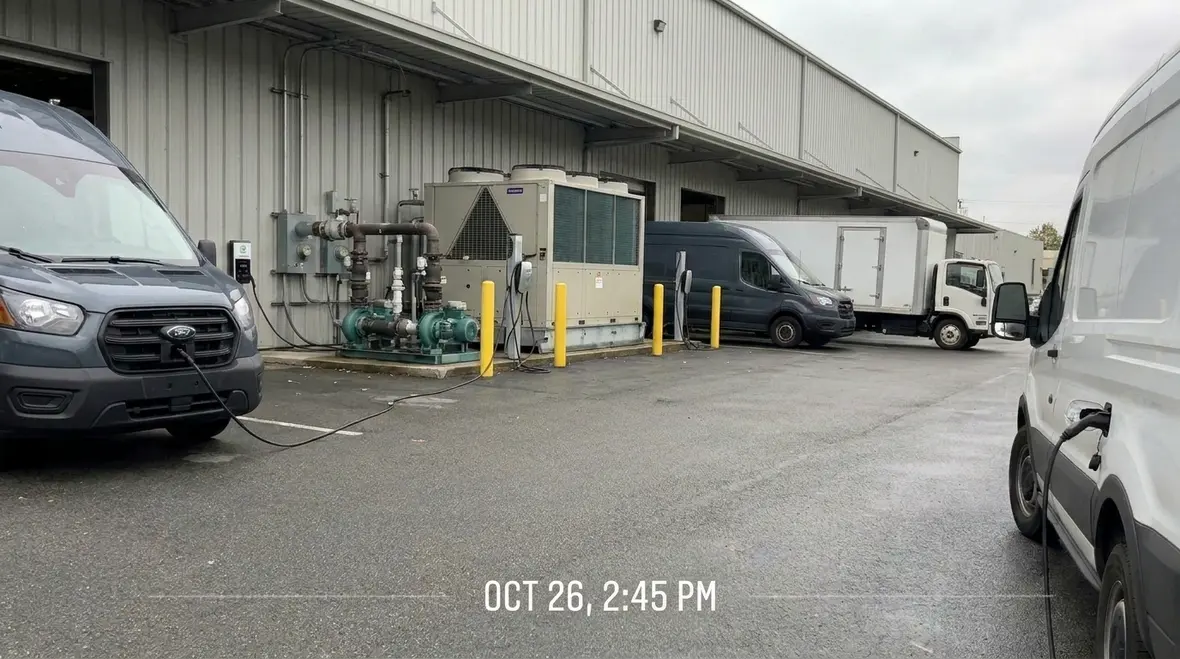
For many properties, the first time they truly “meet” their own electrical system is when chargers arrive. That is when everyone notices how much power HVAC really pulls on hot days, how much lighting stays on overnight, or how production cycles collide with employee charging habits. EV charging load management gives you a way to shape that behavior instead of letting it shape you.
When charging is unmanaged, you see sudden demand spikes, nuisance trips, and panels that sound like they are working overtime. With managed charging, the system smooths those spikes, keeps feeders and transformers within healthy ranges, and treats every charging session as part of a bigger picture. Over time, this stability means fewer emergencies, fewer late-night calls, and a facility team that knows what to expect.
Assessing site load capacity before we install
First, we do not guess. We start by measuring and reviewing real electrical data: panel capacity, service size, feeder ratings, existing loads, and any demand response limits. Next, we map vehicle charging needs against your site schedule. Then we size the system so it supports your goals without pushing equipment beyond safe limits.
At Kord Electric, our technicians also consider transformer headroom, local voltage drop behavior, and how simultaneous charging could affect power factor. If a site has aging switchgear or tight panel space, we plan for safe upgrades where needed. This prevents “future regret,” the kind that shows up when chargers scale up and the building starts acting like it is being asked to lift a couch.
We also factor in the way major properties operate. Parking garages, campuses, and multi-tenant buildings often have complex electrical zones and shared infrastructure. Consequently, we design controls that work across the real layout of the building, not a simplified diagram that only exists in someone’s imagination.
That front-loaded effort pays off when the first vehicles plug in. Instead of mystery behavior, you get a system that matches what we mapped on paper. Operators know which panels feed which chargers, which loads matter most during peaks, and how much spare capacity is still available for future phases. This is also where our broader experience with commercial electric panels and distribution work helps us build load management into the bigger infrastructure story.
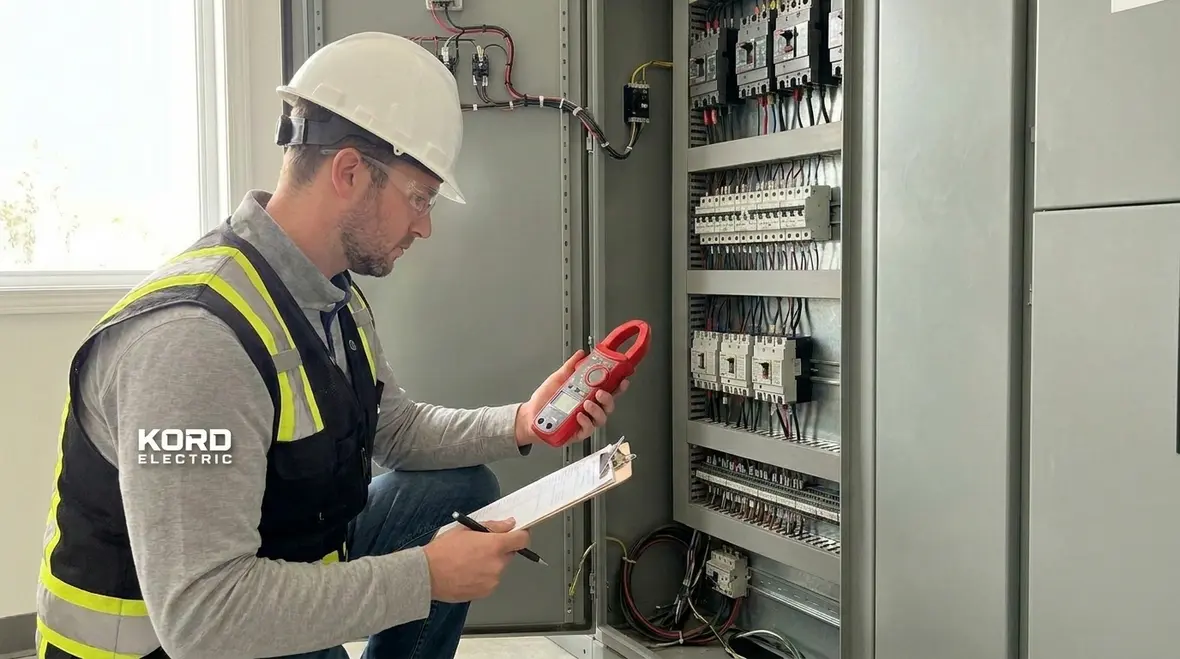
Because we are working with real data, not guesses, we can also highlight constraints early. Maybe the main service is already close to its demand ceiling at certain hours. Maybe a subpanel feeding the parking area is overdue for an upgrade. By surfacing these realities before chargers are ordered, we help you choose the right mix of capacity, controls, and phasing instead of discovering hard limits at the worst possible time.
In many cases, this assessment reveals opportunities too. Not every site needs sweeping upgrades to support commercial charging. Sometimes, tighter control over charging windows, smarter EV charging load management, and minor panel or feeder improvements can unlock the space you need without a full rebuild. Our role is to show you those options clearly so you can match the solution to your budget and risk tolerance.
Smart power allocation: how charging stays within limits
After we confirm capacity, we apply EV supply equipment logic that controls charging rate. Then we set rules based on your facility needs. For example, if the site sees higher demand from HVAC or production loads, the charger system can reduce charging output to keep the overall demand steady.
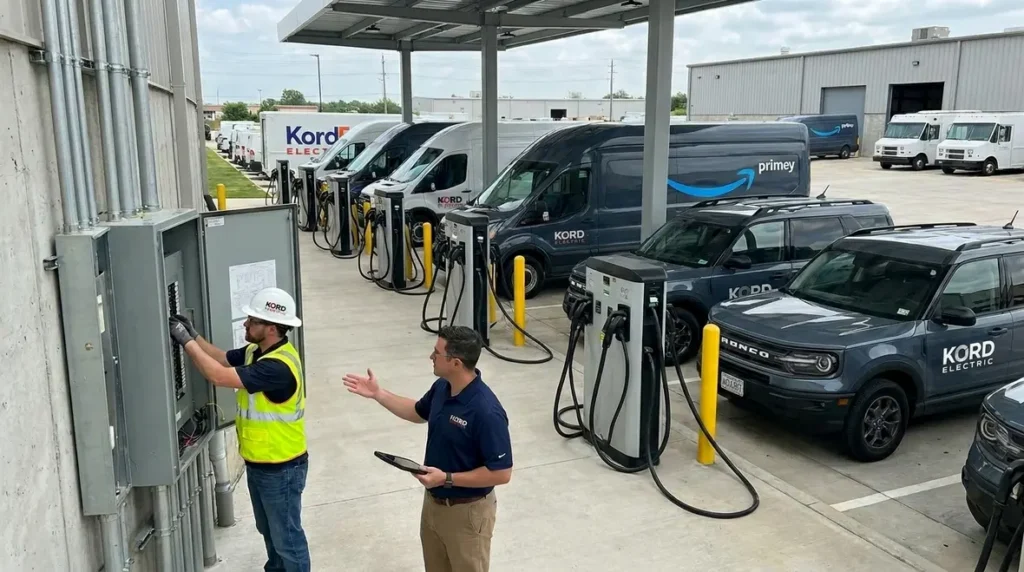
When multiple vehicles plug in, load sharing lets chargers coordinate so the site stays within a target limit. As a result, one charger does not “hog” power while others wait. This improves user experience because vehicles get consistent charging behavior, and it helps protect your electrical infrastructure.
We also recommend a charging strategy that matches your workflow. Fleet yards often benefit from managed charging windows tied to duty cycles. Property owners may prefer predictable charging for tenants and staff. Meanwhile, mixed use sites can use schedules that reflect evening occupancy and daytime demand patterns.
And look, the goal is not to make charging feel like it is rationed. The goal is to make charging feel dependable. Like your reliable coffee shop that never runs out of beans, even when the line is huge.
In practice, this means thinking beyond a single “maximum kW” number on a spec sheet. Smart EV charging load management focuses on how that power is shared minute by minute. A well-tuned system will automatically slow certain sessions when the rest of the site is busy, then speed them back up when load drops. Over an entire shift, drivers still get what they need, but your panel never feels like it is being asked to sprint a marathon.
Because we plan for these rules from day one, we can also align them with future expansion. If you expect more chargers or vehicles later, we can reserve capacity in your demand targets and design your logic so scaling up feels like a controlled volume knob adjustment, not a risky jump. This is the same thinking that powers our EV charging infrastructure scalability approach across commercial properties.
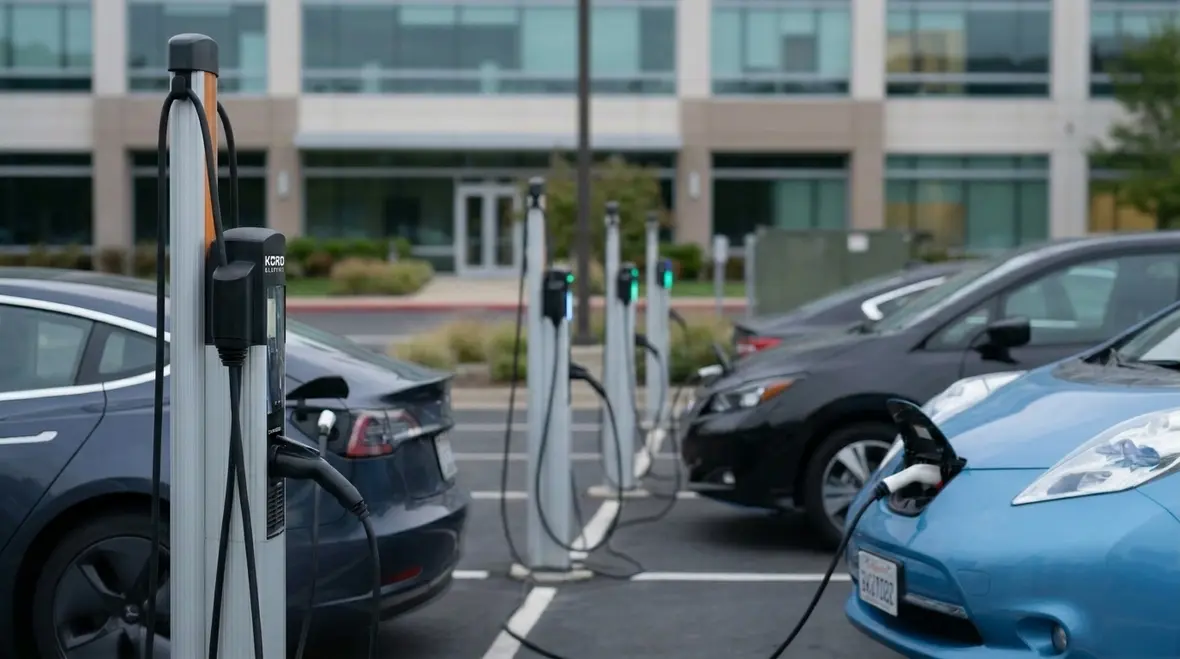
For fleets, this smart allocation often takes the form of scheduled “charging windows” matched to route patterns. Vehicles that must leave earlier get priority; vehicles sitting overnight can charge more slowly. For workplaces and multi-tenant garages, rules can tilt in favor of fairness, ensuring that no single driver or stall monopolizes available power. With the right software and electrical design, all of this happens quietly in the background.
The result is a charging environment where you rarely have to think about the word “limits” at all. Instead, you get a steady rhythm: chargers respond when the facility is busy, catch up when it is calm, and keep your utility profile far more predictable than a simple “full power all the time” strategy ever could.
Controls, monitoring, and safety for industrial and multi building projects
Commercial results depend on more than hardware. We design the control layer and the monitoring layer to work together. That means using management features that track charger status, charging sessions, and power usage in a way facility teams can understand.
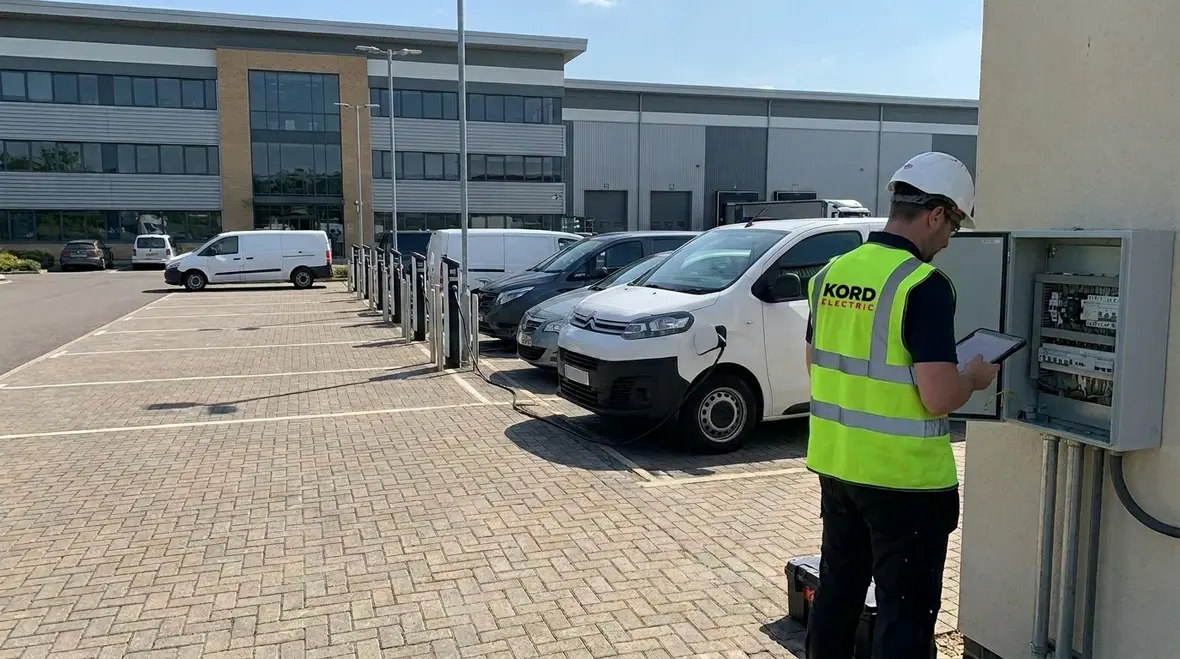
Our technicians install systems with safety in mind: proper overcurrent protection, correct wiring practices, grounded components, and coordination with existing electrical gear. Then we test so chargers respond correctly when load conditions change. In practical terms, that means if another part of the building pulls more power, the charger system responds instead of ignoring the reality.
For campuses and major property buildings, we also plan for how multiple chargers talk to the same management system. We want consistency across locations, which reduces confusion for operations teams. Transitioning from “one charger works” to “the whole site runs well” requires good design, and that is where we focus.
Additionally, we support documentation and handoff so the facility team knows what to expect. Nobody should have to reverse engineer a setup during a utility call. We make sure they get clear guidance, and our expert service staff explains the system step by step.

On multi-building sites, this consistency is especially important. A charger in one garage should not behave wildly differently than a charger in another unless the plan calls for it. When a facilities manager logs into the management platform, they should immediately see which stations are online, which are in use, and how much power the site is drawing. EV charging load management becomes easier when the data is clear and the rules are documented.
We also pay attention to how monitoring ties into broader electrical maintenance. Trends in charger behavior can reveal upstream issues like voltage fluctuations, overloaded circuits, or aging components. Because Kord Electric already supports complex work such as correcting voltage fluctuations in commercial and industrial facilities, we use those insights to keep your charging and base infrastructure working together instead of at odds.
Scaling charging without triggering costly upgrades
Many facilities start with a pilot: a few chargers, a few vehicles, and a promise to “think about expansion later.” That is normal. However, expansion can turn expensive if the original electrical design did not leave room for growth.
Our approach helps commercial and industrial sites scale more smoothly. We use EV charging load management principles so adding chargers does not automatically force major capacity upgrades. Instead, we plan for shared limits and controlled output so you can expand within the service and distribution constraints you already pay for.
We also recommend a rollout plan tied to business goals. For instance, if a warehouse expects new routes over the next 12 to 18 months, we plan charger capacity and controls with that timeline in mind. Likewise, if a property plans tenant adoption, we align the management strategy with expected vehicle growth.
So yes, you can scale. But you do it with math, not wishful thinking. Wishful thinking is great for sports and romance movies, not for electrical panels.
Part of that math includes deciding when it is smarter to invest in new infrastructure versus leaning harder on load management. At certain thresholds, a new transformer or upgraded service is simply the right move. Before you reach that point, however, a combination of smart scheduling, diversified charger power levels, and staged construction often gives you much more mileage from the gear you already have.
We also connect this long-term view to your broader electrical roadmap. If you are already considering panel upgrades, lighting retrofits, or new process equipment, we can time charging expansions alongside those projects. Coordinated work tends to cost less, cause fewer disruptions, and deliver a cleaner end result than scattered, one-off projects.
Utility coordination and demand planning for commercial budgets
Budget control matters, and utility rates can make or break the economics of EV charging. Therefore, we help teams connect charger operation to demand planning. That means understanding how your utility measures peak demand, how time based rates apply, and how your facility can reduce peak load through smart charging schedules.
In many cases, EV charging load management helps facilities flatten demand spikes. Instead of charging at the maximum possible rate for every plugged in vehicle, the system balances power across the site. This can lower peak demand charges and improve predictability for monthly bills.
We also support planning for demand monitoring so you can see performance trends. When operators can view usage patterns, they can adjust schedules and charging rules with confidence. As a result, the site stays aligned with business needs, not surprise expenses.
Our team treats utility coordination as part of the whole project, not a final footnote. We communicate clearly, install correctly, and then explain how the system will behave as the facility changes.
Because we work across California’s commercial and industrial properties, we see a wide range of rate structures and incentive programs. We bring that experience into your project planning so you are not starting from scratch each time a tariff or incentive enters the conversation. When appropriate, we pair load management strategies with rebate opportunities like those described in our guide to EV charger rebates for California commercial properties, so design and budget both land in the right place.
We also help teams think through policy decisions that affect the utility bill but live outside the panel room. For example, you might choose to favor slower charging during known utility peaks and offer faster charging at off-peak times. Or you may decide to prioritize fleet vehicles during certain windows and public access during others. When those policies are built on data from your own load profile, they stop feeling like guesses and start feeling like levers you can actually use.
Dual power planning for future friendly installations
In our experience, the best EV charging projects plan for two futures at once: the near term need and the future expansion. To do this well, we often build a two track plan that covers both physical electrical capacity and charging behavior rules.
Electrical readiness
- Evaluate service size, feeders, and panel capacity
- Plan conduit routing and safe equipment placement
- Coordinate with switchgear and protection requirements
- Leave room for growth where it makes sense
Charging behavior readiness
- Set charging limits based on site demand targets
- Enable power sharing across chargers
- Use schedules tied to facility workflows
- Monitor performance and adjust over time
This combination helps commercial teams avoid the common trap of buying chargers first and learning about load constraints later. We prefer the calmer path: plan early, install cleanly, and manage charging in a way that protects the facility from power stress.
Dual planning also makes it much easier to communicate the project internally. Executives and finance teams want to understand capital spend, while facility teams want to understand real-world operation. When we map both the physical capacity and the operating rules on the same page, everyone sees how the pieces fit. That shared understanding makes approvals faster and implementation smoother.
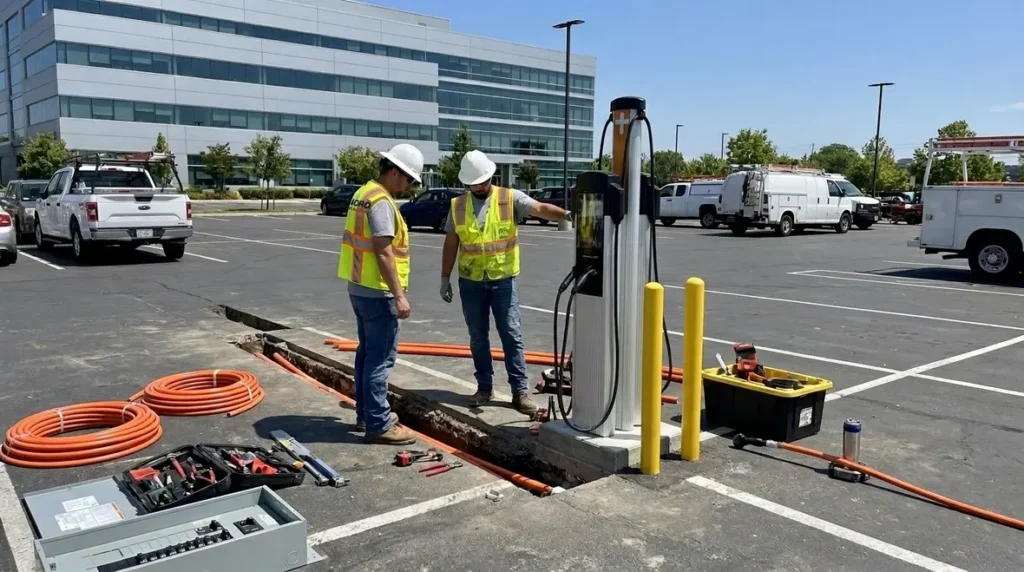
When your site is ready to turn plans into installed infrastructure, our dedicated EV charger installation services take that roadmap into the field. From trenching and conduit runs to commissioning and testing, we keep EV charging load management principles front and center so the finished system behaves like the design promised.
For properties across Southern California, this approach ties directly into regional support and response times. If your operations are based in or around Los Angeles County and you want a partner who understands both the local grid and large-facility demands, our Los Angeles County electrical services team is built specifically for commercial and industrial environments.
Conclusion: get a managed charging plan built for your facility
Kord Electric helps commercial and industrial facilities build EV charging that fits real electrical capacity, real utility rates, and real daily operations. We optimize charging behavior using smart power allocation, monitoring, and safe installation practices, so your site stays stable while vehicles charge reliably. If you want a project plan that avoids costly surprises and supports future growth, we are ready. Contact Kord Electric today to schedule a site review and get an expert team on the work.
Whether you are just beginning to map out your first chargers or you are expanding from a pilot into a full-scale deployment, EV charging load management is the thread that keeps everything connected. With the right design, you can give drivers confidence, protect your infrastructure, and keep your budget under control—all while staying ready for the next wave of electrification at your facility.