Smart Lighting Controls Boost Commercial Building Value
How smart lighting controls quietly raise the value of commercial facilities
Commercial owners and facility managers know one hard truth: buildings do not only get measured by square footage. They get measured by how efficiently they operate, how reliably they perform, and how smoothly they run day to day. That is where smart lighting controls earn their keep, because they help reduce energy use, lower operating costs, and support smarter maintenance. In turn, buyers and lenders often view these systems as a sign that the property is modern, well managed, and ready for the next tenant.
At Kord Electric, our team sees this pattern again and again across warehouses, office campuses, retail centers, and industrial spaces. Our technicians and expert service staff explain the options in plain language, so decision makers can feel confident, not confused. And yes, we will also tell you when a “smart” solution is overkill, because throwing money at a problem is not our hobby. (We do electrical work, not magic.)
What buyers really look for in lighting upgrades

When a major property changes hands, buyers do not just ask, “Does it look nice?” They ask, “Does it run well?” Lighting is a daily system, and it affects comfort, safety, and productivity. However, in many commercial and industrial facilities, lighting upgrades get treated like a cosmetic project. That mindset misses the value.
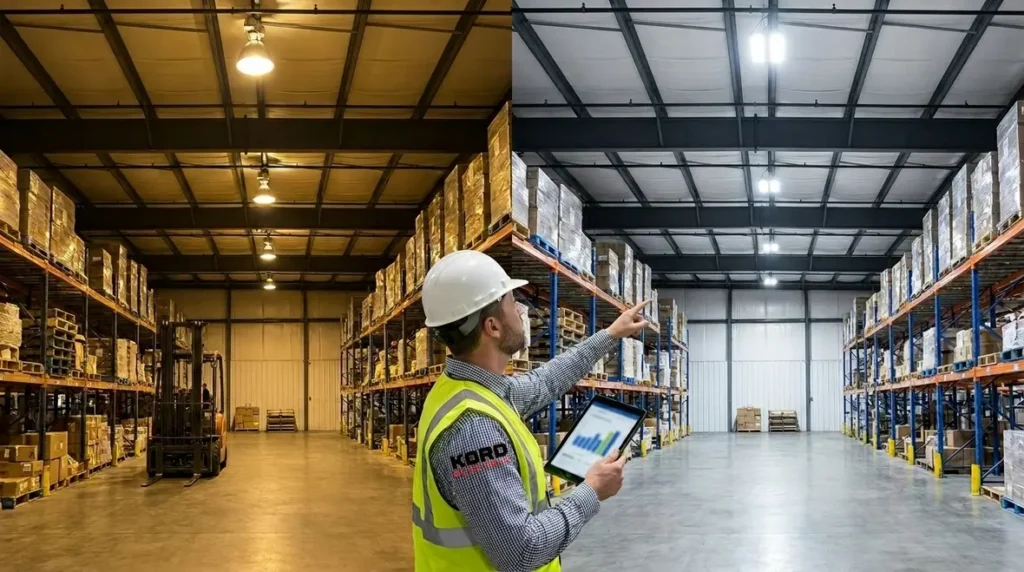
Smart lighting controls shift the conversation from bulbs to outcomes. They help facilities maintain consistent illumination, automate schedules, and respond to occupancy in real time. As a result, the property looks better on paper and behaves better in practice. Additionally, these systems provide documentation and performance insights that align with modern building standards. For decision makers who want to dive deeper into what automated systems can handle, Kord Electric’s piece on automated lighting control benefits for facilities walks through how schedules, occupancy, and daylight all work together in real buildings.
In other words, we help you make lighting a controllable infrastructure layer, not a collection of fixtures. And when other pros talk about “tenant experience,” we already know lighting is part of that conversation.

Lower operating costs that don’t feel like a compromise
Energy savings matter, but the real commercial lighting control benefits go deeper than just reducing utility bills. Smart systems can dim lights when spaces are empty, adjust output based on daylight, and maintain stable light levels without waste. Then, instead of relying on manual switching and guesswork, the building uses sensors and controls to make the right call every day.
Moreover, better control reduces wear and tear. Lights and components operate within expected ranges instead of being forced into extremes by outdated timers or one-size-fits-all settings. Over time, that can mean fewer maintenance calls and a smoother lifecycle for the lighting system.
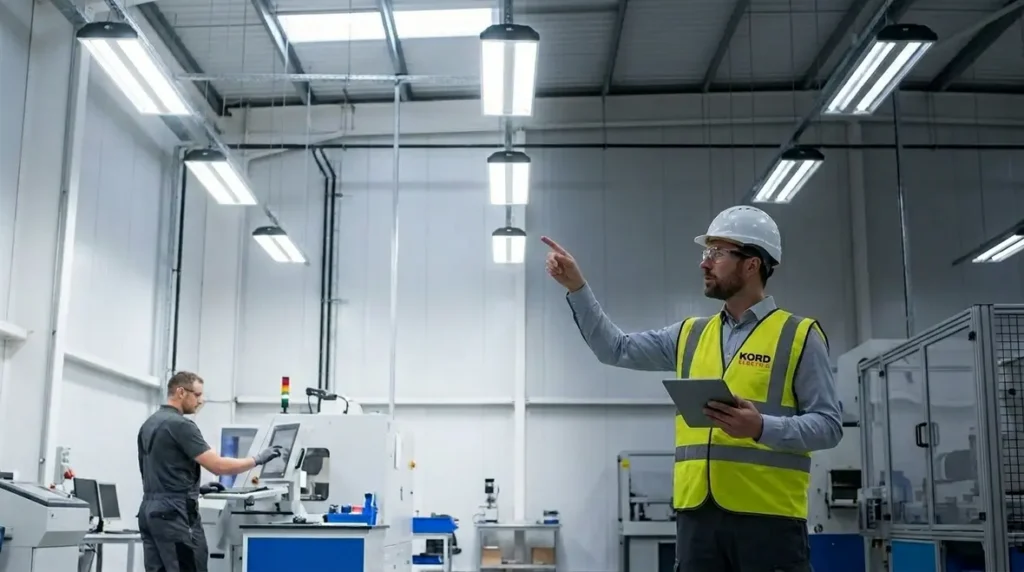
Our technicians at Kord Electric help facilities implement control strategies that match real use patterns. For example, loading docks, corridors, offices, and conference rooms all behave differently. Therefore, we design controls around occupancy and workflow, not around a generic schedule that nobody follows after week one.
Occupancy sensing and daylight harvesting that improve comfort
Comfort is not fluff. In commercial spaces, inconsistent lighting creates visual strain, and that leads to complaints, distractions, and higher risk for errors. Smart controls help solve that by maintaining steady illumination levels and avoiding sudden brightness swings. Meanwhile, daylight harvesting uses natural light to offset electric lighting needs. So, the building stays bright when it should, and it tones down when it can.
Then there is the human factor. When people enter a room, lighting responds right away. When they leave, it adapts. This “set it and forget it” style behavior supports a calmer environment for tenants and staff.
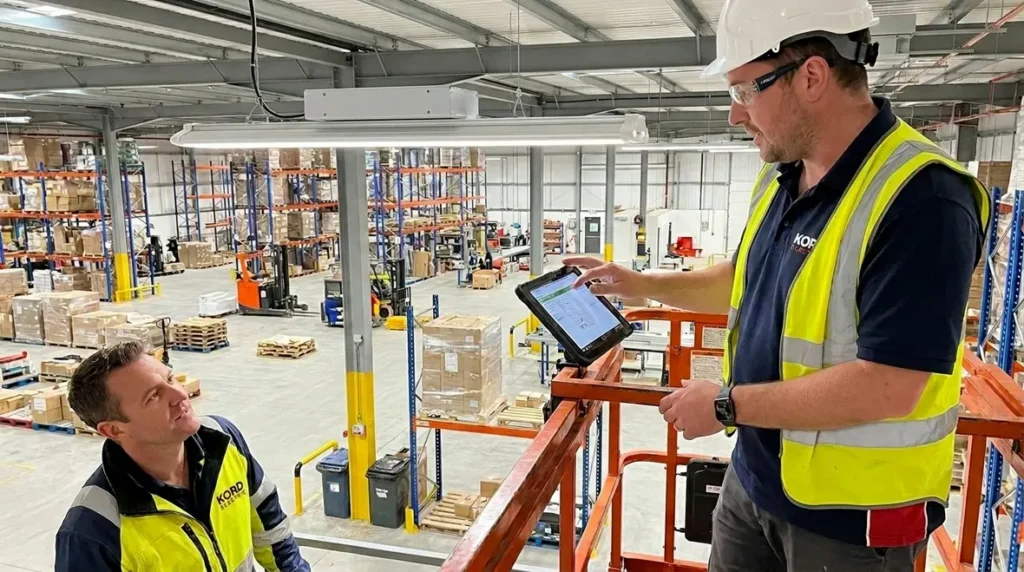
At Kord Electric, our expert service staff explains how to calibrate sensors and fine tune settings so the system behaves naturally. We do not install a sensor and call it a day. We verify coverage, adjust thresholds, and help ensure the system matches the way your facility actually operates. If a control schedule causes lights to flicker at the wrong time, we fix it. Because flicker is not a “feature,” no matter what someone on a forum might say.

Risk reduction: safer spaces and fewer lighting failures
Commercial and industrial buildings must handle people, equipment, and traffic safely. Lighting affects visibility in parking areas, stairwells, loading zones, production corridors, and emergency pathways. With smart controls, facilities can detect issues sooner and respond faster instead of discovering problems after the fact.
For instance, we often see older systems with limited monitoring. Lights fail, switches get left in odd states, and maintenance teams chase symptoms. In contrast, smart control platforms can support alerts and tracking for performance and operational events. As a result, the facility reduces downtime and prevents small problems from becoming large ones.
Additionally, better zoning can improve consistency across a facility. A control plan that divides lighting into logical areas supports more accurate responses to occupancy. Therefore, spaces stay properly lit without over-illuminating everywhere at once. That helps with safety and supports energy goals at the same time.
Our technicians work with facility teams to document what gets controlled, how it gets controlled, and what to do when something needs adjustment. That clarity reduces training time and supports long term confidence.
Modern building systems and easier upgrades for years to come
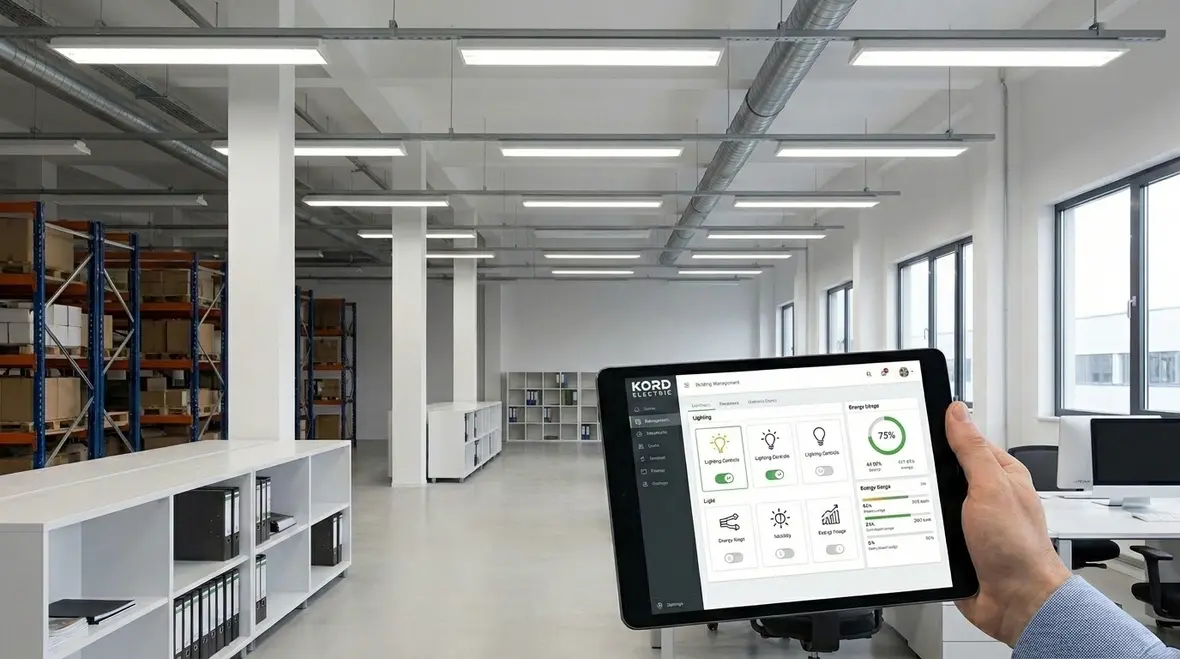
Value increases when a property stays adaptable. Lighting controls are often the backbone for future improvements, because they can integrate with broader building systems. When a facility uses smart controls with clear zoning and scalable design, later upgrades become simpler. Instead of replacing entire networks, teams can adjust settings or add capabilities where needed.
Furthermore, integration supports better management at the campus or multi site level. Facilities can align operating schedules, reduce manual exceptions, and standardize maintenance. This becomes especially important for major property buildings where operations teams manage many areas with limited time.
Kord Electric focuses on commercial and industrial facilities, and we design systems to suit real operational demands. We consider load profiles, control points, and how the building team prefers to manage settings. Then, we explain the decisions in straightforward terms so the facility staff can run the system without needing a handbook the size of a phone book.
Also, when other vendors say, “It will just work,” we believe in testing, commissioning, and clear handoff. That is how you avoid the kind of surprise that shows up during a tenant walkthrough, wearing a frown like it’s a brand mascot.
Smart ROI and property perception: where value shows up
Return on investment comes from multiple angles. Energy reduction helps. Maintenance planning helps. But smart controls also help with property perception. Tenants prefer spaces that feel reliable, and buyers prefer properties that demonstrate smart stewardship.
In practical terms, our customers often report improved operational consistency after controls are tuned to facility behavior. That means fewer after-hours issues, fewer “why are these lights on” calls, and less time spent adjusting switches and timers. Meanwhile, lighting that aligns with occupancy helps create a better working environment.
Additionally, when a facility includes modern controls, it signals that the building has been actively improved rather than patched together. That perception can matter during negotiations, refinancing, and lease renewals. Therefore, the value increase is not only financial, it is also strategic.
We at Kord Electric help clients map the path from the current system to a controlled, efficient setup. Then, we support the rollout with expert explanations so the decision makers and the on site teams both understand what changes and why. For teams planning broader work across the region, pairing this with dedicated Los Angeles County electrical services keeps lighting strategy aligned with overall electrical reliability.
FAQ about smart lighting controls for commercial and industrial buildings
Ready to increase building value with smarter lighting controls?
If Kord Electric helps your facility move from outdated lighting behavior to controlled, efficient operation, you gain more than savings. You gain reliability, clearer maintenance planning, and a property that signals modern management to tenants and buyers. Our technicians and expert service staff will review your spaces, explain the best approach for commercial and industrial facilities, and guide you through a clean, reliable upgrade. For a deeper look at how automated strategies fit into preventive programs and Title 24 requirements, many facility teams also explore Kord Electric’s resources on electrical preventive maintenance alongside their lighting plans.
When you are ready, Kord Electric can help align smart lighting with broader system goals, from compliance to uptime. Whether you are planning a retrofit, building out a new space, or coordinating multiple properties, a thoughtful lighting control strategy becomes one of the clearest, most visible ways to show that your building is managed on purpose, not by accident.
Contact Kord Electric today to schedule an assessment and get a lighting controls plan that performs.