Troubleshooting Commercial Electrical Circuits Proactive
At Kord Electric, we approach troubleshooting commercial electrical circuits the way a calm captain handles choppy seas: with a plan, with timing, and with a crew that actually knows what they are doing. We see the warning signs before they become outages, and we work to keep critical loads running in offices, warehouses, data-adjacent spaces, retail, and major property buildings. In fact, our technicians and expert service staff often explain what they are seeing in plain language, so decision makers can act fast instead of guessing. After all, downtime is expensive, and nobody wants to find out the hard way that a “minor” fault can trip a whole system. We take that personally, and yes, we have the tools and the discipline to prove it.
How proactive troubleshooting prevents downtime in commercial spaces
When teams wait until something fails, they usually end up paying twice: once for the emergency response, and again for the longer repair caused by hidden damage. However, proactive troubleshooting commercial electrical circuits flips that pattern. It uses scheduled checks, targeted tests, and smart diagnostics to catch issues while they are still small.
First, our expert service staff listens to the building’s story. They review maintenance logs, breaker trips, power quality complaints, and any recent renovations or equipment moves. Then they walk the path where faults often start. For example, loose terminations, failing components, heat buildup, and moisture intrusion can look harmless until demand rises. As soon as load increases, the weak spot heats more, resistance climbs, and the risk of nuisance trips or equipment damage grows.
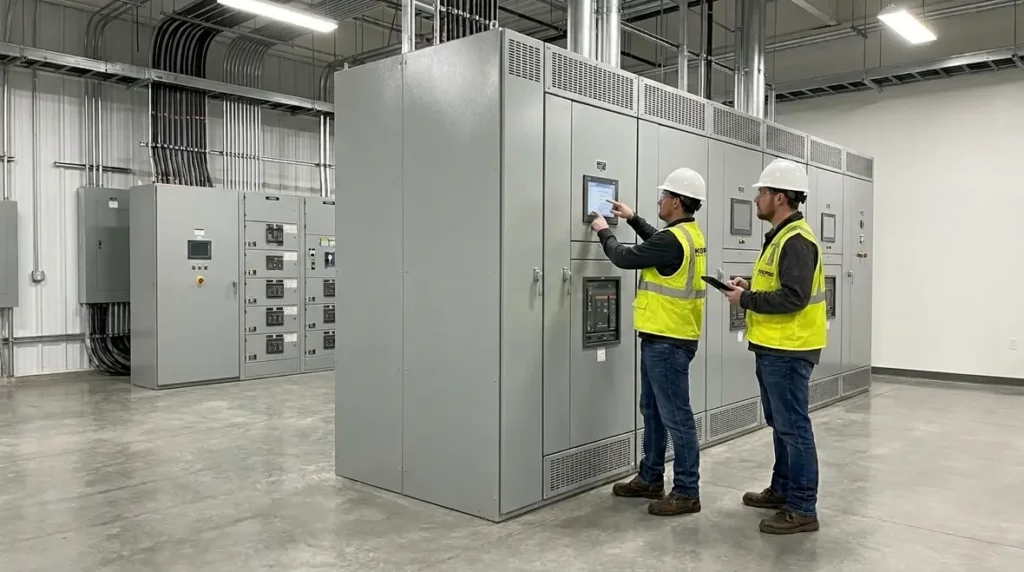
Also, we focus on the circuit reality, not the paper one. Many facilities have single line diagrams that drift from the actual field layout over the years. Because of that, our technicians verify what is installed, how it is connected, and which loads ride on which feeders. This is where calm, deliberate work pays off. You do not need panic. You need accurate information.
Hidden electrical risks in commercial buildings that show up as “mystery” failures
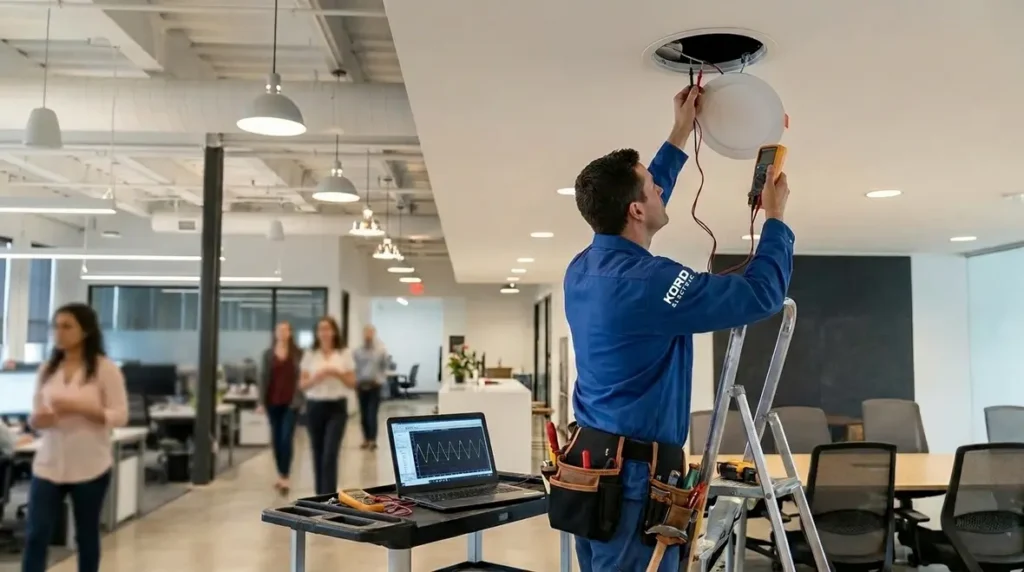
In commercial environments, electrical problems rarely announce themselves with a big red banner. Instead, they disguise themselves as “mystery” behavior: occasional flicker, random tripping, recurring breaker alarms, or motors that run hotter than normal. This is exactly the kind of risk we address in the hidden electrical risks discussed in our Kord Electric blog, especially the issues that build up over time. You can see a deeper dive into those risks in our article on hidden electrical risks in commercial buildings.
We see these risks most often in major property buildings and industrial sites where traffic, schedule pressure, and system age can quietly introduce hazards. Common examples include:
- Overheated connections caused by loose terminations or poor torque practices
- Moisture and contamination that attack insulation and raise leakage
- Deteriorated insulation in aging cable runs and hard to access raceways
- Inconsistent labeling that slows response and causes the wrong circuit to be checked first
- Undetected corrosion in enclosures, especially where condensation happens
Now, here is the part that matters. These risks often escalate through small changes: a little extra resistance at a connection, a tiny shift in load, a slight rise in ambient temperature, or an HVAC cycle that changes humidity. Then, one day, the facility runs under peak load and the system reaches the point where it cannot “hold its breath” any longer. Our technicians step in before that happens, using testing and observation that match the problem, not guesswork.
Build a fault detection plan around how your loads actually behave
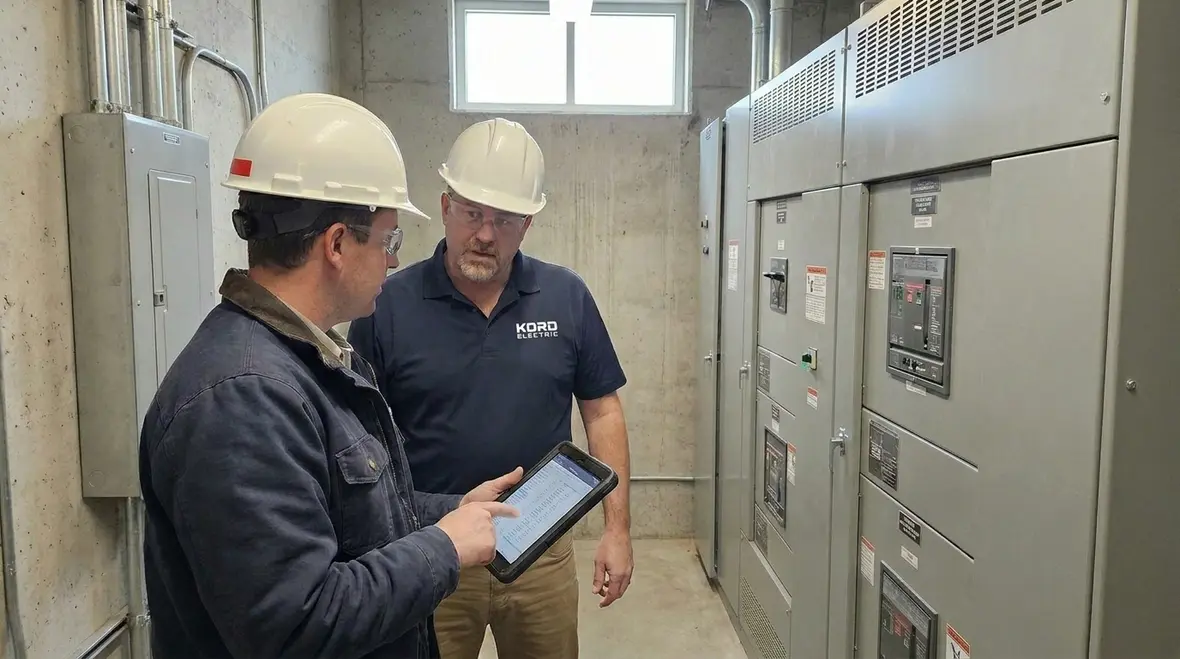
Every commercial and industrial facility has its own rhythm. One building peaks at lunch and early evening. Another spikes during shift changes. Some facilities add loads only during seasonal work. Because of that, we build troubleshooting commercial electrical circuits programs around load behavior instead of generic checklists.
First, we identify critical circuits and the consequences of failure. We do not treat every branch the same. For example, a circuit feeding emergency or life safety loads needs a different strategy than a circuit feeding non critical office receptacles. Then we map the likely failure points based on how the equipment operates.
Next, we schedule checks that align with your operating reality. We reduce disruption by selecting windows where work can happen without interrupting operations. And we coordinate with facility leadership so everyone knows what we will do, what we will test, and what we will recommend.
Finally, we connect test results to action. Our technicians explain what each measurement means, and we help owners and managers understand which issues require immediate attention and which ones can be monitored. That is how we minimize downtime. Not by doing more work, but by doing the right work, at the right time, in the right sequence.
Our technicians use evidence, not guesswork, when circuits act up
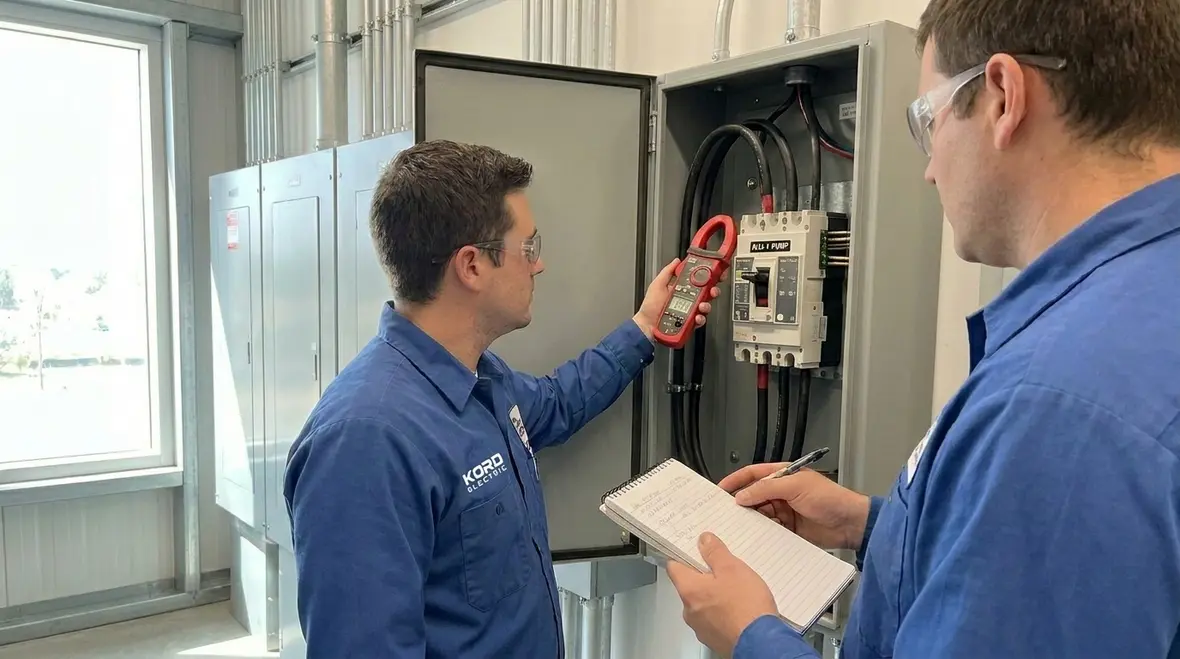
When a problem appears, teams often respond with a “try this, try that” approach. That may feel fast at first, but it usually wastes time and can increase risk. We operate differently. Our expert service staff follows a methodical path that uses evidence as it goes.
In the field, that means:
- Inspecting terminations and enclosure conditions before assuming the fault is upstream
- Checking breaker and control behavior to confirm whether the trip comes from overload, a ground issue, or a control fault
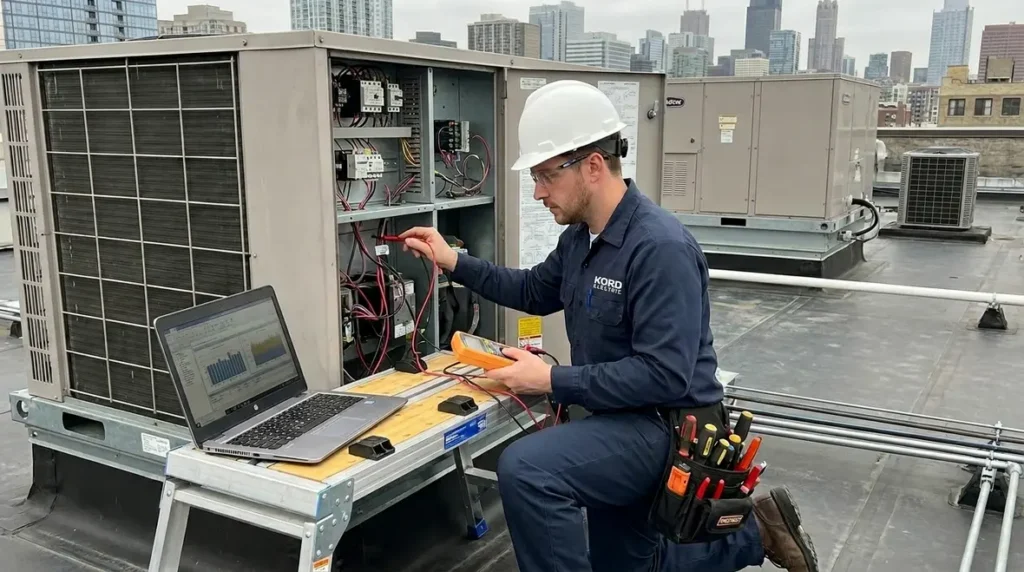
- Measuring relevant electrical parameters to confirm whether the circuit shows signs of stress
- Verifying phase balance and load alignment when equipment complains about “uneven” performance
- Confirming labeling and routing so the next visit is faster, not slower
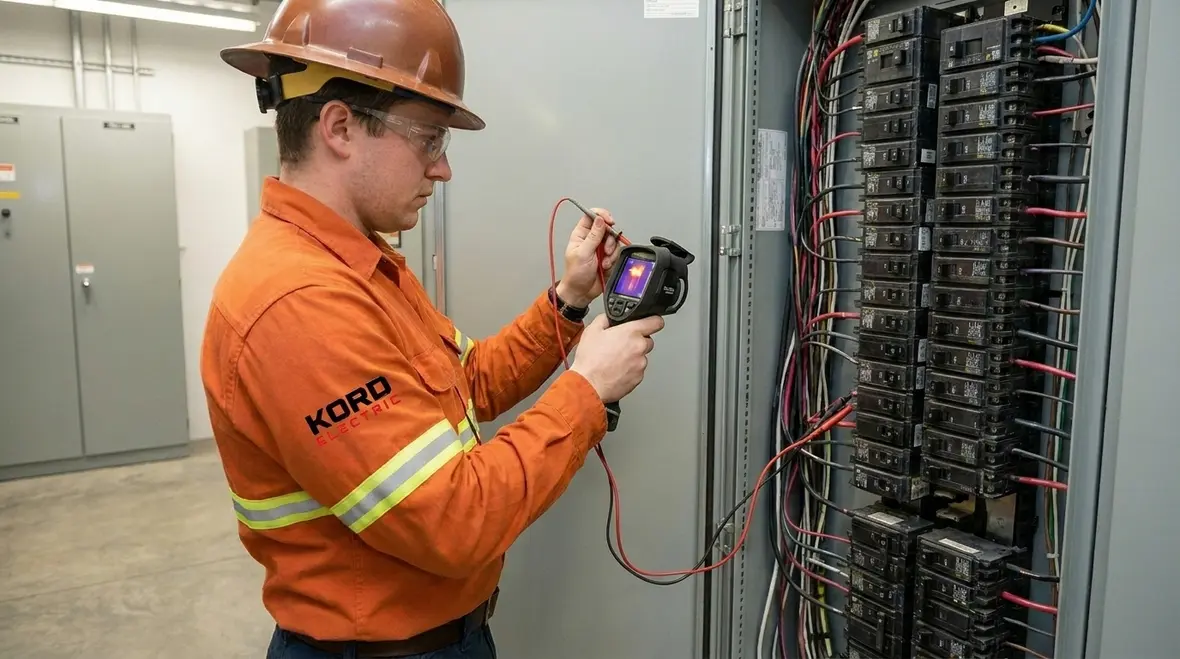
Then, we explain what we found. We do not talk over people. We talk with them. If a technician notices a connection that looks heat stressed, they describe where it is, what it likely means, and how it ties to the symptoms you have seen. And yes, sometimes we hear jokes like, “That breaker has moods.” We smile, because we have the data to prove it does not. Breakers do not have feelings. They have issues.
How we keep major property buildings running during repairs
Downtime does not just come from a failed component. It also comes from the repair process itself. Therefore, Kord Electric designs troubleshooting and repair work for commercial and industrial facilities with real constraints. We plan around occupancy, safety rules, and the time it takes to isolate equipment correctly.
To keep your systems stable, we typically use a sequence that reduces the chance of surprise failures. We confirm the electrical scope before opening enclosures. We coordinate with onsite staff to control access. We verify what can remain energized and what must be de-energized for safe work. And we document the condition of key parts so you are not stuck re-litigating decisions later.
Additionally, our recommendations focus on long term reliability. A temporary fix might get you through one week, but a long term solution prevents repeat outages. We help you prioritize upgrades that reduce failure rate: addressing aging components, improving connection quality, and strengthening protection settings when appropriate. We only target commercial and industrial facilities and major propertie buildings, because those are the environments where reliability is non negotiable.
In other words, we do not show up to “patch.” We show up to keep the facility ready for the next shift, the next rush, and the next demand spike. If you want your maintenance approach to work hand in hand with proactive inspections, our dedicated electrical preventive maintenance services make it easier to keep those repairs strategic instead of reactive.
FAQ about troubleshooting commercial electrical circuits for commercial and industrial facilities
FAQ continued: fast answers for facility leaders
While those are the big-picture questions, facility leaders often ask a few rapid-fire items when they are staring at a panel that has seen better days. They want to know how often to call for help, when an issue moves from “annoying” to “critical,” and how proactive work connects with long term goals like safety, uptime, and capital planning.
Troubleshooting commercial electrical circuits becomes a lot less stressful when everyone understands that inspection, testing, and documentation are not just “extra” tasks. They are the tools that keep those “mystery” failures from turning into very visible outages. When you pair that mindset with structured service programs and resources like our article on hidden electrical risks in commercial buildings, decisions start to feel less like guesswork and more like a clear playbook.
Ready to reduce outages and protect your operation?
When you run a commercial or industrial facility, downtime does not just hurt budgets. It disrupts staff, delays deliveries, and strains relationships. Kord Electric helps you catch issues early through proactive troubleshooting and evidence based repairs, so critical circuits stay reliable when the building needs them most. If you want a clear plan and calm, expert support from our technicians and service staff, contact us today to discuss your circuits, your load schedule, and the risks we can address before they break your day.
For facilities that want to take the next step from one-time fixes to a structured reliability strategy, pairing troubleshooting commercial electrical circuits with our dedicated electrical preventive maintenance services creates a long term safety net for your panels, feeders, and switchgear. That way, the same team that helps you through today’s incident is already working to prevent the next one.
And if voltage stability is part of your concern, especially in facilities with sensitive equipment or data-adjacent operations, our focused support for voltage fluctuations in commercial and industrial facilities can be integrated into your overall plan so that troubleshooting, maintenance, and system upgrades all point in the same direction: fewer surprises and more uptime.
If you are ready to align your circuits, your maintenance schedule, and your risk tolerance, our team is here to help you map the path forward and keep your building’s electrical story running smoothly.