Warehouse Smart Lighting Safety Standards Guide
Safer warehouses start with warehouse smart lighting safety standards
In commercial and industrial facilities, safety should not be a slogan. At Kord Electric, we build our work around warehouse smart lighting safety standards from the start, and we keep the process practical for major property buildings. So when people walk aisles, check shelves, or move pallets, the lighting behaves like a calm, steady guide instead of a surprise. We focus on smart control, clear visibility, and reliable power so hazards stay visible and risks stay managed. And yes, we also handle the “lights that flicker like they are auditioning for a horror movie” problem, because nothing kills productivity like chasing shadows.
How smart lighting reduces risks in storage areas
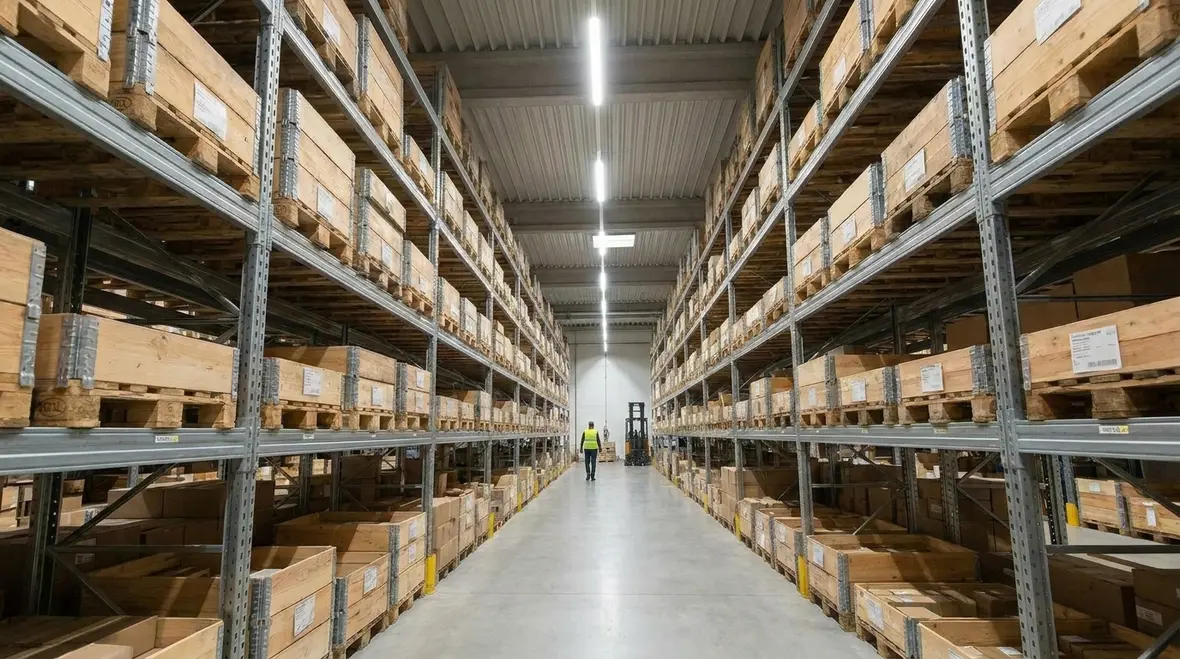
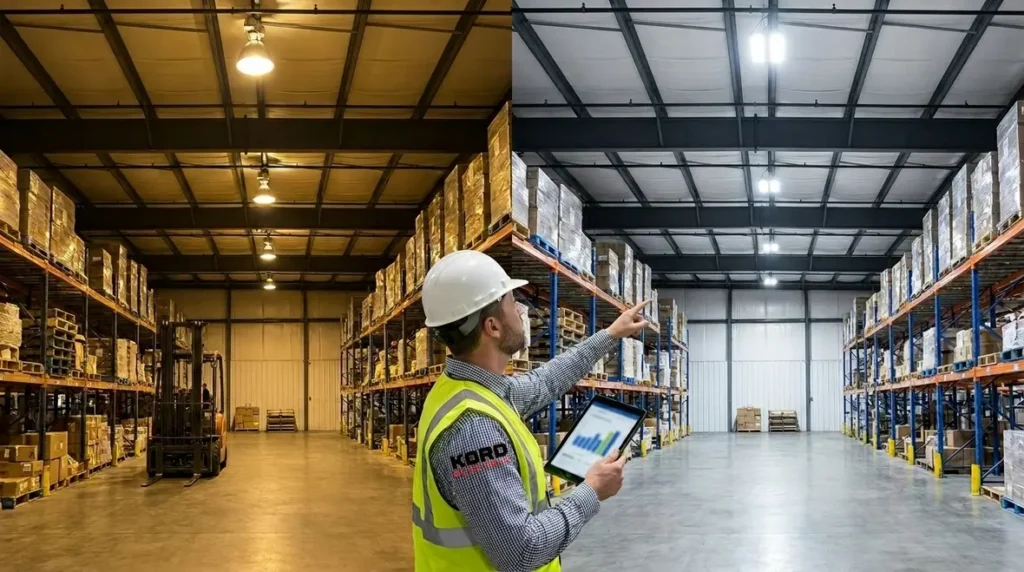
In third person terms, Kord Electric often sees the same story play out: warehouses run busy, forklifts move fast, and staff work in tight sight lines. Then lighting controls lag behind reality. However, smart lighting automation changes the outcome. It adjusts brightness based on occupancy, time of day, and the layout of work zones. That means fewer dark corners, fewer abrupt lighting changes, and better visual focus at doorways, loading docks, and staging areas.
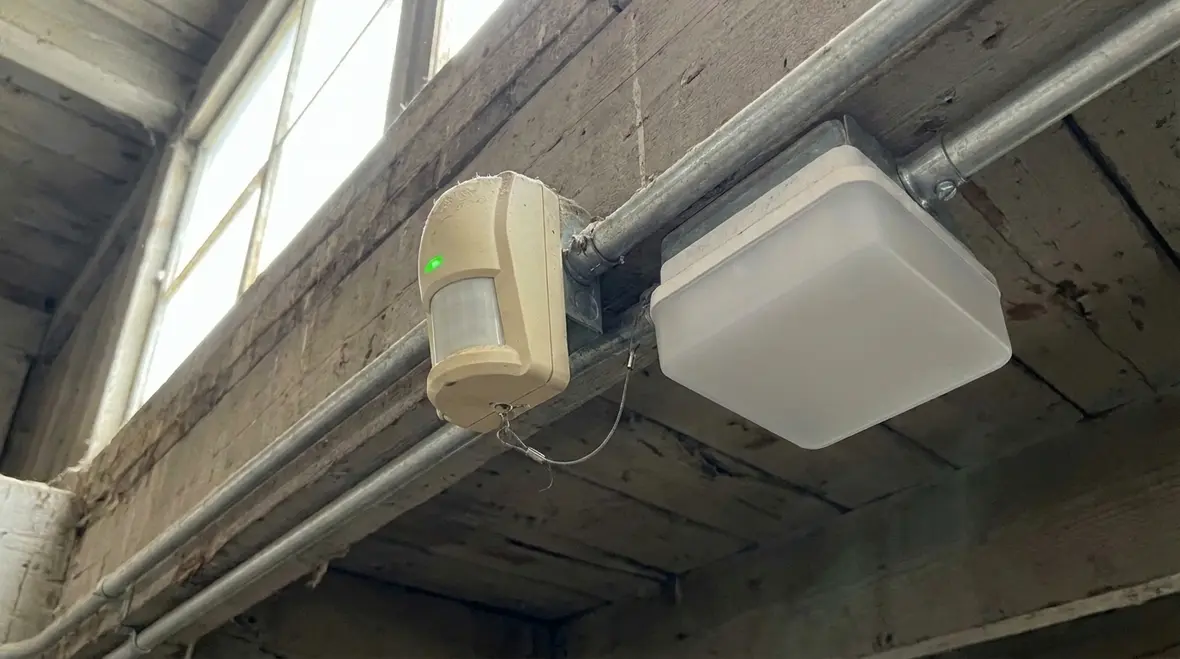
Because a warehouse has constant motion, the lighting needs to keep up. Motion sensing helps staff navigate with consistent visibility. In addition, automation can prevent sudden drop offs when doors open or when large doors stay ajar during material transfer. Meanwhile, staged lighting schedules can maintain adequate levels during shift changes, when attention is naturally stretched thin. It is not flashy. It is steady. And steady beats chaos, every time.
Our expert service staff also explains what this means in real terms. They do not just say “it is safer.” Instead, they point to how improved visibility supports safer foot traffic, clearer separation between walking and operating zones, and faster recognition of obstacles. People do not want theory. They want confidence while they work.
Planning automation with commercial and industrial maintenance plans
For major property buildings, smart lighting does not succeed on day one alone. It needs a plan that fits commercial and industrial electrical maintenance reality. Kord Electric references a structured approach tied to commercial and industrial electrical maintenance plans, because automation without upkeep becomes a “set it and forget it” trap, like leaving a treadmill running after you move out.
So we plan systems with maintenance in mind. That includes inspecting control panels and wiring routes, reviewing sensor and fixture performance, and confirming firmware or control settings stay aligned with safety goals. In the background, we track what is installed, where it runs, and how it behaves across the week. Then we validate outcomes during inspections, not only during the initial commissioning.
Next, our technicians coordinate with facility managers so schedules match operations. If a warehouse must stay active, we plan testing in low traffic periods. If the site has multiple buildings, we sequence work so lighting behavior stays consistent across zones. In other words, the automation supports the facility, and the facility does not have to stop for the automation.
For facilities that want deeper structure around inspections, we often align these lighting strategies with broader programs such as Kord Electric’s commercial and industrial electrical maintenance plans. This keeps warehouse smart lighting safety standards tied directly into preventive maintenance schedules, test documentation, and long-term reliability planning instead of treating lighting as an isolated project that no one revisits until something fails.
That way, when leadership asks how lighting safety is being managed across all major property buildings, facility teams can point to a defined plan, not just a collection of fixtures. Lighting performance folds into the same conversation as electrical preventive maintenance, emergency response preparation, and system longevity, rather than sitting off to the side as an afterthought.
Designing zoning and controls for real warehouse layouts
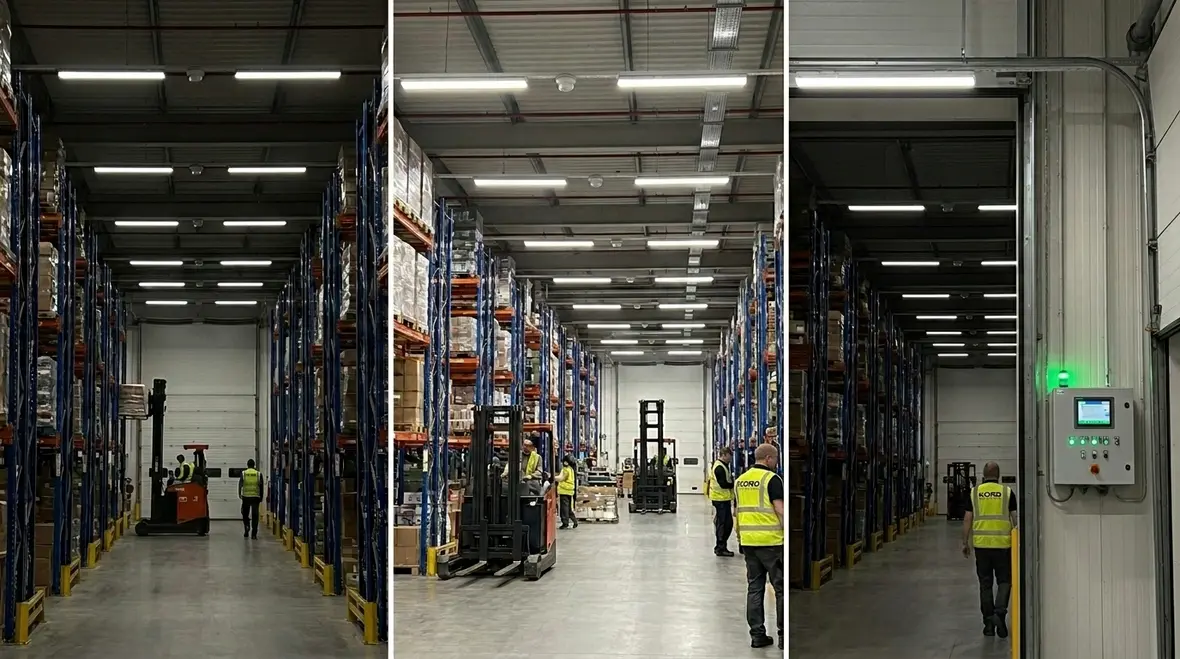
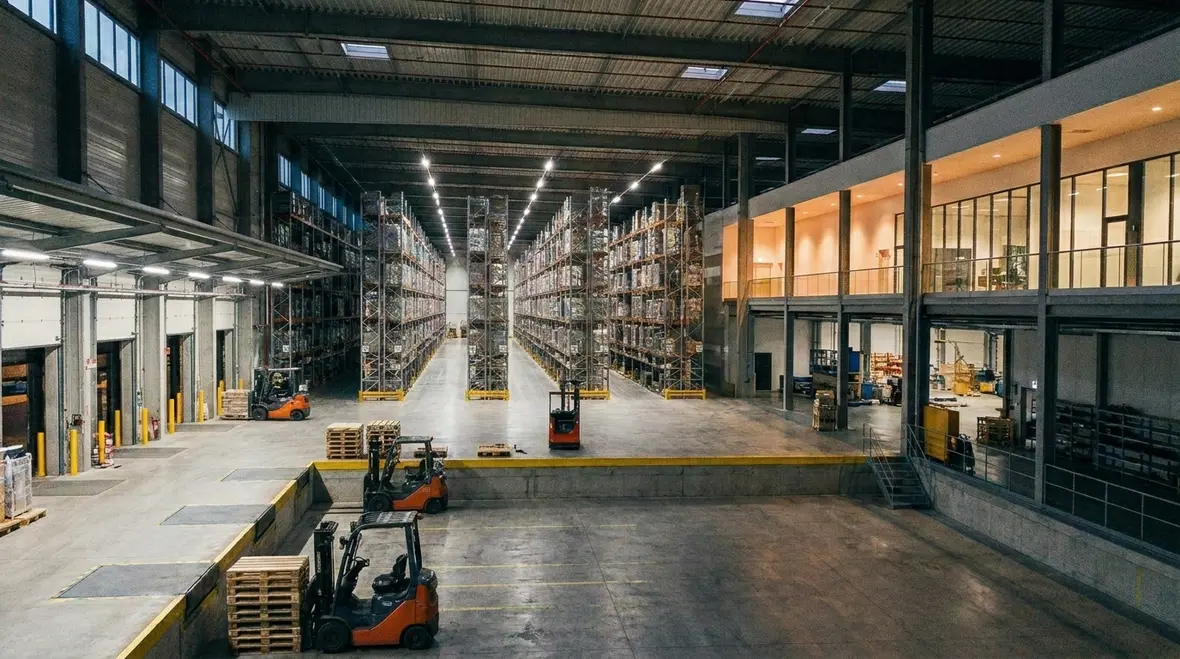
Warehouses are not one big open room. They are lanes, racks, docks, staging areas, and walkways with different use patterns. Therefore, a smart lighting system should use zoning that matches how the building actually operates. Kord Electric typically guides customers to segment areas by task type and traffic flow, so the right light levels reach the right spaces at the right time.
For example, docks and loading bays need stable, glare managed illumination. Rack aisles need coverage that avoids harsh dark bands between fixtures. Break rooms and admin corridors require a different control approach, because the hazard profile differs. Meanwhile, stairways and emergency paths need reliable fallback behavior, since staff cannot “wait for the lights to remember their job.”
Controls also need logic that makes sense to people on site. When staff enter, the system should brighten promptly. When a zone stays empty, the system can reduce power use without creating a safety risk. Additionally, daylight sensing can help keep the lighting steady near windows and skylights, while preventing sudden dimming that can throw off attention.
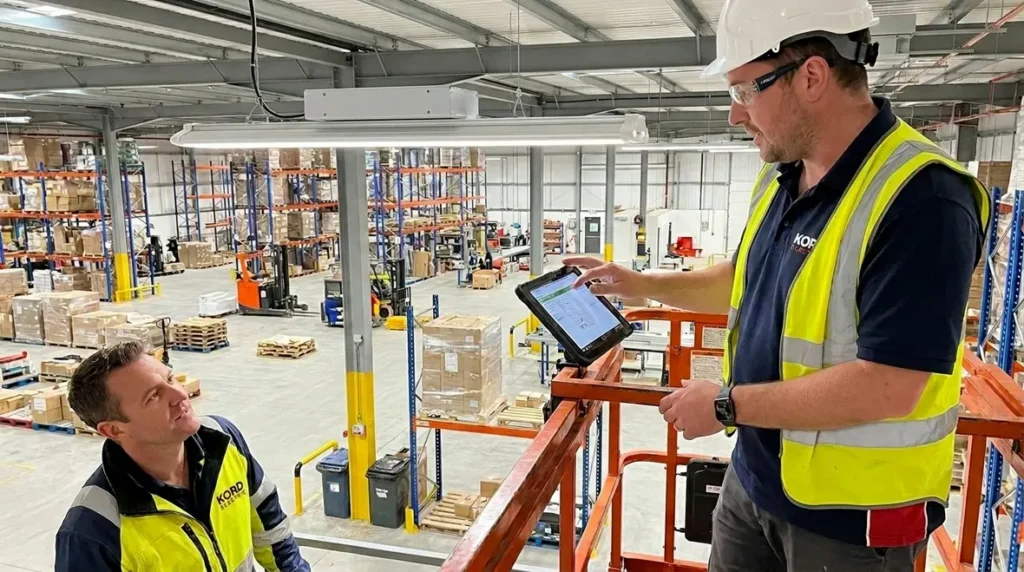
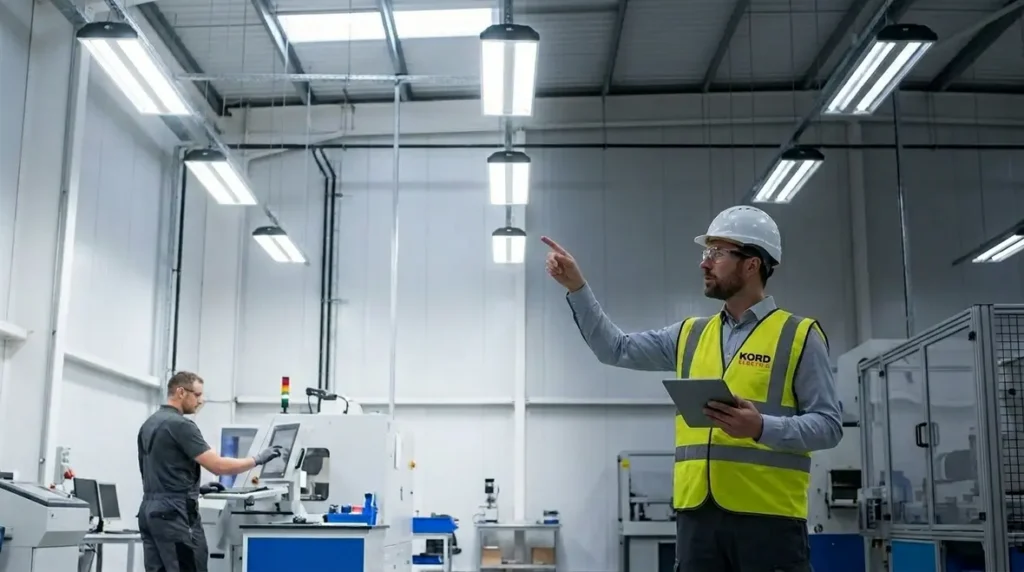
Our technicians explain this during walk-throughs. They point out where line of sight breaks down, where shadows form, and where sensor placement matters. They do not guess. They observe the layout and then map the controls to it.
Safety features that matter: motion, glare control, and fallback
Automation improves safety when it includes safety minded features. Motion sensing supports visibility, but it must respond correctly and quickly. If motion sensors trigger too slowly or too narrowly, staff get inconsistent lighting. If the detection zones sit in the wrong place, the system can brighten the wrong areas and still leave the real hazards in dim light. Because of that, Kord Electric emphasizes sensor calibration and placement during commissioning.
Glare control is just as important. A bright fixture that blinds a worker can still create a safety problem. Therefore, we guide selections and aiming so lighting supports clear sight lines. In addition, dimming curves should feel smooth. Sudden jumps in brightness can distract workers, especially in mixed traffic areas where forklifts and pedestrians share distance.
Then there is fallback behavior. If network controls fail or power fluctuates, safety lighting must still perform. Smart systems should revert to a safe mode that maintains adequate illumination for exits, corridors, and key work paths. In commercial and industrial sites, we treat this as a non negotiable requirement.
And yes, our team jokes about it too, because warehouses love humor: “We do not build lights that panic when the Wi Fi acts up.” The point lands: reliability is the foundation, and smart features sit on top of it.
Using smart automation to support audits and maintenance checks
Safety also depends on verification. Therefore, Kord Electric helps facilities connect lighting performance to inspection routines. This makes it easier to prove that warehouse smart lighting safety standards stay active after installation. Instead of vague “it seems fine,” the facility gains clear logs and checkable behavior.
During maintenance, technicians can review which zones lose output, which sensors drift over time, and which fixtures need cleaning or replacement. That matters because dust, vibration, and heat affect fixtures in warehouses. Over time, even solid systems lose output if the facility never checks them. Yet with automation tied to service workflows, problems get found earlier.
Our expert service staff also helps train site supervisors on what to look for. They explain how to interpret lighting patterns, how to report irregular behavior, and how to request targeted troubleshooting without disrupting the entire building. Then, when audits come, the team can point to a practical maintenance path, not a pile of guesswork.
For organizations building out long term strategies, tying these checks into commercial and industrial electrical maintenance plans keeps accountability clear. Lighting performance, sensor health, and control behavior all feed into the same reporting that covers panels, switchgear, and emergency systems. Warehouse smart lighting safety standards become part of the evidence that a facility is operating with intention, not improvisation.
Costs, uptime, and smart rollouts for multiple buildings
Major property buildings do not run like single tenant offices. When one site needs improvements, others cannot be treated as afterthoughts. Therefore, Kord Electric plans rollouts for commercial and industrial facilities in a way that protects uptime and keeps the work coordinated.
Smart lighting automation can reduce energy use, but we do not sell it like a magic trick. Instead, we focus on safety outcomes first. Energy savings often follow, because well designed control logic avoids unnecessary full power operation in empty zones and during off shift periods. Still, the true value is safer movement, better visibility, and fewer incidents tied to poor lighting.
To manage costs, we recommend phased upgrades where it makes sense. For instance, a facility can begin with high priority zones such as walkways, dock areas, and stair access, then expand into rack aisles and secondary corridors. In addition, we plan materials and labor schedules to match each building’s use pattern.
As one of our technicians likes to say, “Do it in the order that keeps people moving.” That is how we protect business operations while still improving safety.
For facilities that want lighting to align with broader electrical strategies, pairing warehouse smart lighting safety standards with services like electrical preventive maintenance adds another layer of stability. Lighting upgrades then become one part of a long term plan to reduce downtime, manage risk, and keep commercial and industrial buildings running with fewer surprises.
Frequently asked questions
Choose safer lighting with Kord Electric
If a facility wants warehouse smart lighting safety standards that hold up in the real world, Kord Electric is ready to help. Our technicians design zoning, controls, and reliable fallback behavior, then we support the system with service aligned to commercial and industrial electrical maintenance plans. So you gain safer visibility, steadier operations, and fewer “mystery lighting” interruptions. Call us to schedule an on site assessment for your major property buildings. Let us make the lights do their job, quietly and correctly, like a pro at work.
To see how structured planning supports long term performance, explore our insights on commercial and industrial electrical maintenance plans and consider how warehouse smart lighting fits into the same framework. When lighting, maintenance, and safety standards work together, large facilities gain predictable performance instead of reactive repairs.
When you are ready to turn those plans into field work, our team can pair smart warehouse lighting with services such as electrical preventive maintenance for commercial and industrial facilities. This keeps lighting, panels, and distribution systems aligned under one strategy instead of a patchwork of unrelated projects.
Whether you manage a single logistics hub or multiple major property buildings, Kord Electric can help you build a roadmap that respects uptime while upgrading safety. From planning and installation to ongoing inspections, we design warehouse smart lighting safety standards to support how your operations actually run, shift by shift and season by season.