Troubleshooting Commercial Electrical Flickers
When commercial lights start flickering across a building, it is more than just annoying. It is a symptom. At Kord Electric, our technicians treat troubleshooting commercial electrical flickers like a full investigation, not a guessing game. This guide walks through how our team approaches those blinking, buzzing, “is the building trying to send us a message?” moments in real-world commercial and industrial facilities.
You will see how we move from symptom to root cause, where we look for hidden weak points, and why documenting the pattern matters as much as the final fix. Along the way, we will show how smart troubleshooting connects to long-term reliability, electrical preventive maintenance, and safer power systems for tenants, staff, and equipment.
When Commercial Lights Flicker, Start With the Clues
At Kord Electric, we often get called when a business experiences troubleshooting commercial electrical flickers that refuse to quit. You know the situation: a lobby light blinks, a row of offices dims for a second, and then everything acts normal until it does it again. Then the calls roll in, the tenants get nervous, and your maintenance team wonders if the building is haunted. We can confirm it is usually not ghosts, it is electricity with a bad attitude.
In this guide, we walk through how we identify and resolve persistent commercial electrical issues in commercial and industrial facilities, plus major property buildings. Others may guess. We troubleshoot. And once our technicians finish, the goal is simple: fewer interruptions, safer systems, and a site that runs like it means it.
Spot the Pattern in the Problem
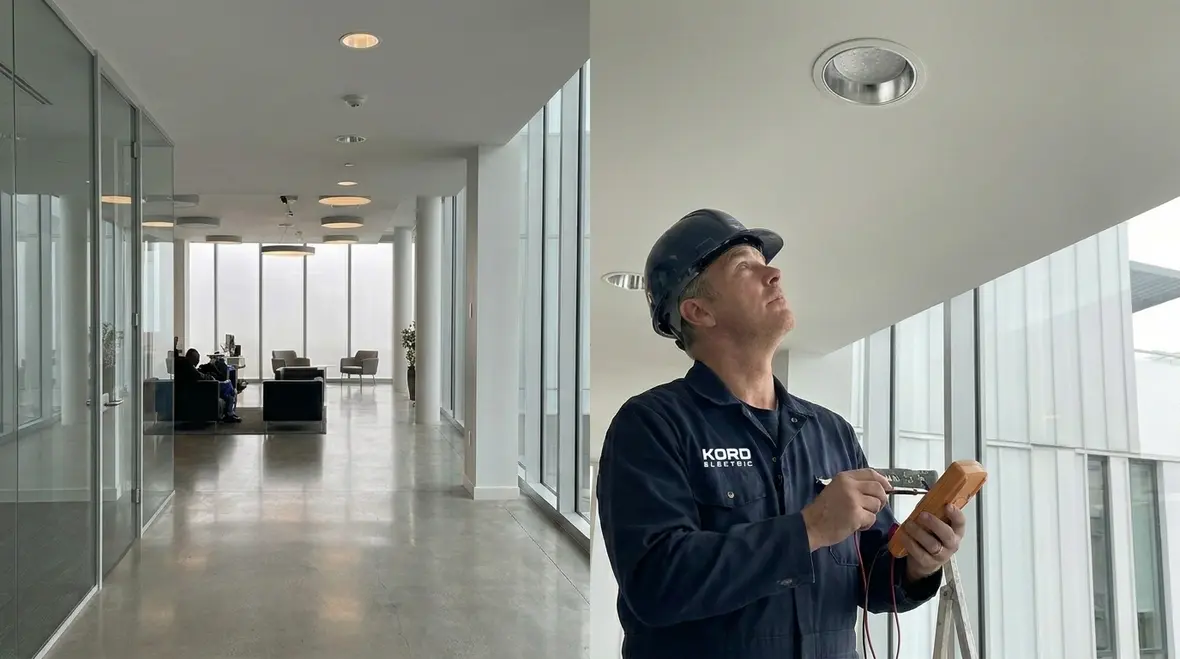
To resolve recurring electrical faults, we first look for a pattern. If the flicker happens only when HVAC units start, it points to a load event, not random failure. If it appears after a storm, we treat it like a power quality problem or a grounding issue. If it shows up at shift change, we check for large motors, compressors, or production equipment kicking on.
Our expert service staff uses a methodical approach. First, we gather details from the people who see it every day. Then, we compare those reports to the building’s electrical one line, panel schedules, and equipment list. Next, we verify the time and location of the symptom while measuring key electrical values. Because if you chase the wrong circuit for two hours, you do not “learn” anything. You just donate time to the problem.
We also document what “persistent” means for your operation. For example, if lights flicker for a few seconds every morning at 8:03, that timing matters more than the fact that it happens.
Inspect Power Quality Like It Matters
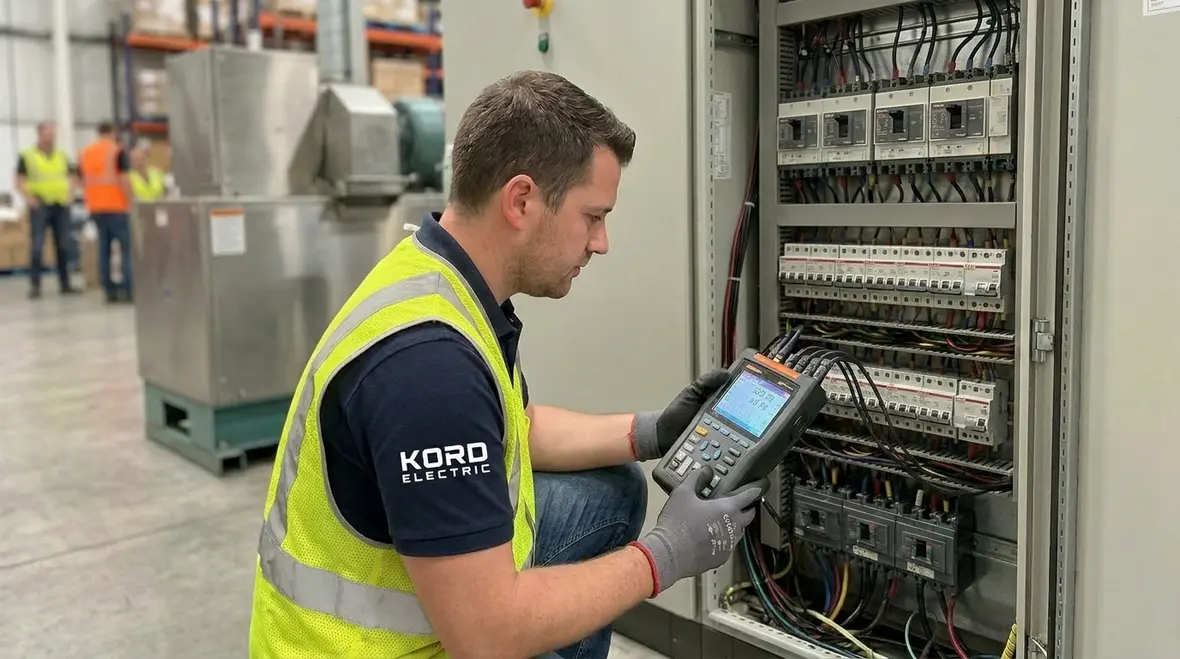
Persistent commercial electrical issues often come from power quality. Voltage sags, harmonic distortion, and unstable supply can cause electronic drivers, fluorescent or LED fixtures, and sensitive controls to behave strangely. And yes, sometimes the lights look fine until they do not, kind of like a coworker who says, “I will be done in five minutes,” and then vanishes.
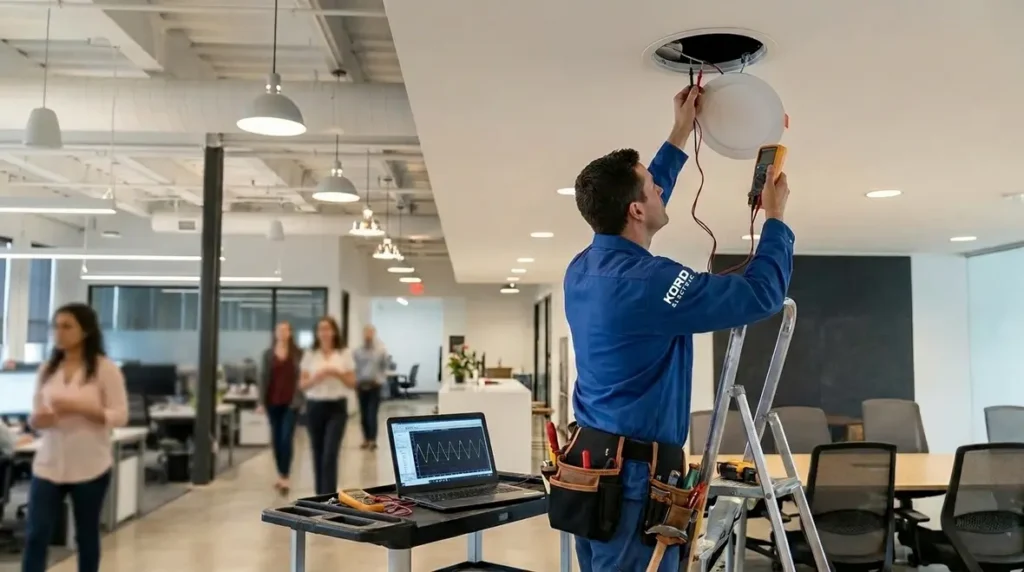
To fix this, our technicians test at the right locations. We do not just measure at the service entrance and call it a day. We also evaluate downstream panels feeding the affected areas, then we compare readings during the exact times the symptoms occur. That helps us separate utility-side issues from building-side issues.
Common findings we verify during our troubleshooting commercial electrical flickers investigations include loose terminations, failing transformers, undersized conductors, and oversized or mismatched loads. We also check whether power factor correction equipment is working properly, because even “efficient” can turn into “messy” when it is not tuned.
Check Load and Circuit Conditions
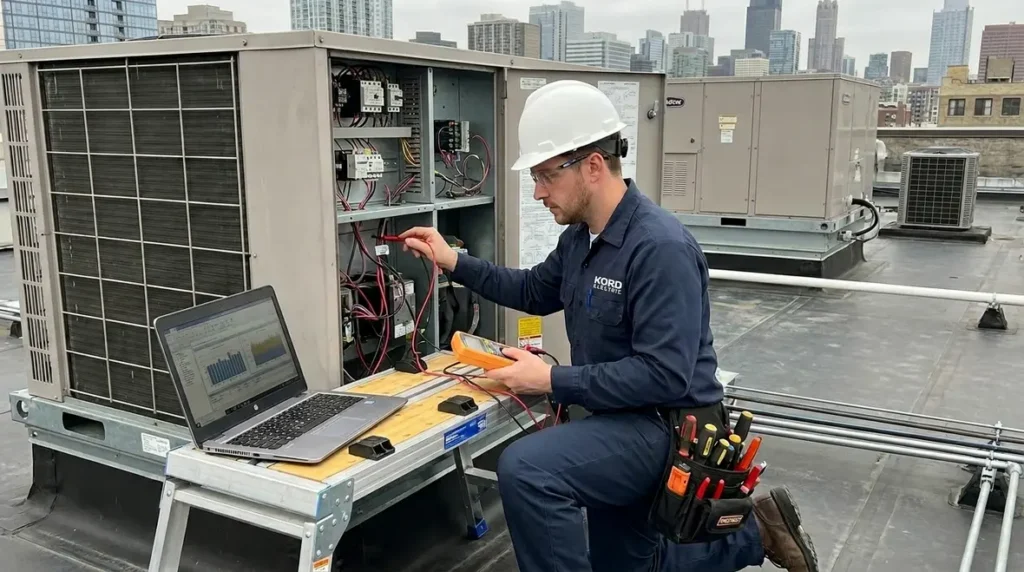
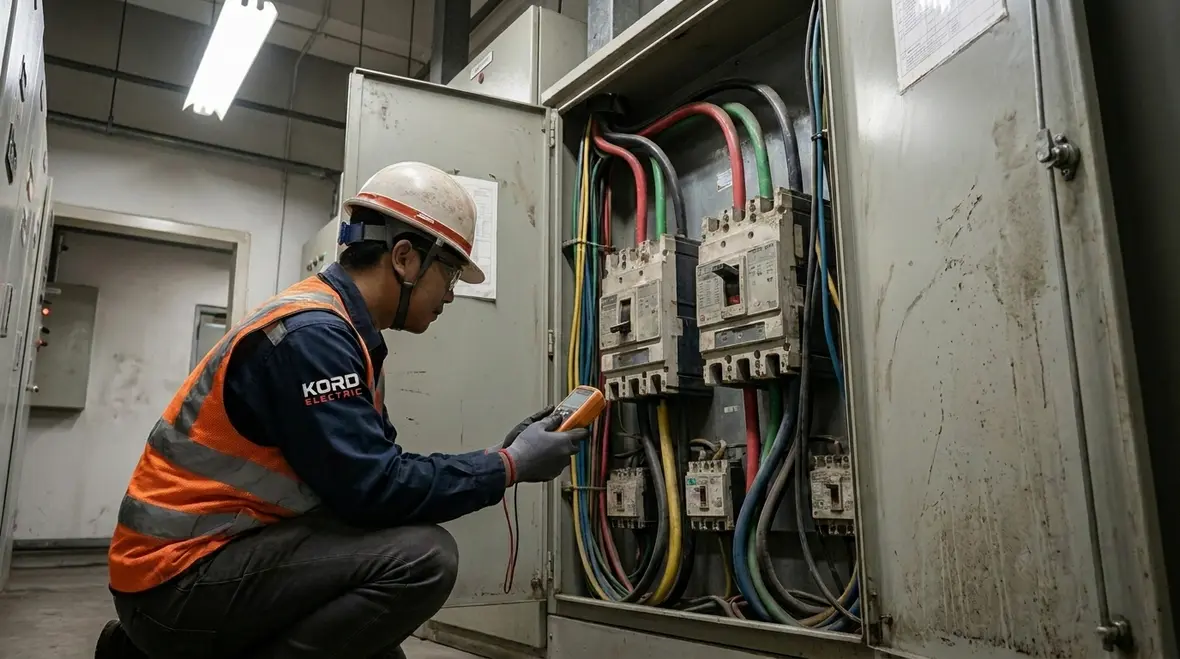
Next, we focus on load behavior. Many persistent problems show up when equipment cycles. That can include large refrigeration systems, pumps, elevators, conveyors, compressors, and multi-zone controls. When these devices start, they draw current. If the system cannot handle it cleanly, you see flicker and instability.
Our expert service staff looks for overloaded circuits, failing contactors, worn motor starters, and aging distribution components. We also pay attention to how circuits are balanced. Unbalanced loads can increase neutral current, raise temperatures, and cause voltage drops that become visible as flickering or intermittent outages.
Then we connect the dots. For example, if only perimeter offices flicker, the likely causes involve local panel loading, fixture driver compatibility, or a specific branch circuit issue. If entire wings flicker, we shift our attention to shared feeders and upstream equipment. In other words, we treat symptoms like breadcrumbs, not like decoration.
Resolve Mechanical and Electrical Weak Points
Now we move from measurements to physical causes. Loose connections, worn breakers, corroded terminations, and damaged busbars can create high resistance paths that heat up under load. Heating changes resistance further, and then the problem becomes more frequent. It is a chain reaction, and it does not care about your business hours.
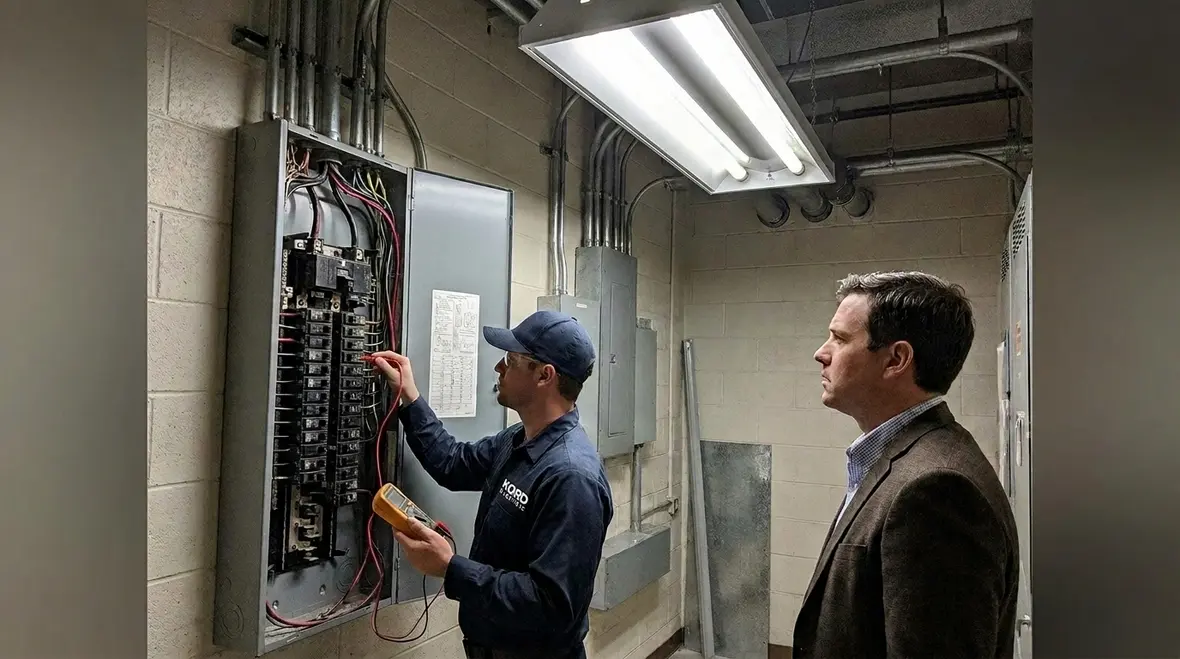
We inspect terminations in distribution equipment and panels serving the problem loads. We check torque, look for discoloration, verify insulation condition, and confirm proper grounding and bonding. Where appropriate, we evaluate protective device coordination so the system clears faults safely without nuisance tripping.
We also examine lighting and control components. In commercial buildings, LED fixtures sometimes use drivers that respond sensitively to voltage quality changes. If the driver spec does not match the site conditions, flicker can persist even after basic repairs. Our approach includes verifying compatibility and checking whether dimming systems and occupancy controls introduce instability.
Verify Grounding, Surge Protection, and Protection Settings
Reliable grounding and surge protection reduce damage and limit side effects like intermittent flickering. If grounding or bonding is weak, the electrical system can behave unpredictably. Similarly, if surge protection devices fail or drift out of spec, your site becomes more vulnerable to transient events.
Our technicians verify grounding conductors, inspect bonding points, and confirm that protective paths remain continuous. We also check surge protective devices for status and rating, and we review protective settings on breakers and relays. If settings do not match the application, you may see repeated disturbances that look like “random” electrical behavior.
Additionally, we confirm that sensitive circuits do not share pathways with high-noise equipment. When that separation is missing, troubleshooting commercial electrical flickers becomes harder because the noise rides along the same distribution paths. Fixing that is often less dramatic than replacing hardware, but it can still make a huge difference.
Document, Monitor, and Prevent the Next Recurrence
Once we fix the underlying cause, we still verify the results. We do not rely on “it seems better.” We confirm stable performance under typical operating load and during startup events. Then, we document what failed, what we corrected, and what to watch next.
Our expert service staff helps facilities build a practical prevention plan. That may include maintenance intervals for terminations, torque checks, panel inspections, and periodic power quality monitoring. It may also include corrective actions for specific equipment that runs at unusual duty cycles.
We also advise on operational changes when they matter. For instance, staggering certain equipment start times can reduce inrush peaks in some commercial setups. It is not flashy, but neither is a seatbelt. Both save you when conditions get tough.
How Flicker Troubleshooting Connects to Long-Term Reliability
Flicker might be the symptom that finally gets everyone’s attention, but the underlying causes often point to deeper infrastructure issues. When our team traces a recurring lighting disturbance back to loose terminations, outdated breakers, or overloaded circuits, we are really uncovering the same problems that can trigger hidden electrical risks or emergency power failures later on.
That is why we connect troubleshooting commercial electrical flickers with broader reliability strategies. Facilities that combine targeted diagnostics with structured electrical preventive maintenance dramatically cut the odds of surprise outages, overheated panels, and nuisance trips. Instead of reacting to every new symptom, you get ahead of them with inspections, testing, and documented corrections that keep systems stable year-round.
For organizations that want flicker-free lighting and calmer electrical rooms, pairing troubleshooting with a long-term maintenance plan is often the most cost-effective path. You solve today’s problem, then shore up the rest of the system so tomorrow’s issues never get a chance to start.
When to Move from In-House Checks to Professional Diagnostics
Many facility teams start with smart, simple checks: confirm no one changed the dimmer settings, verify that recent fixture replacements match the original specifications, and make sure new equipment did not quietly land on an already stressed circuit. Those steps matter, but they also have limits.
It is time to bring in a commercial electrical team when:
- Flicker appears across multiple panels or wings, not just one office.
- Tenants report dips or blips that correlate with heavy equipment starting.
- There are unexplained breaker trips, warm panel covers, or buzzing sounds.
- Prior “fixes” only solved the problem for a few days or weeks.
- You suspect power quality issues or have sensitive production or IT loads.
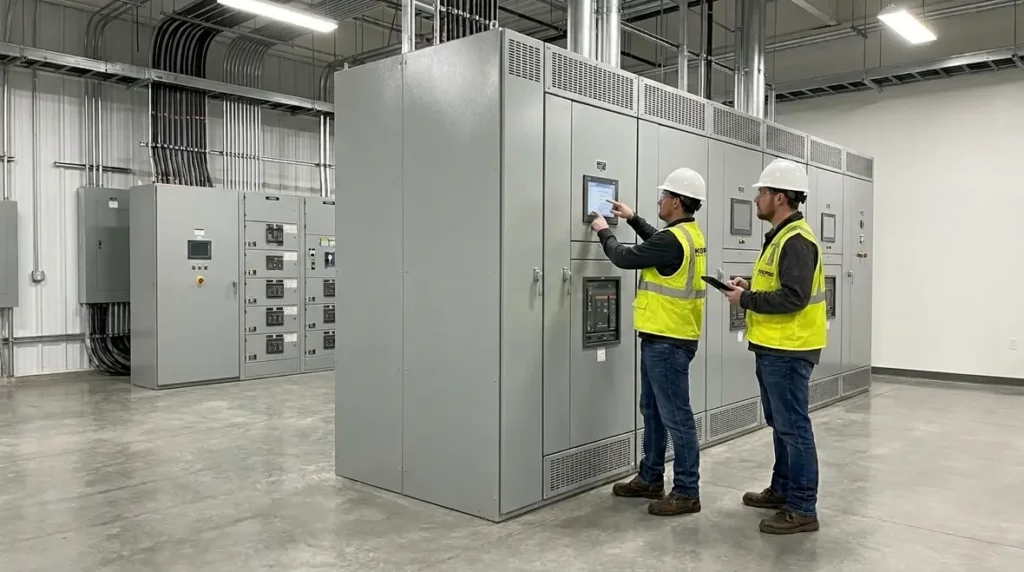
At that point, the right move is data-driven troubleshooting, not more guesswork. Professional testing, thermal imaging, panel inspections, and circuit-level measurements give you clear answers about what is actually happening behind the metal covers and ceiling tiles.
How Troubleshooting Supports Commercial Electrical Upgrades
Chasing down flicker often reveals spots where your electrical system has simply outgrown its original design. Panels that run near capacity all day, feeders that serve expanded production areas, or lighting loads that evolved from fluorescent to dense LED arrays all push existing gear to its limits.
When testing shows that circuits and equipment are working harder than they should, it may be time to think beyond short-term fixes. Strategic projects like targeted rewiring, modern panel upgrades, or redesigned commercial electrical systems for modern buildings can eliminate the bottlenecks that keep causing voltage dips and annoying flicker in the first place.
By treating each troubleshooting commercial electrical flickers call as a chance to reevaluate capacity, code compliance, and long-term growth, you turn a nuisance symptom into a roadmap for smarter upgrades and safer operation.
FAQ for Commercial Electrical Flicker and Persistent Issues
Call Kord Electric for a Real Fix, Not Guesswork
If your commercial building keeps dealing with repeating electrical symptoms, do not treat it like a seasonal mystery. Kord Electric troubleshoots persistent electrical faults with clear testing, careful inspection, and repairs built for commercial and industrial operations. We identify the root cause, verify performance after fixes, and help you prevent the same problem from returning. If you want stable lighting, dependable power, and fewer disruptions, contact us today and schedule an expert site assessment.
Whether you are managing a single office building or a portfolio of major properties, our team is ready to help you move from “why are the lights doing that again?” to a calm, predictable electrical system. From troubleshooting commercial electrical flickers to building out structured maintenance plans and targeted upgrades, we keep your power systems working the way your operation expects them to.
If your facility is located in Los Angeles County and you are ready to stabilize your electrical system, explore our comprehensive Los Angeles County electrical services for commercial and industrial properties to see how troubleshooting, maintenance, and upgrades can all work together for long-term reliability.