Troubleshooting Commercial Lighting Control Systems
When Commercial Lighting Control Starts Acting Up: What We Do First
In our work at Kord Electric, we handle troubleshooting commercial lighting systems for commercial and industrial facilities, major properties, and teams that cannot afford “lights, please hold” as a business plan. When the control behavior changes, people notice fast. A motion sensor that flips off too early. Dimming that drifts like it’s got a mind of its own. Or entire zones that go dark right when the building needs them most.
That is why our technicians follow a calm, step by step method. And yes, we treat the panels like the sensitive equipment they are, not like a phone someone dropped in a parking lot. In the sections ahead, we explain what to check first, how to isolate the fault, and when to escalate to real electrical service work by our expert staff.
Quick Safety Checks Before Any Troubleshooting Commercial Lighting Systems Work
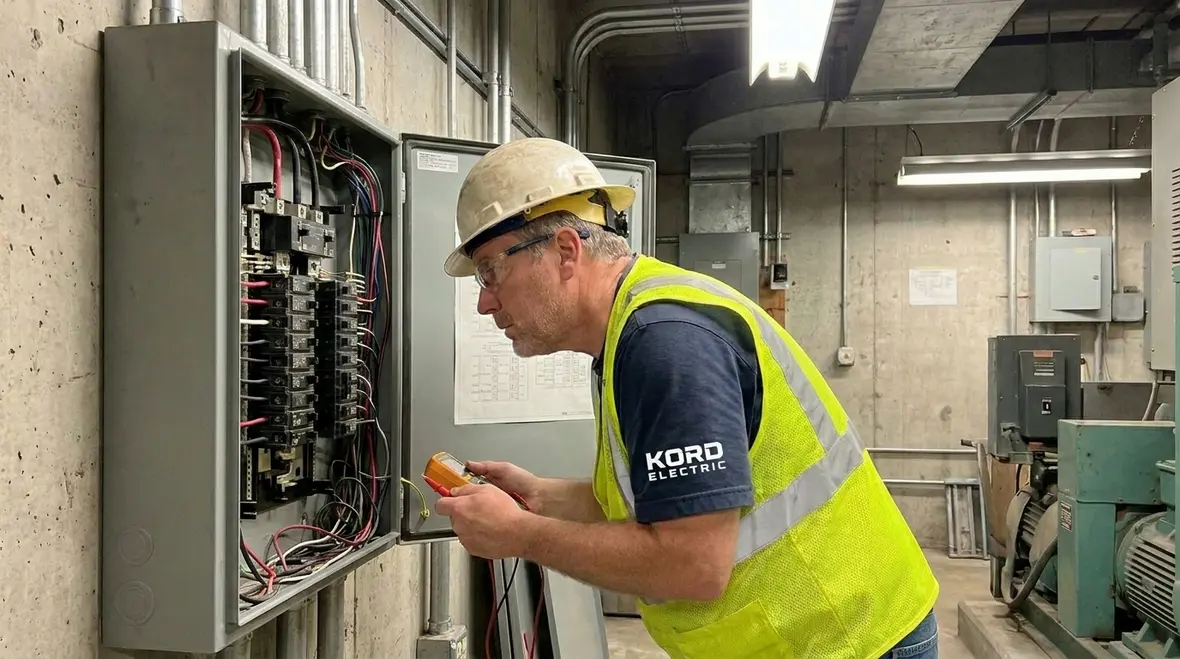
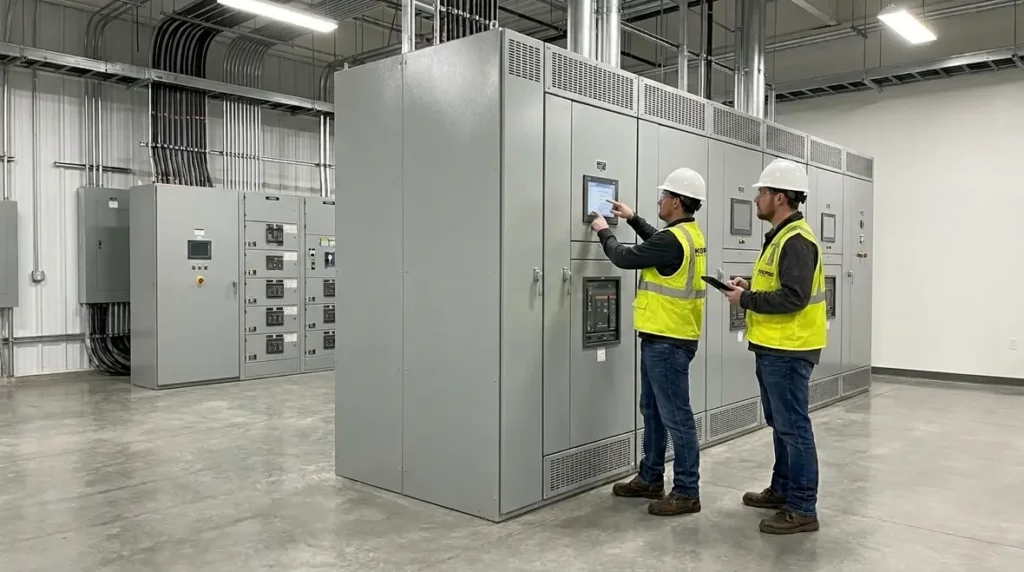
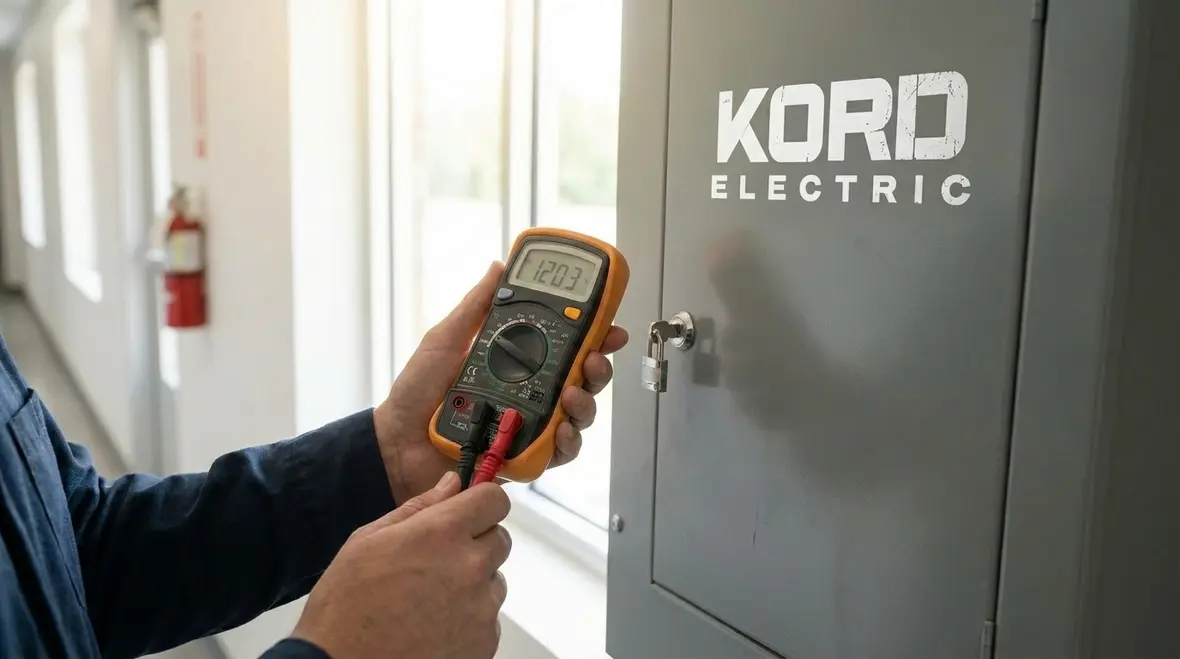
Before anyone touches a wiring area, our team verifies safety in plain terms. First, we confirm the system’s power is isolated where required. Then we check for proper labeling, locked cabinets, and correct voltage at the control equipment. After that, we verify that the lighting control circuit has not been backfed through another path. That can happen in multi-tenant buildings, and it always makes our electricians raise an eyebrow.
Next, we document the symptoms and timing. For example, we note whether the problem shows up only during daylight, only after a schedule change, or only when a specific area is occupied. Because once you can describe the pattern, you can stop guessing.
Finally, our expert service staff confirms the control device status: switches, occupancy sensors, photocells, and any dimming modules or relays. This approach reduces random changes that create new faults. And nobody wants that. Even troubleshooting should not feel like a reality show.
How We Trace the Problem From the Zone to the Panel
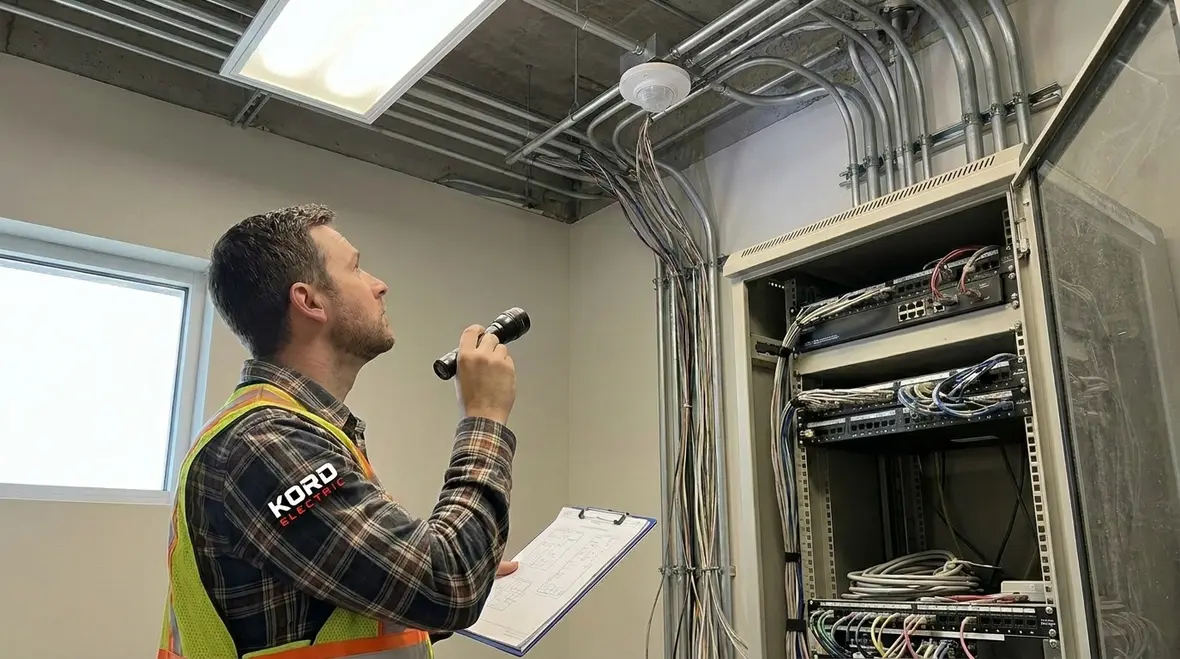
To solve lighting issues in commercial spaces, we trace faults in layers. We begin at the affected zone, then move upstream to the control panel and wiring. That way, we avoid the common mistake of chasing the “most dramatic” component first. If a dimmer slider is flashing red, sure, it is interesting. However, the real problem may sit earlier in the chain.
Step one is to check device behavior. If occupancy sensing fails, we confirm sensor coverage and placement. If daylight harvesting fails, we check the photocell window area for dirt, new obstructions, or misalignment. If dimming causes flicker or strobing, we examine load compatibility and control type.
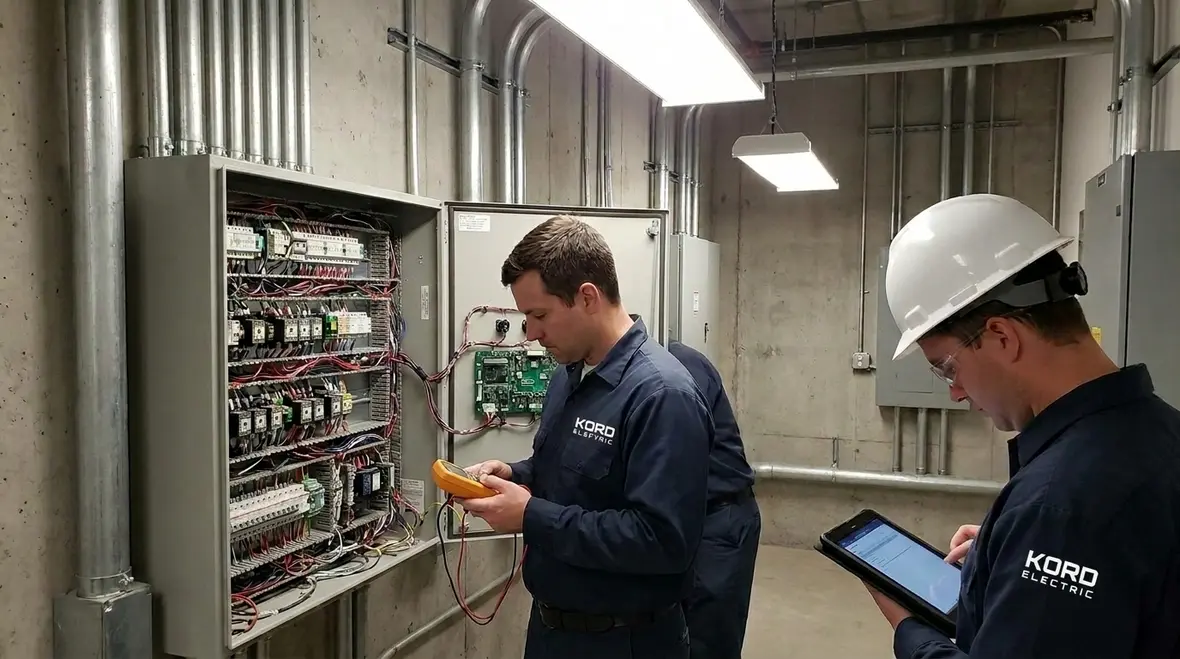
Step two is to inspect control inputs and outputs. We confirm whether the controller is sending the expected commands to the dimming modules or relays. Then we compare that to what the fixtures actually do. When command and action do not match, we usually find a wiring fault, a configuration mismatch, or a failed output module.
Step three is to review zoning maps and circuit labeling. In many major property buildings, zones have grown over time. Subtle changes made during renovations can leave old wiring assumptions behind. Therefore, we update the circuit understanding as we test.
When Dimming, Flicker, or Delay Trouble Hits: What Technicians Check
Dimming problems often look chaotic, but our technicians break them into repeatable checks. Flicker is typically tied to power quality, driver compatibility, wiring integrity, or control settings. Delay issues can relate to sensor settings, occupancy logic, or controller schedules that have been overwritten.
We start with compatibility. Many LED fixtures use specific driver behavior. When a control system expects one driver type but receives another, you can get dimming curve mismatch or unstable output. Next, we confirm whether the dimming control is working with the correct signal type. Then we inspect connections, terminations, and any loose wiring at the control modules and junctions.
After that, we look at power quality. Voltage drops, loose neutrals, and spikes can produce symptoms that look like “the controller is broken,” when the real story is a supply issue. So we verify stable feeds and check for correct grounding and bonding where required.
Finally, we adjust settings using the controller’s logic. We change ramp rates, minimum light levels, hold times, and occupancy parameters in a controlled way. And we always test the updated behavior during real use conditions. Because a setting that works at 2 a.m. might fail at the busiest hour, and buildings love to wait until that hour.
Configuration, Schedules, and Network Issues That Create Big Lighting Changes
Commercial facilities often rely on schedules and zoning logic that sit inside controllers or building management systems. So, when a lighting control event goes wrong, we check configurations before we condemn hardware. We review time schedules, override permissions, daylight harvesting thresholds, and occupancy mode rules.
In larger buildings, networked controllers can also drift due to settings updates, credential changes, or communication faults. Therefore, we verify communication health and confirm that the controller is using the correct IP settings, gateways, and device addresses. If the system runs through a third-party management layer, we confirm data flow between systems.
We also check for human changes. Someone updates a schedule, someone copies a program from another site, and suddenly the wrong floors respond the wrong way. That is why our team keeps a change log and verifies configuration backups before modifications.
Once settings match intended operation, we run a controlled test sequence. We observe response time, dimming steps, and how the system handles transitions between occupancy and vacancy. If it behaves correctly in sequence, we reduce the chance of hidden faults.
Using Test Equipment and Smart Field Checks Without Guesswork
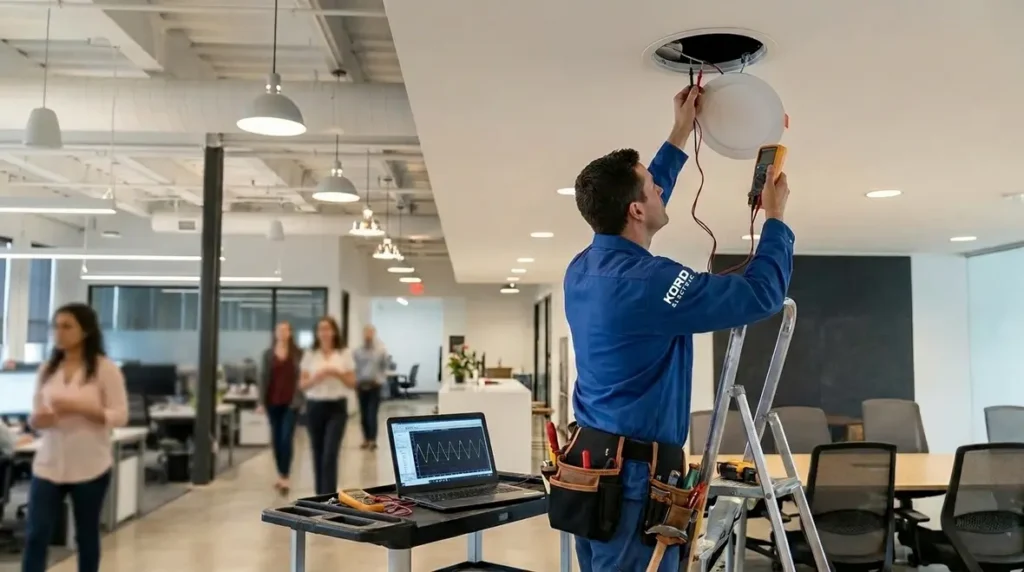
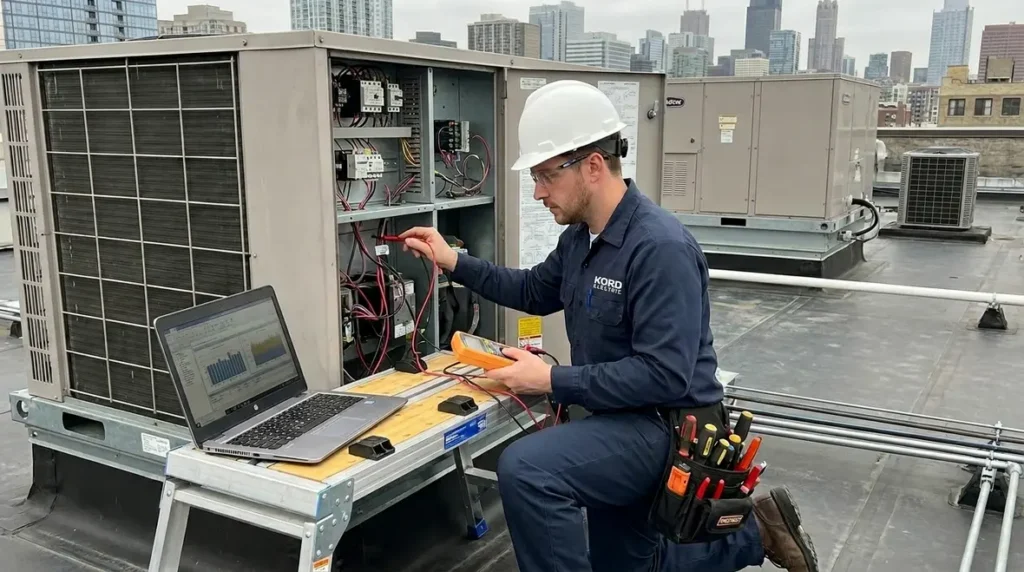
Our expert staff uses the right tools for field confirmation. We measure input signals where appropriate, test continuity and insulation resistance on relevant runs, and verify output switching at the control equipment. Then we validate load response at the fixtures. This method gives us evidence, not vibes.
We also confirm that wiring routes match what the system expects. If someone rerouted a conduit during construction, the control’s assumed conductor could shift. Then the controller outputs the right command but the load never receives it. In a major property setting, these issues often hide behind “it was working last month.”
Whenever our team discovers a wiring or panel issue, we discuss the repair approach clearly. For example, during renovations or corrective rewiring, we consider whole-system impact, not just the immediate spot. In our guide on rewiring cost factors for commercial electrical systems, we explain how labor scope, access difficulty, material needs, and downtime requirements shape cost. Similarly, for lighting control repairs, we plan for clean integration so you do not pay twice because a patch was rushed.
And yes, we keep downtime in mind because your facility is not a lab. We coordinate testing and restoration to meet business needs.
Common Fault Patterns We See in Commercial and Industrial Buildings
Over time, our technicians learn the repeat offenders. Flicker that starts after a change in lighting technology often points to driver compatibility or control settings that no longer match. Occupancy failures after renovations often connect to sensor placement, coverage obstructions, or wiring changes during construction work.
We also see schedule mismatch after tenant buildouts in major properties. A new tenant uses different hours, and the building control system keeps applying older logic. As a result, the system operates “correctly,” just not according to your operational reality. That is an easy fix when we verify schedule ownership and update it properly.
Another pattern is partial zone failure. If one side of a space works and the other side does not, the fault may live in a branch circuit, a relay output channel, or a specific wiring section. Instead of pulling the entire system apart, we isolate by zone and channel, and we correct only the failing element.
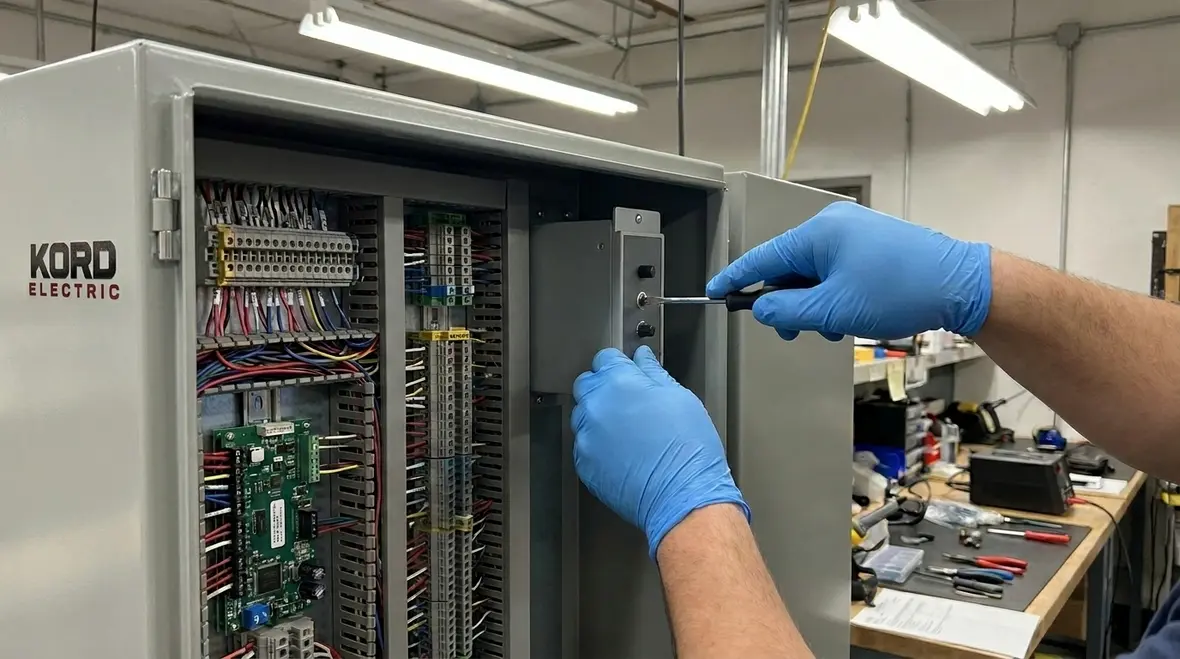
Finally, we see “random” issues that actually follow environmental changes. Heat, moisture, or vibration can affect connections in outdoor or high-humidity areas. Therefore, we inspect enclosures and terminal tightness, and we look for signs of corrosion or insulation wear.
FAQ: Quick Answers for Featured Snippets
Ready to Get Your Lighting Back on Schedule? Contact Kord Electric
When your commercial lighting control system starts acting like it has a personal grudge, do not waste time guessing. At Kord Electric, our technicians use a clear troubleshooting path, from safe field checks to controller and wiring validation, and we keep your commercial and industrial operations in mind at every step. If you want stable schedules, clean dimming, and dependable occupancy control, call us. We will inspect the fault, explain what we find in plain language, and get your building lighting working right again.
If your facility is planning broader electrical upgrades or recurring maintenance, our team can align lighting control repairs with ongoing services for even better reliability. For multi-site portfolios and larger campuses, pairing targeted troubleshooting commercial lighting systems work with structured electrical preventive maintenance helps keep panels, wiring, and controls operating together instead of fighting each other.
For organizations across the region that need an established partner for complex electrical work, our Los Angeles County commercial and industrial electrical services cover everything from emergency repairs to long-term system planning. That way, when your lighting controls behave, the rest of your electrical infrastructure can keep up.