Industrial Lighting Maintenance Plan for Downtime
Industrial lighting maintenance plan: how Kord Electric keeps lights steady
At Kord Electric, we build our industrial lighting maintenance plan to help commercial and industrial facilities avoid the kind of downtime that never makes it into the budget. In the first pass, we set a clear rhythm for inspections, testing, and repairs. Then, we keep that rhythm steady so a single failed component does not turn into a multi site headache. And yes, if you think lights will “just last,” we hear that line almost as often as the tired joke about bulbs being “magic.” In reality, planned service beats surprise failures every time. When our technicians explain the process on site, facility teams understand what we check, why we check it, and how we reduce risk without interrupting operations.
A strong industrial lighting maintenance plan does not live in isolation. It connects to broader reliability planning, including electrical distribution design and preventive maintenance. For example, many of the reliability principles we apply in our data center electrical distribution design for reliability work carry over directly into how we support lighting systems in commercial and industrial facilities.
Why unplanned failures cost more than parts
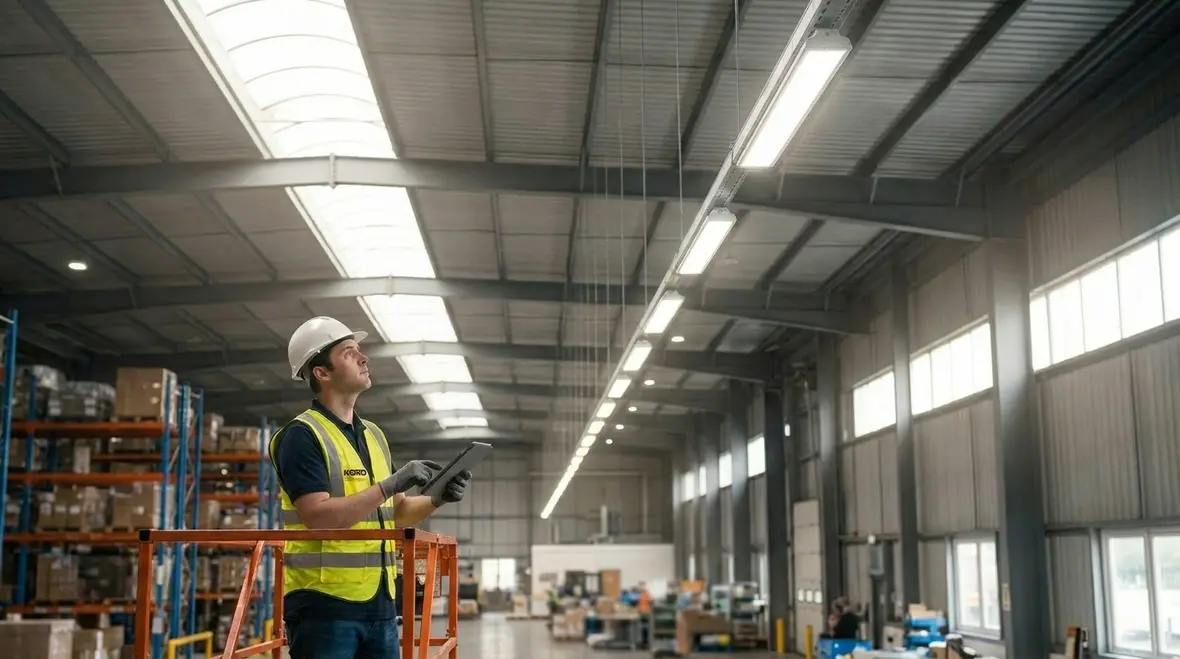
In commercial buildings and industrial environments, lighting does not fail in isolation. A small issue often grows into a bigger one because people notice only after performance drops. First, you see flicker. Next, you get complaints from staff. Then, you begin replacing fixtures quickly, sometimes with inconsistent results across floors, areas, or zones. Meanwhile, operations lose time and crews spend hours troubleshooting instead of running the site.
Industrial lighting is tied to safety, productivity, and compliance. Therefore, when a system fails unexpectedly, you spend more than money on materials. You also spend money on labor rushes, emergency dispatch, and downtime that drifts into peak operating windows. With an industrial lighting maintenance plan in place, we catch wear before it becomes a failure. As our experienced service staff tells clients, maintenance is not just fixing. It is preventing the chain reaction that follows a missed warning sign.
And let us be honest, emergency repairs have the energy of a late night sitcom plot. Everyone shows up, nobody knows the full plan, and the bill somehow looks larger in the final scene.
How routine inspections uncover hidden risk
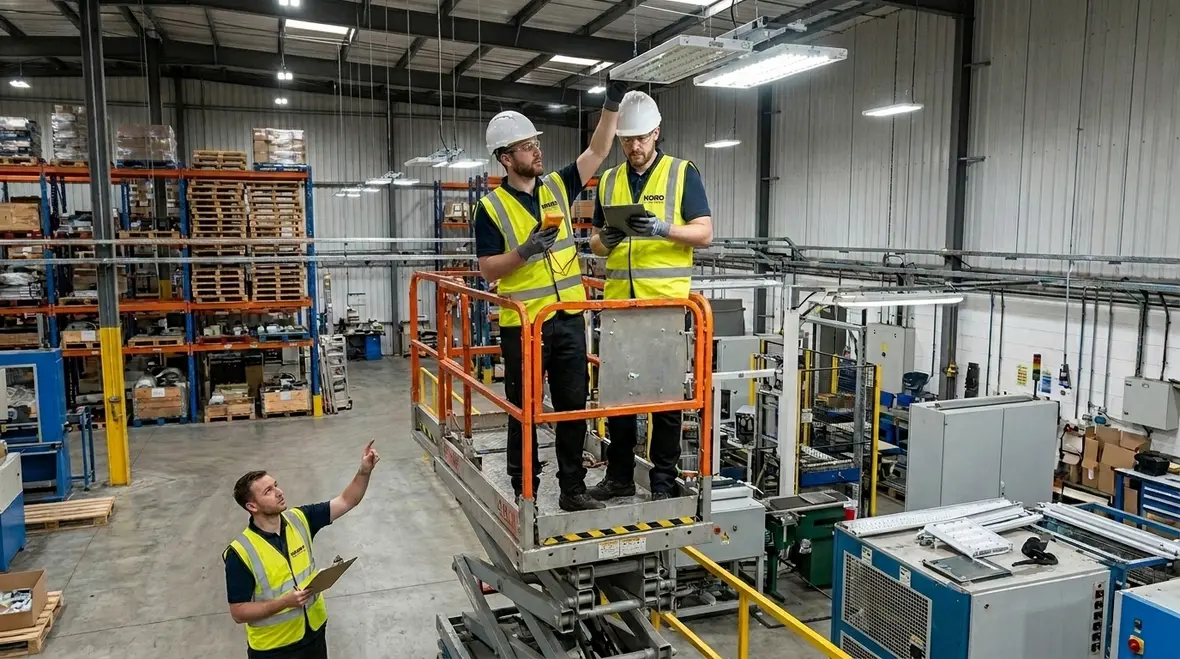
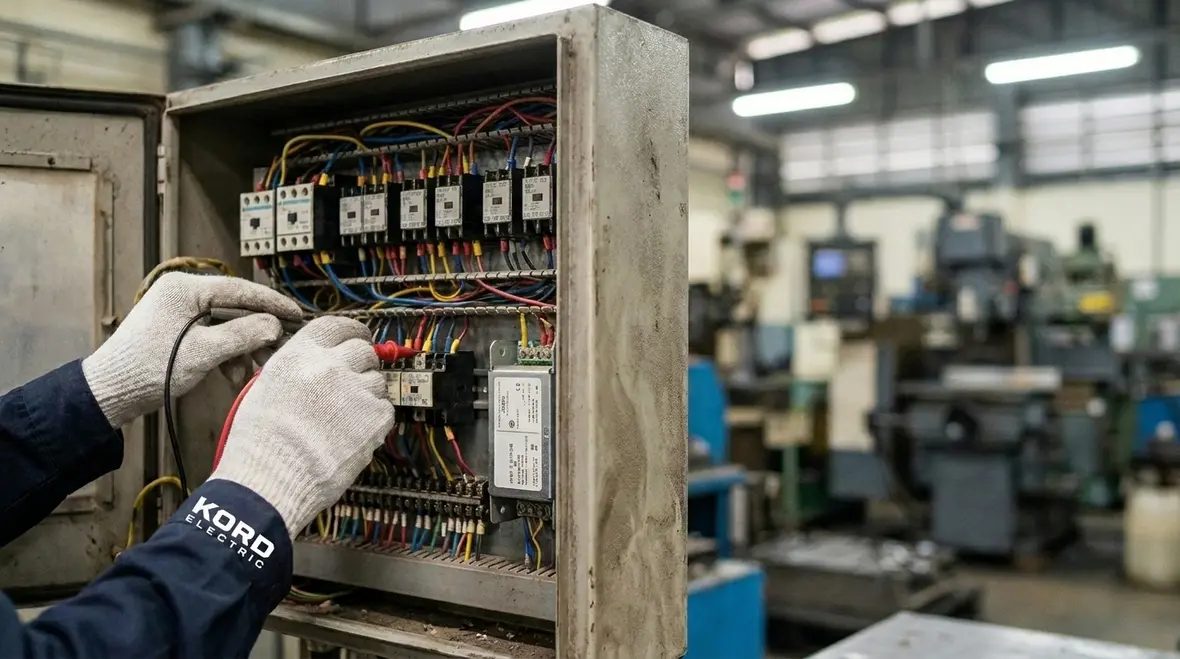
A good program does more than swap bad lamps. It inspects the full path that powers lighting and controls it. For example, our team reviews components that often do not get attention during casual checks. That includes connections, ballast drivers, controls, grounding, and the physical condition of housings and lenses. We also verify that installed hardware matches the design intent and that the environment has not changed around the fixtures.
As conditions shift, risk shifts too. In warehouses and plants, vibration and dust attack equipment. In office campuses and mixed use facilities, upgrades and tenant changes can alter load patterns and controls. Therefore, inspections must keep pace with the way the building actually operates, not just with the way it was documented years ago.
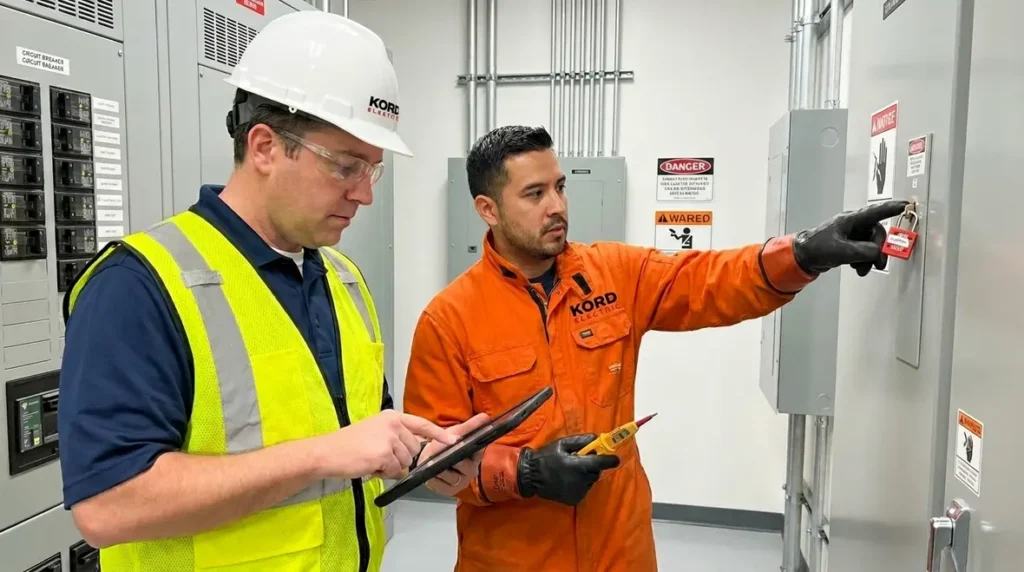
During scheduled visits, our technicians explain findings in plain language. Then, they outline what we will do next, and what impact it will have on uptime. This turns maintenance from a mystery into a managed process and connects naturally with broader electrical preventive maintenance programs for commercial and industrial facilities.

Reliability starts with distribution design
If lighting failures keep showing up in the same areas, the issue might not be the fixture. It might be the way electrical distribution supports the lighting loads. Kord Electric often references reliability concepts from data center distribution practices, because the thinking carries over to any mission critical facility. For instance, when distribution gets designed with clear pathways, proper load allocation, and smart redundancy, systems perform more predictably. You get fewer surprises and easier troubleshooting.
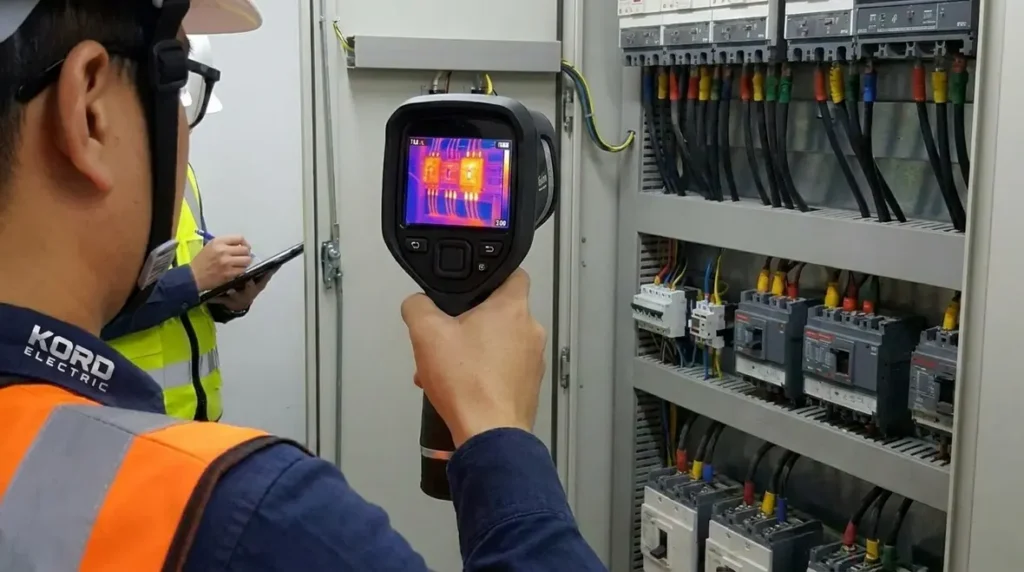
In our approach, we look at how lighting circuits tie into the electrical distribution and how those circuits behave under real conditions. When our technicians review a site, they do not treat lighting as a standalone item. Instead, we connect the dots between distribution health and lighting performance. That includes checking protective devices, verifying breaker and feeder conditions, and watching for signs of overheating, loose connections, or uneven loading.
For teams who manage major property buildings, this matters because lighting supports more than comfort. It supports safe movement, compliant egress illumination, and smooth operations. Also, it supports critical work areas where a “small” outage can halt production or delay a service window. Reliability is not a single fix. It is a system mindset, and it pairs naturally with the kind of thinking we apply in our data center reliability work and in our Los Angeles County commercial and industrial electrical services.
Keep downtime out of the work week
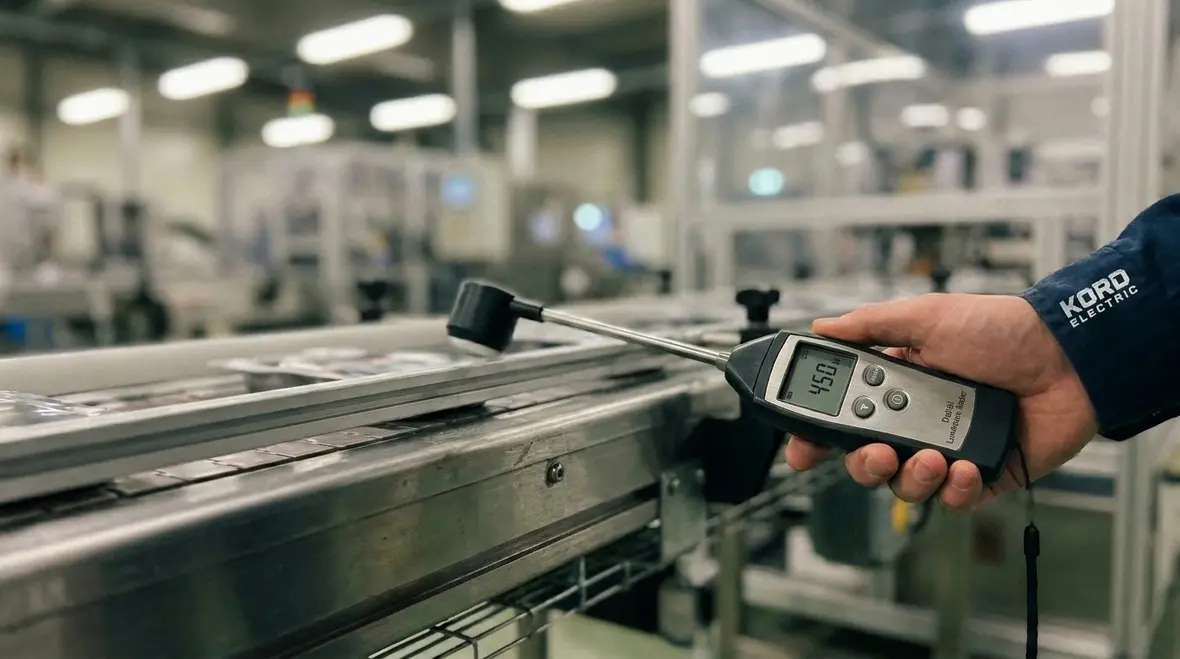
When our customers ask us how an industrial lighting maintenance plan prevents expensive downtime, we answer with a simple truth. We reduce the chance of needing emergency work, and we schedule the work so it fits the operation. We plan visits around production cycles, occupancy, and safety requirements. Then we stage repairs so one area does not hold up another.
Moreover, we manage parts and replacement timelines. That means we avoid the classic “we will order it and come back” situation that turns into multiple visits. Instead, we identify component conditions early and plan the next step. If a driver, control module, or power connection shows wear, we address it while we can do it cleanly.
And yes, our service staff sometimes jokes that the best emergency is one you never have. But the point lands. Planned maintenance stops outages before they interrupt shift change, planned inspections, or client visits. It keeps your teams focused on the work that pays, not the work that improvises.
Preventive maintenance improves quality, not just uptime
Some facility teams see maintenance as a cost center. Others see it as a quality tool. At Kord Electric, we lean into the quality side. When lighting systems receive consistent care, performance stays stable. Color consistency, brightness targets, and uniform coverage remain closer to the design intent. That helps with operational visibility and reduces complaints about “random” lighting changes.
Also, maintenance plans help with documentation. As our technicians complete service, we keep records of what we found and what we corrected. Then we build a clearer history of each area or fixture group. With that, future planning becomes less guesswork. Maintenance decisions become data based, not panic based.
Finally, we help clients coordinate with other building systems. Lighting does not live alone. It connects to controls, occupancy sensors, and sometimes life safety considerations. By managing these relationships through a steady program, we reduce the risk of conflicting schedules or duplicated work.
What our technicians check during service
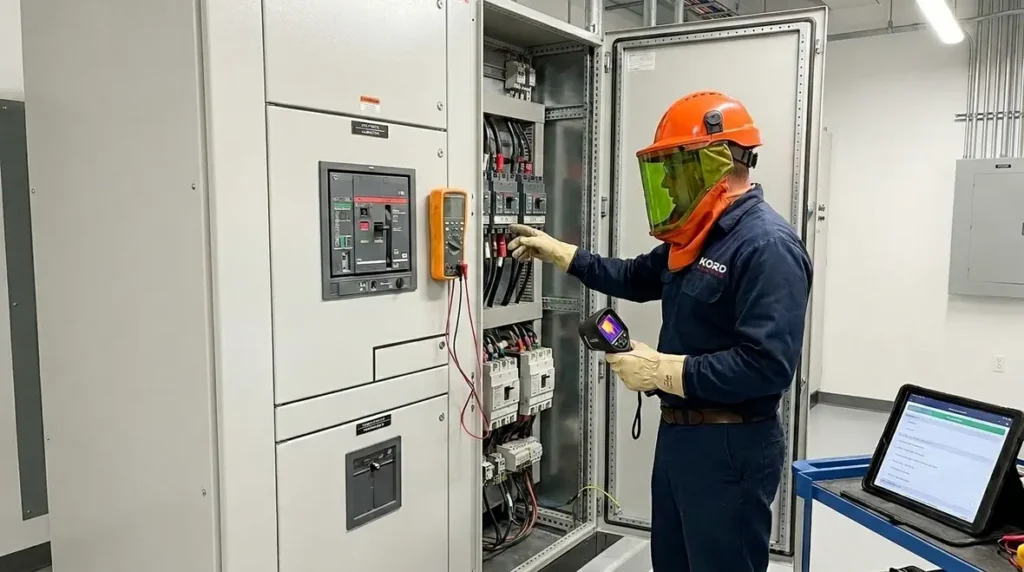
Our industrial customers deserve a maintenance plan that feels thorough, not vague. Therefore, our service includes site walkdowns, component checks, and functional testing. We also review mounting and protection, confirm safe operation, and identify items that need follow up. When our experienced service staff explains results, they separate issues into categories based on urgency and impact.
Typically, we focus on the essentials that drive reliability. That includes:
- Fixture and driver condition so we catch wear before output drops
- Electrical connections and grounding to reduce heat and intermittent faults
- Control performance so sensors and dimming behave as designed
- Protective device checks to verify the system trips correctly under fault
- Environmental impacts such as dust, vibration, and moisture exposure
Then, we propose next steps with a clear plan. If a repair requires downtime, we coordinate the timing. If a component needs replacement, we align the parts and schedule. And if the building needs a broader reliability improvement, we recommend a path that fits a commercial and industrial setting, not a one size approach.
How to build an industrial lighting maintenance plan that fits your facility
Every major property building has its own rhythm. A hospital wing behaves differently from a distribution center aisle. A plant with heavy vibration needs different inspection pacing than a quiet office floor. Therefore, we tailor the plan to the site and the risk level.
We start by understanding the lighting footprint, usage patterns, and how often issues appear. Next, we map critical areas, because egress paths and safety zones cannot wait for “next quarter” work. Then, we define inspection intervals, testing methods, and repair approach. Finally, we set a communication rhythm so facility managers know what is happening and when.
This is where a strong process pays off. Transition after transition, the plan keeps improving because we learn from what we find. Also, teams stay calm, because they are not reacting to failures. They are steering the system. Over time, an industrial lighting maintenance plan can tie directly into a wider industrial lighting maintenance plan across panels, switchgear, and other electrical assets, supporting reliability from the service entrance all the way out to the last fixture.
FAQ
Conclusion
When Kord Electric builds and maintains an industrial lighting maintenance plan, we help commercial and industrial facilities avoid expensive downtime before it starts. Our technicians and expert service staff inspect the full system, catch wear early, and schedule repairs to match your operations. If you want lighting that stays reliable through shifts, seasons, and real-world conditions, contact us. We will review your site, explain what we find, and map a steady plan that keeps your lights on and your teams focused.
For facilities across the region, our lighting focused maintenance work integrates naturally with broader service offerings, from electrical preventive maintenance to emergency response and project upgrades. When you are ready to connect your industrial lighting maintenance plan with a full reliability strategy for panels, distribution, and controls, our team can help you align the pieces into one coordinated program.
Whether you manage a single facility or a portfolio of commercial and industrial buildings, a structured maintenance plan for lighting gives you fewer surprises, clearer documentation, and a calmer work week. It is one of the simplest ways to protect uptime, support safety, and keep energy focused on the work that actually moves your operation forward.