Troubleshooting Intermittent Commercial Electrical Issues
Intermittent Commercial Power Can Look Fine Until It Doesn’t
Intermittent problems are some of the most frustrating Troubleshooting Intermittent Commercial Electrical Issues we handle at Kord Electric, because the symptoms show up just often enough to keep you guessing. You might notice flickering lights, brief power dips, nuisance breaker trips, or equipment that “acts haunted” after hours. And yes, we have heard the same joke more times than we’d like: “Maybe the building is dreaming.”
What we do is methodical. We step through patterns, isolate likely causes, and verify results with proper testing, so your commercial and industrial facility gets back to stable power. In this guide, our technicians and expert service staff explain the process in plain terms, with practical checks you can understand and act on without guessing.
Start With the Pattern: When It Happens, Not Just What Happens
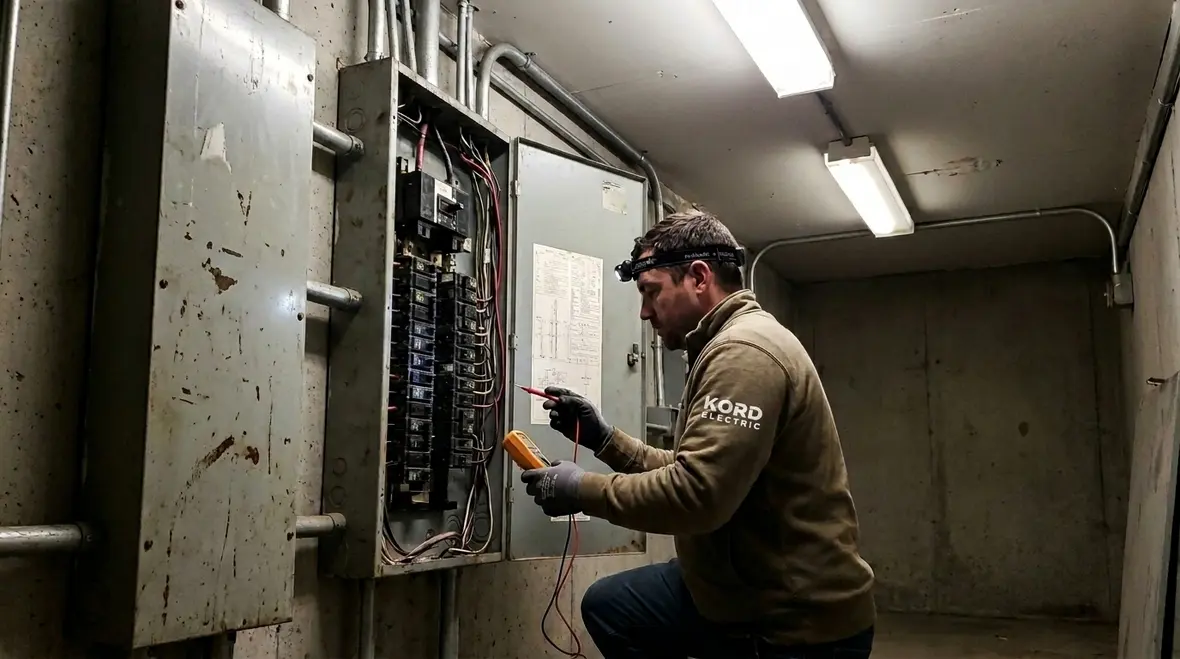
Before anyone touches a panel or swaps a part, we track the timeline. First, we ask what changed right before the first event. Then we ask what stays constant. Intermittent faults often follow a schedule, a load change, or a weather related event. For example, a plant might see voltage dips during motor startups, or a retail property might see flicker after rooftop equipment cycles.
Our team tells property managers and operations leads to document four things, because these details guide the entire troubleshooting path. To help, we suggest collecting these notes:
- Time and duration of the issue, including the exact day and shift
- Location, like a specific floor, room, or equipment circuit
- Load clues, such as which machines run when the symptom appears
- What clears it, like a reset, time delay, or a breaker toggle
From there, we narrow the scope. If the symptom happens across many loads, we suspect the service, feeders, or incoming power quality. If it stays limited to one area, we look at distribution components, wiring, or a particular equipment control. Meanwhile, the “it only happens when nobody is looking” situation is exactly why we treat records like evidence, not paperwork.
Check Visual Clues and Mechanical Truths First
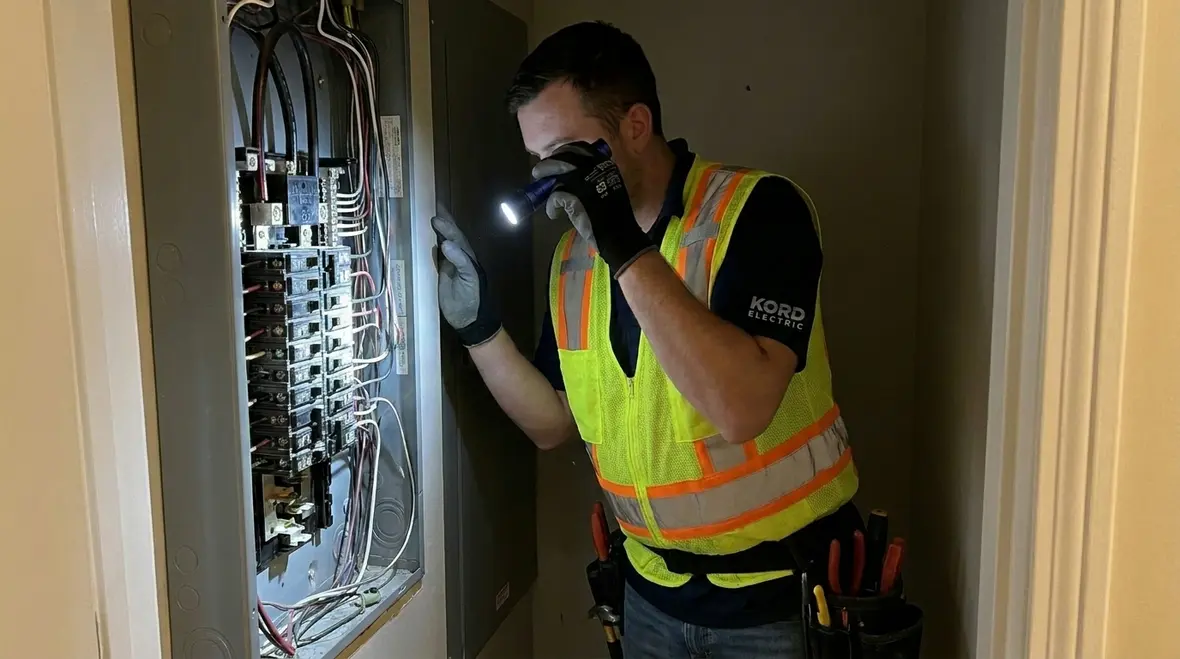
Even though we rely on testing, we begin with what you can see. Loose connections, worn terminations, overheated components, and moisture paths often leave physical hints. And since commercial buildings get cleaned, serviced, modified, and sometimes accidentally bumped, those clues matter.
Our technicians typically inspect:
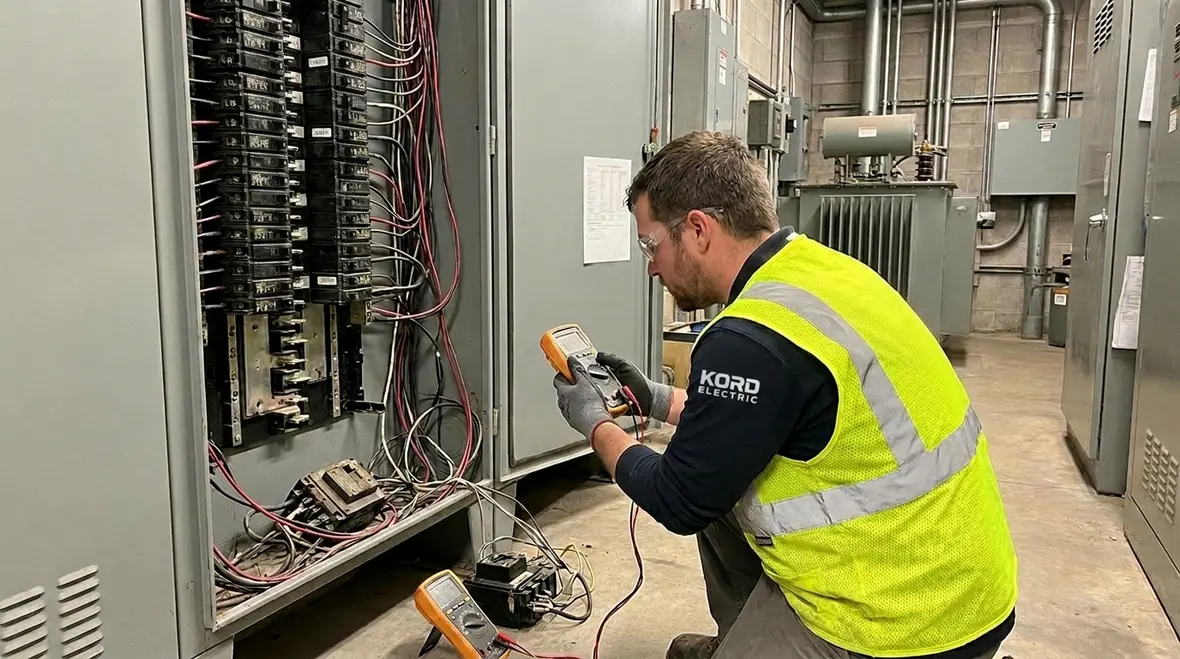
- Breaker and panel condition, including discoloration or signs of heat
- Wire terminations for looseness or corrosion
- Moisture intrusion around conduits, cable trays, and openings
- Signs of arcing, like soot at contact points
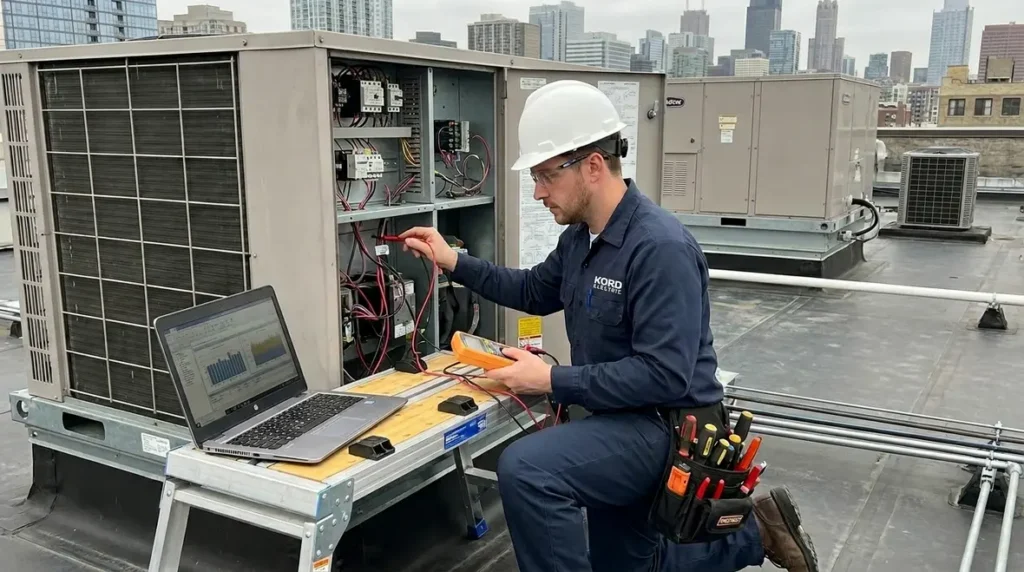
Next, we check the mechanical context. If a problem appears after maintenance, construction, or equipment movement, we look at the routes cables take and whether vibration loosened connections. Also, if a rooftop unit, pump, or compressor cycles during the fault window, we treat that equipment as a suspect, not a coincidence. In other words, we don’t chase ghosts. We chase patterns with receipts.
Measure Voltage, Current, and Harmonics Like a Pro
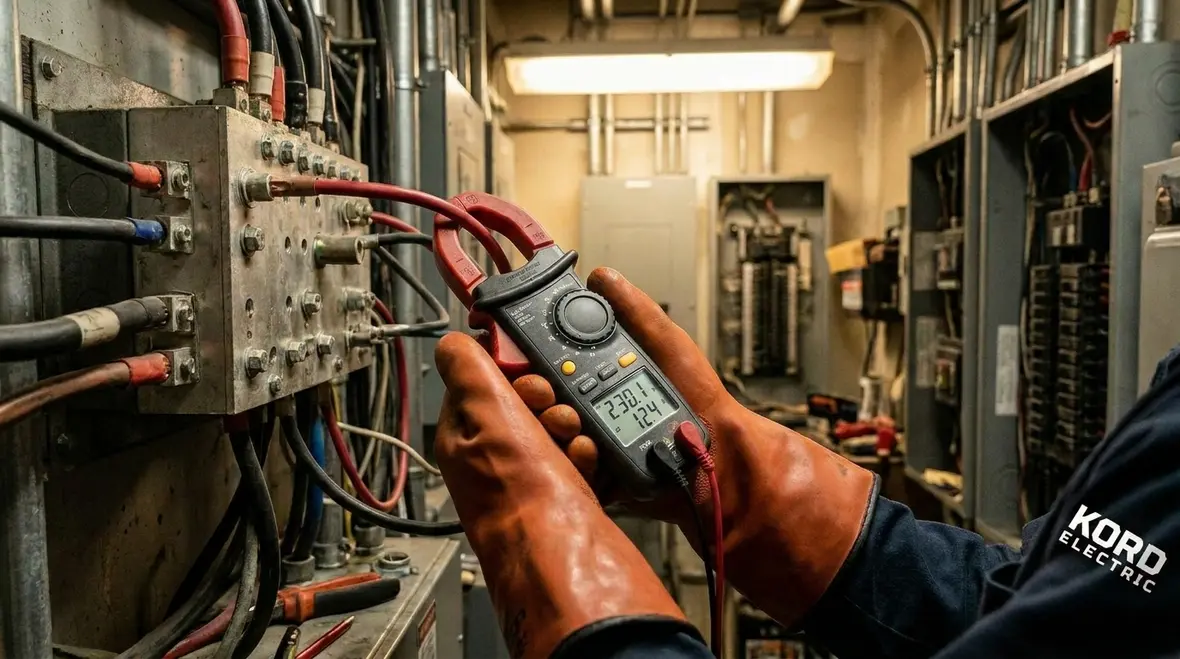
Now we move to testing. To troubleshoot Troubleshooting Intermittent Commercial Electrical Issues correctly, we don’t just take a single reading. Intermittent events require measurements that capture the situation during the fault, not just when the system looks calm. That means we test at the right time and at the right points.
Our expert service staff usually targets these areas:
- Voltage stability at service and at downstream panels during the event
- Load current changes to spot overload conditions or failing motors
- Neutral issues, because loose or overloaded neutrals create weird symptoms that mimic other faults
- Power quality impacts, including harmonics that stress transformers and sensitive controls
Then we interpret results with context. A brief low voltage event can cause lighting flicker and nuisance trips. A neutral problem can create asymmetrical behavior where some loads react and others stay fine. Harmonics can overheat transformers and damage drives. And yes, some of these issues can “feel” like a control problem, even when the root cause is electrical.
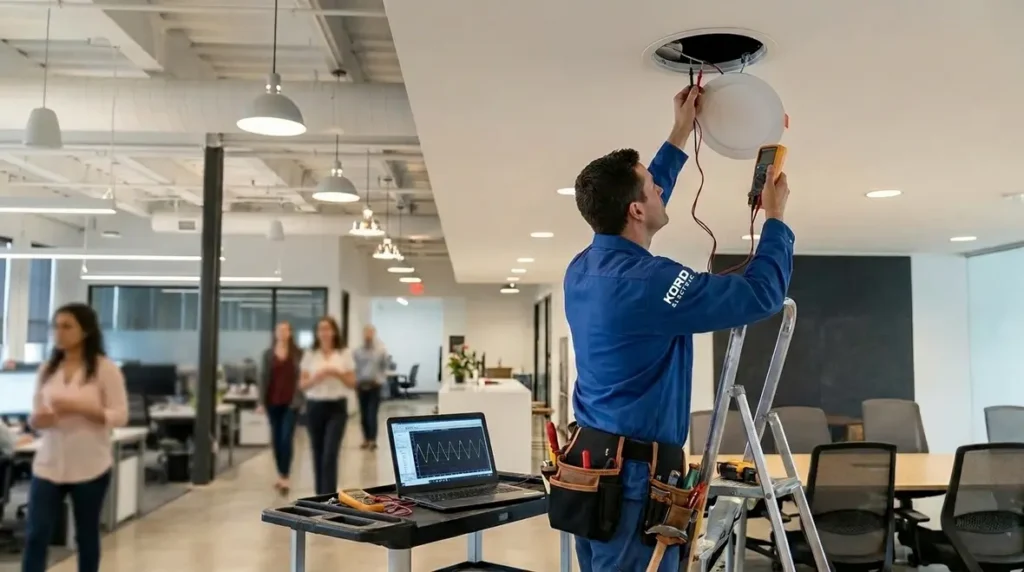
For best results, we align measurement timing with the actual event, using logging tools and coordination with your operations schedule. After all, testing the wrong moment is like checking a smoke alarm after the fire. It’s impressive, but it’s not helpful.
Follow the Circuit Downstream to Isolate the Culprit
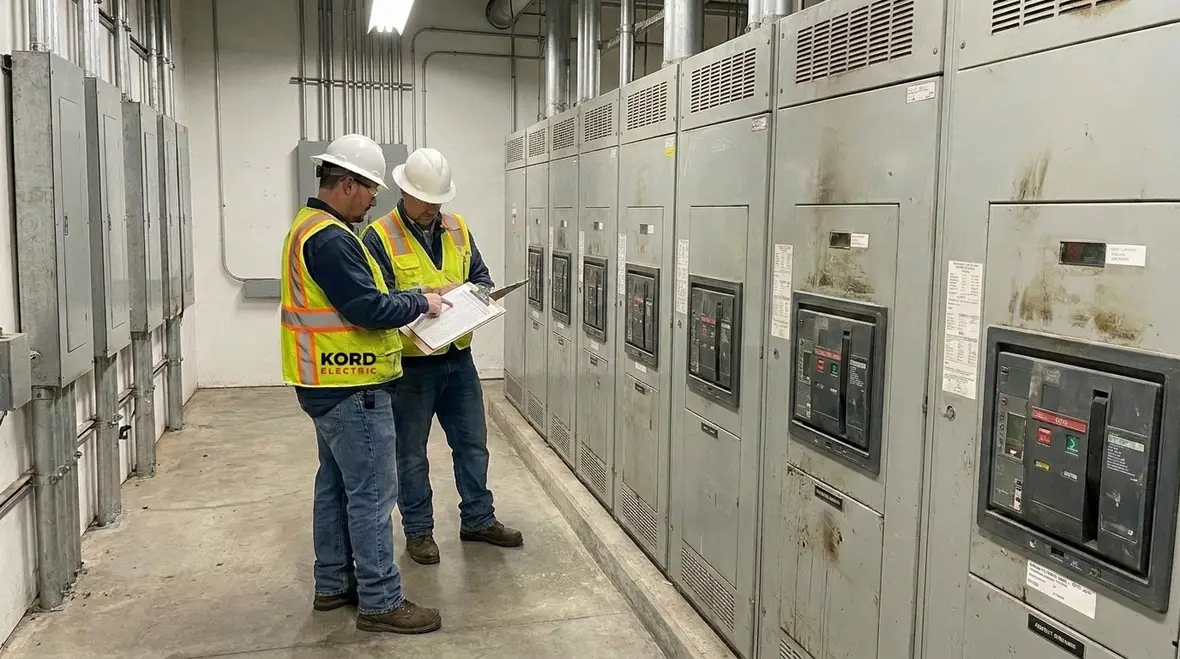
Once we confirm the symptom and measure the electrical behavior, we isolate by tracing the fault boundaries. This is where intermittent troubleshooting becomes a controlled process instead of a random guessing game.
Our approach focuses on how power flows through your facility:
- Service equipment and main switchgear response
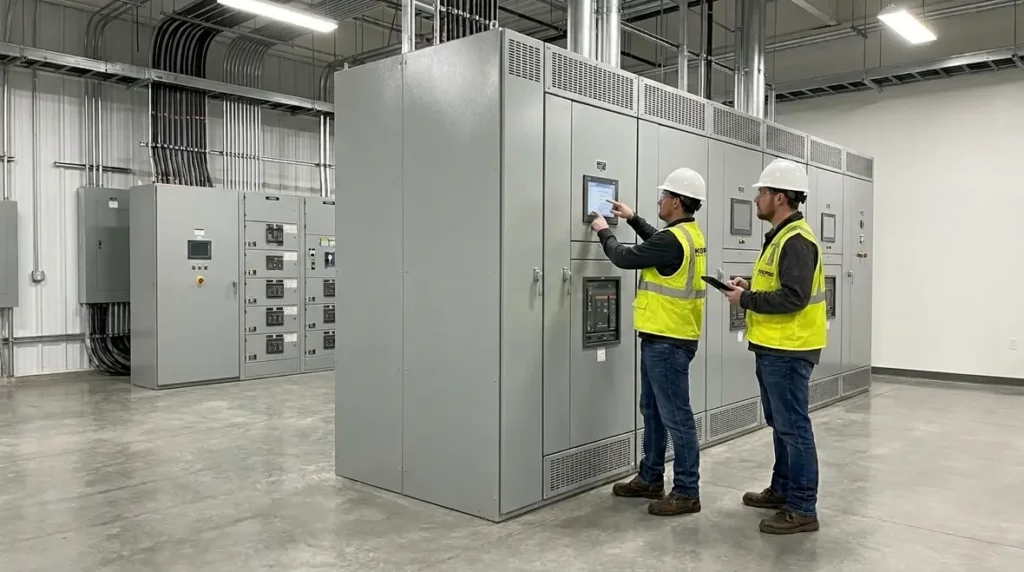
- Feeders to branch panels and distribution rooms
- Branch circuits feeding the specific loads that show symptoms
- Power distribution devices like transformers, ATS systems, and UPS outputs if applicable
As we go, we also watch for signs of selective failure. If only one phase shows voltage imbalance during the event, we reduce the list of suspects. If one transformer repeatedly shows heat rise, we investigate connections and load history. If the issue appears only during equipment startup, we test motor starters, drives, and inrush behavior.
Also, we verify that protective devices behave as intended. Intermittent faults sometimes cause breaker trips because of marginal conditions that only appear under load. So we evaluate settings, curve coordination, and whether the fault energy rises long enough to trip. If we find a device that trips too easily or too late, we correct the root cause instead of simply tightening troubleshooting like a bandage on a broken pipe.
Common Causes We Find in Industrial and Major Property Buildings
In commercial and industrial sites, intermittent symptoms often come from a small list of root causes, even when the effects look broad. Below are the themes our technicians and expert service staff see most frequently when they perform Troubleshooting Intermittent Commercial Electrical Issues work.
Loose terminations and worn connections
Over time, heat cycles and vibration loosen connections. Then they arc, cool, and arc again. That rise and drop creates flicker, noise, or intermittent trips that vanish when you test too early.
Moisture and contamination in enclosures
Even small moisture intrusion can change insulation resistance and create leakage paths. During humid conditions or after washdown, symptoms appear and then fade.
Neutral faults and unbalanced loading
A weak neutral connection can create strange behavior across lighting circuits, controls, and compute loads. When loads change, the imbalance becomes visible.
Motor and drive problems
Failing motors, worn bearings, or drive component stress can trigger voltage dips and harmonic spikes. As a result, the facility may experience intermittent issues without obvious burn marks.
Transformer stress and power quality imbalance
Transformers handle uneven loading and harmonics in complex ways. If your building hosts variable frequency drives or large power electronics, power quality problems can show up as intermittent symptoms at sensitive equipment.
And here is the pop culture truth: intermittent electrical issues behave like a “season finale” no one can predict, except we can predict them by capturing data and applying steady troubleshooting discipline.
Prevent the Next Episode With Better Maintenance and Verification
Once we identify the cause, we don’t stop there. We help you prevent repeat problems through targeted maintenance and verification. Our technicians explain what we found, what it means, and what changes reduce risk.
For many commercial and industrial facilities, prevention focuses on:
- Connection integrity through tightening and inspection where appropriate
- Thermal checks during typical load conditions, not during idle times
- Power quality monitoring when sensitive equipment runs
- Load management insights for startups and cycling equipment that triggers dips
- Clear documentation so future troubleshooting gets faster, not harder
Transitioning from reactive repairs to planned verification matters. Instead of waiting for the next “random” outage, you gain confidence. And if you think the building will magically behave once people stop looking, we get it. But we prefer facts over wishful thinking.
FAQ About Intermittent Commercial Electrical Faults
Dual Focus: Fast Isolation and Clear Explanations
Many property teams want two things at once: progress and clarity. So we run our troubleshooting process with both in mind, and we keep our explanations steady and direct.
What our technicians do
- Collect event timing and load clues from your operations team
- Inspect panels, terminations, and enclosures for heat and moisture signs
- Measure during the event using appropriate logging and test points
- Isolate downstream to confirm the root cause
What our expert service staff explains
- What the measurements indicate, in plain language
- Why the fault looks intermittent, not random
- Which parts we recommend fixing and why
- How to reduce repeat failures through verification and maintenance
Connect Troubleshooting With Long-Term Maintenance
Intermittent electrical issues rarely exist in isolation. They often point to underlying stresses that also affect other parts of your system. Pairing focused fault finding with a structured maintenance plan helps make sure the same problem does not return in a different disguise a few months later.
For commercial and industrial facilities that want fewer surprises, Kord Electric’s electrical preventive maintenance services take the same disciplined approach we use for intermittent faults and apply it on a scheduled basis. Instead of waiting for the next unexplained flicker or nuisance trip, you get ongoing inspections, testing, and documentation shaped around your actual operations.
This connection between Troubleshooting Intermittent Commercial Electrical Issues and preventive maintenance gives facility teams a clearer path: fix the immediate problem, then address the conditions that helped create it. Over time, that shift turns “mystery episodes” into planned service windows and predictable performance.
Call Kord Electric for a Calm, Confirmed Fix
If your facility suffers from intermittent flicker, breaker trips, or equipment that only misbehaves sometimes, don’t gamble with guesswork. Kord Electric works with commercial and industrial sites and major property buildings, and our technicians use testing, isolation, and clear explanations to confirm the root cause. Contact us today, share the timeline and symptoms, and we will help you stop the next “episode” before it interrupts production or tenants again.
When you are ready to go beyond one-off repairs, you can connect troubleshooting with structured service by exploring our dedicated electrical preventive maintenance programs. For facilities planning broader upgrades or distribution changes, Kord Electric also supports complex commercial projects through services highlighted on our home page and in our detailed guides, so long-term reliability becomes part of every decision you make.
Whether you need focused diagnostics today or a roadmap for your entire power system, the next step is simple: reach out, describe the symptoms, and let a commercial electrical team trained in Troubleshooting Intermittent Commercial Electrical Issues turn scattered clues into a calm, confirmed fix.
To align repairs, upgrades, and maintenance under one plan, many facility leaders also combine intermittent troubleshooting with broader commercial electrical services and inspection work. Kord Electric’s team can help you plan future-ready improvements that support stability, safety, and growth across your entire property.
If you are looking for ongoing reliability as well as one-time problem solving, pairing our intermittent fault diagnostics with a customized preventive maintenance service plan gives your building a consistent path forward instead of a revolving door of surprises.