Warehouse Electrical Inspection Checklist California
At Kord Electric, we build safe electrical operations for commercial and industrial facilities, and for major property buildings across California. In the real world, safety failures do not arrive with a warning label, they sneak in through loose connections, worn insulation, and ignored heat. That is why our team follows a warehouse electrical inspection checklist california approach that helps others catch risks early, before they grow teeth.
First, we treat every site like it matters, because it does. Then we move through a practical plan that aligns with preventive maintenance principles. Our technicians and expert service staff explain what they find in plain language, so facility managers are not left guessing. And yes, the goal is simple: keep people safe, keep equipment running, and keep fires from doing overtime, like a villain who missed the schedule.
Why warehouses need electrical safety inspections that actually stick
Safety checks fail when they become paperwork. Kord Electric avoids that trap. We focus on conditions we can see, measure, and confirm. Warehouses often hold more than racking and pallets. They also hold temporary power changes, seasonal material shifts, added circuits, and frequent forklift traffic. These realities increase mechanical stress on wiring, create vibration in panels, and raise the chance that a problem stays hidden until it is expensive.
As a result, the warehouse electrical inspection checklist california mindset supports regular verification of terminations, bonding, and protective devices. Even when an electrical system “seems fine,” small defects can drive heat and degrade insulation over time. Moreover, a well paced inspection helps others reduce downtime because maintenance work can be planned, not forced after an outage.
Our expert service staff also keeps the process calm and clear. They walk facilities through findings, and we explain why each item matters. In many cases, clients say they finally understand what previous reports meant. That is the difference between a “score” and a “solution.”
On site walkthrough: how we run the inspection step by step
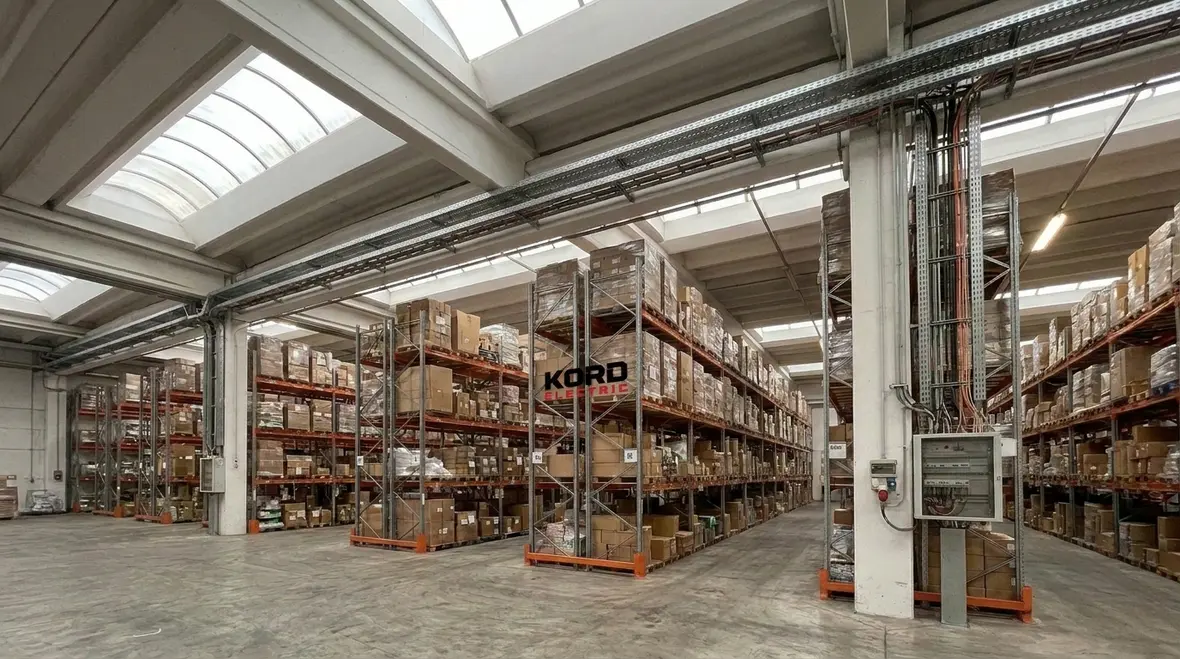
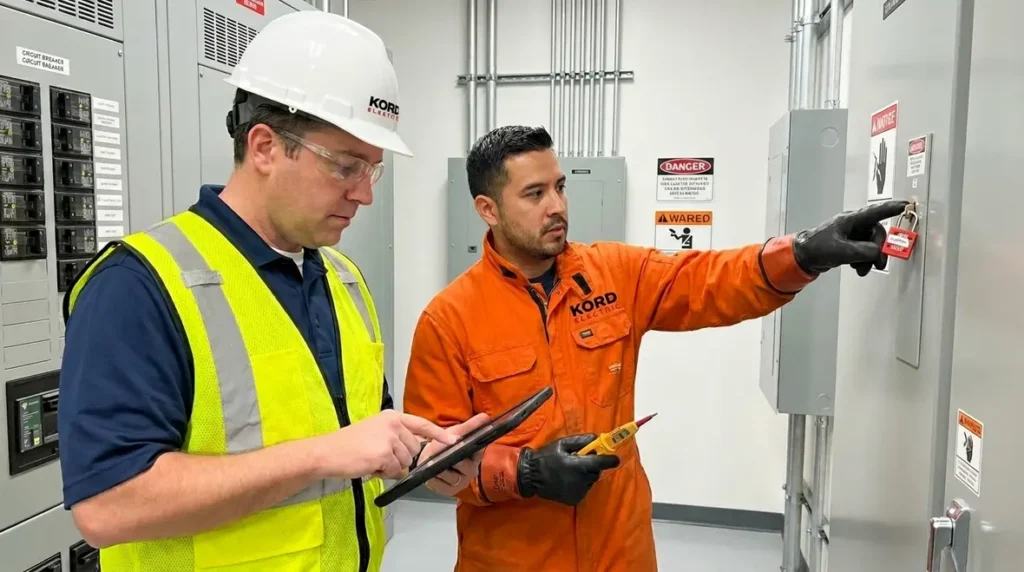
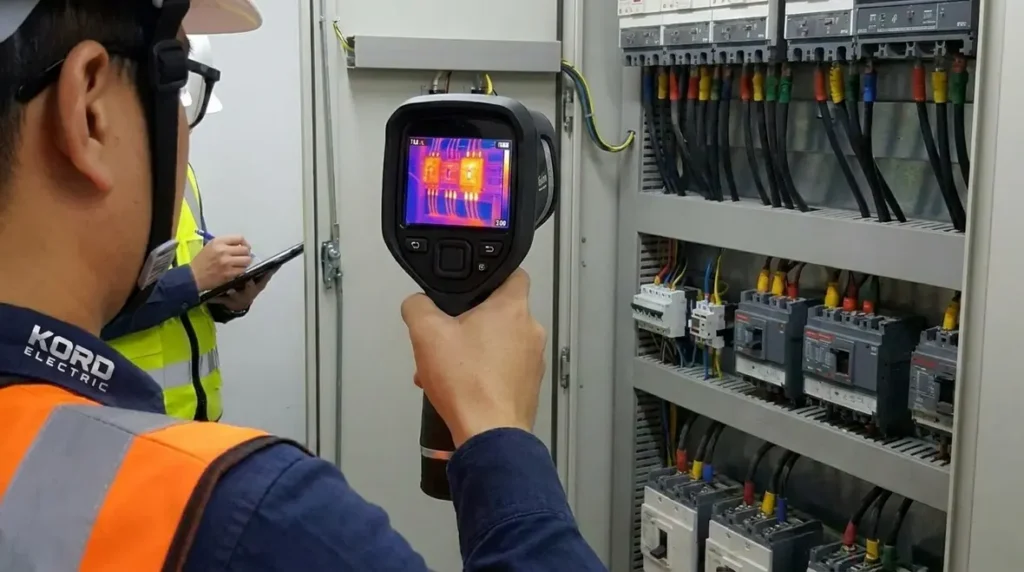
Kord Electric begins with a structured walkthrough, then we confirm details inside panels, disconnects, and distribution gear. We do not rush, because electrical risks rarely announce themselves in neon. Instead, we look for patterns: recurring heat marks, dust buildup, corrosion, and signs of loose hardware.
Next, our technicians verify accessibility and labeling. We check that disconnects open and close smoothly, that covers sit correctly, and that wire routing does not rub against sharp edges. Then we review physical protection for conductors that sit near traffic paths or where pallet handling equipment might bump them.
After that, we inspect grounding and bonding connections. If bonding weakens, metal enclosures can become energized under fault conditions. Therefore, the inspection includes attention to bonding jumpers, conduit fittings, and ground bar integrity. We also confirm conductor size matches the application and that terminations show no signs of over tightening, under tightening, or damage.
Finally, we document results in a way that others can act on quickly. Our team offers clear priority levels so the next maintenance step does not get buried under a pile of other responsibilities.
For warehouses with higher critical loads or complex distribution paths, we often align this walkthrough with a structured preventive maintenance rhythm. That gives facility teams a repeatable way to track what was checked, what changed, and what still needs attention in the next cycle.
If your facility has recurring trouble spots, such as a dock area that overheats equipment or a row of panels that see frequent nuisance trips, our technicians use that history to prioritize the walkthrough. The checklist becomes a living tool, not a static form.
What we check in panels, conduits, and critical connections
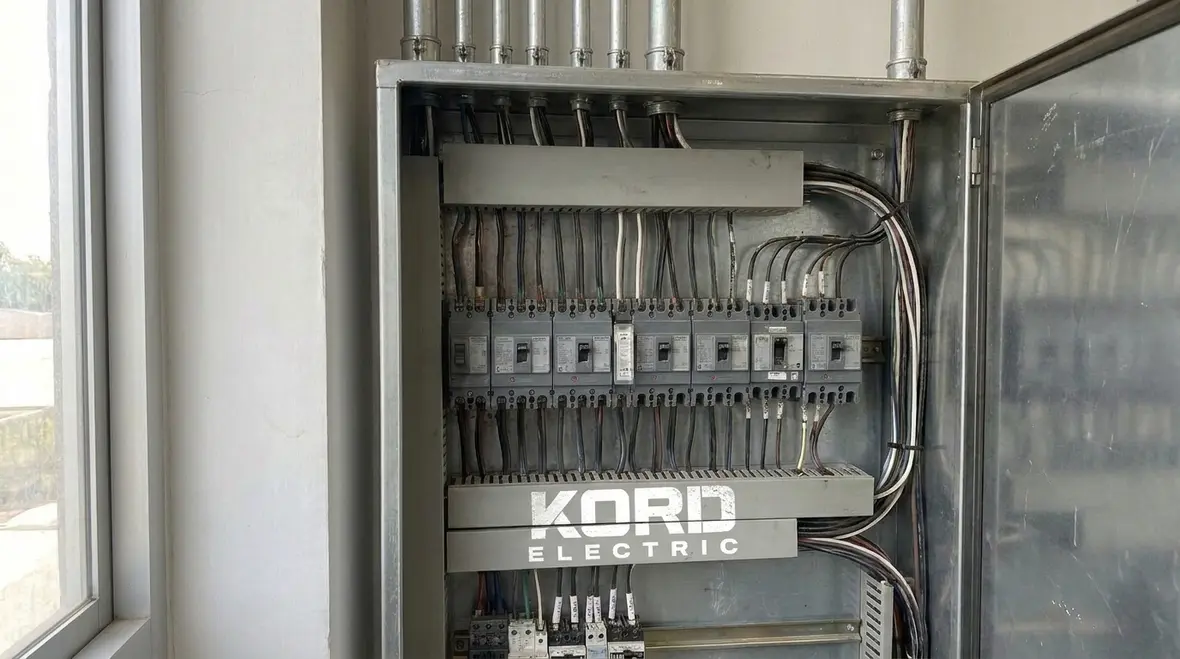
In commercial and industrial spaces, most major failures trace back to connections and components. So our approach concentrates on the electrical heart of the operation.
Distribution panels and panelboards
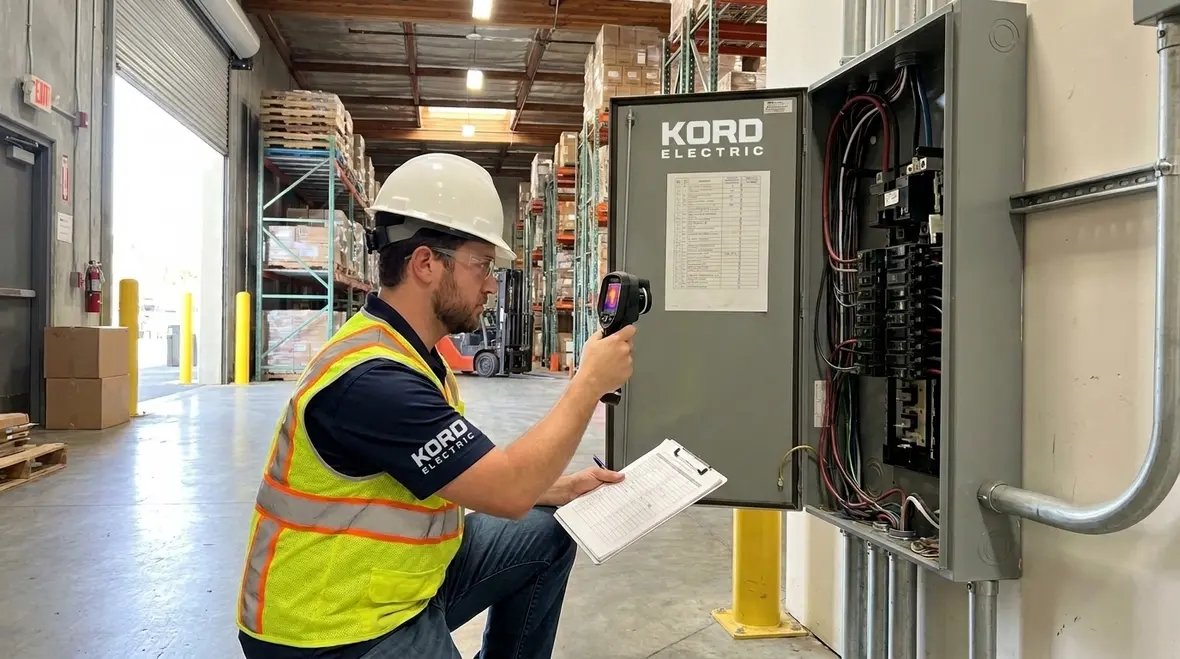
We inspect panel interiors for missing covers, damaged insulation, and signs of moisture. In addition, we examine torque related issues by looking for discoloration at terminations and abnormal wear. We also check that neutral and ground bars remain secure and that breakers fit correctly.
Panels that serve large conveyor runs, refrigeration, or automated storage systems receive special attention. Their failure modes can create wide-area outages, so we look closely at loading patterns, breaker sizing, and any history of resets or part swaps.
Conduit and wire routing
We verify conduit entries and conduit bodies. We also look for strain at elbows, cracked fittings, and evidence of rodent or pest activity in areas where that becomes a risk. When wiring passes through structural openings, we confirm that sleeves and seals remain intact.
Because warehouse traffic evolves over time, we also check for improvised repairs or additions — the extra flex run that appeared when a new machine was added, or the conduit that now sits directly in a forklift turning path. Those details matter as much as what is drawn on the one-line.
Critical terminations
We pay close attention to connections feeding motors, lighting control systems, dock equipment, and HVAC units. These loads cycle often. Consequently, they can reveal weaknesses earlier than a system that runs flat all day.
Now here is the part that sounds simple but matters: we also check for proper labeling and identification. When others can quickly identify circuits during an emergency, response time drops. That makes a real difference, not a “nice to have” difference.
To keep the warehouse electrical inspection checklist california approach practical, we record each issue in a way that connects directly to the panel schedule and floor plan. That way, maintenance teams know exactly where to go when it is time to correct a finding.
Safety devices, grounding, and monitoring for real-world operations
Electrical safety is not only about wiring. It is also about the protective devices that prevent faults from turning into disasters. Kord Electric focuses on the complete safety chain, from detection to interruption.
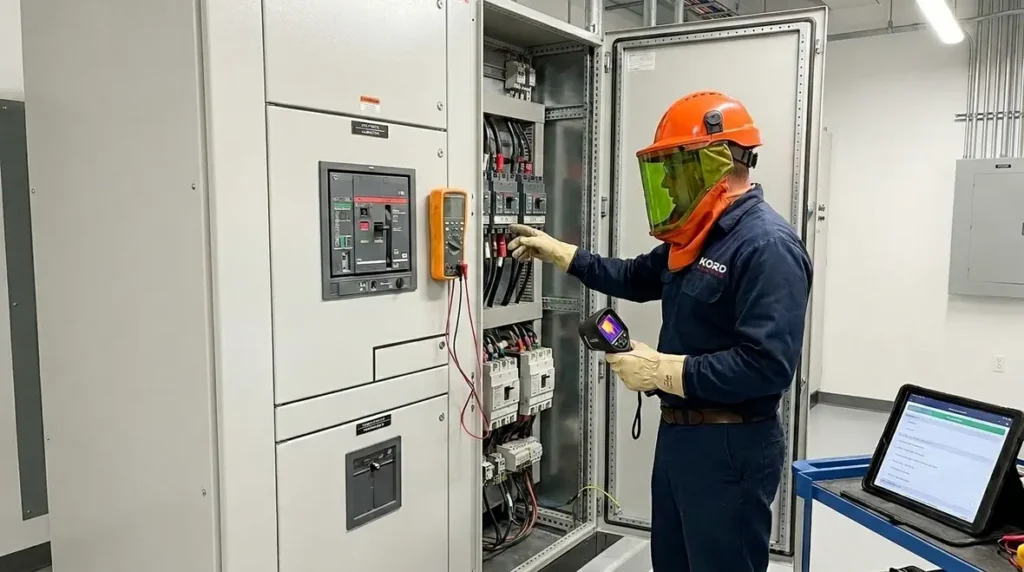
First, we review overcurrent protection. We confirm that breakers and fuses match the load needs and that no one “makes it work” by swapping parts without verifying ratings. Next, we test and observe protective device performance where applicable, and we look for signs that devices trip more often than expected. Frequent nuisance trips can point to loose connections, overloaded circuits, or moisture issues.
Then we verify grounding and bonding pathways. A solid ground path helps protective devices clear faults quickly. Without it, energized enclosures create shock risk, and that is the kind of surprise nobody wants.
We also emphasize preventive monitoring. Our preventive maintenance approach, described in our electrical preventive maintenance service resources, supports ongoing checks that keep systems stable. In short, we look for drift before it turns into failure. And when others ask whether this takes too much time, we remind them: replacing equipment after a failure takes longer than preventing one.
For warehouses with high-value inventory or temperature-sensitive goods, we often pair these safety checks with targeted monitoring of key circuits. That might mean logging load behavior on refrigeration panels, tracking voltage dips at transfer equipment, or scheduling thermal imaging on feeders that run close to their design limits.
Turning findings into a stable operating rhythm
When we identify issues with safety devices or grounding, we do more than flag them. We explain what each fix does for your day-to-day operations. For example, improving grounding in a loading area might reduce static buildup and nuisance trips, while correcting a misapplied breaker can prevent a future outage that would shut down an entire shipping shift.
By tying each recommendation back to uptime, risk, and regulatory expectations, facility managers gain a clear picture of why the checklist exists in the first place — not as a form, but as a roadmap to steadier workdays.
Keeping the checklist aligned with preventive maintenance best practices
Inspections work best when they connect to an action plan. That is why Kord Electric aligns safety findings with preventive maintenance schedules for commercial and industrial facilities and major property buildings.
Our technicians and expert service staff treat each inspection result like a clue, not a dead end. We recommend next steps based on priority, risk level, and impact on operations. For example, a loose termination in a distribution section gets handled with urgency because it can drive heat. Meanwhile, an item like labeling cleanup might land in a later maintenance window, but it still gets tracked to closure.
Additionally, we document what we checked, what we found, and what we recommend. This keeps others from repeating the same investigation next quarter. Also, it helps teams show due diligence for internal reviews and compliance conversations.
Think of it like tuning a musical instrument. If a facility only “checks” when something sounds wrong, it plays out of tune all year. But when we prevent drift, everything performs more smoothly. Warehouses do not need drama. They need uptime.
For teams managing multiple properties across Los Angeles County, pairing this warehouse electrical inspection checklist california mindset with a consistent preventive maintenance program makes it easier to define what “good” looks like at every site. The same categories apply, but the details adapt to each building’s layout, age, and load profile.
When a warehouse also relies on broader support, such as Los Angeles County electrical services for upgrades, troubleshooting, or new projects, the inspection findings feed directly into those plans. Instead of starting from scratch, the next project builds on a clear record of how the system behaves today.
Electrical inspection findings: how we communicate risk clearly
Reports can be confusing. So our team communicates findings in a business casual way that still respects the seriousness of the job. We help others understand what the issue is, why it matters, and what it costs if it stays.
We also use a practical approach to recommendations. Instead of listing dozens of vague items, we group related concerns so the facility team can plan labor and downtime. Then we explain dependencies, like how certain repairs require shutting off specific circuits.
Furthermore, our expert service staff explains safer options. If a circuit needs upgrades, we discuss approaches that match the existing system and the building’s operating needs. For many major property buildings, the electrical plan must support a mix of tenants, equipment types, and loading patterns. We help others maintain that balance with fewer interruptions.
And yes, we know nobody wants their facility treated like a lab experiment. Our goal stays straightforward: keep operations running while improving safety.
When inspection findings suggest a broader reliability or capacity question, we can connect them with related services, from targeted troubleshooting to structured electrical preventive maintenance. That gives facility leaders options: fix the immediate concern, plan a phased upgrade, or build a multi-year roadmap that keeps surprises off the calendar.
Near the end of that roadmap, many teams appreciate having a partner who understands both day-to-day repairs and long-term strategy. That is where coordinated service offerings — including dedicated preventive maintenance and county-wide commercial electrical support — help tie everything together so the warehouse electrical inspection checklist california mindset becomes part of how the facility operates, not a once-a-year event.
FAQ: Warehouse electrical safety inspection in California
Ready to strengthen electrical safety and reduce downtime?
Kord Electric helps commercial and industrial facilities and major property buildings in California protect people and equipment with hands on electrical safety inspections tied to preventive maintenance. Our technicians and expert service staff explain findings clearly, then we help others turn results into a practical action plan. If you want fewer surprises, lower risk, and a warehouse that runs like it should, contact Kord Electric today. We will review your needs, schedule an inspection, and map the next steps with calm, confident control.
When you are ready to connect your inspection program with ongoing support, you can explore structured services such as dedicated electrical preventive maintenance or broader county-wide commercial electrical work, so the same team that knows your warehouse can also support upgrades, troubleshooting, and future projects as your operations grow.