Religious Building Electrical Maintenance Guide
Religious Building Electrical Maintenance Checklist for Peace of Mind
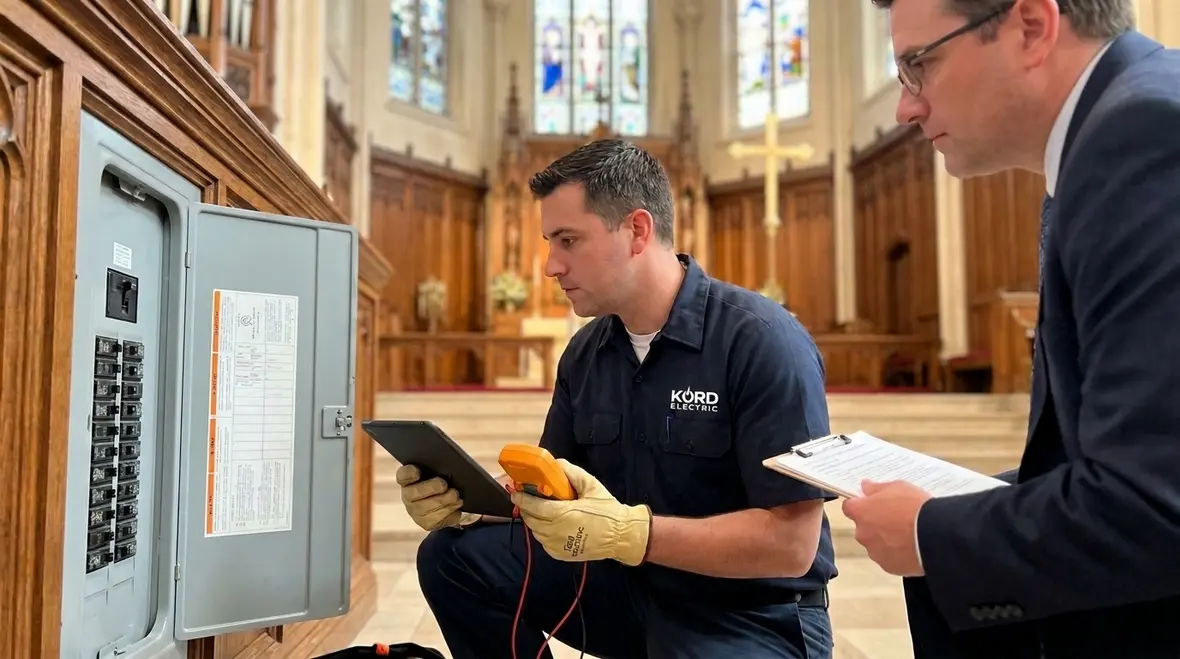
In the first part of our church electrical maintenance checklist, we start with a simple truth: electrical problems inside religious facilities do not just disrupt services, they interrupt people. So, we follow a structured routine that begins with an inspection of the main service, verifies proper grounding, checks panel labeling, and confirms that emergency lighting and exit pathways stay ready. Next, we review lighting circuits, test critical loads, and look for signs of overheating, loose terminations, or moisture intrusion. Then, we document everything and recommend next steps based on what the building actually shows us, not what a guess might say. Because yes, electricity keeps receipts, and it always collects interest.
This article explains how Kord Electric approaches preventive work for churches, synagogues, and other major religious properties, with the same steady care we apply to commercial and industrial facilities.
What Kord Electric checks first at a religious facility
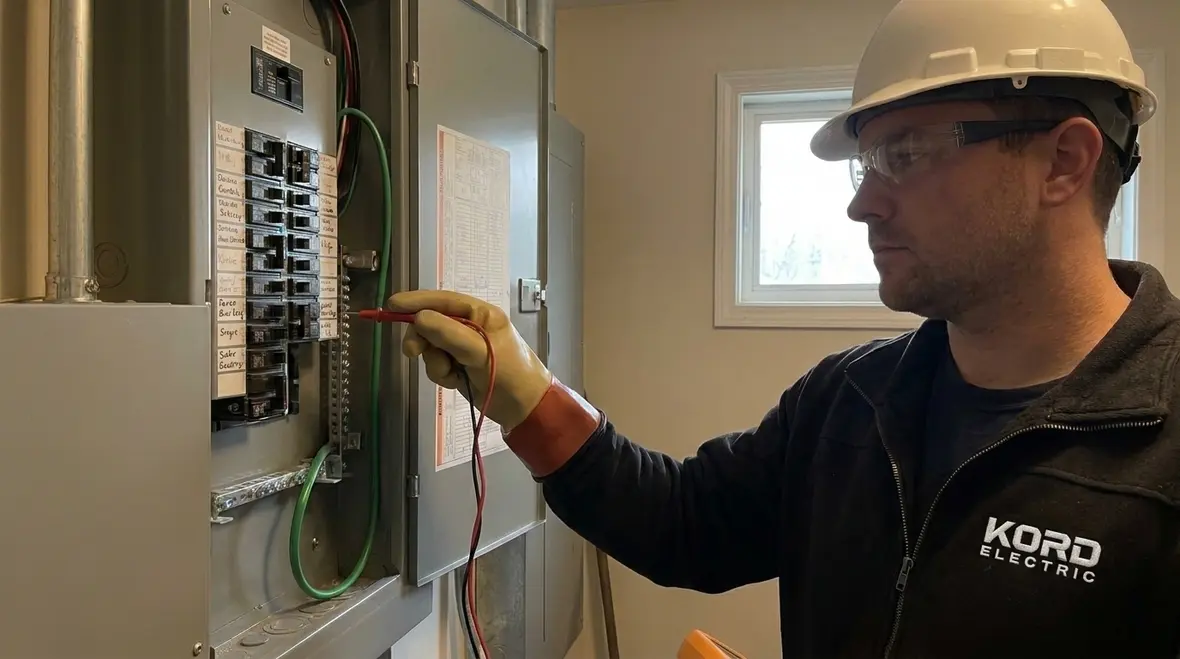
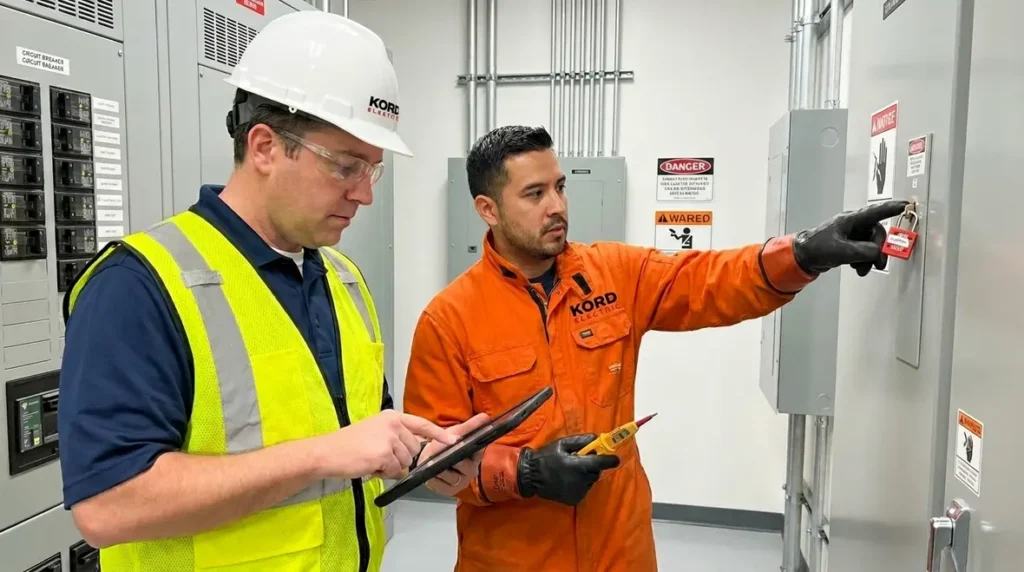
When our expert service staff arrives, they do not begin with the breakers. They begin with the story the building tells. First, we confirm the facility load plan, then we trace how power travels from the utility connection to switchgear, distribution panels, and branch circuits. After that, we verify that the grounding system is correct and continuous, because a weak path turns small faults into loud failures.
Next, we inspect accessibility and condition. Panels need clear working space, conductors need proper support, and terminations must be tight. Additionally, we look for water or condensation near outdoor enclosures, lighting control boxes, and any area with roof leaks. If you have ever watched a sitcom where the light flickers right before the punchline, that is exactly the moment we want to prevent in real life.
Finally, we review labeling and one line documentation. Others may treat that as “admin work,” but our technicians know better. Clear identification reduces outage time and prevents accidental switching during maintenance windows.
Electrical safety and code readiness during inspections
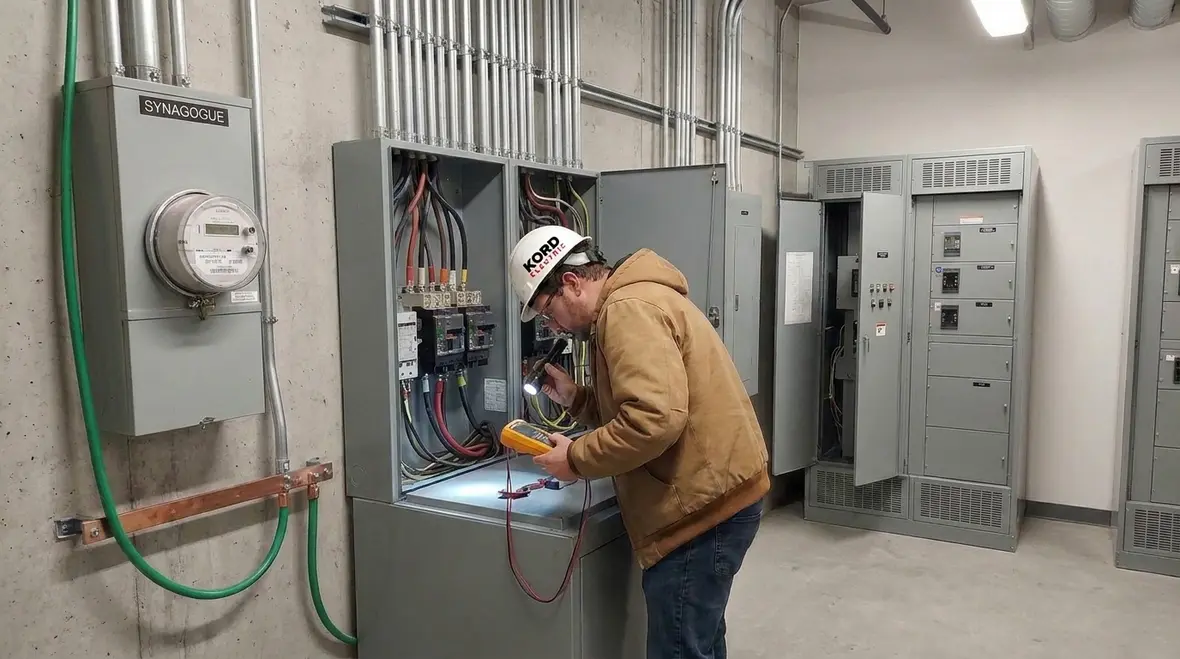
Religious buildings hold people of different ages, mobility needs, and routines. Therefore, our safety approach stays thorough and practical. We verify that protective devices match the load, that circuit breakers and fuses behave correctly, and that any overcurrent protection supports safe shutdown when faults appear.
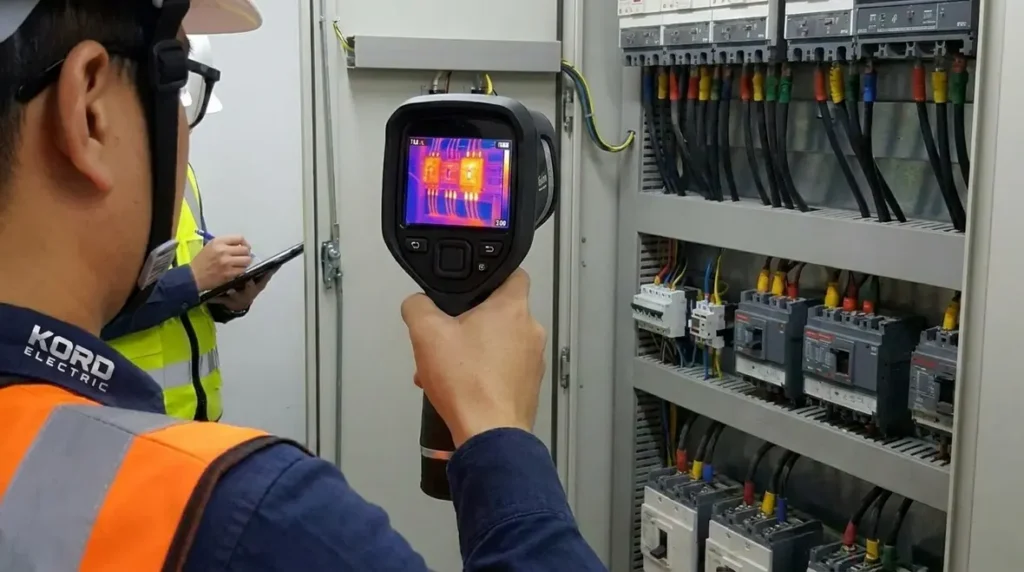
Then, we focus on hot spots. Our technicians inspect for loose connections, measure temperature where appropriate, and check for corrosion on bus bars and grounding points. Moreover, we verify that all equipment is properly rated for its environment. Outdoor or semi sheltered areas deserve real attention, not optimistic assumptions.
We also evaluate emergency systems and life safety power. Exit signage, emergency lighting, and any critical control power support needs stable reliability. In addition, we confirm that testing records stay current and that any observed deficiency gets documented in a format the facility team can act on.
And yes, we know people want lighting to “just work.” Still, electricity does not run on vibes. It runs on correct connections and predictable design.
How our technicians maintain lighting, power, and controls
After safety checks, we move into the systems that shape daily operations. Churches and major religious sites often run complex lighting schedules: sanctuary lighting, stage and podium circuits, fellowship halls, classrooms, corridors, and outdoor areas for gatherings. Our technicians evaluate those circuits by checking switching logic, verifying load balance, and confirming that control devices work as designed.
Next, we look at power quality concerns. In many older or heavily used buildings, issues like voltage drop, unbalanced phases, and harmonic noise can shorten equipment life. Therefore, we examine feeding arrangements and identify abnormal consumption patterns, especially where audio systems, projectors, HVAC cycles, and kitchen equipment run at the same time.
Then we handle controls. Dimmers, occupancy sensors, timer relays, and panel mounted control components must respond consistently, particularly during services and events. We inspect control wiring, check contactor condition where used, and confirm that any interlocks work correctly. If the building has a building management system, we also verify that the electrical side supports reliable operation.
Along the way, our expert service staff explains what we see in plain language. They do not talk like a manual. They talk like your facility partner.
Preventing problems with a detailed preventive maintenance workflow
Preventive maintenance works because it interrupts failure before it becomes an emergency. To support this, Kord Electric follows the preventive process shown in our electrical preventive maintenance approach, including systematic inspections, performance checks, and documented recommendations. We plan the work around how the building operates, so services and events do not get derailed.
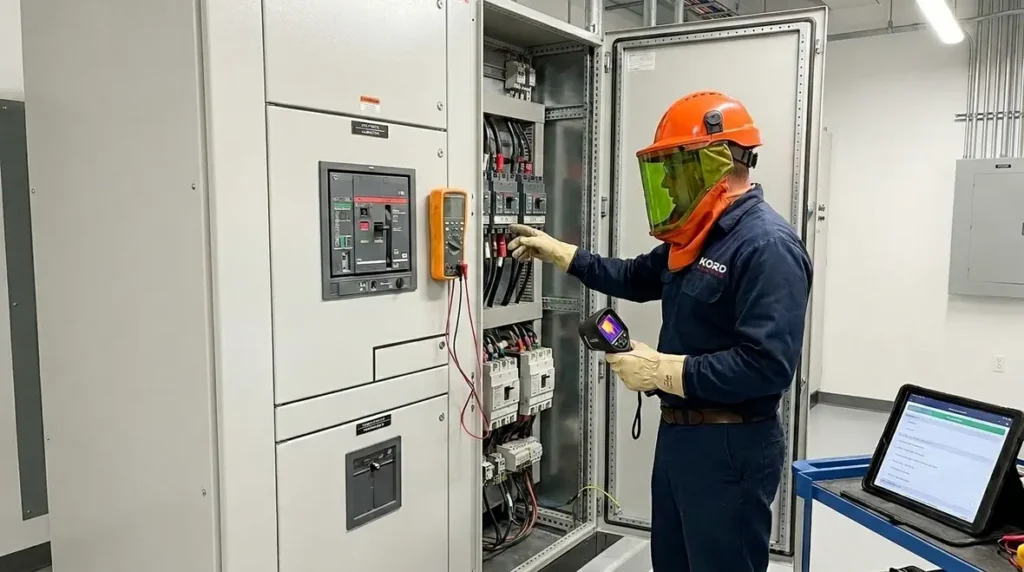
Our technicians typically break the work into steps: inspect, test, verify, correct, and record. Additionally, we evaluate the condition of conductors, cable routing, and connection points. We confirm that equipment enclosures stay sealed and that ventilation pathways remain clear. Then, we test key performance items such as emergency lighting readiness, protective device behavior, and operating functions for controls.
We also manage the follow up. When deficiencies appear, we categorize them by risk and schedule. Small issues get corrected quickly to prevent drift. Higher risk findings get placed into a plan that aligns with facility leadership, electricians, and available downtime windows.
In other words, we do not just look. We follow through.
Dual column focus: what to do before service, during events, and after hours
Before services
- Verify lighting and control response across sanctuary, classrooms, and egress areas
- Confirm emergency lighting and exit signage readiness records stay current
- Check panel accessibility and ensure no storage blocks working clearances
- Inspect outdoor and roof adjacent enclosures for moisture or damage
During major events
- Confirm audio and staging loads run without unusual voltage dips
- Observe switching behavior for stage, podium, and overflow spaces
- Keep an eye on any temporary power use and its safe routing
- Ensure temporary lighting does not overload existing circuits
After hours
- Perform deeper testing of protective devices and connections when loads drop
- Document any abnormal findings for next steps
- Address quick corrections and schedule repairs based on risk level
- Update as built notes when the facility shows changes over time
Typical electrical issues in major religious buildings and how we stop them
Religious properties often combine legacy infrastructure with steady everyday use. Consequently, certain issues show up again and again, and our team plans for them. One common problem is panel labeling breakdown. Over time, circuits get repurposed, and people start guessing. We correct that by verifying circuit identity and updating identification in a way that reduces future troubleshooting time.
Another frequent issue involves moisture. Roof leaks, condensation, and outdoor exposure can affect lighting drivers, control boxes, and connector points. When moisture enters, corrosion follows. Eventually, the building sees flicker, nuisance trips, or intermittent faults. Our technicians inspect and remediate affected components, then recommend a protection strategy where needed.
We also see wear on switches and dimming devices. High frequency use during services and rehearsals can degrade contacts. Instead of waiting for a “mystery failure,” we test and repair or replace worn parts before they become the star of the show.
And because major religious buildings often host community events, we evaluate load growth patterns. We help facility teams understand when existing distribution needs upgrading, not just when a breaker needs replacing. That distinction keeps budgets calmer and outages rarer.
FAQ about Kord Electric’s religious building electrical maintenance
As you build or refine your own church electrical maintenance checklist, you can also align it with the broader support available through Kord Electric’s Los Angeles County electrical services, especially if your property spans multiple buildings or campuses.
Bottom line: schedule preventive electrical maintenance with Kord Electric
When a religious facility keeps its electrical systems healthy, services run smoothly and safety stays steady. Kord Electric brings expert service staff, careful preventive maintenance planning, and detailed documentation built for major commercial level reliability. If you want fewer surprises during weekends, rehearsals, and community events, reach out to us. We will review your current conditions, explain the findings in plain language, and build a practical maintenance plan for your building. Call Kord Electric today and keep the power as dependable as your purpose.
Near the end of any walkthrough, we often connect religious facilities with the same structured electrical preventive maintenance framework we use for commercial and industrial properties, so their sanctuaries, classrooms, offices, and community spaces share the same calm reliability.
Whether you manage a single chapel or a full campus of buildings, coordinating maintenance through dedicated service offerings helps keep your operations steady. Kord Electric’s broader service capabilities across Los Angeles County give you one partner for inspections, maintenance, troubleshooting, and future upgrades as your congregation and facility needs grow.