California School Fire Safety Compliance Guide
California School Fire Safety Compliance Requirements: What Facilities Must Do
In California, school fire safety requirements California drive what commercial and industrial property owners must put in place to protect people and keep buildings compliant. These expectations do not appear out of thin air. They come from a mix of state rules, local enforcement, and widely used building and fire codes. And when an inspection day arrives, the fire marshal does not care how busy your calendar is. They care whether the systems work and whether the facility keeps them maintained.
At Kord Electric, we support major properties and large facilities, and we do it the way our expert service staff would explain it on site: clearly, step by step, and without the runaround. We also make sure owners understand that compliance is not a one-time event. It is a long game. Besides, fires do not respect schedules. Neither do code cycles.
How Fire Safety Requirements Shape Life Safety Systems

To meet school fire safety requirements California, a facility must think about life safety as a system. Fire prevention is only one piece. Once smoke or heat shows up, the building must detect it, warn occupants, control spread, and guide people to safety. Therefore, compliance starts with how the building behaves during an emergency.
First, facilities typically rely on detection and alarm equipment. Next, they use suppression or extinguishing systems where required. Then they focus on compartmentation, meaning the building’s ability to limit fire spread through walls, doors, and rated assemblies. Finally, the facility must support safe egress through properly maintained exit paths.
Our technicians and expert service staff often see the same pattern: systems that were installed correctly years ago, but later neglected during renovations or maintenance gaps. Consequently, the facility can fail an inspection not because the system is brand new, but because it is out of date, impaired, or not documented. That is a big difference, and it matters.
Electrical Oversight That Keeps Fire Risk Lower

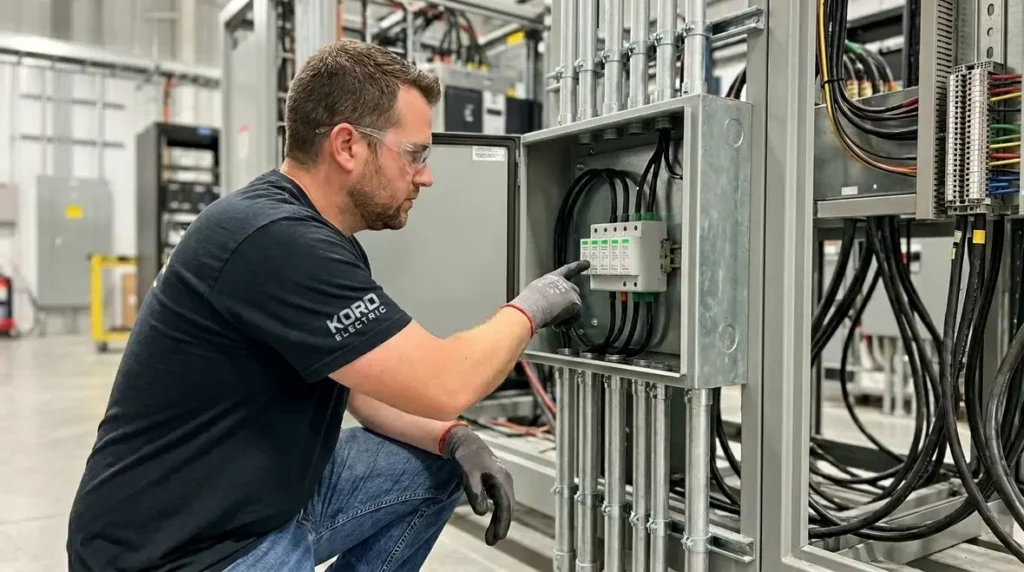
Electrical systems can start problems, worsen failures, or block emergency operations if they are not managed well. While people may picture fire safety as smoke alarms and sprinklers, electrical integrity plays a quiet but decisive role. Wiring issues, overloaded circuits, damaged panels, and poor connections can all create heat and arcing. And arcing can look small until it suddenly looks expensive.
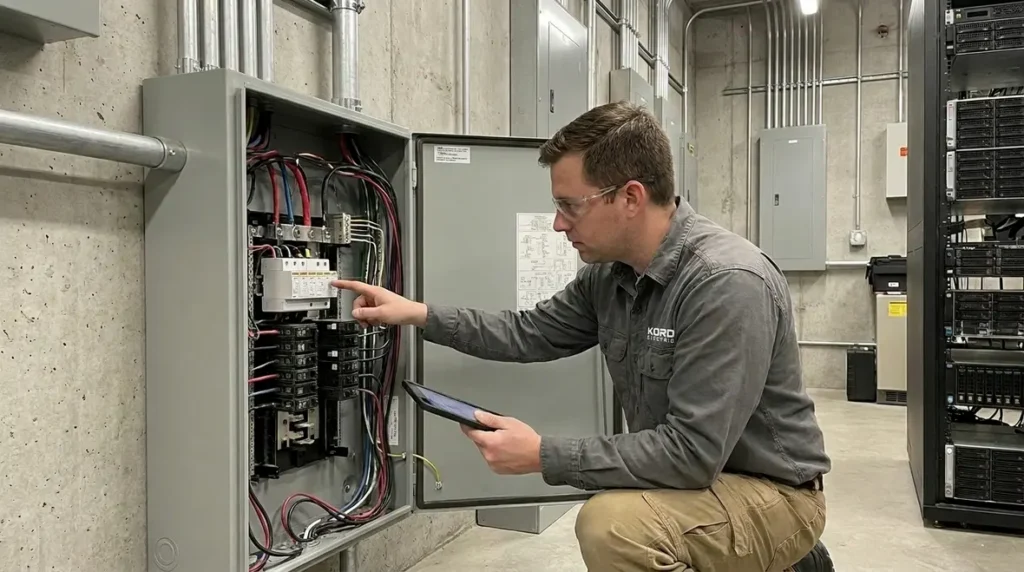
In our experience at commercial and industrial sites, Kord Electric supports electrical fire prevention by focusing on the details that inspectors check. We look at panel condition, conductor terminations, protection devices, and whether devices stay in service without shortcuts. Additionally, we help facilities document testing and maintenance so they can show responsible upkeep when questions come.
We also coordinate with facility teams during planned work, especially when modifications happen. Renovations often move equipment, reroute pathways, or change loads. Even when work seems minor, those changes can affect emergency circuits, alarm power, and critical loads. Therefore, our expert service staff explains the impact in plain terms before installation, so the facility avoids surprises later. It is like reading the fine print, except the fine print can save lives.
For a related view on prevention practices, facilities often use our guidance in electrical fire prevention for commercial buildings as a baseline. That approach fits school environments because the root goal remains the same: reduce ignition sources, keep systems dependable, and support safe operation.
Documentation, Testing, and Inspection Readiness

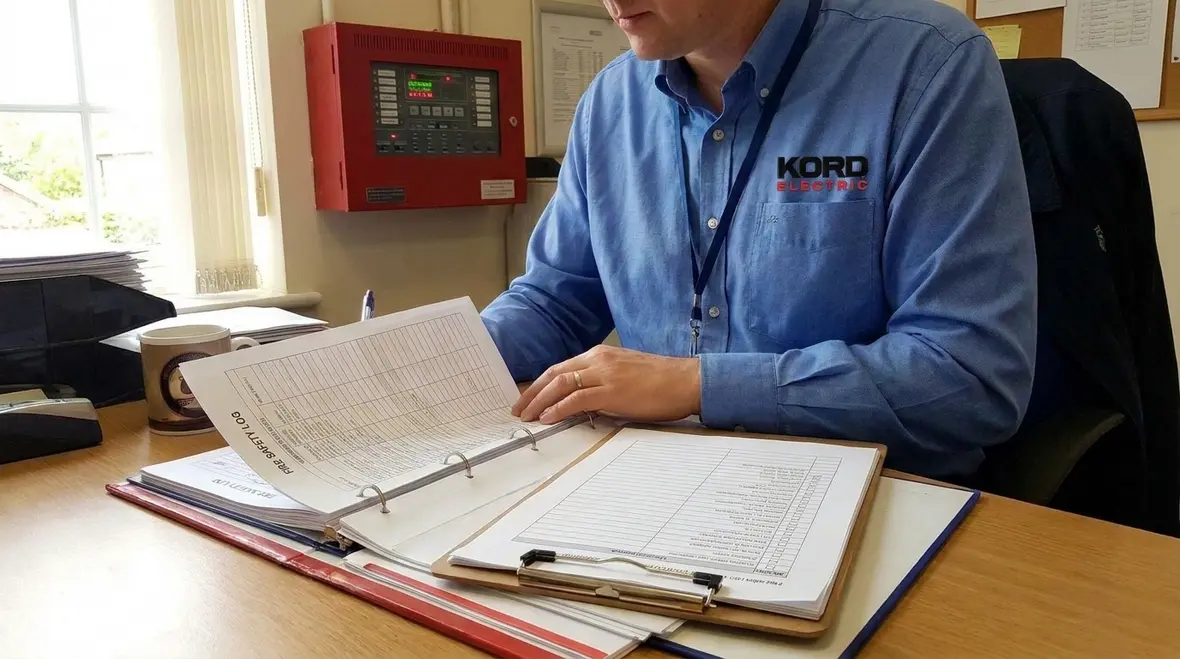
Some owners think compliance means having the right equipment. In reality, compliance means being able to prove that the equipment stays ready. Fire systems require ongoing testing, inspections, and maintenance. In turn, those activities create records that demonstrate the facility follows required schedules and corrective actions.
To stay aligned, many facilities build a clear inspection calendar. They track fire alarm testing, sprinkler and standpipe maintenance, battery checks for alarm systems, and visual inspections of devices and housings. Then they document results and repairs, including dates and service details. Most importantly, they correct deficiencies promptly so the building does not carry a backlog.
When Kord Electric supports a major property, we often help teams treat records like a living asset. We do not just walk away after work. Instead, we communicate what we verified, what we changed, and what the facility should monitor. Consequently, the next inspection feels less like a cliff and more like a planned meeting.
And yes, inspections can still be stressful. Even so, with proper documentation, the facility can move from panic to control. Like any good playlist, consistency beats chaos.
Common Failure Points Seen in California School Settings
Even strong facilities can experience recurring problems. Based on what our technicians encounter across commercial and industrial properties, the most common failure points tend to fall into a few categories.
First, electrical connections and panel components can drift out of proper condition due to heat, age, or repeated maintenance. Second, new equipment added over time may change loads and affect protective devices. Third, emergency power features can degrade if testing is incomplete or not tracked.
Another issue involves altered building spaces. When contractors move classrooms, add storage areas, or adjust lighting and power layouts, it can change how fire and smoke systems perform. Therefore, facilities must coordinate electrical scope with life safety scope. We help reduce gaps by confirming how power pathways and system requirements connect to emergency function.
There is also the human factor. Teams can assume a system works because it has always worked. However, devices can fail silently. Smoke detectors age, batteries lose capacity, and sensors can drift. So, periodic testing and timely repair matter. Our expert service staff makes sure facility leaders understand what “working” means. Working means tested, documented, and reliable under the conditions the code requires.
Lastly, some buildings struggle with access. If panels, control boxes, and test points become blocked by storage or renovations, inspections suffer and emergency responders face delays. It is simple, but it often gets overlooked. Like leaving your house keys inside and acting shocked when you cannot get in.
Planning Upgrades That Support Compliance Without Disruption
When upgrades become necessary, the smartest path balances safety, code alignment, and operational continuity. Schools operate under strict calendars, so owners prefer solutions that minimize downtime and reduce disruption to students, staff, and daily routines.
At Kord Electric, we help commercial and industrial facilities plan improvements with a practical mindset. We start by identifying what systems require attention and what deficiencies create the biggest risk. Next, we confirm how electrical work impacts fire alarm, emergency power, and related circuits. Then we schedule the installation and testing so the building stays safe during transitions.
In many cases, upgrades include improvements to power distribution, correction of unsafe conditions, and better protection for critical circuits. We also support integration efforts so systems coordinate properly. That coordination matters because fire safety cannot rely on one device doing all the work. The building must detect, alert, and respond with the right timing.
Just as importantly, we communicate. Our technicians explain what we find and why it affects compliance. They also explain how the facility should handle ongoing maintenance, so the upgrade remains effective long after the project closes. That is how you protect your investment and your people.
And if someone tells you upgrades are “too much trouble,” we gently remind them that fire prevention is like seatbelts. Nobody wants to think about it until the moment they really should.
FAQ: California School Fire Safety Requirements
Next Steps for Safer Compliance at Your Facility
For major commercial and industrial properties, fire safety compliance should never feel like a last minute scramble. If your facility needs support with electrical fire prevention, life safety readiness, or inspection support, Kord Electric can help. Our technicians and expert service staff explain findings in a clear way and coordinate upgrades that protect your people and your compliance goals. Reach out to Kord Electric to review your current setup and plan the right next steps for safer, calmer operations.
If you manage facilities across Southern California, you can also look at how broader Los Angeles County electrical services from Kord Electric connect fire safety priorities with panels, distribution, and long-term reliability. Treating school fire safety requirements California sites must meet as part of a unified electrical strategy helps keep inspections, upgrades, and day-to-day operations aligned instead of fragmented.
When you are ready to coordinate electrical fire prevention, code-conscious upgrades, and practical maintenance under one umbrella, Kord Electric is prepared to support your next project with steady communication, clear documentation, and service built around real-world school and facility schedules.