Warehouse Electrical Maintenance Requirements CA
Warehouse Electrical Maintenance Requirements in California: what companies should actually do
In California, warehouse electrical maintenance requirements california are not just “nice to have.” They protect people, keep inventory moving, and reduce the odds that your facility goes dark right when shipments need to roll. Kord Electric helps commercial and industrial warehouses, distribution centers, and major property buildings plan and carry out preventive electrical work that stays aligned with safety expectations and real world operations. And we do it with an experienced team whose technicians explain what they find, what it means, and what they recommend next. Because if you have to pay for downtime, you should at least get a clear story, not mystery smoke. Now let’s cover the practical requirements your facility should follow, step by step.
How California warehouses manage electrical risk day to day
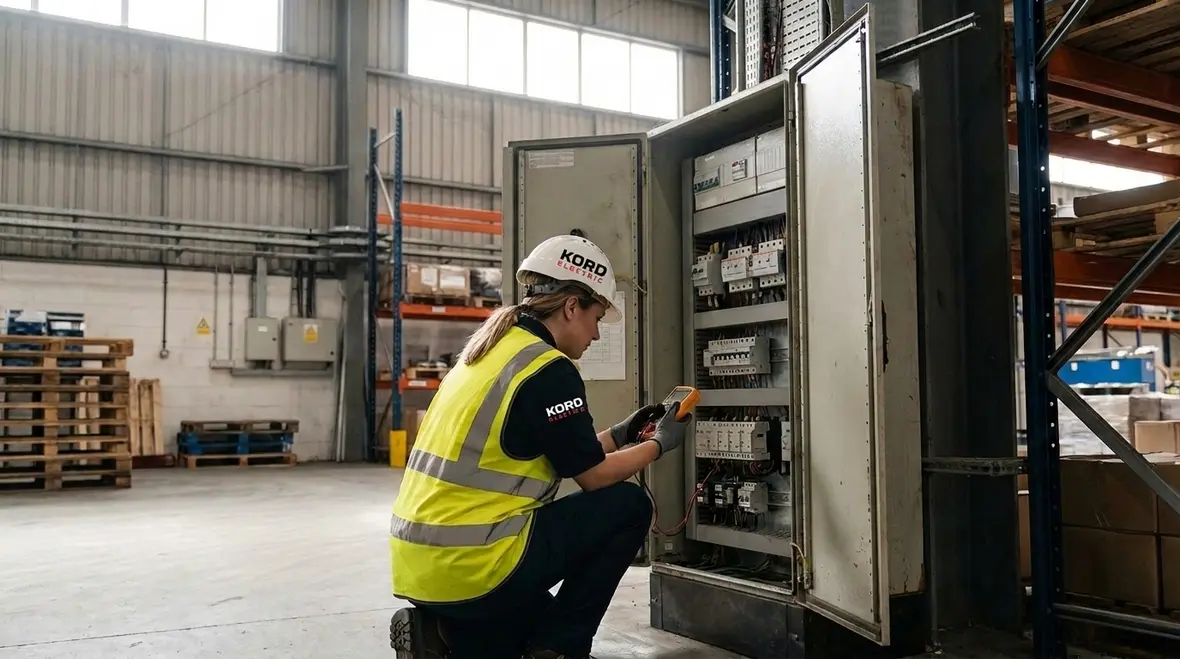
Warehouses run on constant electrical loads: dock equipment, lighting for long aisles, refrigeration, conveyors, forklifts charging, wireless networks, and the systems that keep fire and security active. Therefore, risk builds quietly, through heat, vibration, moisture, and repeated use. Over time, connections loosen, insulation ages, panels corrode, and breakers can drift from their intended behavior. Then, one busy afternoon later, the problem stops being “maintenance” and starts being “urgent.”
Others treat electrical maintenance like spring cleaning, meaning they only look when something breaks. We do not. Our expert service staff plans work around how warehouses actually operate, then they verify conditions during inspections. In short, our technicians look for early signs of failure so the facility avoids emergency repairs that disrupt productivity.
Preventive electrical maintenance plan for industrial and commercial buildings
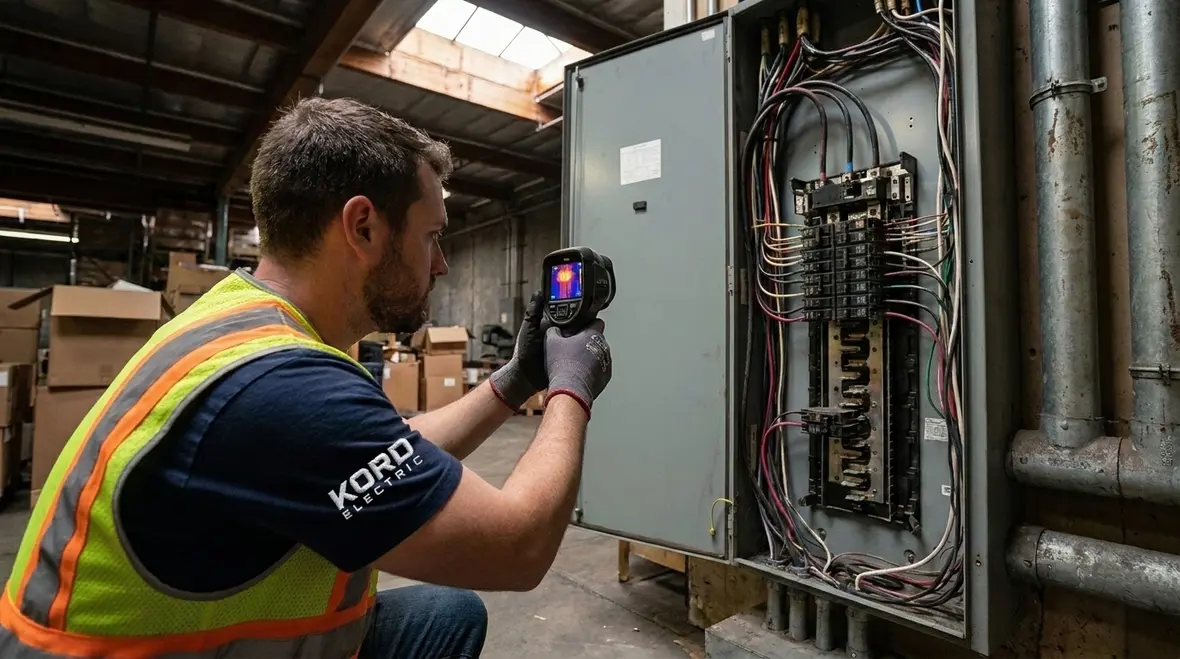
Kord Electric builds preventive programs that fit warehouse realities, not generic checklists. First, we schedule inspections around production cycles, so the work does not fight your calendar. Next, we document findings and track trends across visits, which helps teams budget smarter and fix the right items before they escalate.
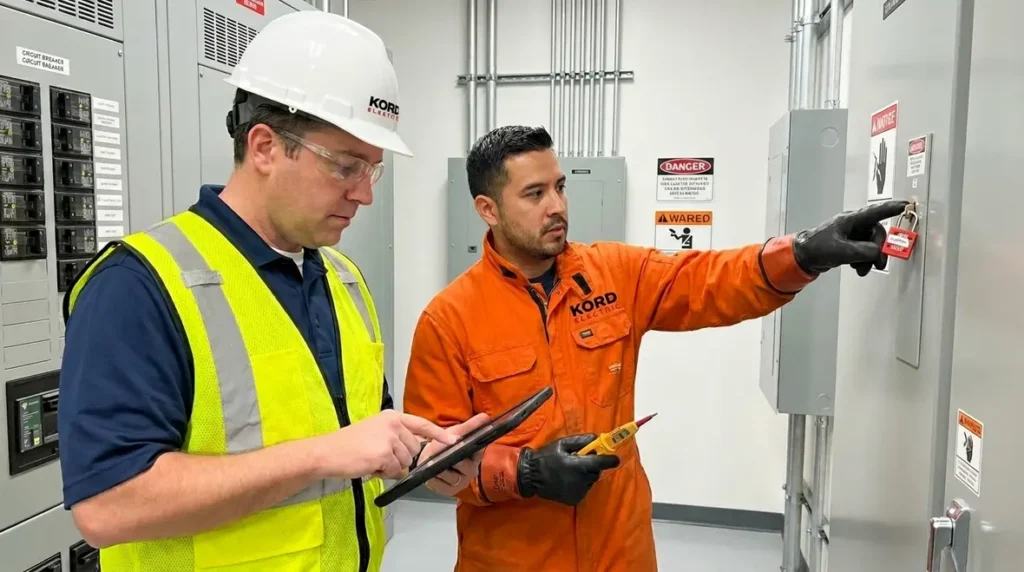
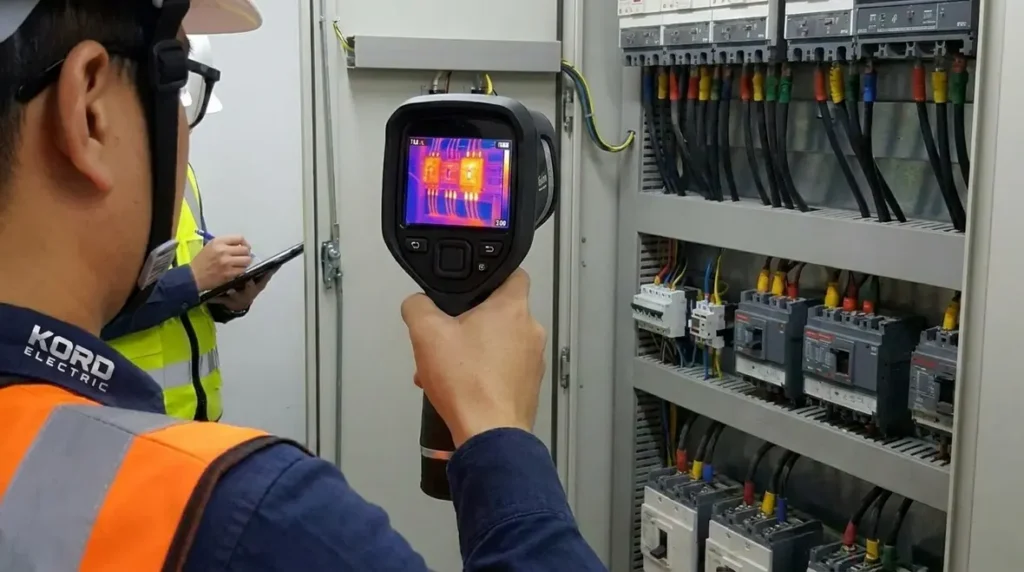
To support this approach, our preventive maintenance program includes the kind of work described in our electrical preventive maintenance process at kordelectric.com. We typically evaluate panels and distribution equipment, verify protective devices, inspect terminations and bus systems, and assess visible and measurable conditions that point to overheating or abnormal wear. Then we help your team understand what needs attention now, what can wait, and what simply needs monitoring.
And yes, the technicians on our side will explain it in plain language. If a connection looks cooked, we tell you what “cooked” means and why it happened. Like a calm voice in a chaotic room, we guide decisions so you are not left guessing.

What inspections should cover inside a warehouse
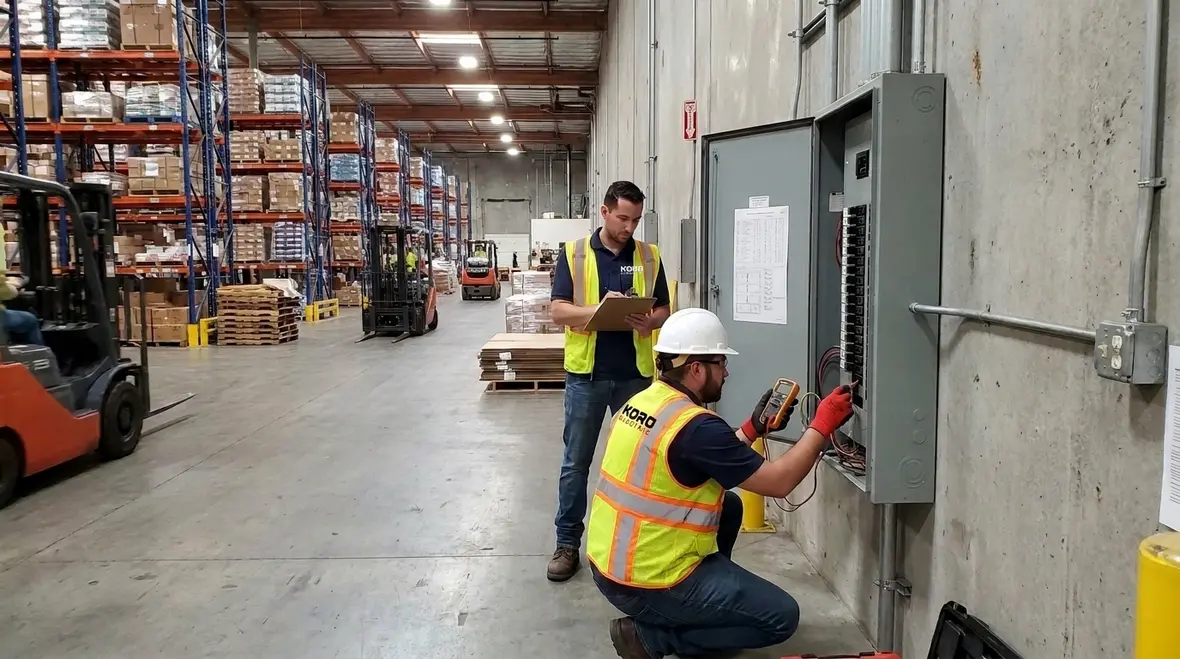
During planned electrical inspections, our technicians focus on the components that commonly drive warehouse downtime. Because warehouses involve heavy use and harsh environments, the inspection scope must reflect those conditions. Then, after the site review, we help teams prioritize corrections.
Key inspection areas often include:
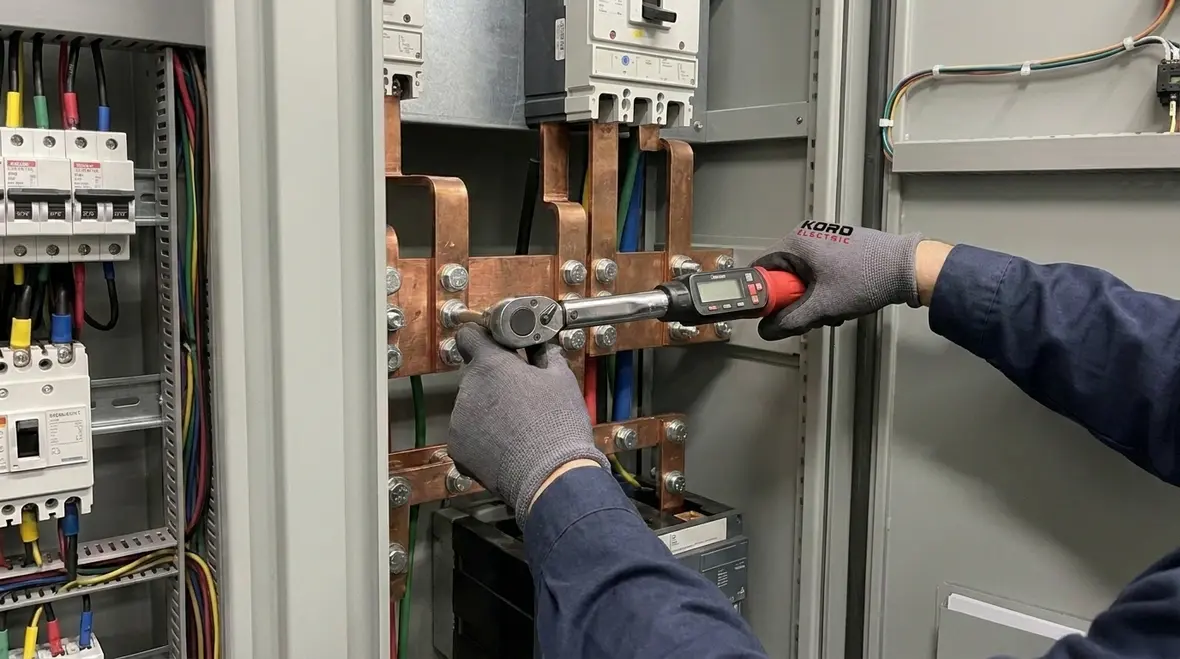
Electrical panels and distribution gear: we examine labeling, lugs and connections, signs of heat, corrosion, and proper torque where applicable.
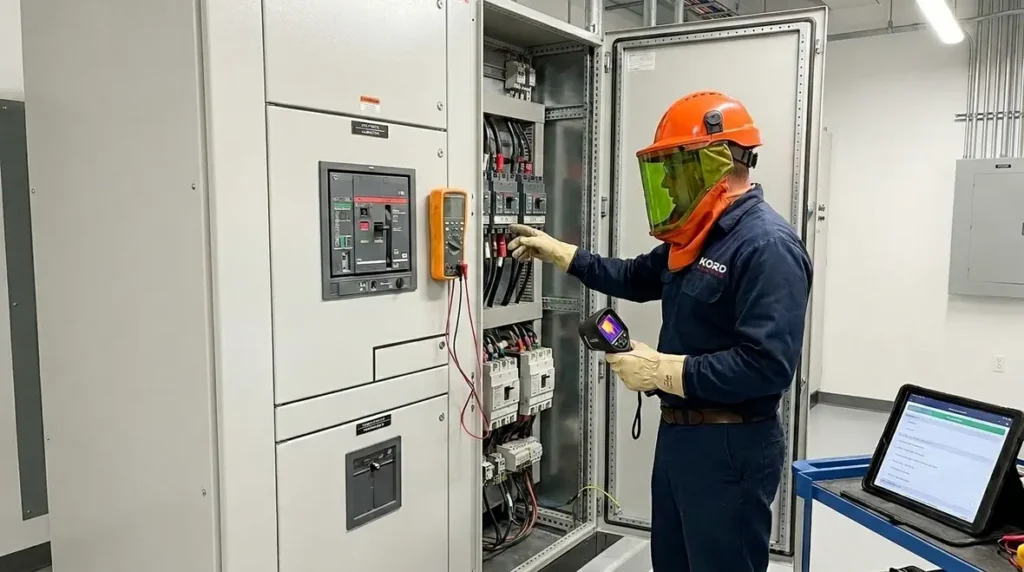
Breakers and protective devices: we confirm operation, inspect for wear, and review that the protection strategy matches load needs.
Busbars and feed wiring: we look for discoloration, loose terminations, and physical strain from vibration.
Grounding and bonding: we verify continuity and condition, because effective grounding supports safety and helps reduce equipment issues.
Lighting systems and controls: we assess fixtures, switches, occupancy sensors, and wiring connections that support long aisle visibility.
Power quality concerns: we evaluate symptoms like nuisance trips, recurring equipment faults, or harmonic-related stress.
Importantly, we do not treat these checks as a one time event. Instead, we align the frequency and depth with the facility’s age, operating hours, and environment. A warehouse with damp dock areas and frequent vehicle charging faces different realities than a cleaner, lighter use building. Our staff adjusts the approach accordingly.
How often should electrical maintenance happen in California warehouses?
Many facility managers ask how often they should schedule work. They also worry that frequent service will slow operations. We get it. Nobody wants their warehouse turned into a construction zone for no reason, and nobody wants the lights flickering like a horror movie.
In practice, warehouse electrical maintenance requirements california expectations often translate into a preventive schedule based on risk, not guesswork. Then the plan becomes a mix of routine inspections and targeted corrective work. For example, panels and terminations benefit from periodic evaluation because overheating usually announces itself through early physical changes. Similarly, grounding systems should not be left to chance since safety depends on continuity and good contact.
Our expert team helps companies set a realistic cadence, often including:
Routine visual and functional checks aligned with operating patterns.
More detailed inspections for panels, feeders, and critical systems, especially in high load areas.
Targeted testing when equipment shows recurring faults, nuisance trips, or signs of aging.
So while the exact schedule depends on your facility, Kord Electric helps you choose intervals that lower risk and protect budgets. In other words, we aim for steady maintenance, not surprise emergencies.
Load management, downtime planning, and documentation that actually helps
Warehouses rely on consistent power. Therefore, maintenance must manage load changes, support safe work, and minimize downtime. Our technicians plan work sequences so they can shut down circuits only when necessary and keep critical systems running. Then they verify return to service with proper checks.
We also help teams with documentation, because paperwork is only boring until it saves you. Detailed records let you see what changed, what failed, and what improved after service. Then your management team can explain decisions to owners, insurers, and internal stakeholders without starting from zero every time.
In addition, we support clearer communication across departments. When our expert service staff explains findings, we translate technical observations into operational impacts, like why a connection issue can lead to repeated breaker trips, or how failing components can shorten equipment life. That way, your maintenance schedule becomes a tool, not a mystery.
Compliance mindset: safety, protection, and real operational conditions
Commercial and industrial buildings face strict safety expectations, and electrical systems sit at the center of that responsibility. Kord Electric takes a compliance mindset, which means we do not just “inspect.” We evaluate the condition of equipment, confirm that protective functions remain reliable, and recommend corrections that fit the facility’s use.
Moreover, compliance does not help you if it ignores reality. Warehouses include busy loading docks, dust, humidity, temperature swings, and vibration. Therefore, maintenance must address those conditions. For example, corrosion on terminations or damaged insulation can increase risk even if the equipment still “works” today. The goal is to prevent hazards before they turn into incidents.
When to schedule emergency help versus preventive service
Preventive work reduces the need for emergencies, but it does not eliminate the possibility of sudden faults. When problems show up, teams need to respond fast and safely. Kord Electric helps commercial and industrial facilities move from alarm to resolution without guesswork.
Consider urgent electrical service when you see signs like repeated breaker trips, burning odors, frequent lighting failures, visible scorching at panels, smoke from electrical rooms, or ongoing malfunctions in critical equipment. Then, once the emergency is handled, we recommend a preventive plan to identify root causes, not just chase symptoms.
Because if a problem keeps returning, it is usually not “bad luck.” It is a system condition that maintenance should uncover and correct. Our technicians focus on the why, so the warehouse can return to stable operations.
Frequently Asked Questions
Take the next step with Kord Electric
If your warehouse needs a steadier electrical maintenance plan, Kord Electric helps you build it with experienced technicians who explain findings clearly and plan work around your operations. We service commercial and industrial facilities, including major property buildings, and we help reduce avoidable failures through preventive inspections and smart corrective action.
Reach out to us to review your current electrical maintenance approach and set a practical schedule for the next season of operations. When your power stays stable, your whole operation breathes easier. For organizations managing multiple properties or complex distribution campuses, pairing your warehouse program with our broader Los Angeles County electrical services keeps maintenance, troubleshooting, and upgrades aligned instead of scattered across vendors.
Whether you are refining inspections for one facility or building a standard across several sites, Kord Electric’s structured services—ranging from electrical preventive maintenance to emergency response—help keep your warehouse electrical systems prepared for the workload ahead.
When your maintenance program lines up with real warehouse conditions, compliance expectations, and day to day operations, electrical power becomes the quiet, dependable backdrop it should be, not the main character in your next outage story.