Warehouse Electrical Safety Audit Checklist
In the first part of a Warehouse electrical safety audit, we at Kord Electric move fast, but we do not rush. We start by mapping how power flows through a facility, then we verify that the people, the process, and the equipment are all protected. During this stage, our expert service staff walks the site with a calm, methodical eye, because we know an issue you catch early is cheaper than one that shows up as a fire, a shutdown, or a claim. And yes, we’ve heard the jokes about “electricity being dramatic.” Still, it is not drama when a panel is unsafe.
Next, we build the audit around real risks found in warehouses and other commercial or industrial facilities, including major property buildings. Then, we document everything in clear language so other teams can act without guesswork.
1) Establishing the audit scope and site risk picture
Before anyone checks a breaker or tests a cable, we define the scope. That means we confirm the warehouse layout, the storage use, and the high activity zones like dock areas, racking lanes, loading docks, maintenance rooms, and external power feeds. Then we review operating schedules, past electrical faults, and any reported shocks, nuisance trips, or overheating issues.
As we do this, our technicians explain what we are looking for, and why. In practice, this step reduces surprises later. Also, it keeps the audit grounded in how the warehouse truly runs, not how we wish it ran. If a building manager expects “a quick look,” we gently correct that expectation, because safety does not work like a pop quiz.

In a complete Warehouse electrical safety audit checklist, this scoping step anchors everything that follows. It is where we connect the dots between your floor plan, your processes, and the electrical system that keeps everything moving.
2) Electrical distribution and panelboard readiness
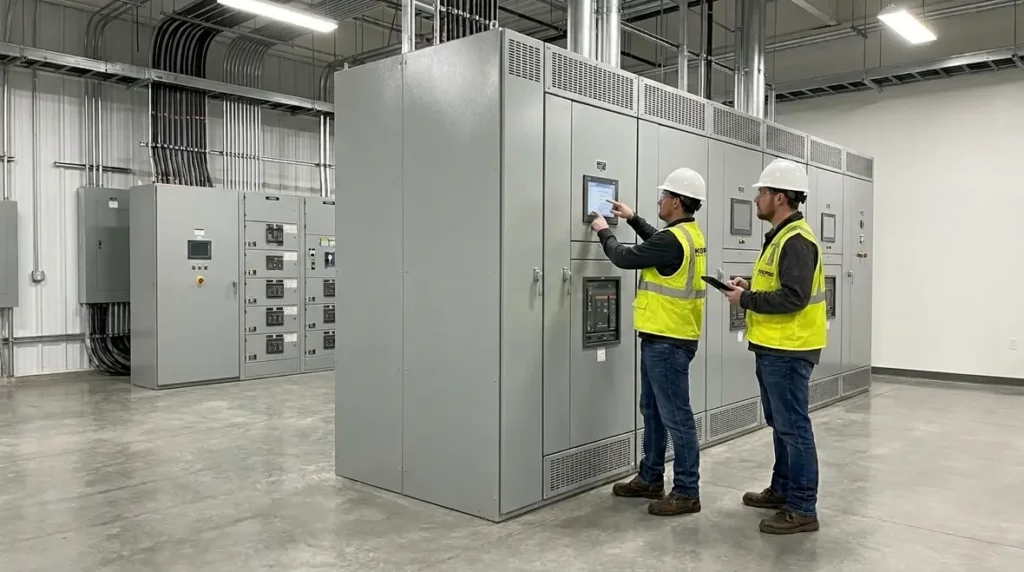
The core of warehouse risk often lives in distribution equipment. Therefore, we examine main switchgear, switchboards, panelboards, and any distribution along the rack systems or mechanical rooms. We verify that enclosures remain closed, labeled, and properly secured. Then we inspect for signs of overheating such as discoloration, melted insulation near terminations, loose lugs, and damaged busbar areas.
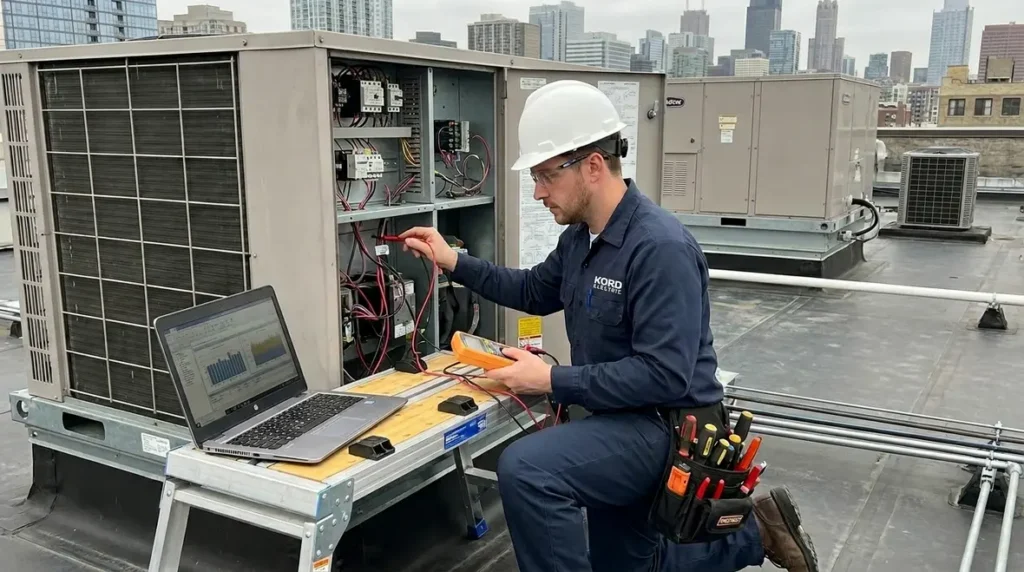
Next, we check breaker types and interrupt ratings. We confirm that protective devices match the conductors they serve, because mismatches can create conditions where protection fails or nuisance trips push teams into unsafe workarounds. Meanwhile, our technicians communicate plainly. They point out which findings could cause arc flash exposure and which ones can lead to fault clearing delays.
Also, we verify that neutral and ground separation rules are followed where required. We see this issue more often than people think, and it is one of those “silent troublemakers” that can cause equipment damage before it causes a visible failure.
For warehouses running complex operations or multi-tenant commercial properties, it often makes sense to connect this checklist with structured maintenance practices. The same distribution and panelboard readiness checks align closely with ongoing inspection work described in Kord Electric’s NFPA 70B electrical panels and switchgear maintenance guidance for commercial and industrial clients.
3) Grounding, bonding, and earthing integrity
In a warehouse, reliable grounding and bonding are not optional. If the grounding system is loose, corroded, undersized, or missing, then fault current may not take the expected path. As a result, overcurrent devices can fail to trip fast enough, and exposed conductive parts can become energized longer than they should.
So we inspect bonding jumpers, grounding electrode conductors, ground rings where present, and connections to metallic raceways and equipment frames. We also confirm that grounding continuity is maintained across the facility where the system relies on bonding for equipotential performance.
We also look for practical issues like corroded clamps in harsh environments, especially where humidity, chemicals, or frequent cleaning show up. Our team explains the “why” behind each test result, and we do not bury it in jargon. When people understand the logic, they usually approve corrective actions faster.

This part of the Warehouse electrical safety audit checklist is also where we tie your warehouse’s grounding and bonding design back to broader code expectations from NFPA 70 and related standards. When combined with preventive work, it helps shrink the gap between “what the drawings say” and how your system behaves under real fault conditions.
4) Cables, raceways, and insulation condition checks
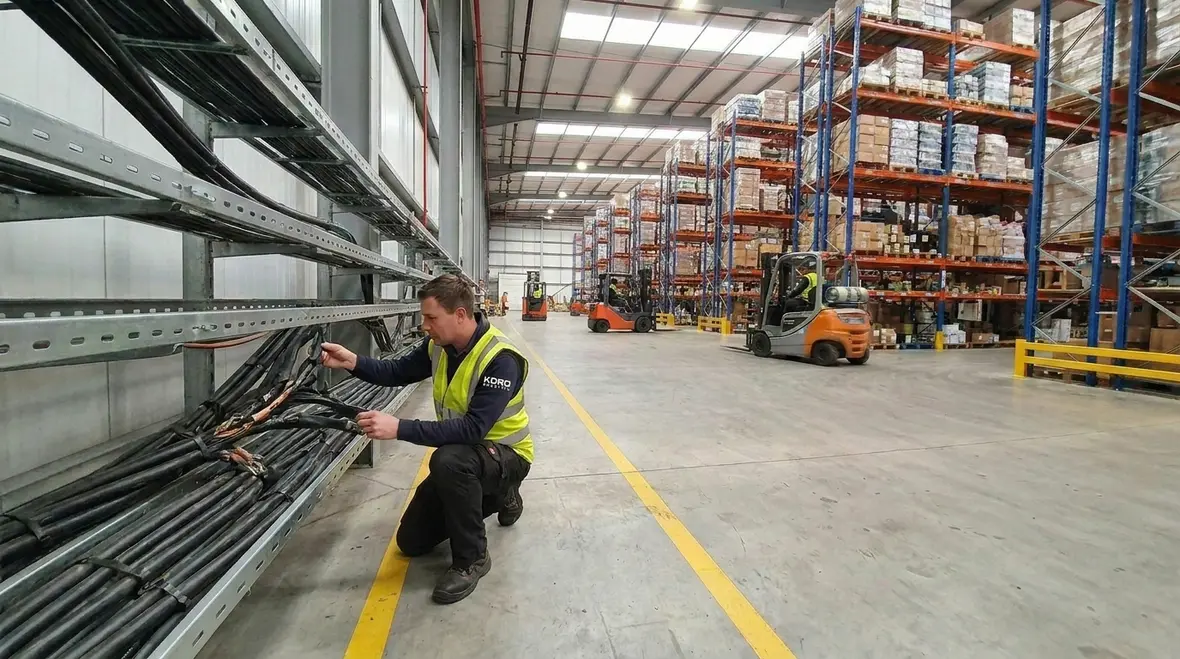
Warehouses are tough on electrical systems. Forklifts bump, racks vibrate, pallets scrape, and cleaning crews move with purpose. Therefore, we inspect cables and raceways for physical damage, abrasion, crushed sections, loose conduits, and missing fittings. We also verify cable routing where it passes through mechanical rooms, underfoot pathways, and along walls that receive constant traffic.
Then we check for signs of insulation breakdown, moisture intrusion, and aging at terminations. Terminations deserve special attention because that is where heat builds when connections are not tight or when lugs are not properly rated. Next, we confirm strain relief and conduit fill where applicable.
In plain terms, we make sure the electrical pathways stay intact, protected, and code-aligned. And yes, we treat a scratched cable the way others treat a cracked windshield. It may still look “fine,” until it does not.

In facilities with demanding lighting or equipment layouts, these cable and raceway checks pair well with the guidance in Kord Electric’s lighting installation code compliance resources for commercial and industrial sites. Together, they keep conductors, fixtures, and supports all working toward the same goal: safer, more reliable operation.
5) Overcurrent protection, arc fault awareness, and labeling control
We then turn to protective performance. We verify that overcurrent protective devices cover the conductors properly, and that trip characteristics align with the equipment served. We confirm that circuit breakers are sized correctly, and we evaluate whether any circuits are overloaded due to temporary equipment or changes in warehouse operations.
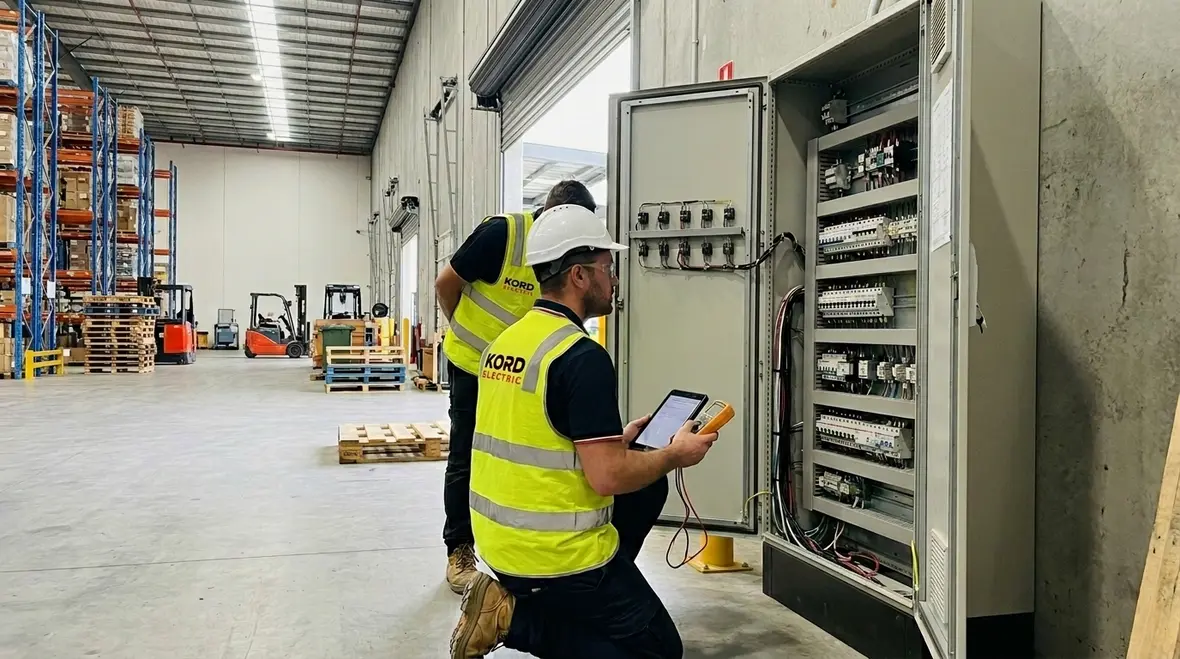
At the same time, we check where arc fault protection applies, and whether it is installed and functional where required by the system design. Even if a device exists, we confirm it is the right device for the application. We also look at how circuits are labeled. In a warehouse, unclear labeling leads to wrong circuits being switched during maintenance, and wrong circuits become the source of accidents.
Our technicians take time with this part. They show how to update directory labels, how to improve panel labeling for real-world use, and how to ensure that the person performing lockout procedures does not rely on memory. In our experience, a clear label saves more time than it costs.
If your Warehouse electrical safety audit checklist keeps turning up recurring breaker issues or unexplained trips, it may be a sign to dig deeper into load behavior. Kord Electric’s support for voltage fluctuations in commercial and industrial facilities can complement this step when sensitive equipment reacts to unstable power in ways that standard checklists might miss.
6) Ground fault and shock hazard controls in real work zones
Once the distribution and conductors check out, we focus on shock hazard controls in the places people actually work. We examine receptacles, extension points, temporary power connections, and any wet or washdown zones that can increase risk. We verify that ground fault protection is present where it should be and that it protects downstream circuits appropriately.
We also review how cords are managed, especially in maintenance areas and loading zones where temporary tools are constantly plugged in. We check for damaged plugs, missing covers, and improper use of adapters. Then we look for elevated risk patterns, such as cords running through doorways, being pinned under pallets, or routed where they can be struck by material handling equipment.
At Kord Electric, we talk through the findings with facility stakeholders and our expert service staff explains the next steps. We keep the conversation practical, because a warehouse cannot shut down for a week just to feel safer. We coordinate recommendations around operational realities.
This is also a good place to think beyond one-time fixes. For sites that want fewer surprises between formal audits, connecting your Warehouse electrical safety audit checklist with a structured electrical preventive maintenance program helps keep ground fault and shock protection in good shape year-round instead of only when inspectors are expected.
7) Documentation, corrective action planning, and follow through
After physical inspections and tests, we do not stop at “here are the issues.” We build a corrective action plan that teams can use immediately. We categorize findings based on risk, such as immediate hazards that require prompt attention versus items that can be scheduled with planned maintenance.
Then we provide clear descriptions, supporting test results, and suggested fixes. We also note where equipment replacement may be a better path than repeated tightening or patch repairs. Because, and this is important, a loose connection does not become safer just because someone tightened it twice.
Also, we include guidance on documentation updates, such as updated as-built labeling, panel directories, and maintenance recommendations. That helps the facility maintain a safer electrical system long after the audit day. We help teams follow through, because safety systems are only as good as their last maintenance cycle.
In many commercial and industrial environments, this is where the Warehouse electrical safety audit naturally connects with long-term Electrical Preventive Maintenance support. Instead of treating the audit as a one-off event, facilities use the findings to shape a maintenance roadmap that keeps critical electrical infrastructure ready for the next peak season, equipment upgrade, or inspection.
Featured snippet FAQ
The questions facility managers ask most often about a Warehouse electrical safety audit checklist tend to fall into a few clear categories: what is included, how often it should be done, what happens during the visit, and how disruptive it will be to operations. We keep the answers straightforward and grounded in real warehouse life.
Bring safety up to speed with Kord Electric
If your warehouse runs heavy, fast, and full of busy hands, your electrical system should match that reality. Kord Electric can perform a thorough Warehouse electrical safety audit, explain the findings clearly with our expert service staff, and help you build a corrective action plan that your team can actually execute. Contact us to schedule an assessment for your commercial or industrial facility. Let’s catch the issues before they become headlines, and keep your operation steady like it should be.
For facilities that want to go beyond a one-time Warehouse electrical safety audit checklist, pairing your audit with Kord Electric’s Electrical Preventive Maintenance services keeps panels, conductors, and protective devices operating smoothly year after year. From infrared inspections to structured reporting, their preventive approach turns today’s findings into tomorrow’s stronger baseline for safety and uptime.
When voltage behavior, lighting compliance, and long-term asset life all matter at once, the right partner helps you connect the dots instead of juggling separate projects. That is where Kord Electric’s broader commercial and industrial services – from resolving voltage fluctuations to ensuring lighting installation code compliance – can wrap around your warehouse and major property portfolio with one coordinated electrical safety strategy.
If you are ready to turn this Warehouse electrical safety audit checklist into action for your own facility, the next step is straightforward: schedule a site visit, walk the floor with expert eyes, and turn today’s questions into a clear, prioritized roadmap for safer operation.