Warehouse Electrical Safety Checklist Guide
Warehouse Electrical Safety Checklist for Facility Managers: What We Verify First
In the first stages of any facility visit, we use a warehouse electrical safety checklist to guide what gets checked, documented, and corrected. That includes quick proof of safe access, proper labeling, and condition checks on panels, wiring routes, and disconnects. Next, we confirm that lockout practices are real, not just “someone’s idea of safety,” and we verify that moisture, dust, and mechanical damage risks stay under control. Finally, we review how staff respond when something looks off, because time matters in a warehouse.
We build our process around commercial and industrial facilities and major property buildings, where downtime costs real money and safety failures cost even more. In those environments, a clear warehouse electrical safety checklist works like a road map. It gives facility managers and technicians a shared language, it keeps priorities straight, and it turns “we should probably look at that someday” into “we verified it, documented it, and fixed it.”
That is why we start each visit with basic safety proof. We confirm that electrical rooms stay clear, that panel fronts are accessible without gymnastics, and that exits are not blocked by pallets or temporary storage. Then we move to what lives behind the covers: breaker condition, terminations, insulation, and wiring routes that could be stressed by warehouse activity. Each of these items carries both a safety and reliability impact, and each one earns a place on the checklist.
How Kord Electric Teams Run a Site Review Without Guesswork
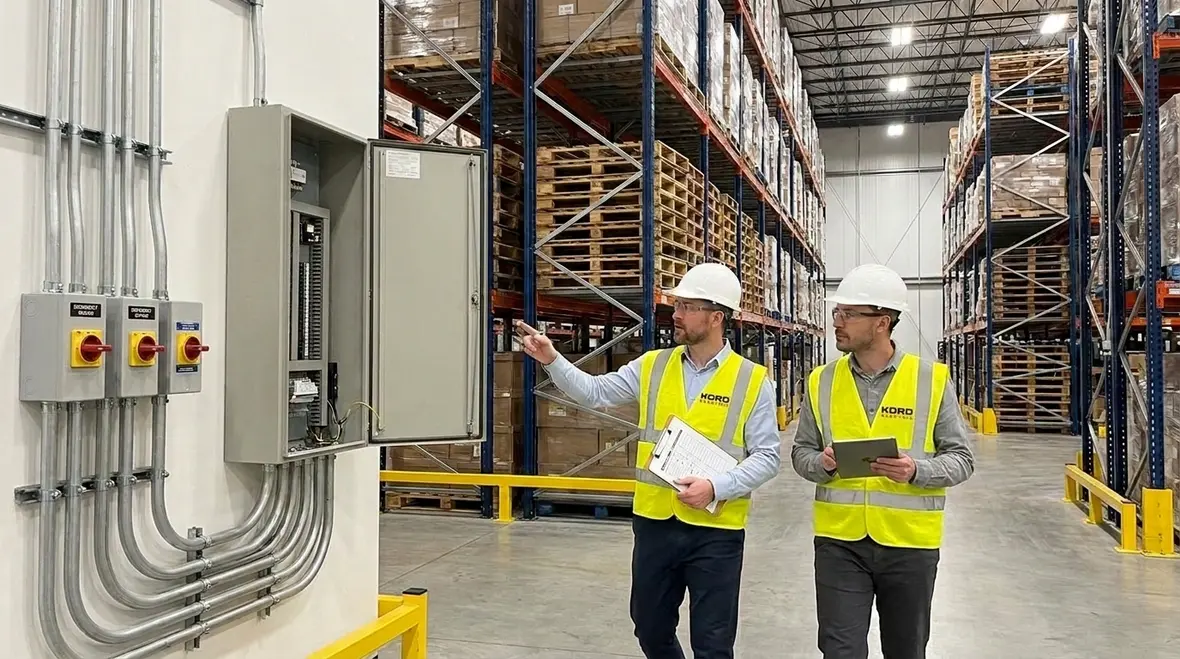
Third person teams lead, and we still keep it personal. Our technicians and expert service staff walk the floor with facility managers, then they explain what they see in plain language. To start, we focus on the “big hazards first” approach: electrical rooms, distribution equipment, and areas where forklifts, pallets, and ladders usually roam. Then, we expand into junction points, conduit runs, and any places where cables can get pinched or overheated.

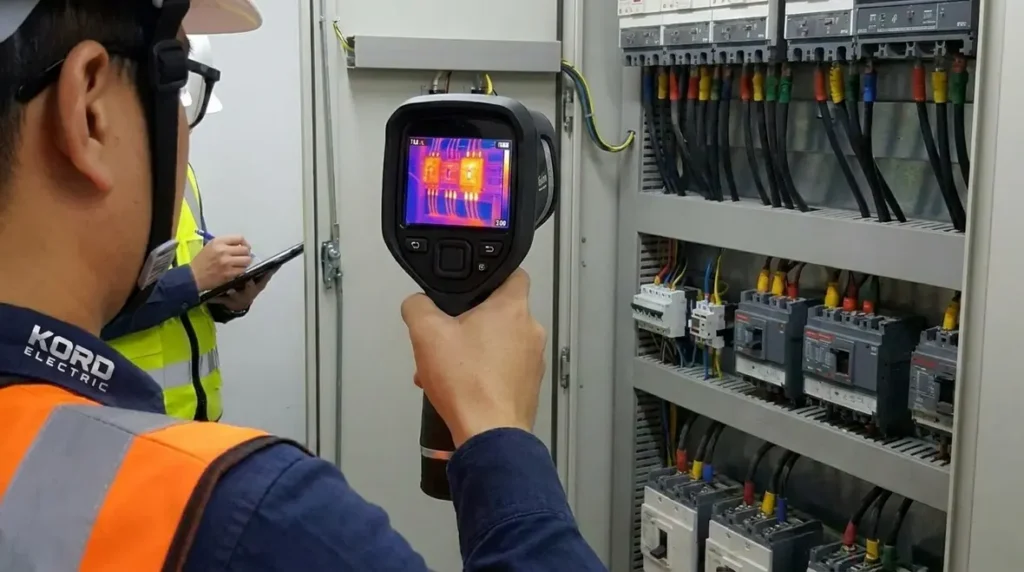
Because warehouses behave like living organisms, we also watch the environment. Humidity levels, cooling airflow, and dust loading all influence insulation life and breaker performance. And yes, dust does not “just sit there.” It acts like a sponge for heat, and it loves to settle on breaker vents. When we see layers of dust building up, we treat it like an early warning sign that temperatures may be rising where no one can see it.
To keep the process calm and controlled, we document each finding, then we assign priorities based on risk and consequence. In other words, we do not treat every issue like it is equally urgent. A loose cover on a low load circuit is not the same as a panel with signs of heat damage. The checklist helps us separate “handle this during normal maintenance” from “do not leave this unresolved before the next shift.”
Throughout the walkthrough, we keep the warehouse electrical safety checklist visible. It becomes a running log, not a one-time form that disappears into a binder. Facility managers see in real time how items move from inspection to action. That transparency keeps everyone aligned and makes follow-up work much easier to schedule around production and inventory needs.
Dual Column Walkthrough: Panel, Raceway, and Grounding Checks
When facility managers ask what we look at, we answer with clarity. Below is a quick structure we follow during a warehouse electrical safety checklist style inspection. It helps teams stay consistent from week to week, even when schedules get busy. The checklist lives in two columns: where we look, and what we verify. That simple structure keeps inspections grounded in both location and purpose.
| Where We Look | What We Verify |
|---|---|
Service panels and distribution boards |
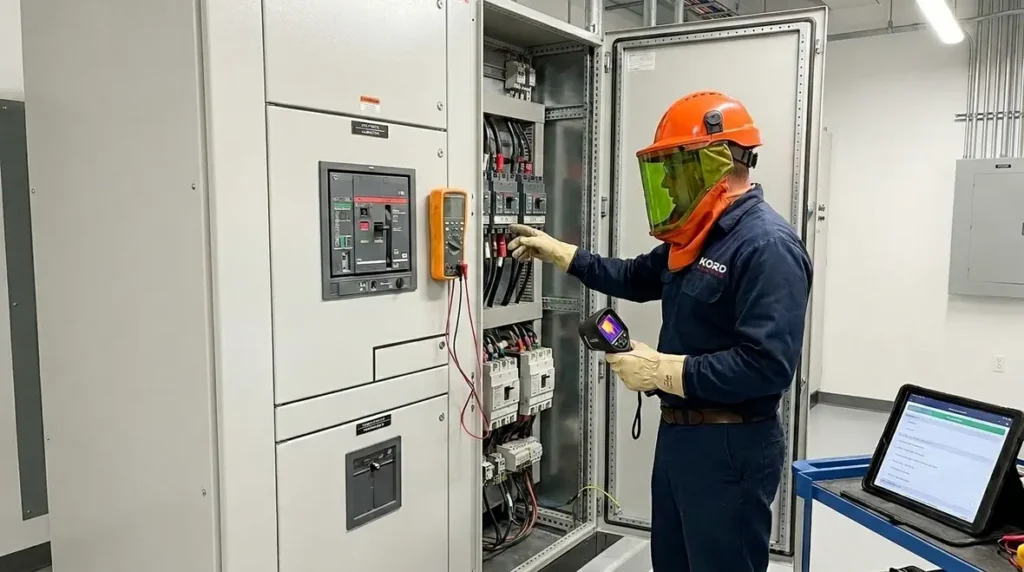
Cover integrity, clean and tight terminations, breaker condition, and any signs of heat staining or arcing |
Raceways, conduit, and cable trays |
Physical protection, secure supports, correct fill levels, and routes that prevent pinch points from material handling |
Grounding and bonding |
Continuity indicators, bonding points, corrosion checks, and that grounding pathways stay unobstructed |
Disconnects and motor controls |
Door interlocks, label accuracy, proper disconnect access, and condition of starter enclosures |
After the review, we explain what each item means and how it affects reliability and worker safety. Our goal stays simple: prevent failures before they become emergencies. The dual column approach also makes it easier to train new staff. They can see that every location we visit ties directly to a specific check, from torque and insulation condition to labeling and clearance.
For facilities that want to go deeper, we often connect these checklist steps with broader programs like electrical preventive maintenance. That connection turns one-time inspections into a repeatable rhythm: inspect, document, prioritize, repair, and then verify. Over time, this rhythm creates a safety culture where surprises become rare.

Many facility teams eventually build their internal training around this dual column view. New hires shadow inspections, learn where critical electrical assets live, and see firsthand what a safe versus unsafe condition looks like. By pairing real equipment with a clearly defined warehouse electrical safety checklist, managers reduce guesswork and build confidence across shifts.
Lockout and Labeling: The Safety Steps That Actually Hold Up
In warehouses, we see two kinds of problems. The first is equipment wear. The second is human behavior when something changes during a shift. That is why we emphasize lockout and labeling as part of our electrical safety approach, not as paperwork.
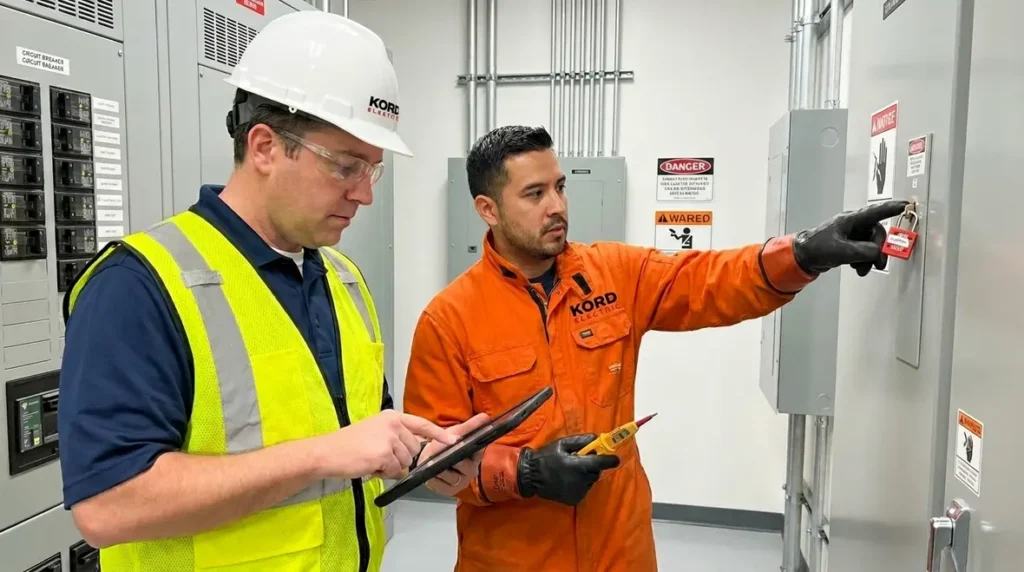
First, we confirm lockout devices match the equipment and the documented procedures. Then, we make sure employees can identify the right disconnect quickly. Clear labeling matters, especially when circuits feed lighting, docks, conveyors, and plug loads across multiple areas. If people have to pause and guess which handle feeds what, the system is already working against them.
Next, we check that labels survive real life. Over time, cleaning chemicals, vibration, and grime blur markings. If a label becomes a mystery, the warehouse becomes a guessing game. And nobody wants to “improvise” with live electrical systems, even if Hollywood makes it look fun. Good labeling, durable materials, and clear lockout points turn an emergency stop into a controlled sequence instead of a scramble.
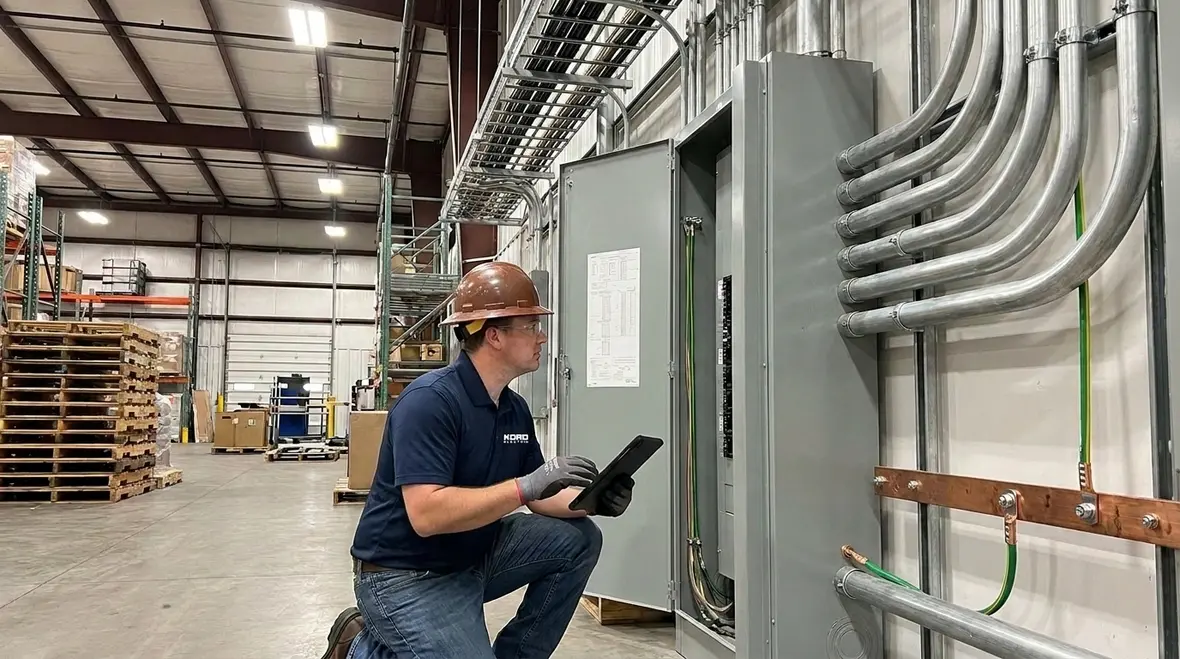
Finally, we align labeling with actual field conditions. When facilities modernize, circuits sometimes get reworked without fully updating directories. We compare what the panel schedules say with what the wiring does, and we adjust documentation so staff act on truth, not assumptions. That alignment is a core part of any solid warehouse electrical safety checklist, because it connects the map (the labels) to the territory (the equipment).
During these reviews, we also look at how lockout procedures play out during real maintenance. If steps are confusing or the right disconnects are hard to reach, we highlight that in our recommendations. The goal is not just to “have a procedure,” but to have one that people can follow under pressure without cutting corners.
Moisture, Dust, and Heat: Managing Warehouse Electrical Risks
Warehouses run in extremes. Doors open and close, weather gets inside, and condensation forms when temperature swings hit. Meanwhile, dust gathers on surfaces and blocks airflow. Then heat concentrates in panels when loads increase or ventilation fails. As a result, insulation degrades faster, contacts erode, and components start failing quietly.
So we do not just check “is it powered.” We check conditions that drive failure. We inspect enclosure integrity and gasket condition, confirm ventilation paths remain clear, and look for signs that water intrusion happened during storms or cleaning. We also review whether equipment is rated for the environment it lives in. A panel that works fine in a clean office can struggle in a dusty loading dock.
Then, we support facility managers with practical steps. For example, we recommend cleaning methods that protect sensitive components, and we advise on where to improve sealing or airflow. If a panel vent is covered in dust like a bad disguise, we tell the truth: it will run hotter, and hotter shortens life.

When teams coordinate maintenance around these findings, reliability improves and service calls drop. And frankly, that is the kind of “boring win” we like. Boring means controlled. A good warehouse electrical safety checklist bakes these environmental checks into the routine so issues like corrosion, moisture ingress, or blocked vents get caught long before downtime headlines the day.
We also encourage facility managers to fold these observations into their broader risk controls. For example, pairing seasonal inspections with weather patterns, or reviewing rooftop and dock equipment after severe storms, turns lessons learned into habits. Over time, that habit keeps equipment running within its comfort zone instead of constantly flirting with the edge.
Ongoing Preventive Maintenance Plans That Reduce Surprises
Safety improves when electrical systems get predictable attention. Kord Electric supports preventive maintenance for commercial and industrial facilities and major property buildings, and we align our approach with what our service staff see in the field.
We also reference the preventive maintenance framework found in our electrical preventive maintenance program at https://kordelectric.com/electrical-preventive-maintenance/. That plan focuses on keeping equipment in good shape through scheduled checks, targeted repairs, and documentation that facility managers can use.
At the heart of a strong preventive plan, we see a few consistent elements. First, we confirm critical loads and equipment get the right inspection frequency. Then, we track trends like breaker aging, terminal condition, and insulation issues. Next, we verify that repairs match the root cause, not just the symptom.
Finally, we make the results easy to act on. Our technicians explain findings with a “what now” focus so stakeholders can plan downtime, order parts, and schedule work with less chaos. That clear path from inspection to action turns a warehouse electrical safety checklist into a living tool instead of a static form.
When preventive maintenance works, the warehouse runs like a machine built to last. When it does not, equipment starts failing in the most inconvenient order, like the universe is playing a prank. A structured warehouse electrical safety checklist, tied into an ongoing preventive maintenance program, helps make sure the joke is never on your facility.
As facilities grow, combine operations, or shift storage strategies, we also help adjust checklist items and maintenance intervals. The goal is to keep your warehouse electrical safety checklist aligned with the way the building actually works today, not how it looked on a drawing ten years ago.
FAQ: Warehouse Electrical Safety Checklist
Call Kord Electric for a Safety-First Inspection Plan
If a facility manager wants fewer surprises and a warehouse that operates with confidence, we help deliver both. Kord Electric provides safety-focused electrical inspections and preventive maintenance for commercial and industrial facilities and major property buildings. Our technicians and expert service staff explain findings clearly, prioritize risks, and support action steps that reduce downtime and improve worker safety. Contact us today to schedule a site review and build a plan your teams can trust. Safety is not a slogan, it is a system.
For facilities across the region, our team also supports broader commercial services, including Los Angeles County electrical services that keep major properties, industrial sites, and distribution centers operating with confidence. Whether you are formalizing a warehouse electrical safety checklist for the first time or refining an existing program, we align our work with your risk, your operations, and your long-term plans.
When you are ready to connect your checklist to a structured service roadmap, we can also integrate inspection findings with targeted projects such as panel upgrades, power quality analysis, or safety audits. That way, each warehouse electrical safety checklist you complete becomes part of a bigger story: a safer facility, steadier operations, and less time wondering what might go wrong next.