Warehouse Energy Efficient Lighting Retrofits and Controls
Introduction: How Kord Electric upgrades warehouse lighting fast
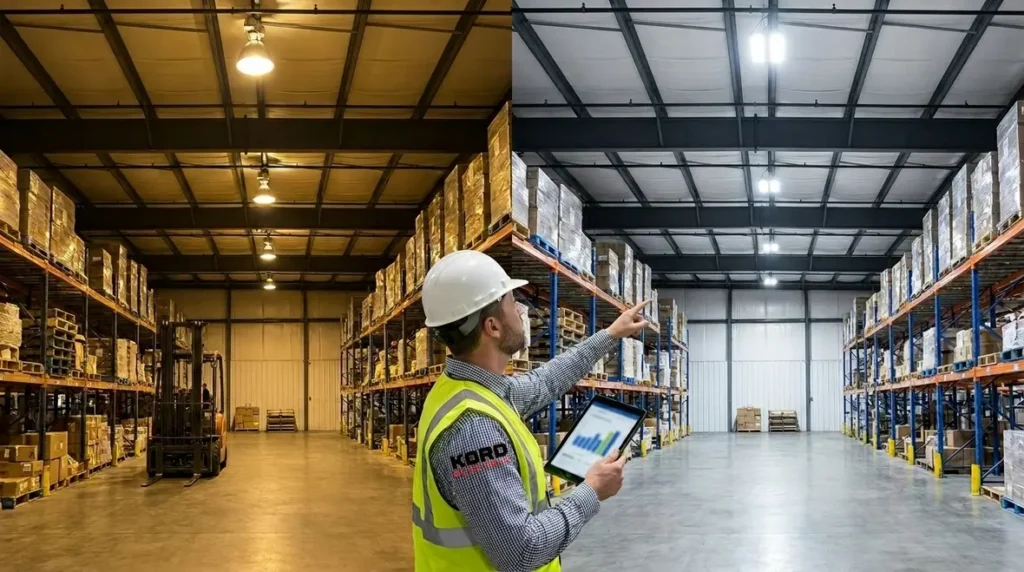
At Kord Electric, we install warehouse energy efficient lighting retrofits that cut waste and keep production moving. In many facilities, lights run like they are trying to win a marathon, even when aisles sit empty. So we bring in modern LED systems and control the lights with motion sensing, which helps reduce energy use without turning your warehouse into a dim cave. Our team focuses on commercial and industrial sites and major property buildings, because those places feel every extra kilowatt. And yes, once our technicians explain the plan, most managers say, “That makes sense,” like they just discovered electricity all over again.
Why warehouses waste power when nobody is looking
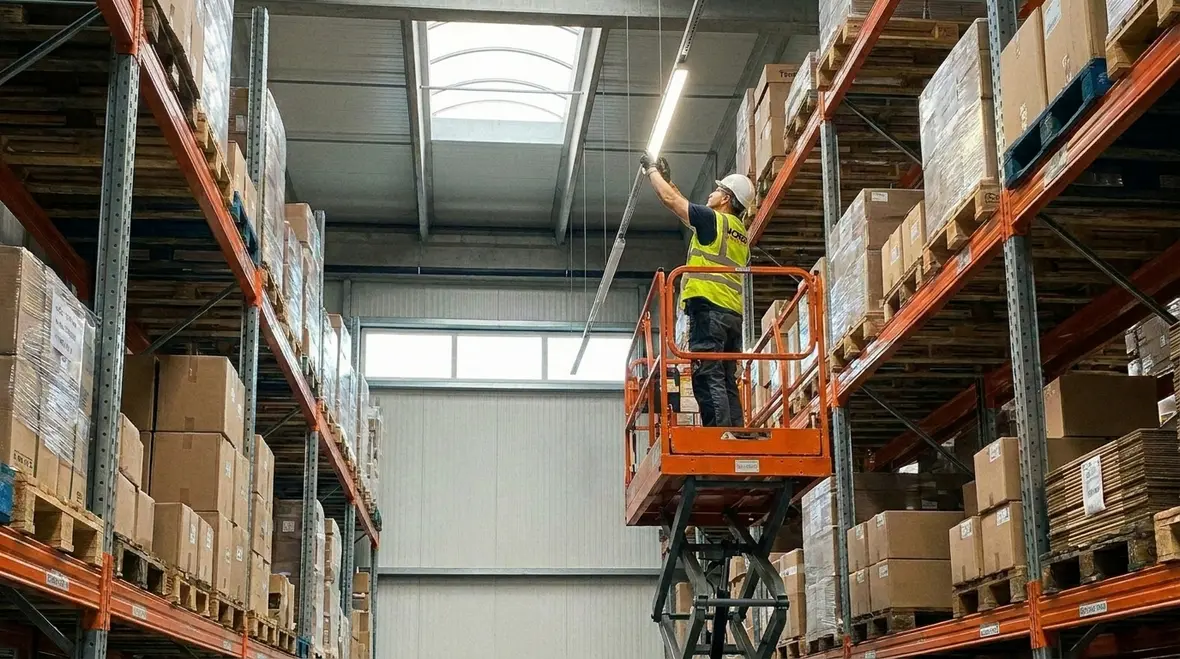
In real warehouse life, people think the lights are “just on,” as if that is a harmless detail. However, older fixtures often waste power through inefficient bulbs, poor optics, and outdated drivers. Meanwhile, HVAC and door activity already add heat loads, and the extra light creates even more load. Then the building management system gets blamed, when the real culprit is usually the lighting design and the way it is controlled.
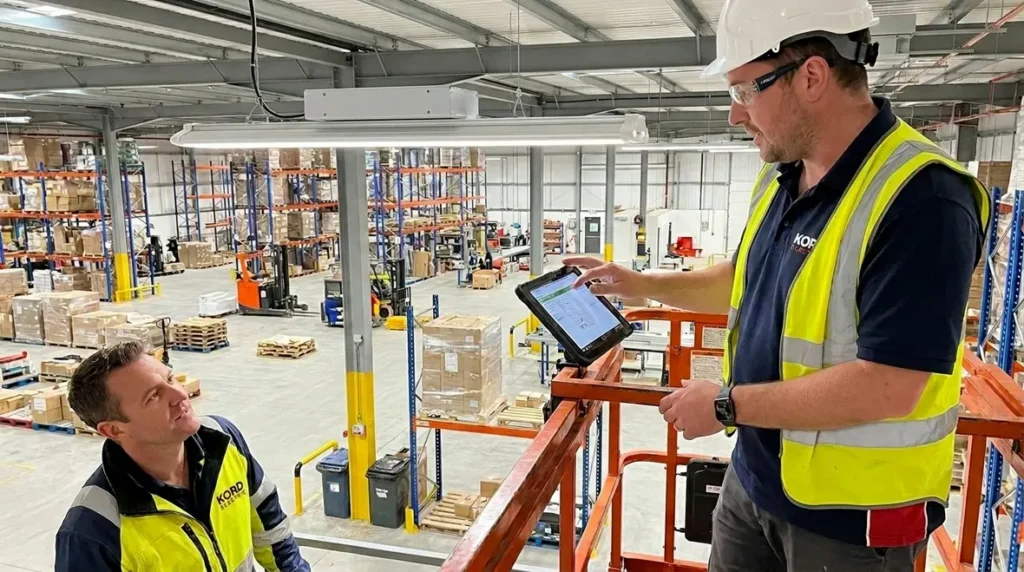
At this point, our technicians step in and explain what they see. They walk aisles, check mounting heights, and review lighting schedules. Next, they correlate energy use with occupancy patterns. Because in many warehouses, forklifts and foot traffic follow routes, shifts, and batch work. Therefore, a one-size-fits-all lighting approach will keep burning power in areas that are quiet most of the day.
This is also where California lighting codes quietly enter the conversation. Title 24 and other energy standards expect warehouses and large commercial facilities to manage lighting with real intent, not just habit. That is why our team often pairs retrofit projects with a review of current code expectations, so your lighting cuts waste and supports compliance at the same time.
What LED retrofit upgrades actually change
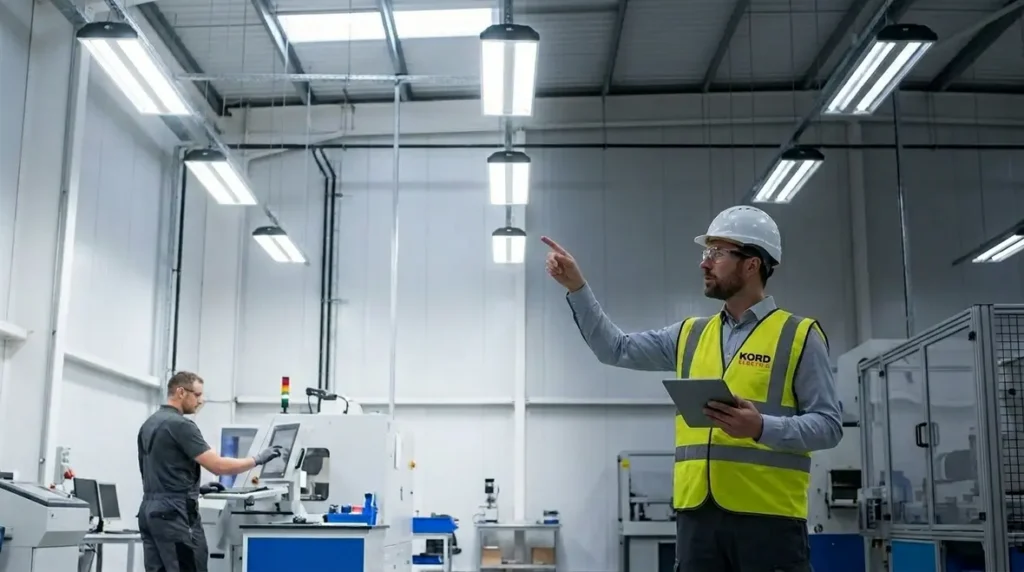
When Kord Electric installs warehouse energy efficient lighting retrofits, we do more than swap bulbs. We evaluate the fixture type, lumen output, beam spread, and mounting conditions. Then we match the LED system to your space so the light lands where it matters. In addition, we review glare and uniformity so workers can scan labels, read displays, and spot hazards without squinting.
Just as important, we think about long-term cost. LED systems usually run with lower power draw and longer service life, which reduces maintenance downtime. So instead of scheduling frequent relamp projects, you plan fewer visits. And when parts do fail, our service team supports you with replacement and troubleshooting guidance that is clear, not riddled with mystery.
We also coordinate the upgrade with your operations. For example, we can stage installation by zones so picking lanes stay usable. Likewise, we can plan outside peak hours when you prefer. That means the retrofit process supports productivity, not interrupts it.
If you are comparing retrofit options, you may also want to understand how overall commercial lighting upgrade costs behave across large facilities. Kord Electric breaks down LED retrofit ranges, drivers, fixture choices, and control impacts in a dedicated cost guide, so you can connect real numbers to the energy savings you are targeting. That context makes it easier to explain upgrade decisions to ownership and finance teams without turning the meeting into a guessing game.
For facilities that are also wrestling with recessed lighting in attached office areas, corridors, or mezzanines, our recessed lighting installation services help tie everything together. The same focus on efficiency, code compliance, and clean layouts carries over from the warehouse floor to your support spaces, so the whole property feels like one coordinated lighting plan instead of a patchwork of old and new ideas.
Connecting retrofits to preventive maintenance
Lighting upgrades land best when they are not treated as one-time projects. By pairing warehouse energy efficient lighting retrofits with an electrical preventive maintenance program, you give your team a structure for periodic inspections, Title 24 lighting compliance checks, and emergency lighting testing. That way, the system you install this year still performs as designed after layout changes, new racking, or added equipment start shifting how your building behaves.
Motion-sensing controls that respect real warehouse work

Motion sensors sound simple, but they need to match your activity patterns. Otherwise, lights flicker at the worst time, and nobody wins. Our team designs control strategies that account for how warehouses move: steady traffic in main aisles, bursts of activity at staging areas, and long quiet periods in back-of-house zones.
We typically use occupancy detection with smart time delays and adjustable dimming levels. That means when movement stops, the system transitions smoothly into a lower output state rather than going dark. As a result, you keep visibility during brief pauses while still cutting energy use when the space sits idle.
Then we tune the settings. Our technicians do this with a practical mindset. They test sensor coverage, confirm where motion triggers, and adjust for obstacles like shelving, racking shadows, and stacked inventory. In warehouses, one tall pallet can block a sensor’s view like it is trying out for an action movie. We plan around that.
Finally, we integrate the control approach with building schedules. Therefore, you can align lighting behavior with shift times, weekends, and seasonal changes, instead of letting the system run on default settings forever.
Controls, codes, and California requirements
In California, motion sensing is not just an efficiency add-on. It is baked directly into commercial lighting compliance. Occupancy sensors, time-switch controls, and demand-responsive strategies all influence how a warehouse or industrial site passes inspections. Our technicians design motion-sensing layouts that support both real-world workflows and Title 24 expectations, so you do not have to choose between staying productive and staying compliant.
How controls and LEDs work together to cut costs
LED efficiency helps, but control is what turns efficiency into measurable savings. When an LED system already uses less power, and the building then reduces output in unoccupied areas, the effect stacks. So the warehouse does not just look modern, it behaves modern.
For our commercial and industrial facility clients and major property buildings, we focus on the operating model. We ask questions that matter to energy use, like how many hours lights operate, where activity is constant, and which zones stay empty for long stretches. Then we recommend control zones that match those patterns.
We also help clients avoid the “install and forget” trap. Many facilities get upgrades, then sensors drift out of proper behavior due to changes in layouts, added racking, or new workflow. Our expert service staff can return for fine-tuning so the lighting controls continue to perform after the dust settles.
From retrofit budget to long-term asset
When you combine warehouse energy efficient lighting retrofits with smart motion sensing and solid documentation, the project becomes more than a capital expense. It turns into an asset that supports inspections, insurance reviews, and property valuations. Energy-efficient lighting, paired with compliance-focused controls, can make your building more attractive to tenants and buyers who care about operating costs and regulatory risk, not just square footage.
Designing for safety and visibility, not just savings
Energy savings are important. Still, warehouses require consistent light for safety and quality. If a control system dims too aggressively, it can hide hazards, reduce clarity for scanning, and slow down work. For that reason, we design the retrofit around visibility targets, worker movement, and task needs.
We pay attention to uniformity across lanes and near doors, docks, and stairwells. We also consider glare and reflectance, because shiny floors and reflective walls can create bright hotspots. Our technicians explain these choices in plain language, so managers understand why the plan protects both people and product.
And we keep things practical. If your facility runs multiple shifts, we account for staffing patterns. If you operate in zones with forklifts and mobile equipment, we confirm that sensors respond correctly to movement at typical speeds and heights. In other words, we treat sensors like part of the workflow, not like a gadget you hope works.
Emergency lighting, exits, and life safety
Behind the scenes, safety lighting and emergency lighting systems have their own set of rules. While your main LED retrofit focuses on day-to-day efficiency, we also recognize how emergency fixtures, exit signs, and backup power must work together during outages. Our teams coordinate with fire protection partners and life safety requirements so you do not end up with a bright warehouse in normal mode and confusing dark spots when the power fails.
Installation planning and minimal disruption for industrial sites
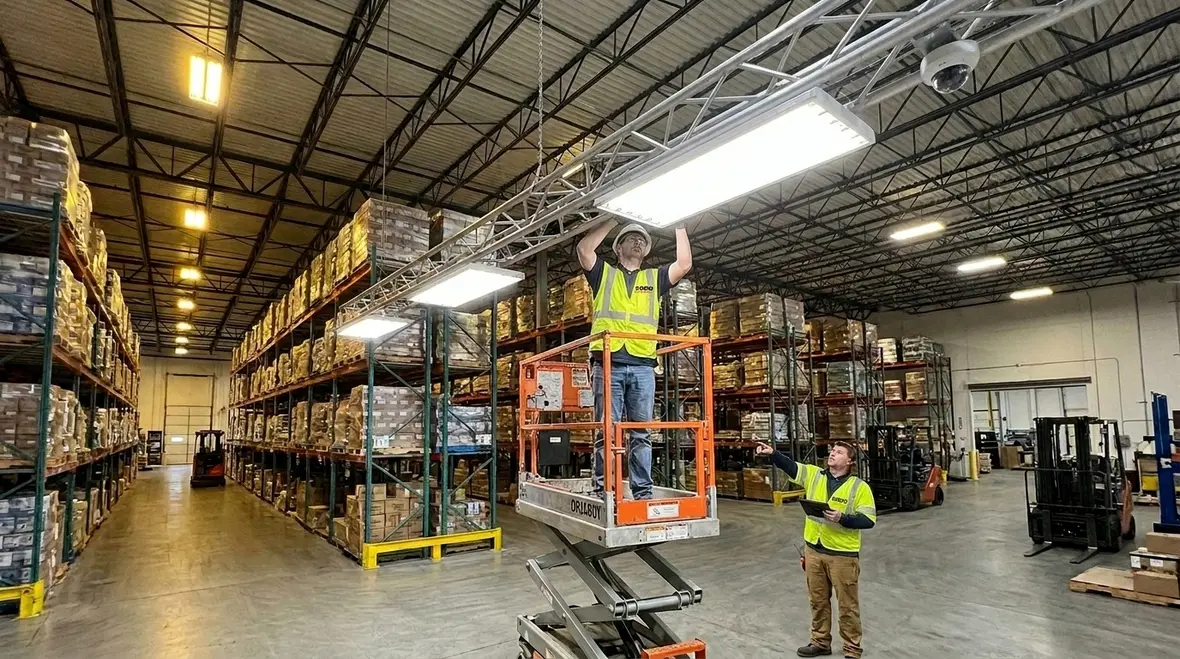
Smart lighting upgrades still need smart execution. Kord Electric coordinates installation to minimize downtime and reduce risk. We review access routes, electrical conditions, and fixture layouts so the retrofit process stays controlled and efficient. Then we stage work by area, which helps you keep receiving, picking, and packing running.
During installation, our technicians work to maintain safety and cleanliness, especially in high traffic zones. They also document what gets installed and where. That documentation helps future maintenance, especially when building teams rotate or schedules change.
After the retrofit, we verify performance. We check illumination levels, confirm control behavior, and validate sensor operation. If something needs adjustment, we tune it. That is how we keep the system from behaving like an office printer that suddenly decides to “update forever.”
For major property buildings, we also consider integration with existing controls and scheduling practices. Therefore, your lighting does not become a separate problem. It becomes a dependable part of your facility operations.
Linking lighting projects with wider electrical services
Because lighting rarely lives alone, many warehouse and industrial clients pair upgrades with broader electrical services such as panel work, preventive maintenance, or emergency electrical support. Kord Electric handles industrial and commercial electrical projects end-to-end, so when your retrofit touches distribution equipment, controls, or monitoring, the same team can manage the full scope without leaving loose ends behind.
Frequently asked questions about lighting retrofits and motion sensing
FAQ: quick snippet answers for featured results
What do warehouse energy efficient lighting retrofits reduce?
They reduce energy use, lower maintenance needs, and improve lighting consistency across work areas. When combined with motion sensing and smart scheduling, they can also reduce peak demand, support California lighting compliance, and make inspections smoother.
Why do controls sometimes fail after upgrades?
Because layouts and workflows change, and sensor tuning may need updates to match new movement paths. Added racking, new product lines, or reconfigured aisles can all block sensor views or change how people move, which is why periodic commissioning and preventive maintenance are so important.
Can we retrofit without shutting down the whole facility?
Yes. We stage the work by zones and align installation with your operational schedule. Critical aisles, docks, and production areas can stay active while adjacent sections are upgraded, which keeps revenue flowing while the lighting system comes up to modern standards.
Do you work with commercial and industrial properties only?
Yes. Kord Electric targets commercial and industrial facilities and major property buildings, not residential projects. Our teams are used to high-bay ceilings, complex controls, Title 24 requirements, and the kind of scheduling that large warehouses and campuses demand.
Will motion sensing improve safety?
When designed correctly, it maintains safe light levels and improves visibility when activity returns. Instead of full dark-to-light jumps, warehouses get smooth dimming, clear sightlines along exits and aisles, and reliable coverage where forklifts, pedestrians, and product all intersect.
Ready to reduce lighting waste without slowing your warehouse?
If you want steady visibility and lower utility bills, Kord Electric can plan a focused upgrade for your commercial or industrial facility. We combine modern LED performance with motion-sensing controls that match how your warehouse actually operates. Then our technicians explain the setup in a way your team can trust, and our expert service staff supports the system after installation. Contact us today for an on site assessment and a retrofit plan that respects your schedule and your budget. Let’s turn wasted light into real momentum.
For facilities that want to connect lighting upgrades with broader reliability planning, consider pairing your retrofit with an electrical preventive maintenance program. That combination keeps your panels, emergency systems, generators, and lighting controls all aligned, tested, and ready for the next inspection or operational challenge.
If recessed fixtures, code compliance questions, or future expansion are also on your list, Kord Electric’s recessed lighting and commercial lighting compliance resources can help you map out a multi-year plan. Whether you are upgrading a single distribution warehouse or managing a portfolio of industrial properties, the right lighting retrofit can be the first step toward a smarter, more resilient electrical strategy.