Warehouse LED Lighting Maintenance Tips Guide
At Kord Electric, we help commercial and industrial facilities keep their lighting dependable, safe, and efficient. In this guide, we share warehouse lighting maintenance tips we use with our clients, starting with what we check first during routine visits: fixtures, drivers, sensors, and the wiring paths that power it all. Then we connect those checks to real-world outcomes, like fewer outages, steadier brightness, and smoother operations for teams who cannot afford “lights out” downtime. And yes, we also explain the process in plain language, because nobody should need a flashlight and a weather app just to understand a maintenance plan.
How we approach warehouse LED care in commercial spaces
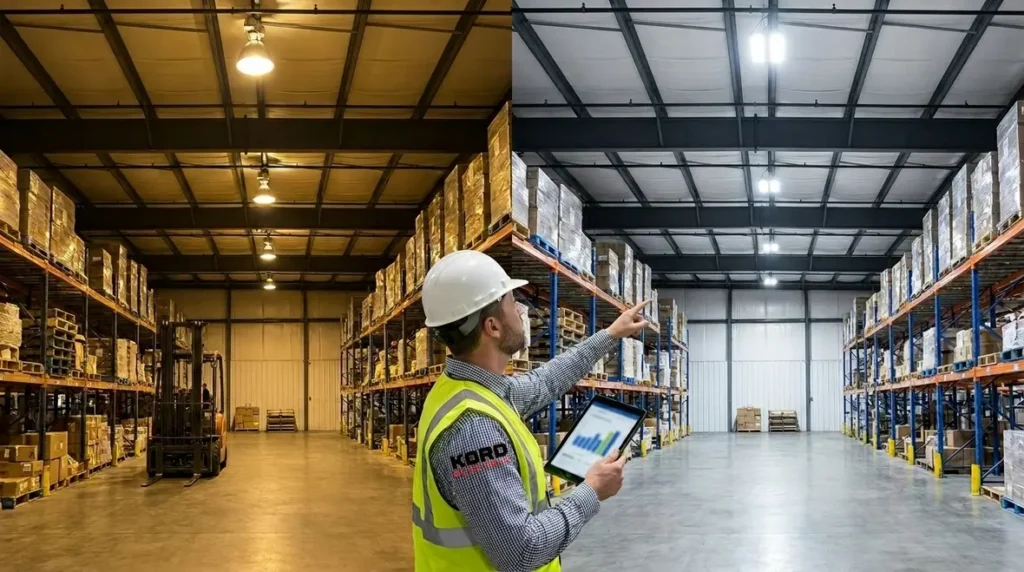
In third person terms, Kord Electric treats warehouse LED lighting systems like critical infrastructure, not like a set-it-and-forget-it upgrade. First, our expert service staff starts with the environment: vibration from forklifts, temperature swings near doors, and dust loads that settle into fixtures. Then they map how light spreads across work zones, because a warehouse does not “feel” bright in the same way a showroom does.
Next, they build a clear maintenance routine that aligns with the facility’s hours and risk. For example, a facility running three shifts often needs a different schedule than one that operates only during daylight. As a result, the maintenance stays predictable and avoids surprise labor costs. This calm, deliberate approach is exactly why clients trust us: we show up prepared, we document what we see, and we explain why we recommend each step.
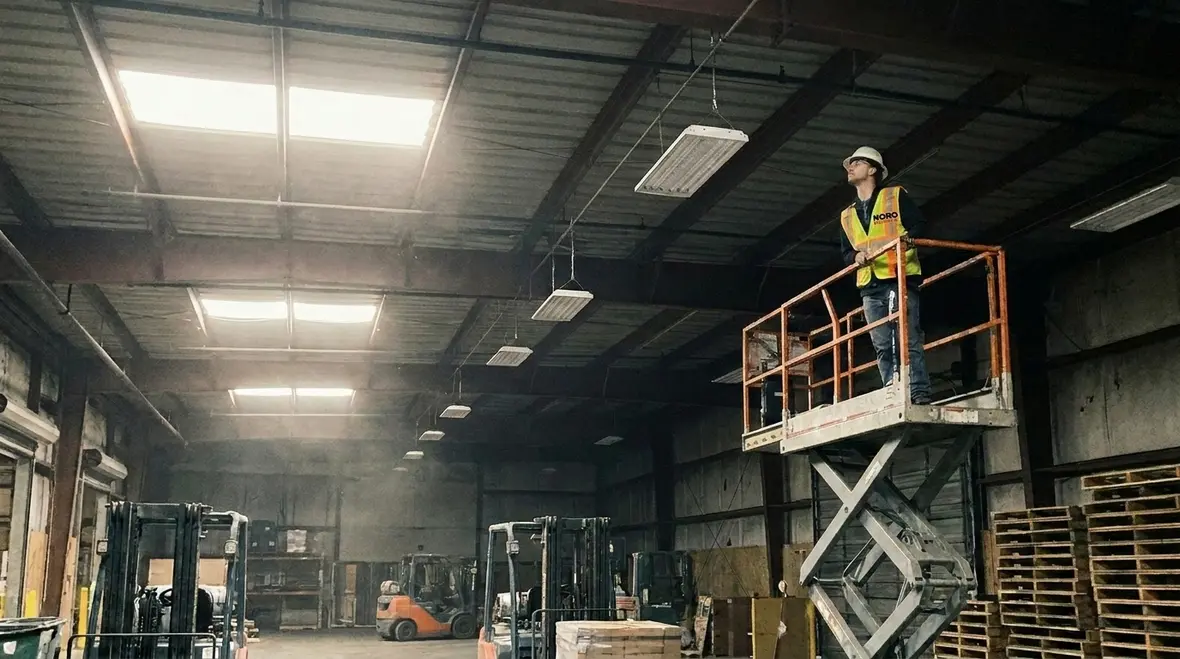
What to inspect first when lights flicker, dim, or fail
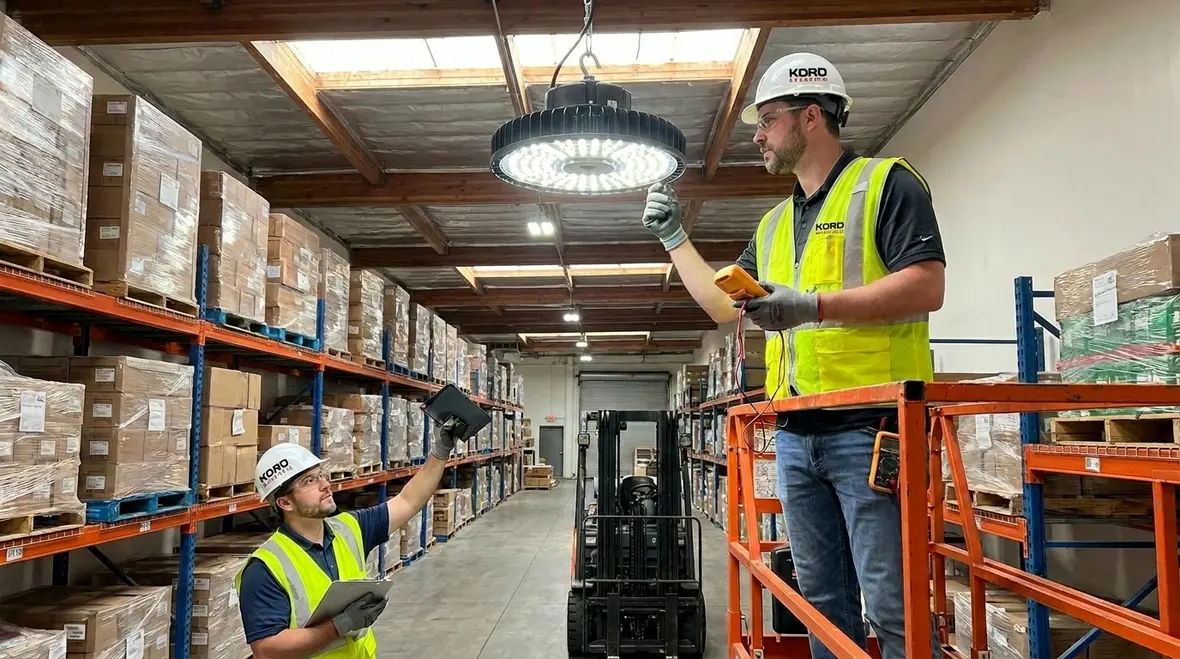
When LED fixtures flicker or dim, the common assumption is that the “LEDs are going bad.” However, in real warehouse lighting maintenance, flicker often points to power quality or driver issues before it ever points to the LED chips. Therefore, Kord Electric technicians begin with the basics that usually reveal the root cause faster.
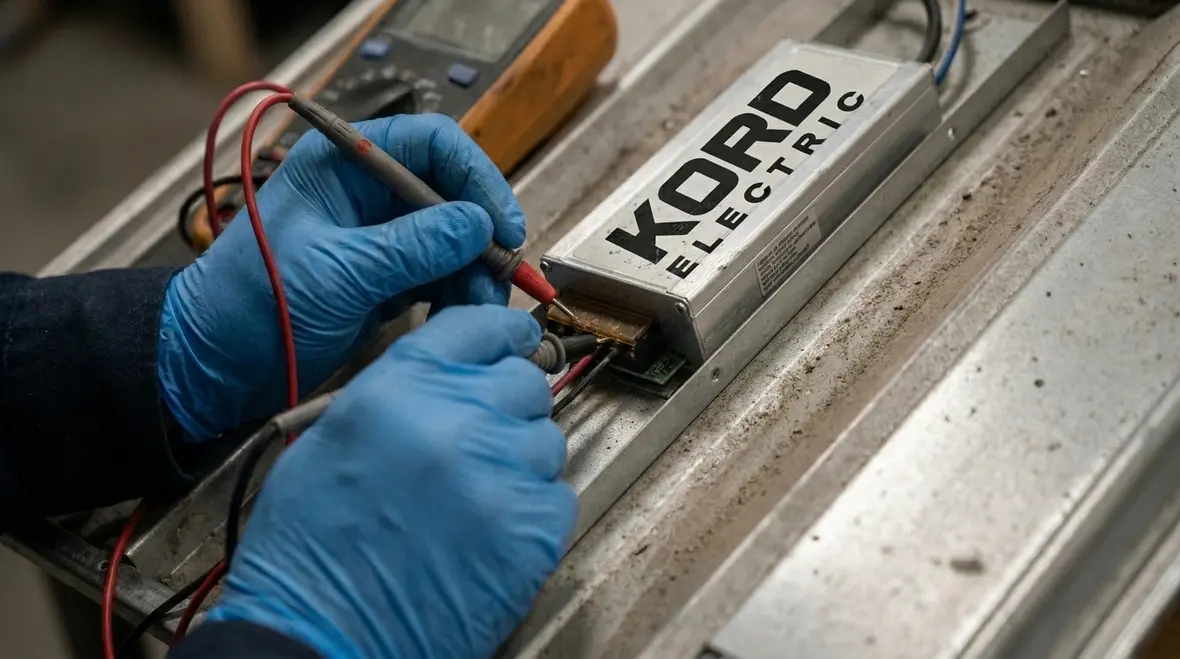
Our technicians typically inspect the following items in order:
- Drivers and internal power components, since heat and voltage stress can reduce stability
- Wiring terminations, especially at junction points, because loose connections create heat and intermittent behavior
- Controls and sensors, such as occupancy sensors and daylight dimming systems, since calibration drift can trigger unexpected dimming
- Fixture seals and lens condition, since dust and moisture intrusion can affect thermal performance
- Load compatibility, because some control gear and dimming settings do not always match the fixture driver design
Then, our expert service staff explains what they find and what it means for the next cycle. In other words, we do not just swap parts and move on. Instead, we help others understand the likely failure pathway, so the next breakdown does not arrive like a pop quiz they never studied for.
Using maintenance plans that protect uptime
Kord Electric supports clients with commercial and industrial electrical maintenance plans designed to reduce downtime and extend equipment life. If a facility wants predictable performance, it needs predictable service. This is why the maintenance plan approach matters more than isolated repairs.
In the referenced planning model, the goal is simple: we schedule inspections, testing, and corrective actions based on risk, operating conditions, and device type. Moreover, we coordinate work so it aligns with production schedules and safety rules. For a warehouse, that means we consider aisle access, dock traffic, and lift patterns so maintenance does not disrupt the flow.
Just as important, the plan includes documentation. So, when others ask why brightness changed or why a specific row of fixtures shows earlier wear, the answers exist on paper. That clarity supports budgeting and reduces “guess and check” work. And yes, it keeps teams from treating every maintenance call like a mystery novel where the culprit is always “the wiring,” even when it is not. For many facilities, pairing dedicated lighting care with a broader program like commercial and industrial electrical maintenance plans keeps both critical power and illumination on a steady, predictable track.
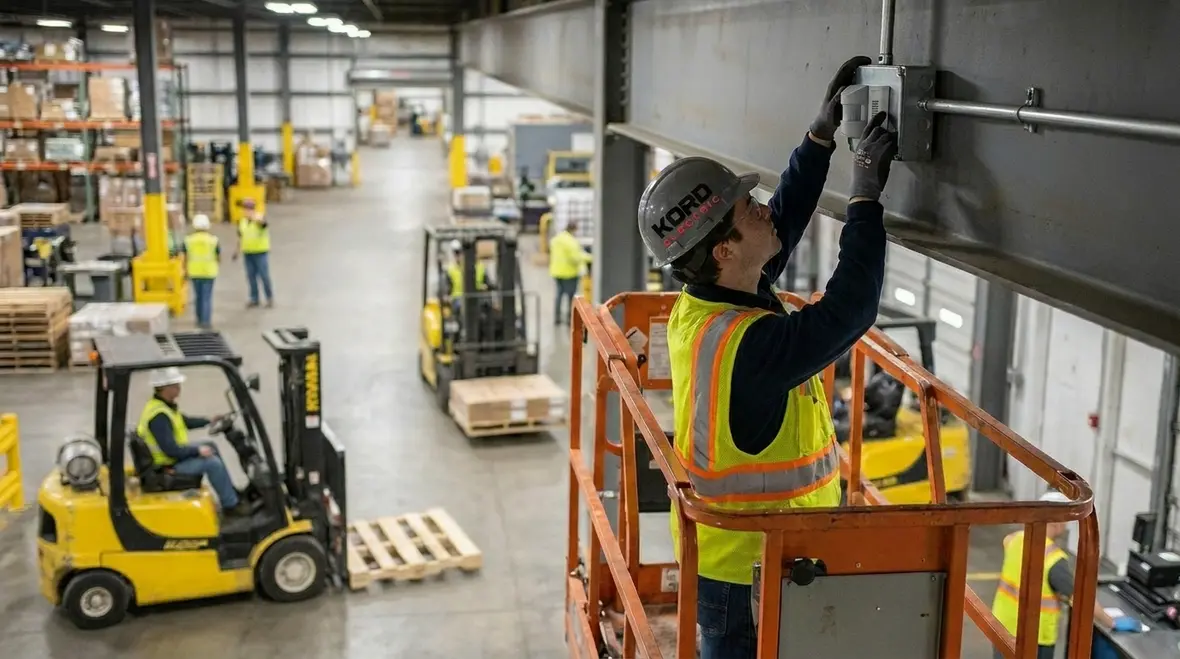
How often should warehouse LED systems be serviced
Frequency depends on heat, cycles, and control complexity. However, in most commercial and industrial warehouses, a practical strategy works like this: routine visual checks occur more often, while deeper electrical testing runs on a slower cycle. Kord Electric helps others pick a service cadence based on actual conditions, not a generic calendar.
For example, facilities with high dust levels often need earlier attention to seals, lenses, and fixture heat pathways. Meanwhile, warehouses with advanced controls like dimming tied to daylight sensors require periodic verification to ensure settings still match current layout and skylight behavior.
Additionally, our technicians coordinate service intervals with seasonal swings. Temperature changes can shift performance and expose weak connections over time. As a result, a plan that adjusts with the year often prevents minor faults from growing into full outages.
Cleaning, thermal care, and fixture housing checks that actually work
Dust does not just make fixtures look dirty. It changes heat flow. When heat cannot move the way it should, LED drivers and components run hotter, and hotter components degrade faster. Therefore, warehouse lighting maintenance tips must include thermal care and proper cleaning methods.
Kord Electric focuses on safe cleaning practices that do not damage lenses or seals. We also verify that vents and heat sink surfaces remain unobstructed. Then, we check housing integrity, including fasteners, gaskets, and any protective covers that keep moisture out of areas where it does not belong.
To keep this step meaningful, our expert service staff also looks at patterns. If one zone fails sooner than others, we investigate causes such as airflow differences, ceiling airflow from HVAC units, or localized vibration. In other words, we do not just clean. We diagnose, and we connect the dots between conditions and performance.
Controls, dimming, and sensors: the hidden source of “wasted” light
Many warehouses pay for LED upgrades and then lose part of the benefit through control issues. Sometimes the fixtures dim too aggressively. Other times, sensors do not cover the full working area, or their mounting angle shifts with seasonal changes. Then, teams end up overriding settings because the light does not feel right.
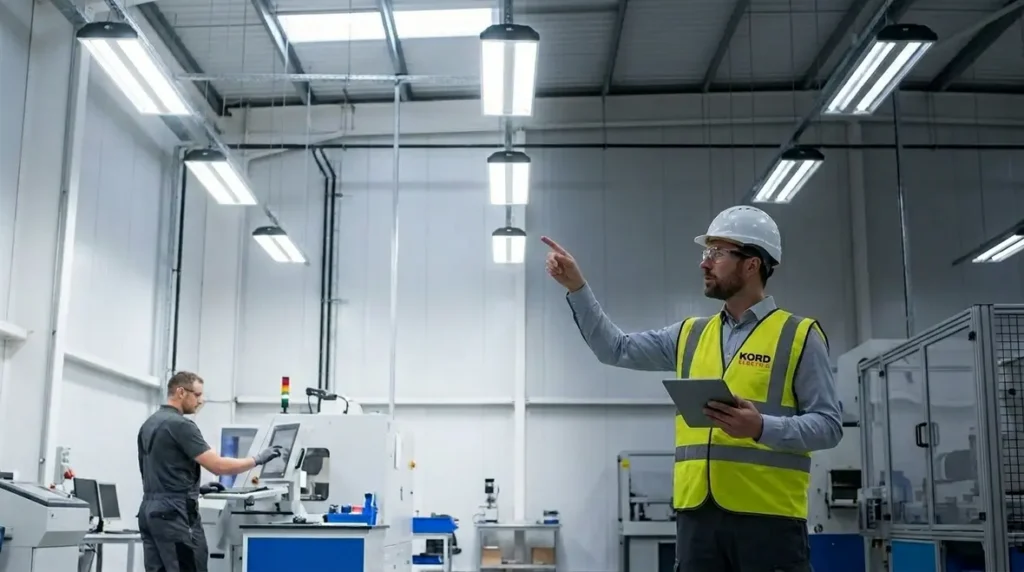
Kord Electric helps commercial and industrial facilities keep control systems working as designed. Our technicians test sensor response, confirm coverage, and check dimming logic against real activity patterns. For instance, they compare expected motion detection zones with actual forklift and pallet movement routes. This step prevents the “always dim, always uncomfortable” scenario that makes people crank up lighting and waste energy.
After the tests, our expert service staff explains the results clearly. We show what changed, why it changed, and what settings we recommend based on the facility’s layout. As a result, others gain confidence in the system rather than treating it as a black box that only breaks when leadership walks by.
Staying safe during inspections and repairs in major property buildings
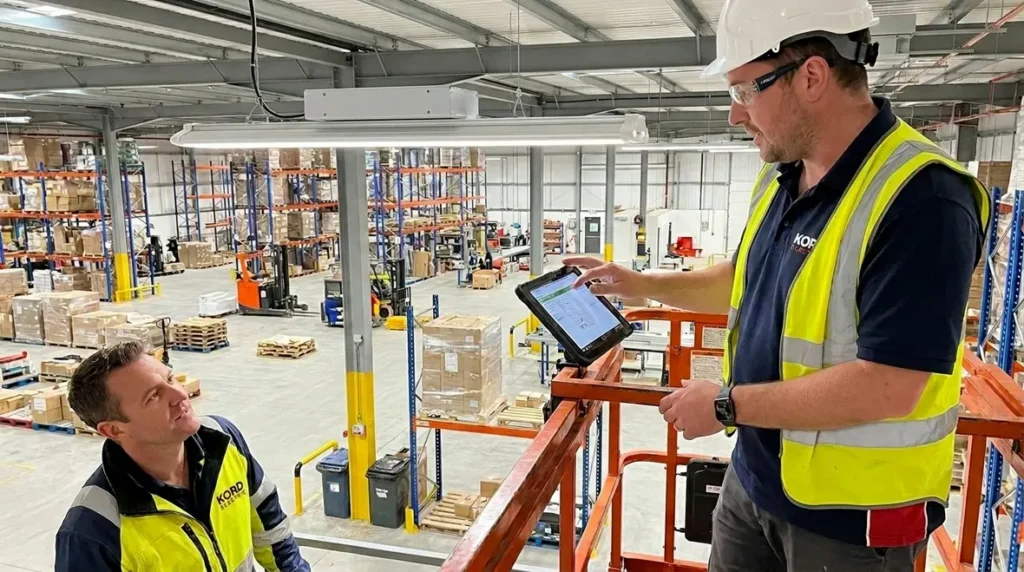
Warehouse environments demand strict safety. Kord Electric’s approach to commercial and industrial maintenance includes controlled access, proper lockout and verification, and attention to areas where lift equipment and pedestrian traffic share space. In major property buildings, safety also depends on coordination with site leadership, because a maintenance visit must respect permits, power shutdown rules, and signage requirements.
Technicians also plan for the “what if” moments. For example, they prepare spare components when needed and verify compatibility before work begins, which reduces time with circuits exposed. Furthermore, they protect fixtures during handling to avoid lens cracks or seal damage that can lead to moisture intrusion later.
This is where our expert service staff earns trust. They do not rush. They verify. Then, they communicate next steps in a calm way that helps facility managers make decisions without guesswork.
FAQ: Warehouse LED lighting maintenance
Call Kord Electric for a maintenance plan that protects your lighting
When warehouse LED lighting maintenance is handled well, outages drop and performance stays steady. Kord Electric helps commercial and industrial facilities build a plan, test controls, inspect wiring, and keep fixtures clean and thermally safe. If you want fewer flickers, smarter dimming behavior, and a documented maintenance history you can trust, we are ready. Reach out today to review your current setup and schedule expert service with technicians who explain everything, slowly and clearly, so your team can get back to work.
To take the next step beyond lighting alone, many facilities pair focused fixture care with broader programs like structured commercial and industrial electrical maintenance plans. Aligning your warehouse lighting maintenance tips and routines with whole-building electrical preventive maintenance keeps power quality, controls, and distribution working in the same direction as your LEDs.
If your team is ready to put those plans into action on a live facility, Kord Electric’s dedicated electrical preventive maintenance services give you a structured way to protect panels, switchgear, and lighting together. That way, your warehouse’s power path—from the main service to the highest fixture—gets the same level of disciplined, uptime-focused care.