Electrical Hazard Reduction for Retail Spaces
How Kord Electric Supports Electrical Hazard Reduction in Retail Spaces
In retail, electricity works quietly in the background, until it does not. At Kord Electric, our electrical hazard reduction approach focuses on preventing issues before they grow teeth. We help owners and property managers in commercial and industrial facilities by finding hidden risks early, tightening safety practices, and keeping systems reliable under real-world load. And yes, we’ve seen some “mystery” wiring that looked like it survived a weekend DIY project. With our proactive measures, we reduce the chance of shock, overheating, equipment failure, and downtime that hurts the bottom line.
To guide this, our expert service staff explains what we find and why it matters, so others can act fast. Then we document the fixes, so compliance and safety move forward together.
Recognize the Hidden Electrical Risks Behind Closed Doors
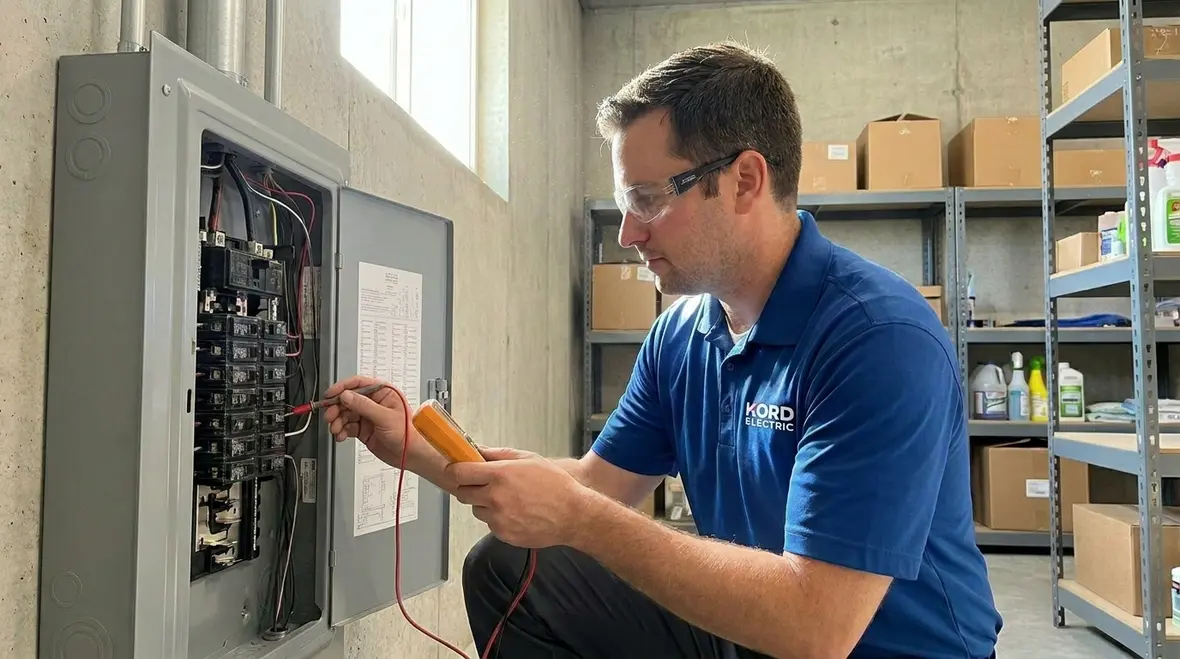
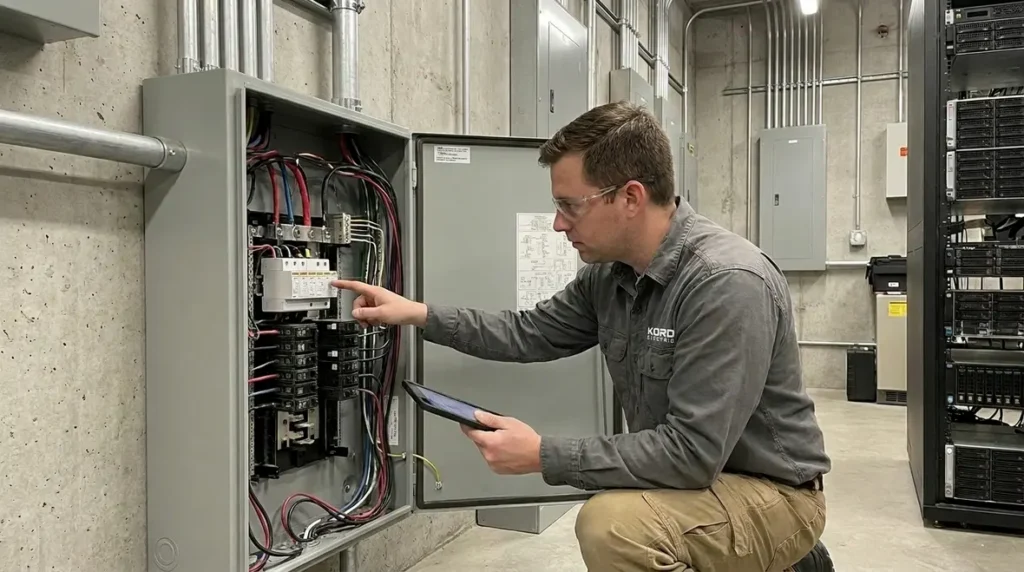
In the best run stores and larger commercial properties, electrical hazards rarely announce themselves. Instead, they hide in places that get ignored because no alarm ever goes off. In our experience, and as our team explains in our article on hidden electrical risks in commercial buildings, the danger often sits where maintenance schedules do not reach. For example, equipment can be overloaded without anyone noticing until heat builds over time. In addition, loose connections and damaged insulation can create arc faults that escalate slowly, then suddenly.
Moreover, retail environments add pressure. Frequent equipment changes, new displays, and seasonal demand spikes mean circuits get reworked often. When someone connects “just one more thing,” the electrical system absorbs stress it was not designed for. Therefore, our technicians treat electrical hazard reduction like a routine practice, not a reaction after something breaks.
Audit Electrical Loads Before They Become a Problem
Retail spaces push power in uneven waves. Refrigeration, lighting, signage, point of sale systems, HVAC, chargers, and back of house equipment all compete for capacity. However, most buildings do not fail because they are “bad.” They fail because load grows and becomes mismatched with the design.
When our technicians perform a targeted review, they look at what is connected now, not just what the panel schedule says. Then we compare actual usage to breaker sizing, feeder capacity, and voltage stability. If the system runs hot under normal business hours, that is already a warning sign.
Next, we help property teams plan upgrades with care. We might redistribute circuits, balance phases, and add capacity where it is truly needed. And when we explain the results, our expert staff makes it clear: the goal is stable operation and electrical hazard reduction, not a pile of parts installed for show. After all, nobody wants a “works on paper” electrical plan.
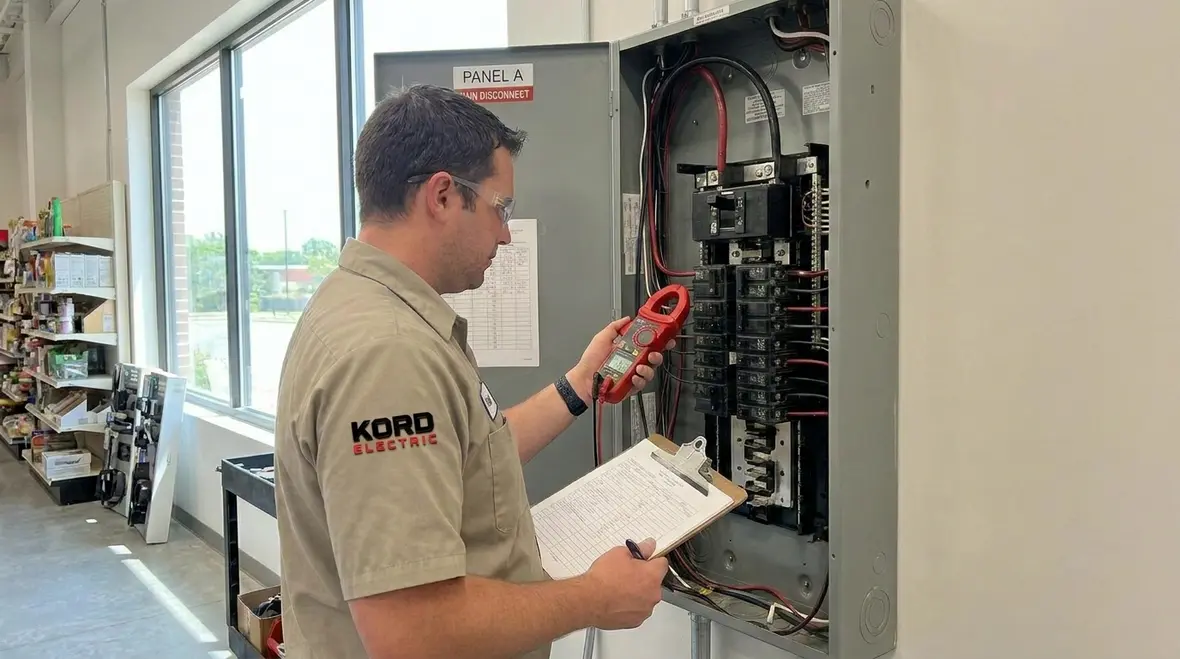
Load reviews in retail often reveal a second story: the quiet impact of voltage swings on sensitive equipment. When lights dim during heavy usage or point of sale stations reset unexpectedly, it may signal deeper power quality issues. For facilities that see these symptoms, structured support such as Kord Electric’s services for voltage fluctuations in commercial and industrial facilities helps stabilize performance before customers ever notice a problem.
In many retail properties, especially those that have expanded over time, load growth happens in small steps: one more freezer, an extra run of decorative lighting, or a quick-add circuit for a temporary display. A thorough load audit connects all of those decisions into one picture so the building’s electrical backbone can keep pace with business demands.
Eliminate Overheating at Connections and Panels
Heat is the silent troublemaker. Loose terminations, corroded conductors, and worn components increase resistance. As resistance rises, temperature follows, and insulation ages faster. Eventually, you get tripping, nuisance failures, or worse, equipment damage and fire risk.
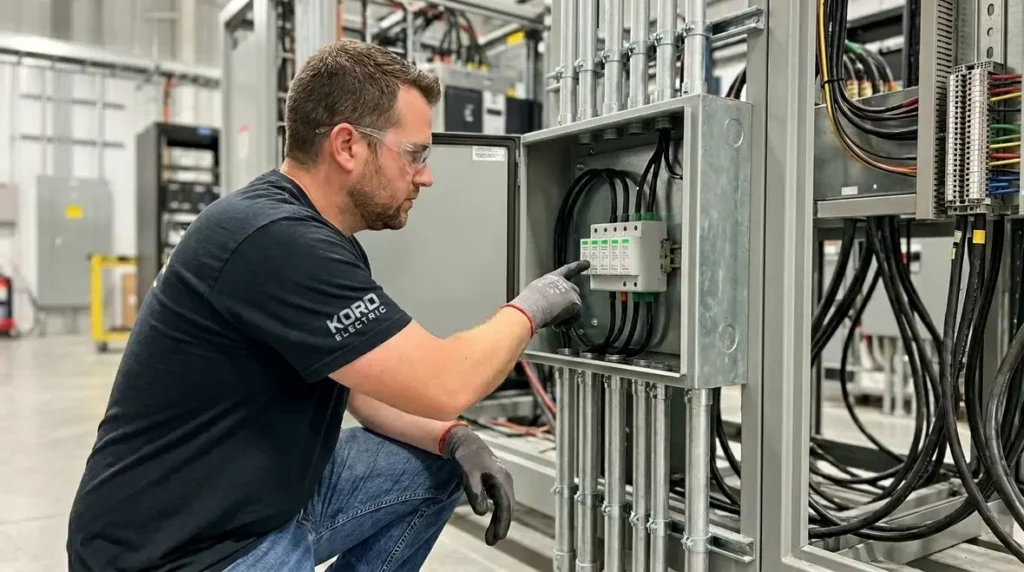
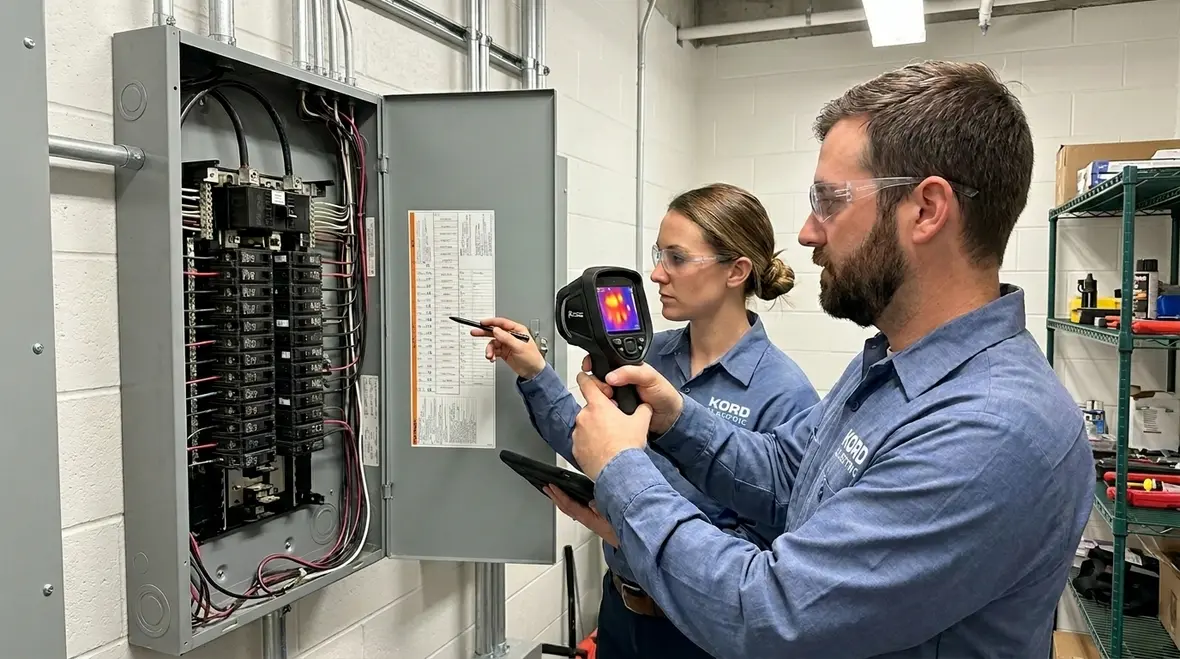
Therefore, our proactive measures emphasize connection quality. We inspect terminations in panels, switchgear, and distribution points, then verify torque and condition where applicable. In many facilities, thermal imaging helps reveal hot spots that eyes miss. Then we pair those findings with practical corrective action: cleaning contacts, replacing damaged components, and tightening what should never have loosened.
Meanwhile, we also look for panel labeling and routing issues. If wires run in ways that trap heat or get stressed by movement, the system takes that damage long-term. So our team supports better installation practices, not just emergency repairs.
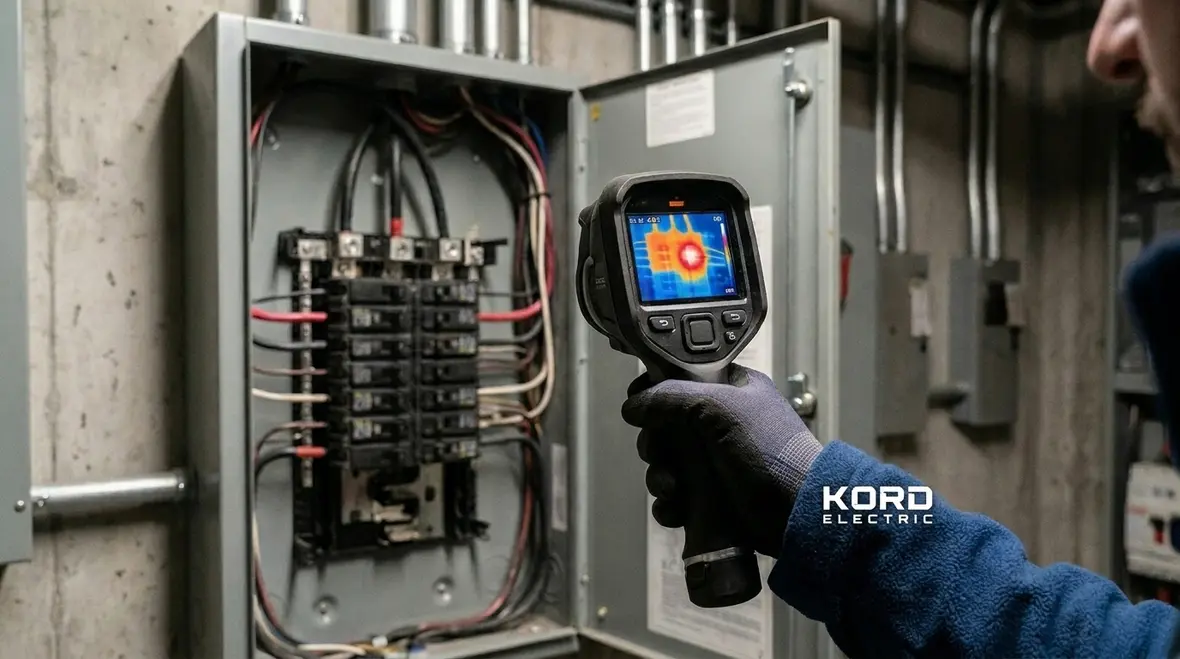
In some retail environments, panels live in stock rooms, utility closets, or back corridors that see plenty of foot traffic but not much inspection. Cardboard boxes stack in front of doors. Dust collects inside enclosures. Labels fade until nobody remembers which breaker controls which run of lighting. Part of electrical hazard reduction is simply restoring order: clear labeling, unobstructed access, and panels that stay as cool and calm as the front-of-house lighting they support.
When inspections uncover hot spots or aging components, our team can tie those findings into a broader strategy that includes structured preventive work. For many property managers, that means aligning corrective action with a long-term program like Kord Electric’s dedicated electrical preventive maintenance services so that each repair strengthens the entire system instead of acting as a one-off fix.
Manage Grounding, Bonding, and Protection Devices
Safety depends on more than breakers “turning off.” Grounding and bonding create a reliable path for fault current, so protective devices can operate correctly. If those systems degrade, the building can become a higher risk environment for shock and equipment damage.
Additionally, we review protective devices like breakers, fuses, and surge protection. If protection fails to trip during a fault, the event has room to grow. And if surge protection is outdated or bypassed, sensitive equipment in retail spaces can absorb stress every day. Over time, that stress adds up.
Our technicians validate settings and inspect components for wear, contamination, and improper installation. Then we explain the findings clearly. In business, calm explanations matter. Folks do not need a lecture, they need the right next steps.
Grounding and bonding details also sit at the center of commercial electrical compliance. When projects reference different codes or standards, small assumptions can become very real risks. Our team routinely helps facility leaders navigate the gap between design documents and field conditions, drawing on guidance like the distinctions covered in Kord Electric’s article on NFPA 70A vs NEC for commercial electrical compliance. The goal is simple: make sure the protection on paper matches the protection in the field.
For retail operators sharing space with other tenants, proper grounding and surge protection also protect shared infrastructure, from fire alarm systems to data networks. A disciplined approach to bonding, fault clearing, and protective devices keeps one tenant’s mistake from becoming everyone’s outage.
Prevent Shock Risks in Back of House and Construction Zones
Retail hazards often cluster behind the storefront. Back of house areas carry outlets, distribution runs, and temporary power for maintenance, displays, and seasonal setups. Meanwhile, construction zones and remodel work increase the chance of accidental contact, damaged insulation, and improper temporary wiring.
So we support electrical hazard reduction by reinforcing site discipline. We check temporary power practices, verify covers and strain relief, and ensure GFCI protection works where it must. Then we coordinate with facility managers so new work matches existing systems. If someone adds a circuit during a remodel, we help them do it in a way that respects the whole electrical design.
Also, we remind teams that “it looks plugged in correctly” is not the same as “it is safe.” We treat this like a food safety rule: if it is not documented, it is not verified. And yes, we have jokes ready for the day someone claims, “It has been like that for years.” In our world, years only mean one thing: the risk has had time to mature.
During remodels, retail timelines often push everyone to move fast: new lighting layouts, added receptacles, and pop-up checkout areas all compete for attention. Coordinating those changes with qualified electrical service keeps shortcuts from creeping into the project. That might mean planning circuits for new display runs, aligning lighting upgrades with energy code requirements, or confirming that temporary feeds do not overload older panels.
When stores operate through construction, the risk of incidental contact goes up. Cords cross walkways, panels stay open for repeated work, and ceiling spaces fill with ladders and tools. Our technicians help leaders set clear expectations around lockout-tagout, temporary enclosures, and inspection checkpoints so that daily operations stay safe even while the space evolves.
Build a Maintenance Plan That Keeps Systems Stable
Proactive work stays proactive when the schedule does. Instead of running on guesswork, Kord Electric works with property teams to create a maintenance plan that fits how the building actually operates. We focus on routines that reduce failures and support compliance needs for commercial and industrial facilities and major property buildings.
Our approach typically includes periodic inspections, targeted testing, and documented corrective actions. Then we help others prioritize repairs based on risk, not pride. That matters because some issues are visible while others are quietly worsening.
Moreover, we connect maintenance tasks to operational impact. If a fix reduces future downtime, it should get a clear place on the schedule. And when our expert service staff explains the plan, they do it in a straightforward way so building teams can support it.
Transitioning from reactive repairs to electrical hazard reduction works best when leadership understands what success looks like: stable operation, fewer surprises, and a building that performs like it should.
For many facilities, the most effective path is to formalize this work through a structured program. Kord Electric outlines this mindset in depth in their article on commercial and industrial electrical maintenance plans, where routine inspections, testing, and reporting come together to create a roadmap instead of a to-do list. Retail properties benefit from the same discipline: clear intervals, defined responsibilities, and a maintenance history that tells the story of how the building stays safe.
When electrical maintenance aligns with business cycles, retailers can schedule higher impact work around slower periods, manage budget timing, and avoid scrambling when inspections or audits arrive. It becomes part of how the property operates, not an interruption to it.
FAQ: Electrical Safety and Hazard Reduction for Retail Properties
Ready to Strengthen Safety in Your Commercial Facility?
If you manage commercial and industrial facilities or major property buildings, you already know that electrical problems cost more than money. They cost time, safety, and customer confidence. Kord Electric helps you move from uncertainty to electrical hazard reduction with inspections, load review, connection checks, and practical upgrades. Our technicians and expert service staff explain each step clearly, so your team can make decisions fast. Contact us today to schedule an assessment and protect your property before the next “small issue” becomes a big one.
For leaders who want electrical safety woven into everyday operations, not just handled when something fails, partnering with a team that delivers structured preventive work is essential. Kord Electric’s electrical preventive maintenance programs give retail properties and large commercial sites a clear path from inspection to action, linking each recommendation to real-world risk. When combined with targeted services for power quality, lighting, and emergency response, your facility gains a practical roadmap for long-term reliability.
If your next step involves updating lighting layouts, supporting new displays, or improving visibility in high-traffic areas, Kord Electric’s lighting installation services can be coordinated alongside hazard reduction work, aligning energy efficiency, safety, and code compliance in a single plan.