Warehouse Lighting Efficiency Upgrades
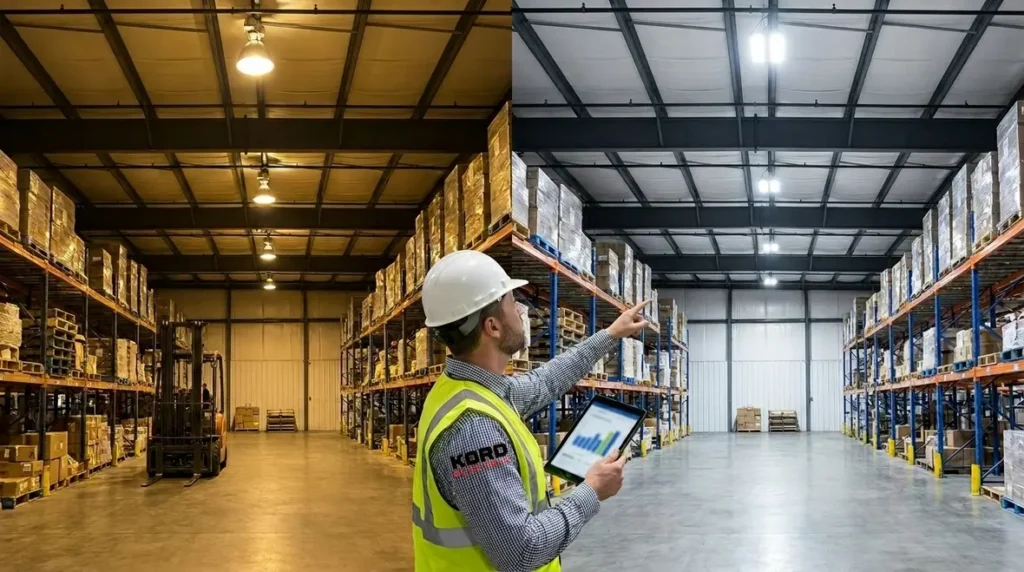
Kord Electric helps commercial and industrial facilities make Warehouse Lighting Efficiency Upgrades that balance safety and savings. In our experience, the best lighting improvements do not just brighten a dock area or reduce bills. They also reduce risk, protect equipment, and support the way people actually work. And yes, we say “support” on purpose, because nobody wants an upgrade that looks good on day one and fails on day fifty. Our technicians and expert service staff walk teams through the decisions step by step, using clear explanations and practical options. Then we plan the work so safety stays first, operations stay steady, and the savings show up where they matter most.
Why warehouse lighting efficiency upgrades feel like a smart business move
When a warehouse team hears “efficiency upgrades,” they often picture a simple bulb swap. However, in most commercial and industrial spaces, the real opportunity comes from the full system. That includes the fixture, controls, mounting heights, reflectance, and how the lighting behaves during different shifts. In other words, this is not a “lights out, lights on” job. Instead, we treat it like a system upgrade for safety, productivity, and cost control.
As Kord Electric explains to facility managers, better lighting can reduce errors, improve visual clarity for picking and inspection, and make hazard areas more visible. Moreover, safer lighting helps when forklifts move, pallets stack, or people work near dock doors. So, even if the goal starts with a utility bill, the outcome keeps expanding into risk reduction and performance.
How safety and compliance guide the upgrade plan
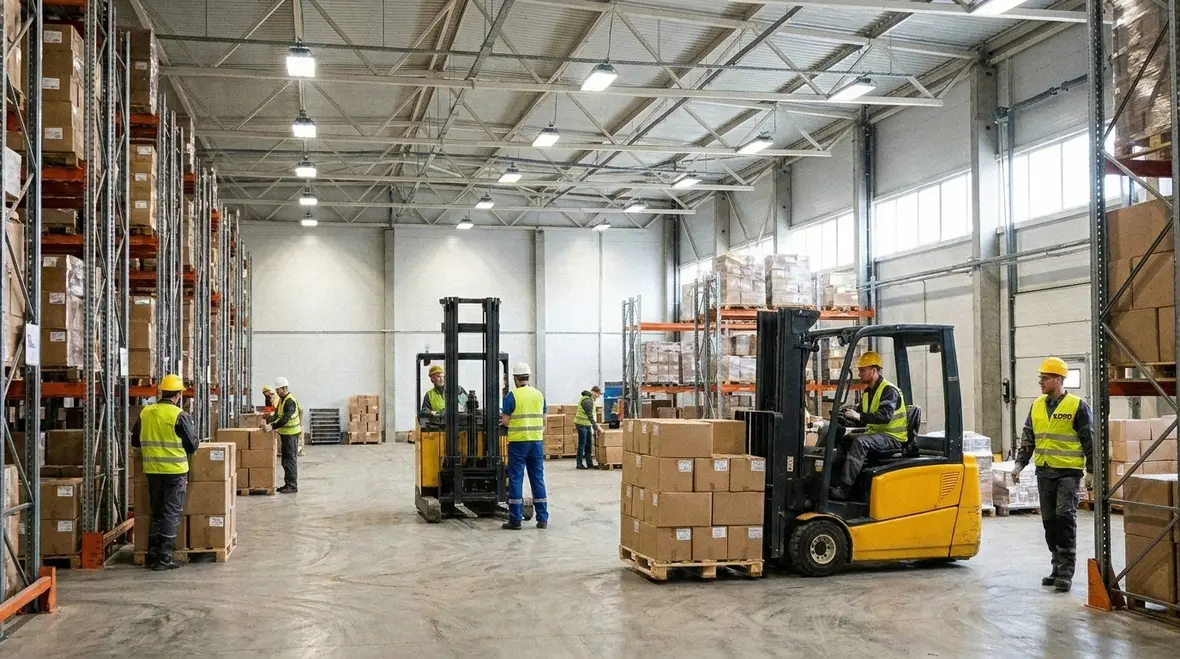
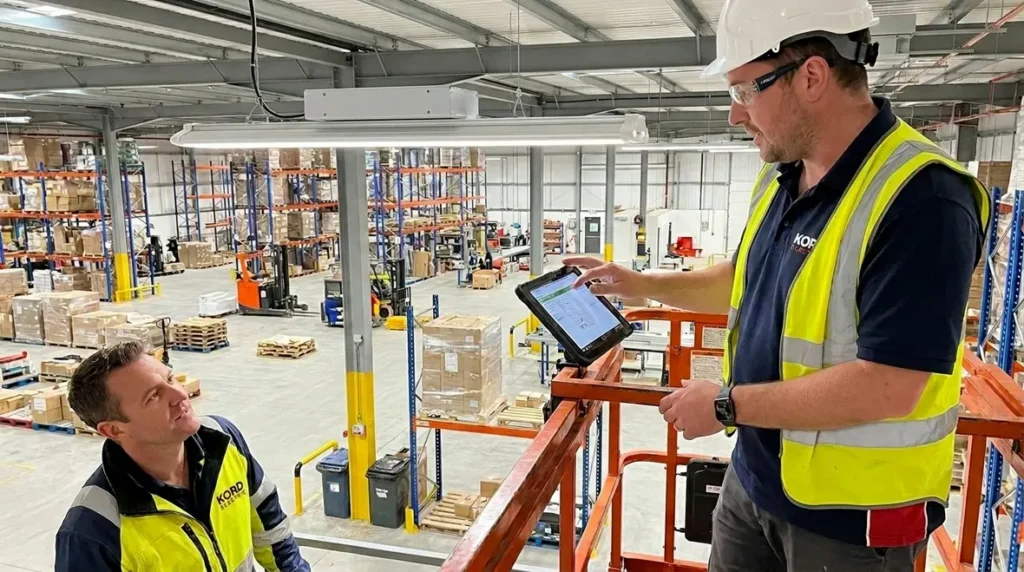
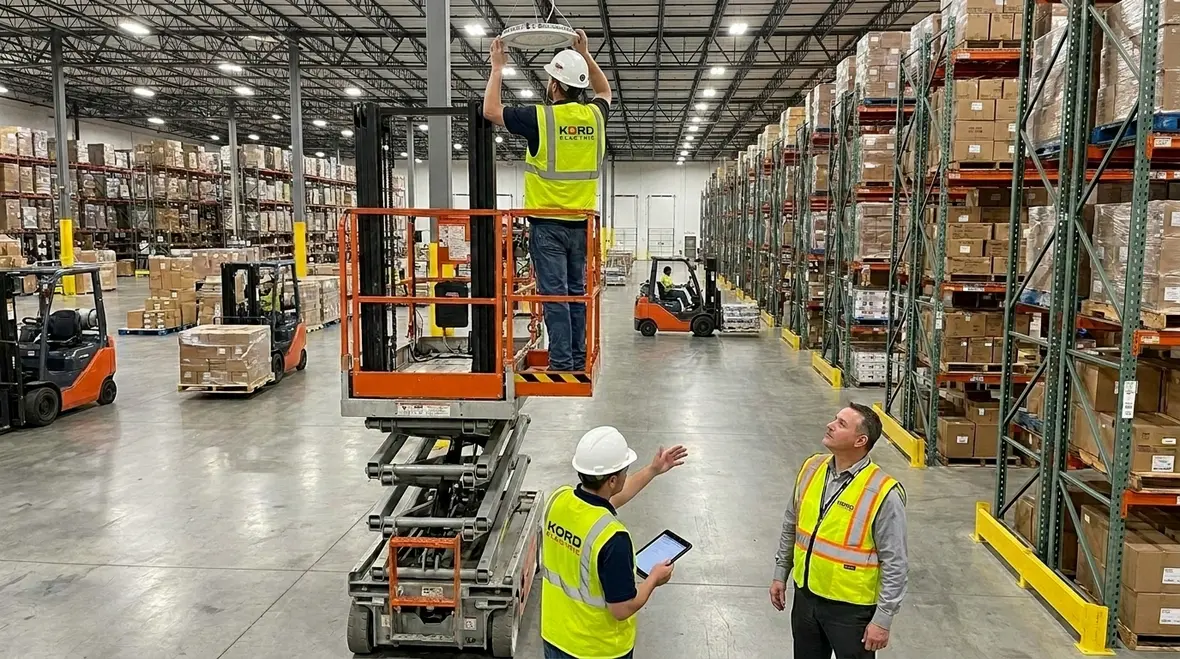
Safety drives the schedule and the design. Therefore, before we install anything, our technicians review the current layout and check for conditions that raise risk. These upgrades often involve electrical components in high traffic areas, and that means we plan around lockout procedures, safe access, and proper protection for circuits and wiring.
We also coordinate with the realities of a major property building. For example, a warehouse may run 24 7, and dock lighting needs stable output during shipping windows. Consequently, we build a staged approach so the facility can keep moving while we work. At the same time, we verify that the new lighting fits the intended environment, including rated fixtures for dust, vibration, and temperature swings.
In the same spirit, our team follows the same principle we use when reviewing commercial electrical costs. The plan must make financial sense, but it must also stay safe and compliant. If an upgrade shortcuts the electrical side, the return gets delayed, and the risk goes up. Nobody needs that plot twist, even if it feels like a TV drama.
Lighting controls deliver savings beyond the fixture
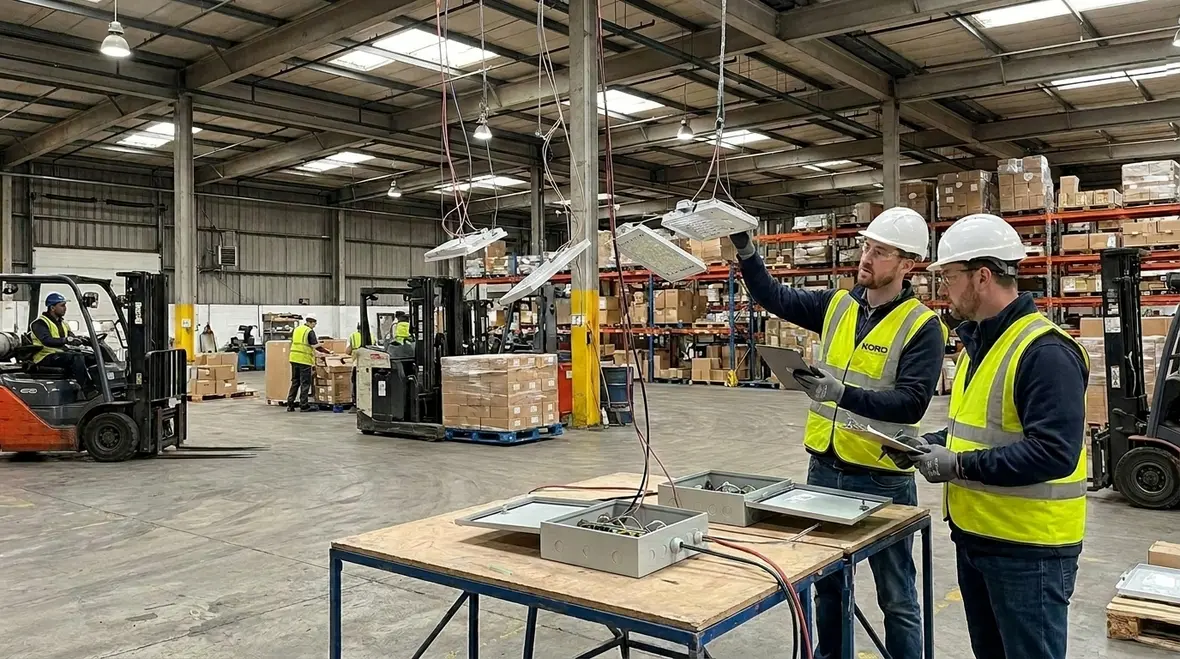
Facility owners tend to focus on fixtures, and fixtures do matter. Yet we often see the strongest long term savings come from controls. When we add the right control strategy, lights stop wasting energy. Then, they come back on when people need them. That is how Warehouse Lighting Efficiency Upgrades become more than brighter space.
Common control approaches include occupancy sensing for low traffic zones, time based scheduling for predictable shifts, and daylight harvesting near entrances or skylights. Furthermore, we can integrate dimming so the system maintains visibility without running at full output when it is not required. As operations shift, the control system still performs because it follows the space, not the guesswork.
Our expert service staff explains the tradeoffs in plain language. For example, dimming can reduce energy use, but the team must confirm that target tasks still have enough light. In other words, we do not just install gear. We confirm performance. That is why we measure and model where needed, and we adjust for mounting height and spacing so the light lands where it should.
Aligning controls with real warehouse operations
In active industrial spaces, lighting controls work best when they match how people and equipment actually move. That means mapping out lanes, pick paths, dock timing, and staging habits before anyone starts programming scenes or sensor zones. When Warehouse Lighting Efficiency Upgrades follow the real workflow, teams get responsive lighting instead of random shutoffs.
Rewiring costs and electrical planning for commercial systems

One of the most common fears we hear is, “Will this turn into an expensive rewiring project?” The answer depends on what the facility already has. Some warehouses can upgrade lighting with minimal electrical changes, while others need panel work, circuit adjustments, or updated wiring routes to support new drivers and controls. Therefore, a careful cost view helps teams plan without surprises.
In our internal guidance, we treat wiring and electrical work as part of the system budget, not an afterthought. We have a detailed rewiring cost guide for commercial electrical systems that breaks down how electrical scope affects project pricing. In practice, that guide aligns with what we see on major property buildings: labor, existing wiring condition, distance to panels, and the complexity of control wiring all influence total cost.
Here is the approach Kord Electric uses to keep the project controlled. First, our technicians inspect the current circuits and identify what can stay. Next, we map control wiring routes and determine whether we can reuse existing pathways or need new ones. Then, we estimate the electrical labor based on the real installation work, not guesses from a catalog description.
And because facility teams value certainty, we explain what drives cost and what reduces it. If existing circuits support the upgrade, we keep changes focused. If they do not, we recommend a path that improves safety and reduces future maintenance. We treat wiring like the foundation of the building’s electrical performance, because it is.
Coordinating lighting work with broader electrical strategy
Warehouse Lighting Efficiency Upgrades often connect with other improvements such as panel maintenance, power quality corrections, or future EV charging projects. Planning the lighting scope alongside these bigger goals helps facilities avoid duplicate work, limit shutdowns, and keep the overall commercial electrical roadmap realistic.
ROI that makes sense for industrial timelines
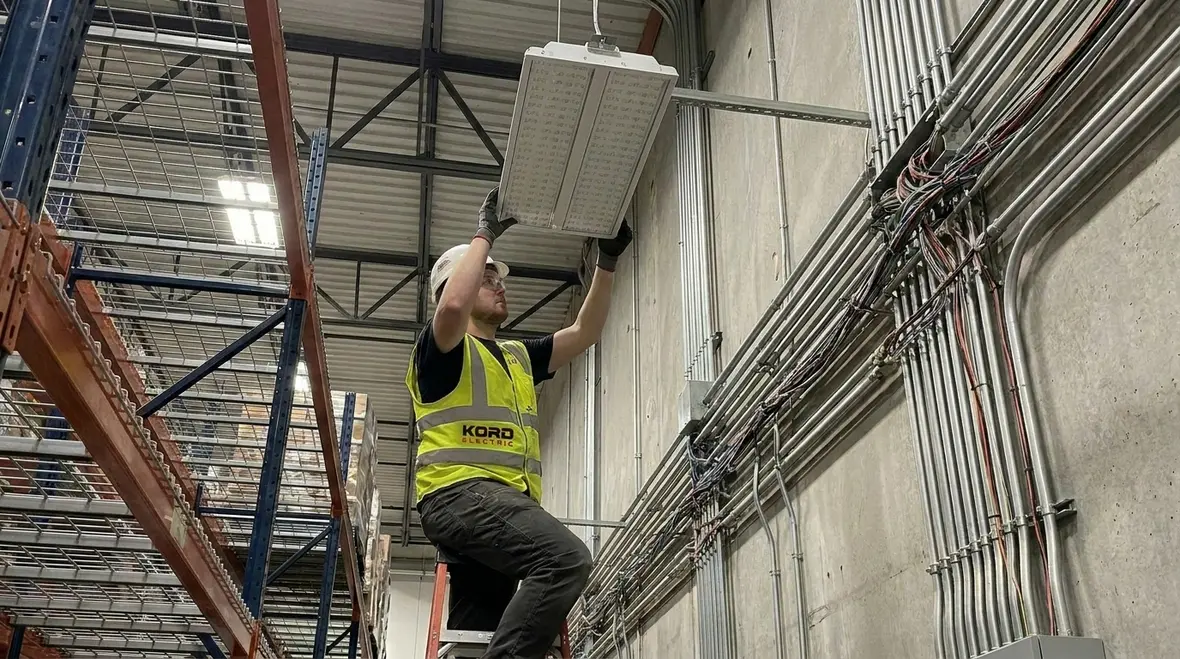
Return on investment matters, but it has to match how the facility operates. A warehouse does not care about payback in theory. It cares about uptime, labor hours, and the ability to keep shipping and receiving on schedule.
So, when we plan Warehouse Lighting Efficiency Upgrades, we build an ROI view that includes energy reduction, maintenance savings, and operational comfort. LEDs typically reduce energy use and extend lamp life. Yet the ROI gets stronger when controls prevent unnecessary runtime, and when the facility avoids frequent relamp labor. Additionally, better light distribution can reduce rework, slower picking, and safety incidents, which often do not show up on the utility invoice but affect day to day performance.
To make the ROI realistic, our technicians consider shift schedules, occupancy patterns, and how long each zone remains active. Then, we estimate the savings based on actual usage, not a brochure fantasy. If the facility runs fewer hours per day than expected, we do not pretend it does. If a zone stays busy, we design controls so they do not under light. That balance protects productivity while still cutting energy waste.
And yes, sometimes ROI takes a moment to land in the human brain. That is normal. Commercial managers run on calendars and priorities. We make the numbers understandable, so decisions happen faster and with less stress.
Connecting ROI to long-term electrical health
Lighting ROI gets even better when upgrades reduce strain on panels, circuits, and transformers. Lower loads can support future equipment, limit nuisance trips, and help align with preventive maintenance goals, turning a lighting project into a broader win for the facility’s electrical system.
Design details that improve light where workers need it
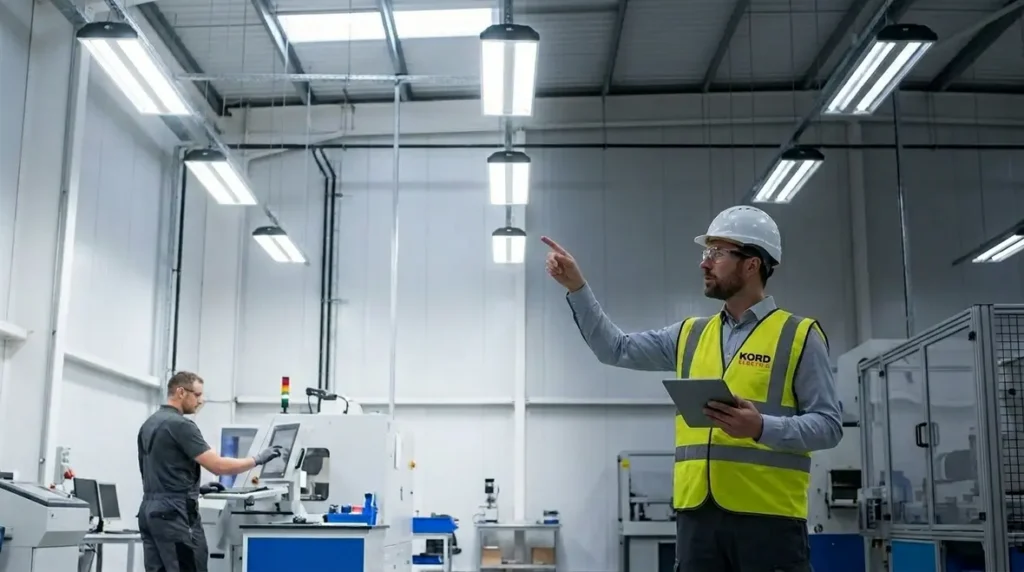
The best efficiency upgrades deliver consistent light, not just high brightness. That is why spacing, optics, and placement come first in good design. Our team examines the warehouse zones, including high bay areas, aisles, staging areas, and loading docks. Then we account for how surfaces reflect light and how the space changes during shifts.
For example, a high bay area may need a different approach than a packing line. High bay fixtures often require careful attention to mounting height, beam angle, and uniformity so light does not create dark pockets. Meanwhile, work areas need better focus for tasks like inspection, labeling, and counting. If the upgrade ignores those details, it can create glare or uneven output, and then productivity slips. Nobody wants to “save energy” while workers squint like it is a reality show challenge.
Our expert service staff also looks at future changes. If the facility plans to add racking, reconfigure lanes, or expand the operation, we can set the design so the lighting keeps supporting those changes. That reduces the need for rework later and keeps the upgrade valuable over time.
Finally, we consider maintenance access and replacement strategy. Since commercial and industrial facilities keep moving, the upgrade should support easy servicing. That means labeling, access planning, and a clean installation so future maintenance stays safe and simple.
Integrating efficiency with other facility upgrades
Lighting design often overlaps with other improvements, from commercial kitchen electrical upgrades and wiring in food service zones to data center electrical distribution design in technical areas. When Warehouse Lighting Efficiency Upgrades are coordinated with these projects, facilities gain a more unified electrical plan instead of one-off changes.
Common mistakes during warehouse lighting upgrades
Most problems do not come from the technology. They come from the planning. Therefore, Kord Electric often sees the same mistakes in commercial and industrial projects.
- Choosing fixtures by wattage alone and ignoring layout, optics, and uniformity. Bright does not always mean usable.
- Skipping control review and assuming every area behaves the same. It never does.
- Underestimating electrical scope and getting surprised by circuit limitations, wiring needs, or driver requirements. Proper planning prevents that.
- Not coordinating shutdown windows and forcing unsafe work practices. A staged plan keeps the facility safe.
- Overlooking safety in installation and treating high ceilings and live circuits like a casual job. Our technicians treat it like critical work because it is.
When clients avoid these pitfalls, Warehouse Lighting Efficiency Upgrades deliver the savings they expect. When they do not, the upgrade can become a costly lesson. And we would rather be the calm voice before the lesson, not the firefighter after it.
FAQ: Warehouse lighting efficiency upgrades
What happens next with Kord Electric
If a facility team wants lighting upgrades that protect safety and deliver savings, Kord Electric is ready to help. We start with a practical assessment, then we design Warehouse Lighting Efficiency Upgrades that fit the building’s electrical setup, operations, and real work zones. Our technicians explain the plan in business casual language, so there are no mystery steps, no surprise scopes, and no “trust us” moments. Contact Kord Electric today to schedule an on site evaluation for your commercial or industrial facility.
For facilities planning broader improvements around reliability and uptime, Kord Electric can also connect warehouse lighting projects with services such as electrical preventive maintenance programs or commercial lighting installation services, building a long term strategy instead of a one time fix.
When your team is ready to move from ideas to action, Kord Electric coordinates a site walk, reviews your existing infrastructure, and outlines a clear path from first fixture to final inspection. That way, Warehouse Lighting Efficiency Upgrades become a confident step forward for your facility, not another item lost in the project shuffle.
To discuss Warehouse Lighting Efficiency Upgrades or align them with other commercial services, visit Kord Electric’s commercial service pages or connect directly with their team to start planning your project with clear numbers, realistic timelines, and a focus on safety.