Warehouse Lighting Energy Efficiency Standards
Warehouse Lighting Energy Efficiency Standards That Lower Costs Over Time
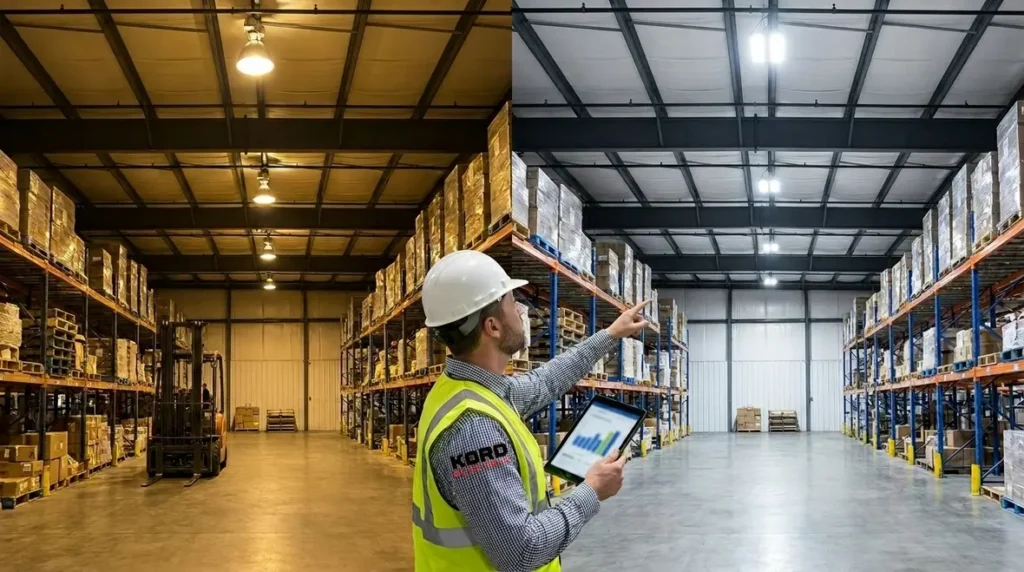
At Kord Electric, we use warehouse lighting energy efficiency standards as the starting line for every commercial and industrial project. That means we plan for the real world: tall ceilings, long operating hours, and maintenance schedules that cannot slow down pick, pack, and ship. Because when lighting runs efficiently, it stops wasting power, reduces heat, and holds performance longer. Then, the whole operation pays less over the years. And yes, it is less exciting than a superhero origin story, but the results still land like a dramatic reveal.
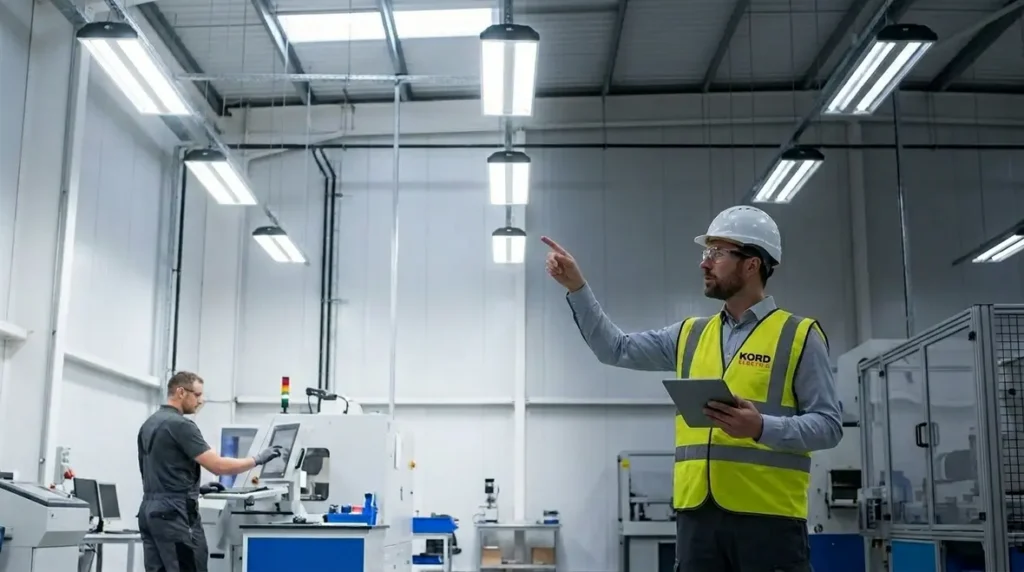
Our approach is practical and clear. First, we assess what is installed now. Next, we recommend upgrades that match usage patterns and storage layouts. Finally, we coordinate service so teams keep working. Meanwhile, our technicians explain what they see and why it matters, in plain terms, not jargon.
Why Efficient Lighting Cuts Utility Bills Without Cutting Corners

Warehouses often run lights for long shifts, sometimes early mornings through late nights. Therefore, even small improvements to light output per watt can create major changes in monthly energy use. When we follow warehouse lighting energy efficiency standards, we do not just swap fixtures and call it a day. We also consider how much light you need at each work zone, and when.
Efficient systems typically reduce energy draw by using better light sources and smarter controls. For example, high output where people work and lower output where motion is rare can lower total consumption. Then, we use layout aware planning so lighting levels stay stable on the floor where it counts. In other words, staff gets the visibility they need, and the electrical bill stops acting like it has its own spending problem.
Also, efficient lighting can reduce HVAC load. Warehouses often handle heat from lighting and other equipment. When lighting produces less heat, air handling systems do not work as hard. As a result, overall operational costs decline, not only utility costs. That is the kind of chain reaction we like.
Long Life Means Fewer Work Orders and Less Downtime
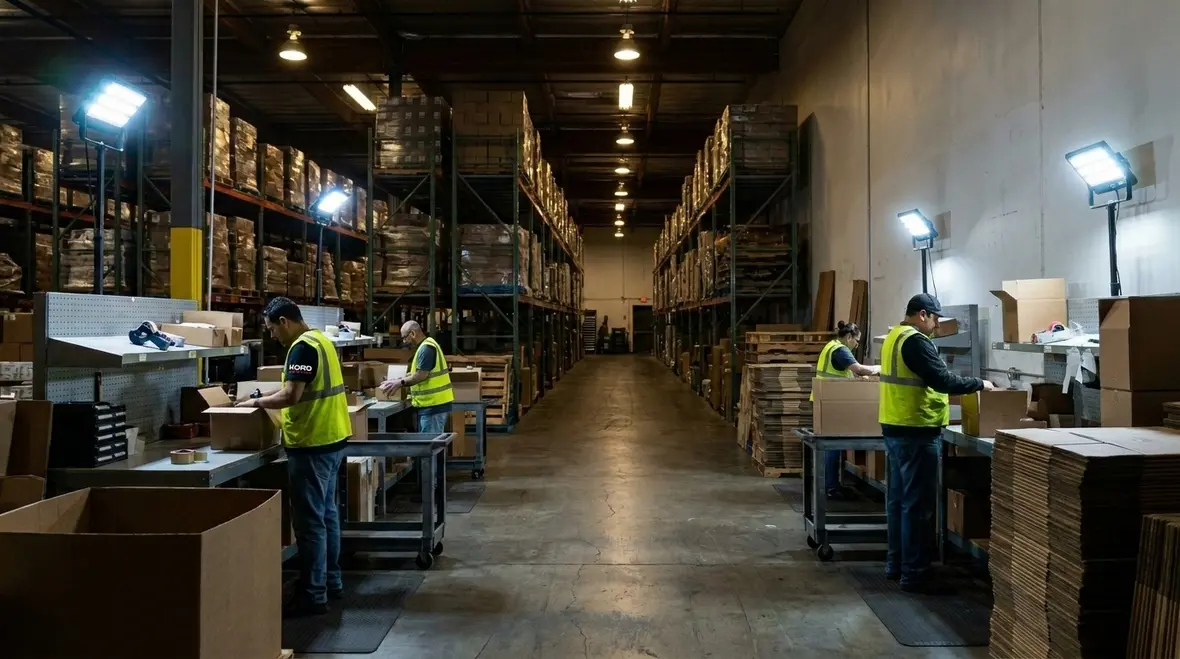
Energy efficiency is not only about watts. It also helps the lighting last longer, which reduces the number of service calls. When fixtures are selected and installed correctly, they withstand dust, vibration, and high ambient temperatures that show up in commercial spaces. However, many failures happen early when installation details are ignored, like drivers, shielding, and mounting conditions.
Our expert service staff designs upgrades with durability in mind for major property buildings and industrial facilities. They look at the environment, not just the label on the box. Then, they set up maintenance steps that prevent slow decline from turning into sudden outages.
So instead of waiting for lights to go dark, we help facilities catch issues early. If a component begins to drift from expected performance, it often leaves clues first: flicker, reduced output, color shift, or higher electrical readings. When we spot those signs early, repairs stay routine. In contrast, a surprise shutdown in a shipping bay is the opposite of routine. Nobody needs that kind of plot twist.
Smart Controls That Match Real Shift Patterns
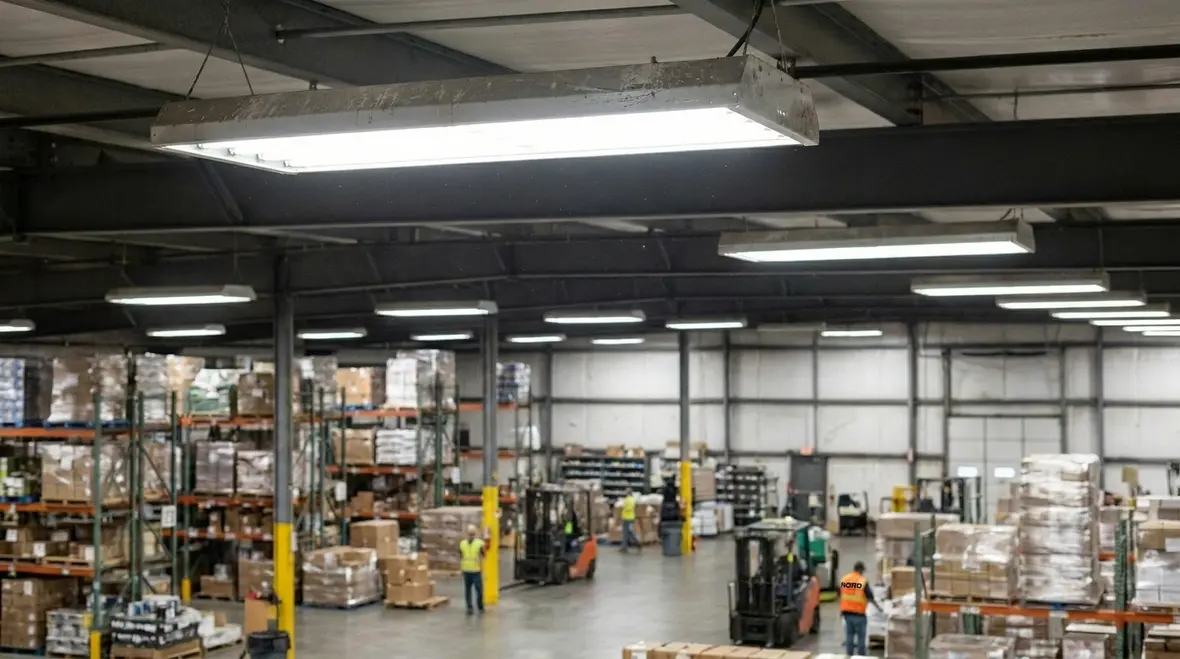
Efficient lighting also gets better when it adapts to actual operations. Warehouses rarely need full brightness all the time. Loading docks may need strong light at certain hours. A storage aisle may only need heavy illumination during replenishment. Therefore, controls help lighting follow usage, not habit.
Common options include occupancy sensing, time scheduling, and dimming strategies. For example, motion based controls can keep lights at full output when forklifts and staff move, and reduce output when areas stay quiet. Meanwhile, scheduling keeps lighting aligned with shifts, restrooms, lunch breaks, and seasonal changes.
We also help facilities avoid a common mistake: over simplifying controls without checking business flow. If controls turn off too aggressively, safety and productivity suffer. If they dim too much, scanning and inspection get harder. Then the operation pays again in rework and slower throughput. Our technicians map controls to how people actually work, so the building behaves like a dependable employee, not like a mood ring.
Preventive Maintenance Protects Performance, Not Just Light Output
Efficient lighting needs care to keep doing what it was designed to do. That is why we support preventive maintenance for commercial and industrial sites. We work with the idea that lighting systems should be checked before they drift out of spec. In fact, our team references the same preventive mindset described in our electrical preventive maintenance approach at kordelectric.com/electrical-preventive-maintenance/.
During preventive service, our technicians look beyond the fixture. They check the electrical path, verify connections, and confirm driver health where applicable. They also pay attention to hotspots, grounding issues, and signs of moisture or contamination. Since warehouses can be harsh, small electrical problems can grow faster than people expect.
Additionally, preventive work supports consistent lighting levels. When a system gradually loses output, employees may compensate by using extra handheld lighting or working more slowly. That is wasted time wearing a friendly disguise. By keeping the system in healthy condition, we reduce the chance of those hidden costs.
And yes, preventive maintenance can feel like paying for an umbrella before the storm. But the storm always shows up. It is just a question of when, and we prefer to be ready.
How We Audit Warehouse Lighting Before We Recommend Upgrades
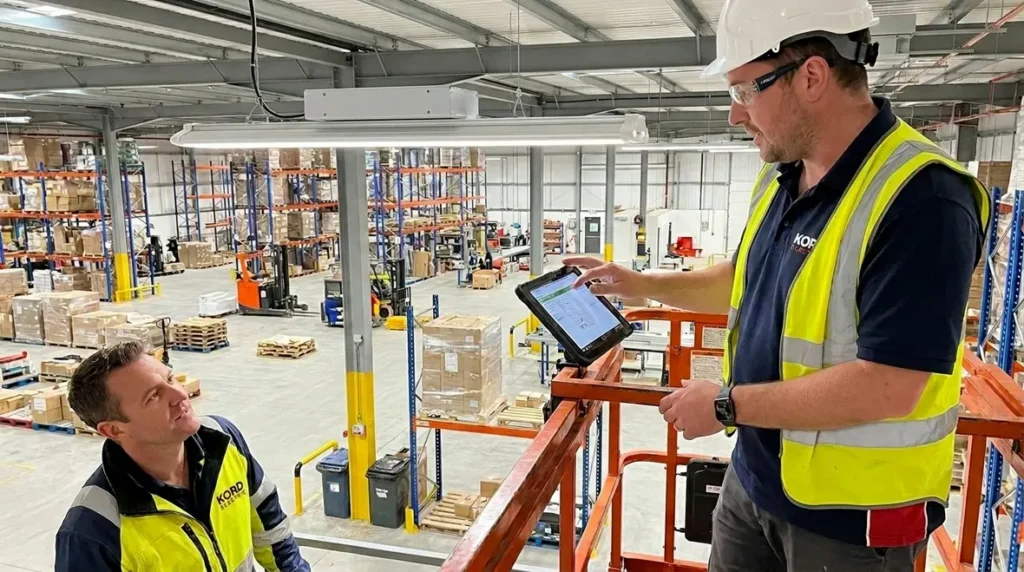
We do not guess. We measure, then we plan. First, our expert service staff reviews current fixtures, control settings, and operating schedules. Then we map lighting levels across key areas like picking zones, packing lines, corridors, and loading bays. We also look at reflectance surfaces, ceiling height, and potential shadow issues created by racks and pallet configurations.
After that, we estimate energy use under real operation hours. We consider lamp and fixture efficiency, expected life, and the effects of dimming strategies. We also evaluate whether controls match the workflow. Finally, we identify which upgrades provide the best balance of performance, reliability, and cost.
During this process, our team explains findings in a clear way. Instead of talking like a textbook, we share the story of the system: what is working, what is aging, and what will likely fail first. That transparency helps decision makers move faster. It also helps facilities avoid the classic mistake of buying equipment that looks efficient on paper but performs poorly in an industrial setting.
For facilities that want lighting to be part of a broader reliability plan, this audit-centric approach also fits neatly alongside Kord Electric’s dedicated electrical preventive maintenance programs for commercial and industrial properties.
Featured FAQ on Warehouse Lighting Energy Efficiency Standards
How do warehouse lighting energy efficiency standards reduce costs?
They guide fixture and control choices to reduce power use, maintain proper light levels, and support longer operating life. That lowers utility costs and reduces maintenance work orders over time.
What controls matter most for warehouses?
Scheduling, occupancy sensing, and dimming tied to shift patterns usually deliver strong savings without reducing safety or task visibility.
Why does preventive maintenance affect lighting costs?
It helps stop early component failures, reduces electrical problems, and keeps light output closer to design levels, which supports steady operations.
Can lighting upgrades also reduce HVAC energy use?
Yes. Efficient lighting can produce less heat, which can lower cooling load in many industrial spaces.
What does a lighting audit include?
It includes reviewing existing fixtures and controls, checking operating hours, mapping lighting coverage across work areas, and calculating expected energy and performance outcomes.
Do you work only with commercial and industrial facilities?
Yes. Kord Electric focuses on commercial and industrial buildings and major property facilities, where uptime and safety requirements are serious.
What Facilities Should Expect After We Start the Project
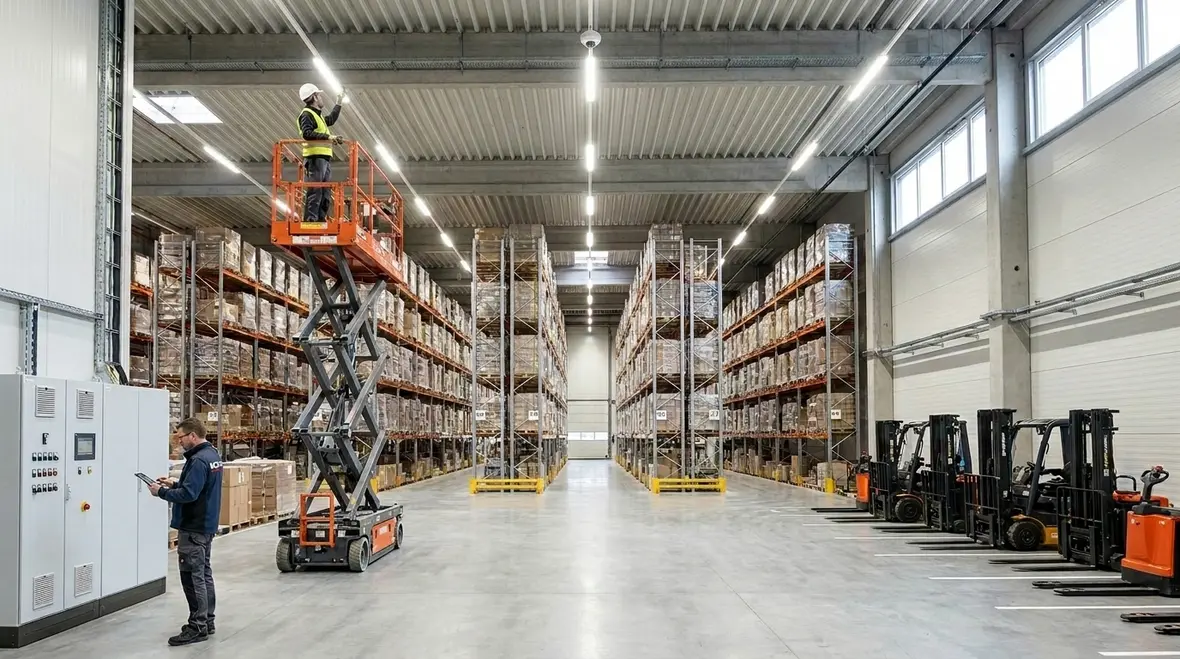
Once we begin, we keep the process smooth. First, we coordinate with facility managers to understand access windows and safety requirements. Then we stage materials and plan installation so lighting performance gets restored quickly. If controls are updated, our technicians test settings against actual shift behavior, not just default schedules.
After installation, we follow up with performance verification. That includes checking light distribution and confirming that controls respond as intended. Also, we share a maintenance outlook so your team knows what to watch and when to schedule service. In many cases, the right plan prevents small problems from becoming big ones.
And when something does need attention, our expert service staff shows up like professionals, not like “we will see what we can do” tourists. We focus on uptime because industrial customers do not run on hope. They run on schedules.
If you are planning a larger reliability strategy that includes panels, distribution equipment, and system longevity in addition to lighting, Kord Electric also supports structured commercial and industrial maintenance programs similar to the approach outlined in our commercial and industrial electrical maintenance plans resource. Together, these services help warehouses align warehouse lighting energy efficiency standards with overall electrical resilience.
For facilities that are ready to move beyond spot fixes and one-off retrofits, our dedicated industrial and commercial lighting installation services provide a clear path from concept to completed upgrade. From code-compliant recessed lighting to full LED retrofit projects, we design and install systems that match warehouse workflow, energy goals, and safety requirements.
Final Call to Action From Kord Electric
If your warehouse lighting feels tired, inconsistent, or expensive to run, it is time to get a real plan. Kord Electric helps commercial and industrial facilities improve performance using lighting energy efficiency standards, smart controls, and preventive service. We audit first, explain clearly, then upgrade with reliability in mind. Reach out to our expert team to discuss your facility, operating hours, and goals, and let us build a lighting strategy that saves money and protects uptime. Your next maintenance call should be planned, not accidental.
Whether you are ready for a full retrofit or just starting to explore options, our team is prepared to help you align warehouse lighting energy efficiency standards with broader electrical reliability. From electrical preventive maintenance to dedicated lighting upgrades, Kord Electric is built for commercial and industrial facilities that cannot afford guesswork.