Warehouse Lighting Energy Savings with LED Upgrades
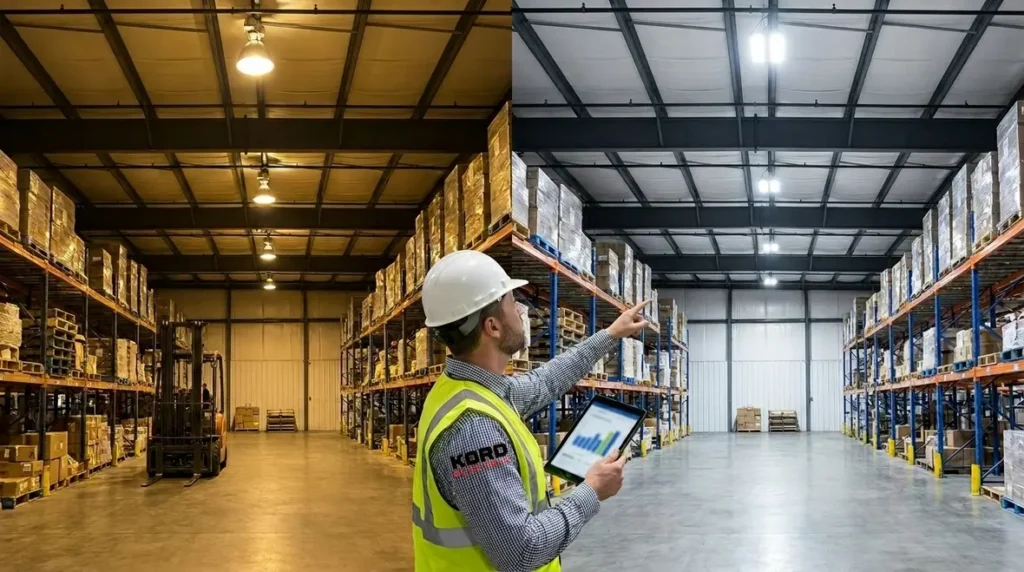
Large facilities often feel like they run on coffee and faith, yet the truth is simpler: warehouse lighting energy savings can happen fast when you upgrade to better LEDs and keep them maintained. At Kord Electric, we see it every time we walk into a big warehouse: lights are doing far more work than they should, and most of that work is wasted as heat. When teams switch to efficient LED systems, then pair that change with smart controls and solid preventive care, the facility stops paying for darkness, glare, and bad power use. And yes, we also notice when the lighting feels like a daytime sitcom that nobody asked for, flickering like it is trying to find a plot.
Below, we explain how we help commercial and industrial facilities and major property buildings squeeze real performance from their lighting, with technicians who show up, test what matters, and explain what they find in plain language.
Why LED upgrades cut waste in high-bay spaces
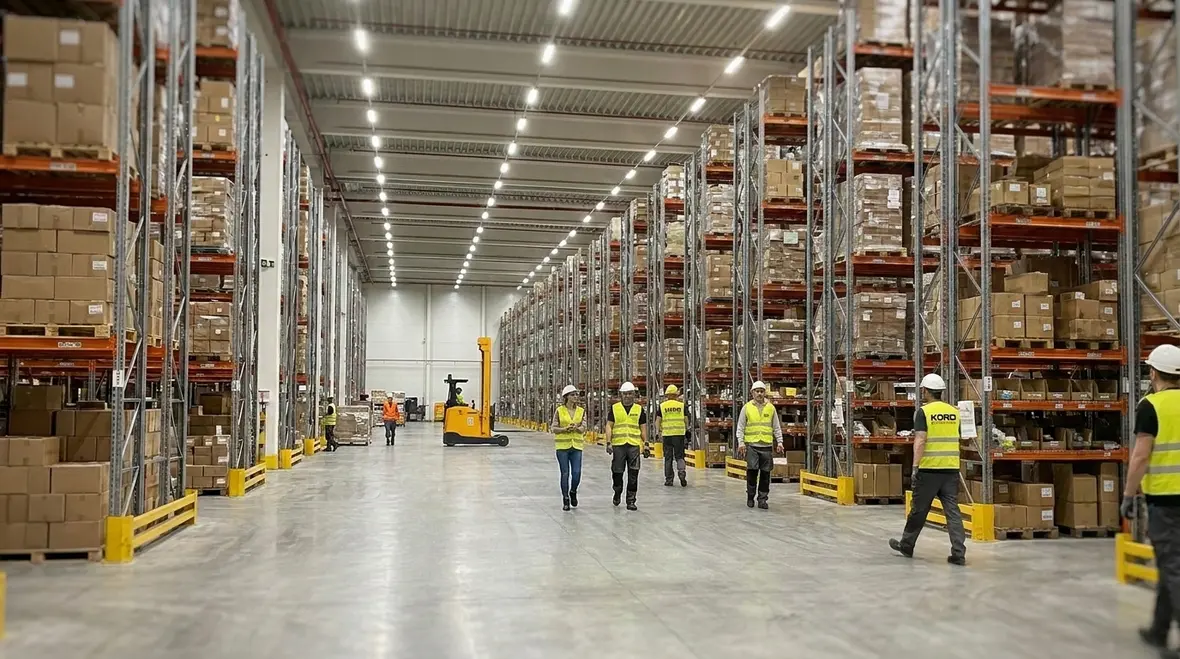
We start by looking at how light behaves in a warehouse. High bays, tall racking, and wide open floor plans create uneven coverage. Old fixtures often run hot, dim over time, and draw more power than necessary. LEDs change that equation because they use less electricity for the same usable light. In addition, LEDs waste less energy as heat, and that matters in spaces with big cooling loads.
Meanwhile, many facilities still rely on older lighting designs that assume “one brightness fits all.” But warehouses do not work like that. Traffic lanes need good visibility. Packing lines need steadier light. Dock areas need quick task clarity. With LED upgrades, we can tune output and placement, then help reduce the load that drives utility costs.
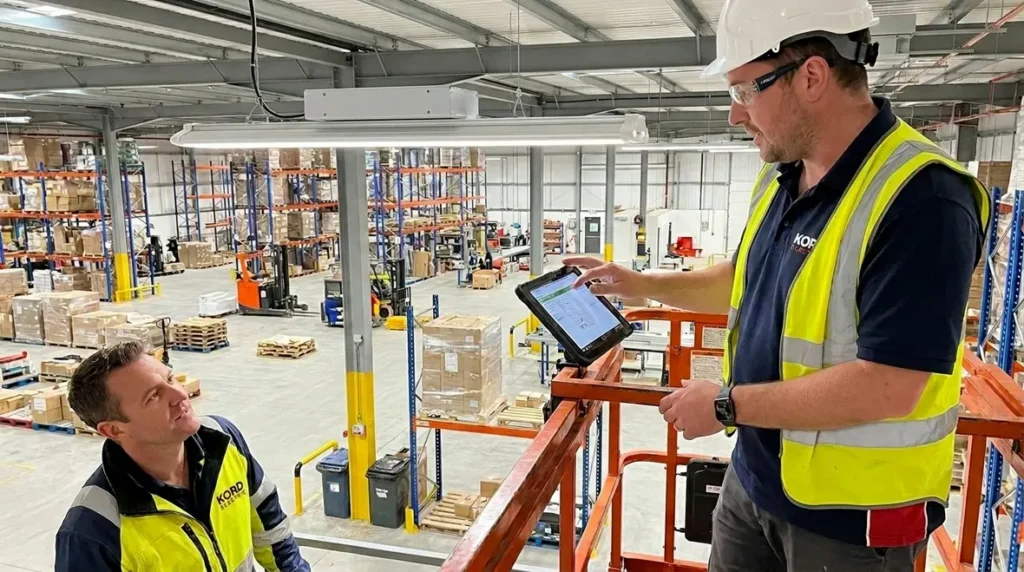
Our expert service staff does not just swap fixtures and walk away. They measure conditions, talk through the work flow, and then recommend an approach that matches how people actually move, pick, and pack. If anyone asks “Will this be bright enough?” we answer yes, and then we show the data, because feelings are not lumens.
Plan the retrofit like an engineering project, not a quick fix
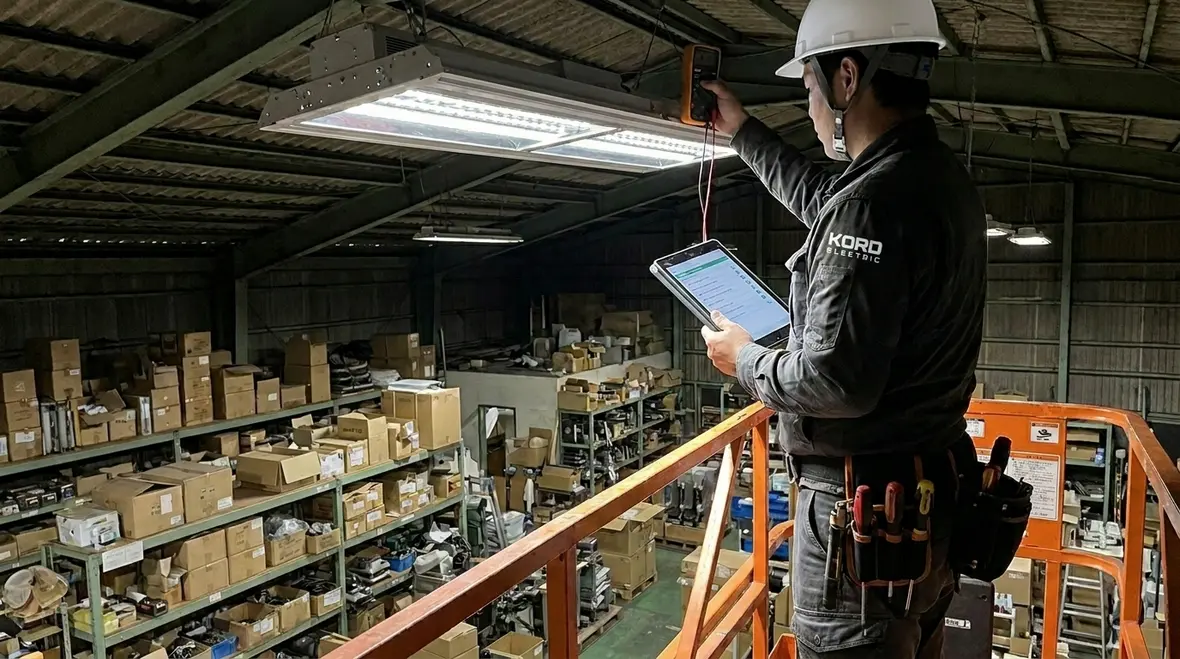
A smooth LED upgrade depends on planning. First, we evaluate the current system: fixture type, age, driver quality, circuit layout, and control strategy. Then we map lighting needs by area, because production zones and storage zones should not share the same lighting rules.
Next, we address mounting height, beam angle, and reflector design. In large warehouses, small placement errors can create “hot spots” where the light is too strong and “dead zones” where workers struggle to see labels or defects. As a result, teams may compensate by lowering task efficiency or adding portable lights, which defeats the purpose of the upgrade.
We also review the electrical side. For many facilities, the upgrade is not only about the fixtures. It is about the wiring, power quality, and how the loads behave under real conditions. Our approach keeps the retrofit from turning into an avoidable surprise, like finding a leak after you paint the ceiling. We like ceilings dry, thank you.
Controls that prevent overlighting throughout the day
After the LED selection is right, we focus on how the lighting runs. Constant full output wastes energy when spaces sit idle. That is where lighting controls earn their keep. We commonly help facilities use sensors and scheduling so lights adjust to occupancy and daylight levels.
When a warehouse has long periods of low activity, controls prevent the lights from working like they are on a never-ending spotlight schedule. Instead, lighting ramps appropriately. For instance, docks may need strong light during arrival windows, while aisle lighting can reduce during off-peak times without hurting safety.
We also consider how controls integrate with the facility’s building management habits. Our expert service staff explains the options, then helps match them to what the site already does. That way, the controls support operations rather than creating a “new system” that nobody fully trusts.
How preventive maintenance protects warehouse lighting energy savings
Even the best LEDs will not perform the way you expect if the system drifts out of spec. Dust, vibration, heat, and power issues can all change results over time. Therefore, our work includes preventive maintenance that preserves performance instead of chasing problems after they happen.
When we refer to preventive maintenance, we mean an organized plan, not a random flashlight check. Our technicians follow a method designed to reduce failures and keep output stable. We leverage our preventive maintenance approach from Kord Electric to review the system, look for early warning signs, and correct issues before they spread. If you want the full details, you can review our electrical preventive maintenance information here: kordelectric.com/electrical-preventive-maintenance/.
During service, we help confirm driver health, inspect fixtures and connections, and check for abnormal wear patterns. We also look for signs of overheating and loose terminations, because those small problems can quietly reduce light levels and efficiency. In other words, preventive care keeps the lights from aging like bread left out on a counter.
Testing, inspection, and documentation for major properties
Commercial and industrial sites need more than “it looks fine.” We handle testing and inspection in a way that supports safe operations and clear records. That documentation helps facility managers plan budgets and reduce guesswork during audits or upgrades.
As part of our process, we help verify the electrical setup that feeds the lighting system. We check how the circuits respond, because voltage issues and power quality problems can shorten the life of drivers and reduce performance. Then we align the lighting system to the intended use. That includes verifying that light levels stay consistent across high-traffic lanes and work zones.
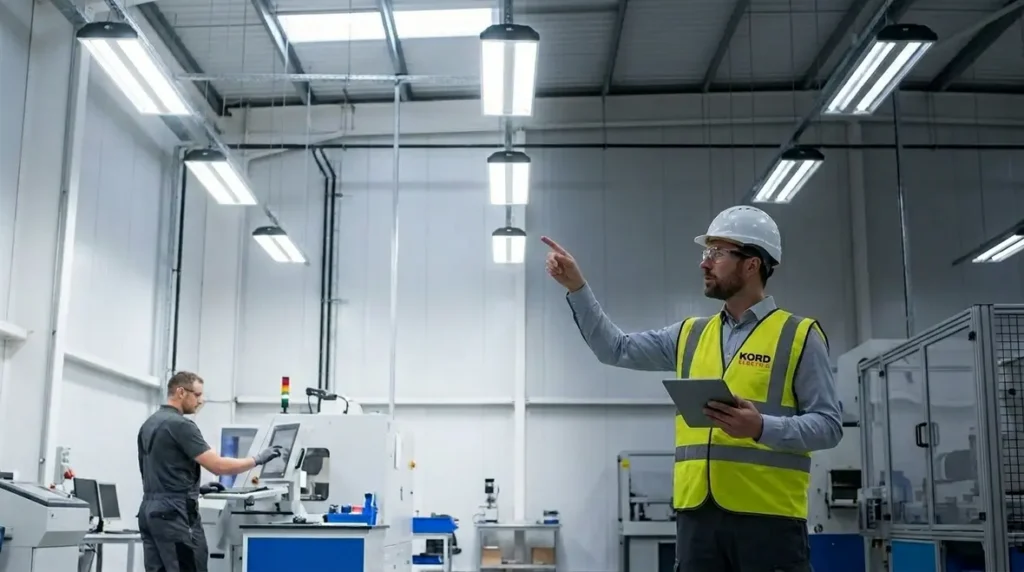
Our technicians communicate what they test and what they see. They explain the “why” behind each recommendation, using simple terms. For example, if we find a mismatch between fixture layout and the actual aisle layout, we explain how it changes coverage and how to correct it. In short, we help people make decisions based on facts, not on a manager’s gut feeling at 6:00 a.m.
Financing, downtime, and rollout steps that keep operations moving
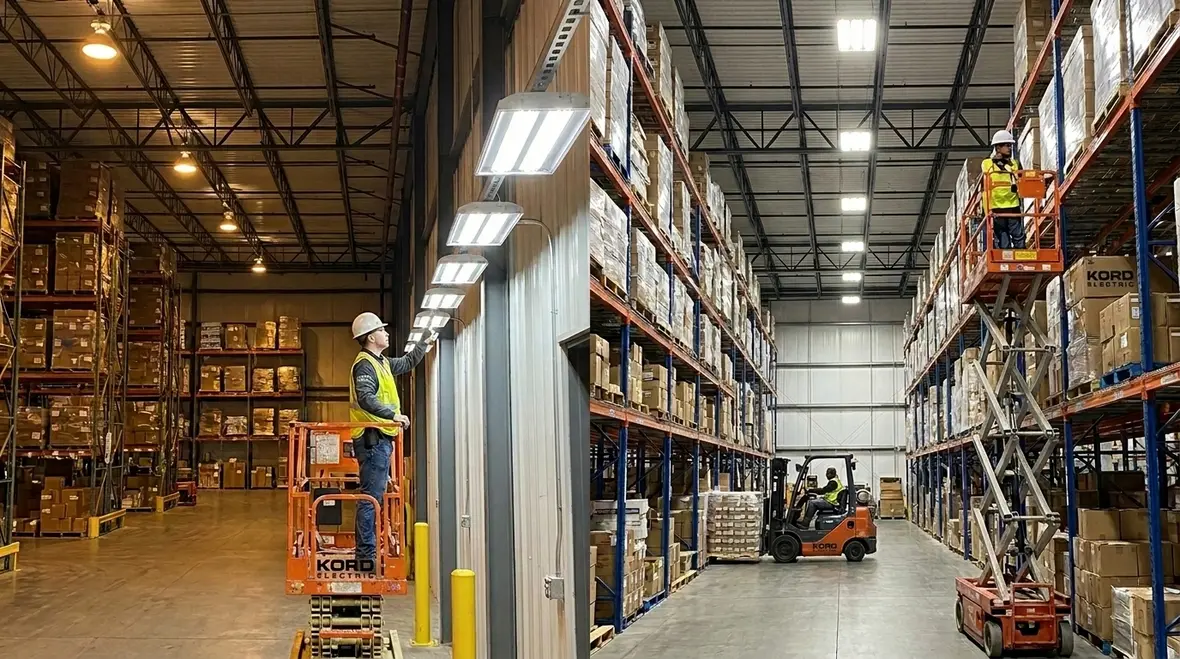
We also plan for real-world constraints. Warehouses do not stop because a contractor needs a clear floor. So we schedule work to reduce downtime and keep production running. We can stage the retrofit area by area, then test and confirm performance as we move.
When we stage projects, we prioritize the areas that impact safety and productivity first, such as loading docks, main aisles, and packing zones. We then handle storage and lower priority areas after. This approach reduces disruption and gives the facility team time to adapt without chaos.
On the business side, we help clients compare options using a practical view: energy use, expected life, maintenance needs, and control benefits. That is how warehouse lighting energy savings turns into a plan you can defend in a meeting, not just a promise on a flyer.
And yes, we keep an eye on the “surprise costs” that show up when upgrades ignore power and controls. We would rather be the team who catches issues early than the team who explains them later over the phone while everyone is busy.
Frequently asked questions
Next steps for your facility lighting plan
If you run a commercial or industrial warehouse or manage a major property building, we can help you upgrade lighting in a way that protects safety, improves visibility, and supports warehouse lighting energy savings year after year. Kord Electric brings technicians who test, document, and explain each step in clear terms, then pair LED installs with preventive maintenance that keeps performance steady. Contact us to schedule an on site assessment and get a rollout plan that fits your workflow. Let’s make your lights work smarter, not louder.
When you are ready to connect the plan to action, you can also explore how our broader commercial and industrial services support your facility beyond lighting. From electrical preventive maintenance programs to full-scale Los Angeles County electrical services, our team focuses on long-term system reliability, not just one-time fixes.
To see how a well-planned warehouse lighting retrofit can integrate with your broader electrical strategy, talk with us about aligning LED upgrades, controls, and maintenance into one cohesive roadmap. We will help you prioritize the areas with the biggest operational impact, organize service windows around your schedule, and document each step so you can show exactly how your facility is capturing and protecting its warehouse lighting energy savings.