Warehouse Lighting Optimization Safety and Efficiency
How Kord Electric improves warehouse safety and efficiency with lighting upgrades
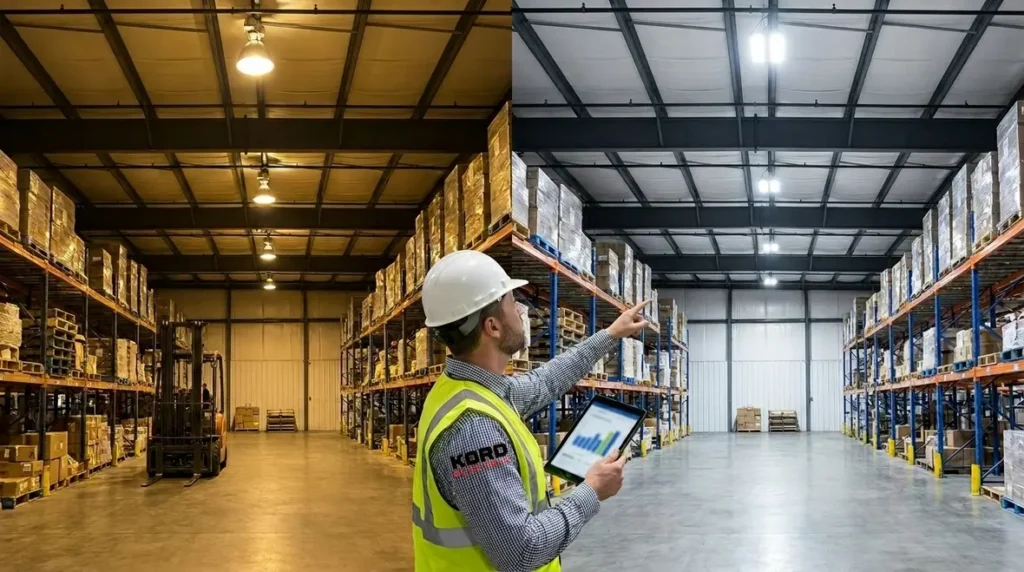
At Kord Electric, we use warehouse lighting optimization strategies to make commercial and industrial spaces safer, calmer to work in, and easier to run. First, we reduce glare and shadows so forklifts and pedestrians do not fight the light like it is a boss level in an old video game. Then we upgrade fixtures and controls so the lighting matches how your facility actually operates, not how it operated ten years ago. Finally, we measure before and after so the results hold up in real day to day work.
In this article, our expert service staff explains what we look for, why it matters, and how upgrades improve throughput without turning your warehouse into a disco.
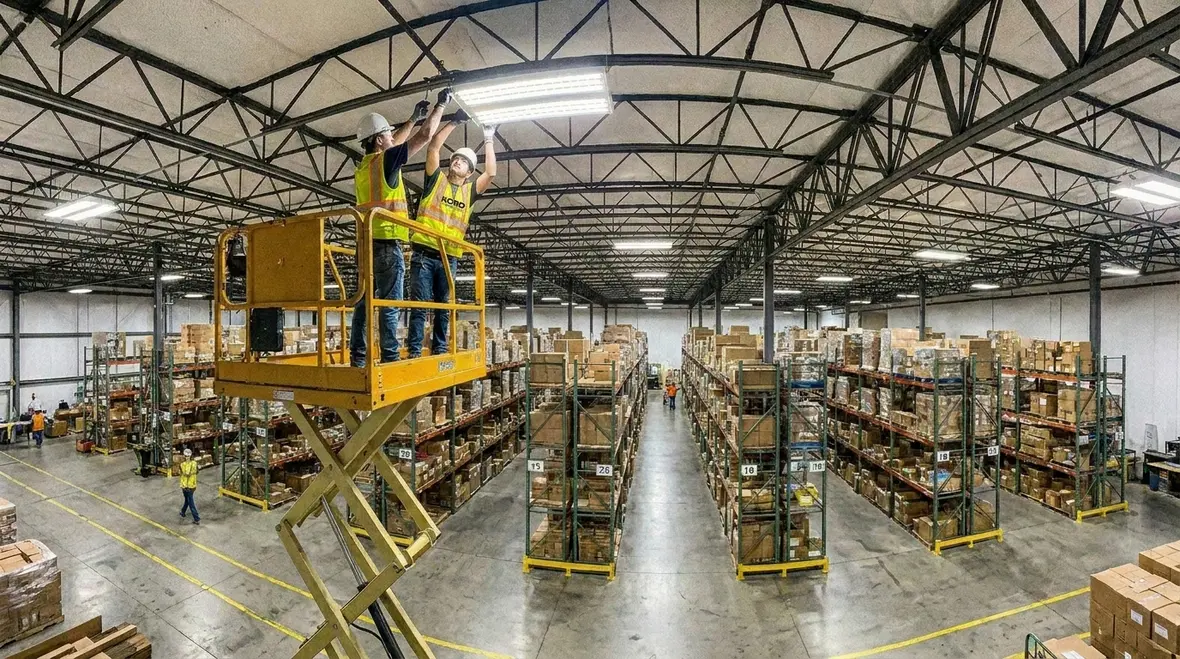
Spot the risk: where bad lighting quietly causes accidents
When a warehouse has poor lighting, accidents rarely announce themselves. Instead, they build slowly. A driver pauses for an extra second because a pallet edge disappears into shadow. A picker misreads a label because glare washes out the barcode. A maintenance tech steps around a dark patch and still trips, because the “almost visible” area fooled the eye.
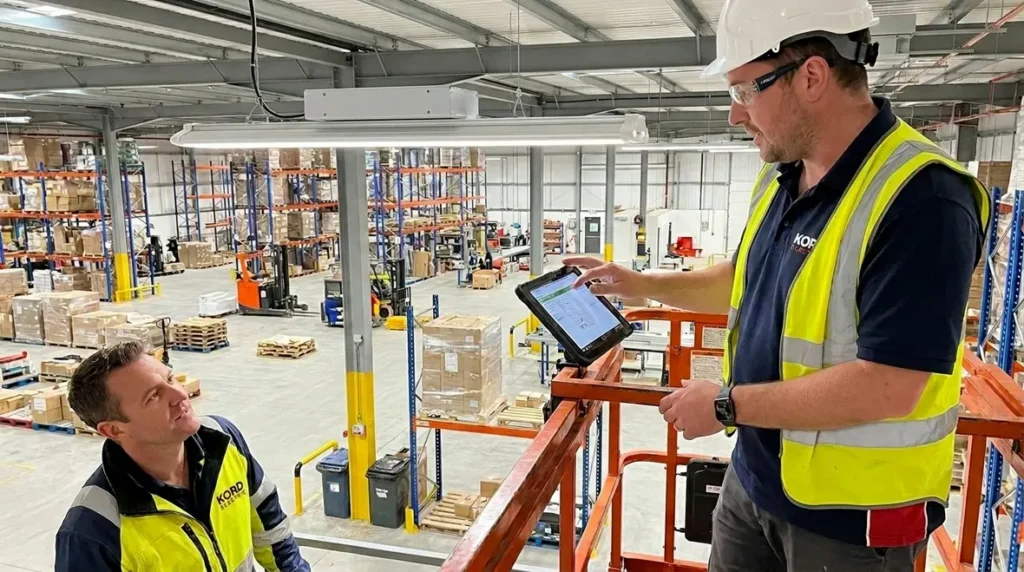
Meanwhile, eyes adjust throughout the shift. As a result, the same aisle can feel safe at 9 AM and hazardous at 4 PM. That is why Kord Electric starts with a practical site review. Our technicians walk aisles, observe tasks, and note where contrast drops or surfaces reflect too much light. Then we map the lighting problem to the real workflow, not to a generic lighting chart.
We also pay attention to the “usual suspects.” Flicker, failing drivers, dirty lenses, and outdated fixtures can all raise risk. Of course, the building did not ask for any of this, but the warehouse keeps moving anyway, like a movie that never stops playing. We help you stop the plot holes.
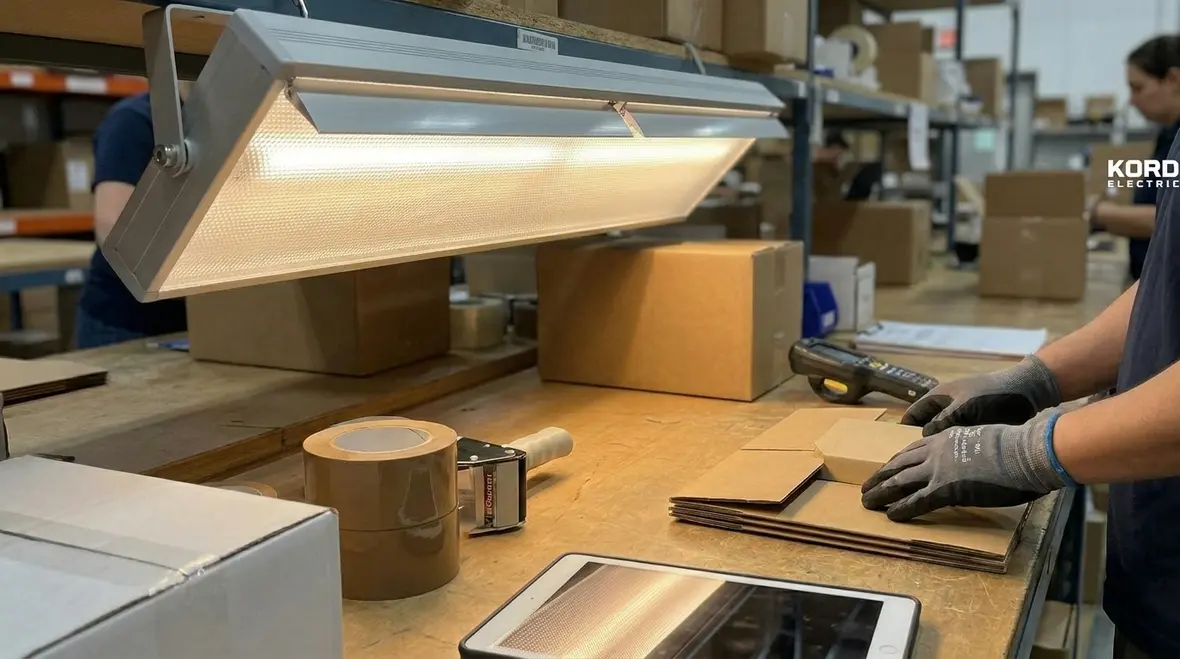
Planning a lighting upgrade that matches how your facility works
A lighting upgrade should not be a one size fits all swap. It needs to match traffic patterns, floor layout, dock schedules, and storage height. Otherwise, you end up with brighter light in the wrong places, while the real problem areas stay dim. To avoid that, we design the project like a system.
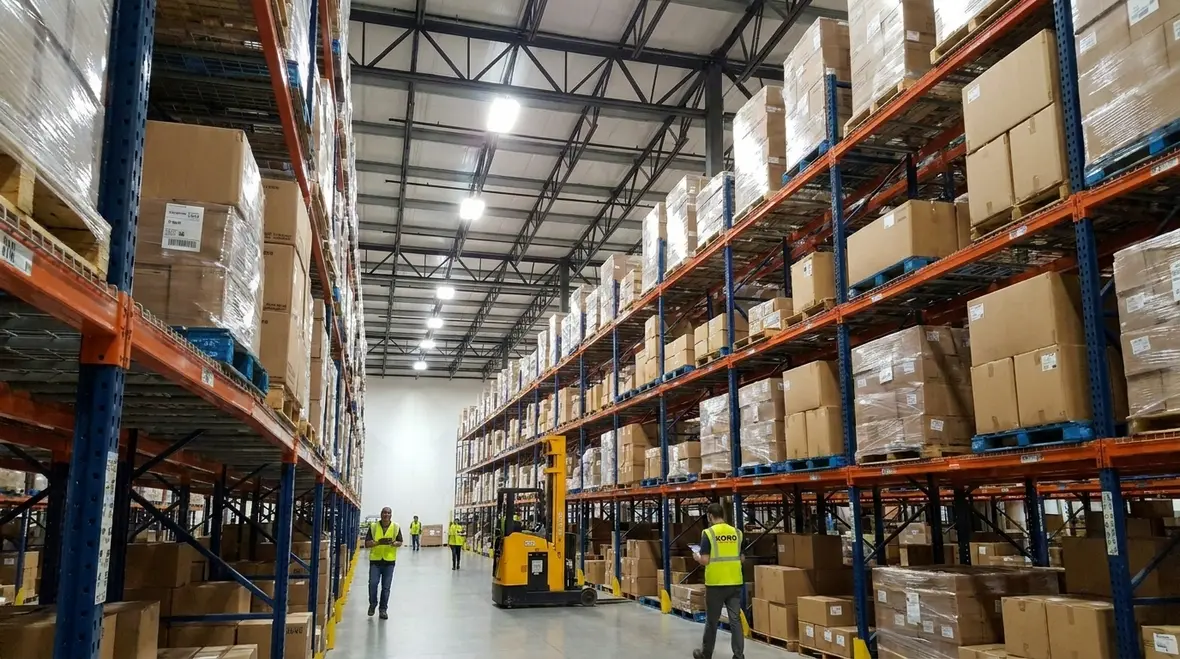
Our approach uses several steps. First, we confirm lighting levels along travel routes, at staging areas, inside aisles, and near loading zones. Next, we verify the color quality and uniformity, because workers identify hazards faster when the lighting helps them see edges and labels clearly. Then we account for reflections from floors, racks, and plastic packaging. Finally, we plan control zones so different areas get the right lighting during different operations.
Our expert service staff also considers safety for high activity periods. During shift change, you have more cross traffic. During seasonal surges, you have taller stacks and different pick paths. Therefore, we design controls that support predictable lighting scenes, instead of forcing staff to improvise with flashlights and vibes.
Connecting lighting upgrades to broader warehouse safety
Lighting does not operate in isolation. It supports the same safety goals as fire protection, exit paths, and emergency response. When you tune visibility around crosswalks, loading docks, and staging areas, you also make it easier for teams to follow warehouse fire safety regulations, maintain clear egress routes, and support equipment like extinguishers and alarms that need to be visible on busy days.
For facilities that also want to strengthen fire protection and emergency readiness alongside electrical upgrades, it helps to align lighting improvements with a broader warehouse fire protection strategy so life safety systems, exit lighting, and general illumination work together instead of competing for space and attention.
Design choices that boost efficiency without glare
Efficiency is not just about saving energy. It is also about reducing rework, speeding up picking, and cutting down incidents tied to poor visibility. When lighting meets the task, people find items faster and they make fewer mistakes.
Kord Electric focuses on three practical design choices.
- Uniform illumination: We aim to reduce harsh brightness swings between bright and dark areas so the eye stays “settled” while people walk and handle inventory.
- Glare control: We use fixture placement and optics to prevent reflections from creating blind spots or washed out markings.
- Task aligned brightness: We avoid overlighting. Instead, we set useful levels where they improve performance: aisles, dock doors, workbenches, and inspection stations.
Because warehouses change, we also plan for future upgrades. If you expand rack density or move processes, you should not start from scratch. So we choose systems that can scale, and we document what we measured so later decisions stay grounded.
And yes, we know people sometimes joke that warehouses need “more light” like a kitchen needs salt. But lighting is not seasoning. It is the foundation of safe work.
Controls, sensors, and smart zoning for daily savings
Once the lighting design makes sense, controls turn good light into consistent performance. Without controls, facilities waste energy when spaces sit idle. With controls, we match lighting output to occupancy, time, and activity.
Kord Electric commonly recommends strategies such as zoning by bay or work area, dimming schedules for low activity periods, and occupancy sensing for offices and storage rooms. For larger spaces, we use time based scenes that reflect shift patterns. That way, the warehouse does not stay fully bright during maintenance windows or during planned downtime.
Our technicians also think about reliability. Sensors should work in dusty environments, and controls should remain stable despite temperature swings. Therefore, we coordinate placement, settings, and commissioning so the system behaves correctly on day one and still behaves correctly after the first busy month. In our view, lighting should not require heroics.
In addition, controls support safety monitoring. When lights respond to real presence, pathways stay visible for pedestrians. Meanwhile, drivers benefit from consistent illumination along loading and travel routes, which can reduce stopping and rerouting.
Smart lighting and emergency systems working together
In warehouses that rely on modern fire alarm and emergency lighting systems, coordination between smart lighting controls and life safety devices becomes part of the strategy. Thoughtful zoning helps keep aisles clear, improves visibility around extinguishers and exit signage, and makes it easier for staff to follow a warehouse fire protection strategy without fighting glare, shadows, or confusing light levels when alarms activate.
Commissioning and verification: we prove the upgrade works
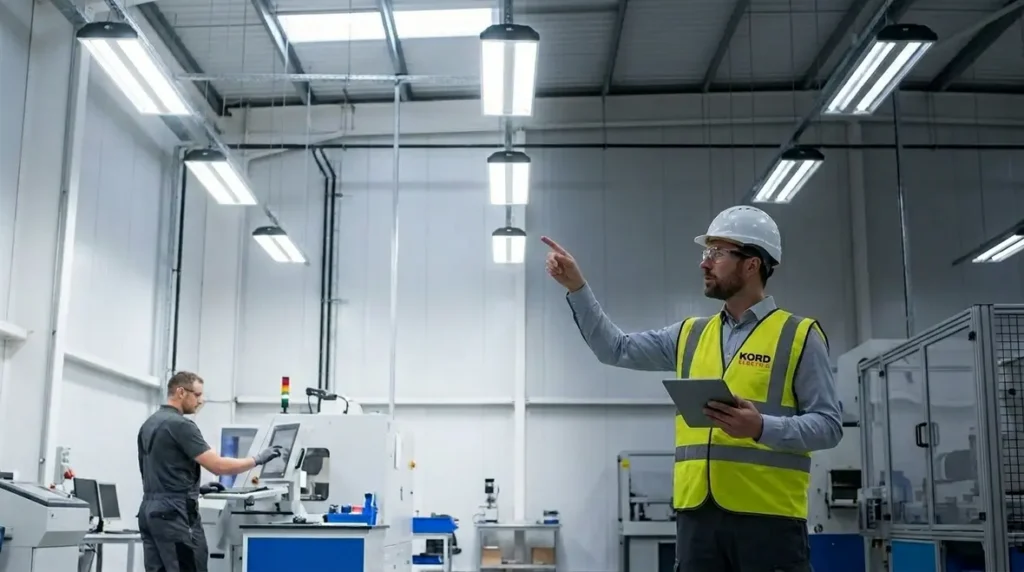
Many upgrades get installed. Fewer get verified. At Kord Electric, we verify. That means we measure lighting levels after installation and compare results with the plan. We also inspect fixtures for coverage, check control response, and confirm that glare is under control in the areas where it matters most.
Our expert service staff explains what they find in plain language, so facility managers can make decisions with confidence. During walkthroughs, we show how uniformity affects visibility across aisles. We also review how control zones behave during shift transitions, because that is when mistakes often start.
We also look for practical issues that can quietly undermine performance. Dirt build up, misaligned fixtures, and incorrect mounting can reduce output over time. So we provide installation guidance and documentation that helps your team maintain performance.
Finally, we align upgrades with safety standards and your operational constraints. We plan work to limit disruption to receiving, shipping, and high traffic workflows. That is not just good manners. It protects your bottom line.
Featured FAQ: warehouse lighting optimization strategies
Do warehouses need lighting upgrades if the lights still turn on?
Yes. Old fixtures can fail in coverage, color quality, and uniformity. Even when lights work, they can create glare and dark zones that increase risk.
How do we know if glare is a problem?
We check visibility during the tasks that matter, measure conditions in aisles and work areas, and review reflections from floors, racks, and packaging.
Will LED upgrades reduce energy use?
Usually. LEDs deliver useful light with less power. With controls and correct design, savings can improve further.
Can lighting controls work in dirty industrial environments?
They can, if sensors and zoning get planned correctly. Our technicians consider dust, mounting height, and response timing during commissioning.
How long does a lighting upgrade project take for a commercial facility?
It depends on coverage area and scheduling constraints. Kord Electric plans around shipping and receiving needs to reduce downtime.
When Kord Electric handles the upgrade, your team gets clarity
In many facilities, managers do not want another vendor story. They want results they can trust. That is exactly why we handle warehouse lighting optimization strategies with a clear process: assessment, design, controlled installation, and verification. Our technicians communicate what they see and why changes improve safety and efficiency. Then we confirm performance with measurements so the warehouse does not guess.
If you run a commercial or industrial facility, and you want safer paths, better visibility, and smarter energy use, contact Kord Electric today to schedule a site evaluation.
Why this matters to your workers and your bottom line
Better lighting supports safer movement, faster picking, and fewer delays from confusion and rework. It also creates a steadier work environment. When people can see what they need to see, the warehouse runs smoother. And when the warehouse runs smoother, everyone gets home on time.
So if your current lighting feels like it was designed for a different building, in a different decade, we can help you modernize it the right way. Let us bring order to the aisles and calm to the shift. No disco required.
| Area | Typical improvement |
| Travel routes and crosswalks | More consistent visibility and fewer shadow pockets |
| Loading docks and staging | Better edge and label visibility for safer movement |
| Pick and packing zones | Improved uniformity and reduced glare during close work |
FAQ: Safety, controls, and verification
Call to action
If you want safer walking paths, clearer visibility for picking and driving, and energy savings you can actually measure, we are ready to help. Kord Electric supports commercial and industrial facilities with expert design, technician based installation, and post upgrade verification. Schedule a site evaluation today and we will map your lighting needs to your workflow, so your warehouse works smarter from the first day.
For facilities across the region that need support beyond a single warehouse, Kord Electric also provides comprehensive Los Angeles County electrical services to keep lighting, power distribution, and other critical systems working together reliably.
If you are planning a deeper lighting retrofit or want to upgrade to recessed and high performance LED systems across your facility, our commercial and industrial lighting services can be tailored to match your warehouse layout, safety priorities, and long term energy goals.
Next steps: schedule your warehouse lighting evaluation
When you are ready to move from “we know the lighting is not great” to “we know exactly what to fix and why,” our team is ready to walk the aisles, review the risks, and design a practical upgrade that fits your schedule.
Tell us how your warehouse actually runs today, where bottlenecks happen, and where visibility feels weakest. We will bring the measurements, the warehouse lighting optimization strategies, and the commissioning plan that makes your next upgrade feel less like a leap of faith and more like a controlled, verified improvement.
From there, our technicians handle the details, so your staff can focus on throughput, accuracy, and safety instead of wrestling with dim aisles and blinding glare.
When lighting, controls, and warehouse operations finally line up, your facility does not just look better. It works better, day after day.