Commercial EV Charging Installation Planning Guide
Commercial EV charging planning starts with a smart map
At Kord Electric, our commercial ev charging installation planning begins long before a single cable hits the ground. We help teams design charging for fleets, delivery hubs, offices, and multi site properties so power, space, and schedules line up from day one. Since most facilities do not get a second chance to “fix it later,” we treat the first step like the calm voice before the busy day. Our technicians and expert service staff explain the process clearly, so owners and managers know what they are buying, why it works, and how to keep it working.
In this guide, we will walk through how others should plan multi vehicle commercial EV charging stations. Then we will connect the dots to power studies, load management, installation sequencing, and ongoing maintenance plans built for commercial and industrial facilities.
Build a station plan that fits the site, not the brochure
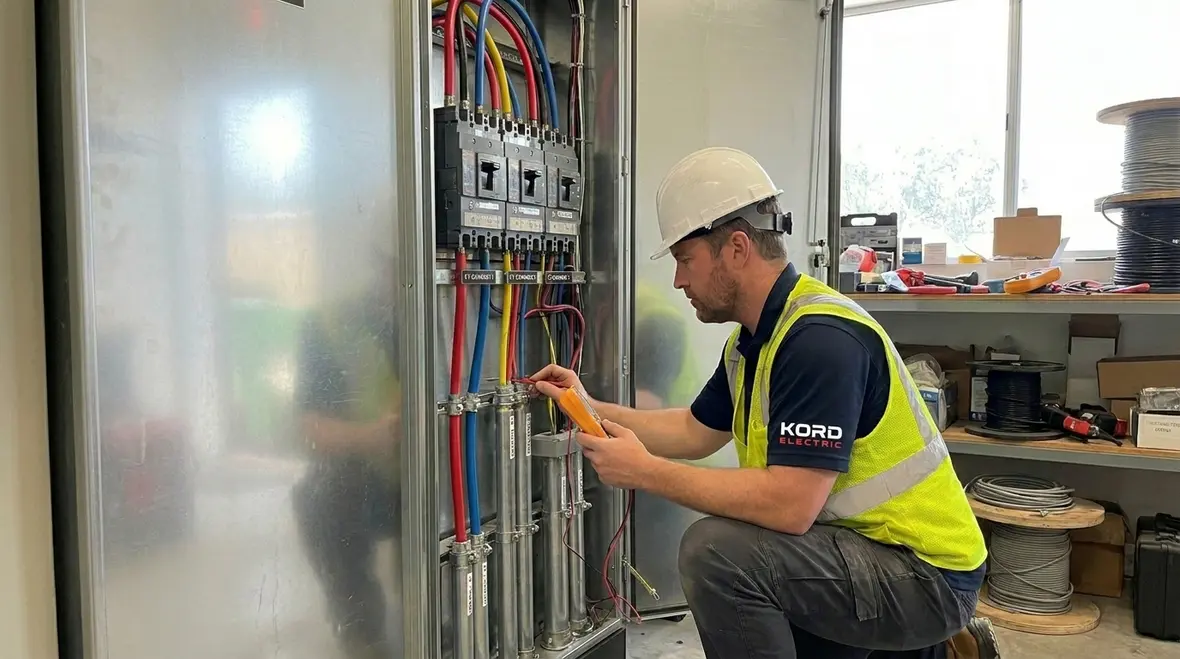
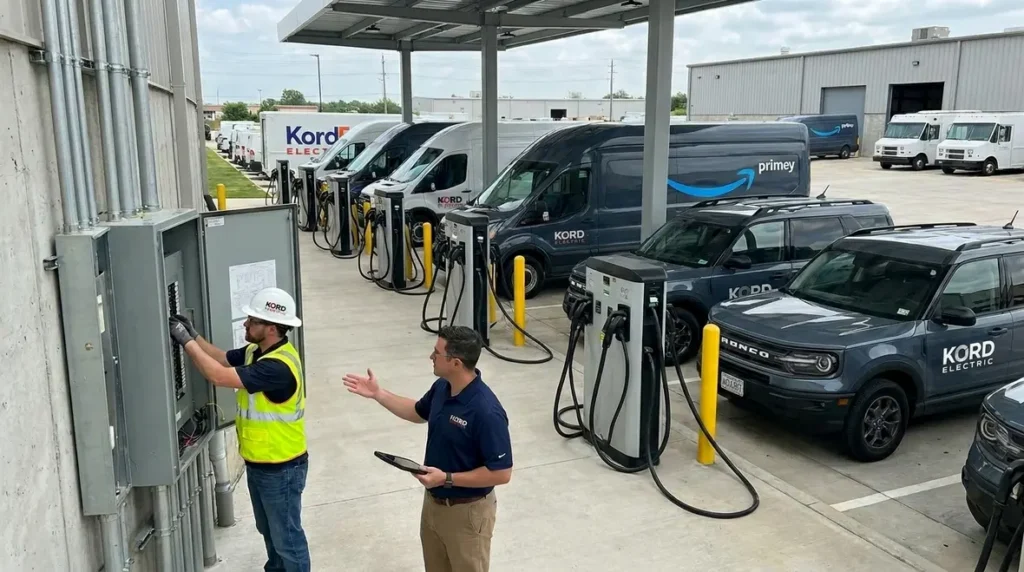
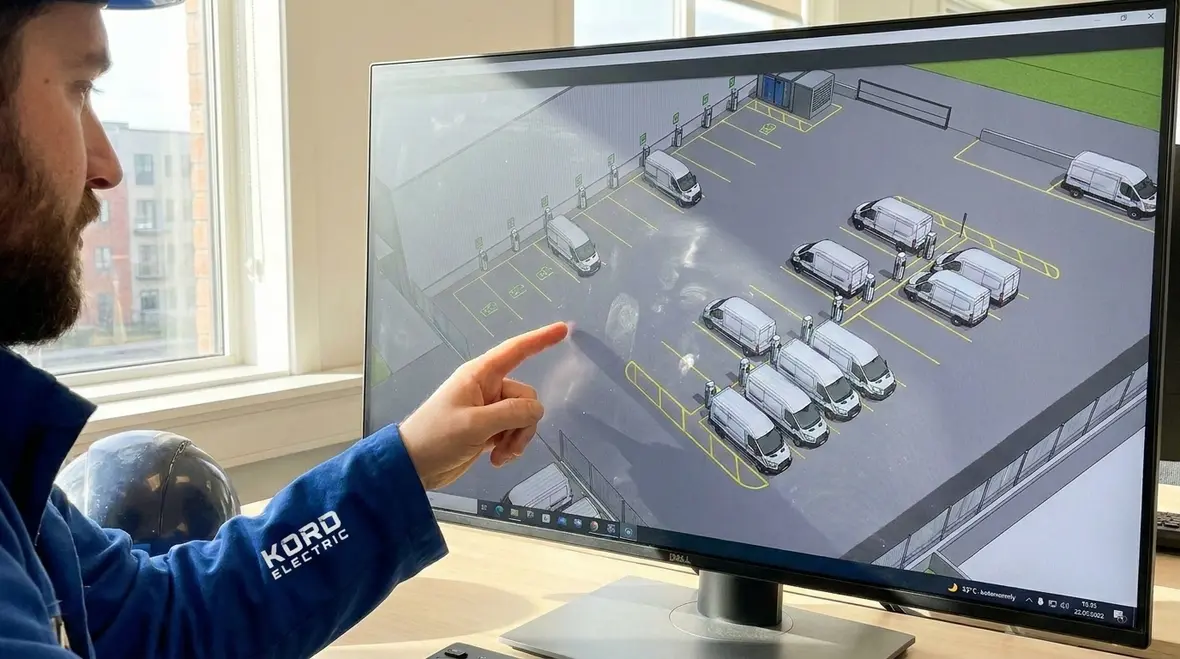
When a property team wants charging for more than one vehicle type, they need a plan that respects how the site actually runs. Therefore, our approach starts with a real look at daily traffic, dwell time, and vehicle mix. For example, a delivery van may stay longer than a commuter car, which means the charging behavior changes. And if a property has shared bays, the plan must account for who charges when, not just how many ports exist.
Next, we help define the station layout around safe movement and future growth. We will consider routes for vehicles, pedestrian areas, and access for maintenance. If a station blocks truck turns or creates conflict with loading zones, the best charger in the world still becomes a problem. We also help teams estimate usage patterns so the system can scale without forcing constant upgrades. Think of it like planning a parking lot for a warehouse expansion. You do it once, you do it right, and you avoid the “we added three more trucks last week” surprise.
For facility teams that like to see how EV infrastructure fits into a broader electrical strategy, it also helps to review how structured service programs support long term reliability. Resources such as Kord Electric’s commercial and industrial electrical maintenance plans guide show how preventive maintenance and charging upgrades can be aligned instead of treated as separate projects.
How multi vehicle charging changes the electrical design
Once the site plan locks in, the electrical design takes center stage. For multi vehicle commercial EV charging, the biggest driver is power. We coordinate with qualified electrical design steps so chargers match the building service capacity. Then we plan for how the load grows when multiple vehicles plug in at once.
Additionally, we focus on load management. Instead of assuming every charger will run at full output at the same time, we build a system that can share power intelligently. This approach reduces the risk of tripping breakers or forcing expensive utility upgrades. In other words, we manage demand the way a good project manager manages deadlines. No drama, just steady progress.
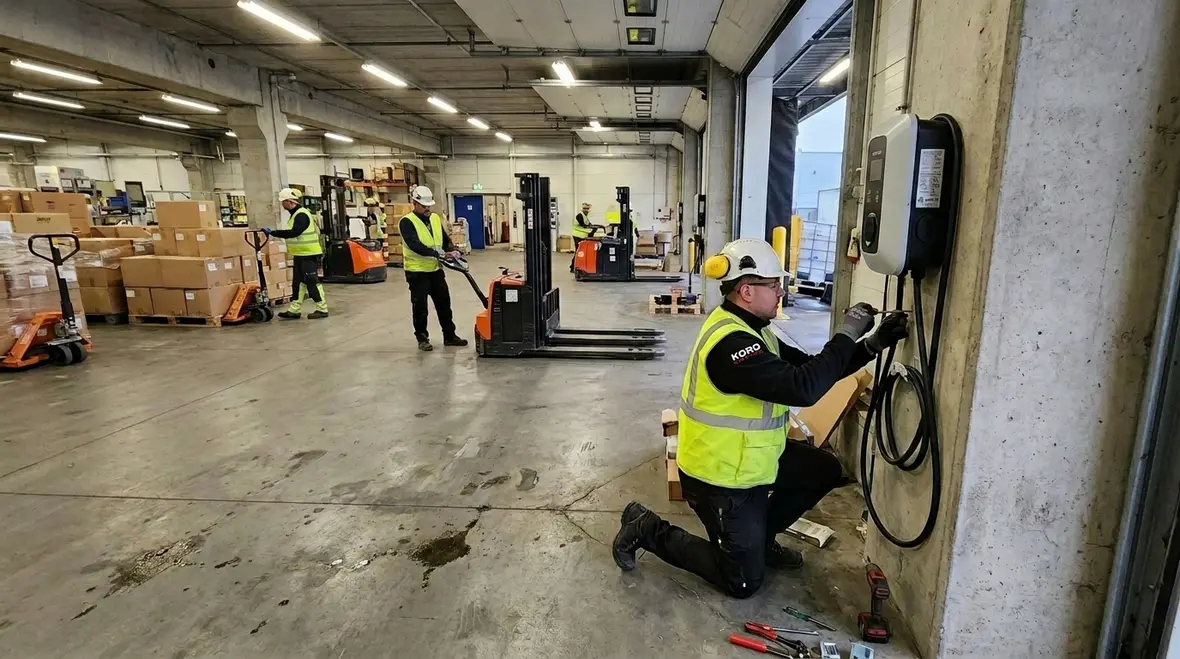
Our team also addresses protection and grounding with commercial and industrial safety in mind. We size conductors, select disconnects, and set up proper circuits for the station layout. Moreover, we review the facility’s electrical history, because older systems sometimes behave like stubborn elevators. They work until they suddenly do not. Our technicians inspect existing conditions so the new chargers integrate cleanly.
When teams start modeling costs, it is helpful to pair design decisions with a clear pricing overview. Kord Electric’s commercial EV charging installation cost guide walks through how power capacity, trenching, charger selection, and phasing all influence budgets long before construction starts.
Phase the work so operations stay alive
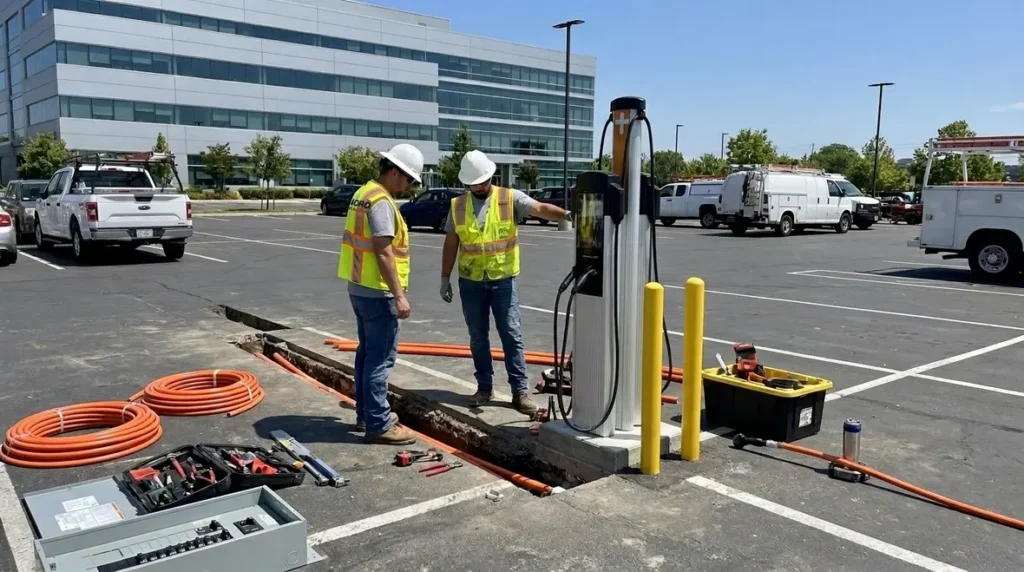
Even the best charging design can fail if installation disrupts business. That is why we structure deployment in phases that keep the facility running. First, we define the work windows with the site manager and facility team. Next, we sequence trenching, conduit runs, electrical terminations, and charger commissioning so they do not collide with critical operations.
Then we plan for temporary power needs when the job requires them. Also, we coordinate inspections and documentation so permitting moves smoothly. When teams skip this step, the project can stall, and nobody wants that feeling of waiting on a utility that moves at the speed of pop culture nostalgia. You know, like a sequel nobody asked for.
Our expert service staff also prepares the facility team for handoff. We explain how to use the chargers, how to handle user questions, and what to expect during early testing. Because if owners and operators understand the system, downtime shrinks. It is a simple truth: clarity prevents confusion.
Plan for compliance, safety, and long term reliability
Commercial charging is not a plug and play hobby. Owners need safety, compliance, and predictable performance. Therefore, we align our work with the standards and practices used for commercial and industrial electrical systems. We verify equipment ratings, we confirm circuit protection, and we ensure the station design supports safe use.
We also plan for environmental factors. Outdoor chargers face heat, moisture, dust, and constant exposure. As a result, we select equipment and install methods that handle real world conditions. We check cable routing and sealing, and we make sure the mounting and enclosures protect components.
Moreover, long term reliability depends on more than hardware. It depends on how the facility supports the chargers. We help teams set up operational practices, such as maintaining clear access, monitoring alerts, and training staff on safe use. And yes, we keep the process business casual, because no one should feel scared of a charger. It is electricity, not a haunted house.
Use maintenance plans that match commercial reality
Charging systems face wear from weather, heavy daily use, and frequent connection events. So the right maintenance plan matters. Kord Electric supports commercial and industrial electrical maintenance plans that match how buildings operate. We review the specifics of your site, then suggest service tasks that reduce risk and protect uptime.
For example, our team can include inspections, preventive checks, and scheduled service so issues show up early. We also help create a process for response when a charger flags an alert. That matters because the fastest fix is the one that catches the issue before it becomes a full shutdown.
To keep this practical, we explain each step in plain language. Our technicians walk through findings, what they mean, and what action we recommend. In addition, we document service work so facilities can track performance over time. That way, decisions stay grounded, not based on guesswork or “it felt slower last week.”
Many teams pair their EV charging rollout with broader reliability work across panels, switchgear, and distribution. For example, Kord Electric’s programs for Los Angeles County electrical services help facilities coordinate EV projects with other commercial electrical upgrades so everything moves under one coordinated plan instead of scattered one off work orders.
What to watch for after launch and how others can avoid rework
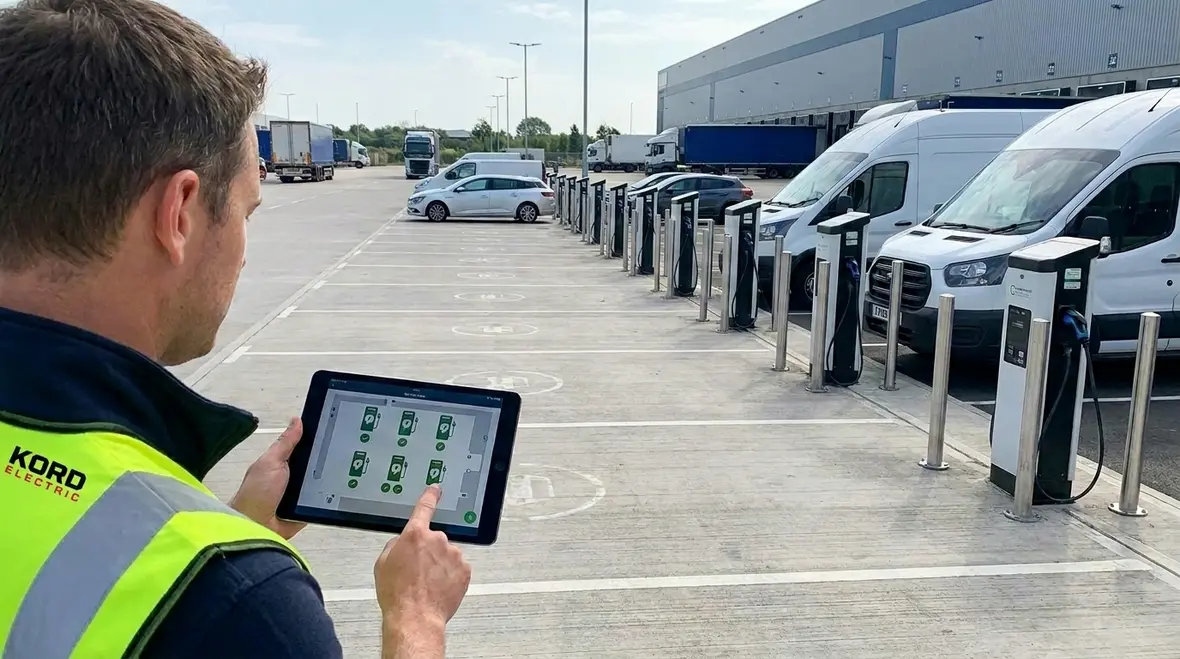
After commissioning, real life takes over. Vehicles do not always arrive on time, usage patterns shift, and schedules change. Therefore, teams should plan for post launch tuning. We help facilities review performance data and charger behavior so they can fine tune settings within the system’s limits.
Also, owners should watch for common pain points. If the site sees peak parking spikes, the load management settings may need adjustment. If users plug in outside expected patterns, the charging output distribution can change. And if the facility adds new vehicles later, the system must accommodate growth without creating a new headache.
We advise others to keep a clear path for feedback from drivers, property managers, and maintenance staff. Then we connect that feedback to technical checks. Our experts respond with updates and service actions that fit commercial and industrial operations. That is how you avoid rework, delays, and the classic “we should have planned for this” moment that shows up right after the ink dries.
FAQ
Why Kord Electric is the steady choice for charging at scale
Kord Electric brings calm, technical certainty to commercial ev charging installation planning for major properties and commercial and industrial facilities. We help you design for real usage, build for electrical safety, and deploy in phases that protect operations. After launch, our expert service staff supports maintenance so your chargers stay ready for daily demand. If you want a plan that avoids costly surprises, contact Kord Electric today for a consultation and a clear next step.
When your facility is ready to move from planning to execution, it helps to work with a partner that already handles complex commercial projects across the region. Kord Electric’s dedicated crews support everything from EV charging to distribution upgrades, so your next project can connect to a broader electrical roadmap instead of standing alone.
For facilities that want commercial EV charging to integrate with lighting, emergency power, and long term maintenance strategies, Kord Electric’s service team can align all of those pieces into one coordinated plan and schedule. That way, you gain one point of contact, one clear set of documents, and one roadmap that keeps electrical work predictable instead of reactive.