
Commercial Electrical Service Life Cycle Guide
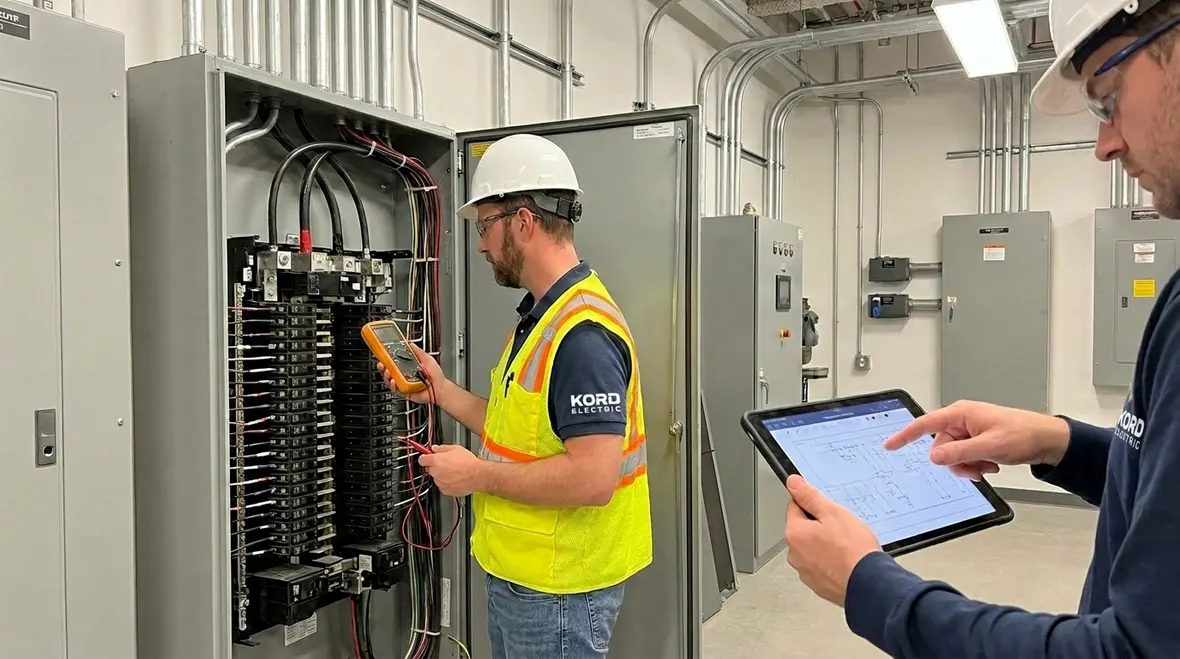
At Kord Electric, we help our commercial partners understand the commercial electrical service life cycle from the first planning meeting to the final upgrade. We guide building owners and facilities teams through design, installation, commissioning, operation, maintenance, and eventual replacement, so the electrical system stays safe and reliable. In the real world, power does not care about deadlines, tenant move ins, or that one time someone “temporarily” changed a breaker label. Instead, the system follows physics, wear, and time. And that is why we treat this like a true life cycle, not a one-time project. Our technicians and expert service staff explain each step in plain language, so others know what is coming next and why it matters.
What is the commercial electrical service life cycle for major buildings?
In a major property building, the electrical system works like a well trained team. First, it gets designed to match the facility’s load needs. Next, it gets installed and tested so it can carry power without surprises. Then, it operates day after day while managers and teams make smart decisions. After that, maintenance reduces risk, upgrades restore performance, and replacement brings everything back to a safe baseline. In other words, the commercial electrical service life cycle is a set of connected phases, not random work orders.
Many teams try to “skip ahead” until something fails. Yet failure usually arrives with smoke, downtime, and a call that sounds exactly like a horror movie trailer. We prefer the calmer route. Our expert service staff walk others through the life cycle so others can plan budgets, schedule downtime, and prevent avoidable failures in commercial and industrial facilities.
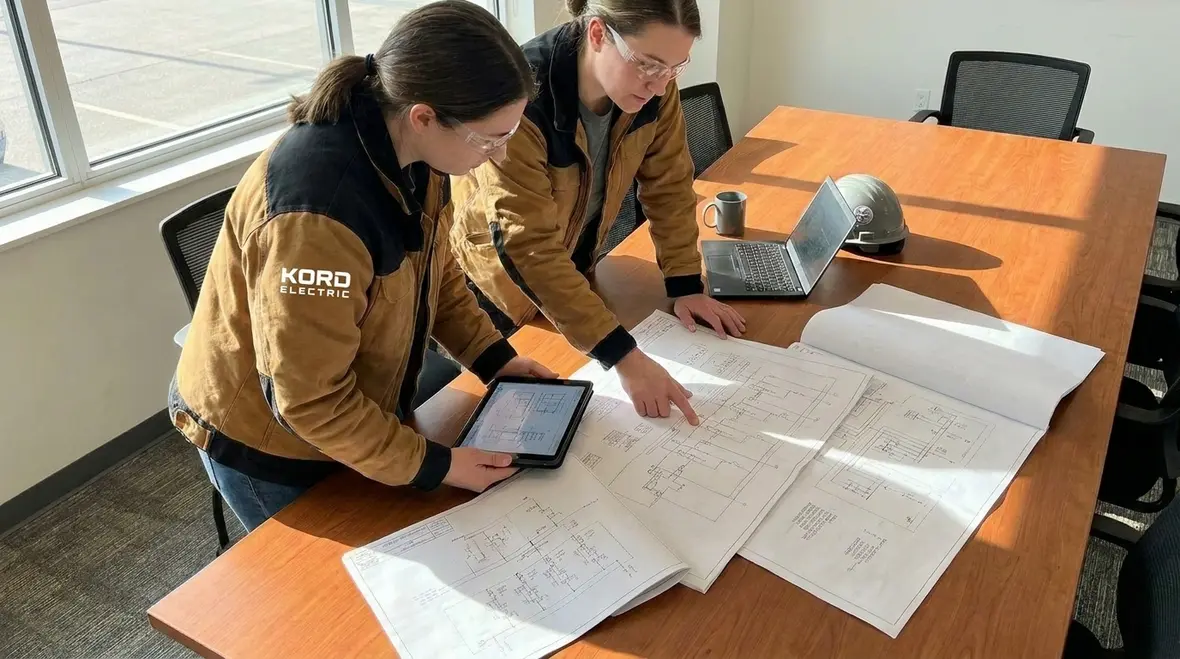
For facility leaders who want to connect this life cycle view to real project decisions, it pairs naturally with cost planning and upgrade strategies described in Kord Electric’s rewiring cost guide for commercial electrical systems, which walks through how aging infrastructure and new loads change long term investment choices.
Phase one: planning, load study, and design choices
Before any conduit gets cut, we build a plan that can survive future growth. During planning and design, we review utility service options, transformer needs, switchgear size, grounding requirements, and power quality expectations. We also consider how the building will change. Maybe a warehouse adds racking, a tenant adds equipment, or a property manager expands common areas.
At this stage, we ask questions that keep later problems from popping up. For example, what loads run continuously? Which loads create inrush current? Do sensitive systems need stable power? Then we translate that into design parameters other teams can follow.
- We develop a load profile and demand assumptions.
- We specify equipment ratings and future expansion margins.
- We plan emergency power pathways for life safety needs.
- We design grounding and bonding to reduce shock and interference risk.
Our technicians explain tradeoffs clearly. If a design choice trades efficiency for upfront cost, we say so. If an equipment option reduces maintenance later, we highlight that too. In business, clarity is the best safety feature.
Early planning is also where code alignment and future upgrades share the same table. Teams who understand how standards such as NFPA 70 shape design decisions can connect today’s drawings with tomorrow’s compliance needs, building on concepts explored in Kord Electric’s overview of the National Electrical Code for 2026.
Phase two: installation and commissioning that actually gets checked
Installation matters, but commissioning seals the deal. In commercial and industrial settings, we cannot rely on “looks good” inspections. We verify connections, torque values, conductor sizing, and protective device settings. We test insulation resistance, check continuity paths, and confirm the system meets the performance targets.
During commissioning, our expert service staff treat testing like a rehearsal before opening night. A building can look polished and still fail under load if the setup is off by just a little. And that little thing can become an expensive headline.
- We inspect workmanship and labeling for long term service.
- We verify protective coordination and breaker functionality.
- We test for correct phasing, grounding, and continuity.
- We document results so future technicians do not guess.
Then we train facility stakeholders on what to monitor. Even if others only handle basic operations, the right understanding prevents the “press every button until it works” method that nobody brags about later.

For many facilities, this is also where long term maintenance thinking begins. Documented test results and as built conditions set the foundation for structured programs like the ones outlined in Kord Electric’s dedicated electrical preventive maintenance services, which extend system life and reduce surprise failures.
Phase three: operation, monitoring, and how wear shows up
Once the system runs, it quietly changes. Heat cycles, humidity, vibration, and electrical stress build over time. However, the system often shows early warning signals long before a full failure.
For commercial electrical infrastructure, we encourage teams to watch patterns, not just alarms. For example, nuisance trips can signal aging breakers or mis settings. Voltage drops during certain hours can reveal overloaded feeders. Cooling issues can show up as repeated thermal events in enclosures. And if a facility adds load without upgrading distribution, the whole chain feels the strain.
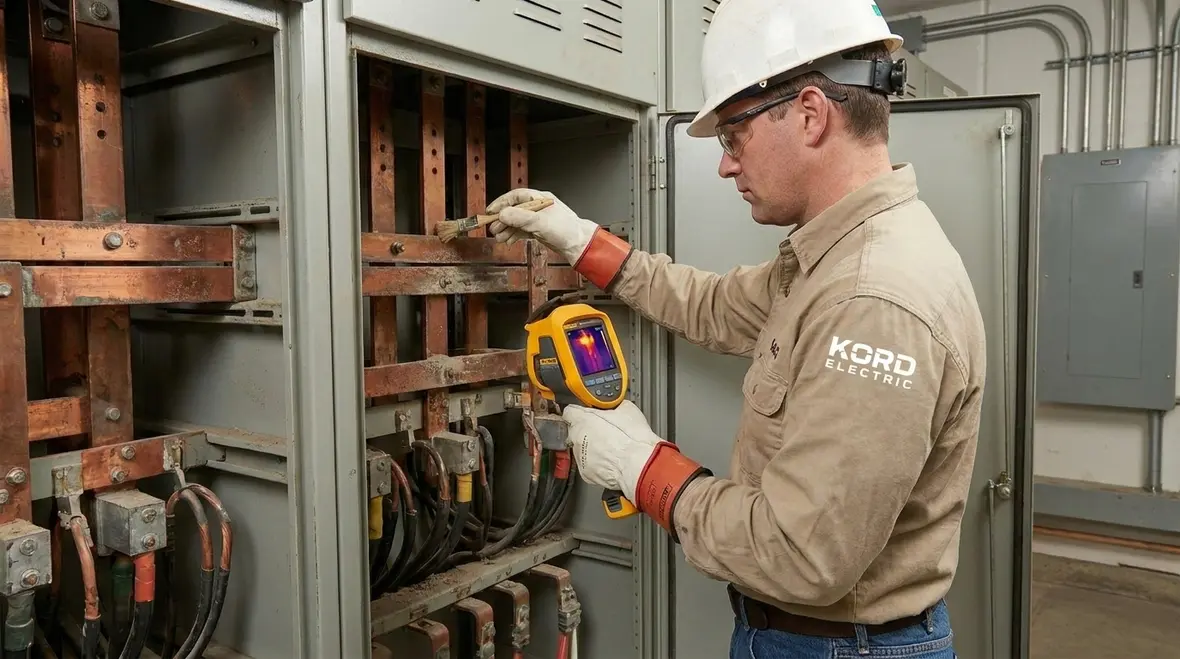
We also help other teams implement practical monitoring steps. That can include periodic inspection schedules, power quality checks for sensitive areas, and infrared scans where appropriate. Our technicians explain what each reading can suggest, and they connect those findings to next actions.
In short, the operation stage keeps performance steady, and it reduces surprises. Nobody wants to find out a system is weak during a tenant event. Power disruptions are like pop quizzes, only more expensive and less forgiving.
This is also the point in the commercial electrical service life cycle where hidden risks begin to matter most. Subtle warning signs—like warm panels, recurring breaker trips, or unexplained equipment resets—often mirror the issues explored in Kord Electric’s article on hidden electrical risks in commercial buildings, which digs into what can go wrong behind walls and inside aging equipment.
Phase four: maintenance planning, preventive work, and smarter repairs
Maintenance is where costs either stay controlled or quietly explode. When preventive work runs on schedule, it improves safety and extends the life of key components. When maintenance gets delayed, wear turns into damage, and damage turns into outages.
We tailor maintenance for commercial and industrial facilities with realistic downtime plans. We focus on the parts that fail first and on conditions that raise risk. For example, corrosion can attack terminations. Loose connections can overheat. Worn insulation can lose strength. Aging breakers can drift out of settings. In many cases, simple preventive tasks reduce risk more than bigger repairs later.
- We inspect panels, switchgear, and terminations for heat and corrosion.
- We test protective devices to confirm safe operation.
- We clean and verify busbar areas in appropriate environments.
- We update labeling and single line diagrams so staff can respond faster.
Our technicians and expert service staff communicate in clear terms. They explain what they find, why it matters, and what to do next. That means others can make decisions without a maze of jargon. Because in a facility, time is money, and confusion costs more than labor.

Well planned preventive maintenance also aligns directly with formal programs like Kord Electric’s commercial and industrial electrical maintenance plans, which turn scattered work orders into structured schedules, clear reporting, and data driven decisions about risk and reliability.
Phase five: upgrades, replacement timing, and avoiding downtime traps
Eventually, the system reaches a point where upgrades or replacement become the safer choice. The goal is not to replace everything at once like a full movie theater makeover. The goal is to protect critical loads, keep operations running, and use timing windows wisely.
We help others evaluate equipment condition, operating history, and performance against current requirements. If a facility has expanded, the design may not meet new load demands. If protective devices aged, coordination may no longer function as intended. If power quality issues show up, sensitive loads may suffer even if nothing “fails” outright.
When we plan upgrades, we also plan the process. That includes staging work, isolating sections safely, coordinating with facility schedules, and documenting changes for long term service. In commercial electrical infrastructure, downtime is not just inconvenience. It impacts safety systems, production, and tenant satisfaction.
Our approach keeps the process calm and structured. Our technicians explain options, and we lay out the tradeoffs. Think of it like choosing the right season for a roof repair, except the roof is your switchgear.
For some facilities, upgrades involve modern technologies such as solar integration or advanced controls. In those cases, the commercial electrical service life cycle overlaps with projects like the ones outlined in Kord Electric’s commercial solar panel electrical integration guide, where new energy sources must coexist peacefully with existing distribution, protections, and maintenance schedules.
No matter which path a facility chooses, aligning upgrades with a realistic budget is crucial. Leaders who want a deeper look at how electrician cost structures, labor, and materials fit into long range planning often pair this life cycle lens with the electrician cost LOS guide for commercial facilities, which breaks down how larger projects and ongoing service work together.
FAQ: commercial electrical service life cycle and facility support
Day to day responsibilities in the commercial electrical service life cycle
What should a facilities team monitor day to day?
They should track alarm frequency, recurring breaker trips, voltage issues, and any abnormal heat smells or sounds. Then they should report patterns early so our technicians can diagnose before damage spreads.
How do you decide between repair and replacement?
We compare component condition, reliability trends, and how critical the equipment is to operations. We also consider safety and future load needs.
Do you work only on commercial and industrial buildings?
Yes. We focus on commercial and industrial facilities and major property buildings, and we keep our service plans aligned to those environments.
For facilities across Southern California, this day to day focus ties directly into broader regional support. Teams looking for help across multiple sites or within a single campus often start by reviewing Kord Electric’s dedicated Los Angeles County electrical services, which outline how commercial, industrial, and major property projects move from first call to final sign off.
Ready to manage the next phase of your electrical system?
If others want a safer, more reliable electrical setup, Kord Electric can map the path from design and commissioning to maintenance, upgrades, and replacement. Our technicians and expert service staff explain what they find, what it means, and what to do next, using clear plans for major commercial and industrial facilities. Reach out to us to review your current infrastructure and build a practical life cycle strategy that reduces downtime and protects your people. Because in electrical work, waiting for drama is never the winning move.
Whether you manage a single major property or a portfolio of facilities, treating electrical work as a true commercial electrical service life cycle—rather than a series of disconnected emergencies—changes everything. It turns outages into data points, inspections into planning tools, and upgrades into strategic investments that support tenants, production, and long term growth.
When you are ready to align planning, installation, operation, maintenance, and upgrades under one clear roadmap, Kord Electric’s commercial and industrial team is prepared to help you take the next step.


