Warehouse Lighting Retrofit ROI Guide for Facilities
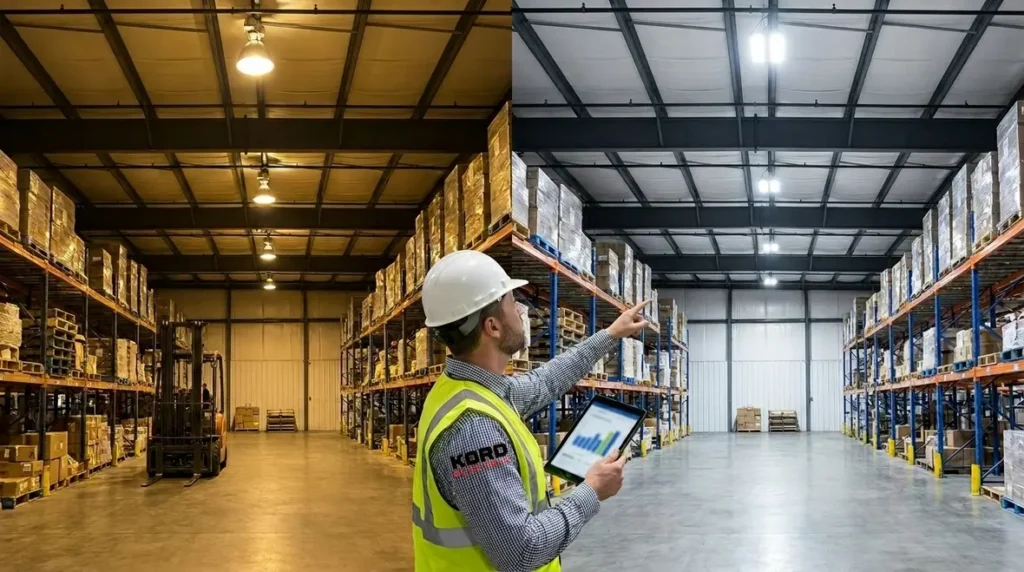
Maximizing ROI on Warehouse Lighting Retrofits is one of those topics that sounds like it belongs in a spreadsheet, not a real world facility. Yet when we speak with facility managers, we keep hearing the same promise: upgrade the lights, cut the energy bill, and improve safety and visibility. That promise is real, and the warehouse lighting retrofit ROI often shows up faster than people expect when the plan is built right. Still, we know the trap: managers chase payback without checking controls, fixtures, loading patterns, or emergency power needs. So, in this article, we lay out what our team at Kord Electric tells facility leaders every day, with the calm confidence of experts who have seen what works and what turns into a “why did we do this” meeting.
Why warehouse lighting retrofit ROI depends on more than wattage
In most warehouses, the lights do not just sit there. They run for long hours, they affect productivity, and they influence safety. Therefore, we start ROI thinking by treating the lighting system as a whole, not a pile of bulbs. Yes, LEDs reduce energy use, and yes, lower maintenance helps. However, the real warehouse lighting retrofit ROI improves when you address dimming, occupancy, mounting height, beam spread, glare, and the way aisles and dock doors are actually used.
We often explain it this way to facility managers: if you buy a new engine and keep using the old fuel line, you do not get the full benefit. Likewise, if you install LEDs but ignore controls or emergency coverage, the project becomes a partial win. And then someone says, “It looks fine,” and later someone else points at the next inspection finding. Nobody wants that plot twist.
Step by step: the audit that protects your payback
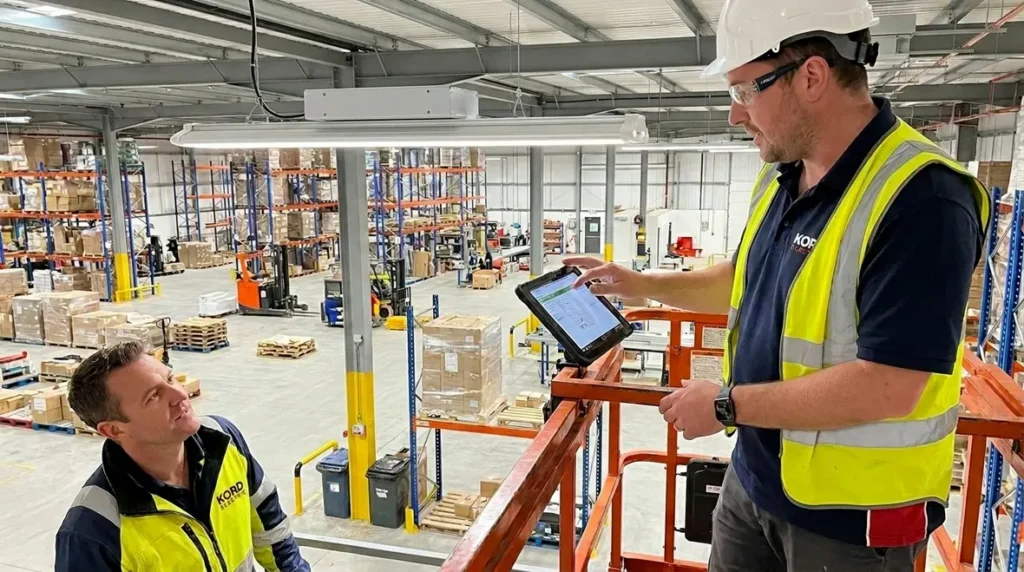
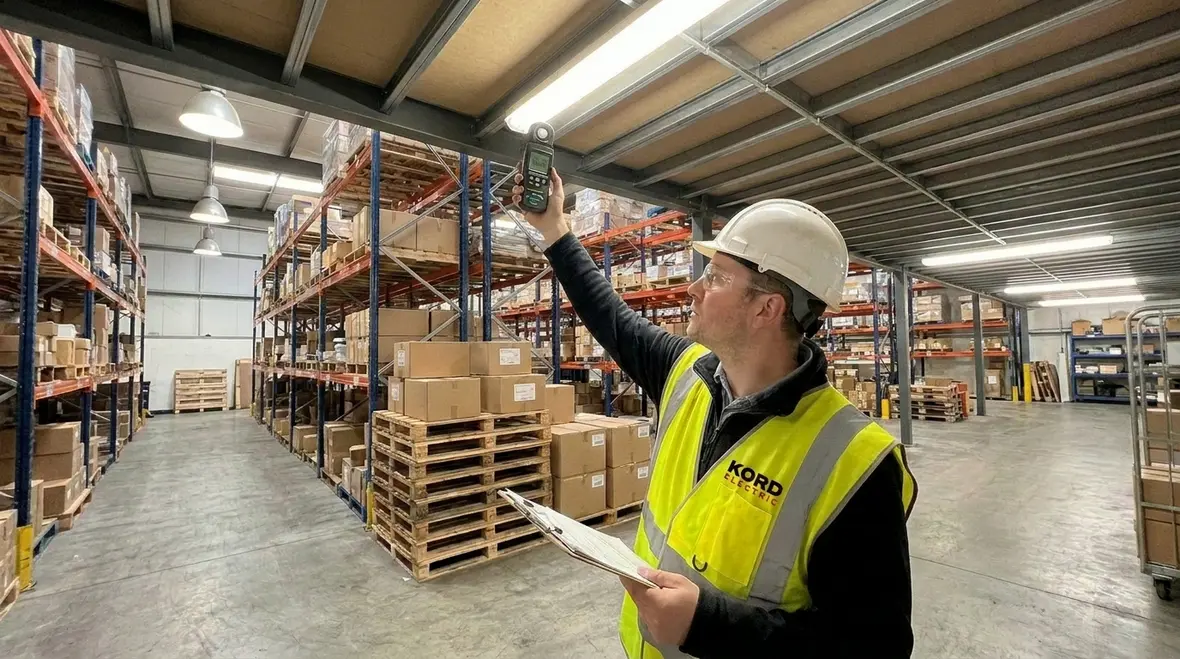
We send our technicians and expert service staff to do a real site review, because numbers on a single utility bill do not tell the whole story. First, we map your lighting layout against use areas: high rack zones, picking lanes, staging, loading docks, offices, and corridors. Next, we check mounting height, reflector condition, lens type, and any existing controls. Then we measure actual light levels where people work and where forklifts travel.
From there, we build a retrofit plan that targets both performance and cost. For example, we choose fixture optics that match the beam pattern you need. We also confirm that dimming and scheduling align with your operation. If your facility runs in shifts, we avoid “always on” settings that waste power. Additionally, we consider how quickly maintenance problems appear based on access limitations, ceiling height, and the time it takes to replace components.
And yes, we laugh a little, because every facility has a corner where a fixture has been “temporary off” for months. That is not a lighting plan, that is a lifestyle. We help you find those gaps and close them, so your ROI does not leak out through the cracks.
Controls and scheduling: the lever most people miss
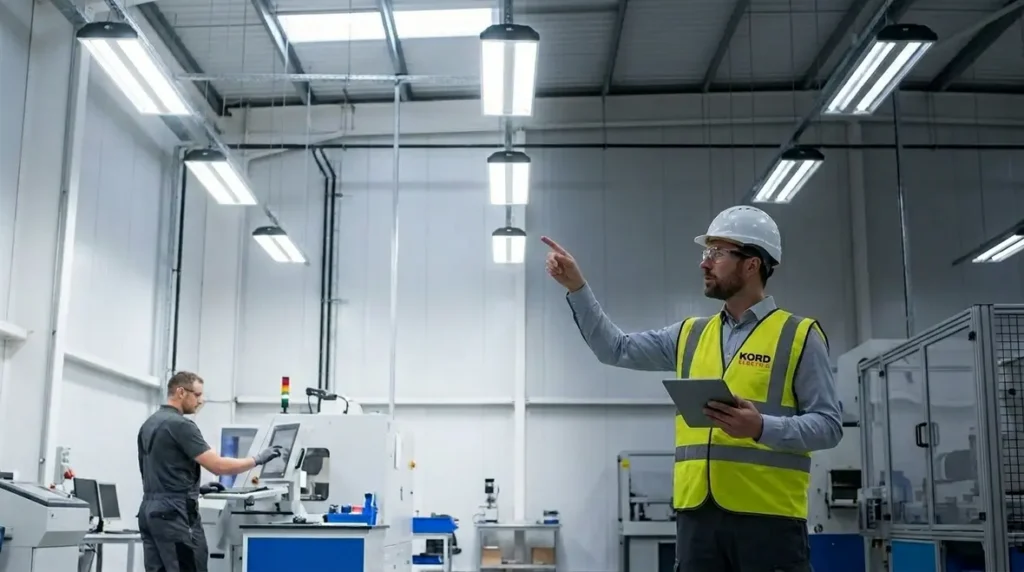
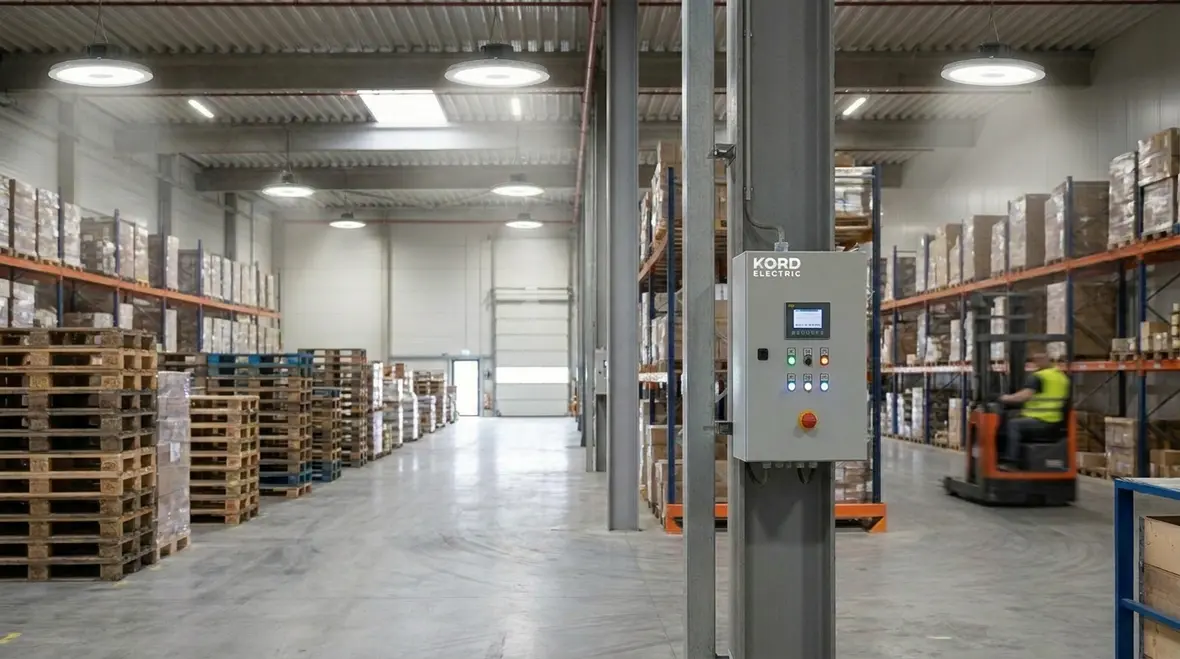
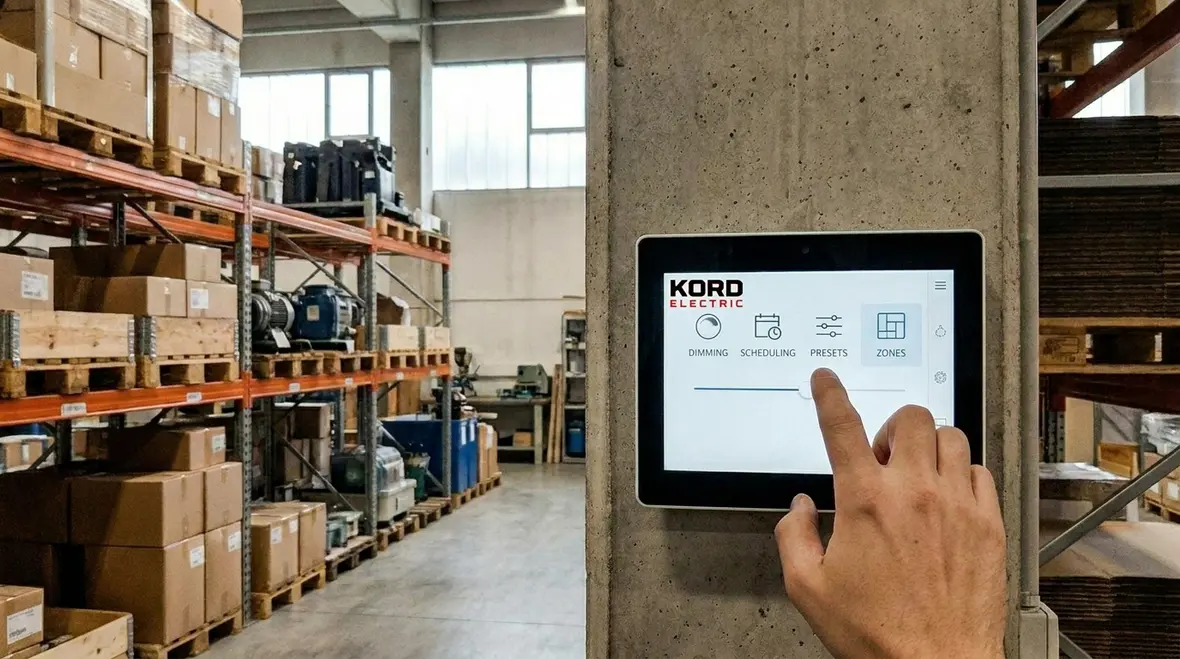
Once we have the layout, we move to the control strategy, because controls decide how much energy you truly save. Dimming works best when it matches tasks. Occupancy sensing works best when people actually enter and exit predictable areas. Time scheduling works best when shifts and workflows stay stable. Therefore, we do not just “add sensors and hope.” We design zones so the system reduces light in low activity areas without hurting visibility where it matters.
In a warehouse, that usually means more attention to aisles and cross traffic near docks. When you maintain consistent illumination, you reduce errors and near misses. And when workers can see clearly, supervisors spend less time solving preventable problems. That is a quiet ROI win, because productivity and safety rarely show up on a utility invoice.
We also plan for future changes. If a department expands, if layouts shift, or if hours change, we prefer control systems that can adapt without turning your facility into a construction site. A retrofit should feel like a clean upgrade, not a recurring hobby.
Emergency power and code confidence during retrofits
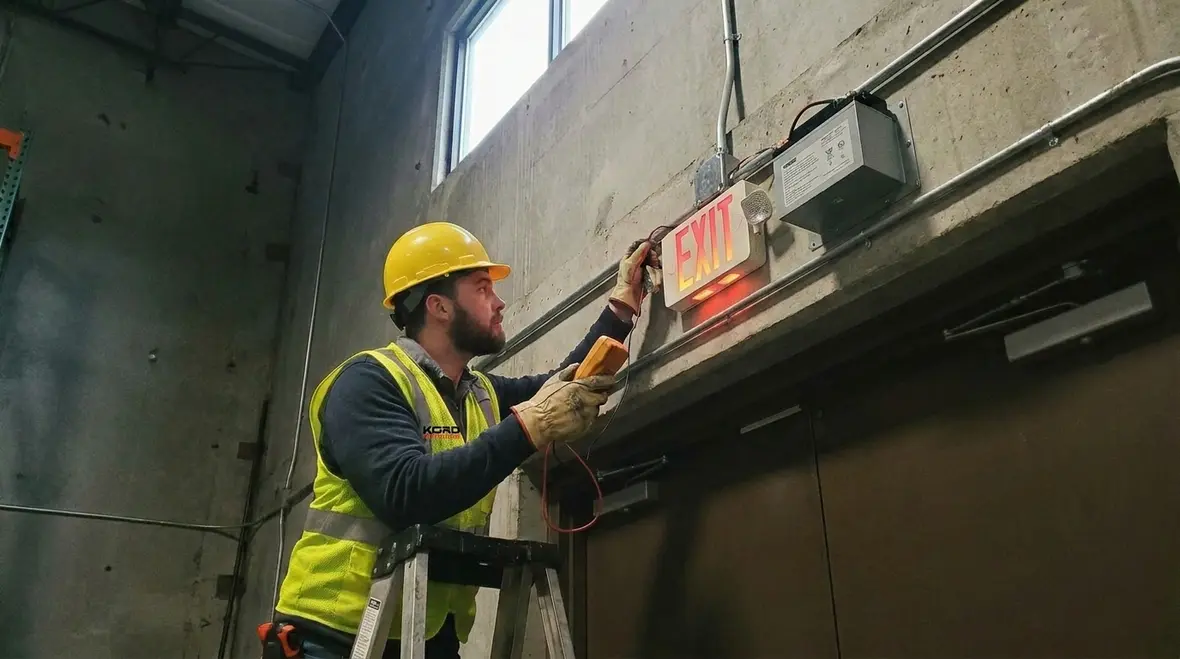
Warehouses and major property buildings carry strict requirements for emergency lighting and safe egress. So, as we plan the retrofit, we make sure the emergency side stays correct and code compliant. We do not treat emergency lighting as an afterthought, because that is how projects get delayed and expensive. Instead, we coordinate fixtures, wiring, and test procedures in a way that protects life safety and keeps your operations moving.
Here, our experience in emergency electrical services matters. You can see our approach at Kord Electric emergency electrical services, where we focus on systems that must work when conditions are worst. In other words, we handle emergency needs with the same seriousness that your local inspector does.
And when our expert service staff explains the process, we keep it clear. We walk facility managers through what we will test, what we will document, and what you should expect during commissioning. That way, your team does not get surprised on inspection day, and the retrofit does not stall while someone hunts for paperwork.
Financial modeling: how we help you see true payback
Energy savings drive the first story, but facility leaders deserve the full story. Therefore, we help calculate ROI using real assumptions based on your operation. We include utility rates, current fixture counts, operating hours, and anticipated savings from the selected performance level. Then we factor maintenance and downtime. Fewer failed lamps, fewer service calls, and fewer labor hours matter when you cannot shut down aisles for long.
We also help managers think through installation timing. If you schedule work around off peak hours, you protect productivity. If you stage the work by zones, you reduce risk to operations. As a result, you avoid hidden costs such as lost picking time, forklift routing changes, and extra labor to restore normal flow.
Additionally, we consider project scope and future expansion. If your facility is planning additional space, we design a retrofit approach that scales, so you do not rebuild the same decisions twice. In the real world, that saves money in ways no one remembers to put in the first proposal.
So, when we say warehouse lighting retrofit ROI can look strong, we mean it. We make sure the numbers match the facility you actually run, not the warehouse you wish you had.
Phased retrofits for fast operations and fewer disruptions
Many commercial and industrial facilities cannot shut down lighting for long. So we recommend phased work that protects production. First, we identify critical paths: dock operations, emergency egress routes, safety sensitive lanes, and storage zones where visibility impacts work speed. Next, we schedule installation in the smallest practical sections.
Our technicians coordinate access and confirm that replacement does not create coverage gaps. Then we verify performance after installation, so the lighting level and uniformity match the design targets. Finally, we document the results for maintenance and future projects.
When facility managers plan this way, the retrofit stops feeling like a disruption and starts feeling like an improvement with a beginning, middle, and end. And yes, we handle the parts that make people sweat, like ensuring emergency compliance and confirming controls function correctly. Think of it as the difference between “wing it” and “lock it in.” Warehouses run on lock in.
What a strong post retrofit plan includes
After installation, we do not disappear like a magician after the rabbit leaves the hat. We set up a clean handoff. We help teams understand the control settings, the maintenance expectations, and the testing schedule for any emergency lighting components involved. That reduces guesswork. And guesswork is expensive, especially when a shift supervisor has to make a call at midnight.
We also recommend a simple performance check after commissioning. If conditions change, such as new racking, new inventory density, or altered shift patterns, the lighting control strategy may need adjustment. We help managers spot those needs early, before complaints become emergencies.
In addition, we advise on tracking results. When you monitor energy trends and service call frequency, you validate savings and strengthen the case for future upgrades. The goal is not just ROI. The goal is confidence.
FAQ
| Decision area | What improves results |
| Controls and zoning | Match dimming and occupancy to real traffic and tasks |
| Emergency coordination | Verify compliance and testing during commissioning |
| Installation planning | Use phases to reduce downtime and production impact |
| Post retrofit checks | Confirm performance and maintain a simple adjustment plan |
Connect your retrofit to broader facility upgrades
Lighting rarely lives alone. When you plan a warehouse lighting retrofit, it often connects to broader electrical strategies: panel capacity, preventive maintenance, and even how your team responds to outages or voltage swings. That is why many facilities pair lighting upgrades with structured programs like electrical preventive maintenance or voltage stability assessments. Aligning these efforts turns a single project into a coordinated step toward safer, more efficient operations.
If your facility is already considering electrical preventive maintenance or addressing voltage fluctuations, it can be smart to plan those efforts alongside lighting. Coordinated work means fewer interruptions, better use of lift equipment, and a clearer picture of how your electrical backbone supports your new lighting. The result is not just a strong warehouse lighting retrofit ROI, but a facility that feels more predictable day to day.
For facilities that have to stay online, it also helps to know you have a team that can respond quickly when something unexpected does happen. Pairing a lighting retrofit with a partner that already handles emergency electrical services, lighting installation services, and long term maintenance gives you one point of contact when the stakes are high and the clock is ticking.
Conclusion and next step
If you want warehouse lighting retrofit ROI that holds up, you need more than a lighting swap. You need a plan that fits your building, your workflow, and your emergency needs. Kord Electric works with commercial and industrial facilities and major property buildings, and our technicians and expert service staff explain every step in plain language. Reach out to us for a site review and a retrofit plan you can trust. Let’s upgrade your lighting without turning your schedule into a comedy show.
Contact Kord Electric to start planning your retrofit, or explore how our lighting installation services support full scale upgrades for warehouses, campuses, and industrial facilities.