Emergency Electrical Preparedness for Small Businesses
Emergency electrical preparedness for small businesses starts before the lights go out
Kord Electric helps commercial and industrial facilities build emergency electrical preparedness for small businesses that actually works when it matters. We do not mean a stack of papers in a drawer that nobody reads. Instead, we help owners and operators plan for the real world: power surges, tripped breakers, smoke from a bad connection, and the kind of outage that shows up right when a facility is busiest. Our technicians explain the steps clearly, and our expert service staff walks teams through what to check, what to document, and what to fix first. And yes, we promise the checklist will be less boring than a safety training video from 1996.
Assess the electrical risks inside your facility
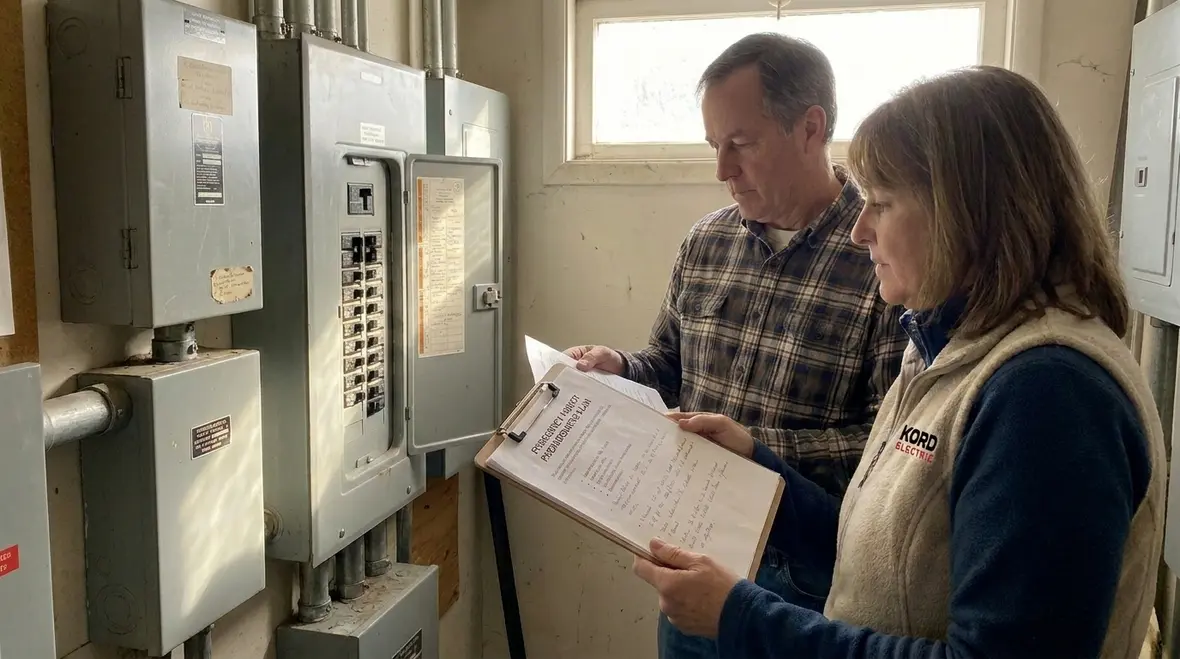
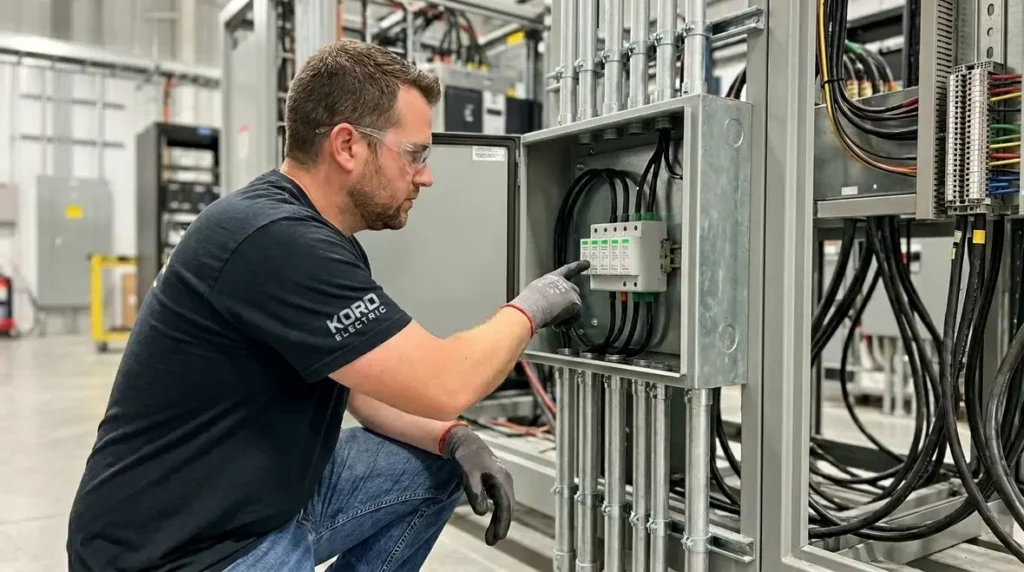
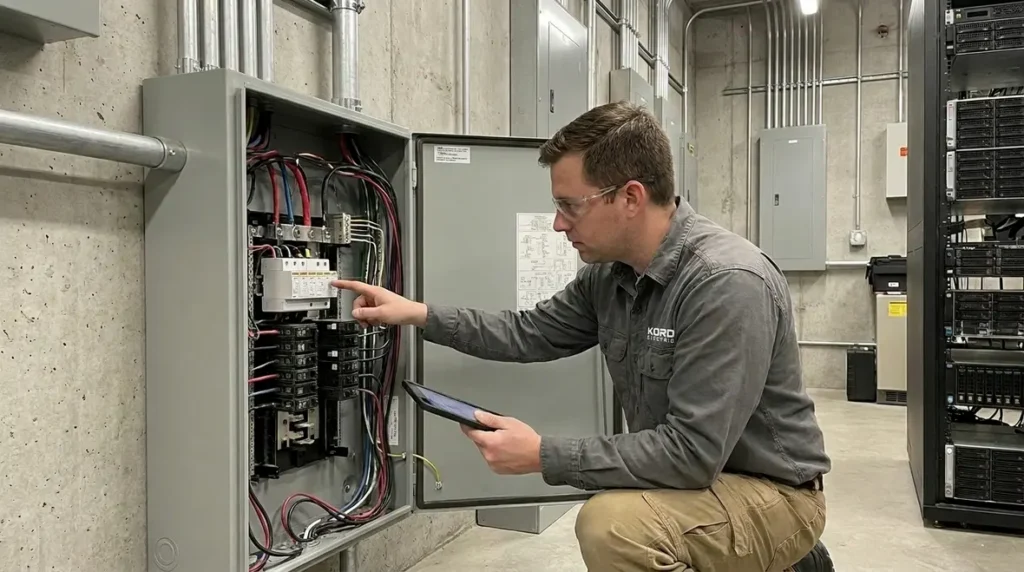
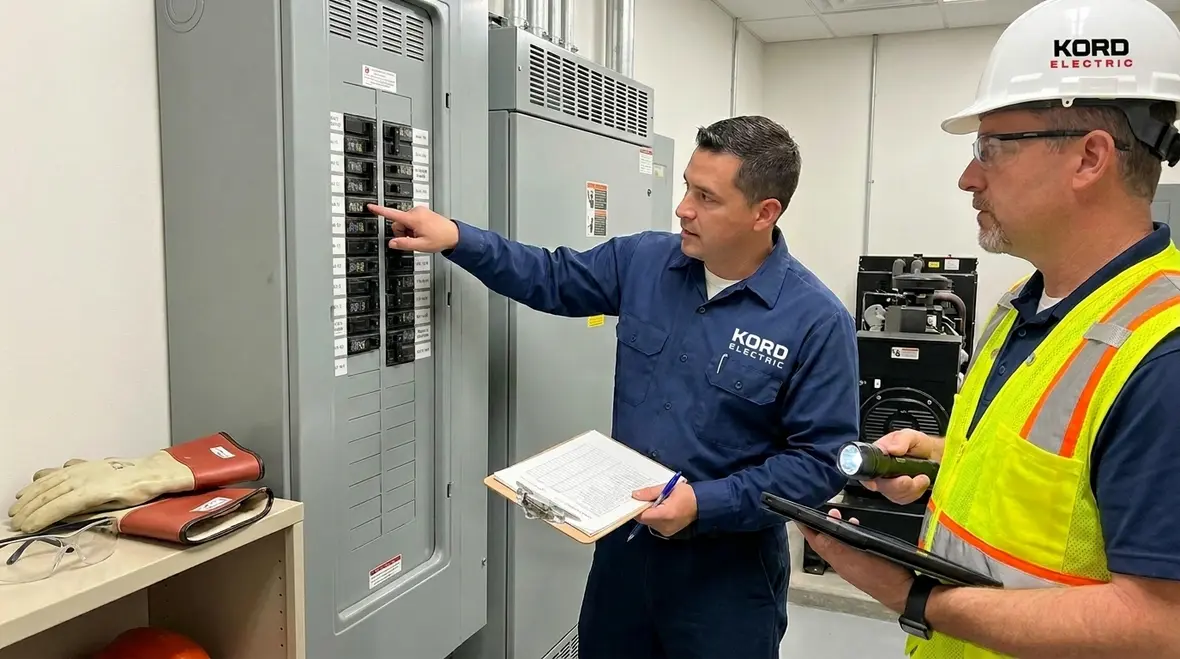
To build a useful emergency plan, teams first map the electrical hazards in the building. Then they match those hazards to the actual load your facility carries. In other words, we start with facts, not fear. We advise facility managers to review one line diagrams if they have them, or request them during service. Also, technicians should note where power enters the building, where main distribution panels sit, and which circuits feed critical systems.
Next, they should identify the systems that cannot fail, such as:
- Fire alarm and life safety systems
- Security systems and controlled access
- Elevators, loading docks, and critical process equipment
- Refrigeration, medical gas support, or other temperature sensitive systems
- Data rooms, communications, and network racks
At this stage, our technicians often find that “critical” means different things to different departments. Therefore, we help others align priorities. When the definitions match, the checklist later becomes simpler and faster to use.
Emergency electrical preparedness for small businesses: the essentials checklist
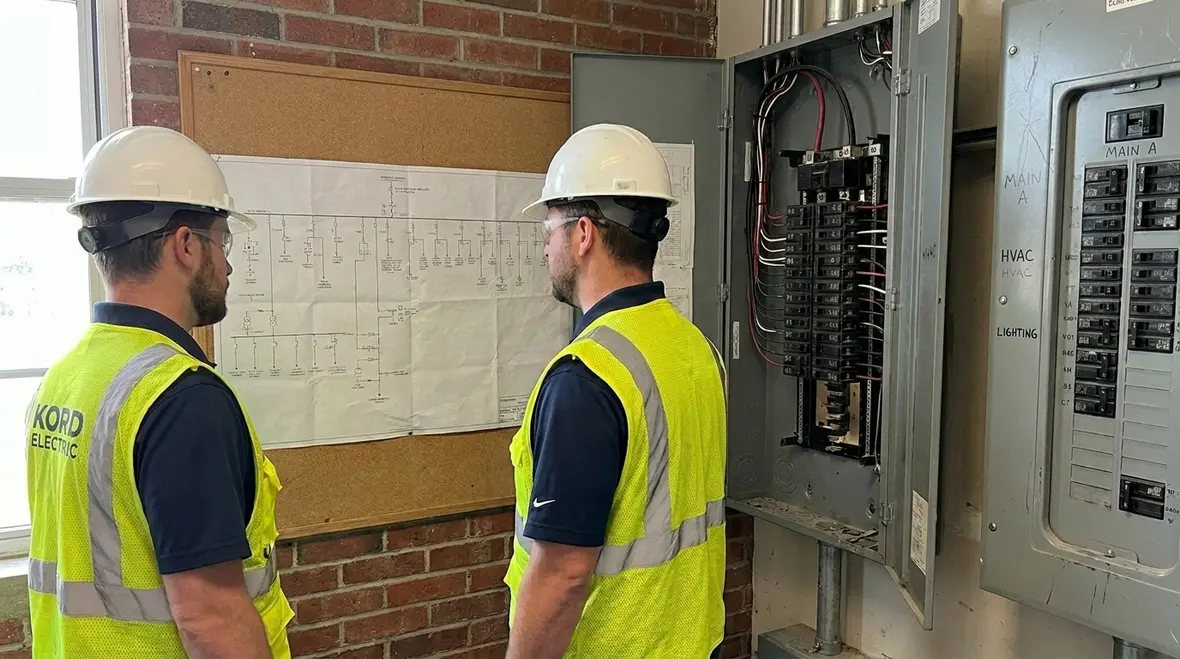
Below is a practical checklist that helps commercial and industrial teams act fast during an outage, a partial power loss, or a fault condition. We recommend posting a condensed version near electrical rooms and training staff to use it calmly.
Power and distribution checks
- Verify main disconnect access is clear, and doors are not blocked
- Confirm panel labels exist and match real circuit use
- Inspect for signs of heat, odor, discoloration, or moisture near panels and pull boxes
- Check that breaker handles move freely and that no breaker looks damaged
- Document any nuisance trips and the circuits that trip first
Critical load readiness
- Confirm backup power sources are identified and tested on schedule
- Verify transfer switches and controls show normal status
- Check that emergency lighting circuits match life safety needs
- Confirm that critical equipment shutdown steps are known to staff
Safety and response steps
- Know the location of the electrical shutoff and the emergency cut method
- Lock out and tag out procedures must be understood, not improvised
- Keep correct PPE and insulated tools available where needed
- Establish a call list for internal staff, utility, and qualified electricians
- Record outage start time, alarm events, and visible damage before repairs
We remind teams: if something smells like hot plastic, looks charred, or arcs when a panel door opens, the checklist stops and safety takes over. In those moments, people want hero stories. But electricity prefers rules.
How to prepare your backup power and transfer systems
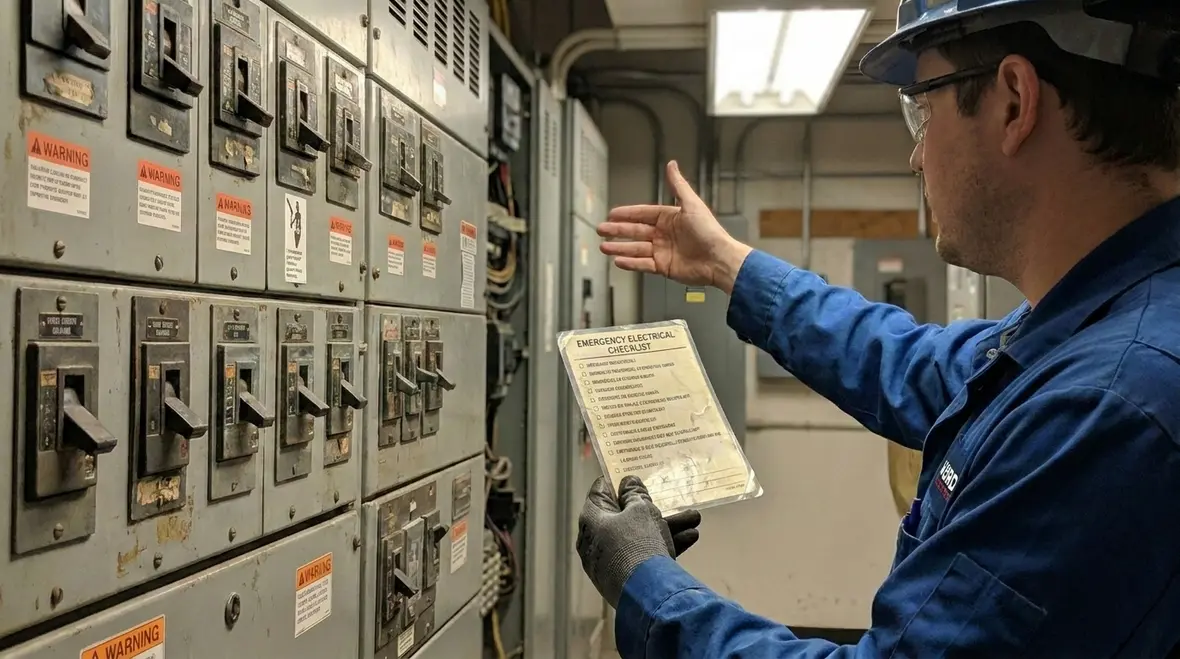
Backup power prevents downtime, but only when it is ready and correctly configured. Therefore, we focus on the full chain, not just the generator. Our expert service staff helps property teams validate transfer switch operation, load behavior, and start up timing. Even a properly sized generator can fail a real test if critical loads do not switch correctly.
During planning, teams should do the following:
- Confirm the transfer switch type and operating sequence
- List priority loads and verify they are connected to the right output circuits
- Review startup delay settings so pumps and controls do not all start at once
- Verify fuel supply and delivery schedules where generators run on-site
- Check battery backup for controls and alarms, since those systems must work during transfer
Next, test schedules matter. We recommend teams set a routine test plan that matches facility risk, such as exercising transfer switches and verifying critical circuits energize properly. Also, after any repairs, the team should run a targeted check again. Think of it like a spell in a movie. If you change one part of the script, you retest the scene.
Spare parts, documentation, and communication that actually speeds repairs
When an outage hits, speed comes from preparation. And speed comes from documentation. We tell commercial and industrial clients to build a small “response kit” that includes more than flashlights. The kit should support the first call, the first inspection, and the first repair decision.
Documentation that reduces guesswork
- As built electrical drawings or updated as built notes
- Panel schedules and circuit descriptions
- Maintenance logs for breakers, transfer switches, UPS units, and surge protection
- Recent inspection notes and any open work orders
- Contact list for vendors and internal electricians
Spare parts that cut downtime
- Correct breaker sizes and compatible trip ratings for the facility
- Fuses where applicable and verified replacement types
- Replacement labels and marking supplies for panel updates
- Consumables for routine checks, as allowed by policy
Then communication needs a simple structure. We help teams set roles: who calls the utility, who logs events, who confirms circuit behavior, and who coordinates building operations. Transition words matter here. When that structure is clear, stress drops and decisions get cleaner. Also, everyone stops waiting for someone to “figure it out,” which is how outages stretch longer than they need to.
Prevent escalation: surge protection, grounding, and load behavior
Most emergency calls come after a warning has been ignored. Sometimes the warning shows up as frequent breaker trips. Sometimes it looks like scorched wiring. Other times it shows up as repeated equipment glitches. Therefore, Kord Electric focuses on prevention work that lowers emergency frequency.
We typically review three areas that drive failures in commercial and industrial facilities.
- Surge protection: Proper devices and correct placement protect sensitive controls and reduce damage from utility events
- Grounding and bonding: Stable grounding supports safe operation and helps protection devices work as designed
- Load balance: Uneven loading can overheat components, especially in multi-phase systems
Additionally, our team connects prevention to real cost outcomes. In our commercial rewiring cost guidance, we explain how system age and the condition of components drive repair scope and price. When teams delay fixes, the later work often expands because more components fail together. That is why preventive checks usually cost less than emergency patch jobs. It is not a magic trick. It is just math, plus good electrical discipline. For a deeper dive into long-term infrastructure planning, many facility teams also review our Rewiring Cost Guide for Commercial Electrical Systems alongside their emergency electrical preparedness for small businesses planning.
Training staff for fast, safe actions during an electrical event
Even with great equipment, people must respond well. Our technicians teach facility staff using plain language and clear steps that match the reality of commercial operations. We do not train only electricians either. We train the people who need to act first, since many emergencies begin with an alarm, a flicker, or a report from a floor supervisor.
Training should cover:
- How to recognize emergency signals and what to do immediately
- How to avoid resetting breakers without identifying the problem
- Where to find the electrical shutoff and how to control access
- How to record observations, including smells, sounds, and panel lights
- How to communicate with vendors and coordinate shutdown steps
And yes, we add a little humor, because panic is a terrible electrician. If someone tells a coworker “just reset it,” we gently remind them that electricity is not a vending machine. It does not accept coins and then forgive mistakes.
FAQ
Build ongoing resilience with preventive maintenance
Emergency electrical preparedness for small businesses works best when it connects to long-term preventive maintenance. Regular inspections, thermal scans, and load reviews help catch weak connections, aging breakers, and overloaded circuits before they show up as alarms at 2 a.m. By pairing your response checklist with a structured maintenance plan, you trade chronic surprises for predictable upkeep.
If your team wants to connect emergency planning with system longevity, Kord Electric’s Electrical Preventive Maintenance programs give you a framework for inspections, testing, and documentation across panels, transfer equipment, and critical loads. That way, the same information that guides your technicians on a calm Tuesday also supports your decisions during a storm-driven outage.
For facilities that have already experienced unstable voltage, repeated breaker trips, or equipment glitches during outages, it can also be helpful to pair your plan with targeted corrective work. Resources like Kord Electric’s guidance on voltage fluctuations in commercial and industrial facilities give property teams a clearer view of why issues occur and how to stop them from turning into emergencies in the first place.
Conclusion: Call Kord Electric and tighten your emergency readiness
If your facility depends on stable power, you deserve an emergency plan built for real conditions. Kord Electric works with commercial and industrial property teams to review risks, organize a usable checklist, and support backup readiness and electrical prevention. We send technicians who explain each step and help your staff respond fast and safely. If you want fewer surprises and shorter outage windows, contact Kord Electric today to schedule an assessment and build your emergency electrical preparedness for small businesses the right way.
When you are ready to turn planning into action, Kord Electric’s dedicated electrical preventive maintenance services give your team a clear, ongoing structure for inspections, testing, documentation, and upgrades that support your emergency strategy day after day—not just when the lights go out.